
p>If you are arriving at JR Shinjuku Station and wondering which exit to take, here is the short answer:
- Kabukicho, Golden Gai, Godzilla Head, or Isetan → East Exit or Central East Exit. You usually go down to B1F.
- Omoide Yokocho, Yodobashi Camera, or Tokyo Metropolitan Government Building → West Exit or Central West Exit. You usually go down to B1F.
- Busta Shinjuku, NEWoMan, Takashimaya Times Square, or Shinjuku Gyoen → South Exit, New South Gate, or Miraina Tower Gate. You usually go up toward 2F.
The core rule is simple: East and West exits are usually downstairs on B1F, while South and New South exits are upstairs around 2F. Look for the yellow exit signs. Blue and green signs usually point toward train platforms, transfers, or railway lines, not the street exit you need.
Last checked: June 2026. This guide focuses mainly on JR Shinjuku Station, because many first-time visitors arrive on JR lines such as the Yamanote Line, Chuo Line, Sobu Line, Saikyo Line, or Narita Express. If you arrive by Odakyu, Keio, Tokyo Metro, or Toei Subway, the same destination logic still helps, but the exact gates and passages may differ.
If you are already lost inside the station and need a broader recovery plan, read this first: Lost in the Shinjuku Station Maze? How to Navigate Shinjuku Station Fast.
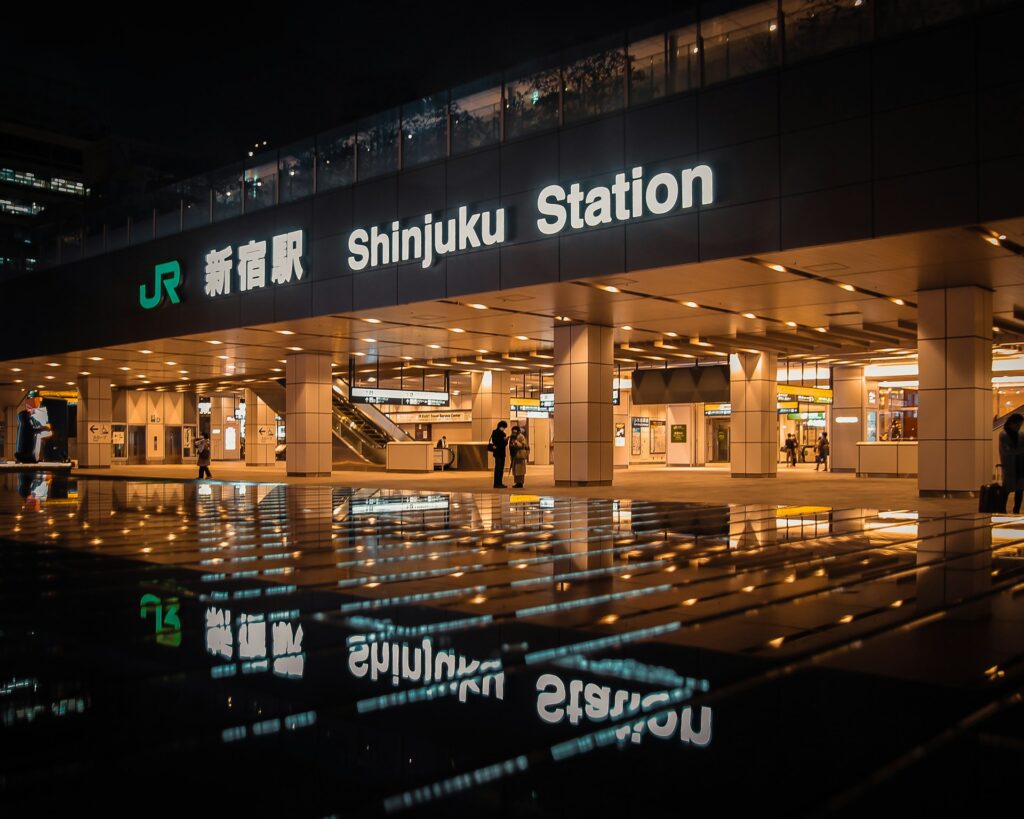
Quick Answer: Which Shinjuku Station Exit Should You Use?
The easiest way to avoid getting lost is to choose your exit by destination, not by exit name. Do not follow the first “Exit” sign you see. Decide where you are going first, then follow the yellow signs.
- Going to Kabukicho, Golden Gai, Godzilla Head, or Isetan? Follow signs for the East Exit or Central East Exit.
- Going to Omoide Yokocho, Yodobashi Camera, or the Tokyo Metropolitan Government Building? Follow signs for the West Exit or Central West Exit.
- Going to Busta Shinjuku, NEWoMan, Takashimaya Times Square, or Shinjuku Gyoen? Follow signs for the South Exit, New South Gate, or Miraina Tower Gate.
The simplest navigation trick inside the station is to look up and follow the yellow exit signs. Yellow signs point toward exits, ticket gates, and outside destinations. Blue and green signs usually point toward train platforms, transfers, and railway lines. If you follow a blue sign expecting to reach street level, you may end up on another platform instead.
Shinjuku Station Exit Cheat Sheet by Destination
Use this table before you start walking. Choose the destination first, then the exit zone.
| Destination | Best JR Exit Zone | Direction From JR Platforms | Useful Note |
|---|---|---|---|
| Kabukicho | East Exit / Central East Exit | Go down to B1F | Best for nightlife, Godzilla Head, restaurants, and entertainment streets. |
| Golden Gai | East Exit / Central East Exit | Go down to B1F | Same general side as Kabukicho. Avoid exiting on the west side by mistake. |
| Godzilla Head | East Exit / Central East Exit | Go down to B1F | Follow Kabukicho signs after leaving the station. |
| Isetan Shinjuku | East Exit / Central East Exit | Go down to B1F | Shinjuku-sanchome Station can be easier if you are already on the subway. |
| Shinjuku 3-chome | East Exit / Central East Exit | Go down to B1F | Good for shopping, restaurants, and access toward Isetan. |
| Omoide Yokocho | West Exit / Central West Exit | Go down to B1F | Close to the west side of JR Shinjuku Station. |
| Yodobashi Camera Shinjuku | West Exit / Central West Exit | Go down to B1F | Useful for electronics shopping and the west-side shopping area. |
| Tokyo Metropolitan Government Building | West Exit / Central West Exit | Go down to B1F | Tochomae Station may be easier if you are already on the Toei Oedo Line. |
| Keio Plaza Hotel area | West Exit / Central West Exit | Go down to B1F | Useful for major west-side hotels and the skyscraper district. |
| Busta Shinjuku | New South Gate / South Exit / Miraina Tower Gate | Go up toward 2F | Best for highway buses and travelers with luggage. |
| NEWoMan | New South Gate / Miraina Tower Gate | Go up toward 2F | Convenient for shopping and dining above the south-side station area. |
| Takashimaya Times Square | South Exit / New South Gate | Go up toward 2F | Good for shopping, restaurants, and easier street-level orientation. |
| Shinjuku Gyoen | South Exit / New South Gate | Go up toward 2F | Often easier from the south or southeast side, depending on your route. |
How JR Shinjuku Station Exits Are Divided
Shinjuku Station feels overwhelming because it is not one simple building. It is a huge transport hub connecting JR lines, private railways, subway lines, shopping areas, underground corridors, and pedestrian passages.
Instead of trying to memorize the whole station, start with the main exit zone.
| Exit Zone | Best For | Go From JR Platforms | Common Mistake | Rain or Luggage Note |
|---|---|---|---|---|
| East / Central East | Kabukicho, Golden Gai, Godzilla Head, Isetan, Shinjuku 3-chome | Go down to B1F | Following South Exit signs and ending up too far from Kabukicho | Good for nightlife areas, but streets can be crowded at night. If you have large luggage, look carefully for elevators or consider a south-side exit first. |
| West / Central West | Omoide Yokocho, Yodobashi Camera, Tokyo Metropolitan Government Building, skyscraper district | Go down to B1F | Confusing West Exit with the south-west side of the station | Useful for taxis, hotels, airport bus areas, and observation deck access. Some routes may involve stairs or detours. |
| South / New South / Miraina Tower | Busta Shinjuku, NEWoMan, Takashimaya Times Square, Shinjuku Gyoen | Go up toward 2F | Going down to B1F and missing the bus terminal route | Often easier with luggage, strollers, and rainy weather, especially if you are heading to the bus terminal or south-side shopping areas. |
East Exit: Best for Kabukicho, Golden Gai and Isetan
Use the East Exit or Central East Exit for Kabukicho, Golden Gai, the Godzilla Head, Isetan, and the Shinjuku 3-chome area.
From a JR platform, look for yellow signs that say East Exit, Central East Exit, or Higashi-guchi. In most cases, you will need to go down from the train platform to the B1F concourse before passing through the ticket gates.
After you pass through the East ticket gates, follow signs toward Kabukicho or the main street-level exits. If you are heading out at night, especially toward Kabukicho or Golden Gai, it is worth reading up on Kabukicho nightlife safety and common scams before you go.
Heads-up for travelers with luggage: the East Exit area can involve stairs and crowds. If you are carrying large bags, the South or New South side may be more comfortable, but you may need extra walking above ground to reach the east side.
Best East Exit Destinations
- Kabukicho
- Godzilla Head
- Golden Gai
- Isetan Shinjuku
- Shinjuku 3-chome
- East-side restaurants and nightlife
The biggest mistake is exiting on the west side and assuming you can quickly cross over outside. The tracks and station buildings make that correction more time-consuming than it looks on a map.
West Exit: Best for Omoide Yokocho and the Tokyo Metropolitan Government Building
Use the West Exit or Central West Exit for Omoide Yokocho, the skyscraper district, Yodobashi Camera, west-side hotels, and the Tokyo Metropolitan Government Building.
From a JR platform, follow the yellow signs for West Exit, Central West Exit, or Nishi-guchi. Like the East Exit, the main West Exit area is usually reached by going down to B1F.
This is the side to choose if you want to visit one of the best free observation decks in Tokyo at the Tokyo Metropolitan Government Building. However, if you are already on the Toei Oedo Line, Tochomae Station is often easier for the Tokyo Metropolitan Government Building than crossing JR Shinjuku Station.
Note on redevelopment work: parts of the West Exit area may be affected by redevelopment, temporary routes, or detours. Always follow current station signs rather than old screenshots or saved maps.
Best West Exit Destinations
- Omoide Yokocho
- Yodobashi Camera Shinjuku
- Tokyo Metropolitan Government Building
- Keio Plaza Hotel area
- West-side skyscraper district
- Some airport limousine bus stops and hotel shuttle areas
South and New South Exits: Best for Busta Shinjuku, NEWoMan and Takashimaya
For Busta Shinjuku, NEWoMan, Takashimaya Times Square, and many south-side destinations, do not go down to the East or West Exit areas. From JR platforms, follow yellow signs for the New South Gate, South Exit, or Miraina Tower Gate.
These exits are reached by going up toward the 2F side of the station. This is the opposite of the East and West exits, which are usually reached by going down to B1F.
The easiest JR route to Busta Shinjuku is usually the JR New South Gate, which connects directly toward the bus terminal area. This is especially useful if you have large luggage or if it is raining, because you can reach the bus terminal side without walking a long distance around the outside of the station.
Important: as of June 2026, the JR New South Gate is generally open from 5:45 to 24:00. Outside those hours, use the South Gate instead and allow a few extra minutes to reach Busta Shinjuku.
Traveler tip: the South and New South side is often easier if you have large luggage, a stroller, or want to avoid unnecessary stairs. However, it is not automatically the closest exit for every destination. If you use it for Kabukicho or the west-side hotel area, expect extra walking above ground.
Best South and New South Destinations
- Busta Shinjuku
- JR Expressway Bus Terminal
- NEWoMan
- Takashimaya Times Square
- Southern Terrace
- Shinjuku Gyoen direction
- Miraina Tower area
If you are catching a highway bus, do not leave this route until the last minute. Shinjuku Station crowds can slow you down, and Busta Shinjuku has separate areas for ticketing, waiting, arrivals, and departures. Check your bus company’s boarding information and allow extra time.
JR EAST Travel Service Center at the New South Gate
If you need JR pass or ticket support, the JR EAST Travel Service Center at Shinjuku New South Exit can be a useful stop before leaving the station.
As of June 2026, the JR EAST Travel Service Center at Shinjuku New South Exit is located on the right after exiting the New South Ticket Gate, and its listed hours are 8:00 to 19:00. Hours and services can change, so check the latest JR East information before relying on it for a tight schedule.
- Useful for: JR pass and ticket support, reserved ticket pickup, travel information, and some visitor services.
- IC card note: ask staff about current IC card options such as Welcome Suica when available. Do not assume all Suica or PASMO products are always sold there.
- Timing tip: if you need ticket help on arrival day, build in extra time. Lines can vary by season and time of day.
Should You Use a Different Station Instead of JR Shinjuku?
Sometimes the easiest way to handle Shinjuku is not to cross the whole station. Depending on where you are coming from, a nearby subway or private railway station may put you closer to your destination.
| Destination | Usually Best From JR Shinjuku | Possible Easier Alternative |
|---|---|---|
| Kabukicho | East Exit or Central East Exit | Seibu-Shinjuku Station can be convenient if you are arriving on the Seibu Shinjuku Line. |
| Isetan / Shinjuku 3-chome | East Exit or Central East Exit | Shinjuku-sanchome Station may be closer if you are already on the Tokyo Metro Marunouchi, Fukutoshin, or Toei Shinjuku Line. |
| Tokyo Metropolitan Government Building | West Exit or Central West Exit | Tochomae Station is often easier if you are already on the Toei Oedo Line. |
| Busta Shinjuku | New South Gate, South Exit, or Miraina Tower Gate | Use the South Gate if the New South Gate is closed outside its usual opening hours. |
| Shinjuku Gyoen | South or New South side | Shinjuku-gyoemmae Station may be easier if you are already on the Marunouchi Line. |
These alternatives are not always necessary, but they are useful if you are carrying heavy bags, traveling in bad weather, or arriving during the evening rush.
Tips for Travelers with Luggage or Rainy Weather
Not all Shinjuku Station exits feel equally easy with bags or in bad weather. Use this as a practical rule of thumb:
- East and West Exits: useful for the correct side of the station, but some routes involve stairs, crowds, or redevelopment detours. If you have heavy luggage, look for elevators and escalators instead of following the nearest staircase.
- South and New South Exits: often easier with luggage, especially for Busta Shinjuku, NEWoMan, Takashimaya, and the south-side area.
- Rainy day plan: if your destination is on the south side or you are catching a highway bus, aim for the South or New South area. For east or west destinations, follow current station signs and use covered passages where available.
- Coin lockers: available in many parts of Shinjuku Station and Busta Shinjuku, but prices, sizes, and availability vary by location. Do not count on finding a large empty locker at the last minute.
What If Google Maps Looks Wrong Inside the Station?
Inside Shinjuku Station, your phone map can become confusing because GPS may lag, jump, or place you on the wrong side of the station. For exit choice, trust the physical signs first.
Use this rule: follow the yellow exit signs until you pass through the correct ticket gate and reach street level. Once you can see open sky, your phone map usually becomes much more reliable for the final walk.
You can also check the official JR East station map or a station navigation app before your trip, but inside the station, the overhead signs should still be your main guide.
If you are already lost, took the wrong exit, or feel completely turned around, use the broader recovery guide here: Lost in the Shinjuku Station Maze? How to Navigate Shinjuku Station Fast.
What to Do If You Take the Wrong Exit
If you take the wrong exit at Shinjuku Station, do not panic. First, identify whether you are on the wrong side between East and West, or whether you simply came out too far south.
If you exit on the East side but need the West side, or the other way around: look for signs to the East-West Free Passageway. This underground corridor connects the East and West sides of Shinjuku Station outside the ticket gates. It is usually easier than walking around the station block above ground, especially in rain or heat.
If you accidentally exit on the South or New South side when you meant to go to Kabukicho or Omoide Yokocho, the easiest fix may be to step outside and use your phone map above ground. GPS is usually much more reliable once you are out of the underground station area.
For travelers with luggage, avoid rushing back down random staircases. Look for elevators, escalators, or major overhead signs first, then choose East, West, South, or New South again from there.
Shinjuku Station Exit FAQ
Which exit is best for Kabukicho?
The East Exit or Central East Exit is best for Kabukicho, the Godzilla Head, and much of Shinjuku’s nightlife area. From JR platforms, follow yellow signs and go down toward the B1F concourse.
Which exit is best for Golden Gai?
Use the East Exit or Central East Exit. Golden Gai is on the same general side as Kabukicho, so avoid following signs for the West Exit or South Exit unless your route specifically tells you to approach from Shinjuku-sanchome.
Which exit is best for Omoide Yokocho?
Use the West Exit or Central West Exit. Omoide Yokocho is on the west side of JR Shinjuku Station, near the narrow food alley area known for yakitori and casual drinks.
Which exit is best for the Tokyo Metropolitan Government Building?
From JR Shinjuku Station, use the West Exit or Central West Exit. If you are already on the Toei Oedo Line, Tochomae Station is often easier than crossing JR Shinjuku Station.
How do I find Busta Shinjuku?
Follow signs for the New South Gate, South Exit, or Miraina Tower Gate. From JR platforms, you generally need to go up toward the 2F side of the station, not down to B1F.
Can I reach Busta Shinjuku without going outside?
Usually, yes, if you use the JR New South Gate during its normal opening hours. As of June 2026, the New South Gate is generally open from 5:45 to 24:00. Outside those hours, use the South Gate instead and allow extra time.
What should I do if Google Maps looks wrong underground?
Stop following the blue dot and look for the overhead yellow station signs. Choose East, West, South, or New South based on your destination, then use Google Maps again after you reach street level.
What happens if I take the wrong exit at Shinjuku Station?
If you exit on the wrong side between East and West, use the East-West Free Passageway to cross over outside the ticket gates. If you end up at the South or New South side by mistake, going outside and using your phone map is often the simplest recovery option.
Where can I get JR pass or ticket help at Shinjuku Station?
The JR EAST Travel Service Center at Shinjuku New South Exit is useful for JR pass and ticket support. As of June 2026, it is listed as open from 8:00 to 19:00, but hours and services can change.
Is Shinjuku Station harder than Tokyo Station?
For many first-time visitors, Shinjuku Station feels harder because the exits are spread across multiple railway companies, underground passages, shopping areas, and redevelopment zones. Tokyo Station is large too, but its main bullet train and city-side exits are often easier to understand once you know Marunouchi versus Yaesu.
Final Verdict: Choose Your Exit Zone First, Then Move
The easiest way to use JR Shinjuku Station is not to memorize the whole station map. Instead, choose your exit zone first, then follow the yellow signs.
- East: Kabukicho, Golden Gai, Godzilla Head, Isetan, and Shinjuku 3-chome.
- West: Omoide Yokocho, Yodobashi Camera, hotels, the skyscraper district, and the Tokyo Metropolitan Government Building.
- South / New South: Busta Shinjuku, NEWoMan, Takashimaya Times Square, Southern Terrace, and Shinjuku Gyoen.
Choose this approach if: you are arriving on JR lines and want to reach a specific destination without wasting time underground. A simple B1F vs 2F rule is easier than trying to memorize every passage.
Choose a different approach if: you are arriving on a private railway or subway line. In that case, check whether Tochomae, Shinjuku-sanchome, Shinjuku-gyoemmae, or Seibu-Shinjuku Station puts you closer to your destination.
For families or travelers with luggage: the South or New South side is often more comfortable, especially for Busta Shinjuku and Takashimaya. Just remember that it may add walking time if your final destination is Kabukicho, Golden Gai, or the west-side hotel area.
For first-time visitors: remember the core rule: East and West are usually downstairs on B1F, while South and New South are upstairs around 2F. If you get confused underground, stop relying on GPS, follow the yellow signs, and get above ground before checking your phone again.
If you are not just choosing an exit but trying to escape the station after getting turned around, read the broader guide here: Lost in the Shinjuku Station Maze? How to Navigate Shinjuku Station Fast.
Once you have figured out Shinjuku Station, nearby Tokyo hubs like Shibuya and Harajuku can still be tiring, especially if you are short on time or do not want to spend your day checking directions every few minutes.
If you would rather save your energy for food, shopping, and smaller local spots, a private guide can make the next part of your Tokyo day easier. Check the current route, inclusions, price, and availability before booking.
Check Availability for the Shibuya & Harajuku Hidden Gems Private Tour
Opening hours, station routes, ticket gate access, redevelopment detours, locker availability, IC card services, and tour details can change. Always follow current station signs and check official sources or your selected booking page before finalizing your trip.

Hi, I’m Kai. I’m a Tokyo-based travel writer, tourism industry insider, and the author of a published guidebook for international visitors to Japan. With over 10 years of professional experience at a leading Japanese tourism company, my mission is to help you skip the tourist traps and navigate Japan’s best destinations like a local. I believe the perfect day trip is like a traditional kaiseki meal: a beautiful balance of precise planning and unforgettable seasonal discovery. When I’m not out conducting field research, you’ll usually find me drafting new itineraries with one of my favorite fountain pens!