
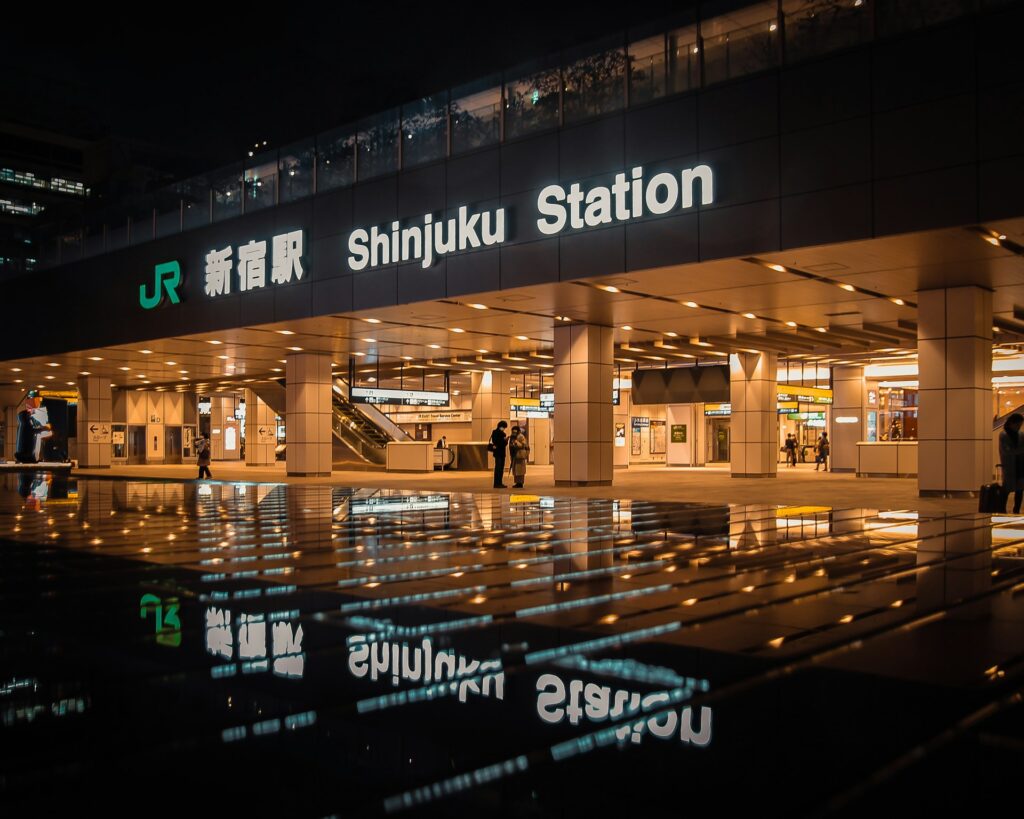
Getting lost in the Shinjuku Station maze is one of the most common Tokyo travel problems. The station is huge, crowded, partly underground, and split across multiple train companies, exits, shopping areas, and passageways.
The good news is that you do not need to memorize the whole station. Knowing how to navigate Shinjuku Station is mostly about choosing the right exit area before you move, trusting the overhead signs, and avoiding one very common mistake: going above ground too early.
What Is the Fastest Way to Escape the Shinjuku Station Maze?
If you are already inside Shinjuku Station and feel lost, follow this order:
- Stop relying on live Google Maps inside the station. GPS can become inaccurate underground and inside large concrete structures.
- Look up for the yellow exit signs. In Japanese stations, exit signs are usually yellow and are more reliable than your phone while you are still indoors.
- Choose your exit area first: East, West, South, or New South.
- Stay underground until you are near the correct exit. Do not go outside just to “get your bearings.”
- If you are on the wrong side, look for the East-West Free Passage. It lets you cross between the east and west sides outside the ticket gates.
The single most important rule is this: do not leave the station from a random staircase. Shinjuku Station is divided by train tracks and large station buildings, so a wrong exit can turn a two-minute correction underground into a long and frustrating walk outside.
Which Shinjuku Station Exit Should You Use?
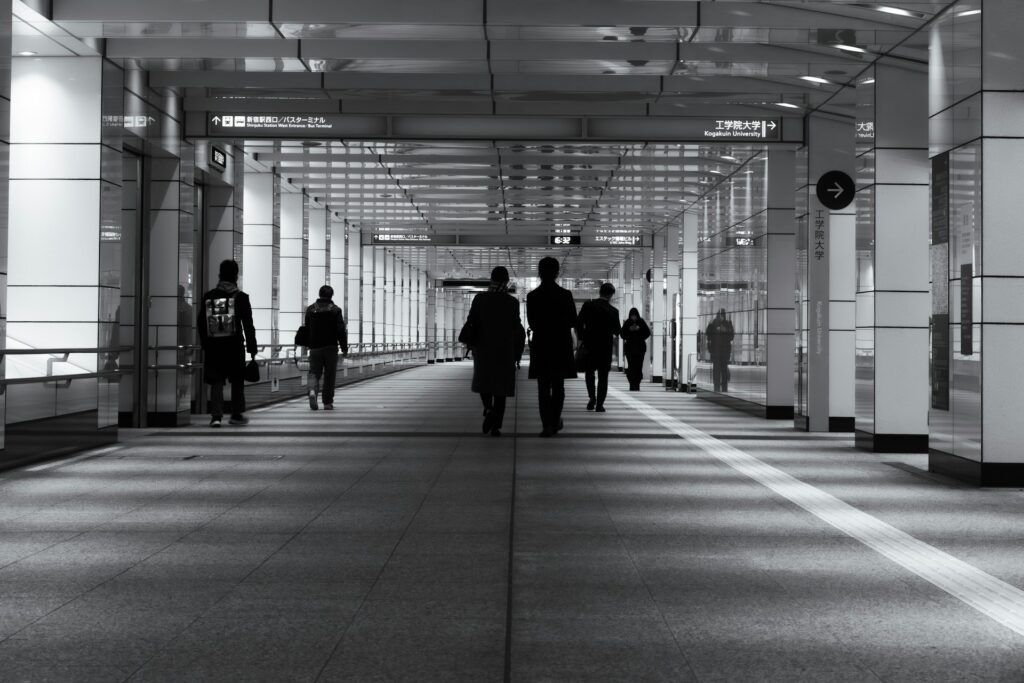
For first-time visitors, ignore the idea of “over 200 exits” and start with the main direction you need. Use this quick guide before you follow the yellow signs.
| Exit Area | Use It For | Best For | Important Note |
|---|---|---|---|
| East Exit | Kabukicho, Godzilla Head, Golden Gai, nightlife, restaurants | First-time visitors heading to the neon side of Shinjuku | Do not exit west if your destination is Kabukicho. |
| West Exit | Tokyo Metropolitan Government Building, skyscraper district, major hotels | Observation decks, business hotels, airport limousine bus stops | As of May 2026, the West Exit area is affected by redevelopment work, so temporary walkways may change. |
| South Exit | Lumine, Takashimaya Times Square, Southern Terrace | Shopping and easier street-level orientation | This side is often easier to understand than the deeper east and west underground areas. |
| New South Gate | Busta Shinjuku, highway buses, JR Expressway Bus Terminal | Travelers taking long-distance buses or carrying luggage | Check your ticket carefully because “South Exit” and “New South Gate” are not always the same place. |
If you are unsure, pause near a wall or pillar, confirm your destination, then follow the yellow signs for that exit area. Standing in the middle of the flow while checking your phone is stressful and can block commuters.
Why Is Shinjuku Station So Confusing?
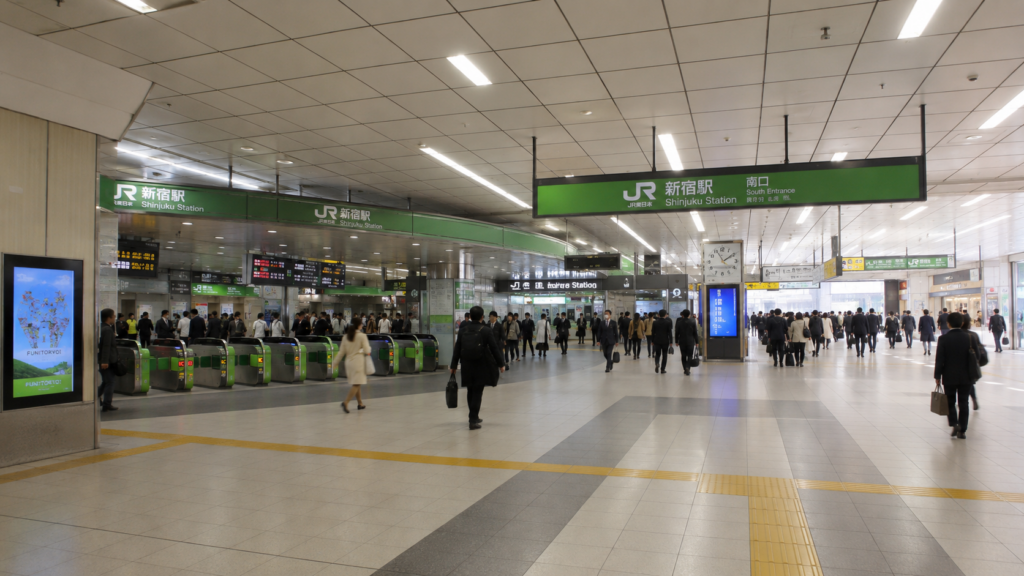
Shinjuku Station is not confusing because tourists are bad at directions. It is confusing because several difficult things happen at the same time: underground GPS problems, multiple train operators, separate ticket gates, busy commuter flows, and ongoing redevelopment around parts of the station.
Why Does Google Maps Fail Inside Shinjuku Station?
Google Maps can be useful once you are outside under open sky, but it is unreliable as your main tool inside the station. The station has many underground corridors, concrete layers, shopping passages, and overlapping train lines. Your blue dot may jump, spin, or place you on the wrong side of the tracks.
Use Google Maps for the final street walk after you exit. While you are still inside the station, use the overhead signs, station maps, and exit names instead. For advance planning, you can also check the official JR East Shinjuku Station map.
Why Do the East and West Sides Feel So Far Apart?
The east and west sides of Shinjuku Station are separated by train tracks and station buildings. If you exit on the wrong side, you usually cannot simply cross the street and fix the mistake. You may need to walk around a large station block or return underground.
This is why the East-West Free Passage is so useful. If you realize you are on the wrong side before leaving the station, look for signs to the passage and cross underground outside the ticket gates.
Why Is the West Exit Area Harder Than Usual?
The West Exit area is part of the Shinjuku West Gate redevelopment zone. As of May 2026, travelers should expect some temporary walkways, detours, and changed routes around the west side of the station.
This does not mean you should avoid the West Exit if your destination is there. It means you should trust the current station signs more than an old blog post, screenshot, or saved map image.
How Do You Navigate Shinjuku Station Without Getting Lost?
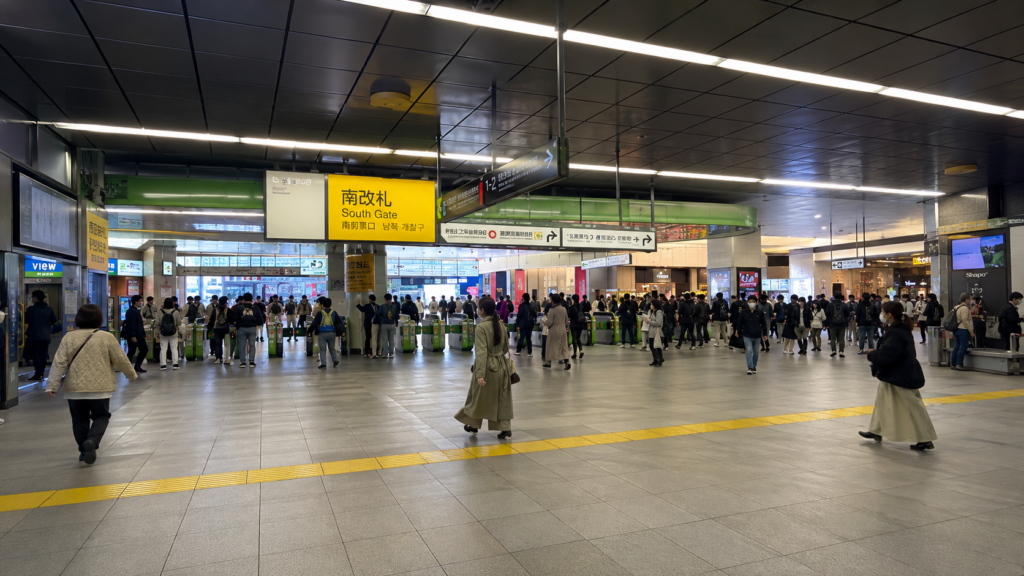
Use these three rules every time you arrive at Shinjuku Station.
How Do You Choose the Right Exit Before Moving?
Before you leave the platform area, decide your exit direction. You do not need the exact staircase number at first. You need the correct side of the station.
- Going to Kabukicho, Golden Gai, or Godzilla Head? Start with the East Exit direction, and read up on the important etiquette when visiting Golden Gai.
- Going to the Tokyo Metropolitan Government Building or skyscraper hotels? Start with the West Exit direction.
- Going shopping at Lumine or Takashimaya? Start with the South Exit direction.
- Taking a highway bus from Busta Shinjuku? Follow signs for New South Gate or the bus terminal.
Why Should You Follow the Yellow Signs?
The yellow exit signs are your main navigation tool inside the station. Once you see the direction you need, keep following the signs even if the corridor feels longer than expected.
Do not switch directions because your phone briefly points somewhere else. In Shinjuku Station, the overhead signs are usually more useful than live GPS until you reach street level.
Why Should You Avoid Going Above Ground Too Early?
It is tempting to take the nearest stairs and think, “I will figure it out outside.” In Shinjuku, that can make the problem worse.
If your hotel is near Kabukicho and you accidentally leave from the West Exit, you may find yourself facing the wrong side of the station with train tracks between you and your destination. In many cases, the fastest fix is to go back underground and find the correct passage rather than walking around the station at street level.
What Should You Do If You Take the Wrong Exit?
If you realize you are heading to the wrong side, do not panic. Use this recovery plan:
- Stop moving with the crowd. Step aside safely near a wall or pillar.
- Check whether you are still inside the station. If you have not gone outside yet, stay underground.
- Look for the East-West Free Passage. This is the easiest way to move between the east and west sides outside the ticket gates.
- Use Google Maps only after you are outside. Once you are under open sky, your phone is much more useful for the final walk.
If you have already gone outside on the wrong side, the best solution is often to return underground, find the East-West Free Passage, and cross underneath rather than trying to walk around the entire station complex.
How Should You Handle Shinjuku Station With Luggage, Kids, or Rain?
Shinjuku Station is more stressful when you are carrying large suitcases, traveling with children, moving during rush hour, or trying to stay dry in heavy rain. In those cases, your goal should be to reduce unnecessary stairs and avoid exiting on the wrong side.
- With luggage: Check your exit area before leaving the platform and avoid random staircases. If you need to store your bags, it helps to know what to do if Shinjuku coin lockers are full.
- With kids: Pause in wider areas before making direction changes so you do not get separated in commuter traffic.
- In rain or summer heat: Stay underground as long as it moves you closer to the correct exit.
- For elevators or step-free routes: Check the official station map before you travel, because elevator locations depend on your line and ticket gate.
The station is manageable if you slow down at decision points. The mistake that usually causes the most stress is rushing above ground before confirming whether you are on the east, west, south, or New South side.
Is It Worth Avoiding Shinjuku Station Altogether?
For many travelers, navigating Shinjuku Station is part of the Tokyo experience. If you are traveling light, have time to spare, and enjoy figuring things out as you go, the train and walking route is usually the most flexible and budget-friendly option.
However, the Shinjuku Station maze can become a real problem when a wrong exit would affect the rest of your day. Families, groups, older travelers, and visitors with large luggage may find that one confusing transfer costs more energy than expected.
| Decision Point | DIY Trains and Walking | Private Chauffeur Tour |
|---|---|---|
| Best for | Solo travelers, budget trips, flexible schedules | Families, groups, older travelers, and short Tokyo stays |
| Cost | Lowest transport cost | Higher cost, but door-to-door |
| Risk of getting lost | High if you choose the wrong exit or rely on underground GPS | Low because you avoid station navigation between stops |
| Luggage and stairs | Can be stressful during busy hours | Easier if you are carrying suitcases or traveling with children |
| Rain, heat, or fatigue | More walking and more chances to exit on the wrong side | Less walking between major sights |
| Booking required | No | Yes |
Who Should Still Use Shinjuku Station?
You should still use Shinjuku Station if your schedule is flexible and you want to move around Tokyo cheaply. The station is confusing, but it is also extremely useful once you understand the main exit areas.
- Use the station yourself if you are traveling light, have mobile data, and do not mind pausing to check signs.
- Use the station yourself if your destination is close to a clearly marked exit, such as Busta Shinjuku, Kabukicho, or the Tokyo Metropolitan Government Building.
- Use the station yourself if you are comfortable asking station staff for help when the signs become confusing.
Who Should Consider a Private Chauffeur Tour?
A private chauffeur tour makes more sense when the station itself is not the experience you came to Tokyo for. If you only have one or two full days in the city, losing an hour in Shinjuku Station can affect your entire itinerary.
It is especially worth considering if you are traveling with children, visiting with older family members, carrying luggage, or trying to combine several neighborhoods in one day without repeated train transfers.
Check Availability: Private Customizable City Tour with Chauffeur
What Is the Final Verdict?
The best way to navigate Shinjuku Station is not to understand every corridor. It is to make fewer decisions.
Choose your exit area first, follow the yellow signs, stay underground until you are close to the correct side, and use the East-West Free Passage if you need to cross between the east and west sides. Once you are outside, then use Google Maps for the final walk to your hotel, restaurant, or attraction.
If you are traveling light and have time, Shinjuku Station is manageable. If you are traveling with luggage, kids, limited mobility, or a tight Tokyo schedule, it may be better to reduce station transfers, use door-to-door transport for the most demanding parts of your day, or consider choosing a quieter neighborhood to stay in Tokyo.
Shinjuku Station Navigation FAQ
Why does Google Maps not work well inside Shinjuku Station?
Google Maps relies on location signals that can become inaccurate underground or inside large concrete station buildings. In Shinjuku Station, your blue dot may jump between corridors, place you on the wrong side of the tracks, or point you toward a route that does not match the station layout. Use Google Maps after you are outside, but follow overhead signs while you are inside.
What is the most important rule for navigating Shinjuku Station?
The most important rule is to choose your exit area before going above ground. Decide whether you need the East Exit, West Exit, South Exit, or New South Gate, then follow the yellow signs until you are close to that side.
Which exit should I use for Kabukicho and Golden Gai?
For Kabukicho, Golden Gai, Godzilla Head, and much of the nightlife area, start by following signs for the East Exit. Do not leave from the West Exit and assume you can simply cross the street. The station tracks and buildings make that correction more complicated than it looks on a map.
Which exit should I use for Busta Shinjuku?
For Busta Shinjuku and highway buses, follow signs for New South Gate or the bus terminal. Be careful not to treat every “South” sign as the same thing. South Exit and New South Gate can lead you to different parts of the station area.
How do I get from the West Exit to the East Exit?
Look for the East-West Free Passage. It connects the east and west sides outside the ticket gates, so you can cross without buying another train ticket. If you realize you are on the wrong side, this passage is usually easier than trying to walk around the station above ground.
What should I do if I already took the wrong exit?
Do not keep walking randomly around the outside of the station. First, check whether your destination is on the opposite side of the tracks. If it is, the fastest fix is often to return underground, find the East-West Free Passage, and cross through the station area.
Is Shinjuku Station difficult with luggage?
It can be difficult with large luggage, especially during rush hour or when you accidentally choose a route with stairs. Before you move, confirm the correct exit area and check the official station map if you need elevators or step-free routes.
Is the West Exit still under construction?
As of May 2026, the West Exit area is still affected by redevelopment work, so temporary corridors, detours, and walking routes may change. Follow current station signs rather than relying only on old screenshots or saved maps.
Should I avoid Shinjuku Station on my first trip to Tokyo?
You do not need to avoid it completely. Shinjuku Station is useful and manageable if you slow down, follow the signs, and choose your exit area early. However, if your schedule is tight or you are traveling with luggage, children, or older family members, it may be worth using door-to-door transport for some parts of your Tokyo itinerary.
Book Your Private Tokyo Chauffeur Tour Here

Hi, I’m Kai. I’m a Tokyo-based travel writer, tourism industry insider, and the author of a published guidebook for international visitors to Japan. With over 10 years of professional experience at a leading Japanese tourism company, my mission is to help you skip the tourist traps and navigate Japan’s best destinations like a local. I believe the perfect day trip is like a traditional kaiseki meal: a beautiful balance of precise planning and unforgettable seasonal discovery. When I’m not out conducting field research, you’ll usually find me drafting new itineraries with one of my favorite fountain pens!