
Otaru does not have one best season. It has three different best seasons, depending on what you are actually optimising for.
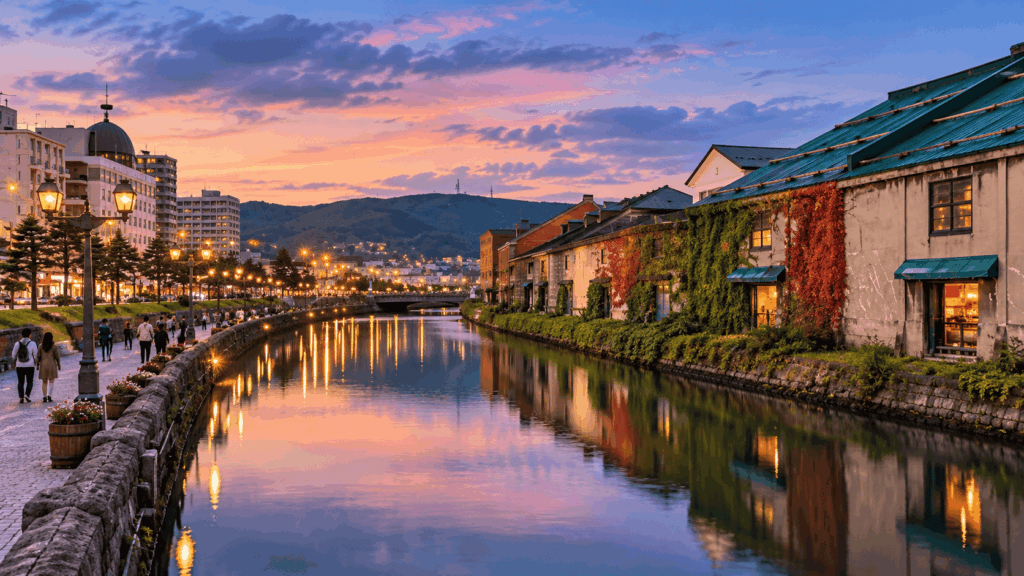
If you want the version of Otaru that appears on posters — snow on the stone warehouses, gas lamps glowing at 4pm — go in winter, and February is the safer bet for reliable snow. If you want to walk all day without watching your footing, September and October are better. And whatever month you pick, the single most valuable decision is not the season at all: it is staying until dusk, when the canal switches from daylight to gaslight in the space of about forty minutes.
Planning Otaru in winter and hoping to catch the canal lights without coordinating the return train yourself? A private day trip from Sapporo can simplify the journey, with timing and stops to confirm before booking. Check winter dates, pickup details, and itinerary flexibility for this private Otaru tour.
What Is the Best Time to Visit Otaru?
Here is the short version, before the seasonal detail:
- Best overall for scenery: winter, specifically February.
- Best for reliable snow and winter events: February, when the Otaru Snow Light Path usually runs.
- Best for comfortable walking and colour: mid-October to early November. September if you mainly want cool, easy days.
- Best for festivals and long evenings: late July.
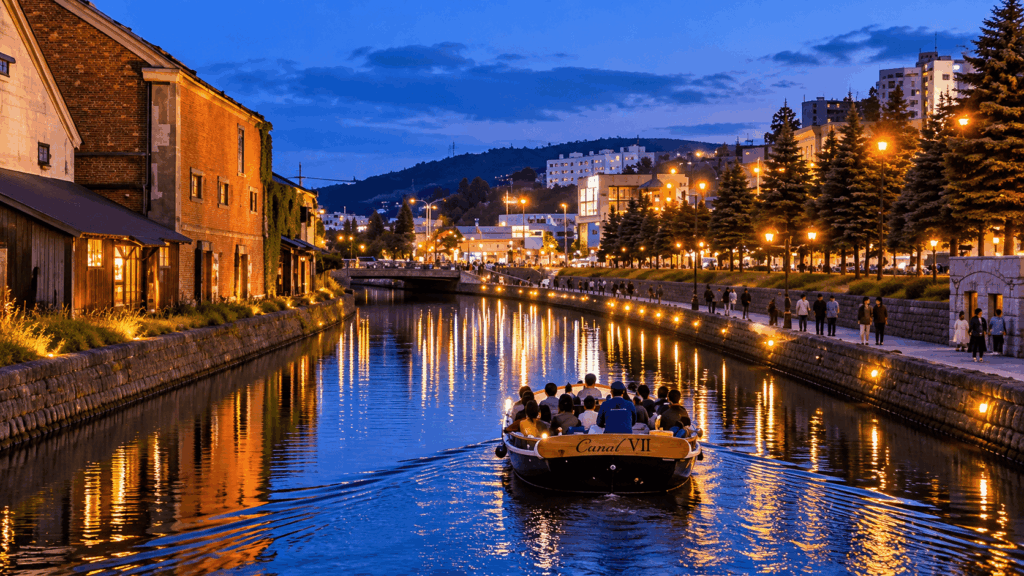
- Best time of day: dusk at the Otaru Canal, roughly 30 to 60 minutes around sunset.
Winter is not automatically right for everyone, and it is worth saying plainly why: Otaru in February is beautiful and physically demanding in the same afternoon. Ice on the pavements, a wind that comes off the sea, and the possibility of a delayed train are real costs, not minor inconveniences. The question is not “which season is best” but “which of those costs am I willing to pay for the photographs I want”.
| Season | Best for | Typical feel | Main advantage | Main drawback | Verdict |
|---|---|---|---|---|---|
| Summer (Jul–Aug) | Festivals, easy walking, long daylight | Mild, breezy, 24–26°C daytime averages | Otaru Ushio Festival; everything open; no ice | No snow at all; the canal loses its signature look | For travellers who want Otaru as a pleasant port town, not a winter postcard |
| Autumn (Sep–early Nov) | Comfortable walking, autumn colour | September still warm by day; October crisp | Best walking conditions of the year; colour peaks mid-Oct to early Nov | Evenings cold, especially on the water; colour dates shift yearly | For travellers who value comfort over drama |
| December | Early-winter atmosphere, illuminations | Around freezing by day, colder at night | Blue Canal and city illuminations; quieter than February | Deep, settled snow is not guaranteed in the first half of the month | For travellers who want winter mood without February’s intensity |
| February | Snow scenery, winter events, night photography | Very cold and often icy; January is slightly colder on average | Most reliable snow; Otaru Snow Light Path | Icy, windy, and busiest around event dates | For travellers who accept the cold to get the classic Otaru image |
If the seasonal comparison leaves you with a bigger question — how to fit the canal, Sakaimachi Street and Mt. Tengu into a single day from Sapporo without managing winter train timing and icy pavements yourself — that is a logistics problem rather than a season problem, and it is worth comparing guided day-trip options before you build the route by hand.
Otaru by Season: Which One Fits Your Trip?
Otaru’s seasons are not four variations of the same experience. They are four different trips, with different walking surfaces, different opening hours and different things to photograph after dark.
Otaru in Summer: Festivals, Long Evenings, No Snow
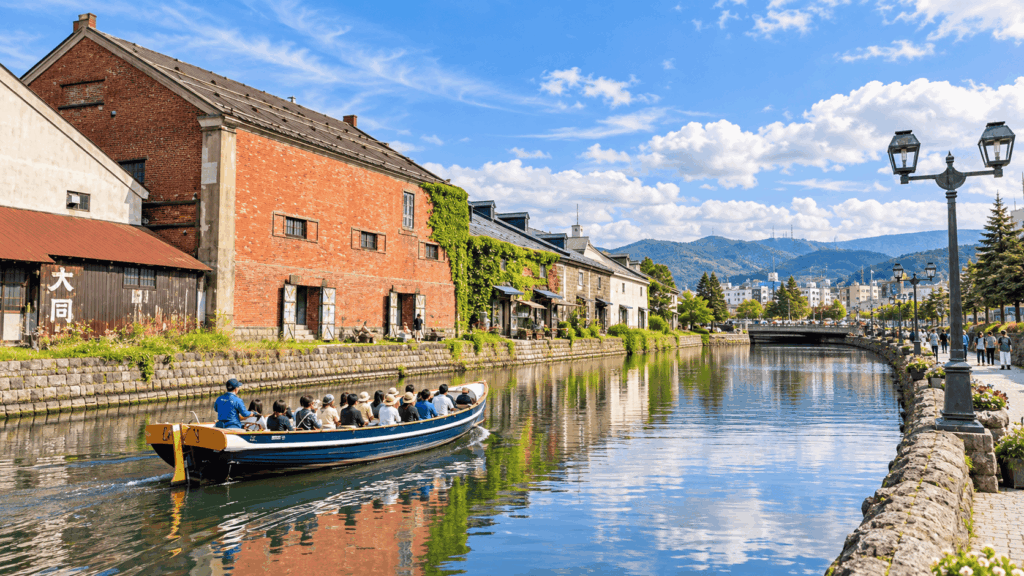
Summer is the season people skip on the assumption that Otaru without snow is pointless. That is too harsh. Otaru in July and August is a working port town with a mild climate — July averages around 24°C by day and 17°C at night, August slightly warmer — and the canal is still the canal: 1,140 metres of water, 63 gas lamps along the promenade, and the stone warehouses on the far bank.
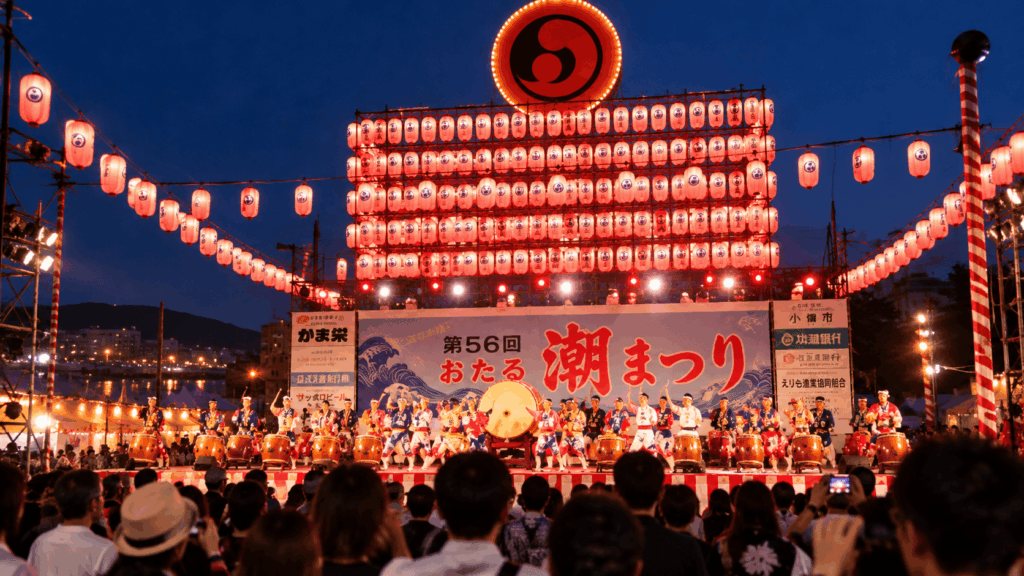
What summer adds is the Otaru Ushio Festival, usually held over three days in late July, with the harbour as its main stage (the 2026 edition, the 60th, ran 24–26 July). It also adds long daylight, which makes the classic mistake of this season possible: treating Otaru as a daytime stop and heading back to Sapporo before the light changes. The gas lamps still come on at sunset in summer; you just have to wait until nearly 19:00 for it.
What summer removes is atmosphere. If your reason for coming is the snow-covered canal, no amount of comfortable weather compensates. Summer is for travellers who want Sakaimachi Street, the glass workshops and the harbour without ice, and who are honest that they are not chasing a winter photograph.
Otaru in Autumn: September for Comfort, October for Colour
Autumn gets lumped together as one season, but September and late October are not the same trip.
September is the most comfortable month of the year in Otaru: averages around 22°C by day and 14°C at night, still green, with far fewer people than August. This is the month for walking the full canal, continuing to the North Canal — the wider, quieter northern section where boats are moored and the old warehouses have not been dressed up for visitors — and then along Sakaimachi Street without stopping every few minutes to let a group pass.
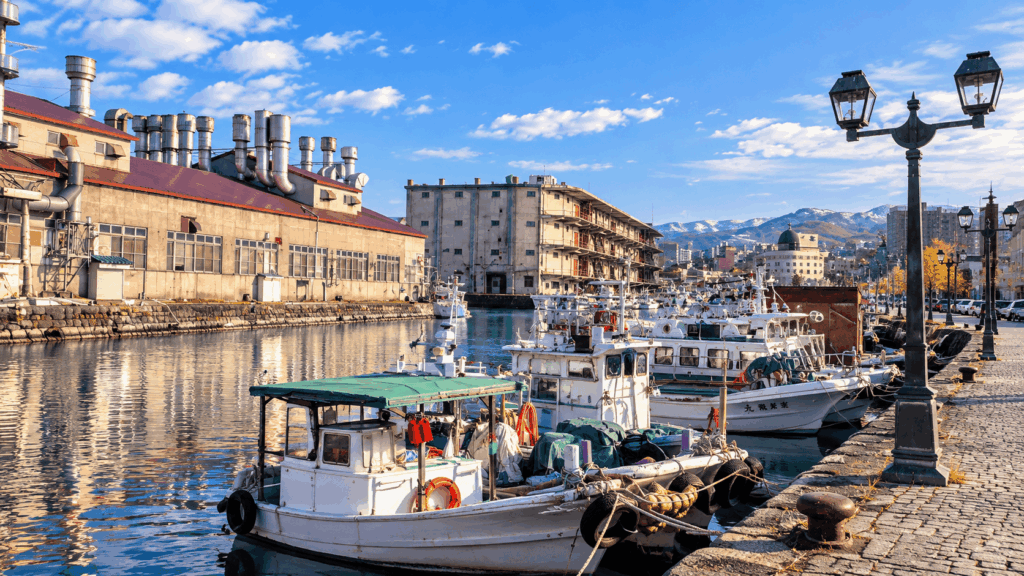
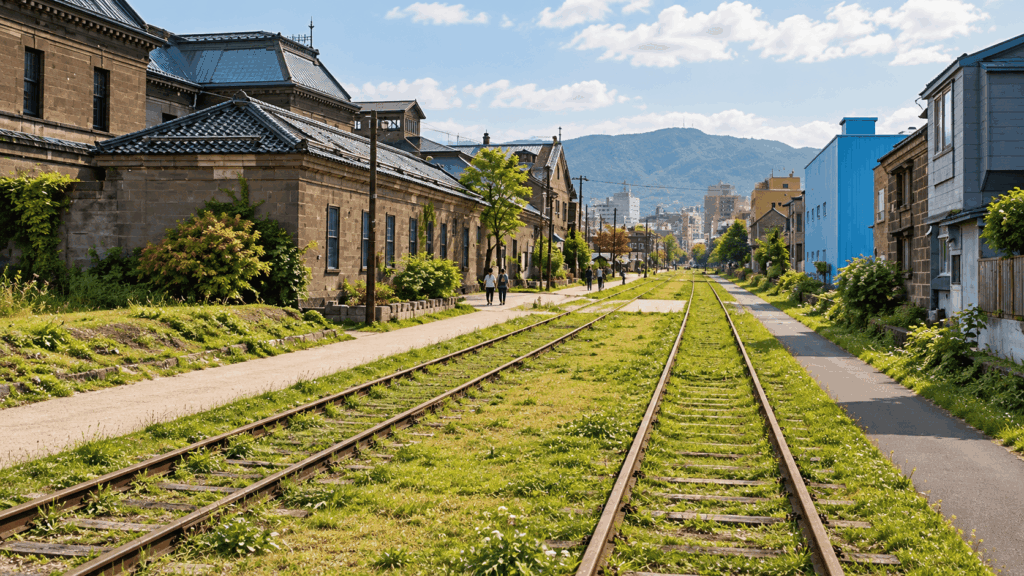
Colour comes later. Foliage in Otaru typically peaks from mid-October into the first days of November, with Temiya Park turning first and the canal and the Former Temiya Line walk following. If autumn colour is the actual goal, aim for mid-to-late October, not September. If you want to walk comfortably and do not care about leaves, September is better than October, because October’s daytime average drops to around 16°C and the first snow can arrive late in the month.
The Former Temiya Line is the underrated autumn walk: a flat, rail-preserved trail on the site of Hokkaido’s first railway, easy on the legs, and photogenic without a crowd. Temiya Park, up the hill, gives you the harbour from above — a different Otaru from the canal’s postcard angle.
Kai’s tip: Do not dress for the midday temperature if you are going anywhere near the water. I have taken the evening canal cruise in September on a day that felt like early summer on land, and spent most of the forty minutes with my arms folded because the air just above the canal was noticeably colder than the street. A light outer layer costs nothing to carry and gets used on the boat, on the North Canal promenade, and at the canal after sunset — in every season except midsummer.
Otaru in Winter: Snow, Gas Lamps and the Trade-offs
Winter is the season Otaru is known for, and the reputation is earned. Snow that settles usually arrives around mid-December and stays; Otaru generally gets more of it than Sapporo, with December and January the heaviest months. By February the canal, the warehouses and the hillside behind the town are properly buried, and the gas lamps at dusk do something no other season can reproduce.
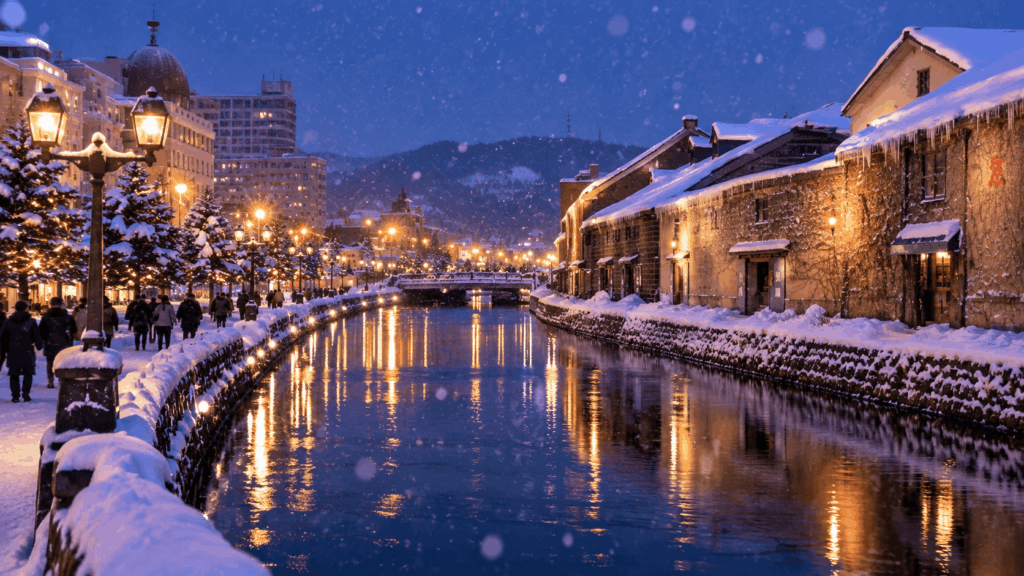
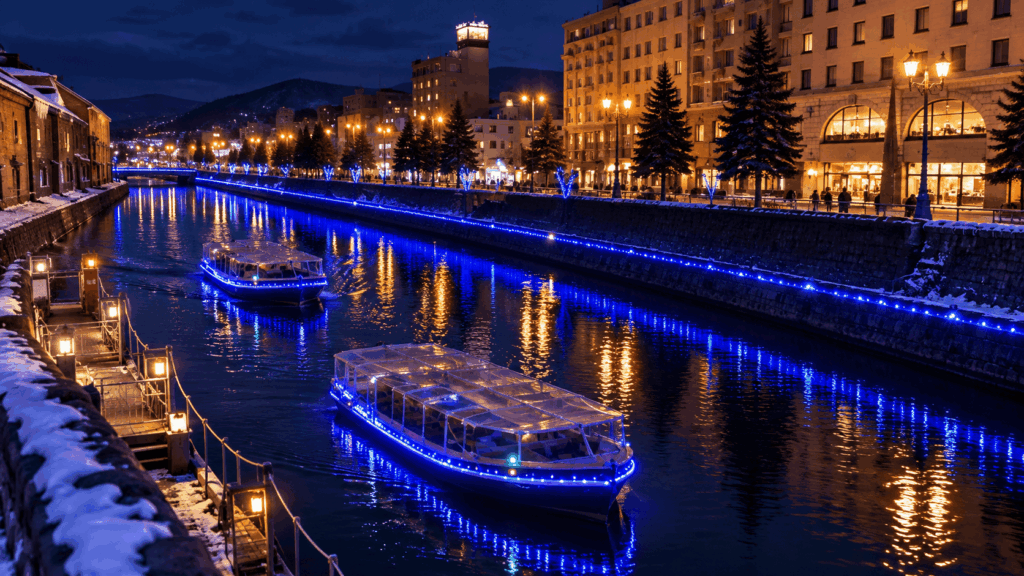
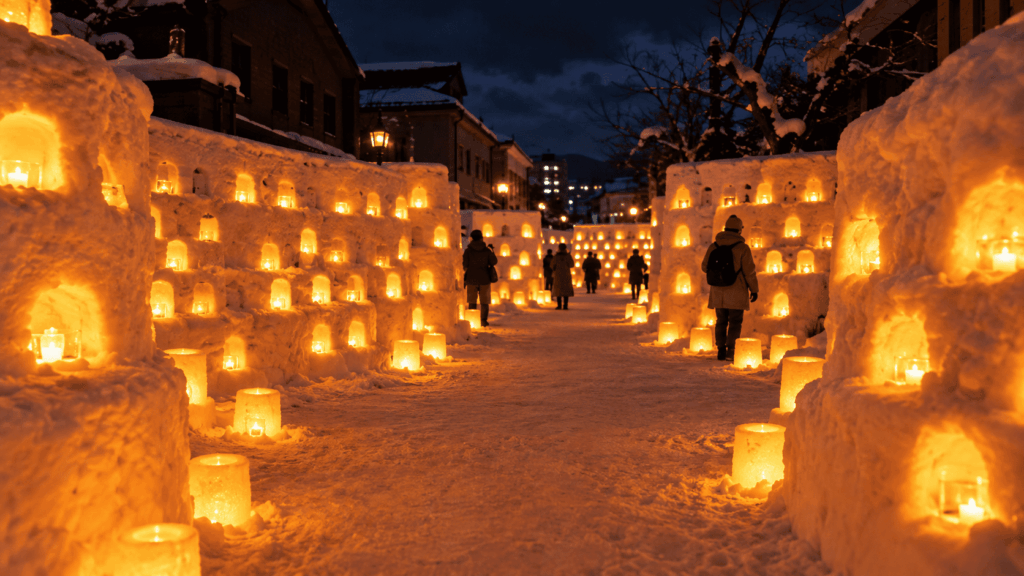
What winter also brings is the Otaru Snow Light Path, held in early-to-mid February — the 2027 edition is scheduled for 6–13 February — with snow candles and lanterns along the canal and the Former Temiya Line, typically lit from around 17:00 to 21:00 in previous editions and free to walk through. The detailed 2027 lighting hours have not yet been announced. Separately, the Blue Canal illumination covers the stretch between Asakusabashi and Chuo Bridge from 1 November to 31 January with blue light from sunset until 22:30. Note the dates: these two events do not overlap, which matters more than most guides admit when you are choosing between December and February.
The trade-off is physical. Pavements in Otaru in February are not uniformly snowy; they are a mix of packed snow, wet slush and polished ice, particularly at crossings, bus stops and the shaded side of the canal promenade. Cold is manageable with the right layers. Ice is not managed by layers. Budget for slower walking, and expect to spend more time looking at the ground than at the warehouses.
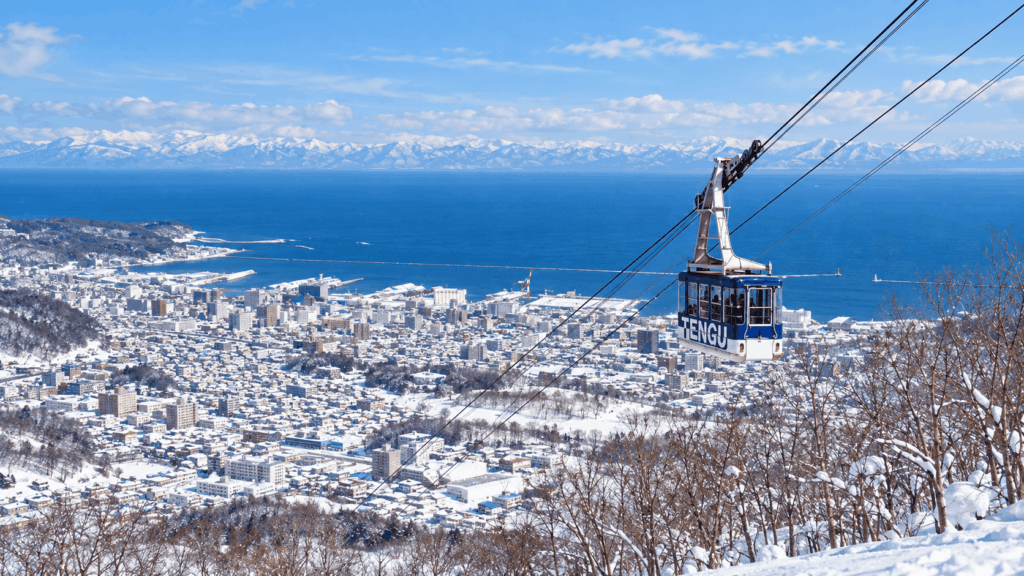
Two reassurances, though. First, the winter canal cruise is not an open boat: winter boats are fitted with canopies, heated seats and protective transparent coverings, so the 35–40 minute run is survivable even in February. Second, the Otaru Tenguyama Ropeway runs through winter, with the last ascent usually at 19:48 (earlier over New Year) — worth knowing if you are planning to end the day with the night view rather than the canal.
Kai’s tip: If you are packing for Otaru in winter, spend your money on footwear before you spend it on another jacket. I have guided people through the canal district in good down jackets and completely unsuitable shoes, and the jacket never once mattered. What mattered was whether they could cross a sloping side street without holding someone’s arm. Thick soles, deep tread, and something you would wear on a wet hiking trail will do more for your day than a warmer coat.
December vs February: Which Is Better for Otaru?
This is the decision most travellers are actually making, and it is usually framed as a question about cold. It is really a question about which version of winter you want, because the two months are lit differently.
December is early winter: illuminations, the Blue Canal, shorter queues, and a canal that may or may not be fully buried. February is deep winter: reliably established snow cover in most years, the Snow Light Path, and icy walking conditions. January is typically the coldest month on average. Choose December for atmosphere with less hardship. Choose February for the photograph you came for.
| Factor | December | February |
|---|---|---|
| Snow reliability | Variable. Snow that settles usually starts around mid-December, so early December is a gamble. | High. Snow cover is normally established and deep. |
| Temperature | Cold but not at its worst; averages around freezing by day. | Very cold and often icy; January is slightly colder on average. Daytime highs are around freezing. |
| Signature night event | Blue Canal (1 Nov – 31 Jan), sunset to 22:30, Asakusabashi to Chuo Bridge. | Otaru Snow Light Path (scheduled 6–13 Feb 2027), typically 17:00–21:00 in previous editions (2027 hours pending), canal and Former Temiya Line. |
| Crowds | Quieter overall, with spikes around weekends, Christmas and New Year. | Busiest around the Snow Light Path, which overlaps the Sapporo Snow Festival period. |
| Walking conditions | Mixed: fresh snow, some cleared pavements, ice forming. | Icier and more persistent; crossings and shaded stretches are the worst. |
| Best for | Winter mood without committing to February conditions; travellers who dislike crowds. | Snow scenery, night photography, event atmosphere. |
December: Blue Canal and Early-Winter Atmosphere
December’s case rests on two things: light and lower stakes. The Blue Canal turns the water between Asakusabashi and Chuo Bridge into a strip of blue from sunset until 22:30, running from 1 November through 31 January, and the warehouse façades are lit separately until the same hour. Because sunset in early December falls around 16:00, you can see the whole transition in the late afternoon and still be back in Sapporo for dinner.
The honest caveat is snow. Otaru’s own seasonal guidance notes that snow begins to settle and accumulate from around mid-December, which means a trip in the first ten days of the month can deliver bare pavements and grey water. Some years bring heavy early snow; others do not. December’s total snowfall figures look impressive on paper, but they are driven by the second half of the month. If a snow-covered canal is the entire point of your trip, December is a bet, and February is the hedge.
February: Snow Light Path and the Most Reliable Snow
February is when Otaru looks like the photographs. Snow sits on the warehouses, the canal edge disappears under it, and the Snow Light Path adds hundreds of small lights along the water and the Former Temiya Line — free to walk, and best experienced after dark rather than at 17:00 exactly when the first crowds arrive.
Two practical points that change how you plan the day. First, the event dates move each year, so check the current schedule rather than an old blog post; the 2027 edition is scheduled for 6–13 February. Second, the ropeway’s winter timetable is shorter than summer’s, with the last ascent around 19:48, and it runs a reduced schedule over New Year — so if you want both the canal and the view from Mt. Tengu, the evening has a hard ceiling.
There is also a winter forecast caveat worth knowing. Seasonal outlooks issued in autumn 2026 pointed to a milder winter with snowfall near or below normal on the Sea of Japan side. That is a forecast, not a promise, and Otaru can produce a heavy snow week regardless — but it is one more reason to treat February as the more reliable choice and early December as the uncertain one.
The Catch Nobody Mentions: Overlap and Crowds
The Snow Light Path usually coincides with the Sapporo Snow Festival, scheduled for early February (4–11 February in 2027). That overlap is good news for a combined itinerary and bad news for everything else: hotel rates in both cities rise, the rapid trains between Sapporo and Otaru fill, and the canal promenade between Asakusabashi and Chuo Bridge becomes difficult to walk slowly, let alone photograph without strangers in frame.
There is a separate catch in February. The Blue Canal finishes on 31 January. If you booked February specifically for the blue-lit water, your dates are too late for that illumination.
The Best Time of Day in Otaru: Stay Until Dusk
Season decides what Otaru looks like. Time of day decides whether you actually see it change.
The canal’s lighting is on a sunset switch: the 63 gas lamps along the promenade come on at sunset and stay lit until midnight, and the warehouse façades on the far bank are illuminated until 22:30. Sunset in Otaru falls around 16:00 in early December, around 16:40 in late October, and around 17:20 by late February. So the canal has a built-in daily event, and most day-trippers miss it by leaving at 15:00.
My clearest memory of this is not a plan that worked but a plan that failed. The night cruise was sold out, so we took the last afternoon departure instead — and it turned out to be the better ticket. Over the 35 to 40 minutes of the run, the sky went from flat grey to deep blue, and the gas lamps came on one stretch at a time while we were still on the water. By the time we docked at Chuo Bridge, the canal looked like a different place from the one we had boarded at. Had we booked the fully dark departure, we would have seen the result without ever seeing the change.
| Time | What you get | Crowds | Photography | Best for |
|---|---|---|---|---|
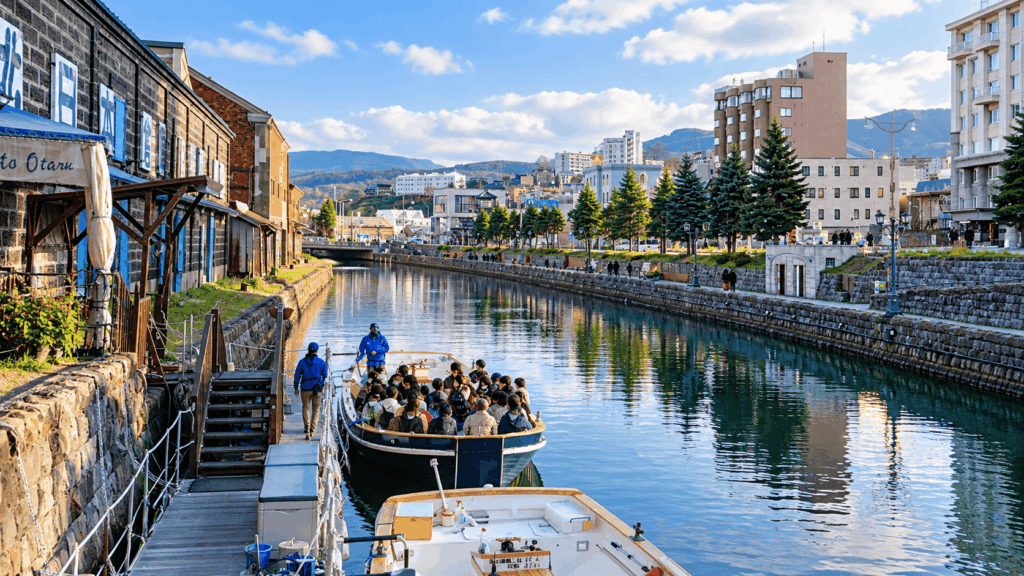
| Daylight (10:00–15:00) | Clear views of the warehouses and canal scenery; easiest walking | Heaviest, especially mid-morning tour arrivals | Flat light; good for detail, poor for atmosphere | First-time orientation, families, cold-averse travellers |
| Dusk (roughly 30–60 min around sunset) | The transition: gas lamps igniting, warehouse lights appearing, sky still holding colour | Moderate, then thins out after the light goes | The best window of the day, in every season | Anyone with one evening in Otaru |
| After dark (time varies by season) | Full illumination, reflections, quiet streets | Light, except during Snow Light Path dates | Strong, but you miss the change itself | Travellers staying overnight, night cruise passengers |
One practical consequence: the dusk departures and the night departures are the ones that sell out. Tickets can be bought online until an hour before sailing, and at the counter until fifteen minutes before, but the operator itself flags nights, weekends and holidays as its busy periods. If the timing of the canal matters to you, check the current timetable, decide which canal cruise time is best for you, and book that specific departure rather than deciding on the day.
Should You Stay in Otaru After Dark?
For travellers based in Sapporo, this is the real question behind “best time to visit”. Otaru is roughly 30 to 35 minutes away by rapid train, which makes leaving easy — and easy is the problem. But before you rush back, it is worth considering what else Otaru at night has to offer beyond the canal.
If you only want the canal, leaving around 16:30 can be sensible in early winter, after the light has changed. In summer, sunset comes much later, so a 16:30 departure would miss dusk entirely. If you want the canal and the view from Mt. Tengu, the arithmetic changes. The Otaru Tenguyama Ropeway is a short bus ride from the station area plus a few minutes in the cable car, and in winter the last ascent is normally at 19:48 with the last descent at 20:00, but shorter hours apply over New Year. Working backwards, that means reaching the base station by about 19:00 to have any time at the top — which in turn means you cannot spend 17:00 to 18:30 lingering on the canal and then decide.
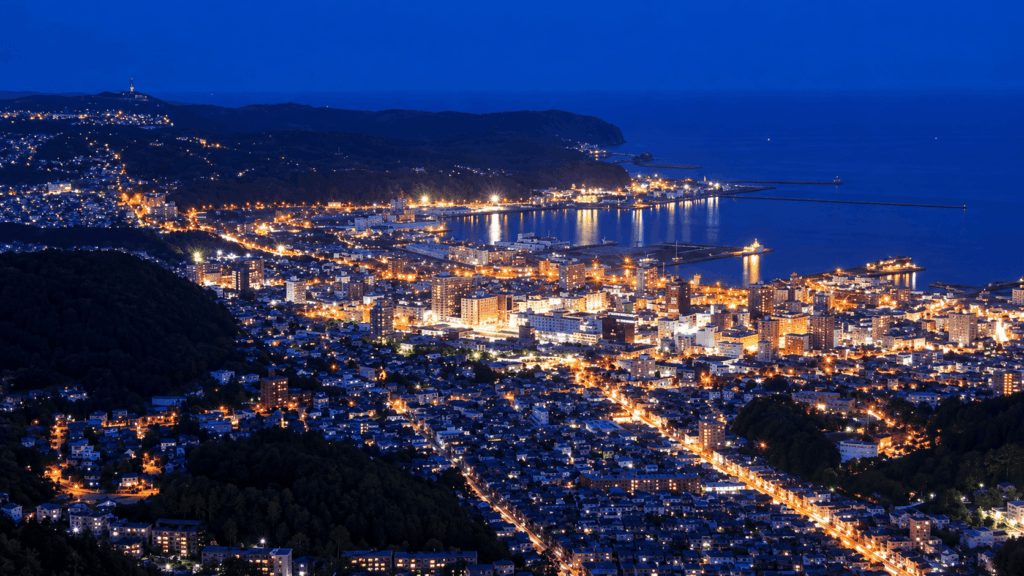
Kai’s tip: I have made the mistake of treating Mt. Tengu as a spontaneous last stop. We reached the top just after 20:00, and the shop and café were already in closing-down mode — we had minutes, not the half hour of browsing we had assumed. The lesson is not a fixed closing time, because those hours shift between the summer and winter seasons; it is that the ropeway’s last ascent and the café’s last orders are two different deadlines, and the earlier one governs your evening. Check both before you commit to a late canal visit.
If you want both the canal at dusk and the mountain after dark, within a single Sapporo day trip, the honest assessment is that you are trying to compress three separate timetables — train, boat, ropeway — into one afternoon. That is exactly the situation where a guided or private day trip from Sapporo stops being a luxury and starts being a way to avoid spending your evening doing arithmetic on a station platform.
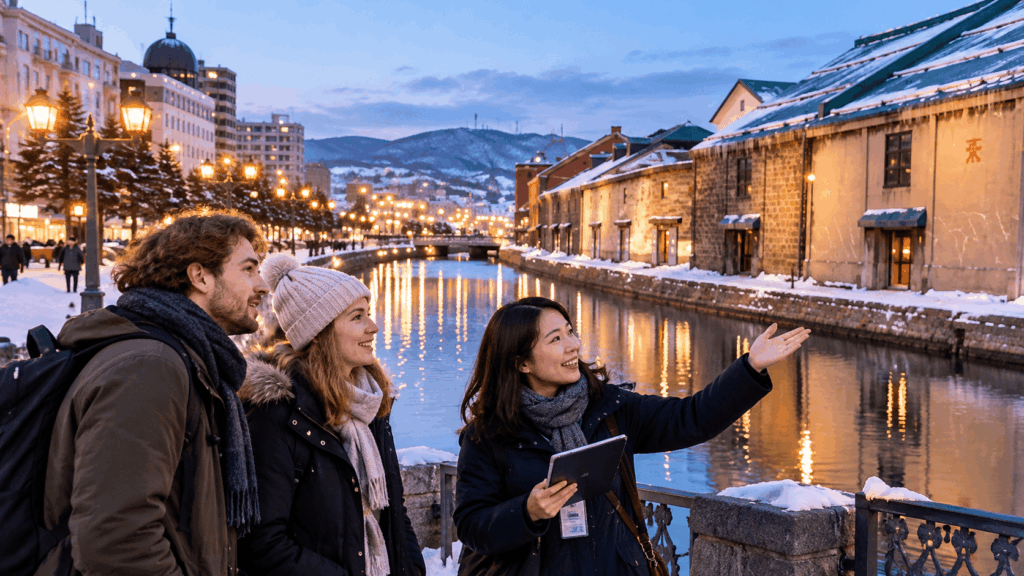
If you fall into that camp — you want Otaru’s winter canal after sunset but would rather not manage icy transfers and the return journey yourself — a private tour with flexible timing is worth considering. The key is confirming that your preferred evening stops can actually fit the itinerary.
Why I’d book this one
- Fewer winter transport decisions: Private vehicle transport and hotel pickup reduce the need to coordinate trains and local transfers between Sapporo and Otaru.
- More flexibility around the canal lights: The itinerary can be discussed around your priorities, potentially allowing time for winter illuminations when operating. Confirm the exact sunset timing and evening route before booking.
- Clearer expectations before committing: This is a newer listing with limited traveler review history, so check the latest feedback, pickup arrangements, and exclusions. Canal cruises and Mt. Tengu ropeway tickets should not be assumed to be included.
See available dates, start times, and itinerary details for this private winter Otaru tour.
What to Wear in Otaru by Season
Otaru’s clothing problem is not the air temperature. It is that you will be standing still near water, in wind, after the sun has gone, and the temperature you dressed for at 11:00 is not the temperature you will be in at 17:00.
| Season | What matters most | The mistake to avoid |
|---|---|---|
| Summer | Breathable layers, something light for after sunset | Packing only T-shirts; the canal at 19:30 is not the canal at 13:00 |
| September | A packable outer layer for the boat and the waterfront | Judging the day by the midday temperature on land |
| October–November | Warm mid-layer plus windproof shell; hat for evenings | Underestimating the wind on the North Canal and the promenade |
| December | Insulated coat, gloves, hat; shoes with real tread | Fashion boots with smooth soles on wet, freezing pavements |
| February | Full winter layers plus grip; hand warmers; something over the ears | Assuming heated boats and indoor shops mean you can skip the footwear |
On the boat, the winter setup helps more than most people expect: during the winter season the cruises use covered boats with heated seats and protective clear panels, so the cold is a nuisance rather than a reason to skip it. On land, nothing helps except soles. The canal promenade itself is usually walkable; the trouble is the side streets, the bus stops and the shaded stretches where meltwater refreezes overnight.
Before You Go: Small Details That Change the Day
- Check which company you are booking. The official Otaru Canal Cruise warns that a similarly named operator offers a comparable service. Confirm the company name before paying, especially if you are booking on the day at a counter.
- Cruises can be cancelled. Wave and weather conditions occasionally stop sailings in winter, so do not build the day around a single departure without a fallback.
- The ropeway stops for wind. Mt. Tengu is exposed; suspensions happen. Have a canal-and-street plan in reserve.
- Tickets go on sale late. Online until an hour before departure, at the counter until fifteen minutes before — and extra seats do sometimes appear the day before a sold-out sailing.
- Know your last train. Sapporo–Otaru rapid services are frequent, but the last departure is earlier than most people assume. Check it before you book a late dinner.
- Event dates move. Snow Light Path, the Ushio Festival and the Blue Canal period are all annual and all subject to confirmation. Verify the current year’s dates before locking in flights.
Visiting Mt. Tengu independently? You can check Mt. Tengu ropeway ticket options and redemption details on Klook. Confirm the operating status and last ascent before settling on your evening plan.
Frequently Asked Questions
Is December a good time to visit Otaru?
Yes, for atmosphere rather than guaranteed snow. December brings the Blue Canal illumination along the stretch between Asakusabashi and Chuo Bridge, the city’s winter lights, and noticeably thinner crowds than February. What it does not reliably bring is a snow-covered canal in the first half of the month: settled snow in Otaru usually builds from around mid-December onward. If you are travelling in the first ten days, treat deep snow as a bonus rather than the plan.
Is February a good time to visit Otaru?
It is the strongest month for the classic winter image. Snow cover is normally established, and the Otaru Snow Light Path — scheduled for 6–13 February in 2027 — lights the canal and the Former Temiya Line in the evenings. The cost is real, though: February is very cold and often icy, although January is marginally colder on average; event dates coincide with the Sapporo Snow Festival period, which pushes up accommodation prices and fills the trains between the two cities.
What is the best month to see snow in Otaru?
February, if snow coverage is the priority. January is also deep, but the Snow Light Path and the most settled conditions fall in February. December is a poorer bet despite heavy snowfall totals for the month as a whole, because much of that snow arrives in the second half. In practice: early December is uncertain, late December is usually white, and February is much more reliable, though no individual trip can guarantee snow depth.
Is Otaru better in winter or autumn?
They are answering different questions. Winter wins on visual impact — snow on the stone warehouses, gas lamps at dusk, the Snow Light Path — and loses on comfort, with ice underfoot and a genuine risk of slower trains. Autumn wins on walking: September averages around 22°C by day, October around 16°C, and the pavements are clear. If you have limited tolerance for cold, autumn is not a compromise; it is the better trip. If you came to Japan for a winter scene, autumn will not substitute for it.
What is the best time of day to visit the Otaru Canal?
Dusk — roughly the 30 to 60 minutes around sunset. Otaru’s 63 canal gas lamps switch on at sunset (the promenade stays lit until midnight, the warehouse façades until 22:30), so the canal visibly transforms rather than simply turning dark. Sunset is around 16:00 in early December and around 17:20 by late February. If you can only manage one visit, aim to be on the promenade or on the water as the lamps come on, not after.
Do you need special shoes for Otaru in winter?
You need grip, not a specific product. The canal promenade is generally walkable, but side streets, bus stops and shaded stretches hold ice, and smooth-soled fashion boots are genuinely hazardous. Thick soles with deep tread — anything you would wear on a wet trail — will change your day more than an extra layer will. This matters most in February, and it matters at night, when refrozen meltwater is harder to see.
Which Season Should You Choose?
Here is the decision, split by what you actually want from the trip.
Choose winter (February) if the snow-covered canal is the reason you are coming, you are comfortable being cold for several hours at a time, and you would rather deal with ice than with a canal that looks ordinary. Book accommodation early if your dates overlap the Snow Light Path, and plan the day around a dusk arrival rather than a midday one.
Choose December if you want winter mood without February’s intensity — the Blue Canal, the illuminations, shorter queues, an easier walk to the station. Accept in advance that early December may be grey rather than white, and that the Blue Canal ends on 31 January, so a February trip will miss it entirely.
Choose autumn (mid-October to early November) if you want colour and comfortable walking in the same trip. This is the best window for the Former Temiya Line and Temiya Park, and the canal promenade is pleasant for hours rather than minutes. September works equally well if foliage is not a priority and you simply want the calmest, most walkable version of the town.
Choose summer (late July) if you are travelling with people who would be miserable in the cold, or you want the Otaru Ushio Festival. Be clear-eyed that you are choosing a pleasant Hokkaido port town over a winter postcard.
Whatever the season, protect the evening. Otaru rewards travellers who stay until the lights come on and punishes those who treat it as a morning excursion. If you take one thing from this guide, take the timing: arrive early afternoon, walk Sakaimachi Street and the canal while it is light, and be at the water at sunset.
If Otaru is a one-day side trip from Sapporo and you would rather not build the train-boat-ropeway timetable yourself — particularly in winter, when ice and shortened opening hours compress the day — it is worth comparing guided day-trip options before you commit to a route.
For first-time visitors who do not mind the cold, winter would still be my personal pick. But I would not recommend it to anyone without proper footwear and a plan that ends at dusk rather than at lunchtime.

Hi, I’m Kai. I’m a Tokyo-based travel writer, tourism industry insider, and the author of a published guidebook for international visitors to Japan. With over 10 years of professional experience at a leading Japanese tourism company, my mission is to help you skip the tourist traps and navigate Japan’s best destinations like a local. I believe the perfect day trip is like a traditional kaiseki meal: a beautiful balance of precise planning and unforgettable seasonal discovery. When I’m not out conducting field research, you’ll usually find me drafting new itineraries with one of my favorite fountain pens!