
Otaru is compact enough that the honest answer surprises people: for most first-time visitors based in Sapporo, one full day is enough for central Otaru. Sankaku Market is next to Otaru Station, the canal is roughly a ten-minute walk away, and the Sakaimachi shopping district stretches farther south. A single well-timed day still covers them without rushing.
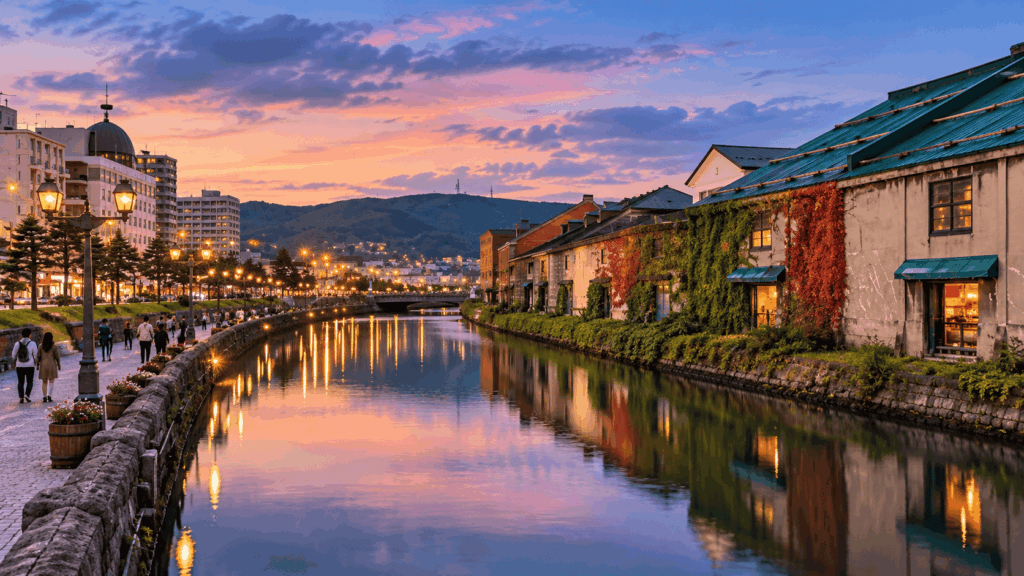
Stay overnight only if you want something a day trip cannot give you: the market in the morning without a train to catch, the canal around sunset and after dark, and enough time on day two for Mt. Tengu or the Shukutsu coast. Two days spent repeating the same three sights is not a better trip — it is the same trip with a hotel bill. This itinerary is built around when each place works best, not how many places you can add.
Quick answer:
- Best for one day: first-time visitors staying in Sapporo, travelers focused on the canal, Sakaimachi and seafood, and anyone who would rather not change hotels for a single night.
- Best for two days: photographers and couples who want the canal at dusk, food-focused travelers who would rather linger at the market, anyone hoping to take a night canal cruise, families adding the aquarium, and travelers willing to spend day two at Mt. Tengu or Shukutsu.
- Probably not worth two days if: the canal, Sakaimachi Street and the music box museum are your whole list, or your Hokkaido schedule is already tight.
Prefer a guided one-day visit? Otaru is easy to explore independently, but a customizable private walking tour with a licensed guide is worth comparing if you want local history and help choosing your stops. Check current prices, available start times and traveler reviews for this private Otaru guided tour before deciding whether to go on your own.
How Many Days Do You Need in Otaru?
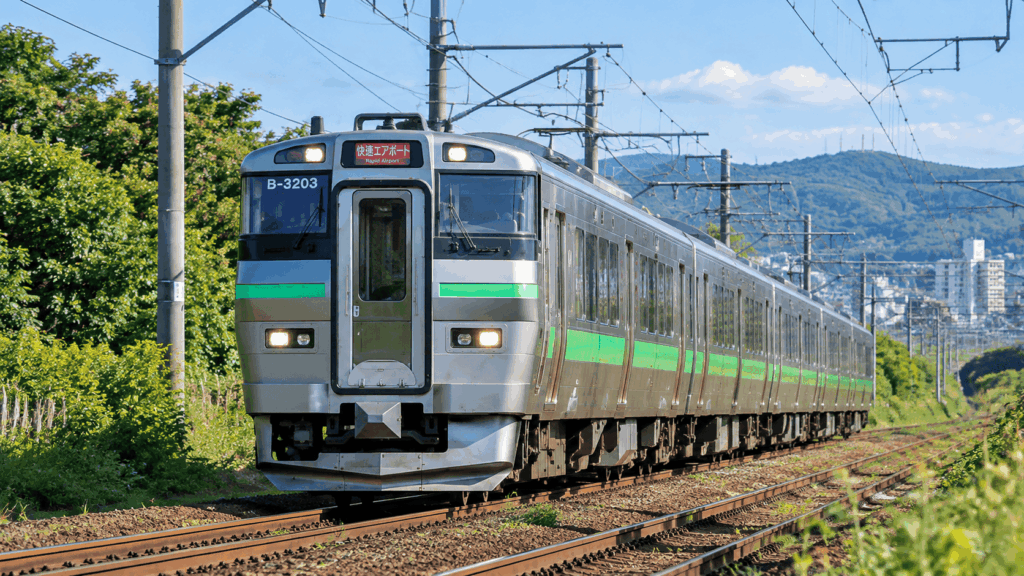
Central Otaru is a walkable cluster rather than a spread-out sightseeing city. From Otaru Station it is one to two minutes to Sankaku Market and roughly ten minutes to the canal; the Sakaimachi shopping area continues farther south, with the Marchen Crossroads end closer to Minami-Otaru Station. Sapporo is roughly 30 minutes away by rapid train, which is exactly why the day-trip question comes up so often. The geography is also why a day works: you are not losing hours in transit between stops.
What a single day does not give you is time at the right hour. The market is a morning place, Sakaimachi is an afternoon place that closes earlier than most visitors expect, and the canal is at its best from late afternoon into the evening. Fit all three into one day and the schedule works — but only in one order. Add a second day and you are not adding new central sights; you are buying the ability to be in each place at the hour it is actually good.
| Factor | One-day trip from Sapporo | Overnight stay / two days |
|---|---|---|
| Central attractions | Comfortable in one full day, in the right order | Split across two unhurried half-days |
| Sankaku Market breakfast | Doable, but means an early train or skipping it | Walk over near opening without checking a timetable |
| Sakaimachi shopping | Must be finished by mid-afternoon | Shop in the afternoon with the evening still ahead |
| Canal at sunset and after dark | Possible, but your evening is set by the return train | The single strongest reason to stay |
| Canal cruise flexibility | Tied to one departure that fits your train | Can target a sunset or night departure instead of any slot |
| Mt. Tengu or outer Otaru | Usually the thing you drop | Realistic day-two anchor |
| Pace | Efficient, timed, low slack | Slower, with buffer for weather and queues |
| Hotel change | None | One move, plus luggage handling on arrival day |
| Best for | Short Hokkaido trips and efficient travelers | Slow travelers, photographers, families, food-first trips |
One Day vs Two Days in Otaru: Which Is Better?
Neither is better in the abstract; they buy different things. A day trip buys coverage. An overnight buys timing — the market before the tour groups arrive in force, the canal in the hour when the gas lamps come on, and a dinner that is not scheduled around a train back to Sapporo.
Be honest about what the extra day is not. Otaru’s canal district is smaller than many first-time visitors picture from photographs. What I notice most when walking people down to the water is not disappointment but recalibration: it is a short stretch of stone warehouses and water, not an afternoon-long attraction. That is an argument for seeing it at the right hour, and against booking a second night purely to look at it twice.
What actually justifies two days is geography. Mt. Tengu sits above town on one side; the Otaru Aquarium and the Shukutsu coast sit out along the sea in the other direction. Either one eats a half-day once you include the bus. Put one of them on day two and the second day has a purpose that has nothing to do with repeating Sakaimachi.
If you are leaning toward one day, the practical problem is not what to see but the order and the transfers. That is a solvable problem, and it is worth being clear about before you book anything.
If you are comfortable walking but would rather spend your limited time learning about Otaru than working out every stop yourself, a private licensed-guide tour is the guided option worth comparing. It is not necessary for seeing the main sights, and it is not a chauffeur service — the value is in the local context and a route tailored to your interests.
Why I’d book this one
- Local knowledge that adds context: Recent traveler reviews highlight the guide’s knowledge and explanations, especially useful if Otaru’s port history, historic buildings and local culture interest you beyond taking photographs.
- A route shaped around your priorities: This customizable walking tour can focus on places such as the canal, Sankaku Market, glass shops and the music box museum. That is more useful than following a fixed list if you care about some stops more than others.
- A manageable guided visit: The tour offers a guided walking experience rather than an all-day vehicle charter. Check the available duration, meeting arrangements, cancellation terms and inclusions before booking. If sunset at the canal matters, confirm whether the timing works or plan to return independently afterward.
See live availability, tour durations and recent traveler reviews for the customizable Otaru private walking tour. If you prefer exploring independently without guided commentary, the one-day route below remains a complete alternative.

Day 1 Morning — Start at Sankaku Market, but Deal With Your Luggage First
Here is the whole two-day shape before the detail, so you can see why the sequence is what it is:
| Time | Stop | Why this time works | Key caution |
|---|---|---|---|
| Early morning | Sankaku Market | Closest to Otaru Station; the natural first stop off the train | Narrow aisles, queues at popular counters, shop hours vary |
| Late morning | Short orientation walk from the station toward the canal | Gets you oriented while the market crowds thin | Keep it brief — the proper canal visit is at sunset |
| Late morning to mid-afternoon | Sakaimachi Street | Enough time for sweets, glass and music boxes before closing | Do not leave shopping for late afternoon |
| Late afternoon | Buffer time or a cafe stop | Absorbs queues, rain or slow shopping | Keep it flexible rather than booking it solid |
| Sunset to evening | Otaru Canal, optionally by cruise | The hour the lamps and reflections matter | Cruise departure times and weather |
| Evening | Dinner near the canal or station | No train to catch if you are staying | Restaurant hours vary; do not assume late service |
| Day 2 morning | Mt. Tengu or Shukutsu and the Otaru Aquarium | Both are outside the central walk and need their own half-day | Ropeway operating seasons and aquarium seasonal hours |
| Day 2 afternoon | One remaining central stop, then return | Lets you finish unhurried and still get back before dark | Last-minute shopping is better done on day one |
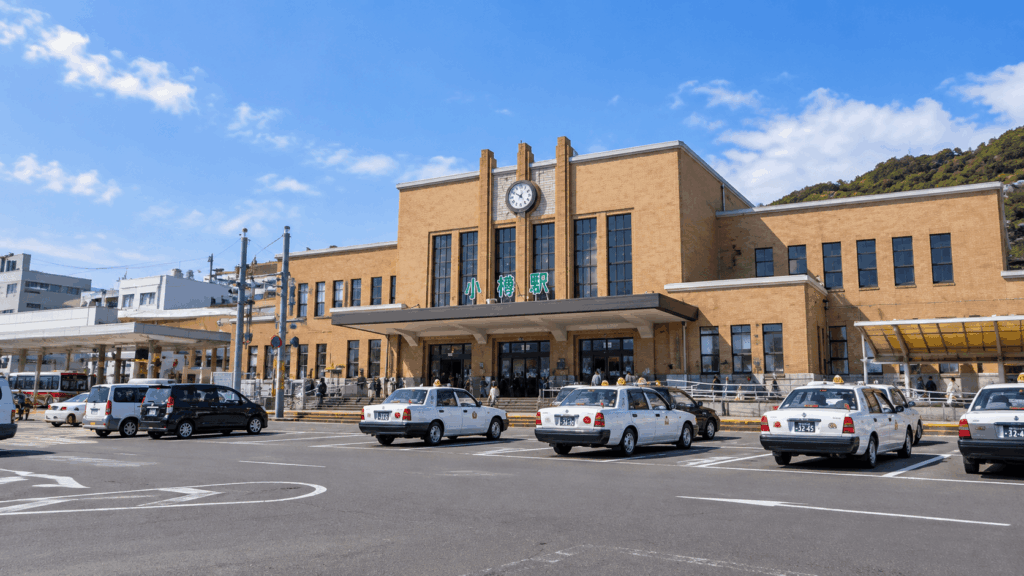
Sankaku Market is the right first stop for a simple reason: it is one to two minutes from the station exit. It is a covered market roughly 200 meters long, with aisles only about two meters wide, lined with seafood stalls and small eateries. The market itself opens around 6:00 and runs to about 17:00, with restaurants generally from 7:00 — but individual shops set their own hours, and not every counter is open at the earliest hour. Check the shop you actually want rather than arriving at dawn for a particular bowl.
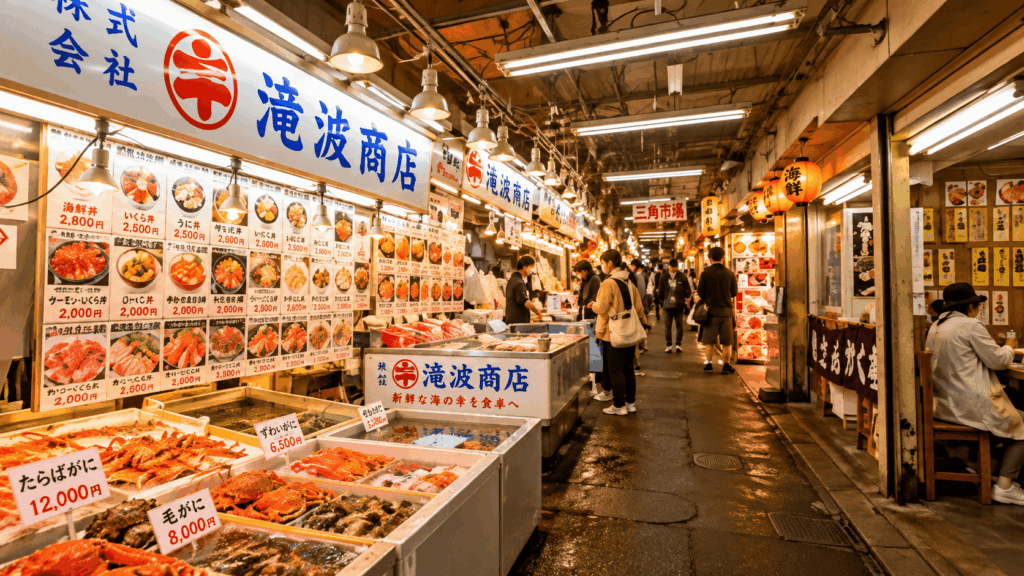
Breakfast here is usually framed as a seafood bowl, and uni and ikura over rice is the standard order. If you want something less rich at that hour, grilled fish is the better call — shima hokke in particular is a good counterpoint to a heavy bowl, and it is what I would order if I were eating here before a long walking day.
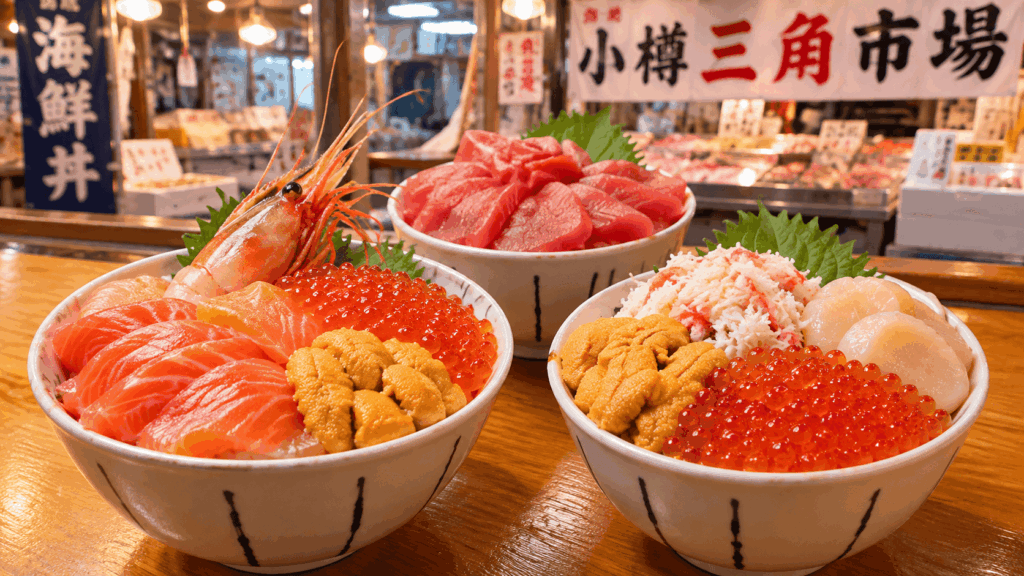
Kai’s tip: The most avoidable mistake I see here is a full-size suitcase being wheeled down the middle of the aisle. The market is narrow, busy, and full of people stopping to look at tanks and display cases — a large bag turns a five-minute walk into a negotiation. Leave it at your hotel if you are staying, or use a coin locker at Otaru Station first. Large lockers are limited and fill up, so treat that as a morning task rather than an afterthought. The market is a one- to two-minute walk from the station, so dropping the bag costs you almost nothing.
The other timing point is that popular counters can involve a wait once the morning trains arrive. Going early helps with the queue but not with shop hours; going slightly later helps with shop choice but not with crowds. There is no perfect slot, which is exactly why staying overnight makes the morning easier rather than longer.
Day 1 Late Morning to Afternoon — Explore Sakaimachi Before Shops Begin Closing
Sakaimachi Street is the part of an Otaru itinerary most likely to go wrong, and it goes wrong in a predictable way: people leave it for late afternoon because it looks like a shopping street, and shopping streets in big cities stay open. This one does not.
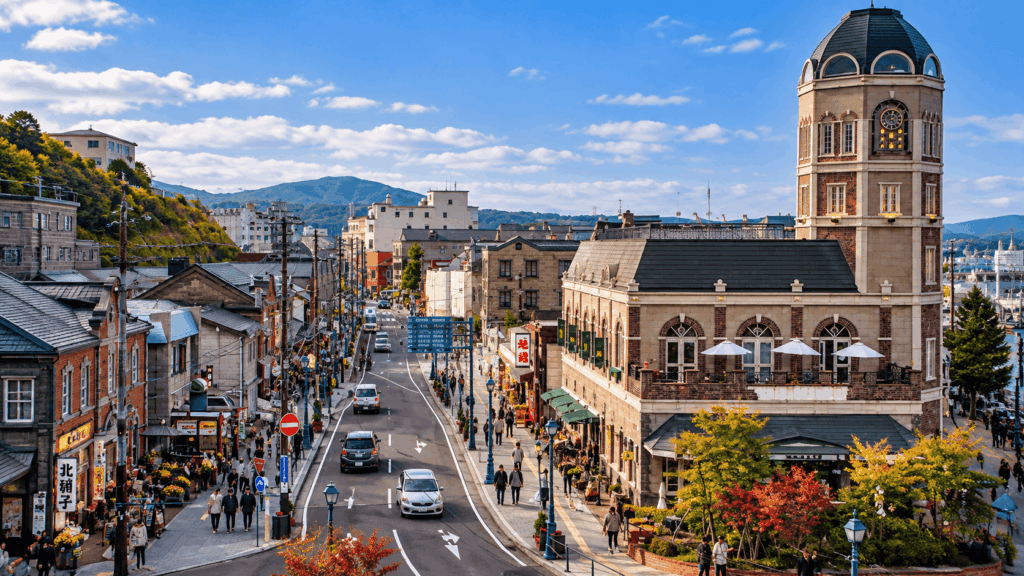
As of October 2026, the anchors along the street close around 18:00 — LeTAO Main Store at 9:00–18:00 with its cafe taking last orders at 17:30, Rokkatei Otaru at 10:00–18:00, and Kitaichi Glass at 9:00–18:00. The Otaru Music Box Museum is open 9:00–18:00 with free admission to the main building, though last entry can be earlier. Smaller shops and cafes can close sooner, and hours shift with the season, so check the specific shop rather than assuming the whole street runs to 18:00.
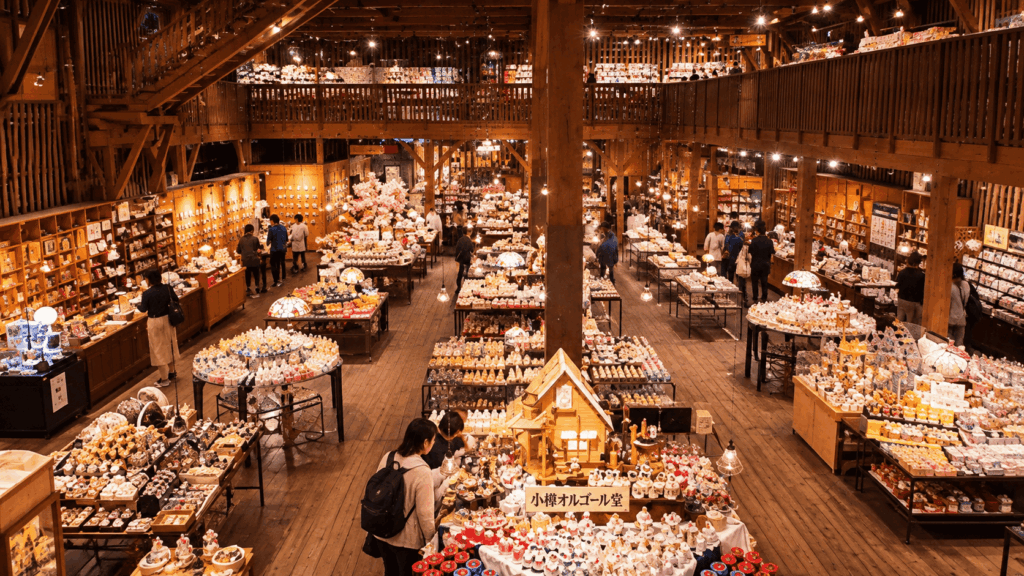
That matters because the street rewards browsing rather than sprinting. The stretch runs from the canal area toward the music box museum, with LeTAO at Marchen Crossroads and Kitaichi Glass a short way along. If you arrive at 16:30 with a list of four shops, you will be walking into closing staff rather than a shopping street.
Kai’s tip: I plan Sakaimachi for early afternoon and treat anything after 17:00 as a bonus, not as the plan. When I walk guests through, we buy the things people actually came for — sweets, glass, music boxes — before we stop for photos, because the photo stops are what eat the time. On weekends and holidays the street slows down further: groups stop in the middle of the pavement for photographs, and a ten-minute walk can take twice that. Finishing before the shops start closing is the difference between a relaxed afternoon and a rushed one.
One practical shortcut: the southern, Marchen Crossroads end of Sakaimachi is roughly a five-minute walk from Minami-Otaru Station, while walking there from Otaru Station takes considerably longer than ten minutes. If you are heading back to the canal afterward, allow another ten to fifteen minutes on foot — or accept that this is the point in the day where a taxi earns its fare in winter.
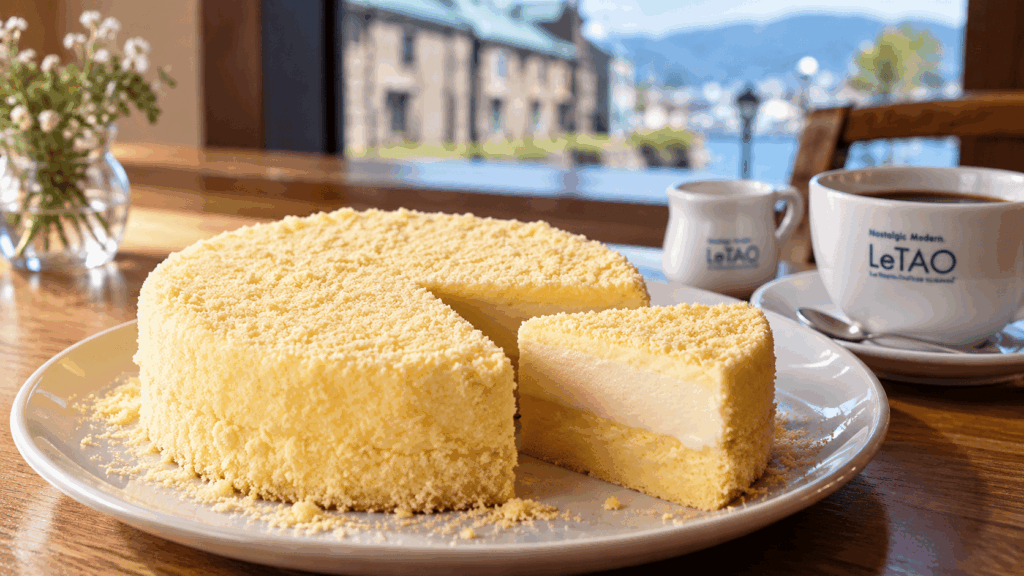
Crowd tolerance is the variable to be honest about. If you dislike being in a stream of people, go earlier in the afternoon and accept that some cafes will be busier at lunch. If you mainly want photographs of the buildings, the same early-afternoon window works, with fewer people in the frame and better light than at dusk.
Day 1 Late Afternoon — Save Otaru Canal for Sunset
The canal is the one part of Otaru where the hour matters more than the plan. Walk it at midday and you get stone warehouses, water and a lot of other visitors in flat light. Walk it as the gas lamps come on and the same short stretch does the work the photographs promised.
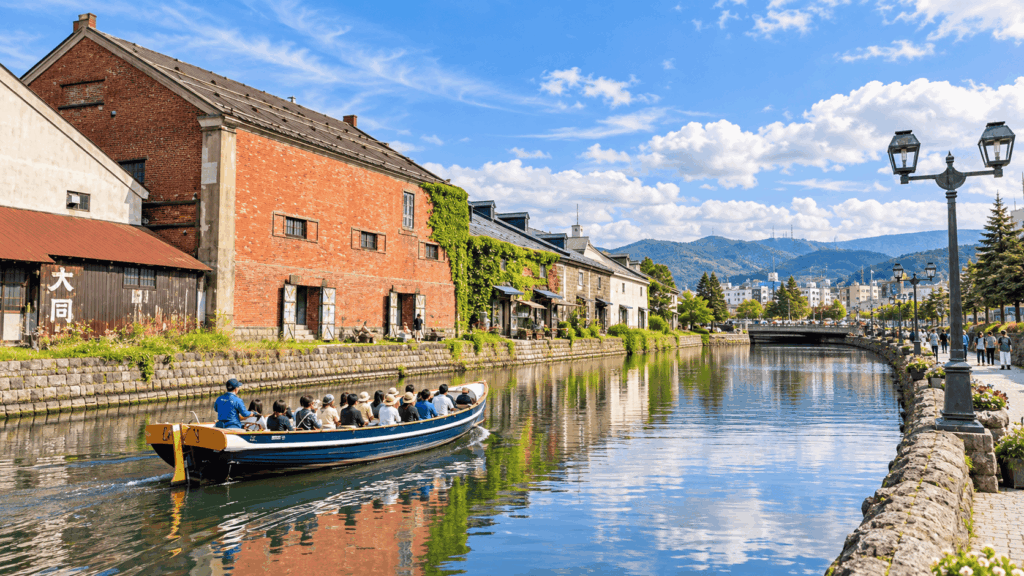
The famous warehouse-lined promenade between Asakusa Bridge and Chuo Bridge is only a few hundred metres long; the full Otaru Canal extends for about 1.1 kilometres. It is an easy walk from Otaru Station — eight to ten minutes — and it connects naturally to Sakaimachi Street at the Asakusa Bridge end. That geography is why the sensible sequence is market in the morning, Sakaimachi in the afternoon, and the canal last, rather than shuttling back and forth to catch the canal twice.
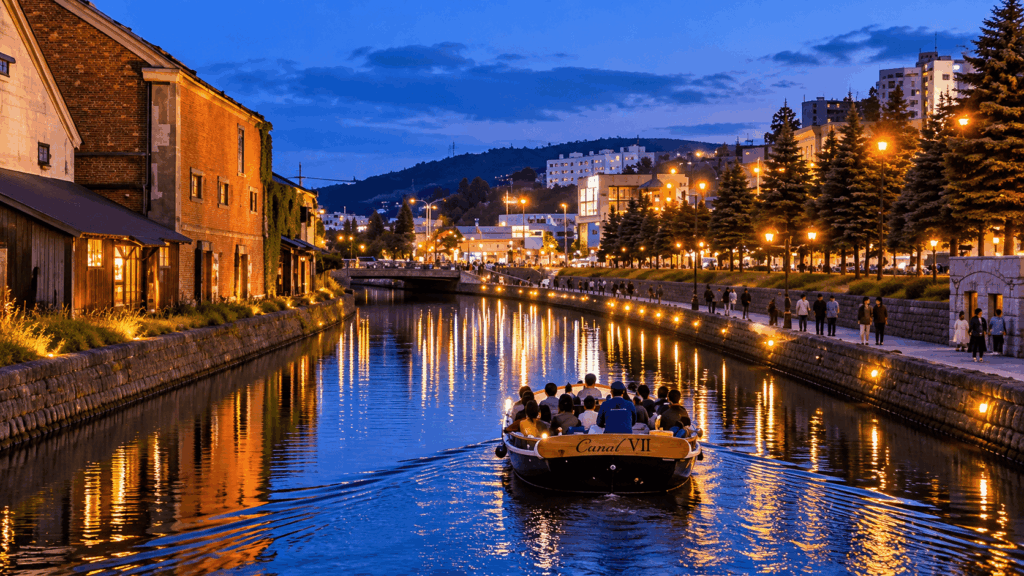
Sunset timing shifts enormously across the year. In midwinter the light is going by late afternoon; in June it can still be bright well into the evening. Rather than build the day around a fixed clock time, plan to be at the canal roughly an hour before sunset and stay through the blue hour. That window is also when the lamps read best against the sky.
Should You Book an Otaru Canal Cruise?
The cruise is a 35 to 40-minute loop departing from beside Chuo Bridge, and it is the easiest way to see the north canal and the warehouse fronts from the water. At the time of writing, day cruises run roughly every 30 minutes from 10:00 to 16:30, with night departures from around 17:00 to 19:00. Adult fares are around ¥1,800 on day cruises and ¥2,000 at night, with children around ¥500. Schedules and prices change with the season, so confirm the departure you want before building the day around it. For a breakdown of the differences, see our guide to day, magic hour and night Otaru canal cruises.
On reservations, the honest answer is narrower than most guides suggest. Tickets are sold online up to about an hour before departure and at the counter up to 15 minutes before, so a same-day walk-up is genuinely possible. The operator itself recommends booking ahead for weekends, long holidays, night cruises and larger groups. In practice: if a night departure is the reason you are staying overnight, book it. If the cruise is a nice-to-have, take your chances and keep the walk as the fallback — the canal does not require a ticket.
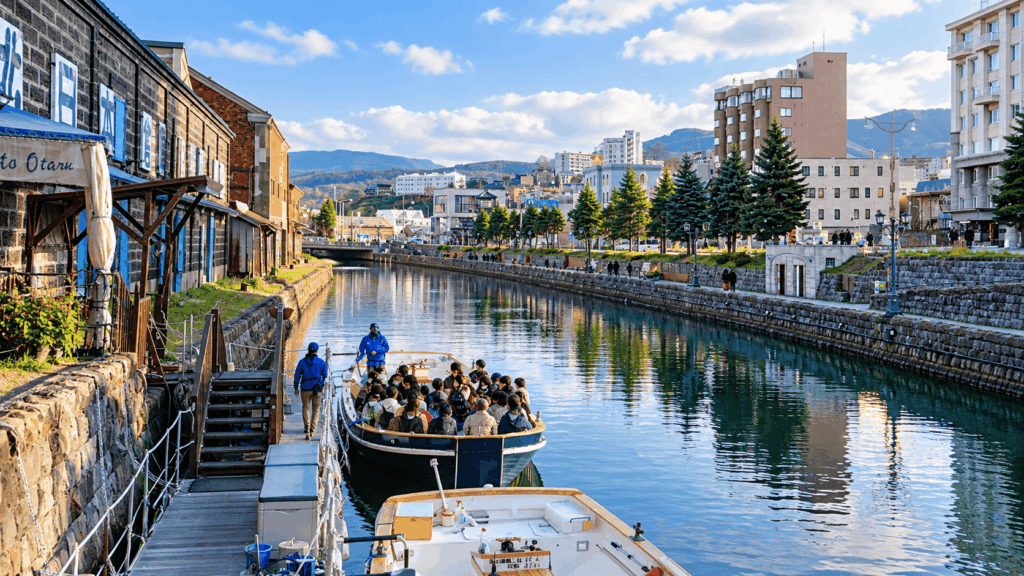
Two operational details worth knowing: boarding is at the Chuo Bridge ticket center, and you are asked to assemble about 15 minutes before departure. Cruises can also be cancelled in bad weather, which is another argument for not making a single night departure the only plan for your evening.
What to Wear Around the Canal at Night
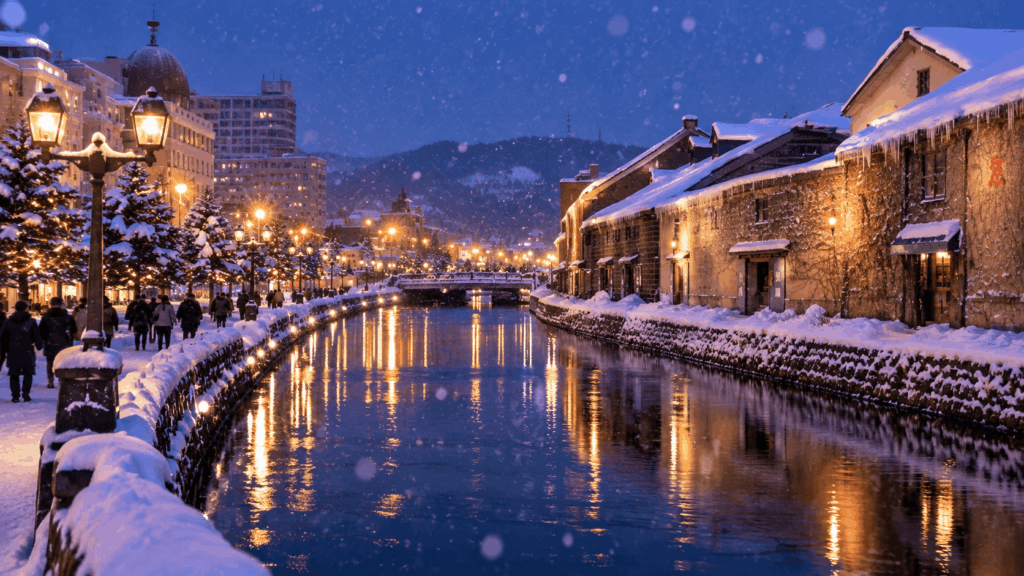
The canal opens toward the sea, and the wind comes with it. The gap between the afternoon temperature in the streets behind the station and the feel of the waterfront after dark is bigger than most visitors budget for, and it is widest from late autumn through early spring.
Kai’s tip: The piece of advice I give most often here is to dress for the evening, not for the afternoon. People arrive in Otaru in a coat that was fine at midday, then spend the best light of the day with their hands in their pockets. A scarf and a proper outer layer change the experience completely — you can stand still and watch the lamps come on instead of walking briskly to stay warm. I would rather carry an extra layer all afternoon than cut the canal short at the hour it finally looks like itself.
This is not a claim about any particular night’s weather. It is a pattern worth planning for: the waterfront is the coldest, windiest part of a very walkable town, and it is the part you will most want to linger in.
Day 1 Evening — Dinner and the Real Advantage of Staying Overnight
If you are staying, the evening is where the extra money actually goes. Not into another attraction, but into not watching the clock. Dinner near the canal or back toward the station, a last walk past the lamps, and no calculation about which train gets you back to Sapporo at a reasonable hour.
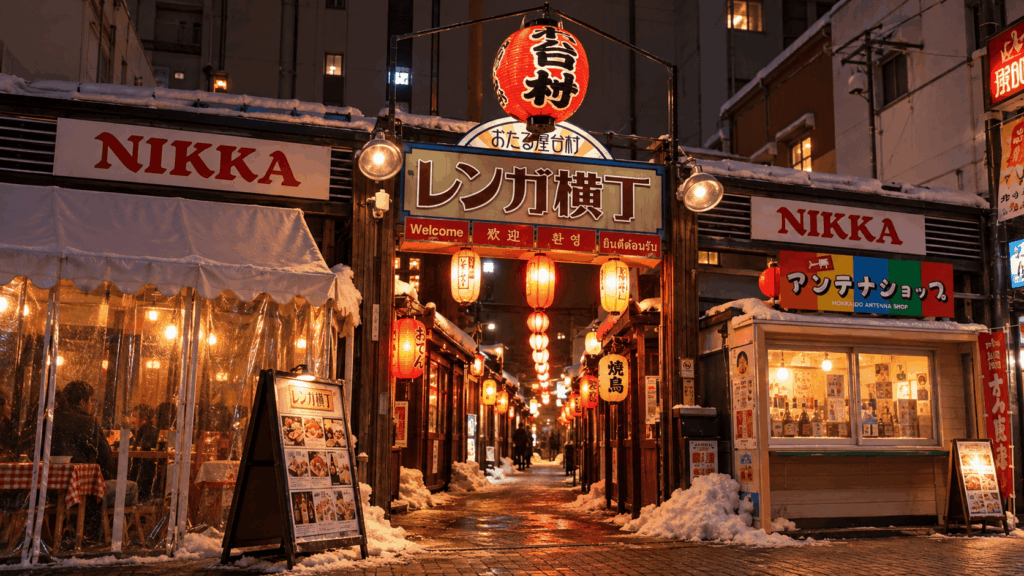
If you are day-tripping, be realistic about the trade. Trains between Otaru and Sapporo run frequently through the day, but the last service is earlier than visitors from larger cities tend to assume. Decide which train you are taking before you sit down to dinner, then work backward. An early dinner near the station is a perfectly good ending; a slow dinner followed by a sprint is not.
Restaurant capacity is the other constraint. Central Otaru is not a big city, many restaurants are small, and weekend evenings fill up. If a particular dinner is part of the plan, book it; if not, keep the canal-to-station corridor as your search area and stay flexible. I would not build an itinerary around one specific restaurant in a town this size without checking its hours and closing days first.
Day 2 — Add One Place You Cannot Comfortably Fit Into a Central Otaru Day Trip
The test for a second day is simple: can you name something that is not within the central walk? If the answer is no, you do not need two days. If it is yes, pick one of the two options below rather than trying both.
Option A — Mt. Tengu for Views and a Slower Second Day
Mt. Tengu sits above the town and is reached by the Otaru Tenguyama Ropeway, with buses from Otaru Station taking roughly 20 minutes for around ¥240. Check the departure frequency for your date. The ropeway ride is short — about five minutes — and departs roughly every 12 minutes. As of October 2026, adult round-trip ropeway fares are ¥1,800 in summer and ¥2,000 in winter, and the view over the city, the bay and the Sea of Japan is the reason to go.
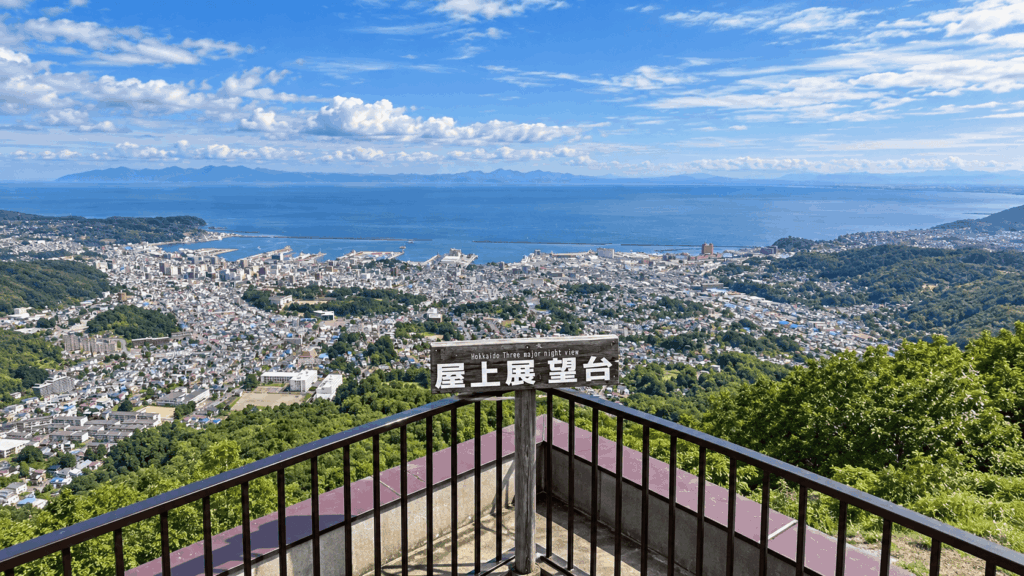
Operating periods are the part most itineraries get wrong. The published operating seasons are 25 April to 3 November 2026 and 28 November 2026 to 28 March 2027, with a gap in between when the ropeway does not operate. Hours also shorten in winter. Check the current calendar before you commit a morning to it.
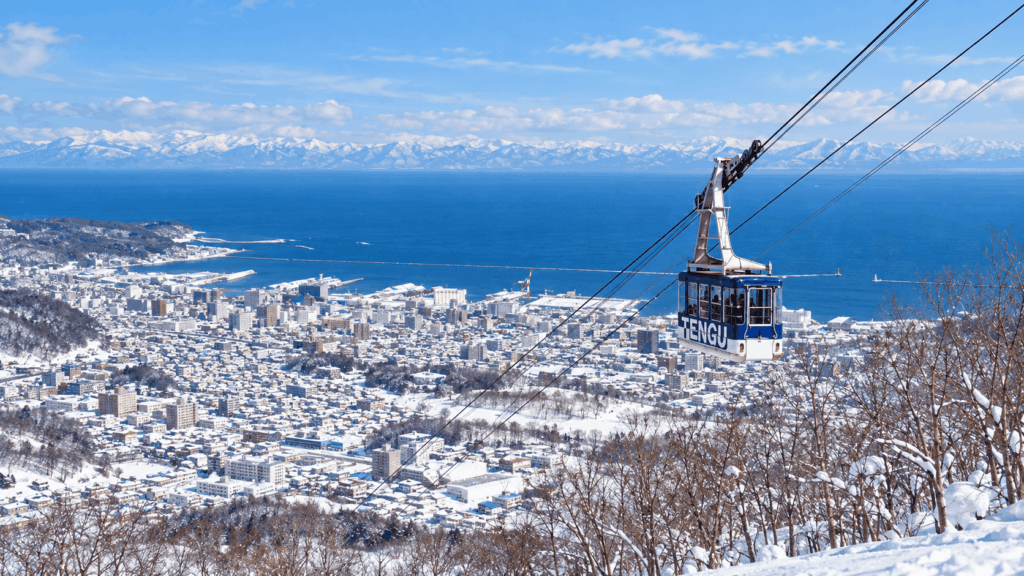
This option is weather-dependent in a way the canal is not. On a clear day it is the best half-day addition in Otaru; in low cloud you pay for a view you cannot see. Build it as a morning plan with a central-Otaru fallback, not as a fixed booking you are stuck with.
If the forecast looks clear and the ropeway is operating on your travel date, you can check current Mt. Tengu round-trip ticket prices and voucher exchange details on Klook before heading up. Check the operating calendar first, and avoid committing to a weather-dependent visit too early.
Option B — Otaru Aquarium and Shukutsu for Families
The Otaru Aquarium sits out along the coast at Shukutsu, roughly 20 to 25 minutes by bus from Otaru Station for around ¥240. It is a proper half-day for families, with the coastal setting doing as much work as the tanks, and it pairs naturally with a slow lunch before heading back.

The seasonal structure matters more here than anywhere else in this itinerary. For 2026, the aquarium’s regular season runs through 23 November, followed by a maintenance closure from 24 November to 11 December. Its winter season is scheduled for 12 December 2026 to 23 February 2027, from 10:00 to 16:00, with the marine animal park and amusement park closed. In other words, “the aquarium is open” is not a safe assumption in late autumn or winter. Confirm the dates for your travel window on the official site before you plan day two around it.
For couples without children, this is usually the weaker choice: the travel time is real, and the appeal is mostly family-oriented. For families with younger children, it is often the single best justification for staying a night.
| Day 2 option | Best for | Time needed | Weather risk | Season caveat |
|---|---|---|---|---|
| Mt. Tengu (ropeway) | Couples, photographers, travelers who want a view | About half a day including buses | High — cloud or snow removes the payoff | Closed between the summer and winter ropeway seasons |
| Otaru Aquarium / Shukutsu | Families with children | About half a day; easily longer | Low — mostly indoors | Maintenance closure in late autumn; winter hours and closures |
How to Turn This Into a One-Day Otaru Itinerary
If you have read this far and decided a day is enough, do not simply delete day two. Compress day one in the right order, because the sequence is what makes a single day work.
- Morning: arrive at Otaru Station, deal with luggage, walk to Sankaku Market for breakfast.
- Late morning to mid-afternoon: Sakaimachi Street — shopping and sweets first, photographs second.
- Late afternoon: move to the canal, ideally arriving an hour before sunset.
- Sunset: walk the canal, or take a cruise if the timing and weather cooperate.
- Evening: early dinner, then the train back to Sapporo.
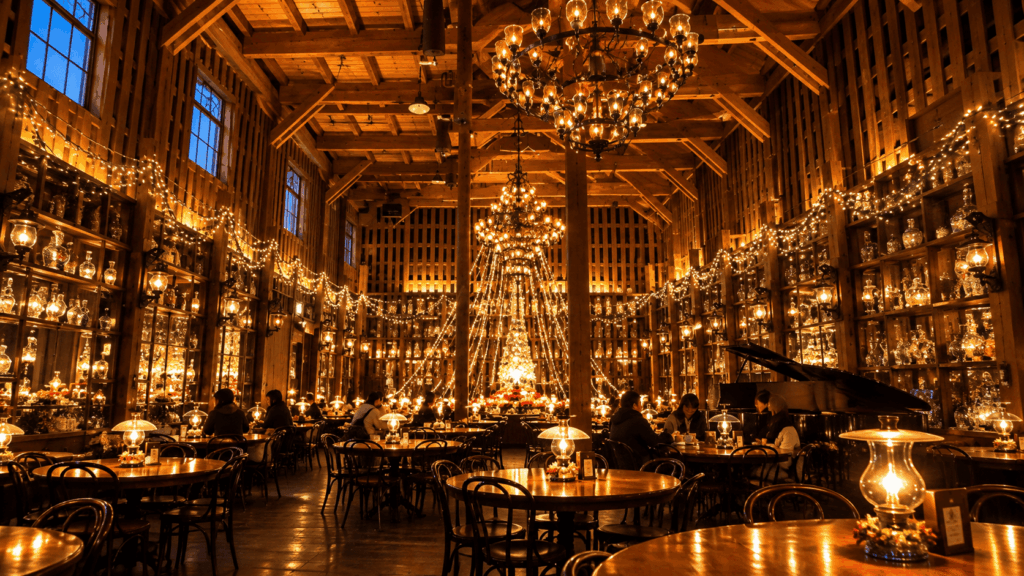
When something has to give, cut in this order. First, drop the market breakfast if you are leaving Sapporo late — a rushed market visit is worse than no market visit, and Sakaimachi should never be pushed into the evening to compensate. Second, drop the cruise; the canal walk is free and does not depend on a departure slot. Third, drop museum and shop interiors and keep the street itself. The one thing not to cut is the canal in the late afternoon — that is the part people remember.
If the sequence makes sense but you would rather not plan the order and timing, a private walking guide can help you make the most of one day. A private car with a driver is a separate option for visitors wanting less walking; do not assume the guided walking tour linked above includes vehicle transport.
Practical Tips That Make This Otaru Itinerary Work
Build the Day Around Two Fixed Points
Treat the market in the morning and the canal at sunset as fixed, and let everything between them flex. That gives you two anchors that do not move with the weather, and a middle of the day that can absorb a slow lunch, a longer-than-expected shop or a sudden downpour without wrecking the itinerary.
Keep a Weather Backup for Mt. Tengu
If day two is Mt. Tengu, decide on the morning of, not weeks ahead. Low cloud, snow or heavy wind turns a paid ropeway trip into a view of white. The fallback is straightforward: stay central, do the museums and shops you skipped, and use the canal again in different light. Otaru is a good town to be rained in — the alternative is not a wasted day, just a different one.
Decide the Cruise Before You Decide the Train
If a night cruise is the reason you are staying, book it first and choose your train or dinner time around it. Doing it the other way — booking a late dinner, then discovering the departure you wanted is gone — is the most common self-inflicted scheduling problem in Otaru. If the cruise is optional, do the reverse: fix the train, and treat any available departure as a bonus.
One last logistics note for anyone moving between hotels: Otaru Station is the natural place to reset. Lockers, staffed baggage storage nearby and the tourist information desk are all at the station, and the market is a two-minute walk away. Arriving, storing and only then starting the day costs ten minutes and saves an hour of awkward maneuvering through narrow streets.
Frequently Asked Questions
Is one day enough in Otaru?
For the central sights, yes. Sankaku Market is beside Otaru Station, the canal is about a ten-minute walk away, and Sakaimachi extends farther south, so a full day — not a half day — covers them comfortably if you get the order right: market in the morning, Sakaimachi before mid-afternoon, canal from late afternoon. What one day does not give you is much slack. If a shop is closed, a queue is long or the weather turns, you will feel it. Overnight stays exist mainly to remove that pressure, not to add more places to see.
Is two days in Otaru too much?
It can be, if both days are spent in the same central triangle. Otaru’s canal district is compact, and repeating it does not make a better trip. Two days make sense when the second day goes somewhere the first day cannot reach comfortably: Mt. Tengu by ropeway, or the Otaru Aquarium and the Shukutsu coast. If neither appeals, one well-sequenced day is the better use of your Hokkaido time.
Is it worth staying overnight in Otaru?
Yes, for a specific kind of traveler: someone who wants the market in the morning without catching an early train, the canal around sunset and after dark, and a dinner that is not timed to a return service. It is also worth it if you plan to add an outer-area stop on day two. It is probably not worth it if you only want the canal, Sakaimachi Street and the music box museum, or if moving hotels for one night would cost you time elsewhere in Hokkaido. If you decide it is worth the extra night, see our guide on where to stay in Otaru.
What time should I visit Otaru Canal?
Aim to arrive about an hour before sunset and stay through the blue hour, when the gas lamps and the warehouse fronts read best. The clock time shifts a lot across the year — late afternoon in midwinter, well into the evening in early summer — so plan around sunset rather than a fixed hour. Daytime is still useful for looking at the buildings properly, but it is not the visit most people are picturing.
Should I book the Otaru Canal Cruise in advance?
Book ahead if a particular departure matters to you — especially a night cruise, a weekend or holiday, or a group. Otherwise, same-day tickets are genuinely available: online sales run until about an hour before departure and the counter sells until roughly 15 minutes before. Cruises can be cancelled in bad weather, so if the boat is essential, keep the canal walk as your backup and check the operator’s status page on the day.
Final Verdict: Which Otaru Itinerary Fits You?
Otaru does not reward adding more. It rewards being in the right place at the right hour, and that is true whether you give it one day or two.
Choose one day if…
You are based in Sapporo, your Hokkaido schedule is finite, and your list is Sankaku Market, Sakaimachi Street and the canal. Run the day in the order above, finish your shopping before mid-afternoon, and take an early dinner before the train. This is a complete Otaru trip, not a compromised one.
Choose two days if…
You want the canal at dusk without watching the clock, the market at opening without an early train, and a second day with an actual destination — Mt. Tengu in clear weather or the Otaru Aquarium at Shukutsu. If you cannot name that day-two destination, book one night fewer.
For first-time visitors to Hokkaido
One full day is usually the right call, because Otaru is one part of a wider trip and the marginal value of a second night is lower than a night in Sapporo, Furano or the onsen towns. Treat Otaru as a well-sequenced day and put the saved night elsewhere.
For families
Two days earns its keep here, with the Otaru Aquarium and Shukutsu as the day-two anchor. The travel time by bus is real, and younger children do better with a slower morning and an earlier evening. Do check the aquarium’s seasonal dates — it closes for maintenance in late autumn and runs shorter winter hours.
For photographers and couples
Stay the night. The case for two days is not more sights but better light: the canal before and after sunset, the market early, and a morning on Mt. Tengu if the sky is clear. The trade-off is one hotel move, which is a small price for not photographing the canal in flat midday light.
For travelers on a tight schedule
Do not stay. Take the roughly 30-minute train from Sapporo, arrive early enough for the market, keep Sakaimachi to a couple of shops, and be at the canal by late afternoon. If even that feels tight, cut the market first — never Sakaimachi’s closing time, and never the canal at dusk.

Hi, I’m Kai. I’m a Tokyo-based travel writer, tourism industry insider, and the author of a published guidebook for international visitors to Japan. With over 10 years of professional experience at a leading Japanese tourism company, my mission is to help you skip the tourist traps and navigate Japan’s best destinations like a local. I believe the perfect day trip is like a traditional kaiseki meal: a beautiful balance of precise planning and unforgettable seasonal discovery. When I’m not out conducting field research, you’ll usually find me drafting new itineraries with one of my favorite fountain pens!