
Otaru has more famous food than a day trip can absorb. The market sits a minute from the station, the canal has sushi restaurants with harbour views, and Sakaimachi Street is one long argument for eating dessert before lunch. Most visitors arrive with a list of five or six names and finish the day having queued for three of them.
The better approach is to treat Otaru as a question of allocation rather than a checklist. You have one, maybe two proper meals in you before the train back to Sapporo. What follows is how to spend them.
If you’d rather have someone help shape the day around your food priorities, a private guided trip from Sapporo is worth comparing. This six-hour experience includes return train tickets and lets you discuss your interests with a local guide in advance; meals are extra. Check available dates, starting times and recent reviews for the private Otaru day trip.
Quick Answer: What to Eat in Otaru
For a first visit, one seafood-centred main meal, one savoury snack and one dessert is enough. You do not need both a seafood bowl and sushi.
- Best first meal: Sankaku Market, early, straight off the train
- Best sit-down meal: Otaru Masazushi Zenan, across from the canal
- Best quick snack: Kamaei fish cake on Sakaimachi Street
- Best dessert: LeTAO Main Store, ideally before mid-afternoon
- Best if someone in your group does not eat raw fish: Wakadori Jidai Naruto
Which Otaru Food Experience Should You Choose?
| Food / Place | Best for | Meal size | Best time | Crowd risk | Budget | Skip if |
|---|---|---|---|---|---|---|
| Sankaku Market seafood | Eating well within minutes of arriving | Full meal | 7:00–10:00 | High from late morning | ¥¥ | You want a quiet, unhurried lunch |
| Otaru Masazushi Zenan | Sit-down sushi with a canal view | Full meal | Opening time or a reserved slot | Moderate to high | ¥¥¥ | You only care about the lowest price per piece of fish |
| Kamaei fish cake | A savoury snack while walking Sakaimachi | Light | Mid-afternoon | Low to moderate | ¥ | You are looking for a proper meal |
| LeTAO Main Store | A sit-down dessert at LeTAO’s flagship café | Light | Early afternoon | High on weekends | ¥¥ | You only want boxed souvenirs, which the airport also sells |
| Wakadori Jidai Naruto | A group with one non-seafood eater | Full meal | Lunch or early evening | Moderate | ¥¥ | You are already eating seafood twice that day |
Budget key, per person, approximate: ¥ under roughly 1,500 yen, ¥¥ roughly 1,500–3,000 yen, ¥¥¥ above 3,000 yen. Prices in Otaru move with the season and the day’s catch, so treat these as planning bands rather than quotes.
What Food Is Otaru Famous For?
Otaru’s food identity is built on two things: a working port and a tourist economy that has been refining itself for decades. That gives you genuinely excellent seafood, and it also gives you prices set for visitors rather than locals. Both are true at once, and knowing that in advance saves a certain amount of disappointment.
The short version:
- Seafood and sushi are the core. Sankaku Market near the station is the casual end; the sushi restaurants around the canal are the sit-down end.
- LeTAO made cheesecake a reason to visit Sakaimachi Street in its own right, and the main store has a café that the airport shops cannot replicate.
- Kamaei is the local fish-cake maker whose fried snacks have become the default street food of the Sakaimachi walk.
- Wakadori Jidai Naruto is the counter-argument to “Otaru is seafood only” — half a fried chicken, ordered by locals as readily as by visitors.
- Ankake yakisoba is the local comfort dish worth knowing about if you want something warm and non-raw on a cold day.
The distinction that matters for your itinerary is this: something being famous in Otaru does not mean it deserves one of your two meals. Sankaku Market and a canal-side sushi lunch are both excellent, and they overlap heavily in what they give you — raw Hokkaido seafood, in quantity. LeTAO and Kamaei, by contrast, cost you twenty minutes and almost nothing, and add variety the seafood cannot.
If you are still working out how a food stop fits into your wider day trip, the eating plan below follows the same walking order most visitors use: station, market, canal, Sakaimachi.
If You Only Have One Main Meal, Choose Seafood Bowl or Sushi
What I have watched go wrong most often is not the choice of restaurant but the sequence: a full seafood bowl at nine, sushi at one, and no appetite left for either the canal or the cheesecake. This is the decision that shapes the whole day, and it is usually made badly — not because people choose the wrong place, but because they try to do both and spend the afternoon full and queuing.
A seafood bowl is a fast, ingredient-first meal. It is raw fish on rice, assembled in front of you, at a counter or a shared table, and it works best when you are hungry and just off the train. Sushi is a slower, more deliberate experience: the rice is seasoned, the pieces come in order, and the room is part of what you are paying for. If you order a bowl at 9am and sushi at 1pm, the second meal rarely lands the way it should.
Ask yourself five questions:
- Do you want volume of seafood, or a composed experience?
- Do you want to eat next to the station, or next to the canal?
- Are you willing to book, or do you want to walk in?
- How long can you give lunch — 45 minutes, or 90?
- Will you eat seafood again later the same day?
If your answers point to volume, convenience and walking in, choose the market. If they point to a slower meal, a view and a reservation, choose sushi. The mistake I see first-time visitors make is treating these as two separate highlights to tick off, when in practice the second one is usually the meal they remember least.
Sankaku Market vs Otaru Masazushi Zenan
| Sankaku Market | Otaru Masazushi Zenan | |
|---|---|---|
| Experience | Working market, narrow aisles, eat at a counter or small table | Proper restaurant, table or counter seating, canal outside the windows |
| Best time | Early morning, ideally before 10:00 | Opening time at 11:00, or a reserved lunch slot |
| Atmosphere | Busy, functional, slightly chaotic | Calm, designed, good for a long lunch |
| Price positioning | Tourist-area pricing for the area’s convenience; expect more than a neighbourhood market | Premium sit-down pricing; selected nigiri sets are listed at ¥4,180–¥6,820 including tax as of October 2026 |
| Time commitment | 45–75 minutes including a wait | 60–90 minutes |
| Reservation | Not possible at the busiest shops; same-day numbered queue tickets instead | Possible online through the restaurant’s own booking page |
| Best for | Early arrivals, big appetites, travellers who want to eat immediately | Travellers who want the meal to be part of the sightseeing |
| Main downside | Crowds and pricing that surprise people expecting a cheap local market | Cost, and a closed day each week, so the timing has to be planned |
Note that Zenan is closed on Thursdays, with exceptions around public holidays, and that its lunch service ends at 14:30 for last orders. Neither place is a walk-in certainty at noon.
Some travellers read a comparison like this and decide they would rather not build the day around opening times, queue tickets and reservation slots at all. That is a reasonable position, and it is the point at which a guided day trip from Sapporo starts to make sense — not as a food tour, but as someone else sequencing the market, the canal and Sakaimachi around your appetite, with the train already sorted.
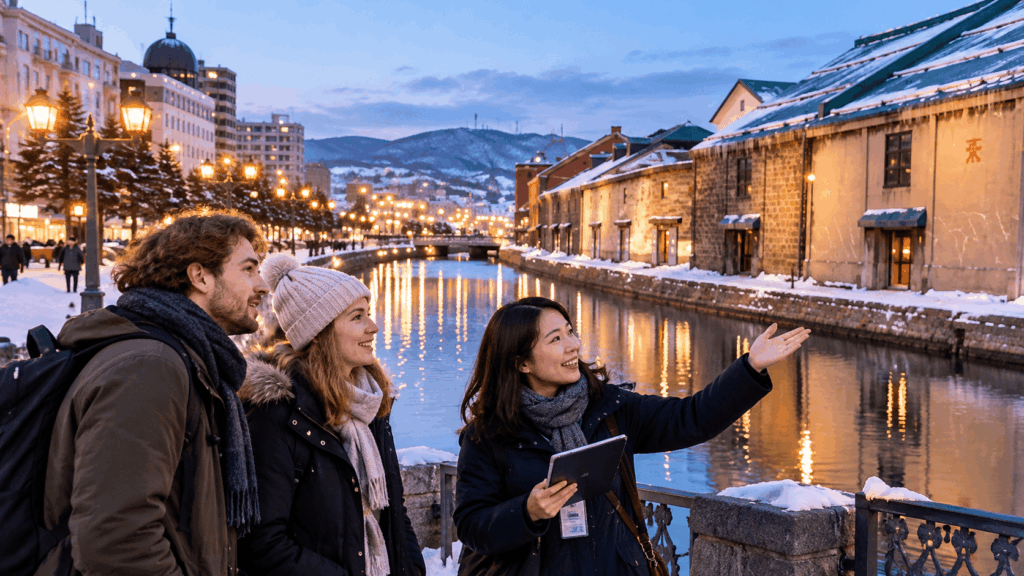
If you want a food-focused day in Otaru but would rather not plan every transfer and sightseeing stop yourself, the private day trip from Sapporo is the guided option worth examining. It offers a flexible itinerary rather than a dedicated food tour, so you can discuss your eating priorities before the trip.
Why I’d book this one
- A flexible, personal itinerary: Recent travelers highlight guides who listened to their interests and adapted the route, rather than following a rigid checklist.
- Return trains included: The six-hour experience covers the journey between Sapporo and Otaru, removing one piece of travel planning.
- Local guidance beyond the menu: Traveler reviews mention knowledgeable guides and useful local recommendations, with a chance to discuss food interests before the trip.
Food and attraction tickets are extra, and specific restaurant stops, reservations or shorter queues are not guaranteed. The advantage is a more personalized day, not priority access to busy dining rooms.
See live availability, starting times and recent traveler reviews for the private Otaru day trip.
1. Sankaku Market — Best for an Early Seafood Meal
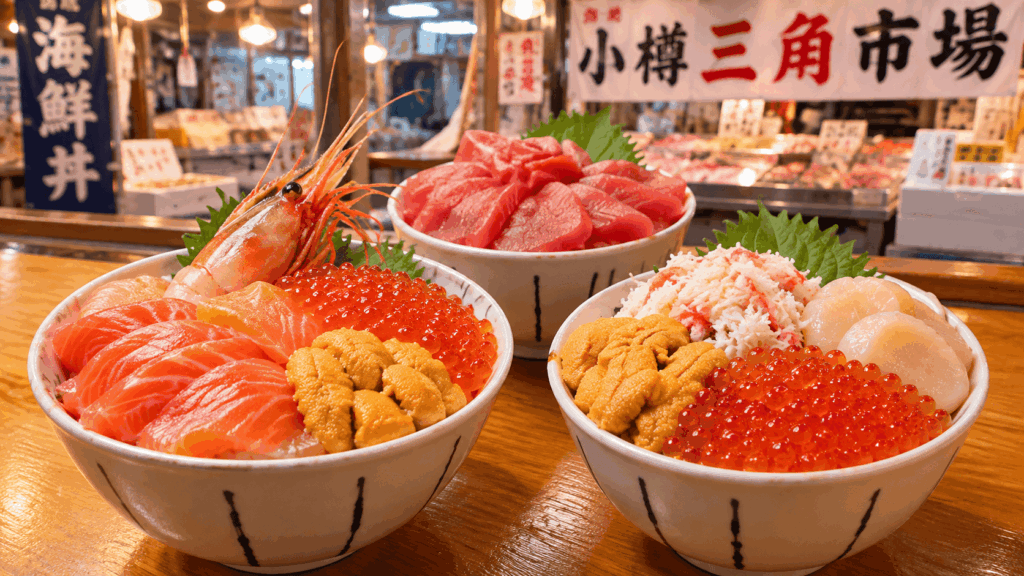
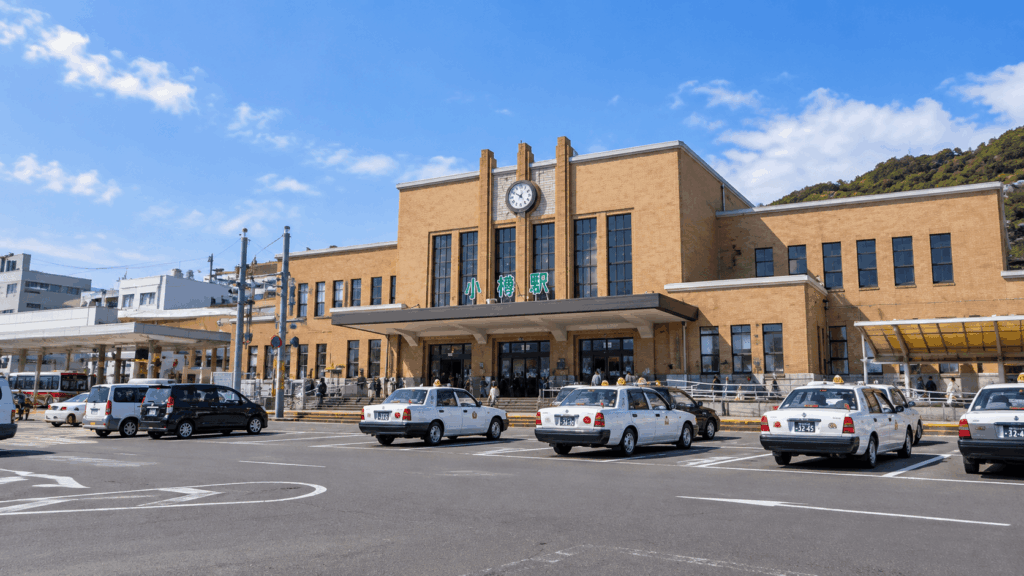
Sankaku Market sits about a minute from the ticket gates at JR Otaru Station, under a triangular roof that gives the place its name. Around twenty shops are packed into a space you can walk end to end in a couple of minutes, and six or so of them are restaurants. This is the most convenient good meal in Otaru, which is exactly why it is busy.
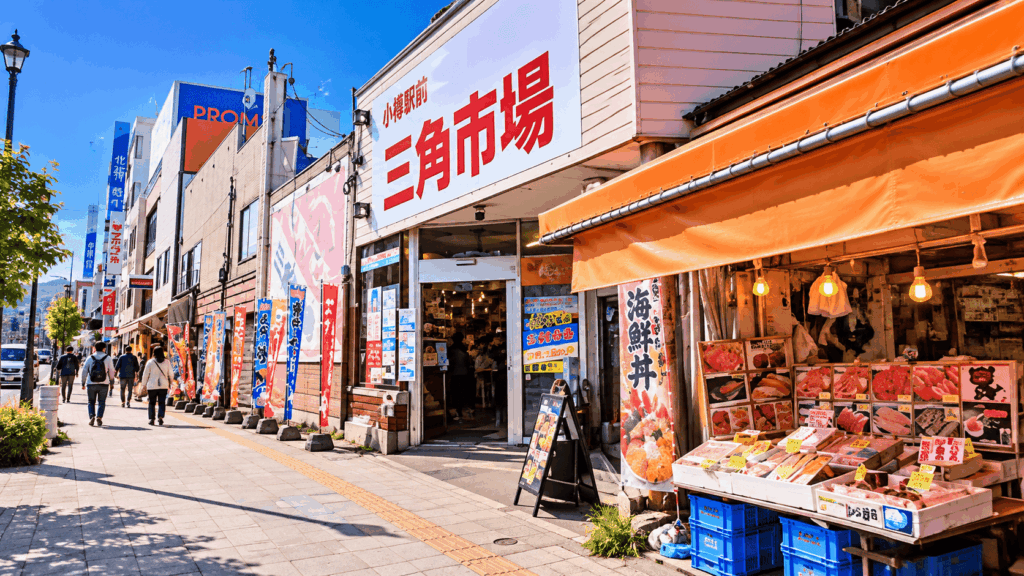
Best for: early arrivals, travellers who want to eat within ten minutes of stepping off the train, and anyone who wants raw Hokkaido seafood without a reservation.
Skip if: you dislike narrow crowded aisles, you want a long relaxed lunch with table service, or you are watching every yen. This is a tourist-area market and it prices accordingly.
Restaurant hours here vary by shop, but most open around 7:00 and close in the late afternoon — broadly 7:00 to 17:00. Some shops close on 1 January. Do not plan a late lunch here on the assumption that everything stays open; the market empties out well before dinner.
Two names come up repeatedly. Takinami Donburi Restaurant (Hokkai Donburiya Takinami Shokudo) is a fish shop’s own dining room, known for a build-your-own bowl where you pick three or four toppings from a list of ten and choose a normal or small size. It runs 7:00–17:00, stops taking new diners at 17:00, and does not accept phone or online reservations — you take a same-day numbered ticket from the terminal at the shop and wait. Ajidokoro Takeda is the other long-standing option, open from 7:00 and closing mid-afternoon. Bring cash as a backup; card and IC payment acceptance varies between shops.
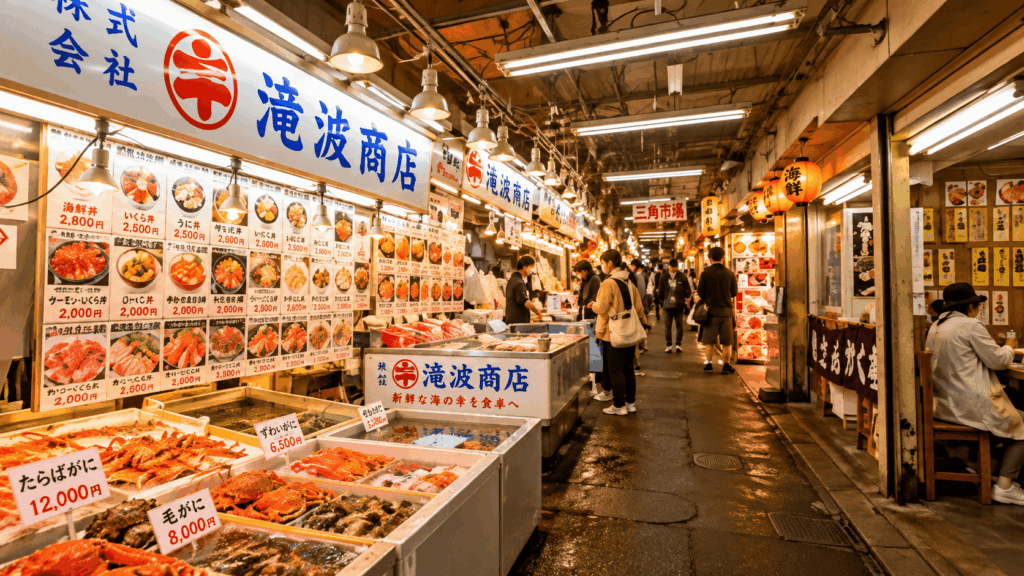
What Should You Eat at Sankaku Market?
A seafood bowl is the obvious first choice, and for a first visit it is a good one: you see the fish, you point at what you want, and it arrives on rice within minutes. Most bowls here land somewhere between roughly 2,000 and 4,000 yen, with anything involving crab or a generous serving of uni climbing well past that. Ask the price before you order if it is not clearly posted.
But the bowl is not the only correct order. If you already have a sushi lunch booked for later, ordering a second mountain of raw fish at 9am is how a good food day goes flat. In that case, grilled fish is the smarter move. Hokke — a Hokkaido atka mackerel, split and grilled — is on most menus here, and honestly it has impressed me more often than another bowl: thick flesh, a lot of fat under the skin, and a savoury char that cuts through the sweetness of a raw-fish breakfast. I would not tell you it beats a bowl for everyone, because it does not; if this is your only Otaru meal, order the bowl. If it is your first of two seafood meals, order the fish.
Smaller bowls and half portions are usually available. Two light dishes shared between two people is a perfectly normal way to eat here and leaves room for Sakaimachi later.
The Best Time to Visit Sankaku Market
Go early. Not because of a rule, but because the arithmetic is unforgiving: the market is one narrow corridor, and once the tour groups and the day-trippers from Sapporo arrive, the aisle between the fish counters and the restaurant stools becomes a single slow-moving queue. By late morning it can be genuinely unpleasant, and the queues outside the popular dining rooms stretch into the street.
Arriving between 7:00 and 9:30 usually means you eat without much of a wait at all. Arriving at 11:30 on a weekend means you may spend longer standing than eating. Weekdays are calmer than weekends, but a weekday lunch is still a peak, and the queue ticket system exists because waits are routine rather than exceptional.
Kai’s tip: When I take guests to Otaru, I put the market first — straight off the train, before anything else — and I do not reverse that order. I have watched the corridor fill up around late morning while people were still walking toward the canal, and those are the same people who end up eating at two in the afternoon. The canal looks the same at 10am and at 1pm; the market does not.
If you want to know whether the market is worth a detour on its own rather than as part of a day, that is a different question from this one, and it depends mostly on how much you value convenience over atmosphere.
2. Otaru Masazushi Zenan — Best for Sushi With a Canal View
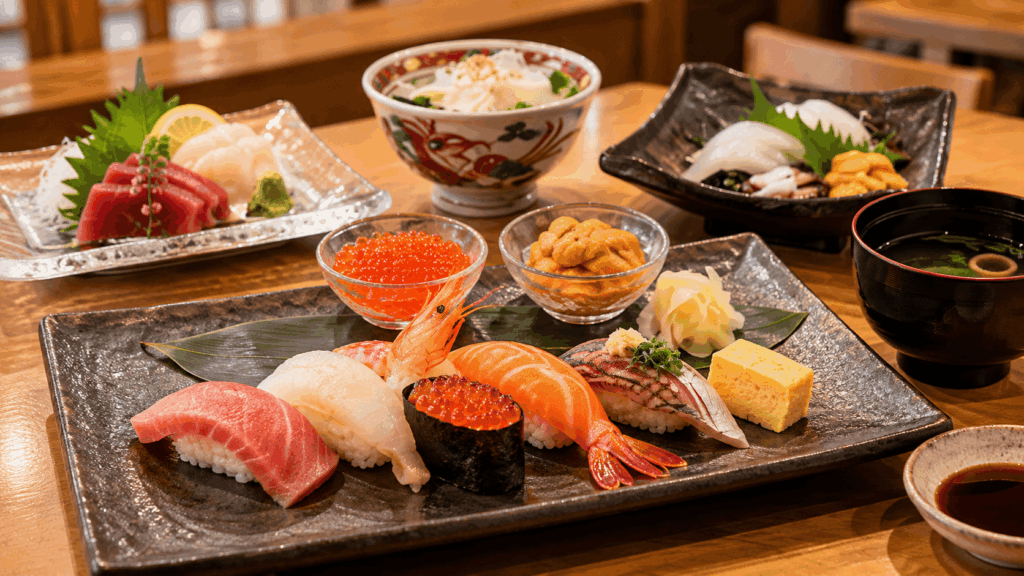
Zenan is the canal-side branch of Otaru Masazushi, one of the city’s established sushi names, and it occupies a spot directly across from the water at 1-2-1 Ironai. The room has eighty seats, a few small private rooms, and windows that face the canal and the stone warehouses.
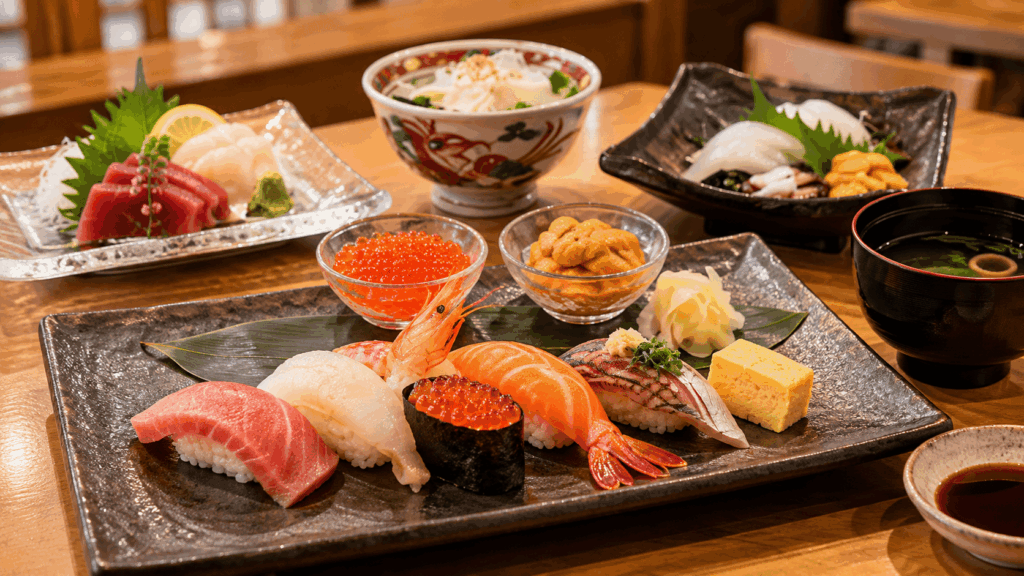
Best for: travellers who want the meal itself to be part of the sightseeing, and who are willing to book or arrive at opening.
Skip if: you are optimising purely for the cheapest good fish, or you want to decide where to eat on the spur of the moment at one in the afternoon.
Lunch runs 11:00–15:00 with last orders at 14:30; dinner is 17:00–21:00. The restaurant closes on Thursdays, with exceptions around public holidays, so check the calendar before you build a day around it. Reservations can be made online through the restaurant’s own booking page, in Japanese or English. A window seat is not something you can reserve — you can ask, but the view is a bonus rather than a guarantee, and it is worth knowing that before you choose the restaurant for that reason alone.
Set menus are the easy way in. As of October 2026, the main nigiri sets listed on the official menu range from ¥4,180 to ¥6,820 including tax, with a counter-only chef’s course well above that. À la carte is possible and is where the interesting pieces are: otoro, botan ebi, and whatever is in season that week. The dish I remember most from a visit here was not sushi at all but a crab-thickened chawanmushi, silky and intensely savoury — whether it is on the current menu depends on the season, so ask rather than assume.
Is It Worth Paying More for Sushi Near Otaru Canal?
If you are measuring value per piece of fish, no. You can eat very well in Otaru for less, and the premium here is partly the address. If you are measuring the day as a whole — one unhurried meal, looking out at the canal you came to see, without leaving the neighbourhood — then it is a reasonable place to spend the money, and the reason I keep going back is as much the room as the rice.
What tips it either way is timing, not quality.
Kai’s tip: I have walked into Zenan just after opening on a weekday and been seated immediately, and I have also turned up without a reservation and waited the better part of an hour and a half. Same restaurant, same menu. If your Otaru day has a fixed shape, book it; if you are winging it, be there at 11:00 rather than at noon and treat a wait as the cost of not booking.
The practical case for booking is stronger here than almost anywhere else in Otaru, because a ninety-minute wait in the middle of a six-hour day trip is a third of your sightseeing gone.
3. LeTAO Main Store — Best Dessert Stop in Sakaimachi
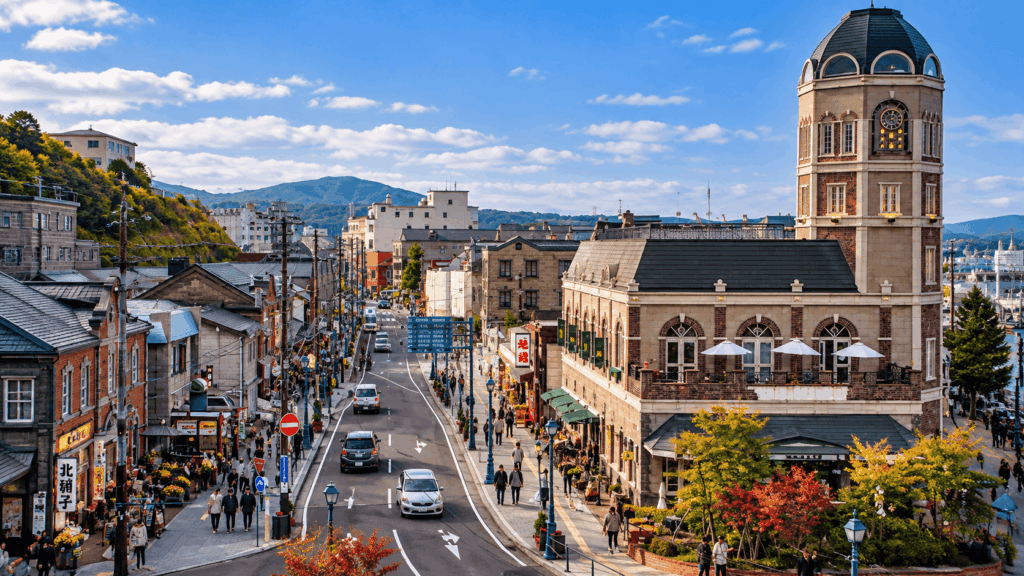
The LeTAO main store stands at the Marchen intersection at 7-16 Sakaimachi, opposite the Otaru Music Box Museum, in a tower-shaped building that functions as the visual anchor of the street. Ground floor is retail and takeaway; the second floor is a café; the top floor has a small observation space.
Best for: anyone who wants cheesecake in the form it is meant to be eaten, and anyone who wants a sit-down break in the middle of the Sakaimachi walk.
Skip if: you only want boxes to take home. Those are sold at New Chitose Airport and at department stores in Sapporo, and queuing here for a box you could buy at the airport is a poor use of an afternoon.
The reason to come is the café. It serves LeTAO’s signature Double Fromage — the two-layer cheesecake that made the brand — alongside other café desserts and drinks. The cheesecake itself is not exclusive to Hokkaido; it is also sold at New Chitose Airport and through other sales channels. Note that the café operates a one-order-per-person rule, so a table of three needs three orders, and last orders are at 17:30 with the whole building closing at 18:00. Hours shift with the season.
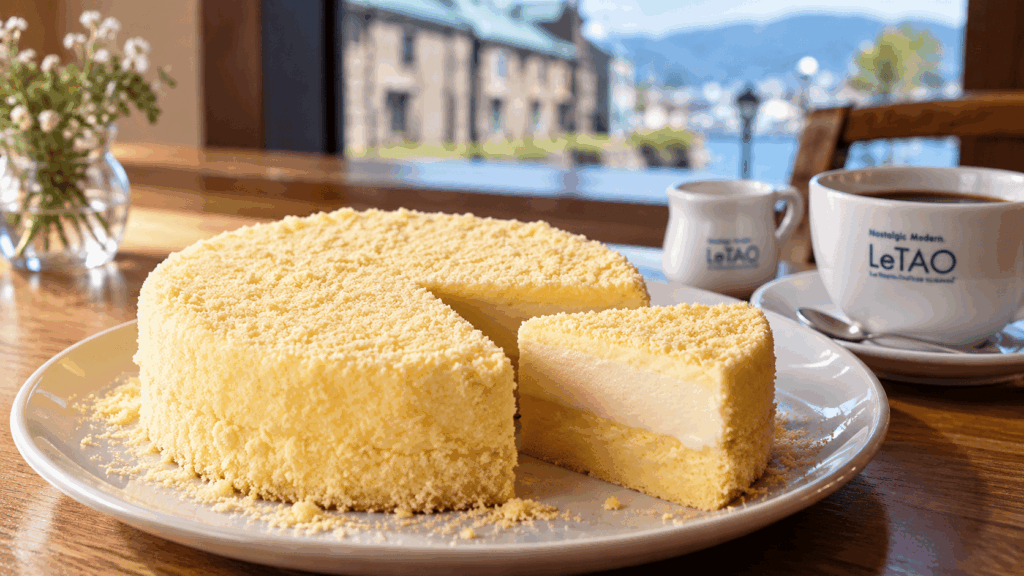
When Should You Visit LeTAO Main Store?
Seat reservations at the café are accepted on weekdays only, and not for same-day or weekend and holiday visits. That single detail tells you most of what you need to know: on a Saturday, this is a queue, and on a Tuesday you may be able to plan around it.
The sensible slot is early afternoon, after lunch and before the day collapses into train timetables — but not late. Both floors can be crowded at once, the retail floor with people buying gifts and the café with people waiting for a table, and the crowd does not reliably thin out as the day goes on.
Kai’s tip: I once left LeTAO until the end of the day, arrived close to closing and could not get in — the café was full and the staff were already winding down. It is a small thing, but it changed how I plan the street: I now take the dessert when I pass the store, not when I have finished everything else. Sakaimachi is 900 metres long and it is very easy to walk past the thing you came for.
4. Kamaei Fish Cake — Best Quick Otaru Street Food
Kamaei is a kamaboko maker that has been operating in Otaru since the Meiji era, and its factory store at 3-7 Sakaimachi is the most useful food stop on the street: cheap, fast, savoury, and eaten standing up.
Best for: a savoury snack between sweet things, and anyone who wants something Otaru-specific without committing to a full meal.
Skip if: you are actually hungry for lunch. This is a snack, not a meal, and treating it as lunch will leave you eating again an hour later.
The signature item is the Pan Roll: fish paste wrapped in bread and deep-fried, sold hot for ¥264 as of October 2026. It is best eaten immediately, which is why the store sells it from a fryer counter rather than a shelf, and why it does not travel well as a souvenir. The store also has a small café area and a viewing window into the factory, and the shop runs 9:00–18:00, staying open until 19:00 on Saturdays and Sundays from May to October. It closes on 1 January.
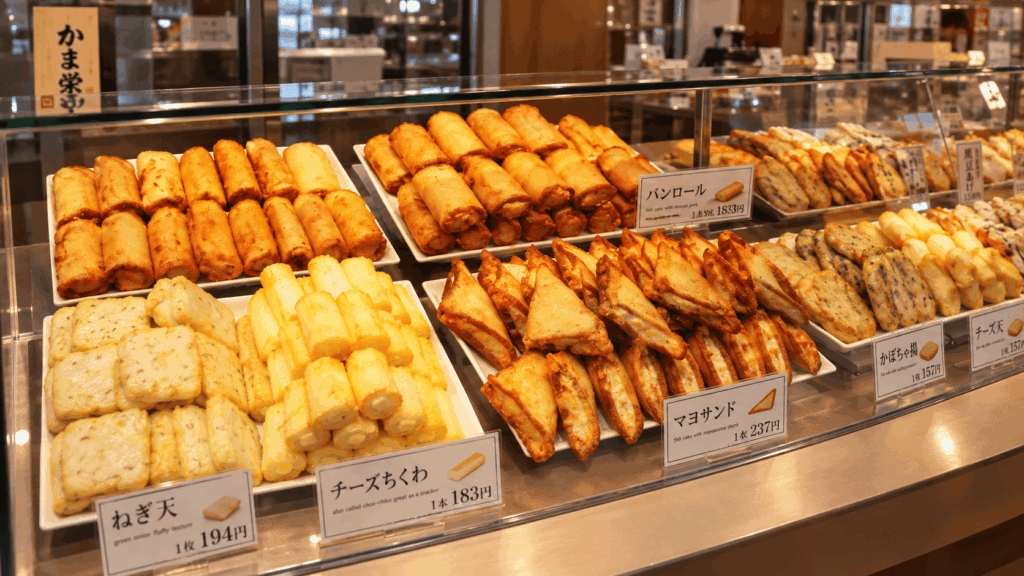
It is roughly a fifteen-minute walk from Otaru Station and sits on the natural route from the canal toward the Marchen intersection, which makes it an easy insertion rather than a detour.
5. Wakadori Jidai Naruto — Best If You Need a Break From Seafood
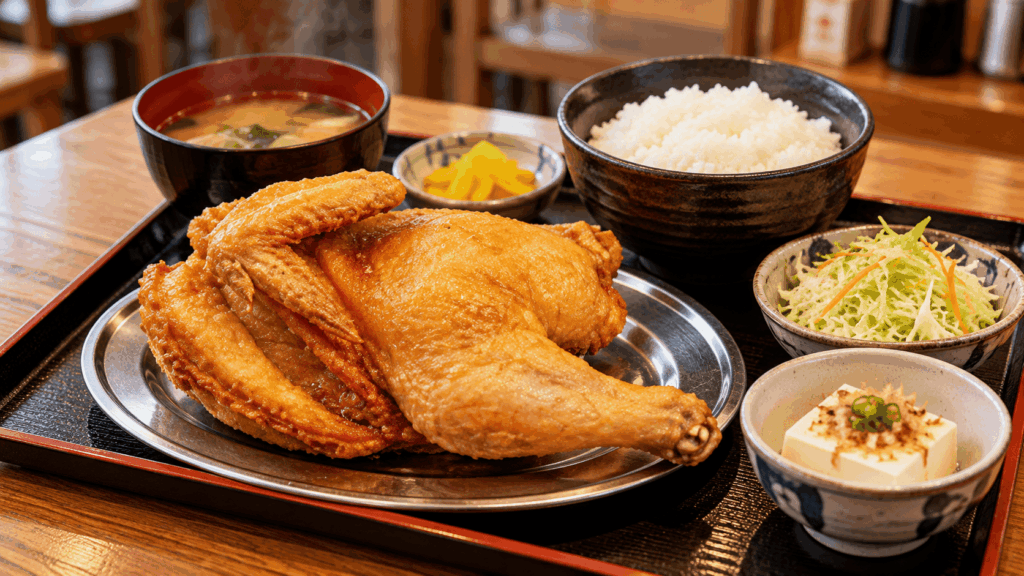
Otaru is not a seafood-only destination, and this is the proof. Wakadori Jidai Naruto’s main store at 3-16-13 Inaho, about five to eight minutes on foot from the station, is known for half a young chicken, deep-fried until the skin shatters and the meat stays juicy. It is ordered by locals as often as by visitors, and it is a full, heavy, satisfying meal.
Best for: groups where one person does not eat raw fish, and anyone who has had enough sashimi for one day.
Skip if: you are travelling alone and hoping for a light lunch. Half a chicken is a lot of chicken.
It is also the answer to a problem that comes up more often than food guides admit: a couple where one partner loves seafood and the other quietly does not. Splitting the day between a market breakfast and a fried-chicken lunch solves it without anyone eating a meal they did not want. Hours are broadly 11:00 to 21:00, though popular items can sell out and the room fills at conventional meal times, so check the current schedule before making it the centrepiece of your evening.
Other Otaru Foods Worth Trying — Only If You Still Have Room
These are additions, not obligations. If you have already eaten a market breakfast and a canal-side lunch, you do not need any of them.
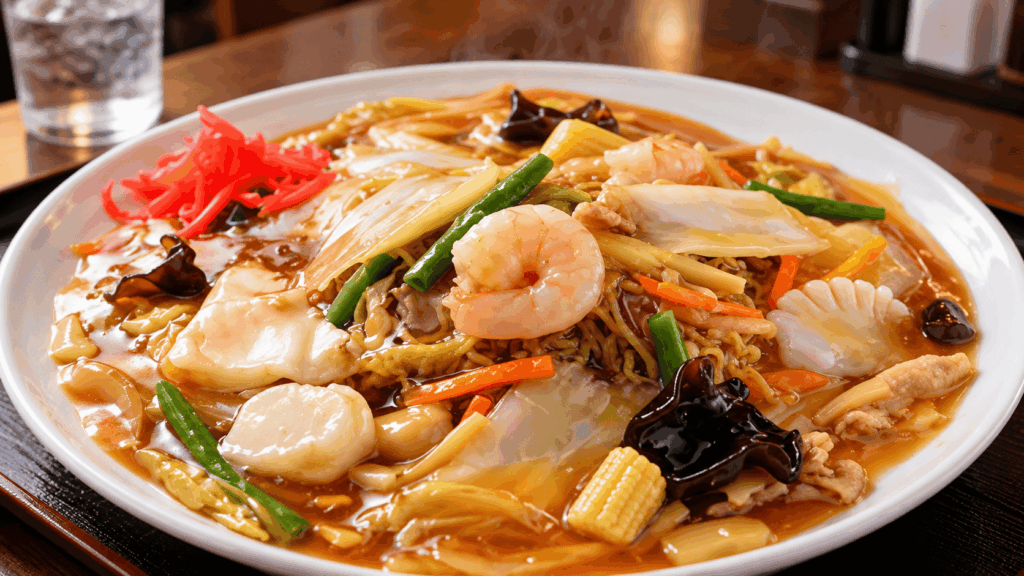
- Ankake yakisoba — pan-fried noodles under a thick savoury sauce, often with vegetables and sometimes seafood. The local comfort dish, and the right order on a cold or wet day.
- Soft-serve and dairy — Hokkaido milk in ice-cream form, sold all along Sakaimachi. Good value for the money, and easy to share.
- Seasonal seafood — uni in summer, crab in winter, salmon and scallops through the year. What is best changes month to month, which is a reason to ask rather than order from a photograph.
- Local sweets beyond cheesecake — the street has enough confectionery to fill an afternoon; pick one or two rather than working through them.
What to Eat Near Otaru Canal
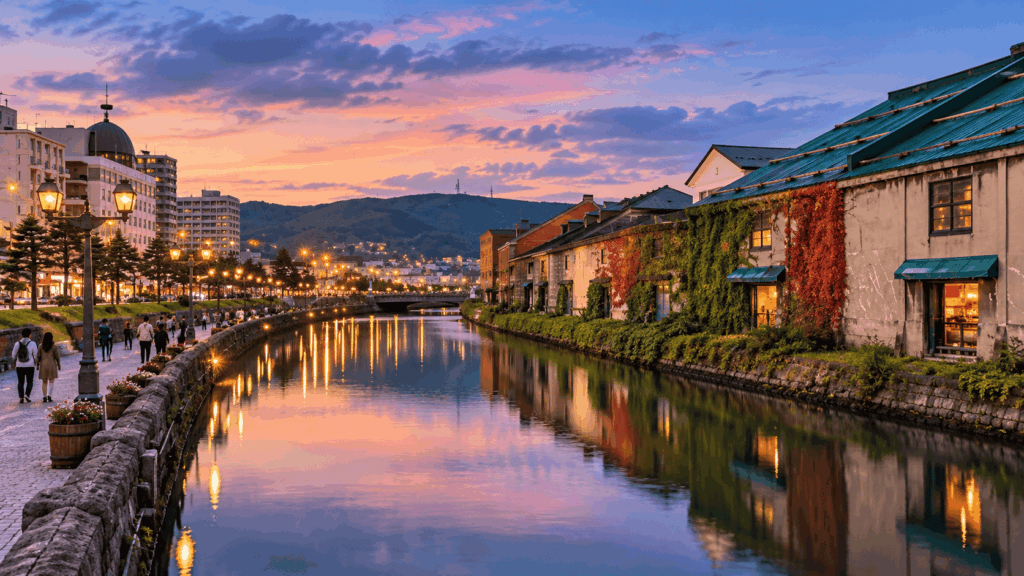
“Near the canal” is less useful than it sounds, because the canal is a strip and the food is spread along it and up the hill behind it. It helps to think in three layers, all within a short walk of the water.
A sit-down meal (60–90 minutes): Otaru Masazushi Zenan, directly across from the canal. This is the one place in the area where the view and the meal arrive together, and it is the reason to book.
A quick bite (15 minutes): walk from the canal toward Sakaimachi — about five minutes — and stop at Kamaei for something fried. If you want variety without leaving the canal, the small food alley at the canal’s edge, Otaru Denuki Koji, packs several casual eateries into one narrow lane.
Dessert (30–45 minutes): continue along Sakaimachi to LeTAO at the Marchen intersection. The street runs roughly 900 metres from the canal end to the music box museum, so this is a walk with stops rather than a single destination.
Laid out this way, the canal area answers the question without a list of ten restaurants: one proper meal, one snack, one dessert, all on a single line of travel. That is also the point at which some travellers decide they would rather hand the sequencing to someone else — a private guide who knows which of these needs a reservation today and which does not, and who can reorder the day when the market is fuller than expected.
My Recommended Otaru Food Plan for a Day Trip
These are three versions of the same day. Pick one; do not attempt all three.
Plan A — Best for most first-time visitors
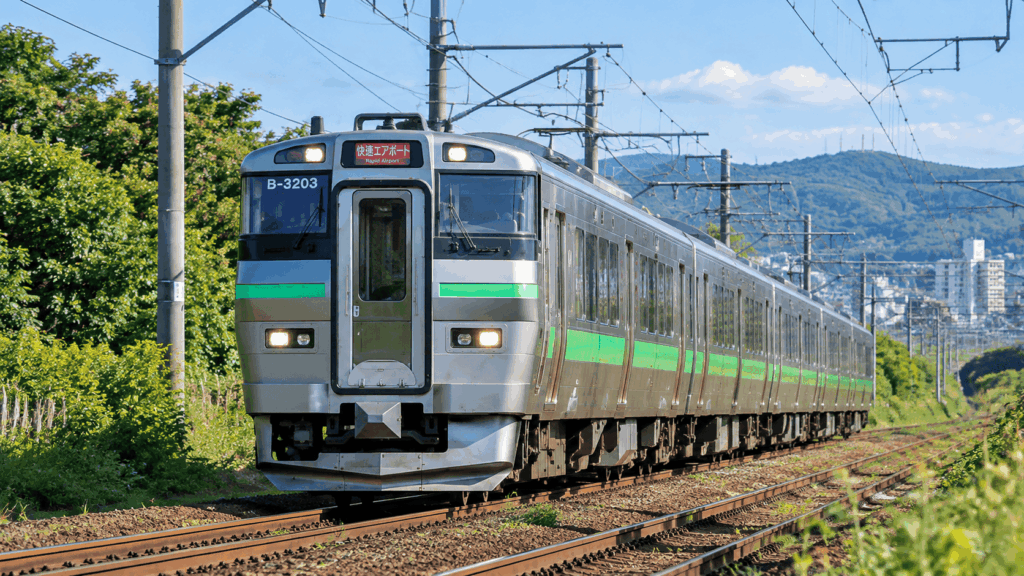
- 8:00–8:45 — Sapporo to Otaru by train, arriving at JR Otaru Station.
- 8:45–10:00 — Sankaku Market, one minute from the station. Seafood bowl, or grilled hokke if sushi is coming later.
- 10:15–12:00 — Otaru Canal. Walk it slowly; this is the part of the day that does not require queuing, unless you plan to take a canal cruise.
- 12:00–12:30 — Walk to Sakaimachi and have a light savoury snack at Kamaei instead of a second full seafood meal.
- 12:30–14:30 — Sakaimachi Street: glass shops, music boxes, and other things to do.
- 14:30–15:30 — LeTAO Main Store for dessert, before the afternoon gets away from you.
- 16:00 onward — Return to the station and Sapporo.
Plan B — Best if sushi matters more than seafood bowls
- Morning — Arrive in Otaru and go straight to the canal. Do the sightseeing first, on an empty stomach.
- 11:00 or a reserved slot — Lunch at Otaru Masazushi Zenan. Book ahead, or be at the door at opening.
- Afternoon — Sakaimachi Street, with a Kamaei snack only if you are genuinely hungry.
- Mid-afternoon — LeTAO for dessert, then back to the station.
Plan B front-loads the walking and puts the one expensive meal in the middle of the day, which suits anyone who would rather not eat raw fish at nine in the morning.
Plan C — For serious seafood lovers
- Early — Sankaku Market at opening for a full seafood breakfast.
- Late morning — Canal and Sakaimachi at an easy pace.
- Early afternoon — A late sushi lunch at Zenan, booked.
- Optional — Dessert only if there is still room, which there may not be.
Plan C is the exception, not the default. Two full seafood meals in one day is a lot of rice and raw fish, and most people enjoy the second one less than the first. If you are going to do it, put the lighter of the two meals first.
Every plan above assumes you are comfortable checking train times, queue tickets and reservation slots as you go. If that is the part of the day you would rather not manage — especially with a group, or with someone who needs to eat at predictable times — a hosted day trip from Sapporo that includes the round-trip train and a flexible route is the alternative worth comparing, provided you go in knowing that food is not included and you will still be choosing and paying for your own meals.
Is Otaru Food Expensive?
It depends entirely on which of the three tiers you are eating in, and conflating them is why some visitors leave convinced Otaru is a rip-off.
Sankaku Market is tourist-area pricing. It is not a cheap local fish market in the sense that a bowl costs what it would cost a fisherman’s family; you are paying for a location a minute from the station, for freshness that is genuinely high, and for the fact that everyone else wants the same thing at the same time. Recent visitors say this plainly — some find it overpriced and crowded, others find the fish excellent and the convenience worth it. Both are describing the same place accurately.
Zenan and the canal-side restaurants are a premium sit-down experience. Set menus sit in the low thousands of yen and climb from there, and you are paying for the room and the address as well as the fish. Judge it as a lunch out rather than as a seafood purchase and the price makes more sense.
Street food and snacks are where you adjust the day’s budget. A fried fish cake and a soft-serve cost less than a tenth of a sushi set, take fifteen minutes, and are the reason a day in Otaru does not have to be expensive even if one meal is.
What I would say to someone deciding whether the market is a rip-off: the seafood in Otaru is not cheap and it is not a bargain, but the freshness is real, and the premium you pay is mostly for time and location rather than for being deceived. If you want value per yen, eat one proper seafood meal and spend the rest on snacks. If you want a memorable lunch with a view, pay for it once and skip the second seafood meal.
FAQ: Eating in Otaru
What food is Otaru most famous for?
Seafood and sushi, for the straightforward reason that Otaru is a working port with fast access to Hokkaido catch. Sankaku Market near the station is the casual expression of that; the sushi restaurants around the canal are the formal one. Beyond seafood, the town is known for LeTAO’s cheesecake, Kamaei’s fried fish cakes, half-fried chicken at Wakadori Jidai Naruto, and ankake yakisoba, a thick-sauced noodle dish that locals eat far more often than visitors do.
Is Sankaku Market worth visiting?
Yes, if you value eating well within minutes of arriving — it is about a minute from the station and the fish is genuinely fresh. But go early, and do not expect bargain prices. It is a tourist-area market with tourist-area pricing, and by late morning the single corridor between the counters and the dining rooms becomes a slow queue. Arriving between 7:00 and 9:30 is the difference between a pleasant breakfast and a standing wait. The busiest restaurants take same-day queue tickets rather than reservations, so you cannot book your way around it.
Should I choose a seafood bowl or sushi in Otaru?
Choose the bowl if you want volume, convenience and no booking, and you are eating soon after arriving. Choose sushi if you want a slower, composed meal where the room and the canal view are part of what you are paying for. What you should not do by default is both: two full seafood meals in one day is a lot of rice and raw fish, and the second almost always lands flatter than the first. If you do want both, make the earlier meal the lighter one.
What should I eat near Otaru Canal?
Treat the canal and Sakaimachi Street as one continuous eating area rather than two destinations — they are about five minutes apart on foot. For a proper meal, Otaru Masazushi Zenan sits directly across from the water. For a quick savoury bite, walk toward Sakaimachi and stop at Kamaei for a fried fish cake. For dessert, continue along Sakaimachi to LeTAO at the Marchen intersection, roughly 900 metres from the canal end. One sit-down meal, one snack, one dessert is the pattern that works.
Can you eat well in Otaru without seafood?
Easily. Half a fried chicken at Wakadori Jidai Naruto is a full, heavy meal and about five minutes from the station. Kamaei’s fish cakes are made from fish but are cooked rather than raw, and the store also serves other items. Ankake yakisoba is another local option, but some versions contain seafood, so check the ingredients if you avoid it entirely. Sakaimachi Street also has bakeries and cafés for a non-seafood lunch. If one person in your group does not eat raw fish, split the day: a market breakfast for one, fried chicken for both.
Do I need a reservation for food in Otaru?
Not for the market, where the popular restaurants use same-day numbered queue tickets instead of bookings. Not for street food or dessert, though LeTAO’s café accepts seat reservations on weekdays only and not for same-day or weekend visits. For a canal-side sushi lunch, booking is worth it: Zenan takes reservations online in Japanese and English, closes on Thursdays, and a walk-in wait at midday can consume a large share of a day trip. If you cannot book, be at the door when it opens at 11:00.
Final Verdict — What Should You Actually Eat in Otaru?
The answer is not a list. It is one seafood meal, one savoury snack, one dessert, chosen in that order of importance and spread across the walk from the station to Sakaimachi.
If this is your first visit to Otaru
Take Plan A: Sankaku Market early, canal mid-morning, a Kamaei snack instead of a second seafood lunch, then LeTAO before mid-afternoon. You will eat the two things Otaru is actually known for, spend most of your day walking rather than queuing, and still have room for dinner in Sapporo.
If sushi is the reason you came
Book Otaru Masazushi Zenan for an 11:00 or 11:30 slot, do the canal first, and let lunch be the centre of the day. Skip the market entirely rather than squeezing it in before sushi — you will enjoy the sushi more on an empty stomach, and the market will still be there next time.
If you are travelling with someone who does not eat raw fish
Keep the seafood meal, but move it earlier and make it smaller. A market breakfast for the seafood eater, then half-fried chicken at Wakadori Jidai Naruto for both of you, solves the day without anyone compromising. Do not try to convert a non-fish-eater at a sushi counter; it rarely ends well and it is an expensive way to find out.
If you only have half a day
Choose one of the two mains and accept that you are choosing. Market at 8:00, canal at 10:00, one dessert at 11:30, train at 13:00 is a complete Otaru day. Attempting both the market and a sit-down sushi lunch inside four hours means spending most of it seated or standing in the same two places.
If you have been to Otaru before
Skip the market and the main-store cheesecake queue, and spend the money on a proper canal-side lunch instead — Zenan’s à la carte is where the seasonal fish is, and it is the part first-timers on a schedule never get to. Add ankake yakisoba somewhere in the day; it is the local dish most visitors miss entirely.
If you are a serious seafood eater with a large appetite
Plan C is yours: market at opening, sushi in the early afternoon, dessert only if there is room. Just book the sushi, and eat the market meal lighter than you think you want to — grilled fish rather than a second bowl. The people who regret Otaru’s food are almost never the ones who ordered too little.
What I would tell a friend coming for the first time is this: the queue is not the price of a good meal in Otaru, it is the price of a badly timed one. The same restaurant that swallows ninety minutes of your afternoon at noon will seat you in five at eleven. Pick your one meal, put it at the right hour, and spend the rest of the day eating small things while walking.

Hi, I’m Kai. I’m a Tokyo-based travel writer, tourism industry insider, and the author of a published guidebook for international visitors to Japan. With over 10 years of professional experience at a leading Japanese tourism company, my mission is to help you skip the tourist traps and navigate Japan’s best destinations like a local. I believe the perfect day trip is like a traditional kaiseki meal: a beautiful balance of precise planning and unforgettable seasonal discovery. When I’m not out conducting field research, you’ll usually find me drafting new itineraries with one of my favorite fountain pens!