
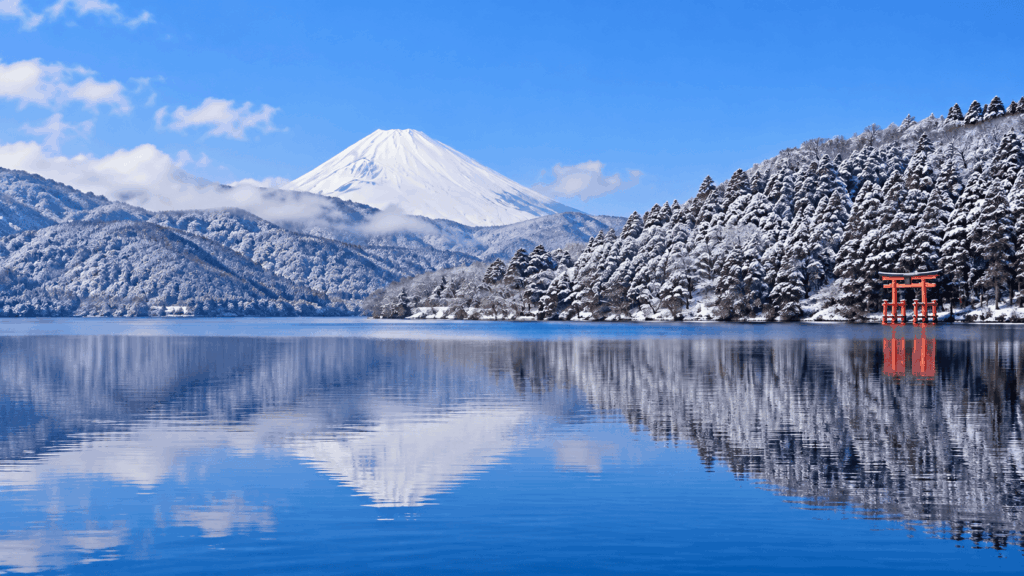
Yes, Hakone is worth visiting in winter — particularly if you value clear views of Mt. Fuji, a long soak in an onsen, and mountain scenery without the summer crowds. Snow is possible, but it is never guaranteed, and the higher parts of Hakone can feel much colder than Tokyo.
A simple way to choose your month: December is the easiest introduction to winter, January is the coldest-feeling trip and demands serious layers, and February gives you the best chance of seeing snow at higher elevations.
On one winter visit while guiding guests, I watched how quickly a group dressed for a Tokyo day out ran into trouble once we reached the colder, windier parts of the route. Hakone is roughly 90 minutes from Shinjuku, but it is not the same climate.
Planning a winter day trip from Tokyo? If you want to explore Lake Ashi and Owakudani without arranging every train and bus connection yourself, check the itinerary, pickup details and available dates for this private Hakone day tour. Confirm which activities are included for your date, especially during winter ropeway maintenance periods.
Is Hakone Worth Visiting in Winter?
The short answer: yes, provided you go for the right reasons. Winter raises the value of Hakone’s outdoor sights — clearer air, sharper Mt. Fuji views, steam pouring out of Owakudani — and lowers the value of anything that depends on long days and predictable transport. If snow is your main goal, treat it as a bonus rather than the reason for the trip.
Best for:
- Travellers who care more about Mt. Fuji views than about snow
- Anyone who wants an onsen to be the centrepiece of the day
- People who are comfortable outdoors in near-freezing temperatures
- Visitors who can accept that one stop may need to be dropped
Think twice if:
- Guaranteed snow is the whole point of the trip
- Ice and cold would make walking genuinely difficult for someone in your group
- You want to drive mountain roads without winter-driving experience or proper tyres
- You are trying to fit five or six sights into a single short winter day
What winter gives you is atmosphere and visibility: the air is at its clearest, Owakudani’s sulphur vents look more dramatic in cold light, and an outdoor bath after hours in the wind feels like a reward. What it costs you is time and flexibility. The ropeway closes at 16:15 in December and January, daylight goes early, and one weather closure can reshape an afternoon.
The concerns travellers raise most often are consistent: whether the Hakone Loop still works in January and February, whether the ropeway or the pirate ship will be running, and whether one day is enough. Those are the right questions, and this guide answers them in the order you need them.
If the only part of a winter Hakone trip that worries you is the driving and the connections, it is worth comparing a guided day tour from Tokyo before you commit to a fully DIY plan — not because Hakone requires a tour, but because winter is the season when logistics take the most time to solve.
Hakone in December vs January vs February
Hakone’s official winter runs from December to February, but the three months are not interchangeable. The averages below come from Hakone Navi and are measured at Hakonemachi, one of the lake-side areas. They are reference figures, not a forecast for Owakudani or the Komagatake summit, which are colder.
| Month | Typical winter feel | Snow chance | Best for | Main drawback | Clothing priority |
|---|---|---|---|---|---|
| December | Cold but manageable; crisp air, early sunsets | Lower; occasional dusting at high elevation | Mt. Fuji views, onsen, first-time winter visitors | Short days; ropeway closes at 16:15 | Warm coat plus windproof accessories |
| January | The coldest-feeling month; ice on paths and roads | Possible at elevation, but not reliable | Travellers who are properly equipped and flexible | Frozen surfaces; Ekiden congestion on 2–3 January | Full layering, gloves, hat, grippy shoes |
| February | Deep winter; the best chance of a snowy scene | More likely at higher elevations, especially Sengokuhara and Lake Ashi | Seeing snow on the mountains, quiet onsen stays | Ropeway section closed for most of the month in 2027 | Same as January, plus waterproof footwear |
Hakone in December
December is the softest landing. The average at Hakonemachi is around 3.4°C, and while mornings and evenings bite, daytime sightseeing is comfortable if you are dressed properly. This is a month for Mt. Fuji, onsen and clear air rather than snow; Hakone-Yumoto rarely holds snow, and any dusting higher up is a bonus.
Two practical points matter. The ropeway switches to its winter timetable, closing at 16:15 instead of 17:00, which compresses the afternoon more than most visitors expect. This winter the Owakudani–Sounzan section is also scheduled to be suspended from 7 to 24 December 2026, with substitute buses running instead, so the classic approach from Gora may not work as planned.
Hakone in January
January is the month to take seriously. The average at Hakonemachi drops to around 0.4°C, and official guidance notes that temperatures can fall below freezing, leaving roads and walking surfaces icy. This is less about snow than about cold and traction. If someone in your group is unsteady on their feet, plan shorter outdoor blocks and more time indoors or in an onsen.
The lake is where the cold surprises people. On the pirate ship, the deck is exposed and the wind coming off the water makes the air feel far colder than the number on your weather app. I have stood on that deck and reached the point where staying outside stopped being pleasant. The indoor cabin is not a compromise in January; it is the sensible base, with short trips to the railing for photographs.
One date-specific warning: the Hakone Ekiden is held on 2 and 3 January, and roads around the course and Lake Ashi are affected by traffic control and heavy congestion. If your trip overlaps, check the current restrictions before planning a driving day.
Hakone in February
February is the month to choose if snow at higher elevations matters to you. Hakone’s official tourism guidance notes that snow usually falls in the upper parts of Hakone, around Sengokuhara and Lake Ashi, most often in February. That is a statement about likelihood, not a promise: a February visit can be brown and snow-free at lake level while the summits are white, or clear and dry for your entire stay.
This winter also brings the longest transport disruption of the season. The Togendai–Ubako–Owakudani section of the ropeway is scheduled to be suspended from 12 January to 26 February 2027, with substitute buses covering the route — which means most of February. The ropeway views are one of the best reasons to visit Hakone in winter, so if riding it is a priority, late February onward or a different month may suit you better. The dates were announced in July 2026; confirm them on the official Hakone Navi site before booking anything non-refundable.
Does It Snow in Hakone? What to Realistically Expect
Yes, it can snow in Hakone. No, winter does not mean the town is under snow for three months. Understanding why prevents most of the disappointment.
Hakone covers a large elevation range in a small area. Hakone-Yumoto, where most visitors arrive, sits low and is the least likely place to see snow settle. Owakudani is around 1,040 m, Lake Ashi is just over 700 m, and the Komagatake summit reaches 1,327 m. A single weather system can deliver rain at Yumoto, wet flakes at the lake and a white Owakudani in the same afternoon.
It also helps to separate snowfall from snow cover. Snow falling while you are there is memorable but brief; snow lying on the ground depends on temperature, timing and how long it has been since the last fall. Repeat visitors do not treat a snowless January as unusual, and one heavy snowfall should not be read as what every winter looks like.
I have seen Owakudani under snow in winter, and the combination of white ground, grey steam and black volcanic rock is unlike anything else in the region. It is worth hoping for. It is not worth building a trip around. If snow and Mt. Fuji are the only two things you care about, it is worth comparing Hakone with Kawaguchiko before you commit, because the two areas behave differently in winter.
How Cold Is Hakone in Winter?
The published averages — around 3.4°C in December, 0.4°C in January and 1.7°C in February at Hakonemachi — are a useful baseline, but they hide the part that matters. Hakone does not have one temperature. It has a gradient, and you will move up and down it in a single day.
Three things make the cold feel worse than the number suggests:
- Elevation. Every step from Hakone-Yumoto toward Gora, Sounzan, Owakudani and the lake takes you into colder air.
- Wind. Lake Ashi and the ropeway platforms are exposed, and wind removes heat far faster than still air.
- Ground temperature. Ice on shaded paths, stairs and car parks persists long after the air has warmed. That is a footing problem more than a comfort problem.
On one guided day, the temperature around the Komagatake summit was about −2°C while the lower areas felt merely chilly. I would not present that as an average; it is a reminder that the weather at the base of the mountain tells you very little about the top.
| Area | Why it feels cold | Main winter concern | Practical advice |
|---|---|---|---|
| Hakone-Yumoto | Low elevation, but shaded valley streets | Judging the rest of the day by this temperature | Change layers here before heading up |
| Owakudani | About 1,040 m, exposed and windy | Ice on walkways; long waits in the cold | Keep the visit short and keep moving |
| Lake Ashi | Open water and strong wind across the deck | Wind chill on the pirate ship; wet footwear | Use the cabin, take short turns outside |
| Komagatake summit | 1,327 m and fully exposed | Much colder than the lake shore below | Check summit conditions, not lakeside ones |
What to Wear in Hakone in Winter
Dress for the highest and most exposed point on your route, not for the station where you arrived:
- An insulated winter coat that blocks wind, not just a fashion layer
- A warm middle layer you can remove indoors
- Gloves, ideally windproof
- A scarf and a warm hat
- Closed shoes with decent grip; avoid smooth soles
- Layers you can add and remove quickly on trains, buses and boats
If your plan includes Lake Ashi, Owakudani or Komagatake, wind protection matters more than thickness. A bulky coat over a thin shirt is less effective than a windproof shell over a proper mid-layer.
Kai’s tip: The guest I remember most arrived in a light jacket and sneakers, having checked the Tokyo forecast that morning. By the time we reached the exposed parts of the route, the cold had stopped being a comfort issue and started deciding where we could go. I now tell people to pack for the elevation rather than the city: windproof gloves, a scarf and shoes with grip change the day more than a smarter coat does.
The Best Things to Do in Hakone in Winter
Hakone has enough museums and gardens to fill a week, but winter is not the season to chase a checklist. The places that justify a cold-weather trip are the ones the season actively improves: the volcanic valley, the ropeway, the lake, the Mt. Fuji viewpoints and the onsen. Everything else is a bonus if time allows.
Owakudani — Go Early in Winter
Owakudani is the reason many people come to Hakone, and winter suits it. The valley sits at about 1,040 m, steam rolls out of the hillside, and on a clear day Mt. Fuji appears behind the vents. The sulphur smell reaches you before you see anything, and the walkways around the vents take perhaps 30 to 45 minutes at an unhurried pace.
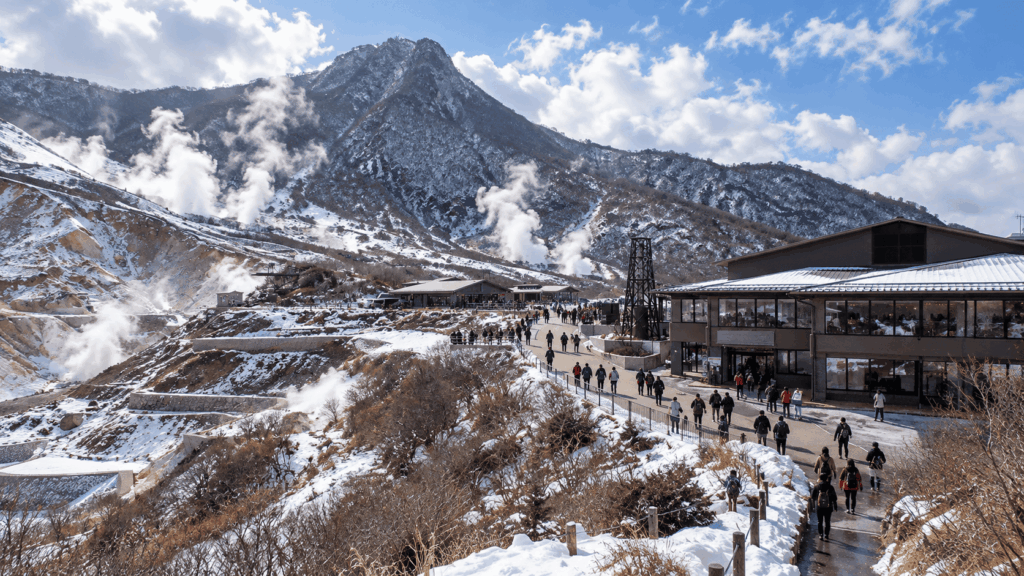
The practical problem is timing. Owakudani is reached by road as well as by ropeway, and the car park is one of the most congested spots in Hakone on weekends, holidays and fine-weather long weekends. In December and January it opens at 09:00 and closes at 16:00, with exit by 16:40. Prices differ sharply: a weekday caps at around ¥1,300 for a normal car, while a weekend or holiday can reach around ¥2,600.
The black eggs sold at the Kurotamago-kan are the other reason people stop. They cost around ¥500 for four, and sales typically run until mid-afternoon, with seasonal changes and the real possibility of selling out. The shop stays open a little later than the egg counter. If you arrive by ropeway rather than by car the queue works differently, but the same logic applies: the middle of the day is busiest, and winter daylight runs out early.
Kai’s tip: On one winter day I drove up in the early afternoon and spent about an hour waiting to get into the car park. By the time I reached the counter, the black eggs had sold out a few people ahead of me. I would not tell you that an early visit guarantees anything, but I would put Owakudani in the morning rather than treating it as a late-afternoon add-on, especially if the eggs are part of why you are going.
Lake Ashi and the Pirate Ship
The Hakone Sightseeing Cruise connects Togendai with Hakone-machi and Moto-Hakone, taking roughly 25 to 40 minutes depending on the route and season. The ships are unabashedly theatrical — pirate-ship styling, painted figures, a special cabin you can pay extra for — and genuinely enjoyable, particularly for children.
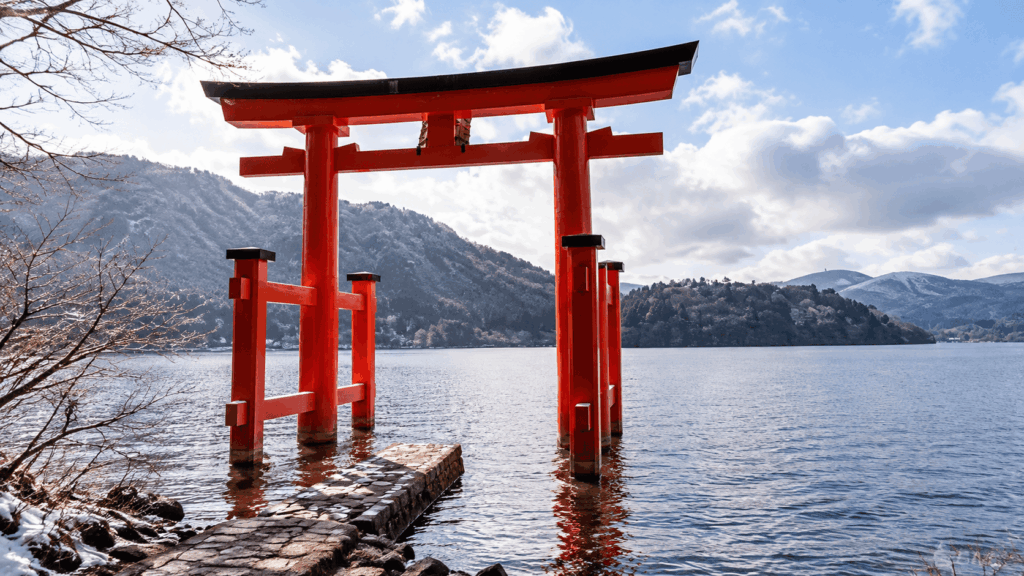
Winter is when the lake looks its best and feels its worst. On a clear day you get the combination that makes the postcards: the red torii of Hakone Shrine at the water’s edge, the wooded shoreline and Mt. Fuji behind. The wind across the open deck is another matter. I have been out there and reached the point where going back inside was less about comfort and more about not wanting to be on the deck any longer. Use the cabin as your base, step out for photographs when the view opens, and go back in. The winter timetable runs from 1 December to 19 March, and some departures take longer than the summer schedule suggests, so check the last sailing for your date before building the afternoon around it.
Hakone Ropeway and Mt. Fuji Views
The ropeway links Sounzan, Owakudani, Ubako and Togendai, and the full run takes around 30 minutes. The section between Sounzan and Owakudani crosses a valley about 130 m below, and the stretch toward Togendai opens up views of Mt. Fuji and the lake. Winter air is often clearer than summer air, which is why the views can be sharper — but clear air is not the same as clear skies, and cloud, wind or maintenance can change the day.
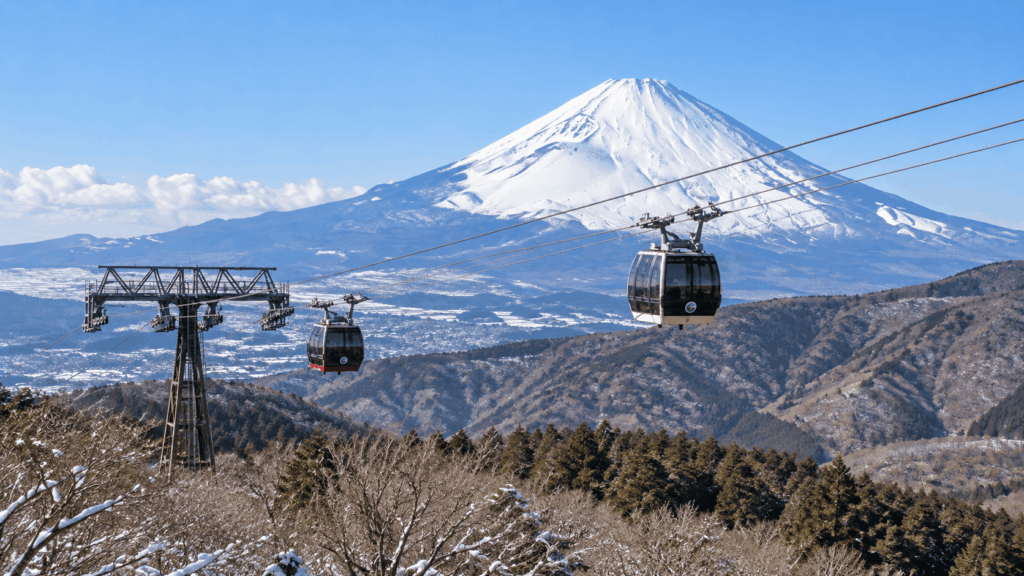
Operating hours are shorter in the cold months: 09:00 to 16:15 in December and January, against 09:00 to 17:00 from February to November. The last ride comes earlier than most people assume, and missing it means a bus journey instead.
This winter the ropeway is also partly closed. Odakyu Hakone has announced two maintenance suspensions: the Owakudani–Sounzan section from 7 to 24 December 2026, and the Togendai–Ubako–Owakudani section from 12 January to 26 February 2027. Substitute buses run instead, roughly every 15 minutes, taking about 10 minutes on the shorter section and about 15 minutes on the longer one. The operator warns that the buses get very crowded and that road traffic can add delays. Check the current notice before you travel, and if riding the ropeway is a highlight, plan around those windows rather than discovering them on the day.
I have seen Mt. Fuji from the ropeway with snow on it, and on that day it was as good as any view in Japan. That is a memory, not a forecast. Treat a Fuji sighting in winter as a strong possibility on a clear day, not a scheduled event. If you want to increase your chances, check out our guide to the best spots to see Mt. Fuji from Hakone.
Mt. Komagatake — The Other Ropeway
The Komagatake Ropeway is easy to overlook because it sits away from the main loop, near the Prince Hotel on the lake’s southern shore. It climbs to the 1,327 m summit in about seven minutes, with a small shrine at the top and a view that takes in Lake Ashi and, on a good day, Mt. Fuji across the water. It is not covered by the Hakone Freepass, though pass holders usually get a discount. Services run roughly every 20 minutes, with the last ascent around 16:30 and the last descent around 16:50. The summit is markedly colder and windier than the lakeside, which is exactly the point: here the elevation difference becomes obvious rather than theoretical.
Finish the Day With an Onsen
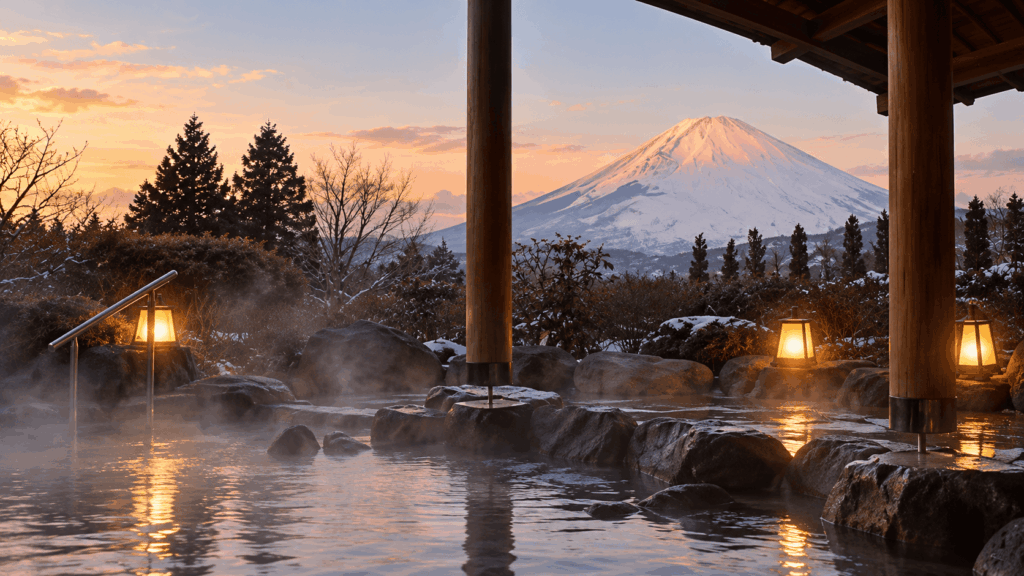
An onsen is not just a nice ending in winter; it is the most efficient way to recover from a day outdoors in the cold. Choose one on your route home rather than adding a long detour at the end of an already long day.
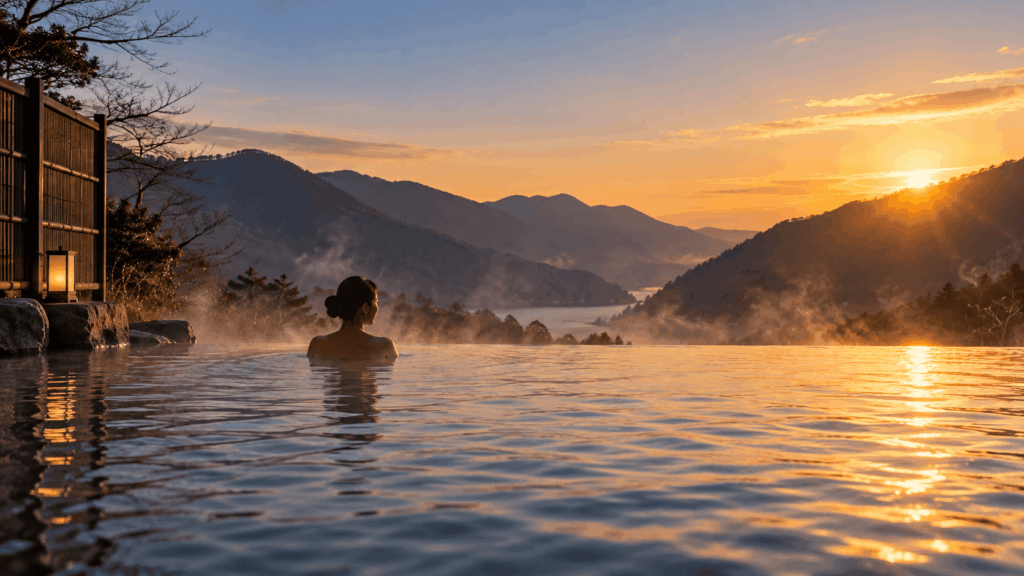
Hakone Yuryo, in the Yumoto area, is a day-use onsen rather than a hotel. A free shuttle runs from Hakone-Yumoto Station every 10 to 15 minutes and takes about three minutes — it is not attached to the station, so allow time to find the stop. The public bath is open until 20:00 on weekdays and 21:00 on weekends and holidays, with last admission an hour earlier, and entry is roughly ¥1,700 to ¥2,000 depending on the day. Tattoos have been permitted since April 2025, and private open-air baths are available for families with young children, who cannot use the main public bath. For more options, see our full guide to the best day-trip and tattoo-friendly onsens in Hakone.
What I remember from winter trips is not the temperature of the water but the contrast: cold wind on the lake in the afternoon, then heat and quiet at the end of the day. It is the part of a winter Hakone itinerary people talk about on the train back.
Getting Around Hakone in Winter — Train, Bus or Car?
Transport is where winter trips succeed or fail. The default recommendation for visitors without winter-driving experience is public transport, but it is not flawless: buses sit in traffic, the ropeway stops in strong wind, and the pirate ship cancels in bad weather. The honest comparison is not “public transport is safe, driving is dangerous” — it is about which risks you are better equipped to manage.
| Option | Advantages | Winter drawbacks | Best for |
|---|---|---|---|
| Public transport (Tozan Train, bus, ropeway, cruise) | No winter driving; the Freepass covers eight modes; fits the classic loop | Multiple transfers; bus delays; ropeway and cruise weather closures | First-time visitors, anyone uneasy about icy roads |
| Rental car | Flexibility; useful for early starts and out-of-the-way stops | Ice and snow; Owakudani parking queues; unfamiliar mountain roads | Experienced winter drivers with time to spare |
| Guided day tour from Tokyo | Transport and timing handled; no route decisions | Fixed schedule; stops may change for weather or operations; less spontaneity | Travellers who want the sights without the logistics |
The Hakone Freepass is the standard choice for independent travel: unlimited use of the Tozan Train and cable car, the ropeway, the sightseeing cruise and designated buses. A two-day pass from Shinjuku costs around ¥7,100 for an adult, and from Odawara around ¥6,000, with three-day versions slightly higher. For the classic loop in one day it usually pays for itself; if you are visiting one area only, it may not. See our detailed guide on whether the Hakone Freepass is worth it for a full breakdown.
Kai’s tip: When I am guiding in winter, I usually build the day around the train and the bus rather than a car. It is not because public transport is risk-free — it is because the risks are someone else’s to manage, and I would rather spend the day watching the weather than watching for ice. The trade-off is real: you will wait, you will transfer, and you may have to abandon a stop.
If icy roads or a chain of transfers is the part of a winter Hakone trip you are least comfortable with, a guided day tour from Tokyo removes that particular problem, though it replaces it with a fixed itinerary that may be adjusted for weather or transport conditions.
For travellers who want Hakone’s main winter sights but would rather avoid managing multiple connections, a private tour offers a different trade-off: less transport planning and more flexibility within the day, in exchange for a higher cost.
Why I’d book this one
- Comfortable transport: Recent travellers mention comfortable private vehicles and helpful guides, making the journey between Hakone’s sights less demanding.
- A more flexible pace: Reviews highlight the ability to adjust stops and spend time at the places that matter most, rather than rushing through a rigid checklist.
- Less planning on the day: Transport and route decisions are handled for you, although snow, traffic and seasonal closures can still require itinerary changes.
See live availability, pickup options, current inclusions and recent traveller reviews for this private Hakone day tour before deciding whether the extra convenience is worth the cost. Check any ropeway or cruise arrangements separately, as seasonal closures and admission costs may affect the experience.
Should You Drive in Hakone in Winter?
Driving gives you the most freedom and the least margin for error. Mountain roads are narrow in places, shaded sections hold ice, and the Owakudani car park can absorb an hour of your day before you have seen anything. Winter tyres or chains are not a guarantee on a road you do not know, and “I have driven in snow before” is a different statement from “I have driven on a frozen mountain road in Japan”. If you do drive, go early, check conditions before leaving, keep the day short, and treat the car park queue as part of the visit. If snow is forecast, the better decision is usually to leave the car where it is.
What to Check on the Day
Winter operating information changes faster than any article can track. Before leaving your accommodation, check the operator status pages for the ropeway, the sightseeing cruise, the Tozan Train and the buses, and look at the live cameras for Owakudani and the lake. Hakone Navi and Odakyu’s Hakone area status page are the two sources worth bookmarking. Then decide in advance which stop you will drop if something is closed. Travellers who plan to “see how it goes” tend to rush every stop and enjoy none of them.
A Realistic One-Day Hakone Winter Itinerary
A winter day trip should aim for two to four main experiences plus an onsen, not a complete circuit. The blocks below are a framework rather than a timetable; check current train, ropeway and cruise schedules for your date, because winter frequencies are lower and last departures come earlier.
Travelling independently? Compare current Hakone Freepass options, prices and transport coverage on Klook before finalising your winter route, particularly if planned ropeway closures could affect how you use the pass.
Early morning: Arrive at Hakone-Yumoto as early as you can and take the Tozan Train to Gora, then the cable car to Sounzan. The mountain railway is slow and scenic by design; do not plan it as a quick transfer.
Mid-morning: Head to Owakudani by ropeway, or by substitute bus if your dates fall inside a maintenance window. Walk the vents, buy the black eggs if the queue is short, and keep the visit under an hour.
Midday: Continue to Togendai and take the pirate ship across Lake Ashi to Moto-Hakone or Hakone-machi. Eat before or after the crossing rather than queuing at the busiest hour.
Afternoon: Add Hakone Shrine or a lakeside walk only if weather and energy allow, then take the bus back toward Hakone-Yumoto with a buffer for traffic.
Late afternoon: Finish at a day-use onsen near Yumoto, then walk or shuttle to the station for the journey back to Tokyo.
The most common winter mistake is treating the loop as a challenge to complete. If the ropeway closes, the lake disappears into cloud, or the bus is late, drop one stop and protect the rest. A shorter day that ends in an onsen is a better winter day than a full circuit spent running.
If you would rather not build this schedule yourself, or you want transport and timing handled for you, a guided day tour from Tokyo covers the same core sights with less decision-making — at the cost of flexibility.
Day Trip or Overnight?
In winter, a day trip works if you accept a narrower version of Hakone: one or two outdoor sights, the lake and an onsen. It is a long day from Tokyo, daylight is short, and any delay eats directly into your remaining time.
An overnight stay buys you something specific: a buffer. You can move the ropeway to the following morning if the weather turns, use the onsen in the evening rather than squeezing it in before the last train, and see the lake before the day-trippers arrive. If your priority is relaxation rather than coverage, one night is the better use of the same budget.
Frequently Asked Questions
Does it snow in Hakone in winter?
Yes, it can snow, but snow is not guaranteed and continuous cover is unusual. Hakone’s official tourism guidance notes that snow most often falls in the upper areas — around Sengokuhara and Lake Ashi — and most typically in February. Hakone-Yumoto is lower and less likely to hold snow. It also helps to distinguish snowfall from snow on the ground: flakes during your visit are memorable, but whether they settle depends on temperature and timing.
Is Hakone worth visiting in December?
Yes, if your reasons are Mt. Fuji views, onsen and crisp winter air rather than snow. December is the gentlest of the three winter months, with an average around 3.4°C at Hakonemachi, and a comfortable introduction for travellers who have not experienced a Japanese mountain winter. Plan around two things: the ropeway closes at 16:15 from December, and the Owakudani–Sounzan section is scheduled to be suspended from 7 to 24 December 2026, with substitute buses running instead.
Is Hakone worth visiting in January?
Yes, provided you dress for it. January is the coldest-feeling month, with an average around 0.4°C at Hakonemachi and a real risk of ice on paths, stairs and shaded roads. The lake is where the cold is most underestimated, because wind across the deck makes it feel far colder than the air temperature suggests. If your dates include 2 or 3 January, expect congestion and traffic control around the Hakone Ekiden course.
Is February a good time to visit Hakone?
February gives you the best chance of seeing snow at higher elevations, which suits travellers who specifically want a snowy mountain scene. It is still not a promise: a February trip can be clear and dry, or wet at lake level with white summits above. Be aware that the Togendai–Ubako–Owakudani ropeway section is scheduled to be closed from 12 January to 26 February 2027, so the classic ropeway crossing is replaced by bus for most of the month.
Can you do Hakone as a day trip in winter?
Yes, but plan a smaller day than you would in summer. Start early, check ropeway, cruise and train status before leaving Tokyo, choose two to four main experiences, and keep a buffer for delays. A realistic winter day trip is Owakudani in the morning, the lake around midday and an onsen near Hakone-Yumoto before the journey back. Trying to complete the full loop in low light and short operating hours is where most day trips go wrong.
Is the Hakone Ropeway open in winter?
The ropeway operates year-round in principle, with shorter hours from December to January (09:00 to 16:15) and occasional suspensions for strong wind, inspections or maintenance. This winter, two sections are scheduled for maintenance closures: Owakudani–Sounzan from 7 to 24 December 2026, and Togendai–Ubako–Owakudani from 12 January to 26 February 2027. Substitute buses operate during those periods. Because schedules change, confirm the current status on the official Hakone Navi or Odakyu Hakone operation pages before you travel.
Final Verdict: Which Winter Traveller Are You?
Hakone in winter rewards a particular kind of traveller and frustrates another. The difference is rarely about budget or fitness; it is about what you are willing to trade. Here is how I would decide.
Choose Hakone in winter if you want Mt. Fuji views, an onsen and volcanic scenery, and you can accept that snow is a possibility rather than a plan. Choose another option if a guaranteed snowscape is the main goal — in that case, look at destinations where winter snow is reliable rather than hoping for it in Hakone.
For first-time visitors: December or early February works well, with Owakudani in the morning, the lake at midday and an onsen at the end. Book the ropeway into the plan only after checking the maintenance calendar, and keep one sight as an optional extra.
For couples and onsen-focused travellers: an overnight stay is worth more than a longer list of sights. Winter is when a ryokan or a day-use bath earns its price, and having a buffer means a cloudy afternoon does not ruin the trip.
For families with young children: the pirate ship and the black eggs are the reliable hits, and both are short enough to hold attention. Watch the ice rather than the temperature, keep outdoor blocks under an hour, and use the cabin on the lake rather than the deck.
For travellers on a tight schedule: a guided day tour from Tokyo makes sense if the logistics are the part you dread, because winter is when transfers and closures consume the most time. If you are comfortable with trains and buses, the Freepass and an early start will get you to the same places with more freedom.
For repeat visitors and photographers: go in January or February for the clearest air, accept that the ropeway may be partly replaced by bus, and build the day around light rather than around stops. The hour after sunrise at the lake is worth more than any itinerary.
What I would tell a friend visiting for the first time is simple: pack for the mountain, not for Tokyo, put Owakudani early, keep one stop disposable, and finish in an onsen. Do that, and winter is the best version of Hakone. Expect guaranteed snow, and it may be the most disappointing.
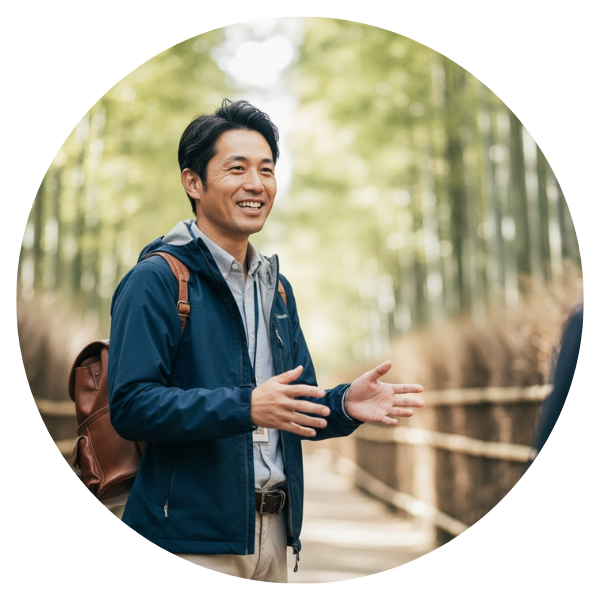
Hi, I’m Kai. I’m a Tokyo-based travel writer, tourism industry insider, and the author of a published guidebook for international visitors to Japan. With over 10 years of professional experience at a leading Japanese tourism company, my mission is to help you skip the tourist traps and navigate Japan’s best destinations like a local. I believe the perfect day trip is like a traditional kaiseki meal: a beautiful balance of precise planning and unforgettable seasonal discovery. When I’m not out conducting field research, you’ll usually find me drafting new itineraries with one of my favorite fountain pens!