
Nagasaki looks small on a map, which is why so many travelers assume a single day will cover it. But the city spreads its main sights across hills and districts that don’t sit side by side, and the hours each one keeps don’t line up neatly. The real answer to “how many days in Nagasaki?” comes down to how much you’re willing to leave out.
For most first-time visitors, two full days is the sweet spot. One full day is workable if you prioritize ruthlessly. Three days is worth it if you want to add Gunkanjima, spend unhurried time in the museums, or keep a buffer for bad weather.
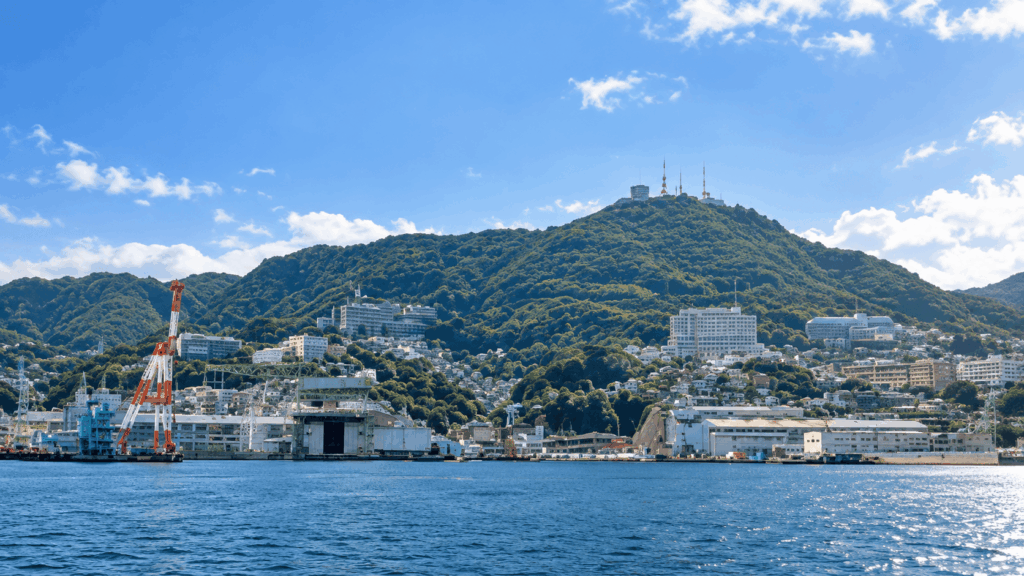
Short on time? If you only have one day — or want to make the most of one day within a two-day stay — a customizable private guide may take some of the route-planning pressure off. Check the 4- and 6-hour options, current dates, and traveler reviews for this Nagasaki private tour before deciding whether a guided visit fits your schedule.
How Many Days Do You Need in Nagasaki?
Nagasaki is compact, but it is not frictionless. The distance between two dots on the map rarely tells you the real travel time, because you’re often waiting for a tram, walking uphill from the stop, and watching the clock against very different closing times. That gap between the map and the day is the single biggest reason one day can feel rushed and two full days can feel calm.
In practice, the answer breaks down like this:
- 1 full day — possible, if you accept that you’ll cover the Peace District and one historic area well, and treat everything else as optional.
- 2 days — ideal for most first-time visitors, and the length that lets you stop racing closing times.
- 3 days — useful for Gunkanjima, deeper museum visits, slower walking paces, and weather flexibility, but not necessary for everyone.
Based on guiding visitors around the city, the mistake I see most often isn’t choosing too few days — it’s trying to fit too many districts into one. Travelers who plan around areas rather than a spot count tend to enjoy Nagasaki far more than those chasing a checklist.
Quick Answer: 1, 2, or 3 Days?
- 1 day = possible (highlights only, with real compromises).
- 2 days = ideal for most first-time visitors.
- 3 days = worth it for Gunkanjima, slower pace, or weather backup.
The question isn’t really “can I see the famous places?” — most people can. It’s “how much of the day do I want to spend without watching the clock?”
1 vs 2 vs 3 Days at a Glance
| Time in Nagasaki | Best for | What you can realistically cover | Main compromise | Recommended? |
|---|---|---|---|---|
| 1 full day | Travelers on a tight Kyushu schedule who accept prioritizing | Peace Park and the Atomic Bomb Museum in the morning; one historic area in the afternoon (Glover Garden/Oura or Dejima and the central streets); Mt. Inasa in the evening only if energy and weather allow | You choose between historic districts, skip Gunkanjima, and have little slack for queues or a slow museum visit | Conditional — yes if you prioritize |
| 1 night / about 1.5 days | Travelers arriving in the early afternoon, or wanting one relaxed morning | A half-day arrival block plus one full day — realistically the Peace District, one historic area, and possibly Mt. Inasa | Depends entirely on arrival and departure times; a late arrival collapses this to one effective day | Good, if your arrival time is early |
| 2 full days | Most first-time visitors | Peace District on day one with Mt. Inasa at night; Glover Garden, Oura, and Minamiyamate plus Dejima and the central streets on day two — without racing closing times | Still no Gunkanjima landing, and you may drop one smaller sight | Yes — the best balance for most |
| 3 days | Travelers who want Gunkanjima, deeper history, a slower pace, or a weather buffer | Everything in the 2-day plan, plus a Gunkanjima cruise, quieter temple areas, and time for cafés and photography | One extra hotel night, and time taken from another stop on your Kyushu route | Yes, if those extras genuinely matter to you |
One point worth stressing: one night is not the same as one day. A single night can give you anywhere from half a day to nearly two, depending on when you arrive and leave — which is why the row above for “1 night” sits between the two.
Is One Day Enough for Nagasaki?
Yes — one full day can be enough, if this is your first quick visit and you’re comfortable choosing priorities. No — one day is not enough if you want to visit several museums in depth, cover both Glover Garden and the Oura area, walk Dejima and the central streets, and still catch Mt. Inasa without rushing.
The catch is that the day’s shape matters more than its length. The Atomic Bomb Museum opens early (around 8:30, seasonal hours vary), which means the Peace District is the natural place to start. Dejima stays open much later than most sights — commonly until around 21:00 — so it can be moved to the back half of the day if your morning runs long. Building the day around those two anchors is what makes a single day realistic.
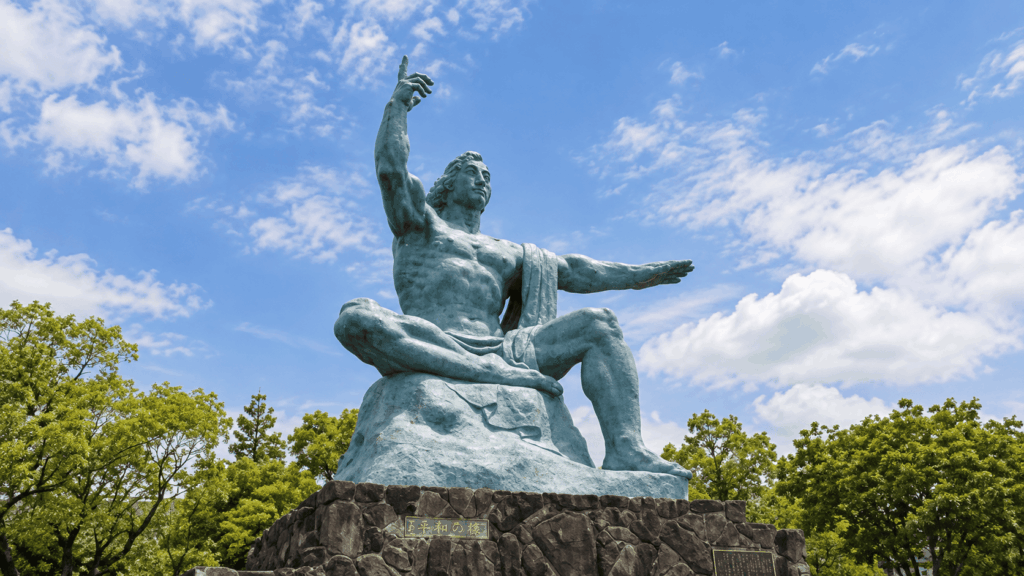
Travelers commonly describe a one-day visit as “possible but rushed,” and that framing is fair. Where people run into trouble is assuming they’ll fit the Peace District, a full Glover Garden and Oura wander, Dejima, and a night view into the same daylight hours. Something has to give, and it’s better to decide what that is in advance. To help you narrow down your choices, see our list of the best things to do in Nagasaki.
What I Would Prioritize With Only One Day
Think in three blocks rather than a spot list:
- Morning — Peace District. Peace Park, the Atomic Bomb Museum, and Hypocenter Park sit together, and starting early keeps you ahead of the crowds.
- Afternoon — choose one, not both. Either Glover Garden and the Oura Cathedral side, or Dejima and the central streets around Meganebashi.
- Evening — Mt. Inasa, only if it fits. Treat the night view as a bonus that needs energy, weather, and a workable trip up the mountain.
If you go the Glover/Oura route, remember the historic district sits on a slope; if you choose the central route, Dejima’s late closing gives you flexibility that Glover Garden doesn’t. Choosing one and giving it room beats splitting the afternoon and enjoying neither.
Kai’s tip: What catches people out at the Peace District isn’t the park itself — it’s the ride back. On a recent visit, arriving around opening time meant a quiet, calm walk through the park, but by the time I left, the Peace Park tram stop had filled with groups all leaving together. Walking one stop to Ohashi and boarding there made the return trip noticeably smoother that day. It’s worth keeping that in your pocket rather than assuming the nearest stop is always the fastest.
Also budget more than you expect for the Atomic Bomb Museum. Visitors who read the exhibits carefully routinely spend well over an hour — sometimes closer to two — so don’t lock yourself into a 45-minute slot and then feel rushed through the rest of the day.
What to Skip If You Only Have One Day
With a single day, resist the urge to include all of the following:
- A long Gunkanjima excursion — the boat trip and landing easily consume half a day.
- Every stop in the central historic district.
- More than one museum in depth.
- Both a slow Glover Garden exploration and a long Dejima visit.
- Backtracking between districts to “squeeze in” one more sight.
This isn’t about importance — it’s about time efficiency and what can be swapped. Dejima closing late makes it a flexible piece; Glover Garden rewards unhurried time in a way that a rushed visit doesn’t. Cutting the extras isn’t settling. It’s what turns a frantic day into a good one.
Why Two Days Is the Sweet Spot for Most First-Time Visitors
The case for two days isn’t that you’ll see twice as many places. It’s that two days let you split the city by area and by time of day, so you stop racing closing times and stop doubling back.
With one day, you’re constantly solving a timetable: the Atomic Bomb Museum’s hours on one side, Dejima’s late closing on the other, and a sunset you don’t want to miss. With two days, that pressure dissolves. You can give the Peace District a full morning, move through Glover Garden and Oura without watching the clock, and still leave an evening free for Mt. Inasa.
This matters even more than the map suggests, because Nagasaki’s sights sit at different elevations and in separate clusters — the Peace District in the north, Glover Garden and Oura in the south, Dejima and the central streets in between, and Mt. Inasa off to one side. Grouping them across two days is what keeps the walking realistic. Travelers repeatedly mention the hills and the walking load as the thing that made a packed itinerary harder than expected.
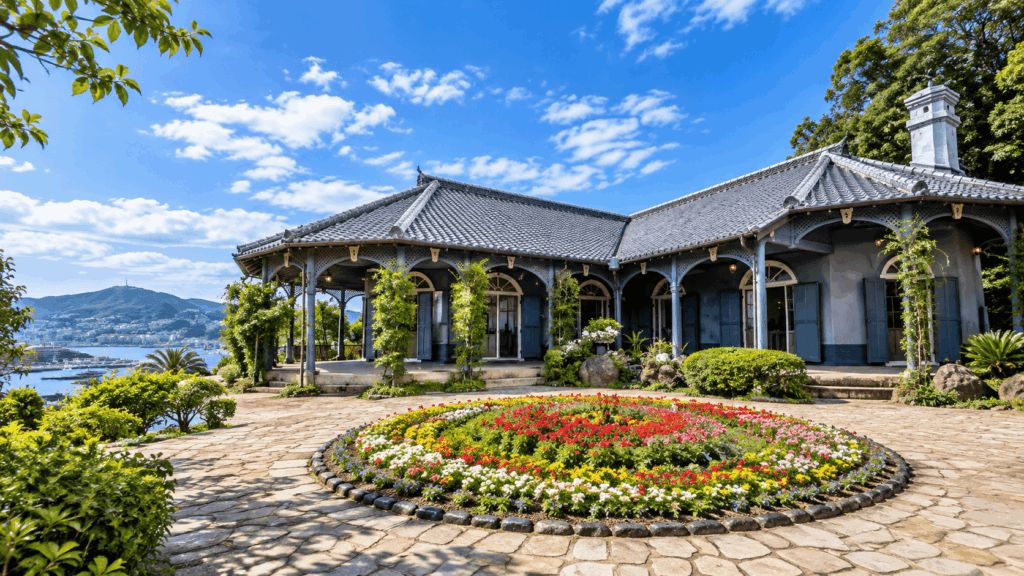
Kai’s tip: Glover Garden is often treated as a 30-minute photo stop, and that’s a mistake. On an afternoon visit, the garden was lively with Japanese school groups, which is part of why the timing of your visit matters. A second day gives you the freedom to shift this stop to a quieter hour instead of forcing it into a fixed slot. The garden does have moving walkways that ease the climb, but stone paths and slopes remain, so it’s still a place to visit with some energy in reserve. Standing at the upper level, the view over the harbor is the part guests tend to linger on — worth leaving room for rather than sprinting past.
A Simple 2-Day Nagasaki Itinerary Structure
This isn’t a minute-by-minute plan — just the shape that works. You can switch the order to suit the weather, closing times, and your own pace.
- Day 1 — Peace District + central area + night view. Peace Park and the Atomic Bomb Museum in the morning; central Nagasaki and Dejima in the afternoon; Mt. Inasa for the night view if conditions allow.
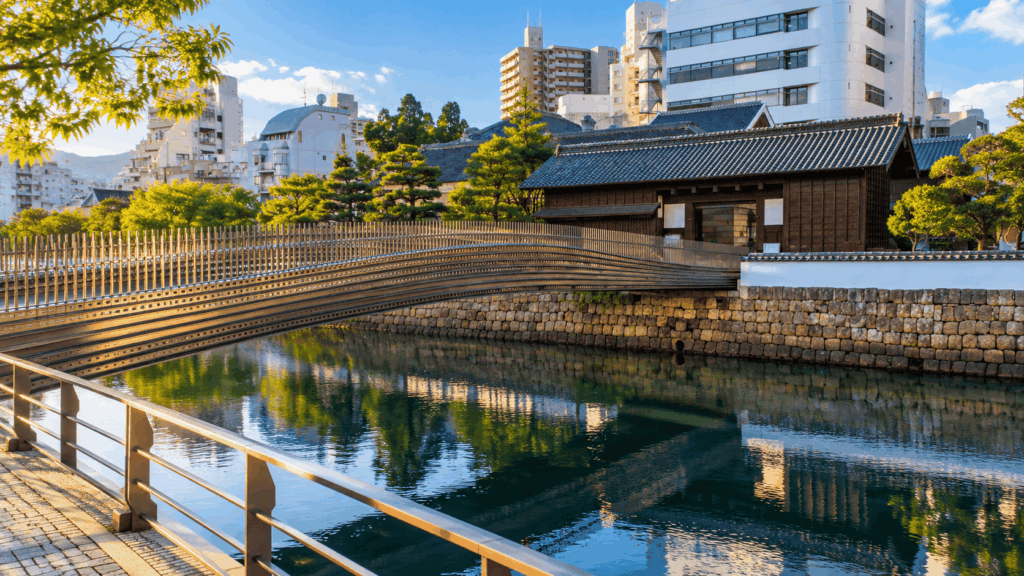
- Day 2 — Southern historic district. Glover Garden, Oura Cathedral, and the Minamiyamate and Higashiyamate slopes; Shinchi Chinatown or Meganebashi depending on your pace.
The main variable is the evening. Mt. Inasa works best when the weather is clear and you’ve saved enough energy — so if day one runs long, the night view is the piece that’s easiest to move to day two rather than abandon.
When Three Days in Nagasaki Is Worth It
Three days isn’t necessary for everyone, and pretending otherwise would be dishonest. But for certain travelers, the third day isn’t filler — it’s the difference between a good trip and a great one.
Add a third day if you want any of the following:
- Gunkanjima (Hashima Island). A landing cruise departs from Nagasaki Port, and it’s a substantial half-day commitment.
- Deeper museum time. The Atomic Bomb Museum and the related memorial sites reward unhurried attention.
- A slower pace. If hills and long walks wear you out, spacing the sights across three days changes the whole experience.
- Weather flexibility. Any activity that depends on the sea or the sky benefits from a spare day.
- Cafés, photography, and city wandering. The central slopes and quiet temple areas are worth time that a tight schedule can’t give them.
The Gunkanjima cruise deserves a specific warning: landings are weather-dependent and can be cancelled or changed to a non-landing cruise when sea conditions are poor. Note also that most operators don’t refund the boarding fee if the boat can’t land. If Gunkanjima is a priority for you, that’s the strongest single reason to build in a spare day — and it’s exactly the kind of plan that’s safer with three days than two.

Treat the third day as an excursion day, a slower day, or a weather-buffer day — not as a day for chasing even more spots. That reframing is what stops three days from feeling like too much.
If Gunkanjima is your main reason for adding a third day, check current cruise dates, departure options, and booking conditions for Battleship Island. This listing provides Japanese-language guidance, and island landings remain weather-dependent.
You Probably Do Not Need Three Days If…
Skip the third day if any of these describe you:
- You mainly want the highlights and are happy to see them at a brisk pace.
- You’re comfortable moving through museums in a short visit.
- You’re not planning to visit Gunkanjima.
- You want to spread your time across several Kyushu cities.
In those cases, two days covers Nagasaki well, and the third day is better spent elsewhere on your route. This is really a question of opportunity cost: every extra day in Nagasaki is a day taken from Fukuoka, Kumamoto, Beppu, or Kagoshima.
One Night or Two Nights in Nagasaki?
This trips up a lot of travelers, because “days” and “nights” get used as if they’re interchangeable. They aren’t. What matters is your usable sightseeing hours, which follow your arrival and departure times — not the raw number of nights.
- 1 night: if you arrive around midday, you can salvage roughly a day and a half. If you arrive in the evening, you’re really left with only the next day.
- 2 nights: this is the easiest way to secure around 1.5 to 2 full sightseeing days, especially if you arrive early on day one and leave late on the final day.
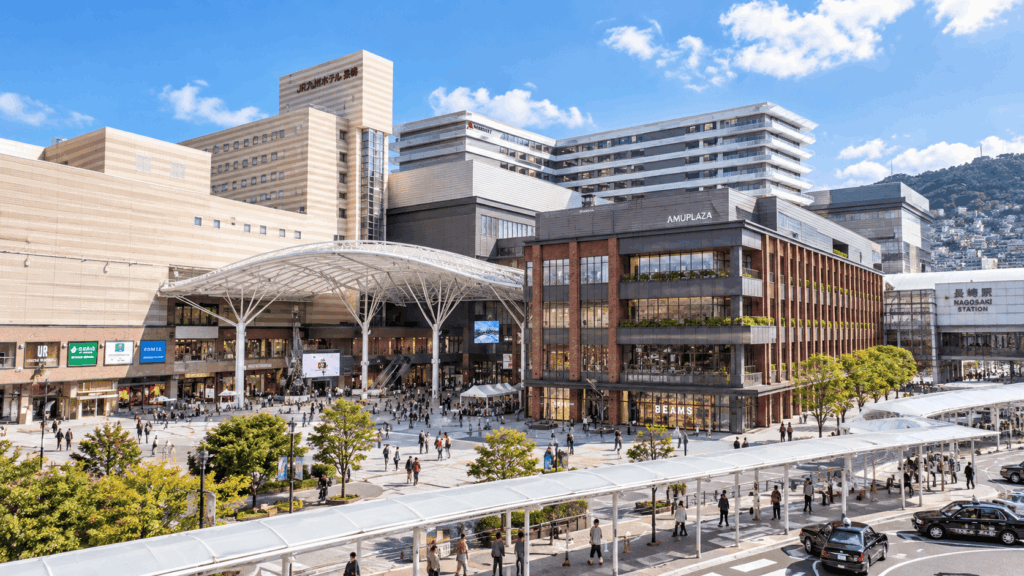
So two nights doesn’t automatically mean two full days — but it gives you the best odds of getting close. Check your actual train times against Nagasaki Station before you book, because an hour or two either way can change the entire shape of your visit. If you’re deciding between areas, our guide on where to stay in Nagasaki covers the best spots for first-time visitors.
The strongest argument for staying overnight rather than day-tripping is the night view. Mt. Inasa is one of Japan’s best-known night panoramas, and it’s genuinely hard to enjoy if you’re also watching a return train. That’s the piece of the trip most people would regret cutting. For the best ways to reach the observatory, check out our detailed guide on how to get to Mount Inasa.
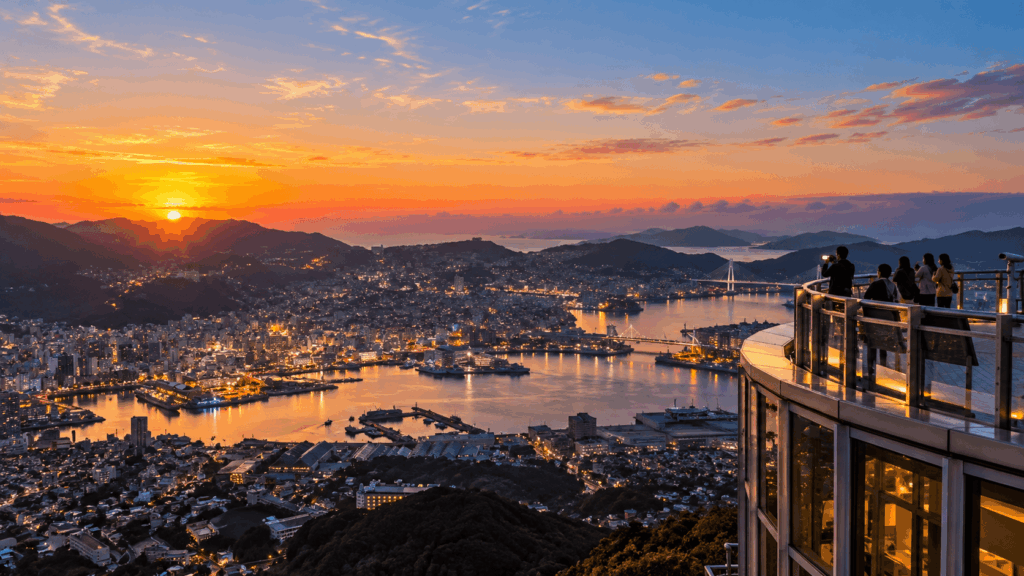
Kai’s tip: The trap at Mt. Inasa isn’t the view — it’s the access plan. On the evening I visited, summit vehicle restrictions were in effect, so we ended up walking up to the observatory from partway down the mountain, and the steep climb left us far more tired than expected. The ropeway cabin was crowded, though the observation deck itself was relaxed enough to enjoy the view properly. The point isn’t that the ropeway, the slope car, or the road is “the” answer on any given night — operations and vehicle restrictions change, and the slope car has been out of service for extended periods after a long closure. Check the current status on the official site on the day, and don’t assume your preferred way up will be running.
Travelers also routinely mention long evening waits for the ropeway, so if you’re set on the night view, it pays to go a little earlier than the peak and leave some margin.
Nagasaki Day Trip From Fukuoka vs Staying Overnight
Can you visit Nagasaki as a day trip from Fukuoka? Yes. Should you expect it to equal a full day in the city after sleeping there? No — and the reasons are all about usable time.
The train route runs from Hakata Station via Takeo-Onsen Station, using the Relay KAMOME limited express and the Nishi Kyushu Shinkansen KAMOME. The fastest journey is around one hour and twenty minutes, but with the transfer it’s realistically closer to an hour and a half door to door. Round trip, that’s roughly three hours of train travel before you’ve seen anything. If you’re debating whether to base yourself in Fukuoka or move entirely, check out our Fukuoka vs Nagasaki comparison.
| Factor | Fukuoka day trip | Staying overnight |
|---|---|---|
| Usable sightseeing hours | Roughly 6 to 8 hours, minus station-to-sight transit | Far more flexible — you control the start and end of the day |
| Evening flexibility | Limited; the last train constrains any night view | Mt. Inasa at night becomes realistic |
| Train travel | About 2.5 to 3 hours round trip | Split across arrival and departure days |
| Fatigue | Higher — you’re packing the city into the middle of a travel day | Lower, especially with hills and walking |
| Best for | Peace Park plus one or two districts, if your schedule is tight | Peace District, Glover/Oura, Dejima, and Mt. Inasa without racing |
Travelers weighing this up commonly report that a day trip “works but feels short.” If you only want the Peace District and one historic area, a day trip can be efficient. If you want a slow museum visit, Glover Garden, the central city, and the night view together, a day trip will feel rushed. For many people, one night in Nagasaki is the single best upgrade to a Fukuoka-based Kyushu itinerary.
What Makes Nagasaki Take Longer Than It Looks?
This is the heart of the whole question. Nagasaki is small, but a sightseeing day here is not fast. Six things quietly add up:
- The tram is convenient but not door to door. You still walk to the stop, wait, ride, and then walk from the stop to the actual sight — often uphill.
- Hills and slopes. Many key areas sit on gradients, and that slows you down in ways a flat city never would.
- Museums aren’t quick photo stops. A careful visit to the Atomic Bomb Museum takes real time.
- Sights keep different closing times. Dejima stays open late; Glover Garden doesn’t. Your day has to bend around that.
- The night view is a separate trip. Mt. Inasa is an evening excursion of its own, not something you fold into the afternoon.
- Popular times create queues. Around sunset and peak hours, waits build — especially for the ropeway.
Put those together and you get the pattern travelers describe as “stop-start”: wait for the tram, walk, climb, spend a long while inside a museum, return to a stop, check the next closing time, then make a separate trip up the mountain. Individually, each friction is small. Stacked across one day, they’re exactly why a compact city can still consume your schedule.
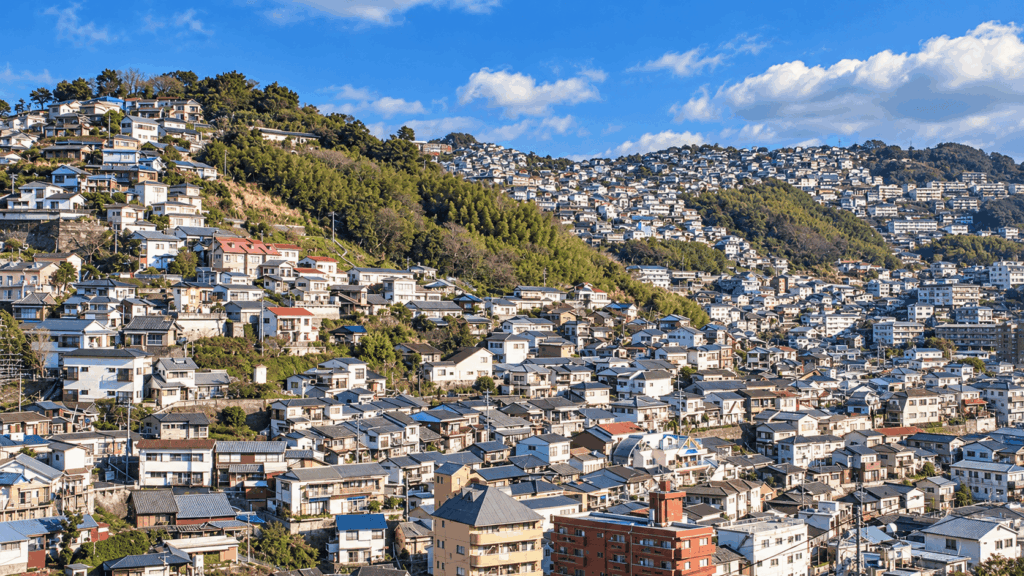
Three small examples make the point, drawn from guiding visitors here: leaving the Peace Park tram stop at a busy moment, negotiating the slope and school groups at Glover Garden, and misjudging the Mt. Inasa access on a night when restrictions applied. None is dramatic on its own. Together, they show why a “short” day in Nagasaki rarely runs to the plan.
This is also why a private local guide can be more useful here than the difficulty of the city suggests. Nagasaki isn’t impossible to navigate — but someone who knows the areas can reduce the decision-making and the backtracking, which is precisely what eats into a single day. If your time is tight, it’s worth weighing before you commit to going it alone.
If you’d rather spend your limited sightseeing hours exploring Nagasaki than deciding how to connect each district, a flexible private guide is worth considering. For travelers who want historical context and a more personalized route without committing to a rigid group itinerary, the Nagasaki Customized Private Tour is one option to compare with independent sightseeing.
Why I’d book this one
- Flexible sightseeing priorities. Recent travelers highlight guides who adapt the itinerary to their interests rather than following a rigid checklist, which is particularly useful when you only have four to six hours.
- More context at historic sites. Reviews frequently praise the guides’ historical explanations and their attention to walking pace and route choices around Nagasaki’s hilly districts.
- Room to check plans before committing. The listing offers flexible booking conditions, including cancellation and payment options, although you should verify the current terms for your selected date.
Keep in mind that this is primarily a walking tour, not a private-car sightseeing package. Transport and admission costs are separate, and the guide helps you prioritize the places that matter most rather than promising to fit every attraction into one day.
See live availability, start times, and recent traveler reviews for the Nagasaki customized private tour to decide whether the guided option is worth it for your schedule.
How to Decide: Stay 1, 2, or 3 Days
Read down the list and pick the line that sounds most like you.
Choose 1 day if you:
- Want the highlights only.
- Move at a fairly fast pace.
- Aren’t visiting Gunkanjima.
- Have limited time across your wider Kyushu route.
Choose 2 days if you:
- Are visiting Nagasaki for the first time.
- Want the major historical sights, Glover Garden or Dejima, and the night view without rushing.
- Prefer to spend each day in one area rather than chasing a list.
Choose 3 days if you:
- Want to visit Gunkanjima.
- Prioritize museums and history in depth.
- Walk slowly, or want to avoid long stretches on your feet.
- Want a weather buffer.
- Are traveling partly for photography or relaxed city wandering.
Should You Add Another Day?
| Traveler type / condition | Stay 1 day | Stay 2 days | Stay 3 days |
|---|---|---|---|
| First-time visitor | Possible | Best choice | Not needed unless adding Gunkanjima |
| History or museum lover | Too tight | Good | Best choice |
| Fast-paced traveler | Workable | Comfortable | Usually more than needed |
| Limited mobility or slower walking pace | Very tight | Good | Best choice |
| Want to visit Gunkanjima | Not realistic | Possible | Best choice |
| Coming as a Fukuoka day trip | Technically possible | Consider staying overnight instead | — |
| Want Mt. Inasa at night | Possible but constrained by trains | Ideal | More than enough |
If one line describes you and the table suggests two days, take the two days. Most first-time visitors who spend only one day don’t regret the sights they missed — they regret the pace they had to keep.
Frequently Asked Questions
Is one day enough for Nagasaki?
Yes, for the highlights — but expect to prioritize. One full day covers the Peace District in the morning and one historic area in the afternoon, with Mt. Inasa only if energy and weather allow. Two days is better for most first-time visitors, because it removes the pressure of racing closing times.
Are two days in Nagasaki enough?
Yes. Two full days is the best balance for most travelers: the Peace District and the Atomic Bomb Museum, Glover Garden and the Oura area, Dejima and the central streets, and Mt. Inasa at night — without excessive rushing. The main thing you’d still miss is a Gunkanjima landing.
Is three days in Nagasaki too much?
Not if you want Gunkanjima, unhurried museum time, photography, a slower walking pace, or a weather buffer. For travelers who only want the main sights and move quickly, two days is usually enough, and the third day is better spent elsewhere on your Kyushu route.
Can you visit Nagasaki as a day trip from Fukuoka?
Yes, but the round-trip train time — roughly three hours via Takeo-Onsen — cuts into your usable sightseeing hours, so it’s more rushed than spending a full day after staying overnight. A day trip works if you focus on the Peace District and one other area. A night view is hard to manage, since you’ll be watching the last train.
How many nights should I stay in Nagasaki?
For most first-time visitors, two nights is the easiest way to secure roughly 1.5 to 2 full sightseeing days. One night can be enough if you arrive early and leave late, but an evening arrival leaves you with little more than a single day. Arrival and departure times matter more than the raw number of nights.
Do I need to stay overnight to see Mt. Inasa at night?
It’s not strictly required, but it’s far easier if you do. The night view is an evening trip in its own right, and if you’re returning to Fukuoka the same day, the last train limits how long you can stay. Note that access changes: the ropeway and slope car don’t always run as expected, and vehicle restrictions can apply at the summit on busy evenings, so check the official status on the day.
Final Verdict: Which Is Right for You?
There’s no single correct answer — but there is a correct answer for your trip.
Choose two days if you’re a first-time visitor. It’s the length that lets you see the Peace District, one or two historic areas, and Mt. Inasa without spending the day watching the clock. If you take one recommendation from this guide, take that one.
Choose one day if your Kyushu schedule is genuinely tight. Lead with the Peace District in the morning, pick Glover Garden/Oura or Dejima and the central streets for the afternoon, and treat the night view as optional. You’ll see the essentials — you just won’t see them slowly.
Choose three days if you want Gunkanjima, a slower pace, or a weather buffer. The extra day isn’t for more spots; it’s for excursions, unhurried museums, and room to absorb a cancelled boat trip.
For families and travelers with limited mobility, lean toward two or three days. Nagasaki’s hills and walking load are the part people underestimate, and spacing the sights out makes the trip far more manageable.
For travelers on a tight schedule, be honest about what you’ll cut. One efficient day is a real option, and if the decision-making is what worries you, a private local guide can reduce backtracking and help you spend your hours where they matter most.
For repeat visitors, three days opens up the quieter side of the city — temple areas, slopes, and cafés — that a first visit rarely reaches. If you’ve done the highlights before, the third day is where Nagasaki gets interesting again.

Hi, I’m Kai. I’m a Tokyo-based travel writer, tourism industry insider, and the author of a published guidebook for international visitors to Japan. With over 10 years of professional experience at a leading Japanese tourism company, my mission is to help you skip the tourist traps and navigate Japan’s best destinations like a local. I believe the perfect day trip is like a traditional kaiseki meal: a beautiful balance of precise planning and unforgettable seasonal discovery. When I’m not out conducting field research, you’ll usually find me drafting new itineraries with one of my favorite fountain pens!