
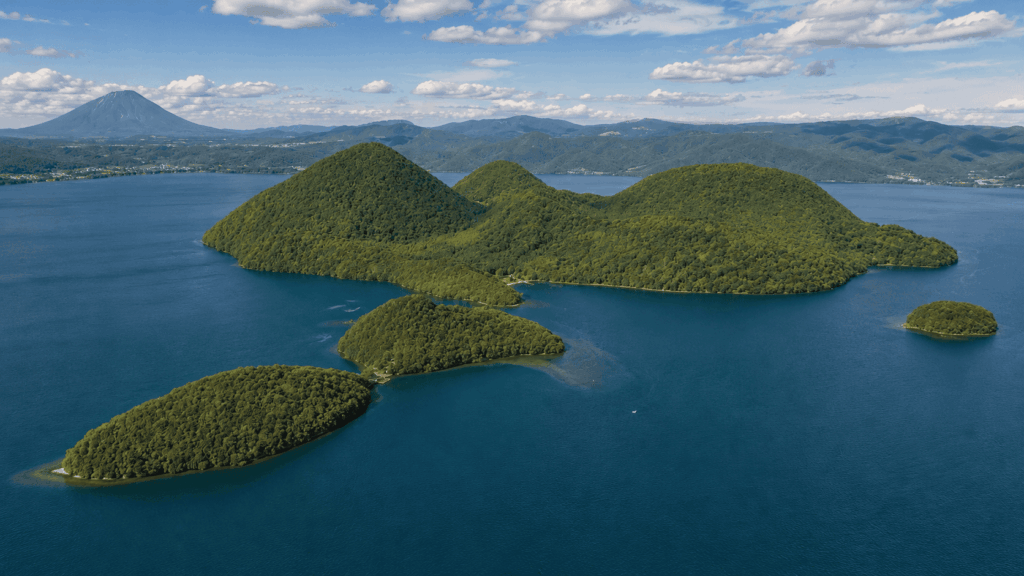
Lake Toya (洞爺湖) is one of Hokkaido’s most photographed caldera lakes—a wide, placid body of water ringed by smoking volcanoes, onsen resorts, and the walking paths of Shikotsu-Toya National Park. If you are planning a summer trip to Hokkaido and wondering whether to squeeze it into your itinerary, the honest answer depends entirely on your travel style, your means of transport, and what you expect from a lakeside stop.
In short: Lake Toya in summer is worth visiting if you enjoy quiet lakeside walks, relaxed onsen stays, volcanic landscapes, and gentle outdoor activities such as cruising or canoeing. It may feel underwhelming if you are looking for a packed day of distinct sightseeing stops, a wide choice of restaurants open late, or a fast-paced itinerary. How much you get out of the visit depends largely on whether you have a car, whether you stay overnight, and whether you time your visit for the Long Run Fireworks display (held nightly from late April through October).
This guide is designed to help you decide if Lake Toya belongs in your Hokkaido itinerary—and if so, for how long, with which transport, and at what time of year.
Car-free from Sapporo? If Lake Toya is a day trip rather than an overnight stop, a guided route that combines it with Noboribetsu and other southern Hokkaido highlights removes several transport decisions. See current start times, route options, and recent traveler reviews for this Lake Toya day tour.
Is Lake Toya Worth Visiting in Summer?
For most first-time visitors to Hokkaido, Lake Toya is a worthwhile addition rather than a must-see destination on the level of Noboribetsu or Furano (if you are deciding between the two, see our guide comparing Lake Toya and Noboribetsu).
Whether that combination appeals to you depends on the kind of traveller you are.
Who Will Enjoy Lake Toya Most
- Travellers who value a slower pace. If your ideal afternoon involves a short boat cruise, a walk along a lakefront path, and a long soak in an onsen with a view, Lake Toya delivers this without the crowds of Noboribetsu.
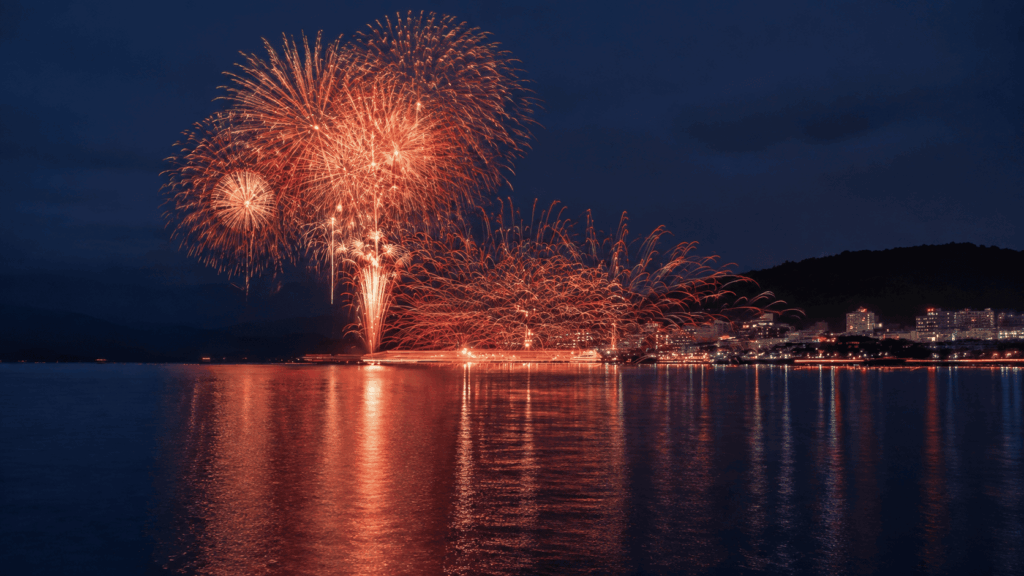
- Overnight visitors who want to see the fireworks. The Lake Toya Long Run Fireworks Display launches from barges on the lake every night at 20:45 from late April through October. Watching from the waterfront or a hotel room is the single most memorable thing you can do here, and it requires staying overnight.
- Drivers who can cover more ground. With a rental car, you can add the Usuzan Ropeway, the Silo Observatory, and the Nishiyama Crater Walking Trail to a half-day visit, making the trip considerably more rewarding.
- Families with children. The Toyako Visitor Centre (free entry) and the Volcano Science Museum (¥600 for adults, ¥300 for children) are hands-on, educational, and manageable in under an hour each. The cruise and ropeway are also straightforward logistics for families.
Who May Find It Underwhelming
- Travellers on a tight schedule. If you have only five to seven days in Hokkaido and are basing yourself in Sapporo, a round trip to Lake Toya consumes most of a day. Travellers who prioritise variety over relaxation may find the time better spent on other day trips from Sapporo.
- Car-free visitors hoping to see everything. Without a car, you are realistically limited to the Toyako Onsen lakeside area, the cruise, the visitor centre, and perhaps the ropeway if you time the buses carefully. The Silo Observatory and the crater trails require extra transport that not every bus schedule accommodates.
- Anyone looking for nightlife or extensive dining. Toyako Onsen is a small hot-spring town with a concentrated restaurant strip. Choices are limited, especially for dinner after the fireworks. A recurring observation among travellers is that planning dinner in advance is more important here than in larger resort towns.
- Repeat visitors to Japan who have seen other caldera lakes. If you have already visited Lake Shikotsu, Lake Mashū, or Lake Akan, the landscape at Lake Toya—while beautiful—will feel familiar rather than extraordinary.
What Is Lake Toya Like in Summer?
Summer at Lake Toya runs from June through August, with conditions that are noticeably cooler and less humid than in central Honshu. Daytime temperatures typically range from 19°C (66°F) in June to 25°C (77°F) in August, with cooler evenings. Rain is common—June and July see the highest precipitation—but it usually arrives in brief spells rather than all-day drizzle.
June, July or August: When Is Best?
| Month | Daytime Temp. | Rainfall | Key Feature |
|---|---|---|---|
| June | 19°C / 66°F | Moderate–high | Fewer crowds; early-summer greenery; fireworks run from late April, so you can catch them from June onward |
| July | 22°C / 72°F | High | Peak summer events (Summer Festa, Toya Summer Festival); warmest lake water for canoeing; highest accommodation rates |
| August | 25°C / 77°F | Moderate | Still warm but slightly drier; Hokkaido Triathlon in late August; last full month of peak-season lake activities |
For the best balance of comfortable weather and reasonable accommodation prices, late June and early July are the sweet spot. August is the busiest and most expensive month, but it also offers the warmest evenings for the fireworks.
What to Wear and Pack
Pack layers. A T-shirt or light blouse is fine during the day, but you will need a fleece or light jacket for the evening—especially if you plan to watch the fireworks from the waterfront at 20:45, when the lake breeze can be cool even in August. A rain jacket or compact umbrella is essential in June and July. Good walking shoes are important for the lakeside path, the ropeway summit area, and the Nishiyama Crater trail if you plan to walk it. Sunscreen and a hat are advisable on clear days, as the reflection off the lake is stronger than you might expect at this latitude.
Best Things to Do at Lake Toya in Summer
The activities below are listed roughly in order of the value they add to a one-day visit (for a comprehensive list beyond summer highlights, check our wider guide to the best things to do in Lake Toya). The table that follows summarises each experience with practical details so you can decide which ones fit your schedule and interests.
| Experience | Best For | Duration | Approx. Cost | Car-Free? |
|---|---|---|---|---|
| Lake Toya Cruise (TOYAKOKISEN) | First-time visitors; families; photographers | 50 min (no island stop) / 80 min (with island stop) | ¥1,600 / adult | Yes—departs from the pier at Toyako Onsen |
| Usuzan Ropeway | Volcano enthusiasts; hikers; panoramic-view seekers | 40–60 min at summit (6 min each way) | ¥2,000 round trip / adult | Requires bus or taxi from Toyako Onsen (about 15 min) |
| Lakeside walk + Toyako Visitor Centre | Families; budget travellers; rainy-day backup | 30–60 min | Free (Visitor Centre) / ¥600 for Volcano Science Museum | Yes—right in Toyako Onsen |
| Silo Observatory | Photographers; sunrise/sunset viewers; drivers | 15–20 min | Free | Difficult—located on the lake’s east side, served by some Donan Bus Sapporo routes |
| Canoeing or SUP | Active travellers; nature lovers; small groups | 1.5–2 hours | ¥10,000–¥13,000 / adult (guided, English available) | Toyako Onsen area—but requires advance reservation |
Take the Lake Toya Cruise and Visit Nakajima
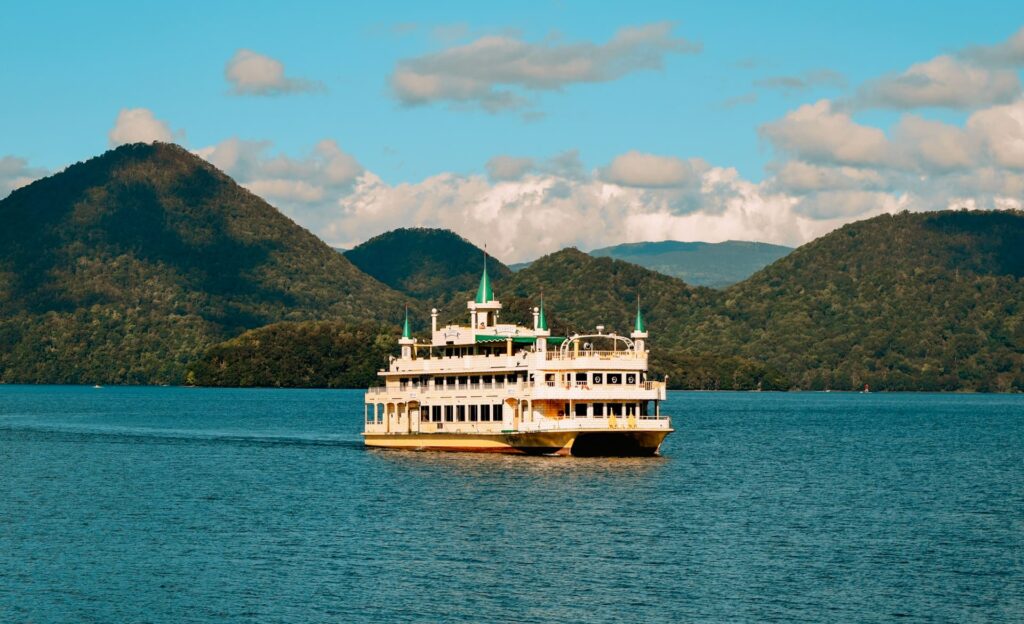
The Lake Toya cruise, operated by TOYAKOKISEN, is the most straightforward way to experience the lake from the water. Boats depart every 30 minutes between 8:30 and 16:30 during the summer season (late April through October). A standard round trip without disembarking at Nakanoshima takes about 50 minutes; if you get off on the island, add 30 minutes for exploring before the next boat arrives.
The cruise passes Nakajima, the forested island at the centre of the lake, which is protected as part of Shikotsu-Toya National Park. On clear days, the views of Mt. Usu behind the lake and the ring of green hills on the far shore are excellent. Footage and photos from the boat are a staple of any Lake Toya visit.
Best for: First-time visitors who want the classic Lake Toya experience. Families with children who enjoy boat rides. Travellers who want a relaxed, seated activity between walking or driving segments.
Where to board: Two piers serve different cruises. The Nakanoshima Cruise Pier (Ekimae-sambashi) is behind Hotel Grand Toya. The Fireworks Cruise Pier (Honshamae-sambashi) is between Toyako Manseikaku and Toya Park Hotel Tensho. Both are within walking distance of the main onsen area.
Note: A separate Fireworks Cruise operates on the same evenings as the fireworks display (20:30 departure, ¥1,700/adult). This is a popular option for hotel guests but not necessary—the fireworks are perfectly visible from the lakeside footpath and hotel windows at no extra charge.
Ride the Usuzan Ropeway to the Mt. Usu Summit
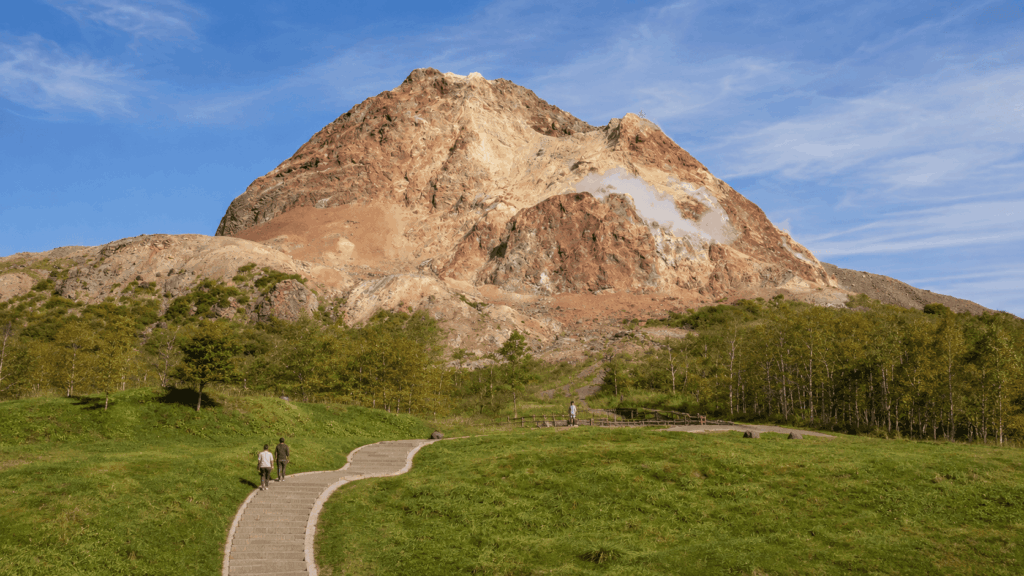
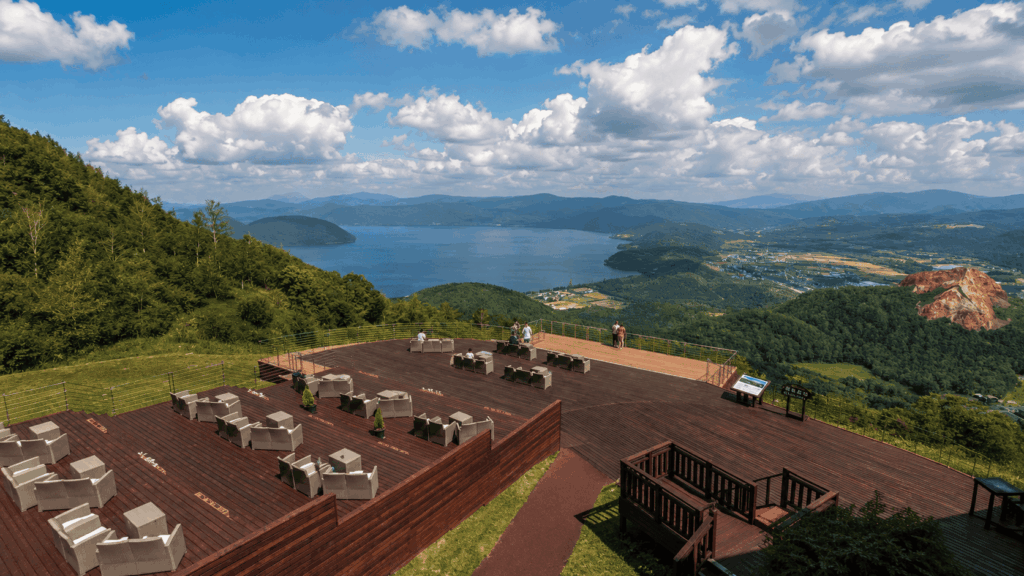
If the cruise gives you the lake view, the Usuzan Ropeway gives you the crater view. The ropeway climbs Mt. Usu in about six minutes, reaching the summit station where two observation decks overlook the lake on one side and the Usu crater basin on the other. The site is part of the Toya-Usu UNESCO Global Geopark, and the summit area includes interpretive panels about the volcano’s four major eruptions in the 20th century.
The ropeway operates year-round, but summer hours are the longest: the first upward run departs at 8:15 and the last downward run descends at 17:45 (as of July 2026). A round-trip ticket costs ¥2,000 for adults and ¥1,000 for children. Allow 40 minutes if you stay at the lake-view observation deck only, or 60 minutes if you walk across to the crater-basin viewing area.
Best for: Volcano enthusiasts. Hikers (multiple trails start from the summit station). Travellers who want a wide-angle photograph of the lake and the surrounding volcano ring.
Getting there without a car: The ropeway base station is about a 15-minute drive from Toyako Onsen. Buses run from the onsen area to the Sobetsu side of the mountain, but services are limited. A common solution for car-free visitors is to take a taxi from Toyako Onsen (around ¥2,000–3,000 one way) or to visit the ropeway as part of a guided tour that includes transport.
Weather note: The ropeway may suspend operation in strong wind, heavy rain, or poor visibility. The official website (usuzan.hokkaido.jp) shows a live camera feed from the summit station, which is worth checking before you commit to the trip.
Walk the Lakeside and Learn About the Volcano
If you prefer to stay on solid ground, the lakeside promenade in front of Toyako Onsen is a straightforward, enjoyable walk that takes you past the Toron-no-Yu footbath (free, open-air, directly on the lake), several public art installations, and the Toyako Visitor Centre. The centre is free to enter, has English panels about the caldera formation and the 2000 eruption of Mt. Usu, and is a useful first stop if you arrive unsure of what to do or what the weather will permit.
Adjacent to the visitor centre is the Volcano Science Museum (adults ¥600, children ¥300), which covers the volcanic geology of the Toya-Usu area with interactive exhibits and a small theatre. It is not a large museum—most visitors finish in 30–40 minutes—but it adds useful context before you ride the ropeway or walk the crater trails.
Best for: Budget travellers and families with school-age children. Rainy days (both the visitor centre and the museum are indoors). Anyone who wants a calm, educational component in an otherwise scenic trip.
Where: Both facilities are on the lakefront, a few minutes’ walk from the central bus stop and the main hotel strip.
Try Canoeing, SUP or Other Green-Season Activities
For travellers who want to get on the lake without the engine noise of the cruise boat, the Toya Guide Center runs guided canoe and stand-up paddleboard (SUP) sessions from the Toyako Onsen waterfront. The sunset canoe tour (¥10,000 per person, 13 years and up) lasts roughly two hours and takes you away from the pier area into the quieter parts of the lake. SUP introductory sessions (1.5 hours, ¥13,000 per person) are also available, and English-speaking guides can be requested.
These activities are small-scale and reservation-only, with limited availability in peak season. If this is your reason for visiting Lake Toya, book at least several days in advance.
Best for: Active couples and small groups. Travellers who have seen other caldera lakes from a boat and want a different perspective. Solo travellers who enjoy guided group activities.
Not recommended for: Budget travellers (prices are high compared with the cruise or entry fees). Families with very young children who are too small for SUP or canoe. Anyone arriving without a reservation—same-day availability is rare in July and August.
How Long Should You Spend at Lake Toya?
This is the question most Lake Toya visitors are trying to answer, and there is no single correct duration. The table below breaks down what is realistic at each time scale, depending on how you are travelling (you can also read our detailed guide on Lake Toya itineraries for step-by-step route options).
| Duration | Best For | What You Can Do | What You Miss |
|---|---|---|---|
| 2–3 hours (half day) | Transit stop between Sapporo and Hakodate (drivers only) | Lakeside walk, cruise (50 min), quick lunch | Usuzan Ropeway, Silo Observatory, Visitor Centre, any hiking, the fireworks |
| 5–7 hours (full day) | Self-drivers who want to cover the main sights | Cruise + ropeway + lakeside walk + lunch + Visitor Centre/Museum pick-one | Silo Observatory (15 min away by car but adds 30 min driving), Nishiyama Crater trail, sunset views, the fireworks |
| 1 night (check-in ~15:00 → check-out ~10:00) | First-time visitors who want the full experience | Cruise + ropeway + lakeside walk + onsen + dinner + fireworks + optional morning museum visit | Day-use visitors pay more for accommodation but gain the fireworks and evening atmosphere |
| 2 nights | Hikers, volcano enthusiasts, very slow-paced travellers | Everything above plus Nishiyama Crater trail, Silo Observatory, canoeing/SUP, summit hikes on Mt. Usu | Some travellers report feeling ready to leave after one night. Evaluate honestly whether your group values two evenings of quiet in a small onsen town. |
Half Day or Full Day
A half day works well for self-drivers passing through on the way from Sapporo to Hakodate (or vice versa). Park at Toyako Onsen, take the 50-minute cruise, walk the lakeside for 30 minutes, eat lunch, and drive on. This covers the basics but leaves no time for the ropeway, the Silo Observatory, or any in-depth volcano sightseeing.
A full day adds the Usuzan Ropeway and one indoor stop (the Visitor Centre or the Volcano Science Museum). Drivers can also squeeze in the Silo Observatory, which adds a 15-minute drive to the lake’s east side. Car-free visitors on a full day should stick to the onsen area—adding the ropeway requires taxis or careful bus timing that leaves little margin for error.
Travelers commonly report that a full day is the minimum needed to feel they have “done” Lake Toya, but that the day feels packed rather than relaxing. If you value a relaxed pace, a full day by rental car strikes the best balance.
Is Lake Toya Worth an Overnight Stay?
The one clear reason to stay overnight is the fireworks. The Lake Toya Long Run Fireworks Display runs nightly from 28 April to 31 October 2026, launched from barges at 20:45 for approximately 20 minutes. From the lakeside footpath along the onsen strip, the fireworks are directly overhead—an experience that is distinctly different from watching them from a distance on a day trip that ends before dark.
Beyond the fireworks, an overnight stay allows you to use your hotel’s onsen (most ryokan and hotels have lakeside or rooftop baths), eat dinner at a normal pace without watching the clock, and wake up to the lake in the morning before the day-trip crowds arrive. This is the version of Lake Toya that most travellers find memorable.
The downsides are accommodation cost (summer rates at Toyako Onsen are high, especially in August) and the limited dinner options. A recurring concern among travellers is that restaurants in the onsen town close early and offer a narrow range of cuisines. If you have dietary restrictions or prefer a wide selection, confirm your hotel includes dinner or research restaurants before you arrive.
Lake Toya Without a Car: What Is Realistically Possible?
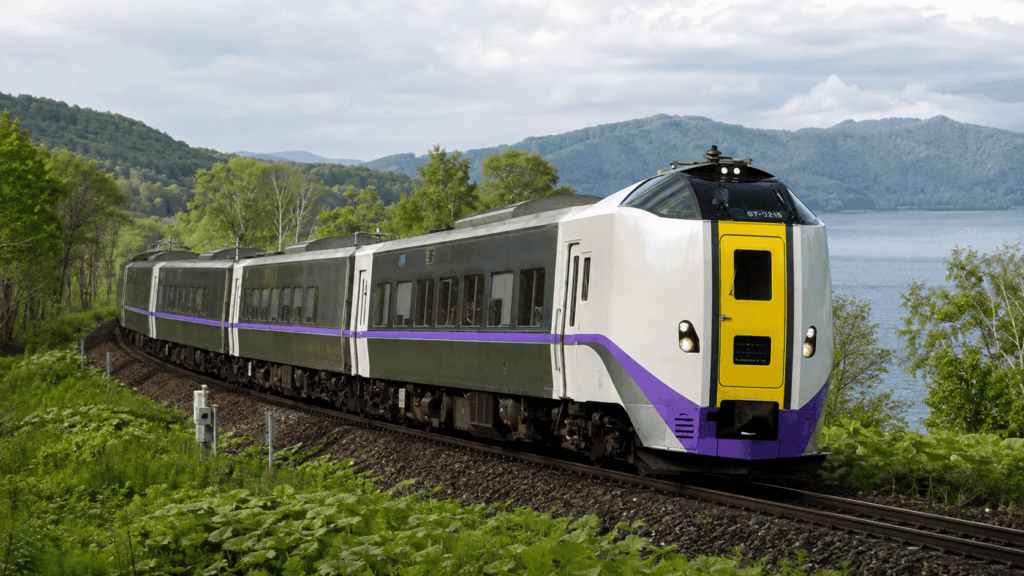
A common assumption among first-time visitors is that JR Toya Station is on the lakeside. This is not the case. The station is roughly 17 km (about 26 minutes by bus) from Toyako Onsen, the main hub for visitors. Understanding this distance is the single most important step in planning a car-free visit (for detailed schedules and routes across all transport modes, see our complete transport guide on how to get to Lake Toya).
Getting from JR Toya Station to Toyako Onsen
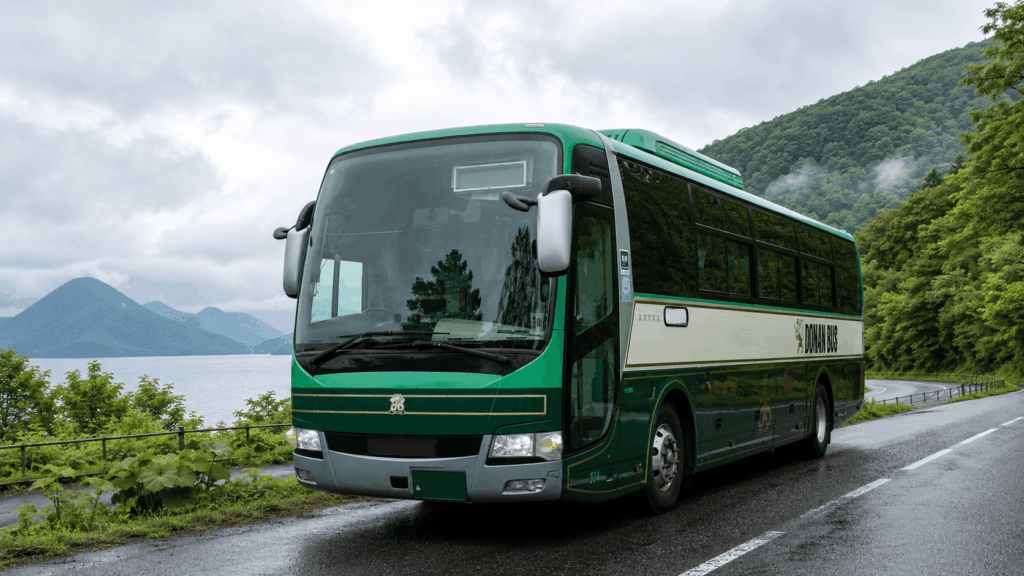
Donan Bus runs the route between JR Toya Station and the Toyako Onsen Bus Terminal. The fare is ¥400 one way (adult), and the journey takes about 26 minutes. As of mid-2026, there are approximately 16 buses per day, with the first departure from the station at 8:13 and the last from Toyako Onsen at 19:48 (arriving at the station at 20:12). Schedules shift seasonally—check the Donan Bus website for the exact timetable when you travel.
Travellers who miscalculate the bus schedule often find themselves waiting 45–60 minutes at the station or the bus terminal for the next service. The bus is reliable but infrequent, and missing the last bus back to the station in the evening effectively commits you to an unplanned overnight stay or an expensive taxi (approximately ¥5,000–6,000 from Toyako Onsen to JR Toya Station).
Rental Car vs Public Transport vs Guided Tour
The table below compares the three main ways to visit Lake Toya. None is inherently better—each suits a different travel situation.
| Factor | Rental Car | Public Transport (Train + Bus) | Guided Tour (Sapporo Day Trip) |
|---|---|---|---|
| Freedom of route | Full control; add Silo Observatory, Nishiyama Crater, Showa-Shinzan | Limited to Toyako Onsen area + ropeway (by taxi or timed bus) | Fixed itinerary; includes Noboribetsu, Cape Chikyu, Lake Shikotsu as well |
| Approx. round-trip cost per person | ¥6,000–10,000 (fuel + rental + tolls, shared) | ¥1,100 (Sapporo–JR Toya by train) + ¥800 (bus) = ~¥1,900 + ¥7,000–10,000 for JR limited express (Sapporo–Toya) | From approx. $54 (¥8,000–9,000) per person, including transport and guide |
| Fireworks possible? | Yes—drive back after 21:05 (about 2h to Sapporo by road) | No—last bus from Toyako Onsen leaves at 19:48 | No—tour returns to Sapporo in the late afternoon |
| Coverage of sights | Best—can reach all major points | Moderate—onsen area + cruise + ropeway (with taxi) is realistic | Good—includes Silo Observatory and Noboribetsu, but limited time at Lake Toya (≈70 min free time) |
| Best for | Groups of 2–4 who want flexible timing and full coverage | Budget travellers with patience who are content with the onsen area only | Sapporo-based solo travellers or couples without a car who want a packed day covering south Hokkaido highlights |
Lake Toya in Summer vs Autumn
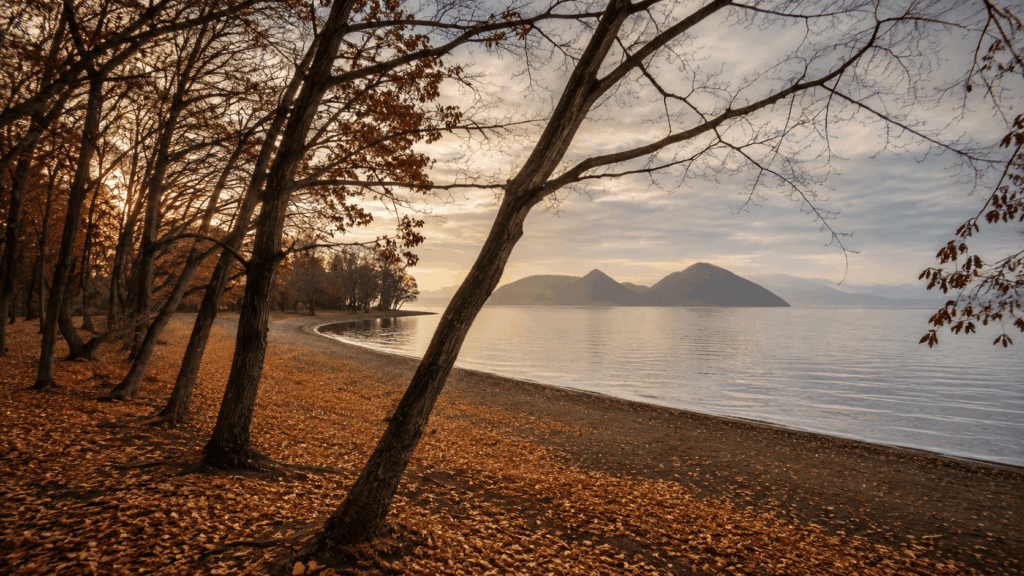
If your travel dates are flexible, you might be weighing summer (fireworks, green landscapes, water activities) against autumn (fall foliage, cooler hiking, the last window for fireworks before winter closure). The table below compares the two seasons on the factors that matter most to travellers.
| Factor | Summer (June–August) | Early Autumn (September) | Peak Foliage (October) |
|---|---|---|---|
| Landscape | Deep green hills, blue lake, green Nakajima | Green fading to yellow; still lush | Red, orange, and yellow leaves around Ukimido Park and the lakeside path |
| Fireworks | Yes—nightly through 31 October | Yes—still running | Yes—through 31 October; evenings are colder |
| Lake Cruise | Running (8:30–16:30) | Running | Running through late October; may shorten hours in late October |
| Usuzan Ropeway | Full summer hours (first 8:15, last down 17:45) | Reduced hours from late September | Reduced hours; check website for closure dates for winter maintenance |
| Canoeing / SUP | Available (reservation recommended) | Available through September (water still warm-ish) | Limited—water and air temperatures drop significantly in October |
| Crowds | Busy in August; moderate in June–July | Quieter than August; domestic tourists in Silver Week (late Sep) | Busy on weekends during peak foliage (mid–late October) |
| Accommodation cost | Peak season rates (especially August) | Drops after Silver Week | Moderate—lower than August but higher than winter |
| Evening temperature | 18–22°C / 64–72°F (comfortable for fireworks) | 14–18°C / 57–64°F (light jacket needed) | 8–14°C / 46–57°F (warm coat and gloves for evening fireworks) |
| Photography appeal | Bright, vivid greens; clear blue sky days | Soft light, fewer crowds, still colourful | Highest—foliage frames the lake in a way that summer cannot match |
When Are the Autumn Leaves at Lake Toya?
The autumn foliage season at Lake Toya typically runs from early to late October, with the peak around mid-October. The exact timing shifts by a week or more depending on the year’s temperatures—there is no reliable way to predict the exact peak more than two weeks in advance. Ukimido Park, a small peninsula on the lake’s north-east shore, is the most photographed foliage spot, followed by the lakeside path near the Visitor Centre and the slopes visible from the Silo Observatory.
If autumn leaves are your priority, plan to visit between 10 and 25 October, and check the Toyako Onsen Tourist Association’s foliage updates a few days before you depart. Outside this window, the foliage at Lake Toya is limited to scattered colour rather than the full display.
Choose Summer If… / Choose Autumn If…
Choose summer if: You want to swim in the onsen in warm evening air, watch the fireworks in short sleeves, try canoeing or SUP, and prefer bright green landscapes over red leaves. Summer is also the safer choice for families with children, since the operating hours of all attractions are at their longest and the weather is most predictable.
Choose autumn if: Your priority is photography, you prefer cooler daytime temperatures for hiking, you can time your visit to the peak foliage window (10–25 October), and you are comfortable with shorter daylight and cooler evenings. Autumn is also less expensive than August for accommodation.
Suggested Lake Toya Summer Itineraries
The three itineraries below are designed for the most common travel situations. Adjust the sequence based on your bus times, ropeway weather, and personal pace.
One-Day Itinerary by Rental Car
- 8:30 – Arrive at Silo Observatory (free, 15–20 min). Start early before the sun gets high; the lake view from this elevated east-side spot is the best morning photo angle.
- 9:15 – Head to Showa-Shinzan / Usuzan Ropeway. Ride up by 9:30, spend 45–60 min at the summit, and descend by 10:30.
- 11:00 – Drive to Toyako Onsen. Park, buy cruise tickets.
- 11:30 – Lake Toya Cruise (50 min without island stop).
- 12:30 – Lunch at one of the lakeside restaurants or a bento eaten on a park bench.
- 13:30 – Toyako Visitor Centre + quick Volcano Science Museum stop (30–40 min combined).
- 14:30 – Final stretch: walk the lakeside path, dip your feet at Toron-no-Yu, browse souvenir shops.
- 15:30–16:00 – Depart for Sapporo or onward.
Car-Free Overnight Itinerary
Day 1
- ~13:00 – Arrive at JR Toya Station from Sapporo or Hakodate via limited express.
- 13:30 – Donan Bus to Toyako Onsen (¥400, 26 min). Check into your hotel.
- 14:30 – Lake Toya Cruise (50 min or 80 min with island stop).
- 15:30 – Lakeside walk + Toron-no-Yu footbath + Visitor Centre (free).
- 17:00 – Onsen at your hotel.
- 18:30 – Dinner (earlier is safer—confirm restaurant opening hours).
- 20:45 – Fireworks from the lakeside or your hotel.
Day 2
- 8:00 – Morning onsen or a final lakeside walk.
- 9:30 – Check out. If you have time and the bus schedule works, take a taxi to Usuzan Ropeway (¥2,000–3,000 one way, 15 min).
- 12:00 – Donan Bus back to JR Toya Station for onward travel.
Sapporo Day Tour Itinerary
If you are based in Sapporo and do not have a rental car, a full-day guided bus tour offers a practical way to visit Lake Toya alongside Noboribetsu and other south Hokkaido highlights. One typical route combines a stop at the Silo Observatory (20 min), free time at Lake Toya (approximately 70 minutes—enough for a quick lakeside walk and lunch), Noboribetsu Jigokudani (Hell Valley), Cape Chikyu, and Lake Shikotsu.
The tour covers a large area in one day, which is the main advantage. The trade-offs are limited time at Lake Toya (you will not be able to take the cruise or ride the ropeway), no access to the fireworks, and a fixed schedule with no flexibility. For car-free travellers who want to see the lake without the logistics of independent bus travel, this option makes sense—but the lake is one stop among several, not the focus of the day.
If you are based in Sapporo, do not want to drive, and care more about covering southern Hokkaido efficiently than spending half a day at the lake, this is the guided option worth comparing with DIY transport.
Why I’d book this one
- The route closely matches the multi-stop day trip described above, combining Lake Toya with other southern Hokkaido sights that are awkward to connect independently in a single day.
- Recent travelers consistently mention helpful guides and smooth organisation. Some also note that the pace can feel brisk, which makes it a better fit for travellers who value breadth over long stops.
- The booking page lets you compare current start times, included stops, cancellation terms, and recent traveler feedback before deciding.
Staying in Sapporo without a car and considering a day trip that includes Lake Toya? Check current availability, included stops, cancellation terms, and recent reviews for this guided Lake Toya day tour before deciding whether it suits your schedule.
Practical Tips Before You Go
Plan Dinner Before Arriving
Restaurants in Toyako Onsen are concentrated along the main street and within the hotels, but the selection is small. A recurring observation among overnight visitors is that finding a restaurant after the fireworks (21:05 onward) is difficult—most places stop serving by 20:30 or earlier. If your hotel offers a dinner plan, take it. If you are arriving independently, check Google Maps or the Toyako Onsen Tourist Association website for restaurants that accept walk-ins and note their last order times.
Have a Rainy-Day Backup
The combination of Lake Toya’s summer rain and the fact that the two main paid activities (cruise and ropeway) both depend on good weather means you need an indoor plan. The Toyako Visitor Centre (free), Volcano Science Museum (¥600), and the onsen at your hotel all function well as rain alternatives. If the weather is poor, lower your expectations for the day and treat it as a relaxing onsen stop rather than a sightseeing one.
Check the Fireworks and Last Transport
If you are considering a day trip by public transport that includes the fireworks, be aware that the last Donan Bus from Toyako Onsen to JR Toya Station departs at 19:48—nearly an hour before the 20:45 fireworks begin. It is not possible to watch the fireworks and catch public transport back to the station on the same evening. Staying overnight is the only way to see the display unless you are driving.
FAQ
Is Lake Toya worth visiting in summer?
Yes—for most travellers who enjoy quiet lakeside scenery, onsen stays, and volcanic landscapes, Lake Toya is a worthwhile addition to a southern Hokkaido itinerary. It may not meet expectations if you are looking for a dense collection of sightseeing stops, a wide range of restaurants, or fast-paced activities. The answer also depends heavily on whether you have a car and whether you stay overnight to see the fireworks. Travellers who visit on a tight day trip by public transport often report that the lake felt underwhelming, while those who stay overnight and time the ropeway and cruise usually describe it as a highlight.
How many days do you need at Lake Toya?
One night (arriving mid-afternoon and leaving the following morning) is the sweet spot for most first-time visitors. This gives you enough time for the cruise, the ropeway (by car or taxi), a lakeside walk, a dinner at a normal pace, the fireworks, and a morning onsen. A half day by car (2–3 hours) works as a pit stop on the Sapporo–Hakodate route but skips the ropeway and fireworks. Two nights are only necessary if you plan to do significant hiking on Mt. Usu, canoeing, or crater trail walks.
Can you visit Lake Toya without a car?
Yes, but with important limitations. Without a car, you are realistically limited to the Toyako Onsen lakeside area—the cruise, the Visitor Centre, the lakeside walk, and Toron-no-Yu footbath are all walkable. It is possible to reach the Usuzan Ropeway by taxi (about ¥2,000–3,000 one way, 15 minutes). The Silo Observatory and the Nishiyama Crater trail are difficult to reach by public transport. The Donan Bus from JR Toya Station to Toyako Onsen runs about 16 times a day (¥400, 26 minutes), but the last bus departs Toyako Onsen at 19:48, which means you cannot watch the fireworks without staying overnight.
Can you take a day trip to Lake Toya from Sapporo?
Yes, by rental car or guided bus tour, but not by public transport alone if you want to see the lake in a relaxed way. By rental car, the drive from Sapporo to Toyako Onsen takes about 2 hours each way, allowing a full day with the cruise, ropeway, and lunch. By public transport (JR limited express to JR Toya Station + Donan Bus to the lake), the journey takes roughly 3 hours each way, leaving very limited time at the lake. A guided bus tour that combines Lake Toya with Noboribetsu is the most efficient option for car-free travellers based in Sapporo.
When are the autumn leaves at Lake Toya?
The autumn foliage season typically runs from early to late October, with the peak around mid-October. The exact timing varies by a week or more depending on the year’s temperatures. Ukimido Park, on the lake’s north-east shore, is the most popular photography spot for the foliage. If autumn leaves are your priority, plan your visit between 10 and 25 October and check the Toyako Onsen Tourist Association’s foliage updates shortly before departure.
Can you see the Lake Toya fireworks without staying overnight?
Only if you are driving. The fireworks start at 20:45 and run for about 20 minutes. The last Donan Bus from Toyako Onsen to JR Toya Station departs at 19:48—nearly an hour before the fireworks begin. If you arrive by rental car, you can watch the fireworks and drive back to Sapporo or your next destination after 21:05 (the drive to Sapporo takes approximately 2 hours). Public transport day-trippers cannot see the fireworks without an unplanned overnight stay.
What is there to eat at Lake Toya? Are there options for vegetarians or vegans?
The restaurant strip in Toyako Onsen is small and oriented toward Japanese-ised Western dishes, ramen, and seafood. Most hotels offer kaiseki-style dinner plans that are typically heavy on seafood and meat. Travellers with vegetarian or vegan requirements commonly report that options are limited, especially in the evening. If you have dietary restrictions, contact your hotel in advance about meal accommodations or plan to bring your own food for dinner—the convenience store near the bus terminal has basic supplies but closes early.
Final Verdict: Day Trip, Overnight Stay or Skip It?
The right call for Lake Toya depends on your travel style, your transport, and what you value most in a destination. Below is a breakdown by traveller type.
Choose a Day Trip (by Rental Car) If…
- You are driving from Sapporo to Hakodate (or vice versa) and want a scenic lunch stop.
- You want to cover the cruise and the Usuzan Ropeway in a single, efficient outing.
- You are not interested in fireworks or evening onsen bathing.
Choose a Guided Day Tour If…
- You are based in Sapporo, do not have a rental car, and want a practical way to see Lake Toya alongside Noboribetsu and other south Hokkaido highlights.
- You accept that the time at Lake Toya will be limited (approximately 70 minutes of free time) and that you will not be able to take the cruise or the ropeway.
- You prefer to let someone else handle the logistics of connecting transport and admission tickets.
Stay Overnight If…
- You want to see the Long Run Fireworks Display from the lakeside or your hotel.
- You value a relaxed pace: cruise, ropeway, dinner, onsen, and a morning stroll without watching the clock.
- You are visiting on a romantic getaway or a trip where relaxation matters more than sightseeing density.
- You are a first-time visitor to southern Hokkaido who wants the fullest version of what Lake Toya offers.
Consider Skipping Lake Toya If…
- Your Hokkaido itinerary is 5–6 days or fewer and you have not yet allocated time for Furano/Biei, Noboribetsu, and the core Sapporo sights.
- You are travelling without a car and do not want to deal with bus schedules and limited evening options.
- You prefer destinations with more dining choices, nightlife, or a wider variety of organised activities.
- You have already visited other caldera lakes in Hokkaido (Shikotsu, Akan, Mashū) and want a different type of landscape.

Hi, I’m Kai. I’m a Tokyo-based travel writer, tourism industry insider, and the author of a published guidebook for international visitors to Japan. With over 10 years of professional experience at a leading Japanese tourism company, my mission is to help you skip the tourist traps and navigate Japan’s best destinations like a local. I believe the perfect day trip is like a traditional kaiseki meal: a beautiful balance of precise planning and unforgettable seasonal discovery. When I’m not out conducting field research, you’ll usually find me drafting new itineraries with one of my favorite fountain pens!