

The question comes up in nearly every Hokkaido itinerary discussion: Lake Toya or Noboribetsu? Both are famous onsen towns on the southern side of Hokkaido, both are reachable from Sapporo in roughly two hours, and both promise a memorable night in a hot spring. But they deliver fundamentally different experiences, and choosing the wrong one for your travel style can leave you wondering what the fuss was about.
I visited both with a friend who is equally serious about onsen, and the difference became clear within hours of arriving at each. This comparison breaks down exactly who should choose which, how the onsen experience actually differs, and what you need to know before booking a room.
Only have one free day? If your real constraint is time rather than choosing the perfect onsen stay, a guided trip can cover both Noboribetsu and Lake Toya without piecing together the transport yourself. Check the current itinerary, pickup details, and recent traveler reviews for this Noboribetsu and Lake Toya day tour. It is a sightseeing alternative rather than a substitute for an overnight onsen soak.
Lake Toya vs Noboribetsu: The Quick Verdict
If you care primarily about the onsen water itself—its character, variety, and mineral richness—Noboribetsu is the stronger choice. If you care about the setting of the bath—a lake-view open-air bath, fireworks over the water at night, and a dramatic caldera landscape—Lake Toya edges ahead. Neither is objectively better; they are different products sold under the same category.
| Category | Noboribetsu | Lake Toya | Edge |
|---|---|---|---|
| Onsen water quality | 9 spring types; milky white sulfur is the signature | Clear, soft water; less mineral character | Noboribetsu |
| Open-air bath experience | Some hotel baths with garden views; not the main draw | Lake-facing open-air baths are the entire point | Lake Toya |
| Evening entertainment | Onsen town stroll, Jigokudani night walk (illuminated seasonally) | 45th Long-Run Fireworks Festival nightly Apr 28–Oct 31, 8:45–9:05 pm | Lake Toya |
| Things to do outside the bath | Jigokudani, Oyunuma footbath, Bear Park | Lake cruise, Usuzan Ropeway, Showa-shinzan, Mt. Yotei views | Tie |
| Access from Sapporo | 1h40m train (¥5,340) or 1h50m bus (¥2,500) | ~2h train+bus (¥5,860) or 2h45m bus (¥3,700) | Noboribetsu |
| Access from New Chitose Airport | Direct bus 1h15m (¥1,900, 3/day) | No direct bus; train+bus ~2h | Noboribetsu |
| Access from Hakodate | Limited express 2h35m + bus (¥8,240) | Limited express ~2h + bus (¥8,340) | Tie |
| Winter reliability | Jigokudani open 24h; onsen experience unaffected by snow | Fireworks only in season; lake views depend on weather | Noboribetsu |
| Day trip from Sapporo | Doable; ~1h40m each way | Doable but long; 2h45m each way by bus | Noboribetsu |
| Family appeal | Bear Park, Jigokudani (no cost), accessible paths | Cruise, ropeway, bear ranch, open space | Tie |
| Hotel diversity | Larger selection; from luxury ryokan to mid-range | Smaller selection; mostly hotels with lake views | Noboribetsu |
| Crowds | Busier, especially with tour groups | Generally quieter; more relaxed pace | Lake Toya |
| Best for one-night stay | Onsen purists, first-time Hokkaido visitors | Couples, photographers, travelers who want a scenic overnight | Depends on your style (see verdict below) |
What Is the Real Difference Between Noboribetsu and Lake Toya?
Both are onsen towns, but the experience you “buy” with your overnight stay is fundamentally different.
Choose Noboribetsu When the Onsen Is the Main Event

Noboribetsu is built around its water. The town sits directly below Jigokudani (Hell Valley), a steaming volcanic crater where nine distinct types of onsen water surface from the ground. The hotels are clustered within walking distance of the valley, and most draw their baths directly from these sources. The sulfur springs produce milky white water with a distinctive boiled-egg aroma—the kind of onsen that leaves a physical memory. If what you want is a serious hot spring experience where the water itself is the reason you came, Noboribetsu is among the best you will find in Japan.
Choose Lake Toya When the View Is Part of the Bath
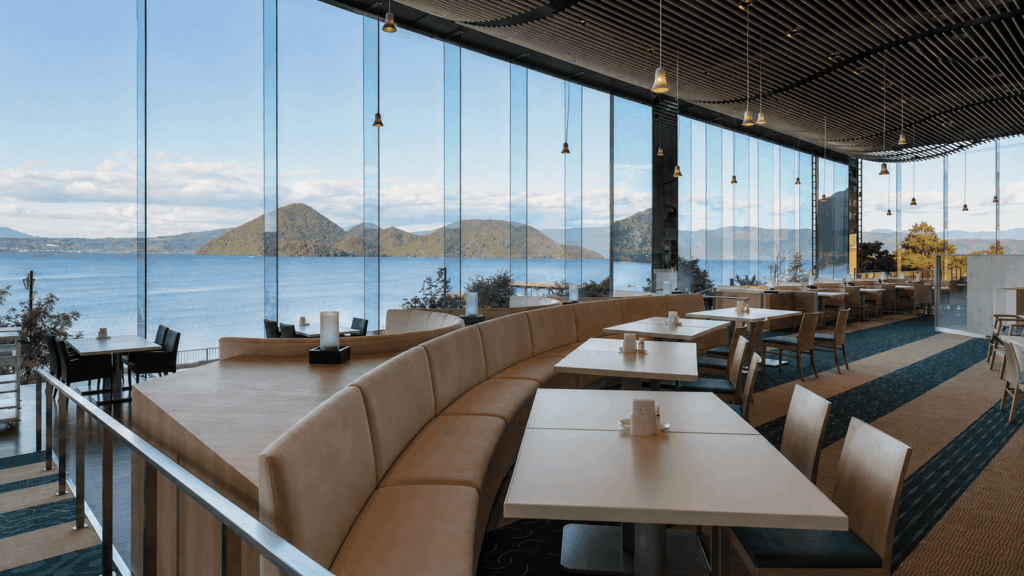
Lake Toya is a caldera lake—calm, wide, and surrounded by Mount Yotei and Mount Usu. The onsen experience here is inseparable from the lake. Many hotels position their open-air baths to face the water, and from late April through October, the Lake Toya Long-Run Fireworks launch directly over the lake every night. You are not coming to Lake Toya for the mineral character of the water. You are coming for the sight of the lake at dusk from a steaming outdoor bath, and the moment when fireworks explode silently above the dark water. It is a visual and atmospheric experience as much as a bathing one.
Kai’s tip: The difference clicked for me when I described Noboribetsu to a friend as “the onsen I could still smell on my skin the next morning” and Lake Toya as “the onsen where I remember the view more than the water.” Neither is a criticism—they reveal what each destination prioritises.
Which Has the Better Onsen Experience?
This is the core question, and the answer depends on what you value more: what is in the water, or what surrounds the bath.
Noboribetsu’s Advantage: Water You Notice
The signature of Noboribetsu is sulfur spring water—milky white, warm, and carrying a scent that is unmistakably volcanic. It is one of the few onsen in Hokkaido where the water feels thick and active on your skin. The town’s nine spring types include iron, alum, saline, and acidic waters, and larger hotels often circulate several different baths so you can rotate through them in a single evening. In ryokan like Dai-ichi Takimotokan or Noboribetsu Grand Hotel, the bath complexes are substantial, with multiple indoor and outdoor pools fed by different sources.
The mineral richness is the point. You feel it, you smell it, and you remember it.
Lake Toya’s Advantage: A Bath Built Around the Scenery
Lake Toya’s waters are clearer, softer, and less mineral-forward than Noboribetsu’s. What makes them memorable is where you soak. A lake-facing open-air bath at sunset—with Mount Yotei to the west and the caldera stretching out in front—is one of the most peaceful bathing experiences in Hokkaido. And if you time your stay between late April and October, you get the nightly fireworks: 20 minutes of shells launched from boats over the lake while you sit in the outdoor bath.
Kai’s tip: The lake-view open-air bath is the entire reason to stay overnight at Lake Toya, but not every hotel delivers it equally. Before booking, check two things: whether the open-air bath faces the lake directly, and whether the hotel’s position along the shore gives you a clear view of the fireworks from the bath (not just from the rooftop or your room). Some hotels have beautiful baths that face the street side. Read recent guest photos carefully.
Which Destination Is Better for a One-Night Stay?
A one-night stay is the standard recommendation for both towns, but the way you spend that night differs significantly. Here is how a typical overnight unfolds at each.
| Timing | Noboribetsu | Lake Toya |
|---|---|---|
| Arrival | Arrive by early afternoon via JR or bus from Sapporo | Arrive by mid-afternoon via bus from Sapporo or JR + local bus |
| Afternoon activity | Walk Jigokudani (free, 30–40 min loop); continue to Oyunuma footbath | Lake cruise (50 min, ¥1,600) or Usuzan Ropeway (round trip ¥1,800) |
| Evening before dinner | Soak in the hotel’s multiple baths (rotating through different spring types) | Sunset soak in the lake-view open-air bath before dinner |
| Dinner | Kaiseki-style multi-course meal at the ryokan (typically included) | Kaiseki-style multi-course meal at the ryokan (typically included) |
| Post-dinner | Night walk to illuminated Jigokudani (seasonal); another soak | 8:45–9:05 pm fireworks over the lake from the bath, your room, or the waterfront |
| Morning | Early morning bath; breakfast; optional morning walk in Jigokudani | Early morning lake-view soak; breakfast; lakeside walk before checkout |
| Departure | Bus to JR Noboribetsu Station (15 min, ¥450) | Bus to JR Toya Station (15 min, ¥400) |
A Practical One-Night Plan for Noboribetsu
Arrive by early afternoon so you have daylight to walk Jigokudani. The main boardwalk loops through the valley in about 30 minutes—go when the tour groups thin out after 3:00 pm. From the far end of the loop, a 10-minute path leads to Oyunuma (Big Hot Spring Pond), where you can soak your feet in the Oyunuma River Footbath for free. The entire valley circuit plus footbath takes about 1.5 hours at a relaxed pace. Then check into your ryokan and start rotating through the baths.
The evening walk back to Jigokudani after dark is worth doing if the seasonal illumination is on. The steam against the night lights gives the valley a different character.
A Practical One-Night Plan for Lake Toya
Time your arrival so you can take the Lake Toya Cruise (final departure around 4:00 pm, hourly from 8:30 am) before the sunset light fades. The 50-minute loop crosses open water with views of Mount Yotei and the surrounding caldera rim. Alternatively, take the Usuzan Ropeway up Mount Usu for a panoramic view of the lake from above—but leave enough time to be back in your hotel for the sunset soak and the 8:45 pm fireworks. For a full list of activities, browse our guide on things to do in Lake Toya.
Kai’s tip: If the fireworks are your primary reason for choosing Lake Toya (and they are a compelling one), check the hotel’s position on the lakeside map before you book. Hotels on the western side of the lake near the town centre have the most direct view of the fireworks launch zone. Hotels farther east or tucked into smaller bays may see the shells at an angle or not at all. Most property listings on booking sites will not tell you this—use the photos and satellite view to judge.
Which Is Easier Without a Car?
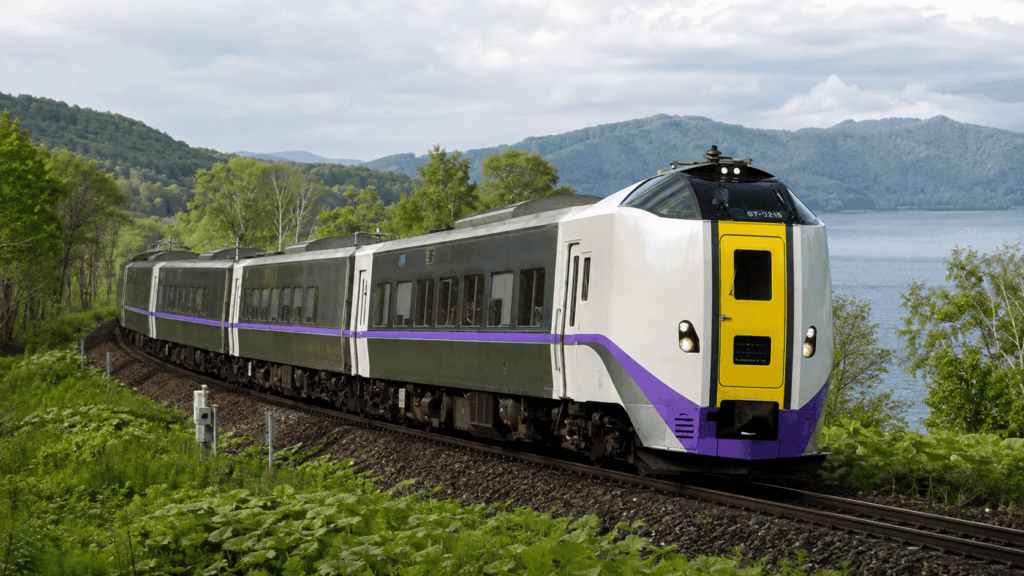
Both destinations are reachable by public transport from Sapporo, New Chitose Airport, and Hakodate. Neither is difficult, but Noboribetsu has an edge in simplicity.
Noboribetsu without a car: Take the JR Limited Express Hokuto or Suzuran from Sapporo to JR Noboribetsu Station (1h20m, ¥5,340, all seats reserved as of March 2026). From the station, a local bus runs every 20–40 minutes to Noboribetsu Onsen (15–20 minutes, ¥450, exact cash required). A direct highway bus from Sapporo is also available (1h50m, ¥2,500, lower cost but fewer departures). From New Chitose Airport, the direct bus takes 1h15m (¥1,900, 3 departures per day, booking required before 11:00 am on the day).
Lake Toya without a car: Take the JR Limited Express Hokuto from Sapporo to JR Toya Station (1h55m, ¥5,340). From there, a local Donan Bus runs to Toyako Onsen in 15 minutes (¥400). A direct highway bus from Sapporo takes 2h45m (¥3,700) and drops you closer to the hotels. From New Chitose Airport, there is no direct bus—you will need to go via Sapporo or JR Tomakomai, adding time. From Hakodate, both towns are roughly comparable at about 2 hours by limited express plus a short bus. For complete schedules, see our guide on how to get to Lake Toya.
Best Choice by Route
| If Your Route Includes | Better Base for One Night | Why |
|---|---|---|
| Sapporo → Onsen → New Chitose (fly out) | Noboribetsu | Direct bus from airport; saves backtracking |
| Sapporo → Onsen → Hakodate | Either (Lake Toya slightly shorter on train) | JR passes through both; similar total time |
| New Chitose → Onsen → Sapporo | Noboribetsu | Direct bus from airport; shorter ride |
| Sapporo → Onsen → Sapporo (round trip) | Noboribetsu | Faster and cheaper bus or train from Sapporo |
| Driving a rental car | Either | Both have ample hotel parking; Lake Toya’s lakeside drive is scenic |
Kai’s tip: A detail that catches out first-time visitors: the local bus from JR Noboribetsu Station to the onsen town does not accept IC cards (Suica, Kitaca, etc.). Have ¥450 in cash ready when you get off the train. The bus from JR Toya Station to Toyako Onsen is the same story—cash only, ¥400.
Noboribetsu or Lake Toya by Traveler Type and Season
By Traveler Type

Couples: Lake Toya is the more romantic choice. The combination of a lake-view open-air bath, sunset over Mount Yotei, and nightly fireworks creates a setting that is hard to beat for a special overnight.
Families: Both work well, but for different reasons. Noboribetsu has the Bear Park, the dramatic steam vents of Jigokudani, and a wider range of hotel types (including larger facilities with kids-friendly baths). Lake Toya appeals to families who enjoy boat rides, ropeway trips, and open space—but activities shut down earlier, so the evening focus is the hotel and the fireworks.
Serious onsen lovers: Noboribetsu without hesitation. The variety of spring types—nine distinct mineral compositions—and the density of quality ryokan along the valley make it a destination you return to for the water itself.
First-time Hokkaido visitors: Noboribetsu is the safer bet. Jigokudani is visually striking and uniquely Japanese, the onsen experience is unmistakable, and the town is easier to reach from Sapporo. Lake Toya is more weather-dependent—if the lake is shrouded in cloud and rain, the value of your stay drops significantly.
By Season
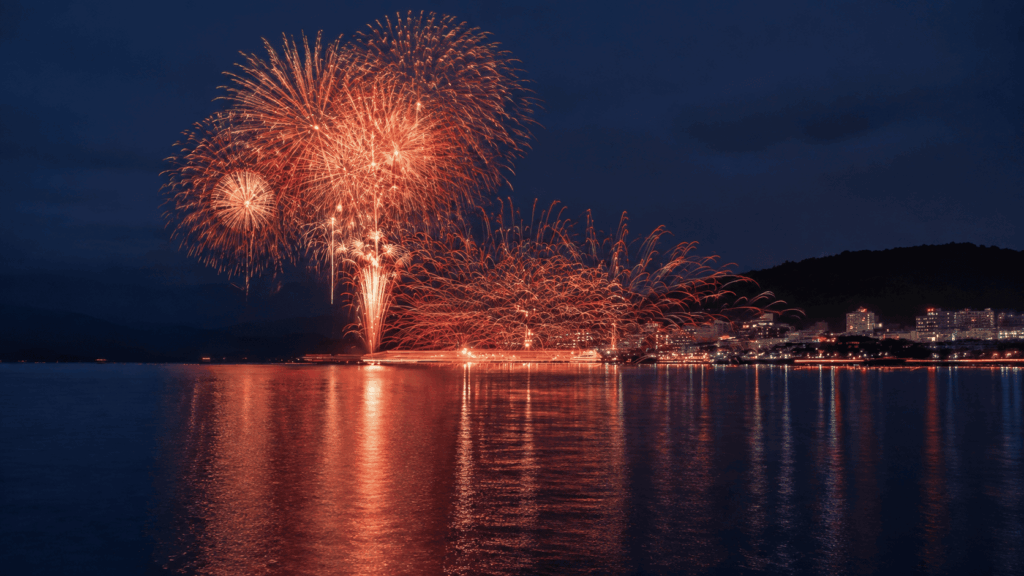
Summer (June–August) and Fireworks Season (April 28–October 31): Lake Toya is at its peak. The 45th Lake Toya Long-Run Fireworks run every night during this window, from 8:45 to 9:05 pm (weather permitting). The lake cruise and ropeway both operate at full schedule. If you are planning a trip during these warm months, read more about visiting Lake Toya in summer. This is the best time to choose Lake Toya.
Winter (November–April): The advantage shifts to Noboribetsu. The fireworks at Lake Toya are replaced by a winter illumination (6:00–10:00 pm, November–April 27), and strong winter winds can make the lake-view baths less comfortable. The cruise runs on a reduced winter schedule and does not stop at Nakajima Island. For a deeper look at the cold-weather conditions, see what to expect in Lake Toya in winter. Noboribetsu’s experience is much less weather-dependent—Jigokudani is open year-round, and the onsen experience is unaffected by snow. The valley paths can be icy, so wear sturdy shoes.
Shoulder seasons (May, June, September, October): Both work well. Lake Toya is within fireworks season and suffers less from peak-season crowds. Noboribetsu is less crowded than July–August. This is the most flexible window for choosing either.
Should You Stay Overnight or Visit Both on a Day Tour?
If you have only one day and want to see both Noboribetsu and Lake Toya without staying overnight, a day tour from Sapporo is worth considering. Several operators run full-day tours that visit Jigokudani (35 minutes), Lake Toya (70 minutes for lunch and a walk), and Lake Toya observation points, plus a stop at Lake Shikotsu and Cape Chikyu.
The key limitation is that these tours do not include onsen bathing. You see the sights, but you do not experience the hot springs themselves. If the onsen is your reason for visiting, an overnight stay is the only way to get the full experience.
Tours are the better choice if:
- You have only one spare day and want to see both destinations
- The onsen itself is less important than seeing the volcanic landscape
- You are travelling solo and would pay a single supplement for a ryokan room
- You prefer not to arrange multiple bus and train connections
Overnight stays are the better choice if:
- You want to bathe in authentic onsen water (not just look at it)
- The evening fireworks or valley illumination matter to you
- You want a kaiseki dinner and a ryokan experience
- You are willing to commit to one destination for depth over breadth
If you fall into the “see both in one day” camp—you want the volcanic scenery and lake views but not the transport planning—this tour is the closest match to the trade-off described above.
Why I’d book this one
- Recent travelers consistently mention friendly, helpful guides and smooth logistics across a long sightseeing day.
- The itinerary bundles places that are awkward to combine by public transport, which is where a guided tour saves the most effort.
- Flexible booking options can make it easier to keep a weather-sensitive Hokkaido itinerary adaptable.
What About Lake Shikotsu?
Lake Shikotsu is the third major caldera lake onsen in southern Hokkaido, and it occasionally comes up in the same conversation. It is worth mentioning for one specific advantage: proximity to New Chitose Airport. A direct bus reaches Shikotsu Onsen in about one hour (¥1,260), making it the easiest onsen to reach for anyone flying in or out.
The lake itself is strikingly clear—Shikotsu is known for its transparency, surrounded by dense forest rather than the open views of Toya. The onsen town is smaller and quieter than both Toya and Noboribetsu. If you have a tight connection at New Chitose Airport and want a quick onsen stop, Shikotsu is worth considering. But for a proper one-night stay that anchors your itinerary, the core decision remains between Noboribetsu and Lake Toya.
Frequently Asked Questions
Can I visit both Noboribetsu and Lake Toya in one day?
Technically yes, but not comfortably by public transport. The two towns are about two hours apart by road, and a day tour from Sapporo covers both—but the tour is sightseeing only, with no time for onsen bathing. If you want to actually soak in hot springs, commit to one destination and stay overnight.
Is one night enough at either destination?
Yes. One night is the standard stay at both Noboribetsu and Lake Toya. You arrive in the early afternoon, spend the evening enjoying the baths and the town’s main attraction (Jigokudani or the fireworks), and leave the next morning. Two nights would be relaxing but is not necessary unless you want a slow-paced break mid-trip.
Which is better in winter—Noboribetsu or Lake Toya?
Noboribetsu. Jigokudani is open year-round, the onsen experience is unaffected by snow, and the town is less weather-dependent overall. Lake Toya’s fireworks do not run in winter (replaced by an illumination), the cruise operates on a reduced schedule, and lake views can be disappointing in overcast or snowy conditions.
Which is closer to Sapporo?
Noboribetsu. The fastest option is JR Limited Express (1h20m to Noboribetsu Station, plus 15–20 min bus to the onsen town). Lake Toya takes about 1h55m by JR plus 15 min by bus. By highway bus, Noboribetsu is 1h50m (¥2,500) and Lake Toya is 2h45m (¥3,700).
Are the fireworks at Lake Toya visible from every hotel?
No. The fireworks launch from boats near the town centre on the eastern side of the lake. Hotels with a direct lakeside position in this area have the best view from their rooms and baths. Hotels farther along the shore or set back from the water may have limited or angled views. Check the hotel’s position on a map and look at recent guest photos before booking if the fireworks are a priority.
Does Noboribetsu smell like sulfur everywhere?
The sulfur smell is strongest at Jigokudani and around the main steam vents. In hotels and indoor bath areas, the scent is present but much milder—noticeable enough to remind you where you are, but not overwhelming. Some people find the scent relaxing; a small number find it unpleasant. If you are sensitive to smells, try spending 15 minutes at Jigokudani during a day trip before booking an overnight stay.
Final Verdict: Which One Should You Choose?
After visiting both and comparing them across every dimension that matters for a one-night onsen stay, here is how the decision breaks down by traveler type.
Choose Noboribetsu if:
- The onsen water itself is your priority—you want to experience Japan’s finest sulfur springs, rotate through multiple bath types, and feel the mineral character on your skin
- You are visiting Hokkaido for the first time and want a safe, impressive introduction to Japanese volcanic onsen
- You are travelling in winter or during uncertain weather and do not want your experience to depend on clear skies
- You are arriving from or departing to New Chitose Airport and want the easiest onsen access on your route
- You prefer a compact, walkable town where Jigokudani, the baths, and evening activities are within a short stroll
Choose Lake Toya if:
- The setting of the bath matters more than the water itself—you want to soak while looking across a volcanic caldera lake at sunset
- You are travelling between late April and October and want the nightly fireworks from the bath or your room
- You are looking for a romantic overnight with a visual, atmospheric quality that couples remember
- You have decent weather flexibility built into your itinerary and can adjust if the forecast shows rain or thick cloud
- You are driving and want to combine the onsen stay with the scenic lakeside drive and a ropeway trip up Mount Usu
If you are still unsure: Let your route decide. If you are heading south toward Hakodate after the onsen stop, either works. If you are looping back up to Sapporo, Noboribetsu saves you time and money. If you are flying out of New Chitose, Noboribetsu is the logical choice. And if you cannot shake the image of watching fireworks from a steaming lake-view bath under a summer sky, that feeling is your answer—book Lake Toya.
Whichever you choose, you will not be disappointed. You will simply have experienced a different facet of what makes Hokkaido’s onsen culture so rewarding: the astonishing diversity of water, landscape, and atmosphere packed into this small corner of northern Japan.

Hi, I’m Kai. I’m a Tokyo-based travel writer, tourism industry insider, and the author of a published guidebook for international visitors to Japan. With over 10 years of professional experience at a leading Japanese tourism company, my mission is to help you skip the tourist traps and navigate Japan’s best destinations like a local. I believe the perfect day trip is like a traditional kaiseki meal: a beautiful balance of precise planning and unforgettable seasonal discovery. When I’m not out conducting field research, you’ll usually find me drafting new itineraries with one of my favorite fountain pens!