

Quick Answer: Is Lake Toya Worth Visiting in Winter?
Lake Toya in winter is worth visiting — but only for the right traveler. If your idea of a good winter trip involves snow-covered lake views, a quiet open-air onsen, and a short evening walk through a lit-up tunnel with no crowds, then a one-night stay here will be one of the most relaxing stops on your Hokkaido itinerary.
If, on the other hand, you are looking for packed sightseeing, reliable snow sports (before mid-January), or a destination you can easily visit from Sapporo in a few hours and feel satisfied, Lake Toya in winter may leave you underwhelmed.
Choose Lake Toya in winter if:
- You want a quiet onsen town with lake views and snow scenery
- You are traveling between Sapporo and Hakodate and need a relaxing overnight stop
- You value a good onsen over a long list of attractions
- You are a couple or solo traveler looking for a slow, romantic evening
Skip Lake Toya in winter if:
- You want to pack your day with activities from morning to night
- You are visiting before mid-January and hoping for snow play (Snow Park Toya opens mid-January)
- You are short on time and based in Sapporo — day trips here feel rushed in winter
- You expect heavy, reliable snowfall like you would get in Niseko or Furano
Lake Toya does not freeze in winter thanks to geothermal heat, so you will see a rare landscape of blue water surrounded by snow — but that also means no skating or walking on the lake. The key is to adjust your expectations: treat Lake Toya as a recovery stop, not an attraction-packed destination.
Winter Weather at Lake Toya: What to Really Expect
Lake Toya sits in southern Hokkaido, where winter temperatures range from around 2°C (36°F) during the day to −6°C (21°F) or lower at night. Snowfall is moderate compared to Niseko or central Hokkaido — you will see snow on the ground, but deep powder is not guaranteed.
What surprises most first-time winter visitors is how early it gets dark. The sun sets around 4:00 PM to 4:30 PM in December and January. If you arrive on a day trip at noon, you get roughly three and a half hours of daylight before the temperature drops sharply and the lakefront turns dark. This is the single biggest reason I recommend staying overnight rather than rushing back.
One of the most unique things about Lake Toya in winter is that the lake itself does not freeze. Geothermal heat from the volcanic activity beneath keeps the water temperature above freezing year-round. You will see steam rising from the lake surface on cold mornings — a beautiful sight, but it also means no frozen lake activities.
What to pack: Thermal layers, a windproof jacket, gloves, a hat, and shoes with good grip (the lakeside footpaths can get icy in the evening). If you plan to walk to the Illumination Tunnel after dinner, warm boots are non-negotiable.
Things to Do at Lake Toya in Winter
Let me be direct: there are fewer things to do in winter than in summer (you can see the best things to do in Lake Toya across all seasons for comparison). The daily fireworks end in October. The hiking trails around Mount Usu can be inaccessible. Some facilities close for the season or shorten their hours.
But the things that remain are enjoyable precisely because there are fewer of them. You are not rushing from one attraction to the next. Here is what is actually open and worth your time.
Lake Toya Cruise (Still Running — With a Catch)

Toyako Kisen operates year-round, including winter. From November through early April, the cruise runs once every hour from 9:00 AM to 4:00 PM and takes about 45 minutes. The fare is 1,600 yen for adults.
The catch: in winter, you cannot disembark at Nakajima (the island in the middle of the lake). The cruise simply circles the lake and returns to the pier. It is still a pleasant ride — you get views of snow-covered Mount Yotei to the northwest and Mount Usu to the south — but it is a shorter, simpler experience than the summer version.
Best for: Travelers who want a quick lake view from the water without spending much time outdoors. The boat is heated.
Skip it if: You are short on daylight and would rather walk the lakeside for free. The view from the shore is just as good on a clear day.
Illumination Tunnel (The Winter Highlight)

The Lake Toya Onsen Illumination Tunnel is a 70-meter passage of roughly 400,000 LED lights, set up in the open space at the center of the hot spring town. It runs every year from November 1 through late April.
Lighting hours are 5:00 PM to 10:00 PM from November through February, and 6:00 PM to 10:00 PM from March onward. It is completely free.
Kai’s tip: If you are staying overnight, time your walk so you head out right after dinner. The tunnel is compact — it takes under ten minutes to walk from one end to the other — so treat it as a short evening excursion between your meal and your onsen. It is not a standalone destination, but as a quick post-dinner stroll in the snow, it adds a genuinely pleasant moment to the evening. Most day-trippers miss it entirely because the buses back to Sapporo or Toya Station leave before sunset.
There is also the Lake Toya Onsen Illumination Street, a lakeside path lit with 12,000 bulbs that runs all year round. It is less flashy than the tunnel but makes for a nice walk between your hotel and the tunnel itself.
Usuzan Ropeway (Check Before You Go)

The Usuzan Ropeway runs from 9:00 AM to 4:00 PM in winter and costs 2,000 yen for a round trip. From the upper station, you get panoramic views of Lake Toya, Mount Yotei, and the crater of Mount Usu.
However, the ropeway closes for maintenance for several weeks each winter, and the exact dates change every year. Some travelers have arrived at the ropeway station only to find it closed for the week.
Kai’s tip: Check the official Usuzan Ropeway website before you go, especially if you are traveling in January or February. The ropeway station is a 15-minute bus ride (400 yen) from Toyako Onsen, and buses only run about once per hour — arriving to find it closed eats into your limited daylight significantly.
Best for: Anyone who wants the classic Lake Toya panorama shot. On clear winter days, the contrast between the snow-covered crater and the blue lake is striking.
Skip it if: You are visiting during a known maintenance window, or if the weather is overcast — the view from the top is lost in clouds.
Toyako Visitor Center & Volcano Science Museum
If you need an indoor activity, the Toyako Visitor Center and Volcano Science Museum is a solid option. It is open 9:00 AM to 5:00 PM (closed December 31 to January 3) and entry is free.
The museum covers the volcanic history of Mount Usu and the formation of Lake Toya, with interactive exhibits that are good for a 30- to 45-minute stop. It is located right on the lakefront, a short walk from most hotels.
Best for: Families with children, or anyone visiting on a snowy afternoon when outdoor activities are less comfortable.
Snow Park Toya (Mid-January Onwards)

For those who want actual snow activities, Snow Park Toya opens from mid-January through late March (the 2026 season starts January 17). Activities include snowshoeing, sledding, snow tubing, cross-country skiing, and a snowball fight area. Reservations are required.
The park is located near the Silo Observatory, a short drive from the onsen town. Winter bus access is limited, so this is most practical if you have a car or join a tour.
Important: If you are visiting in December or early January, Snow Park Toya will not be open yet. Plan your activities accordingly.
Lake Hill Farm (Winter Hours)

Lake Hill Farm stays open year-round with winter hours (9:00 AM to 5:00 PM from October through March). The farm itself is quieter in winter, but the gelato shop operates and the snow-covered pastures have their own charm. It is a short stop rather than a half-day activity.
Best for: A quick photo stop and a scoop of Hokkaido milk ice cream if you are passing by on a road trip.
Getting to Lake Toya in Winter
By Public Transport (Without a Car)
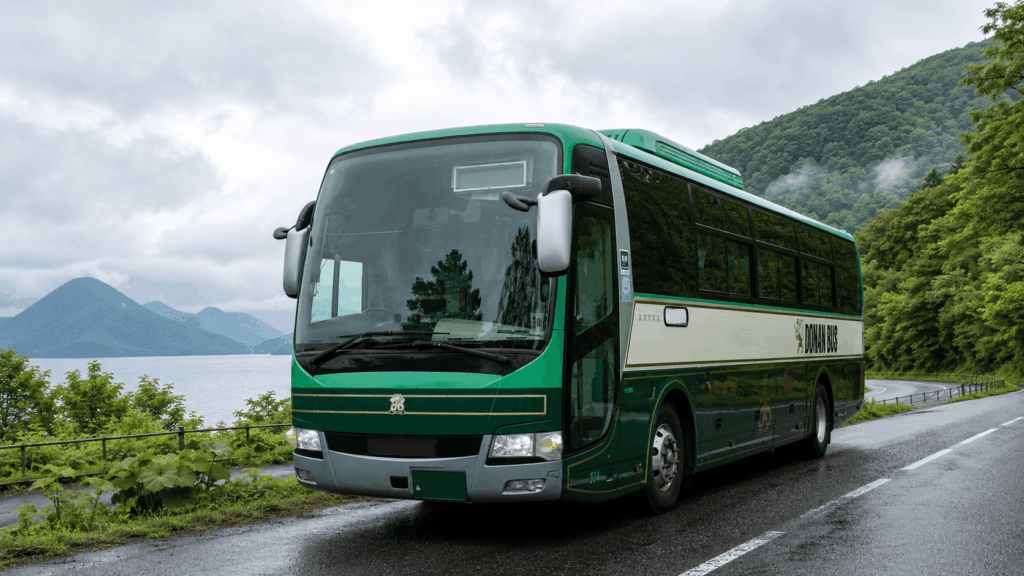
There are two main options from Sapporo, and one is significantly more practical for a single trip. For alternative routes from other cities or detailed timetables, see our complete guide on how to get to Lake Toya.
Option 1: Direct Highway Bus (Donan Bus)
The Donan Bus runs from Sapporo Station directly to Toyako Onsen. The trip takes roughly 2 hours and 45 minutes and costs 3,700 yen one way. There are four departures per day, and reservations are required (you can book online up to 2 hours before departure).
This is the simplest option — one bus, no transfers. The bus is comfortable, has a toilet, and drops you off right in the onsen town center.
Option 2: JR Limited Express Hokuto + Local Bus
Take the JR Hokuto limited express from Sapporo Station to Toya Station (about 1 hour 50 minutes, around 5,600 yen one way, reserved seat required). From Toya Station, take the Donan local bus to Toyako Onsen (15 minutes, 400 yen, roughly one bus per hour).
This option is slightly faster but requires a transfer at Toya Station. If you have a JR Pass, the train portion is covered.
Kai’s tip: Whichever option you choose, check the return schedule before you arrive. In winter, buses from Toyako Onsen back to Toya Station or Sapporo are spaced far apart — missing one could mean waiting over an hour in the cold. I have seen travelers plan their arrival in detail but forget to confirm the last departure, only to find themselves stranded at the bus stop at dusk. Book your return seat at the same time as your outbound.
By Rental Car
Driving from Sapporo to Lake Toya takes about 2 hours via the Hokkaido Expressway and Route 230. In winter, you must use winter tires (they are mandatory by law in Hokkaido from November to March). The Nakayama Pass section can be icy or snow-covered, and visibility drops quickly after dark.
A rental car gives you the most flexibility, especially if you want to visit the Usuzan Ropeway, Snow Park Toya, or Lake Hill Farm in one trip. Parking is free at most hotels in Toyako Onsen.
Not recommended for: Travelers unfamiliar with winter driving. If you have not driven on snow before, take the bus or train.
Day Trip vs Overnight: Which Should You Choose?
This is the most common question I hear from travelers planning a winter Hokkaido trip. The honest answer depends on what you value more: saving time and money, or getting the full experience of Lake Toya.
Here is a direct comparison to help you decide.
| Day Trip | Overnight Stay | |
|---|---|---|
| Total travel time | 5–6 hours round trip (Sapporo) | Same outbound, but no rush back |
| Time on-site | 2–3 hours max (arrive 12:30 PM, leave by 3:30 PM) | Roughly 16 hours (arrive 2:00 PM, leave 10:00 AM next day) |
| Daylight available | 1.5–2 hours of usable daylight after factoring in lunch | Full afternoon + next morning |
| Illumination Tunnel | Almost certainly miss it (lights turn on after 5:00 PM) | Walk through after dinner |
| Onsen experience | Possible at a day-use facility (1,000–1,500 yen) | Your hotel’s lake-view open-air bath, before bed and again at sunrise |
| Total cost (1 person, from Sapporo) | ¥7,400–10,500 (transport + day-use onsen + lunch) | ¥15,000–30,000 (transport + hotel with dinner and breakfast) |
| Who it’s best for | Travelers on a tight schedule who just want to see the lake | Anyone who wants the real Lake Toya experience: quiet evening, onsen, and snow-lit scenery |
My honest take: If you are based in Sapporo and considering a day trip specifically to Lake Toya in winter, I would suggest saving the trip for another season (if you do, see our dedicated Lake Toya day trip guide) or choosing a closer destination like Jozankei instead. The ratio of travel time (over 2.5 hours each way) to rewarding on-site time (barely 2 hours of daylight) simply does not work in winter. You will spend more time on the bus or train than actually enjoying the lake.
If you cannot spare a night but still want to see Lake Toya from Sapporo, a guided day tour makes more sense than spending most of the day piecing together winter buses and trains for a short lake-only visit.
Why I’d book this one
- Recent travelers consistently mention knowledgeable guides and a well-paced itinerary, which matters when winter daylight is limited.
- It combines Lake Toya with Noboribetsu, so the long trip from Sapporo gives you substantially more sightseeing than a lake-only DIY day trip.
- You can check current cancellation terms and flexible booking options before committing, which is useful for winter travel plans.
If you are already traveling the Sapporo–Hakodate corridor (a very common winter itinerary), that is a different story. Adding one overnight at Lake Toya between the two cities adds minimal detour time and gives you a full evening at the lake without extra travel for its own sake.
Kai’s tip: Winter daylight is the constraint that most guides do not talk about. The sun sets by 4:15 PM in December and January. A day-tripper arriving at noon effectively sees the lake in daylight for about an hour and a half before the light shifts and the temperature drops sharply. The evening atmosphere — the quiet lakefront, the lit tunnel, the outdoor onsen under the stars — is entirely reserved for overnight guests. If you can stay one night, do it. If you absolutely cannot, consider whether the time commitment is worth a brief glimpse of a snow-covered lake.
Sample Winter Overnight Itinerary (The Best Way to Do It)
If you are staying one night, this is the rhythm that works best in winter. It requires no rushing and fits perfectly within the limited daylight hours.
Afternoon (2:00 PM – 4:00 PM): Arrive and Walk the Lakefront
Arrive at Toyako Onsen by early afternoon. Check into your hotel, drop your luggage, and head out for a walk along the lakefront. The path from the Toyako Visitor Center to the pier area is flat, maintained, and offers clear views of Mount Yotei across the water. Stop at the Silo Observatory viewpoint for photos. This is your only window of decent daylight, so make the most of it. If you are interested in the Volcano Science Museum, this is a good time to visit (it closes at 5:00 PM).
Late Afternoon (4:00 PM – 6:00 PM): Early Dinner at Your Hotel
Most hotels in Toyako Onsen serve dinner between 5:30 PM and 7:30 PM. Book an early slot (5:30 PM or 6:00 PM) so you finish before 7:00 PM. Winter hotel dinners in Hokkaido are usually substantial multi-course kaiseki or buffet-style meals featuring local seafood, crab, and Hokkaido beef. Eat well — you will want the warmth.
Evening (7:00 PM – 8:00 PM): Illumination Tunnel Walk
After dinner, put on your warmest layers and walk to the Illumination Tunnel. It is a short stroll from most hotels in the town center — about 5 to 10 minutes on foot. The tunnel takes less than 10 minutes to walk through, but the contrast between the cold night air, the snow on the ground, and the bright tunnel of lights is exactly what makes this stop memorable. After the tunnel, walk back along the Illumination Street lakeside path.
Night (8:00 PM onwards): Onsen
Return to your hotel and head straight to the onsen. This is the moment that makes the whole trip worth it: stepping into an open-air bath with cold air on your face and warm water up to your shoulders, with the dark lake and the lights of the opposite shore in the distance. Most hotels separate men’s and women’s baths, and some offer nighttime hours until midnight. Do this before bed, and again in the early morning if you can manage it.
Morning (7:00 AM – 10:00 AM): Morning Onsen and Departure
Wake up early for one more bath before breakfast — the morning light over the lake is beautiful, and the baths are at their quietest. Have breakfast at your hotel (usually included), check out by 10:00 AM, and continue your journey south toward Hakodate or north back toward Sapporo.
Kai’s tip: The combination of a post-dinner Illumination Tunnel walk followed by an outdoor onsen is something you simply cannot replicate as a day visitor. It is a sequence that takes about 90 minutes total but leaves a disproportionately strong impression. If you stay overnight, make sure you do not skip either step — the tunnel loses its charm without the cold air, and the onsen loses its magic without the contrast of the winter night.
Where to Stay: Lake-View Onsen Hotels
The main accommodation area is Toyako Onsen, a compact hot spring town that lines the eastern shore of the lake. Almost every hotel here faces the water, and the best ones offer open-air baths (rotemburo) with direct lake views.
Hotels in Toyako Onsen generally fall into two categories:
- Large resort hotels with multiple onsen facilities, buffet dinners, and a full range of amenities. These are what most first-time visitors choose. Examples include The Lake View Toya Nonokaze Resort (popular with international travelers) and Toya Kanko Hotel (older but well-established).
- Smaller ryokan and mid-range hotels with fewer rooms and a more traditional atmosphere. These tend to be quieter and more affordable, though not always with lake-view onsen.
If you want a concrete benchmark while comparing lake-view onsen hotels, check current room options and dates for The Lake View Toya Nonokaze Resort on Klook. It is a useful reference point if a lake-view stay and open-air onsen are high on your priority list.
When booking for winter, confirm two things in advance:
- Does the hotel have a lake-view open-air bath? Not all hotels do, and this makes a significant difference to the winter experience.
- Are dinner and breakfast included? Most ryokan-style hotels include both meals (一泊二食 / one-night two-meal plan). In winter, having dinner at the hotel is far more practical than walking to a restaurant in the dark cold, and restaurant options in town are limited in winter anyway.
Kai’s tip: If you are choosing between hotels, prioritize the open-air bath over room size or decor. In winter, you will spend more time in the onsen than in your room, and the experience of soaking while snow falls around you is what makes Lake Toya special. Rooms with a private onsen are available at some high-end hotels but come at a significant premium — the shared lake-view rotemburo is usually just as good.
Common Mistakes to Avoid at Lake Toya in Winter
After watching travelers navigate Lake Toya in winter, here are the patterns I see most often — and how to avoid them.
1. Assuming everything that operates in summer also operates in winter.
The cruise is shorter, the ropeway may be closed for maintenance, the fireworks are seasonal, and the hiking trails are inaccessible. Check individual facility websites before you go, not travel blogs that copy-paste year-old information.
2. Not checking the last bus time.
Buses from Toyako Onsen to Toya Station run roughly once per hour, and the last connection can be as early as 5:00 PM depending on the season. If you miss it, a taxi to Toya Station costs around 3,000–4,000 yen.
3. Arriving too late in winter.
If you arrive at 4:00 PM, it is already dusk. You will have missed most of the daylight and many facilities will be closing. Aim to arrive by 1:00 PM at the latest if you want to see anything in daylight.
4. Skipping the evening onsen because dinner was too heavy.
Wait 30 minutes after eating and go anyway. The outdoor onsen in winter is the highlight of the stay, and you will regret skipping it over a temporary feeling of fullness.
5. Expecting Niseko-level snow.
Lake Toya gets snow, but not deep powder like Niseko or central Hokkaido. If your primary goal is heavy snow and winter sports, choose a different destination. If your goal is a quiet lake-view onsen with snow on the ground, Lake Toya delivers.
FAQ: Lake Toya in Winter
Does Lake Toya freeze in winter?
No. Geothermal heat from the volcanic activity beneath the lake keeps the water temperature above freezing year-round. The lake never freezes, even when the surrounding land is covered in snow. This means no ice skating or walking on the lake, but it also means you will see steam rising from the water on cold winter mornings — a unique sight you will not get at most frozen Hokkaido lakes.
Are there winter fireworks at Lake Toya?
The daily summer fireworks (late April to late October) are a major attraction, but they do not run in winter. However, a special winter fireworks event is held during the Toyako Onsen Winter Festival, typically in early to mid-February (the 2026 event runs February 3–12). Outside this window, the night sky over the lake is quiet and dark — which is part of the appeal for overnight visitors.
Is the Usuzan Ropeway open in winter?
It usually operates from 9:00 AM to 4:00 PM in winter, but it does close for scheduled maintenance for several weeks each winter (typically in January or February). The exact dates vary each year and are not always announced far in advance. Check the official website before your visit, especially if the ropeway is a priority for you.
Is Lake Toya worth visiting in winter without a car?
Yes, if you stay overnight. The direct Donan bus from Sapporo and the JR Hokuto limited express both operate reliably in winter, and Toyako Onsen is compact enough to explore on foot once you arrive. The challenge is the limited return schedule — if you try to day-trip without a car, you will have very little time on-site before you need to head back.
How many days should I spend at Lake Toya in winter?
One night is enough for most travelers. Arrive in the early afternoon, enjoy the lakefront, have dinner, walk the Illumination Tunnel, and soak in the onsen. Two nights starts to feel quiet unless you are specifically looking for a multi-day retreat with no agenda.
Lake Toya or Noboribetsu in winter — which is better?
It depends on what you want. Noboribetsu has more to see in winter (Jigokudani is dramatic in snow, and the hell valley walking paths are maintained), a wider selection of ryokan, and is easier to reach from Sapporo. Lake Toya has a more scenic setting (lake + mountain views vs. a valley) and feels quieter overall. If you can only choose one onsen town on a winter Hokkaido trip, Noboribetsu offers more to do, but Lake Toya offers a more peaceful experience. For a deeper dive into this choice, read our full Lake Toya vs Noboribetsu comparison.
Final Verdict: Is Lake Toya Worth It in Winter?
The honest answer depends entirely on your travel style. Here is how I would advise different types of travelers.
For first-time winter visitors to Hokkaido:
If your itinerary includes both Sapporo and Hakodate, adding one night at Lake Toya is a natural stop that breaks up a 4-hour train ride into two shorter segments. The overnight experience — lake-view onsen, quiet dinner, Illumination Tunnel walk — is genuinely memorable. If your itinerary is Sapporo-centric only, skip Lake Toya in winter and choose Jozankei or Noboribetsu instead for a closer onsen experience.
For couples seeking a romantic winter getaway:
This is the traveler type that will enjoy Lake Toya most in winter. The combination of a snow-lit lakeside, an evening walk through the Illumination Tunnel, and an open-air onsen under the cold night sky is hard to beat for romance. Stay at a hotel with a lake-view rotemburo and book a private dinner time if available.
For families with children:
Lake Toya in winter is a mixed bag for families. Snow Park Toya (from mid-January) is excellent for younger children, and the Visitor Center is a good rainy-day option. But teenagers may find the town too quiet, and the lack of varied activities means families need to be comfortable with downtime. If your children are old enough to enjoy an onsen, it works. If they need constant entertainment, choose Noboribetsu.
For budget travelers:
A one-night stay at Lake Toya with dinner and breakfast at a mid-range hotel costs roughly 15,000–20,000 yen per person including transport from Sapporo. This is not cheap, but it is reasonable for what you get (transport + accommodation + two meals + onsen access). Day-tripping to save money is not recommended — you will spend almost as much on transport alone and see very little.
For active travelers and skiers:
Skip Lake Toya. The lake setting is beautiful, but there is very little active winter recreation here unless you time your visit with Snow Park Toya’s opening (mid-January onward). You will be happier in Niseko, Furano, or even Noboribetsu, where the terrain offers more to explore on foot.
For travelers on the Sapporo–Hakodate route:
This is the ideal context for a Lake Toya stop. The detour adds almost no extra travel time — Toya Station is directly on the JR Hokuto line between the two cities. One night here turns a long transit day into a relaxing overnight. I see this as the single best use case for Lake Toya in winter.

Hi, I’m Kai. I’m a Tokyo-based travel writer, tourism industry insider, and the author of a published guidebook for international visitors to Japan. With over 10 years of professional experience at a leading Japanese tourism company, my mission is to help you skip the tourist traps and navigate Japan’s best destinations like a local. I believe the perfect day trip is like a traditional kaiseki meal: a beautiful balance of precise planning and unforgettable seasonal discovery. When I’m not out conducting field research, you’ll usually find me drafting new itineraries with one of my favorite fountain pens!