

Planning Lake Toya as a day trip from Sapporo without a car? A guided full-day route is worth comparing with DIY transport if you want to cover the lake and volcanic sights without building your day around infrequent local buses. Check current start times, itinerary details, and recent traveler reviews for this Sapporo–Lake Toya day tour.
Lake Toya at a Glance — Three Things That Define It
Lake Toya is one of Hokkaido’s most scenic caldera lakes, but it’s not a destination you “see” from a single viewpoint. What makes it memorable is that it offers three entirely different experiences, and which one you choose depends on how much time you have and how you want to spend it.
- The lake experience — a ferry crossing to Nakajima Island, where you walk through a forest of towering ash trees and ancient oaks, surrounded by nothing but bird calls and the rustle of deer moving through the undergrowth.
- The volcano experience — riding the Usuzan Ropeway to the rim of an active volcano, staring down into a crater that erupted in 2000, and walking trails that cross the blast zone.
- The onsen + fireworks experience — soaking in a lake-view outdoor bath at a Toyako Onsen hotel, then stepping onto the balcony at 8:45 pm to watch fireworks launched from boats on the lake below.
The mistake I see first-time visitors make is trying to do all three in half a day. Nakajima and Mount Usu are on opposite sides of the lake, and each takes at least 3–4 hours. Realistically, you have to choose one main experience — and that’s exactly what this guide helps you decide.
The Top Experiences Ranked
If you only do one thing at Lake Toya, make it the ferry crossing to Nakajima — it’s the experience you can’t replicate anywhere else in Hokkaido. The Usuzan Ropeway comes a close second, and the evening fireworks are the cherry on top if you’re staying overnight.
| Rank | Experience | Best For | Time Needed |
|---|---|---|---|
| 1 | Nakajima Island — forest hike + boat ride across the caldera | Nature lovers, photographers, anyone who wants a quiet escape | 2–3 hours (incl. ferry) |
| 2 | Mount Usu / Usuzan Ropeway — crater views and volcanic landscape | Hiking enthusiasts, travellers who want dramatic scenery | 1.5–2.5 hours |
| 3 | Lake Toyako Fireworks Display — 20-minute show over the lake | Overnight visitors, couples, families | 20 minutes (from hotel or lakeside) |
Nakajima and Mount Usu sit on opposite sides of the lake — the ferry terminal is on the eastern shore (Toyako Onsen), while the ropeway is on the western shore. You cannot do both in a single half-day visit without rushing. Overnight stays give you time for both, but for a day trip, pick one.
How Much Time Do You Need?

Half a Day (3–4 Hours)
With three to four hours, your options are limited. You can either take the Lake Toya cruise (TOYAKOKISEN) without getting off at Nakajima — a 50-minute round trip that gives you a feel for the lake from the water — or ride the Usuzan Ropeway up and back in about an hour, then walk the lakeside promenade. If I only had half a day, I’d take the cruise. You still get the best view of the caldera, and you won’t feel the time pressure of trying to fit in a hike.
One Full Day (6–8 Hours)
A full day opens up real choices. You can pick one of these two plans:
| Plan | Main Activity | Lunch Area | Can Add |
|---|---|---|---|
| Nakajima Plan | Ferry to Nakajima + Adventure Route hike (2–3 hours) | Toyako Onsen | Lakeside promenade, foot bath |
| Mount Usu Plan | Ropeway to crater + Nishiyama Crater Walking Trail (2–3 hours) | Toyako Onsen or crater area | Toyako Visitor Center, Volcano Science Museum |
If you’re visiting without a car, you’ll also need to factor in bus timetables between the JR station and Toyako Onsen, and between the onsen town and the ropeway. More on that in the “Without a Car” section below.
Overnight / One Night (Best Use of a Stay)
Staying one night transforms what’s possible. You can arrive around midday, take the ferry to Nakajima in the afternoon, check into your onsen hotel, enjoy a kaiseki dinner and outdoor bath, and watch the fireworks from your room or the lakeside at 8:45 pm. The next morning, ride the Usuzan Ropeway before checking out. That’s all three experiences in roughly 24 hours — the best return on a single night at Lake Toya.
Two Nights (For Nature Lovers and Geopark Enthusiasts)
Two nights give you breathing room. You can hike Nakajima’s full Adventure Route without hurrying, walk both the Nishiyama and Konpira Crater Trails, visit the Toyako Visitor Center and Volcano Science Museum, and still have time for a second round of fireworks and onsen time. This is the sweet spot for travellers who want to experience the Toya-Usu UNESCO Global Geopark properly. For a step-by-step breakdown of how to structure your days, see our Lake Toya itinerary.
Nakajima Island — The Forest Escape in the Middle of the Lake
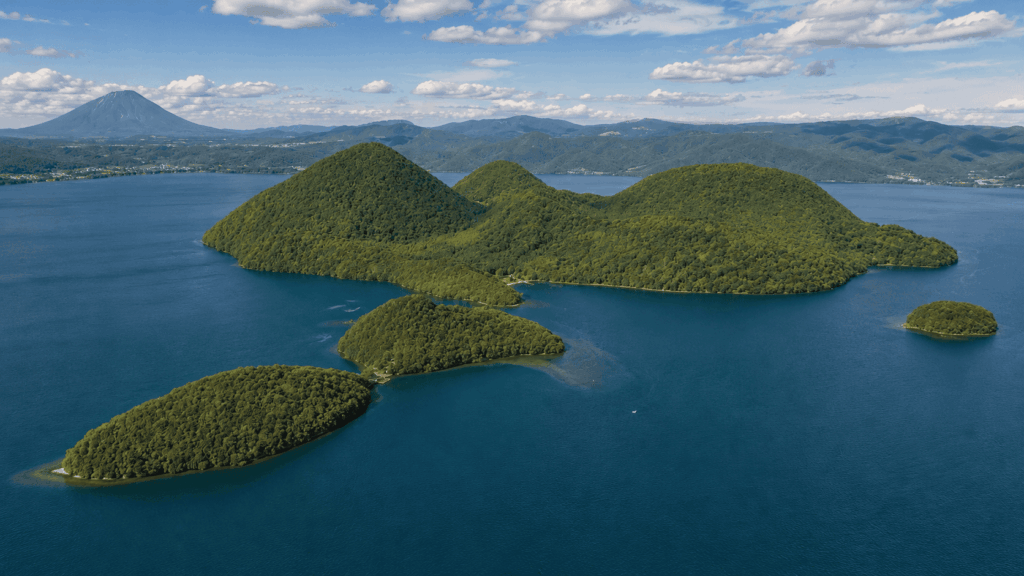
The single best thing to do at Lake Toya is to get on the water and cross to Nakajima. From the shore, the lake looks wide and open, but stepping onto the island is like entering a different world — a dense, quiet forest of century-old trees where the only sounds are birds and the crunch of volcanic soil underfoot.
The Ferry (TOYAKOKISEN)
Ferries depart from the pier near the Toyako Onsen bus terminal. Tickets are purchased at the terminal just before boarding; no advance reservation needed for most sailings.
| Item | Summer (late Apr–Oct 31) | Winter (Nov–early Apr) |
|---|---|---|
| Frequency | Every 30 minutes, 8:30–16:30 | Every 60 minutes, 9:00–16:00 |
| Round trip (no landing) | ~50 minutes, ¥1,600 | ~45 minutes, ¥1,600 |
| Round trip (with landing) | ~80 minutes (next ferry back), ¥1,600 | Not available — no landing in winter |
| Landing allowed | Yes (last landing ferry: 16:00) | No |
Important: The 16:30 departure is the last ferry of the day, but it does not allow landing at Nakajima. If you want to step onto the island, board no later than the 16:00 sailing. Many visitors miss this nuance and end up on a loop ride around the island with no chance to explore.
On the Island — What to Do
Nakajima has two visitor modes, and the choice makes a big difference.
Option 1: Quick stop (stay on the second ferry, ~30–40 minutes on the island)
Walk the short path from the pier, visit the small Nakajima Lake Forest Museum (¥200, open 9:00–16:00, closed early Nov–early Apr), and head back to the same ferry. You’ll get a taste of the forest, but you won’t reach the deeper trail.
Option 2: Full hike (stay for the next ferry, ~2 hours on the island)
Take the Nakajima Adventure Route, a well-maintained trail that loops through the interior of the island. The path is mostly flat and shaded — dense forest of Japanese ash (shioji), Mongolian oak (mizunara), and the occasional deer sighting. The trail takes about 40–50 minutes at a moderate pace, plus time to pause at the shore on the far side. You’ll need to catch a later ferry back.
I brought a family of four here on a late summer afternoon, and the kids — who had been glued to their phones on the train from Sapporo — were completely quiet once we stepped into the forest. The light filtering through the canopy, the moss-covered volcanic rock, the sudden rustle of a deer somewhere to the left — it had the kind of stillness that’s hard to find in Japan’s more popular national parks. We spent just over an hour on the island, and on the ferry back, one of them said it was the best part of the trip so far. That said, I’ve also been on days where we didn’t see a single deer. The forest itself is the draw; the animals are a bonus, not a guarantee.
What You Need to Know
- No food or drink on the island. There are no shops, vending machines, or restaurants. Bring water and snacks if you plan to hike.
- No toilets beyond the pier area. Use the facilities at the ferry terminal before boarding.
- Mosquitoes can be heavy in summer. Bring repellent, especially for the hiking route.
- The trail is mostly shaded, but the pier area is fully exposed — bring sun protection.
- Deer are present but not guaranteed. Recent visitors consistently mention seeing at least one deer, especially on the Adventure Route, but sightings depend on time of day and season.
Mount Usu & the Ropeway — Volcano Views from Above

While Nakajima takes you into the middle of the lake, Mount Usu takes you above it. At 732 metres, this active volcano last erupted in 2000, and the landscape around it still bears the scars — bare slopes, craters still steaming on cool mornings, and new domes that pushed up from the earth. It’s a different kind of beauty from Nakajima: dramatic, raw, and humbling.
The Ropeway Experience
The Usuzan Ropeway carries you from the base station near the western shore to the summit in about six minutes. At the top, you have two lookout options:
| Route | Time at Summit | What You See |
|---|---|---|
| Ropeway + Lake Toya Observation Deck | ~40 minutes total | Panoramic view of Lake Toya, Showa Shinzan, the Pacific coastline |
| Ropeway + Usu Crater Basin Observation Deck | ~60 minutes total | Close-up view of the 2000 eruption crater, volcanic vents, and the crater basin trail |
Round-trip fare is ¥2,000 for adults and ¥1,000 for children, plus ¥500 for parking if you drive. The first uphill ropeway departs at 8:15; the last downhill is at 17:45 (times can shift slightly by season).
The Crater Basin Observation Deck involves a short, moderately steep walk from the upper ropeway station — about 10–15 minutes each way on a paved path. It’s manageable for most fitness levels, but if you have mobility concerns or are visiting on a very hot or rainy day, the Lake Toya Observation Deck (directly next to the station) gives you the panorama without the extra walk.
Crater Walking Trails — Nishiyama & Konpira
If you want to get closer to the volcanic landscape, the crater walking trails are the best thing you can do beyond the ropeway. These are free, well-maintained paths that cross the areas affected by the 2000 eruption.
- Nishiyama Crater Walking Trail — a ~2.5 km loop that takes about 40–50 minutes. Mostly flat boardwalks over the blast zone, with interpretive panels in Japanese and English.
- Konpira Crater Ruins Walking Trail — a ~2.4 km route that passes the old Konpira Onsen, buried up to its second floor by the eruption. Slightly more uneven than Nishiyama but still manageable in sturdy footwear.
Both trails are open from late April to mid-November. In winter, they are closed due to snow and ice. The trails start near the Usuzan Ropeway base station, so you can combine the ropeway with one or both trails in a single visit — allow 2–3 hours total.
Between the ropeway summit and the crater trails, you’ll also find the Toyako Visitor Center (free entry for the exhibition area) and the Volcano Science Museum (¥600 for adults). The museum has a mock eruption simulation and detailed exhibits about the 2000 eruption. If you have children interested in volcanoes, it’s worth the entry fee.
In my observation, the crater walking trails are the most underrated part of the Mount Usu experience. Many visitors ride the ropeway, take a photo from the observation deck, and leave. But walking the boardwalks through the blast zone — seeing telephone poles snapped like twigs and the half-buried onsen building — gives you a visceral understanding of what a volcanic eruption actually does to a community. The ropeway gives you the view; the trails give you the context.
Lake Toya Fireworks Display — Is It Worth Staying For?
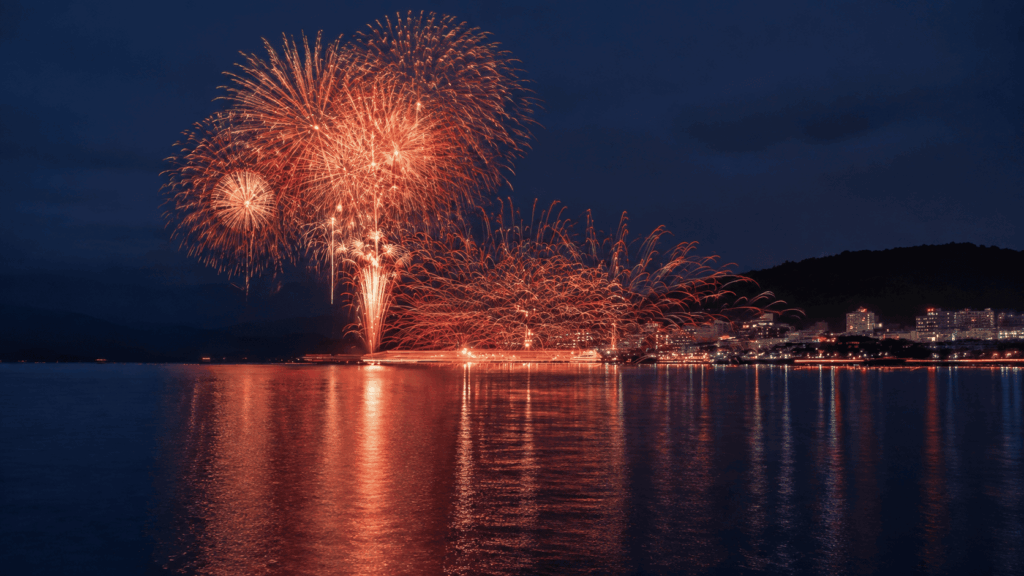
Every night from late April through October, fireworks are launched from boats on the lake at 8:45 pm. The Lake Toyako Long-Run Fireworks Display runs for exactly 20 minutes, and boats move across the lake as they fire, which means the show is visible from different angles depending on where you’re standing.
What It Actually Looks Like From the Lakeside vs a Hotel Room
From the lakeside promenade in Toyako Onsen, you get the full width of the display. The sound reverberates off the caldera walls, and you can walk along the shore to follow the boats. It’s free, crowded (especially in peak summer), and lively.
From a hotel room on the lake side — assuming your room faces the water and is high enough — you get a quieter, more private view. Some hotels have windows that overlook the lake, others have open-air baths with a view. But there’s a nuance here that isn’t always explained in hotel listings.
Kai’s tip: Not every room described as “lake-view” gives you a clear sightline to the fireworks. The boats move along a broad arc across the lake, and if your hotel sits at the edge of the onsen town or behind a slight curve in the shoreline, you may see only part of the show. I’ve had guests who booked a lake-view room expecting the fireworks to unfold directly below their window, only to find they could see the flashes but not the full spread. If fireworks are the main reason you’re booking a specific hotel, call or email ahead and ask whether the room has a direct line of sight to where the boats launch — not just a “lake view.” A general lake view and a fireworks view are not the same thing.
Fireworks Viewing Cruise
During the summer season (April 28–October 31), TOYAKOKISEN also operates a fireworks viewing cruise that departs at around 20:30. The boat follows the launch boats at a safe distance, giving you a front-row seat. Tickets are around ¥1,700 for adults and ¥850 for children. Arrive at the pier by 20:15 to secure your spot; the boat can fill up.
The fireworks are cancelled in heavy rain or strong wind. There is no make-up date — it’s simply cancelled for the night.
Lake Toya Without a Car — What’s Realistic
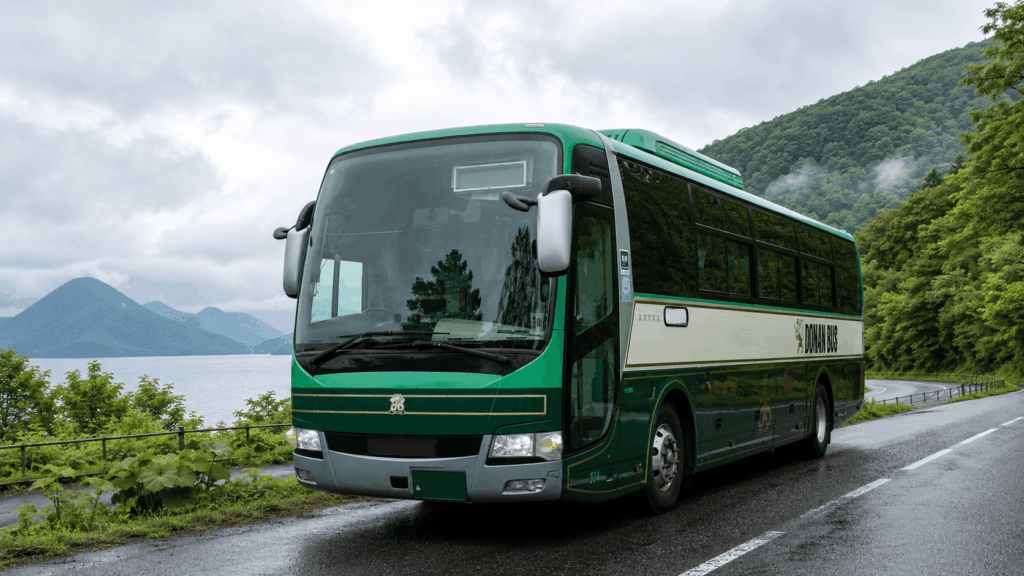
This is the most common question I hear from travellers planning a Hokkaido road trip. The short answer: Lake Toya is accessible without a car, but your mobility is limited once you arrive.
Getting There
| Route | Travel Time | Cost (one way) | Notes |
|---|---|---|---|
| Sapporo → Toyako Onsen (direct highway bus) | ~2 hr 45 min | ¥3,700 | Reservation required. 4 departures daily (7:40, 11:30, 14:10, 16:10). Operated by Donan Bus. |
| Sapporo → JR Toya Station (Hokuto limited express) + bus to Toyako Onsen | ~2 hr 10 min (train) + 26 min (bus) | ~¥7,000 + ¥400 | Train runs hourly. Bus from JR Toya Station to Toyako Onsen is ¥400. |
| Hakodate → JR Toya Station + bus | ~1 hr 50 min (train) + 26 min (bus) | ~¥5,000 + ¥400 | Same connection as above. |
The direct highway bus from Sapporo is the most practical option — it drops you right in the centre of Toyako Onsen, steps from the ferry terminal and most hotels. The train option is faster on paper, but the bus connection from JR Toya Station runs only about once per hour, and missing it means a ¥3,000–4,000 taxi ride. For more details on schedules, driving routes, and shuttle buses, check out our complete guide on how to get to Lake Toya.
Getting Around Once You’re There
Toyako Onsen itself is walkable — the lakeside promenade, foot baths, and restaurants are all within a 10–15 minute walk from the bus terminal. The ferry to Nakajima departs from the pier right next to the terminal.
The problem is everything else. The Usuzan Ropeway is about 6 km from Toyako Onsen, on the opposite side of the lake. A local bus runs between the onsen town and the ropeway (approx. 20 minutes, ¥400–500), but the schedule is limited — roughly one bus every 1–2 hours. Taxis are available but cost around ¥2,000–2,500 each way. The crater walking trails, the Silo Observation Deck, and Lake-Hill Farm are even harder to reach without a car or taxi.
Kai’s tip: The real limitation of visiting Lake Toya without a car isn’t reaching the lake itself — it’s the fact that once you’re there, you’re largely confined to the Toyako Onsen side of the lake and the Nakajima ferry. If you want to do the ropeway and the crater trails in the same day, you’ll need to work around bus timetables or budget for a taxi. For travellers on a day trip from Sapporo without a car, a guided tour that includes both the ropeway and a cruise (or lunch on the lake) is often the more time-efficient option, even if it costs a bit more than DIY transport.
If that transport trade-off sounds familiar, the useful comparison is not simply tour price versus bus fare — it’s how much of the region you can realistically cover in one day.
If you want Lake Toya and its volcanic landscape in a single day from Sapporo, but do not want your schedule dictated by infrequent connections, this is the guided option worth comparing with DIY.
Why I’d book this one
- Recent travelers repeatedly highlight the convenience of covering several major Hokkaido sights in one day instead of piecing together multiple public-transport connections.
- Feedback on the guides and transportation is consistently positive, especially for keeping a long sightseeing day organised and easy to follow.
- You can use the booking page to check current cancellation terms, start times, meeting points, and the seasonal itinerary before committing.
Best Time to Visit Lake Toya

Summer (June–September)
This is peak season for good reason. All three experiences — Nakajima hiking, Mount Usu ropeway, crater trails, and the nightly fireworks — are fully operational. The weather is warm (20–28°C) and the forest on Nakajima is lush and green. However, July and August bring higher humidity, mosquitoes, and more crowds at the ferry terminal and ropeway. If you can manage late June or early September, the balance of good weather and quieter conditions is ideal.
Autumn (October)
October is a sweet spot. The autumn foliage around the caldera is striking — the mountainsides turn orange and red. The fireworks are still running through October 31, the weather is cooler and more comfortable for walking, and the crowds thin out significantly after the Japanese summer holiday period. Just bring a warm jacket for the evenings.
Winter (November–April)
Winter at Lake Toya is a different destination entirely. The ferry still runs but Nakajima landing is closed — the cruise becomes a 45-minute loop around the lake. The Usuzan Ropeway may close for a few weeks in winter for maintenance (dates vary annually, so check the official site before heading there). The crater walking trails are closed by snow. The lakeside promenade can be icy and the wind off the caldera is biting.
What remains open? The onsen hotels, of course. And from November to late April, the Illumination Tunnel — a 200-metre corridor of LED lights — runs nightly (18:00–22:00, free) along the lakeside, creating a winter atmosphere that’s quite pretty but very different from the summer experience. There’s also a limited winter fireworks display (usually a 9-day run in early February).
Honestly, if your main goal is the natural landscape and hiking, winter is not the time to visit Lake Toya. Onsen lovers who simply want a quiet, snow-view soak without needing much else to do will enjoy it; everyone else should wait for warmer months. If you are still deciding, read our honest guide on whether Lake Toya in winter is worth your time.
FAQs
Is Lake Toya worth visiting?
Yes, if you enjoy natural landscapes, onsen, and quiet outdoor activities. It’s not an action-packed destination — there are no theme parks, shopping streets, or nightlife. What it offers is a volcanic caldera lake, a forested island you can reach by ferry, an active volcano you can ride a ropeway to see up close, and open-air baths with lake views. For travellers passing between Sapporo and Hakodate, a stop here adds meaningful depth to a Hokkaido itinerary. It’s less worth visiting if your priority is urban sightseeing, packed schedules, or winter hiking.
Which is better — Nakajima Island or Mount Usu?
They serve different moods. Choose Nakajima if you want a quiet forest walk, birdwatching, and the experience of being out on the lake itself. Choose Mount Usu if you want dramatic volcanic scenery, wide panoramic views, and the geological context of a recent eruption. If you have a full day, you can do both — take the ferry to Nakajima in the afternoon and ride the ropeway the next morning. If you only have a half-day, pick the one that matches your preference for “forest stillness” vs “volcanic drama.”
How much time do you need at Lake Toya?
Bare minimum: 3–4 hours for a quick cruise or ropeway visit. Ideal for most first-time visitors: one night (arrive midday, ferry to Nakajima in the afternoon, fireworks and onsen in the evening, ropeway the next morning). For nature lovers and geopark enthusiasts: two nights, which allows you to walk both crater trails and explore the volcano museum without rushing.
Can you visit Lake Toya in winter?
Yes, with significant limitations. The ferry runs but Nakajima landing is closed — you can only do a 45-minute loop around the lake. The ropeway may have a maintenance closure period (check the official site for exact dates). The crater walking trails are closed by snow. What remains open: onsen hotels, the Illumination Tunnel (mid-November through April), and a short winter fireworks display in early February. If your main goal is hiking and sightseeing, winter is not the best season. If you want a quiet onsen retreat with a snowy view, it works well.
How do I get from Sapporo to Lake Toya?
Two main options. The direct highway bus (Donan Bus, reservation required, ¥3,700, ~2 hours 45 minutes) drops you at Toyako Onsen bus terminal, steps from the ferry and most hotels. The JR Hokuto limited express to Toya Station (~2 hours 10 minutes, ~¥7,000) followed by a local bus to Toyako Onsen (~26 minutes, ¥400) is faster in theory, but the bus connection runs only about once per hour. If you miss it, a taxi costs ¥3,000–4,000. For most travellers, the direct bus is the simpler choice.
Do I need to book the ferry in advance?
No, not for regular daytime ferries. Tickets are purchased at the TOYAKOKISEN terminal just before boarding. The line moves quickly except on peak summer weekends and public holidays (Obon week in mid-August, Golden Week in early May). The fireworks viewing cruise can fill up — arrive 15–20 minutes before departure if you want a guaranteed spot.
Can you see the fireworks from any hotel?
Not automatically. The fireworks are launched from boats that move across the lake, so visibility depends on your hotel’s position along the shoreline and the room’s exact orientation. Hotels in the central part of Toyako Onsen facing the lake generally have good views. Hotels at the northern or southern edges may see only part of the show. If fireworks are important to you, contact the hotel directly and ask about the room’s line of sight to the launch area, rather than relying on a “lake view” listing alone.
Is Lake Toya suitable for families with children?
Yes, with some caveats. The ferry ride and Nakajima forest walk are popular with children — the Adventure Route is easy and flat, and spotting deer adds excitement. The Volcano Science Museum is also engaging for school-age kids. The crater walking trails are manageable for older children but may be too long for younger ones. The onsen experience is family-friendly in most hotels, though check whether the hotel allows children in the public bath (some have age restrictions or separate family bath times).
Final Verdict — Who Should Visit Lake Toya (and Who Should Skip It)
Choose Lake Toya if:
- You’re travelling between Sapporo and Hakodate and want a scenic overnight stop that breaks up the journey naturally.
- You enjoy quiet natural landscapes — lakes, forests, volcanoes — and don’t need a packed itinerary to feel satisfied.
- You’re an onsen lover who wants the experience of soaking in an outdoor bath with a view of a caldera lake.
- You’re travelling with children who are old enough to enjoy a ferry ride and a forest walk (ages 5+ will get the most out of it).
- You’re visiting between May and October and can take advantage of the full range of activities — Nakajima, ropeway, crater trails, and fireworks.
Choose another option if:
- You have only a half-day and want to maximise sightseeing volume — Lake Toya rewards slower pacing, not ticking boxes.
- You’re visiting in winter (December–March) and your priority is hiking or outdoor exploration. Consider Noboribetsu instead (see our Lake Toya vs Noboribetsu comparison), which offers Jigokudani (Hell Valley) and active crater walks in most winter conditions.
- You’re looking for urban nightlife, shopping, or a dense restaurant scene. Lake Toya’s dining is limited to onsen hotel restaurants and a handful of local eateries.
- You have mobility issues that prevent you from walking more than short distances on uneven ground. The lakeside promenade is flat and accessible, but the Nakajima trail, ropeway summit paths, and crater walking trails all involve unpaved or stepped sections.
For first-time visitors to Hokkaido: If your itinerary already includes Sapporo, Hakodate, and Noboribetsu, adding one night at Lake Toya is a natural fit — it sits between Sapporo and Hakodate on the JR line, and it offers a kind of landscape you won’t see in the other three destinations. Aim for an overnight stay rather than a rushed day trip; the combination of the Nakajima ferry, a dinner at an onsen hotel, and the 8:45 pm fireworks is what makes Lake Toya memorable, not the list of sights you can check off.
For families: Lake Toya works well if you plan around your children’s energy levels. A late morning arrival, the ferry to Nakajima (with the short forest loop, not the full hike), lunch at a lakeside restaurant, then a visit to the Volcano Science Museum gives a full but not exhausting day. Skip the crater trails unless your children are older and used to walking.
For repeat visitors to Hokkaido: If you’ve already seen the main sights and want something quieter, Lake Toya’s geopark trails, the full Nakajima Adventure Route, and a slow two-night stay with both sunrise and sunset on the lake offer a depth that a quick day trip misses. This is the kind of place that rewards returning.

Hi, I’m Kai. I’m a Tokyo-based travel writer, tourism industry insider, and the author of a published guidebook for international visitors to Japan. With over 10 years of professional experience at a leading Japanese tourism company, my mission is to help you skip the tourist traps and navigate Japan’s best destinations like a local. I believe the perfect day trip is like a traditional kaiseki meal: a beautiful balance of precise planning and unforgettable seasonal discovery. When I’m not out conducting field research, you’ll usually find me drafting new itineraries with one of my favorite fountain pens!