
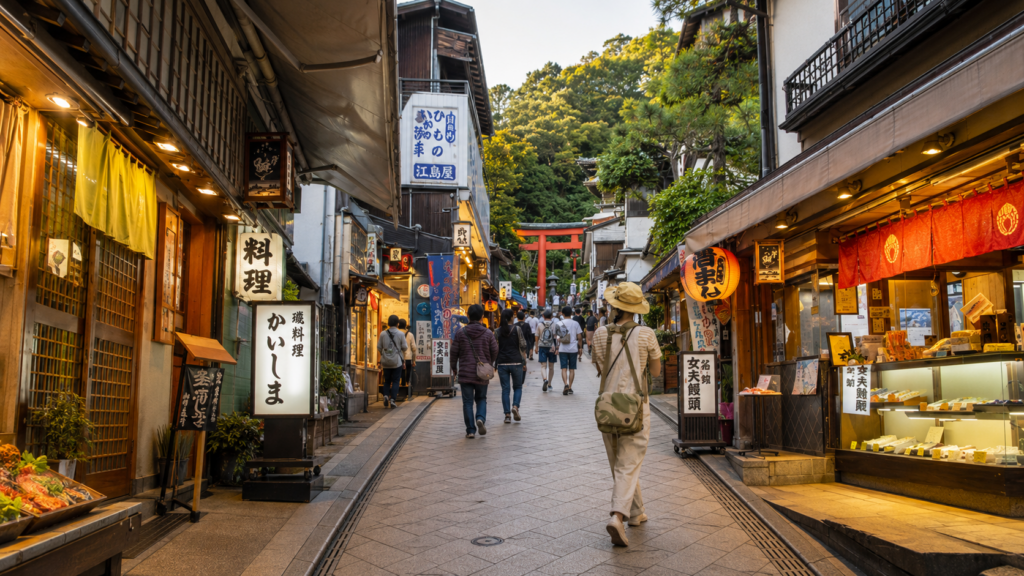
Enoshima is a small island just off the coast of Kamakura—less than 90 minutes from central Tokyo—and it punches well above its weight when it comes to food. The narrow shopping street that runs from the bronze torii gate up toward Enoshima Shrine is packed with seafood stalls, century-old sweet shops, and restaurants serving the island’s signature catch: shirasu (whitebait).
The question isn’t whether you’ll eat well here—it’s whether you’ll spend your limited time queueing for the right things. This guide cuts through the options. You’ll find exactly what to eat, which shops are worth the wait, how to dodge the worst crowds, and—just as importantly—what you can walk past without a second thought.
Quick Answer: Enoshima’s Must-Eat Foods at a Glance
If you only have a couple of hours on Enoshima, here is what to prioritise and where each stop fits into your route.
| Food | Where to Get It | Best For | Queue Reality |
|---|---|---|---|
| Shirasu don (whitebait rice bowl) | Tobiccho (とびっちょ) | The definitive shirasu experience — nama (raw) or kamaage (boiled) | Often busiest around lunch; use the numbered waiting system if available |
| Maruyaki tako senbei (grilled octopus cracker) | Asahi Honten (あさひ本店) | Street snack with a live-press show — the most iconic bite on the island | Queue times vary; the main shop is cash-only |
| Ice cream monaka | Inoue Sohonpo (井上総本舗) | A crisp wafer sandwich filled with ice cream and sweet red bean paste | Minimal — order and go |
| Meoto manju (steamed buns) | Kinokuniya Honten (紀の国屋本店) | Founded in 1789 — traditional, not trendy | Minimal — takeaway counter |
| Shirasu with an ocean view | Uomi-tei (魚見亭) | Clifftop dining over the Pacific; 150-year-old institution | No reservations — allow extra walking time to the far side of the island |
The Heart of Enoshima Food: Nakamise Street Walking Route
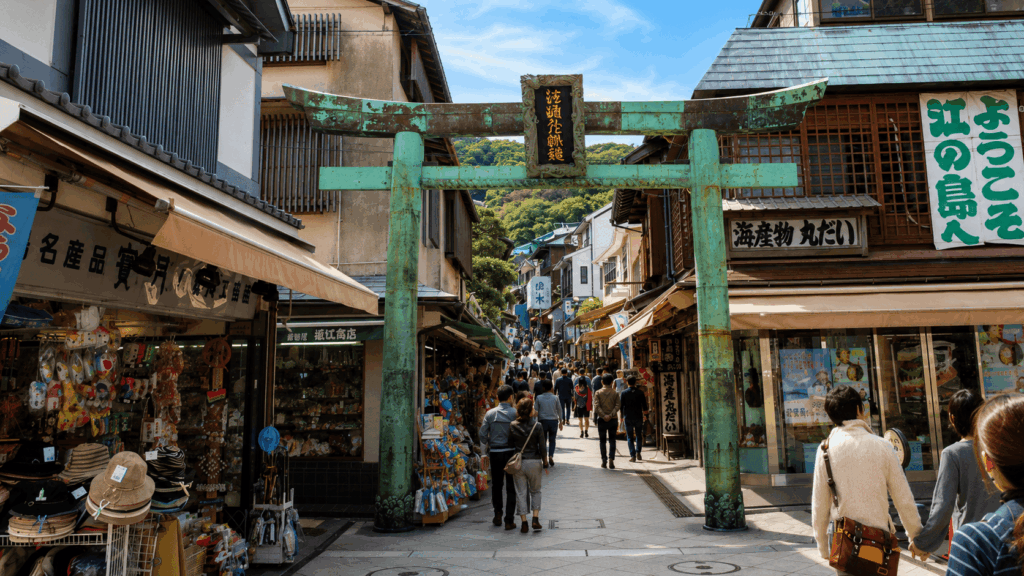
Most of Enoshima’s street-food stalls are concentrated on one street: Benzaiten Nakamise-dori (弁財天仲見世通り), the pedestrian-only shopping lane that begins at the bronze torii gate and climbs toward Enoshima Shrine. But several stops in this guide sit elsewhere: Enoshima Koya and Ogiya are on the mainland side, LON CAFE is near the top of the island, and Uomi-tei is on the far western side.
A second, quieter street called Subana-dori (洲鼻通り) runs from the Enoden Enoshima Station side toward the bridge. It has fewer food stalls but a more relaxed pace—worth a detour if you want to escape the crowd for a few minutes.
The most efficient walking route is simple: start at the bronze torii gate, walk up Nakamise Street sampling as you go, continue past the shrine to the far side of the island (where Uomi-tei and Samuel Cocking Garden are located), and loop back. More on timing below.
Shirasu (Whitebait) – The Island’s Signature Catch
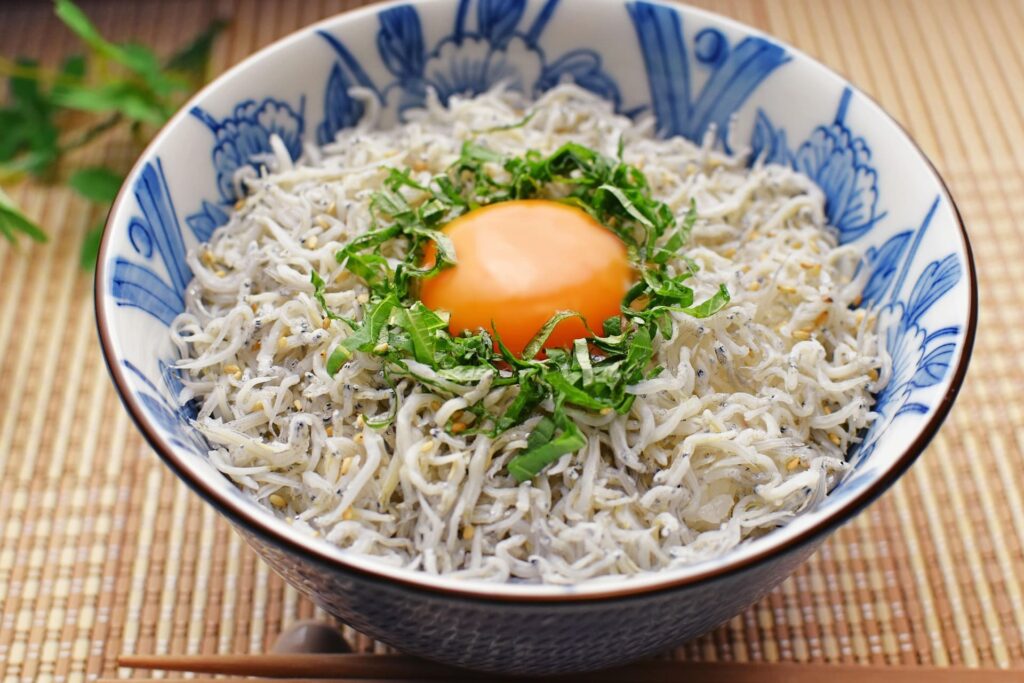
Shirasu—tiny, translucent juvenile sardines or anchovies—is what Enoshima is known for, and it appears everywhere: on rice bowls, in crackers, deep-fried as kakiage, even stirred into soft-serve ice cream. How you eat it depends on the season, your tolerance for raw seafood, and how long you’re willing to queue.
Nama Shirasu vs. Kamaage Shirasu: What’s the Difference?
Nama shirasu (生しらす) is raw whitebait, served fresh and uncooked. The texture is soft and the flavour is mild, almost sweet—closer to a very delicate sashimi than anything fishy. It’s the most prized preparation, but it’s also the most restricted by season.
Kamaage shirasu (釜揚げしらす) is boiled immediately after being caught, then served warm or at room temperature. The cooking firms the texture and concentrates the savoury flavour. It is generally easier to find than nama shirasu and is the most reliable backup when raw shirasu is not available.
If you’re in doubt, order kamaage—it’s just as delicious, and you won’t have any regrets.
Where to Eat Shirasu on Enoshima
Tobiccho (とびっちょ) – The Definitive Shirasu Restaurant
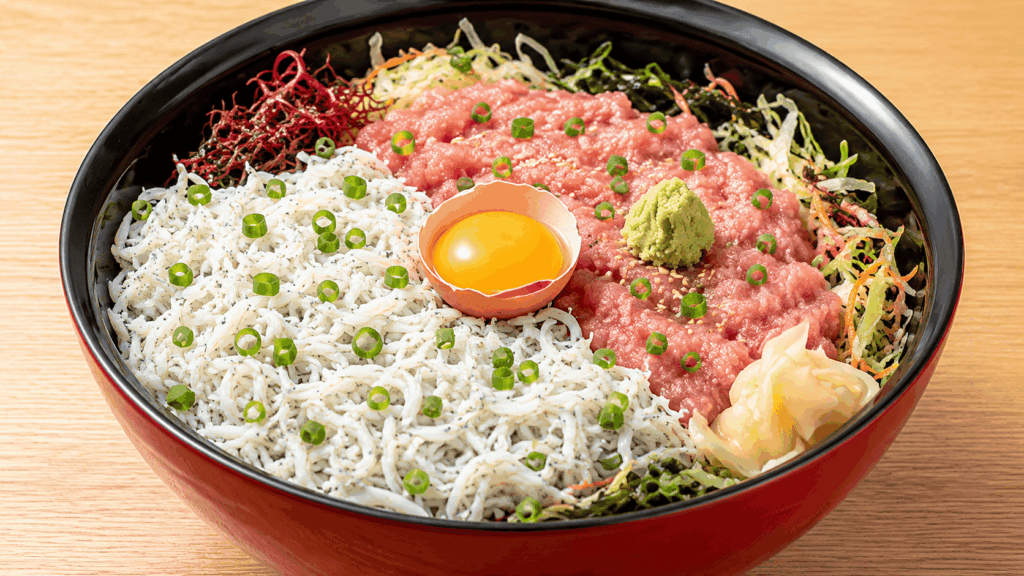
Tobiccho is the most famous shirasu restaurant on the island, and it’s the one you’ll see recommended most often—for good reason. The menu covers almost every possible shirasu preparation: kamaage shirasu don, nama shirasu as a side, fried shirasu kakiage, even a shirasu soft-serve ice cream that looks startlingly plain but tastes like a savoury-sweet custard.
Important: The Tobiccho Benzaiten Nakamise Street branch accepts credit cards and has English menu support. It is located on Nakamise Street, about halfway up the hill, and is normally listed as open from 11:00 am to 9:00 pm, although hours can change with weather or conditions on the day.
Uomi-tei (魚見亭) – Shirasu with a View
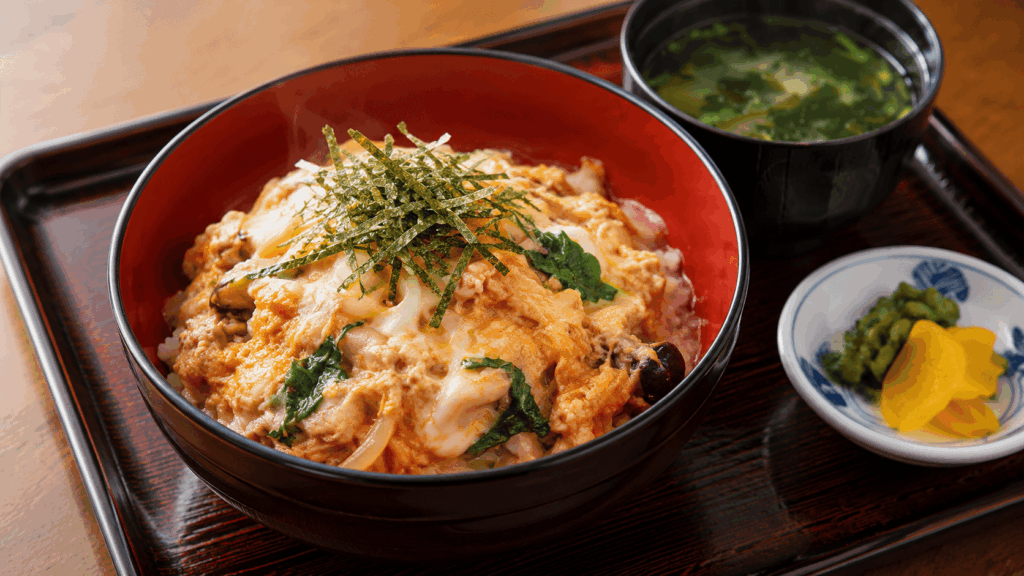
On the far side of the island, perched on the cliffs above the Pacific, Uomi-tei has been serving seafood for more than 150 years. Every seat—including the popular terrace—looks out over the water, and on clear days you can see Mount Fuji. The shirasu bowls are straightforward and fresh, and the atmosphere alone makes it worth the walk to the far end of the island—about 30 minutes on foot from Katase-Enoshima Station. As of September 2026, kamaage shirasu don is ¥1,300 and nama shirasu don is ¥1,400. No reservations accepted.
Enoshima Koya (江ノ島小屋) – The Early-Morning Option
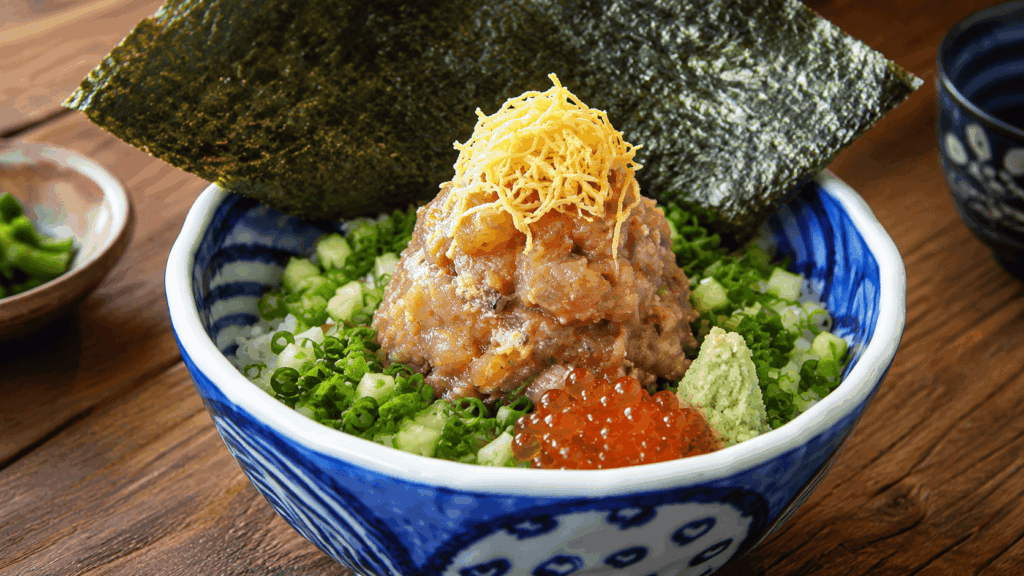
If you arrive before the crowds, Enoshima Koya on the mainland side near the bridge opens at 8:00 am—much earlier than most island restaurants. Its dedicated breakfast menu makes it a solid choice for an early meal before the Nakamise Street shops open; check the current menu if you are visiting for one specific shirasu dish.
The Shirasu Season Reality Check
This is the part that catches many first-time visitors off guard. Nama shirasu (raw whitebait) is not available year-round.
The shirasu fishing season in Shonan waters runs with an annual closure from roughly January 1 to March 10. During this period, no fresh local raw shirasu is landed. Even when the season is open (approximately March 11 to December 31), nama shirasu may still be unavailable on any given day due to rough seas, poor catches, or the previous day’s catch being insufficient.
Kamaage shirasu (boiled) is your most reliable fallback when raw shirasu is unavailable, although supply can still vary by shop. Most travellers find it just as satisfying.
Kai’s tip: Before you set your heart on nama shirasu, check the shop’s signboard or social media in the morning. Many restaurants post a “本日 生しらすあり” (nama shirasu available today) sign at the entrance. If you don’t see it, switch your order to kamaage without hesitation—it is the cooked version and a reliable alternative. The disappointment of planning your day around raw shirasu only to find it’s off the menu is easily avoided with a 5-second glance at the door.
Queue Strategy for Shirasu Restaurants
Tobiccho’s queue is the biggest bottleneck on any Enoshima food crawl. On a weekend afternoon, the wait can stretch past an hour. The mistake I see most visitors make is arriving at noon, joining the longest line of the day, and spending their entire island visit waiting for one bowl of rice.
Kai’s tip: If Tobiccho is using its numbered waiting system, grab a ticket early, explore Nakamise Street and the island while you wait, and return closer to your number. That lets you spend much of the waiting time sightseeing instead of standing outside the restaurant.
If you’re short on time and queuing isn’t your idea of a good holiday, Uomi-tei and Enoshima Koya are alternatives worth checking if Tobiccho’s wait is too long.
Tako Senbei (Octopus Crackers) – The Iconic Street Snack
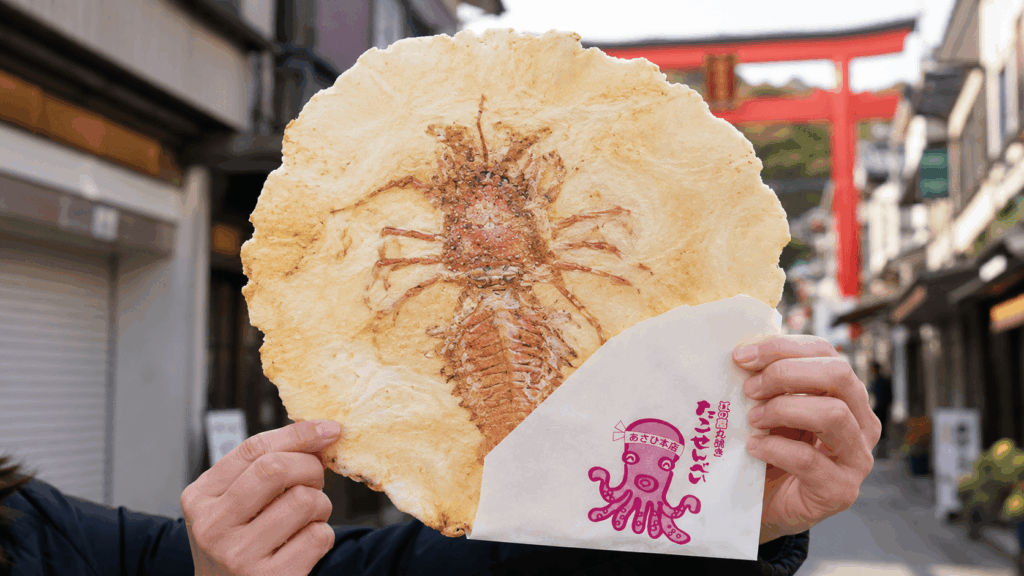
If you only queue once on Enoshima, make it here. Asahi Honten (あさひ本店) is the shop that put Enoshima’s octopus crackers on the map, and the spectacle is as compelling as the snack itself.
The process is simple: two or three small octopuses are lightly seasoned, dusted with flour, and flattened between hot plates under heavy pressure. The sizzle, the steam, and the transformation from seafood to crisp wafer happen in about two minutes. Staff members work continuously, pressing and wrapping hot crackers in paper while the queue watches the show.
A standard maruyaki tako senbei costs around ¥500. Asahi Honten also makes ebi senbei (shrimp crackers) and other pressed crackers—worth checking if octopus isn’t your thing. The main shop’s ticket machine accepts cash only, and queue times vary by day.
Kai’s tip: The tako senbei at Asahi Honten is the one street snack on Enoshima that genuinely justifies a queue. It’s fresh, it’s hot, and the theatre of watching an octopus get pressed into a cracker is unique to this island. What I wouldn’t do is queue again for a similar skewer or grilled item at another stall—most of the grilled seafood (scallops, squid, shellfish) sold along Nakamise Street is comparable from one vendor to the next. Buy it when you see it; don’t go out of your way or stand in a second long line. Spend that time on something that’s harder to find elsewhere.
Sweet Treats – Monaka, Manju, and French Toast
Enoshima’s food scene isn’t all savoury. The island has a handful of sweet shops that have been operating for centuries, plus a modern café that pairs dessert with one of the best views in the region.
Ice Cream Monaka @ Inoue Sohonpo (井上総本舗)
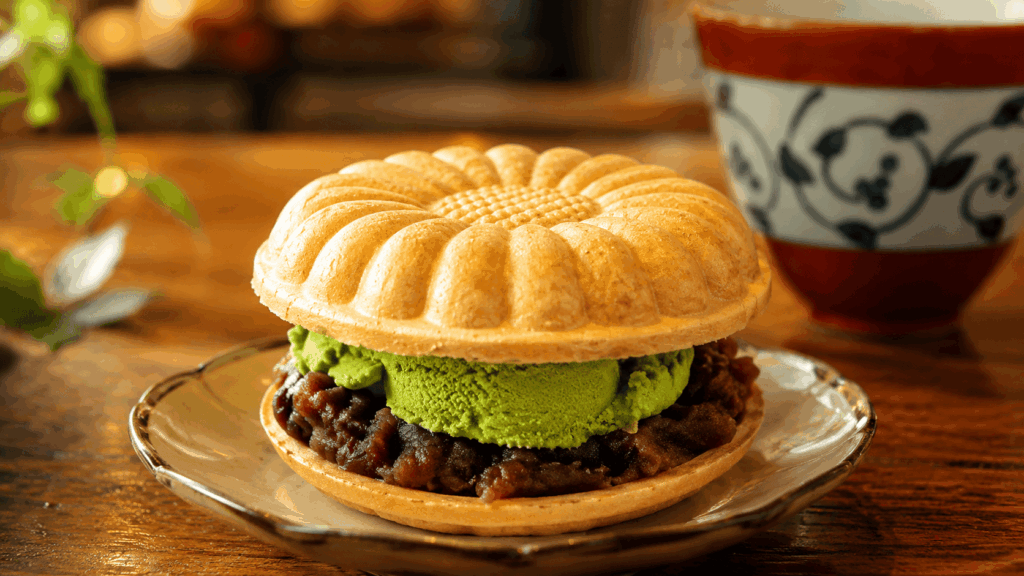
Located about five shops up from the bronze torii gate on Nakamise Street, Inoue Sohonpo serves one of the simplest and most satisfying sweets on the island: ice cream monaka. A crisp, thin wafer shell is filled to order with vanilla or matcha ice cream and a scoop of sweet red bean paste (anko). The contrast between the warm, brittle wafer and the cold, creamy filling works every time.
Meoto Manju @ Kinokuniya Honten (紀の国屋本店)
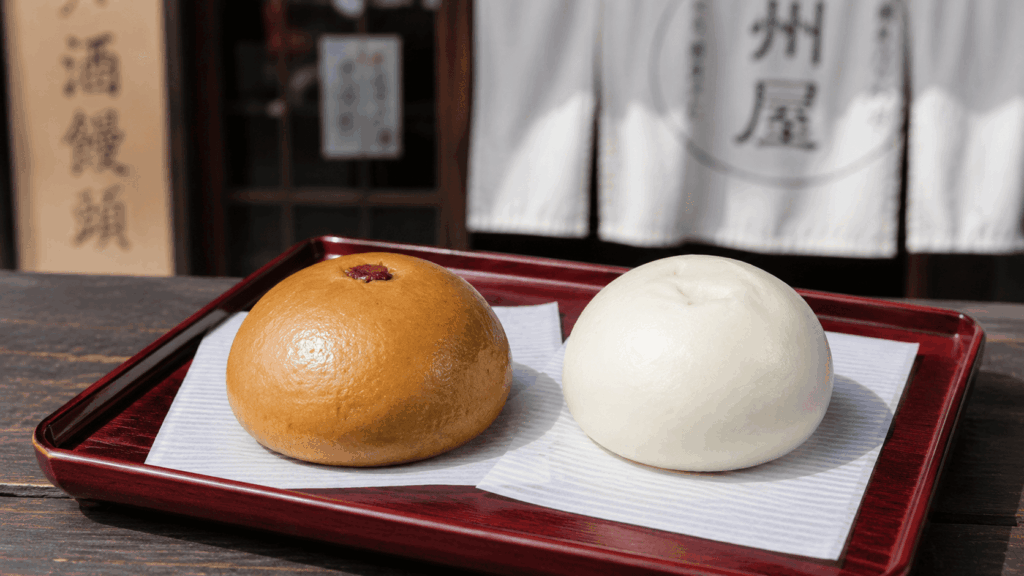
Kinokuniya Honten has been in business since 1789. Their signature is meoto manju (“husband-and-wife steamed buns”), a pair of small soft buns filled with sweet red bean paste, one slightly larger than the other. They’re served warm and cost around ¥150 each. The shop also sells Enoshima monaka—a different style of wafer from Inoue’s ice cream version, best as a souvenir rather than an eat-now snack.
Enoden Monaka @ Ogiya (扇屋)
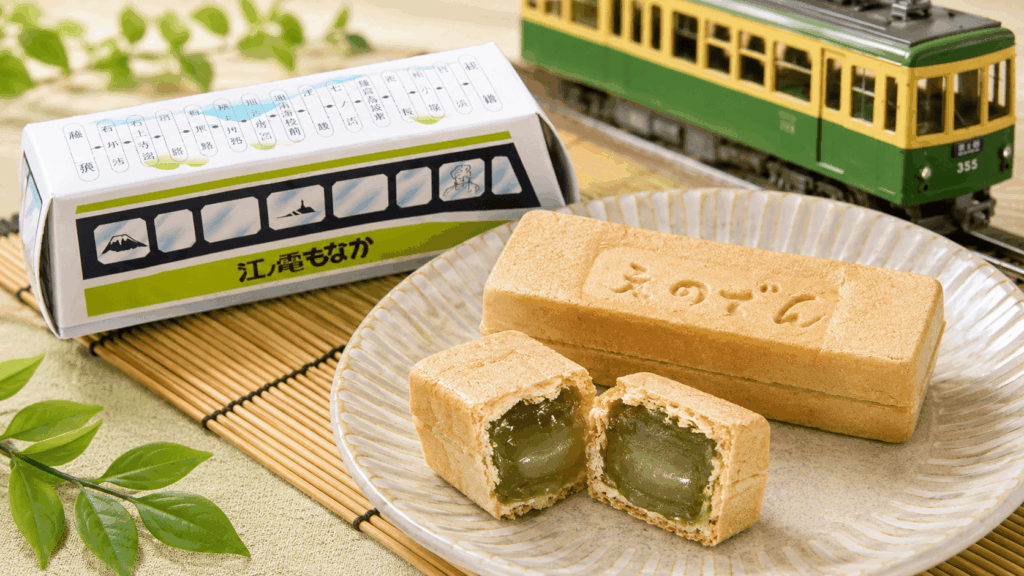
Near Enoden Enoshima Station on the mainland side, Ogiya (established in the 1830s–1840s) makes wafer snacks shaped like the Enoden train that runs between Kamakura and Enoshima. The Enoden Monaka comes in several flavours and is sold in train-themed packaging. This is squarely in souvenir territory—pick up a box as a gift rather than eating it on the street.
LON CAFE – French Toast with a View
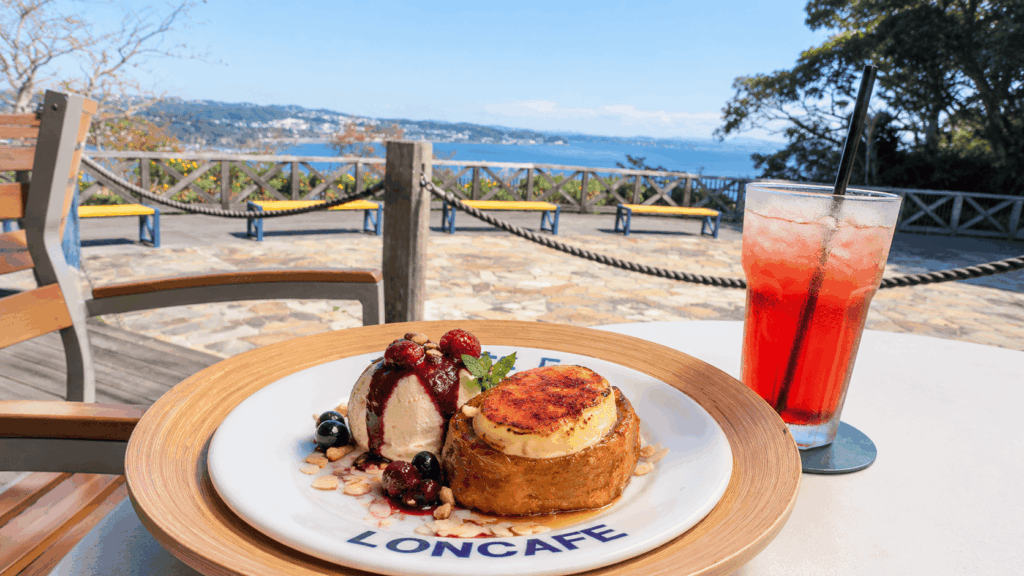
At the top of the island inside Samuel Cocking Garden, LON CAFE opened in 2003 as Japan’s first specialist French toast café. Samuel Cocking Garden is free to enter during the daytime; during event periods, admission is charged after 5:00 pm. Their signature dish is thick-cut French toast soaked and griddled until golden. The real draw is the setting: floor-to-ceiling windows face Sagami Bay, and on clear winter days you can see Mount Fuji across the water. It’s a sit-down destination, not a grab-and-go snack, so budget at least 30–40 minutes if you want a table.
Other Seafood Snacks Worth Knowing About
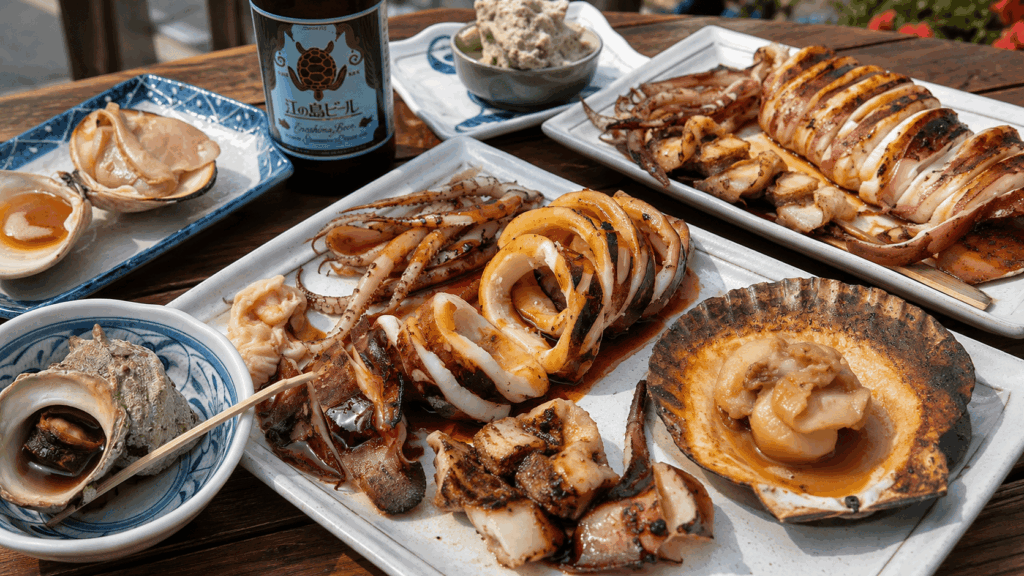
Along Nakamise Street you’ll see stalls selling grilled scallops, whole squid charred over charcoal, and sazae no tsuboyaki—turban shell snails cooked in their own shell with soy sauce and sake. These are good, and they smell incredible as you walk past. What I see most travellers do is buy one of each from different stalls as they work their way up the hill. That’s exactly the right approach.
These grilled items are not destination foods—they are impulse purchases that make the walk more fun. The quality is reasonably consistent from stall to stall. If you see something that looks good, buy it. If a stall has a long line and the one next to it doesn’t, the food is almost certainly the same. Don’t waste your island time queueing for grilled scallops when you could be eating tako senbei or shirasu instead.
Tips for a Smooth Food Crawl on Enoshima
Best Time to Go
Enoshima’s food scene follows a predictable rhythm. Before 11:00 am, Nakamise Street is generally quieter and you are ahead of the main lunch rush. Late morning through early afternoon is usually the busiest period, especially on weekends and holidays. Later in the afternoon, queues may ease, but do not rely on one fixed time working every day.
If your schedule is flexible, arrive early, use the quieter morning for Nakamise Street and the far side of the island, and avoid making noon your only option for shirasu. This gives you more flexibility if a popular restaurant has a long wait.
Bring Some Cash
Larger restaurants such as Tobiccho accept credit cards, but some smaller food stalls and sweet shops still require cash. Bring enough cash for a few snacks. A reasonable budget for a full food crawl (shirasu don + two or three snacks + a drink or ice cream) is around ¥2,500–¥4,000 per person. Small notes and coins are useful at cash-only counters.
Language and Ordering
Major restaurants like Tobiccho and Uomi-tei have English menus or picture-based ordering. The smaller stalls and sweet shops operate on a “point and pay” basis—most display their items with prices on plastic models or photos. No Japanese language skill is required for a successful food crawl on Enoshima.
What to Skip
Nothing on Enoshima is “bad”—but some things are worth more of your attention than others. My honest read:
- Skip second-long queues for generic grilled seafood (scallops, squid) when the next stall has no line.
- Skip the souvenir boxes of monaka if you haven’t eaten the fresh version first—buy the fresh monaka from Inoue Sohonpo to eat now, and the boxed version from Kinokuniya or Ogiya only if you want gifts.
Rainy Day Plan
Light rain is manageable if you are prepared, but much of the route between shops is outdoors. For a sit-down meal, Enoshima Koya or Uomi-tei let you get out of the weather, while LON CAFE can work if you are already near the top of the island. Heavy rain or typhoon conditions may affect opening hours, so check the forecast and the latest shop information before you go.
Putting It All Together: A 3-Hour Food Crawl Route
If you have a limited window on Enoshima, here is the most efficient route I know. It follows the natural geography of the island with minimal backtracking and uses the crowd patterns to your advantage.
- Start at the bronze torii gate (10:00 am). Walk into Nakamise Street and get your bearings before choosing your first snack.
- Stop at Inoue Sohonpo for ice cream monaka (a quick stop you can eat while walking).
- Continue past Enoshima Shrine toward the far side of the island. Visit Samuel Cocking Garden and the Sea Candle lighthouse if interested—the views are excellent.
- Lunch at Uomi-tei (around 11:30 am, before the midday rush). Order shirasu don with an ocean view.
- Walk back through Nakamise Street (around 1:00–1:30 pm). Stop at Asahi Honten for tako senbei if the queue works for your schedule.
- Optional: Tobiccho for shirasu soft-serve if you still have room.
- End at Kinokuniya Honten for meoto manju to take away.
Frequently Asked Questions About Enoshima Street Food
How much money do I need for a full food crawl on Enoshima?
A realistic budget for one person covering a shirasu rice bowl, two or three street snacks, and a drink or ice cream is around ¥2,500–¥4,000. Uomi-tei’s shirasu bowls are currently around ¥1,300–¥1,400, and a standard tako senbei from Asahi Honten is around ¥500. Bring some cash for smaller counters even though larger restaurants may accept cards.
Can I eat shirasu if I don’t eat raw fish?
Absolutely. Order kamaage shirasu (boiled whitebait) instead of nama shirasu. It is served warm or at room temperature, has a firmer texture than the raw version, and is generally easier to find. Most shirasu restaurants offer cooked preparations, so you can still enjoy the island’s signature ingredient without eating it raw.
Are there vegetarian or vegan options on Enoshima?
Enoshima’s food scene is overwhelmingly seafood-focused, and pure vegetarian or vegan options are limited. Your best bets are the sweet shops: ice cream monaka from Inoue Sohonpo (contains dairy) and meoto manju from Kinokuniya Honten (typically contains red bean paste—check for dairy or egg if strict). LON CAFE’s French toast uses egg and dairy. For a savoury option, some stalls sell roasted chestnuts or sweet potato snacks, but these are not guaranteed on every visit.
Is the street food safe to eat for travellers?
If you are concerned about raw seafood, stick to kamaage shirasu (boiled) or grilled items, both of which are cooked. For nama shirasu, use established restaurants and follow the same precautions you normally would with raw seafood.
Can I visit Enoshima for street food if the weather is bad?
Yes, with some adjustments. Much of the route between shops is outdoors, and bad weather can affect opening conditions, so prioritise indoor restaurants and check the forecast and latest shop information before you go.
Is Enoshima street food suitable for children?
Yes—the walk-and-eat format works well with kids. The snacks are small, inexpensive, and served immediately, which suits shorter attention spans. Tako senbei and ice cream monaka are especially popular with younger eaters. For a proper meal, Tobiccho and Uomi-tei both offer sit-down dining, which can be easier than trying to snack continuously with young children.
Final Verdict: Is Enoshima Street Food Worth the Trip?
Enoshima’s food scene is genuinely good, but it rewards a little planning. (If you’re still debating whether to add the island to your itinerary, check out our honest verdict on whether Enoshima is worth visiting). Here is how I would break it down by traveller type.
For first-time visitors to Enoshima
Yes—make food a central part of your visit. Follow the 3-hour route above rather than trying to eat at every stall, and leave enough time to actually explore the island between food stops.
For travellers on a tight schedule (2 hours or less)
Prioritise two things: tako senbei from Asahi Honten and a shirasu dish from wherever fits your route without a long wait. Skip LON CAFE (it requires a 30–40 minute sit-down) and skip the souvenir monaka boxes. You can cover the essentials in about 90 minutes if you avoid a long restaurant queue.
For food-focused travellers who want depth
Give yourself 4–5 hours and do the full route. Start with Enoshima Koya for an early breakfast, walk the island end-to-end, eat shirasu at Tobiccho if the wait fits your day, have tako senbei as a walking snack, take a break at LON CAFE for French toast with an ocean view, and finish with meoto manju to take away. This is the most comprehensive single-day food experience Enoshima offers.
For travellers visiting during the shirasu off-season (January–March)
Adjust your expectations and you will still eat well. Fresh nama shirasu is unavailable during the fishing closure, and kamaage availability can still vary by shop. The tako senbei, grilled seafood, ice cream monaka, and meoto manju are unaffected by the fishing calendar, so treat shirasu availability as one part of the food crawl rather than the whole reason to visit.
For families with young children
A great choice. The street-food format means no long sit-down meals, the snacks are kid-friendly (crispy crackers, ice cream, sweet buns), and the walk up Nakamise Street is entertaining even for restless eaters. If you want a proper meal, choose a sit-down restaurant that fits your route rather than adding another long queue.
Choose a guided tour if…
…you want to visit both Kamakura and Enoshima in one day without worrying about train schedules, restaurant queues, or ordering in Japanese. Several guided day trips from Tokyo cover the Kamakura highlights (Hase-dera, the Great Buddha, Tsurugaoka Hachimangu) followed by an Enoshima food stop, with a local guide handling the logistics so you can focus on eating.
If you fall into that camp — you want Kamakura and Enoshima in one day, but you do not want the whole day to hinge on train timing, temple order, and lunch queues — this is the one booking I’d push you toward.
Why I’d book this one
- Recent travelers consistently mention the value of having a guide handle the flow between Kamakura’s temples, Komachi Street, and Enoshima.
- The route covers the main Kamakura highlights plus Enoshima, which matches the way most first-time visitors actually combine this food stop with a wider day trip.
- It is low-commitment to check first: the page shows live dates, start times, cancellation terms, and recent traveler reviews before you decide.
Hi, I’m Kai. I’m a Tokyo-based travel writer, tourism industry insider, and the author of a published guidebook for international visitors to Japan. With over 10 years of professional experience at a leading Japanese tourism company, my mission is to help you skip the tourist traps and navigate Japan’s best destinations like a local. I believe the perfect day trip is like a traditional kaiseki meal: a beautiful balance of precise planning and unforgettable seasonal discovery. When I’m not out conducting field research, you’ll usually find me drafting new itineraries with one of my favorite fountain pens!