
Getting to Enoshima from Tokyo is simple once you know which station to aim for. The frustration most visitors run into is that three different stations serve the island, each operated by a different railway company, and the names look almost identical on a timetable.
This guide covers every route from Tokyo, explains exactly which station to get off at, and helps you decide whether the Enoshima-Kamakura Freepass is worth buying for your trip.
Prefer to skip the transfers? If you already know you want to combine Kamakura and Enoshima in one day, compare start times and recent traveler reviews for this Tokyo-based Kamakura and Enoshima guided day trip before committing to the DIY train route.
Which Station Should You Actually Get Off At?
Three stations sit within walking distance of Enoshima Island. The one you use depends entirely on which line you take from Tokyo:
| Station | Operated By | Walk to Bridge | Cross Bridge (~400m) | Total to Island |
|---|---|---|---|---|
| Katase-Enoshima | Odakyu Line (from Shinjuku) | ~8 minutes | ~3 minutes | ~11–15 minutes |
| Enoshima | Enoden (from Kamakura) | ~15–20 minutes | ~3 minutes | ~18–23 minutes |
| Shonan-Enoshima | Shonan Monorail (from Ofuna) | ~9–10 minutes | ~3 minutes | ~12–15 minutes |
Katase-Enoshima is the closest station to the island entrance and the one you will most likely use if you are coming from Shinjuku via the Odakyu Line. Its station building is designed to look like a dragon palace, which makes it easy to spot.
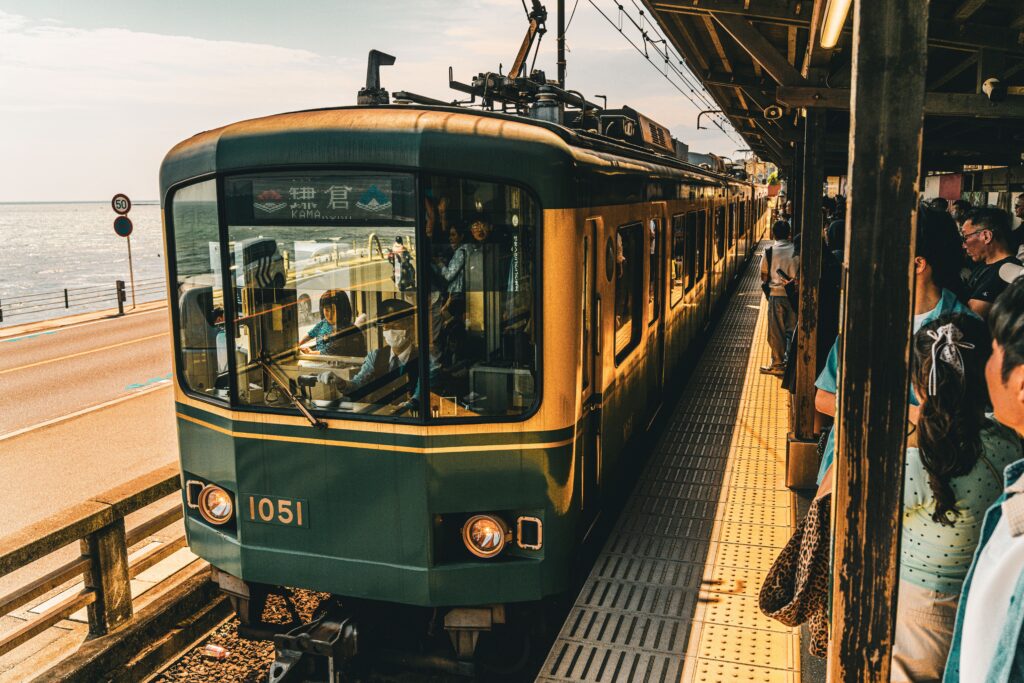
Enoshima Station is the stop on the Enoden line, the charming coastal railway that runs between Kamakura and Fujisawa. It is about a 15-minute walk from the bridge rather than 8, but the walk itself is a pleasant seaside stroll past shops and cafes.
Shonan-Enoshima is the terminal of the Shonan Monorail from Ofuna. It is slightly closer to the bridge than the Enoden station, at around 9 to 10 minutes on foot.
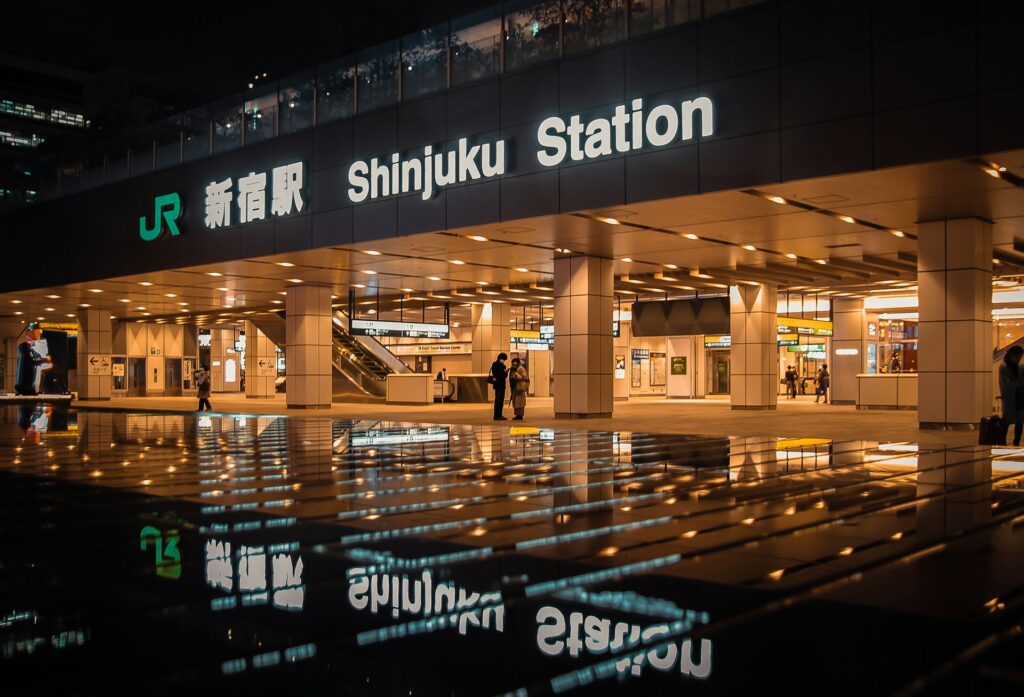
Kai’s tip: When you check departure boards at Shinjuku Station, you will see “Enoshima” and “Katase-Enoshima” listed on different lines. The confusion is understandable — they look almost identical. The rule is simple: if you are taking the Odakyu Line (from Shinjuku), your destination is Katase-Enoshima. If you are already on the Enoden line from Kamakura, you get off at Enoshima Station. They are about an 8-minute walk apart, so picking the right one saves you unnecessary walking at the start of your day.
Route Comparison: All Ways to Get to Enoshima from Tokyo
| Route | Approx. Time | Approx. Fare (One Way) | Transfers | Best For |
|---|---|---|---|---|
| Odakyu Line Shinjuku → Katase-Enoshima |
70–80 min | ~¥650 | 1 (usually at Fujisawa) | Travelers staying near Shinjuku |
| Odakyu Romancecar Shinjuku → Katase-Enoshima |
65–70 min | ~¥1,400 | 0 on direct services | Those wanting a guaranteed seat |
| JR Tokaido Line + Enoden Tokyo → Fujisawa → Enoshima |
60–75 min | ~¥1,100–1,400 | 1 (Fujisawa) | JR Pass holders / Tokyo Station area |
| JR Shonan-Shinjuku + Odakyu Shinjuku → Fujisawa → Katase-Enoshima |
55–70 min | ~¥800–1,100 + ¥210 | 1 (Fujisawa) | Shinjuku-based JR Pass holders |
| Shonan Monorail Shinjuku → Ofuna → Shonan-Enoshima |
~47 + 14 min | ~¥800–1,100 + ¥310 | 1 (Ofuna) | Scenic ride lovers |
| Enoden Kamakura → Enoshima |
25–30 min | ~¥310 | 0 | Those combining Enoshima with Kamakura |
All prices are per adult one-way and may vary depending on the exact departure station and time of day. IC card (Suica / PASMO) fares are slightly different from paper ticket fares in some cases.
Route 1: From Shinjuku — Odakyu Line (Most Direct)
If you are staying near Shinjuku or Shibuya, the Odakyu Line is the most practical route. It takes you from Shinjuku Station to Katase-Enoshima Station on a single line, usually with one transfer at Fujisawa Station. You have two options: the regular train or the Romancecar limited express.
Regular Odakyu Train
The standard option is to take an Odakyu commuter train from Shinjuku to Fujisawa (about 50 minutes), then transfer to the local Odakyu Enoshima Line for the final three stops to Katase-Enoshima (about 10 minutes). The total journey is around 70 to 80 minutes and costs approximately ¥650 one way with an IC card.
The regular train is the budget-friendly choice, but it can be crowded during morning and evening commuter hours, especially on weekdays. If you are traveling with luggage or during peak times, consider upgrading to the Romancecar.
Odakyu Romancecar (Limited Express)
The Romancecar is Odakyu’s reserved-seat limited express, offering reclining seats, onboard restrooms, and a quieter ride. The trip from Shinjuku to Katase-Enoshima takes about 65 to 70 minutes.
Two important things to understand about the Romancecar to Enoshima:
- The fare has two parts: a base fare of around ¥650 (payable by IC card or ticket) plus a limited express surcharge of ¥750 for the reserved seat. Total one-way cost: approximately ¥1,400.
- Not all Romancecar services go directly to Katase-Enoshima. Direct trains run mainly on weekends, holidays, and during peak travel seasons. On weekdays, most Romancecar services on this route terminate at Fujisawa, requiring a transfer to a local train for the final three stops.
All Romancecar seats are reserved. You cannot board with just an IC card — you need to purchase the limited express ticket in advance. Bookings can be made online through the official Odakyu system or at ticket counters in Shinjuku Station. For more details on making reservations and deciding if the upgrade makes sense for your trip, see our dedicated guide to taking the Romancecar to Enoshima.
Kai’s tip: A common mistake I see is travelers assuming the Romancecar always runs direct to Katase-Enoshima. They reserve a seat thinking they will get a one-seat ride, only to discover their train terminates at Fujisawa. Before you book, check the train’s final destination. On weekdays, direct Romancecar services to Katase-Enoshima are significantly fewer than on weekends. If a direct train is not available at your preferred time, the regular Odakyu train with a transfer at Fujisawa is still a perfectly straightforward option — and costs half the price.
Route 2: From Tokyo Station / Shinagawa — JR Line
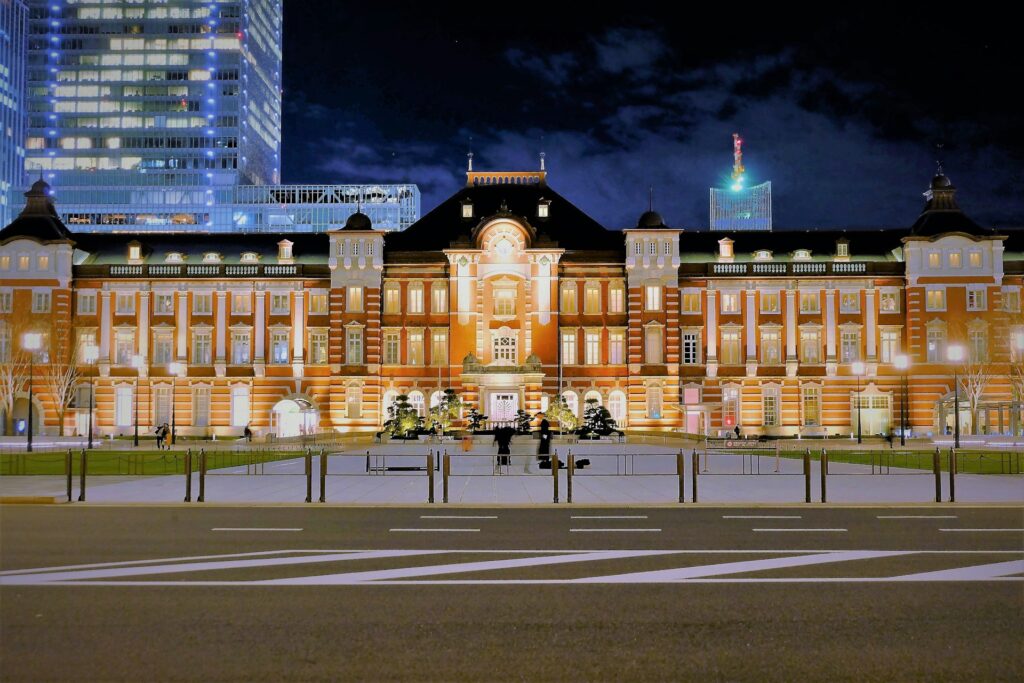
If you are staying near Tokyo Station, Shinagawa, or along the Yamanote Line’s eastern side, the JR route may be more convenient than making your way to Shinjuku.
JR Tokaido Line + Enoden
Take the JR Tokaido Line from Tokyo Station (or Shinagawa) to Fujisawa Station. The journey takes about 50 to 55 minutes and costs around ¥800 to ¥1,100 depending on your starting station. At Fujisawa, transfer to the Enoden (Enoshima Electric Railway) and ride to Enoshima Station — about 15 to 20 minutes and approximately ¥310.
Total journey time: roughly 65 to 80 minutes. Total one-way cost: approximately ¥1,100 to ¥1,400.
JR Shonan-Shinjuku Line + Odakyu (from Shinjuku)
If you are staying near Shinjuku and hold a JR Pass, this is your best option. Take the JR Shonan-Shinjuku Line from Shinjuku to Fujisawa Station (about 50 minutes, ~¥800–1,100). Then transfer to the Odakyu Enoshima Line for three stops to Katase-Enoshima (about 10 minutes, ~¥210).
JR Pass holders note: Your pass covers the JR segment to Fujisawa at no additional cost. You only pay separately for the Odakyu portion from Fujisawa to Katase-Enoshima, or the Enoden segment if you choose that route instead.
Route 3: From Kamakura — Enoden (Scenic Coastal Ride)
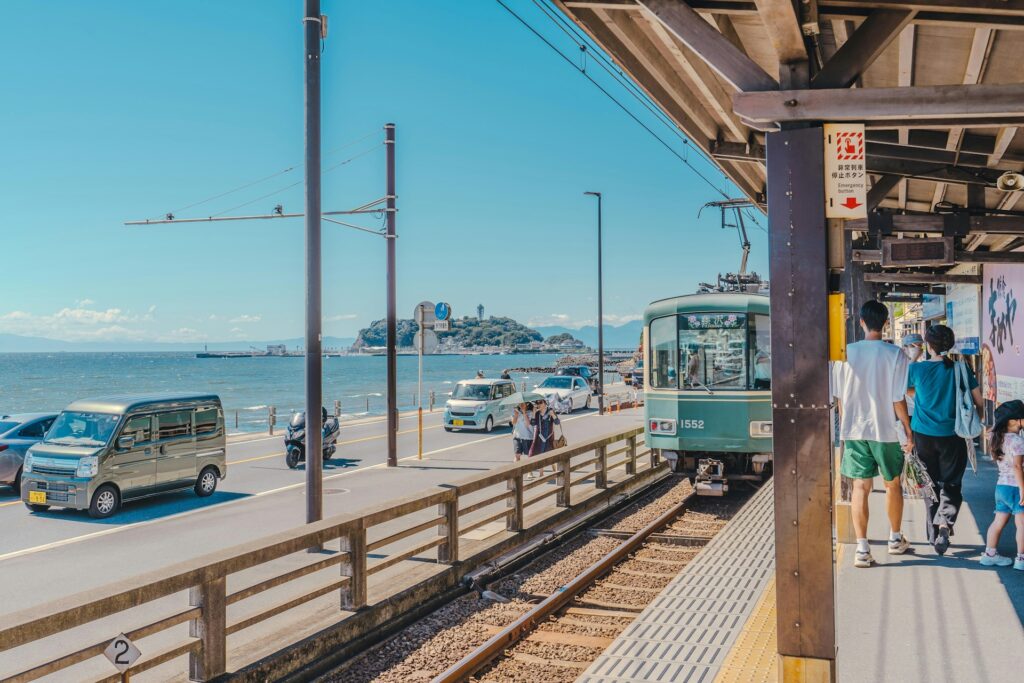
If you are combining Enoshima with a Kamakura day trip, the Enoden (Enoshima Electric Railway) is the most natural connection. It runs between Kamakura Station and Fujisawa Station, hugging the coastline for much of the route with views of Sagami Bay on one side and residential neighborhoods on the other.
Kamakura → Enoshima Station: 25 to 30 minutes, approximately ¥310 one way. No transfers needed.
The Enoden is a single-track local railway — trains are smaller and slower than the JR lines, which is exactly the point. The ride itself is part of the experience, passing through Shichirigahama Beach and the famous Kamakurakōkōmae crossing (the Slam Dunk railroad crossing that draws photographers year-round).
Getting from Enoshima (Enoden) Station to the island: The station is about a 15-minute walk from Enoshima Benten Bridge. The route is straightforward — exit the station and follow the main street straight toward the coast. You will pass souvenir shops, seafood restaurants, and street food stalls along the way.
If you are visiting in summer or on a weekend, expect the Enoden cars to be packed. The line is popular with both tourists and locals, and during peak hours you may end up standing for the full ride.
Route 4: From Ofuna — Shonan Monorail (The “Hidden Route”)
The Shonan Monorail is the least-known approach to Enoshima among first-time visitors, and that is a shame because it is arguably the most entertaining one.
From Ofuna Station (about 33 minutes from Shinjuku on the JR Shonan-Shinjuku Line, or 13 minutes from Kamakura), follow the signs to the monorail platform. The Shonan Monorail is a suspended (hanging) monorail — the cars hang below the track rather than riding on top of it. The 6.6-kilometer ride takes about 14 minutes and costs ¥310 one way to Shonan-Enoshima Station.
Kai’s tip: If you ride the monorail, grab a spot at the very front of the first car. The driver’s cabin has a glass panel at your feet, giving you a direct view of the track below as you glide over roads, rivers, and residential rooftops. It is not a sightseeing train by design, but the forward-facing view — especially just before the final station, when you see Enoshima Island suddenly appear through the windshield — is something the other routes cannot offer.
Getting from Shonan-Enoshima Station to the island: About 9 to 10 minutes on foot to Enoshima Benten Bridge. The exit is on the southeast side of the station, connected by a small shopping arcade.
The monorail also runs a 1-day free pass at ¥700, which pays for itself in two round trips. If you plan to return to Ofuna on the same day and enjoy riding the monorail, the day pass is worth considering — though for most travelers going to Enoshima, a one-way ticket is sufficient.
From the Station to Enoshima Island: Walking Route
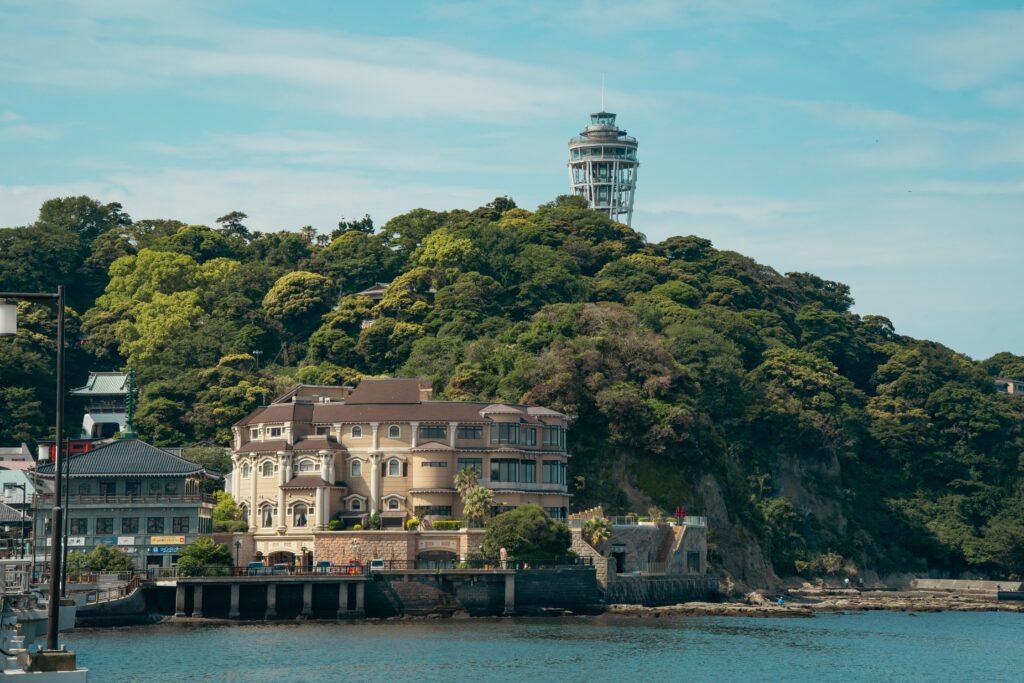
All three Enoshima stations feed into the same path to the island. The connecting point is Enoshima Benten Bridge, a fixed bridge that carries pedestrians (and occasional vehicles) across the narrow channel separating Enoshima Island from the mainland.
The bridge itself is about 400 meters long and takes roughly 3 minutes to cross on foot. On a clear day, you can see Mount Fuji to the west from the bridge’s midpoint.
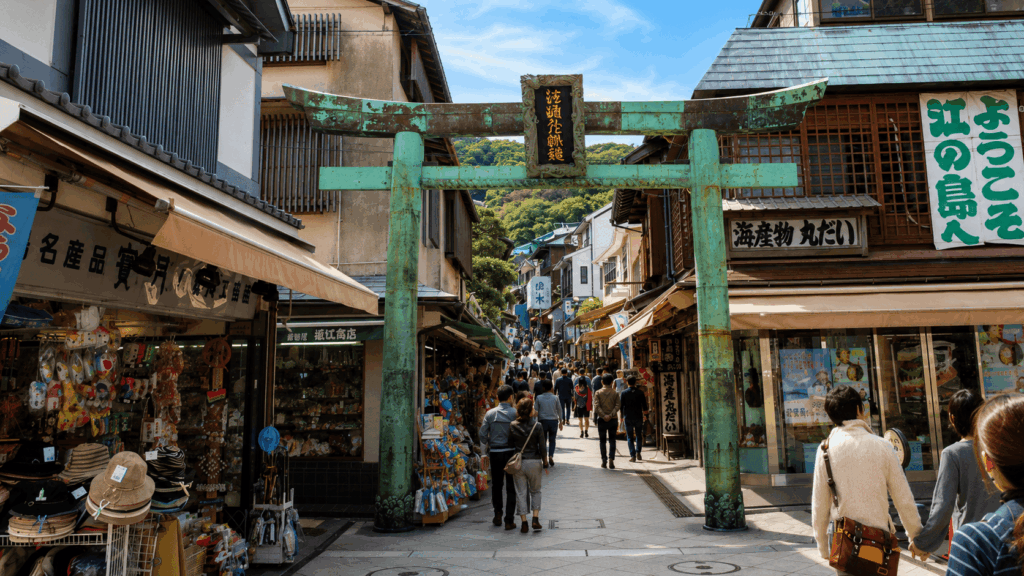
Once across the bridge, you arrive at the base of the island. The entrance to the main walking path is marked by a large torii gate, with the Enoshima Shrine complex and observation lighthouse accessible via stairs and escalators further uphill.
What to watch for:
- Wind: The bridge and the coastal approach can get very windy, especially in winter and spring. Hold onto hats and light items.
- Tides around Enoshima’s back side: At low tide, you can walk around the island’s western edge to the Iwaya Caves. At high tide, the path is partially submerged — check the tide schedule if this is on your plan.
- Street food lining the approach: From the bridge entrance all the way to Katase-Enoshima Station, the main street is packed with stalls selling takoyaki, grilled seafood, and shaved ice. It is a solid stretch for lunch or a snack on your way out.
Do You Need the Enoshima-Kamakura Freepass?
The Enoshima-Kamakura Freepass is a day pass sold by Odakyu Railway at Shinjuku Station. It covers one round trip from Shinjuku (or other Odakyu stations) to Fujisawa, unlimited travel on the Enoden line for the day, and unlimited travel on the Odakyu Enoshima Line between Fujisawa and Katase-Enoshima.
| Enoshima-Kamakura Freepass | |
|---|---|
| Price (adult, from Shinjuku) | ~¥1,640 |
| Coverage | Round-trip Shinjuku ↔ Fujisawa + Enoden unlimited rides + Odakyu Enoshima Line (Fujisawa ↔ Katase-Enoshima) |
| Duration | 1 day |
| Where to buy | Odakyu station counters / ticket machines at Shinjuku Also available online via EMot digital ticket |
| Romancecar surcharge | Not included — ¥750 extra each way if you ride the Romancecar |
When the pass makes sense: The Freepass is worth it if — and only if — you plan to use the Enoden for multiple rides in one day. The typical scenario is visitors who combine Enoshima with stops in Kamakura: ride the Odakyu to Katase-Enoshima, walk around the island, then take the Enoden from Enoshima Station to Kamakura via stops like Hase (for the Great Buddha) or Kamakurakōkōmae (for the photo spot), then return to Shinjuku via the same Odakyu route.
When Suica is cheaper: If you are only visiting Enoshima with no plans to use the Enoden elsewhere, do not buy the Freepass. A one-way trip from Shinjuku to Katase-Enoshima costs about ¥650, and walking onto the island is free. A round trip costs around ¥1,300 — less than the ¥1,640 pass — and you are not locked into traveling via Odakyu.
Kai’s tip: The best way to decide is to ask yourself a simple question: “Am I going anywhere on the Enoden today?” If the answer is no — you just want Enoshima and nothing else — tap your Suica and go. The Freepass only pays off when the Enoden becomes part of your itinerary. I have seen travelers buy the pass out of habit and end up using about ¥400 worth of train travel. The pass is a good deal, but only in the right scenario.
Important distinction: The Enoshima-Kamakura Freepass is a transit pass. It does not include admission to Enoshima’s attractions such as the Sea Candle observation lighthouse, Enoshima Shrine, or the Iwaya Caves. For those, there is a separate Enoshima 1-Day Pass sold at the island — the two passes cover completely different things and should not be confused.
If you are only doing Enoshima and want the Odakyu ride plus the Sea Candle / Escar side handled together, you can also check the current inclusions and price for the Enoshima Sky View Ticket and Odakyu Line on Klook.
Which Route Should You Take? (By Traveler Type)
| Your Situation | Recommended Route | Why |
|---|---|---|
| Staying near Shinjuku / Shibuya | Odakyu Line (regular or Romancecar) | Simplest route, one line, reasonable cost. Romancecar for a guaranteed seat. |
| JR Pass holder | JR Shonan-Shinjuku or JR Tokaido + Enoden | Your pass covers the longest segment. Only pay for the last few stops. |
| Combining Enoshima with Kamakura | Odakyu to Katase-Enoshima, Enoden to Kamakura | Natural loop. Consider the Freepass if riding Enoden for 2+ stops. |
| Coming from Kamakura only | Enoden direct | 25 minutes, scenic ride, no transfers. |
| Want a scenic / fun approach | Shonan Monorail from Ofuna | Suspended monorail with forward views. Unique even by Japanese standards. |
| Traveling with heavy luggage / young kids / limited mobility | Consider a guided tour from Tokyo | One-seat bus transport, door-to-door handling. Eliminates all transfers and platform navigation. |
The DIY routes above are all entirely doable with a smartphone and a Suica card. Train signage in Japan uses English for station names and line colors are consistent. If you are comfortable navigating the Tokyo rail system, Enoshima is a straightforward day trip.
That said, the transfer at Fujisawa Station — which most routes require — is not difficult but adds uncertainty for first-time visitors. If you are on a tight schedule, traveling with children or large bags, or simply want to avoid navigating unfamiliar platforms, a guided day tour from Tokyo that covers both Kamakura and Enoshima removes the logistical friction entirely. The bus handles the route, and you spend your energy on the sights rather than the transfers.
If you fall into that camp — you want Enoshima and Kamakura in one day, but the Fujisawa transfer and Enoden timing do not sound like part of the fun — this is the guided option to compare first.
Why I’d book this one
- It solves the exact pain point in this article: the route planning, station choice, and transfer timing are handled as part of a Tokyo-based day trip.
- It fits the classic Enoshima + Kamakura pairing: the itinerary brings together Enoshima, the Great Buddha, Kamakura stops, and an Enoden ride without making you build the loop yourself.
- Recent travelers tend to highlight the guide and organization: check the latest reviews to see whether the pace and stop times match the kind of day you want.
FAQ
Which station is closest to Enoshima Island?
Katase-Enoshima Station (Odakyu Line) is the closest, at about 8 minutes on foot to Enoshima Benten Bridge. Shonan-Enoshima Station (Monorail) is around 9 to 10 minutes away. Enoshima Station (Enoden) is the farthest at roughly 15 to 20 minutes of walking. All three stations lead to the same bridge, so the difference is minor — but Katase-Enoshima saves you the most walking time.
Is there a direct train from Shinjuku to Enoshima?
Yes and no. The Odakyu Romancecar runs direct to Katase-Enoshima on some services, but these are most common on weekends, holidays, and peak travel seasons. On weekdays, most Romancecar trains terminate at Fujisawa, requiring a transfer. The regular Odakyu commuter train always requires one transfer at Fujisawa. Check the train’s final destination before you board — do not assume direct service just because you are on a Romancecar.
Is the Enoshima-Kamakura Freepass worth it for a day trip?
It depends on your itinerary. If you are combining Enoshima with Kamakura and plan to ride the Enoden for multiple stops (for example, visiting Hase-dera, the Great Buddha, and Kamakurakōkōmae), the Freepass saves money. If you are only visiting Enoshima itself, a regular round-trip ticket on the Odakyu Line costs around ¥1,300 — less than the ¥1,640 Freepass — so you are better off tapping your Suica card.
Can I use my JR Pass to get to Enoshima?
Your JR Pass covers the JR segment to Fujisawa Station (via the JR Tokaido Line or JR Shonan-Shinjuku Line) at no extra cost. From Fujisawa, you need to pay separately for the final leg: either the Odakyu Enoshima Line to Katase-Enoshima (~¥210) or the Enoden to Enoshima Station (~¥310). JR Pass holders staying near Tokyo Station or Shinagawa should use the JR Tokaido Line route. Those near Shinjuku can use the JR Shonan-Shinjuku Line.
How far apart are the three Enoshima stations from each other?
Katase-Enoshima (Odakyu) and Shonan-Enoshima (Monorail) are about a 5-minute walk apart. Katase-Enoshima and Enoshima Station (Enoden) are about 8 to 10 minutes apart on foot. Shonan-Enoshima and Enoshima Station are roughly 10 to 12 minutes apart. All are within a comfortable walking distance — you can walk between any two stations in under 15 minutes if you take the wrong one.
Should I buy the Enoshima 1-Day Pass or the Enoshima-Kamakura Freepass?
These are two completely different passes. The Enoshima-Kamakura Freepass (sold by Odakyu at Shinjuku) covers train transport to and around the area. The Enoshima 1-Day Pass (sold on the island) covers attraction admission — the Sea Candle observation lighthouse, Enoshima Shrine, the Iwaya Caves, and the escalators. Some travelers buy both; most buy one or neither depending on their plans. Hybrid combined passes also exist in some seasons and should be checked at the island’s information booth upon arrival.
How long should I allow for the trip from central Tokyo to Enoshima?
Budget about 90 minutes each way, including walking between the station and the island. From Shinjuku via the Odakyu Line, the train portion alone is 70 to 80 minutes. Factoring in the walk across the bridge and a few minutes to find your platform, a realistic one-way door-to-door time is roughly 1 hour 20 minutes to 1 hour 40 minutes.
Final Verdict
Choose a DIY train route if: You are comfortable navigating Tokyo’s rail system, you have a smartphone with Google Maps or a transit app, and you are not carrying heavy luggage. The Odakyu Line from Shinjuku is the most straightforward option for most travelers. If you have a JR Pass, the JR route to Fujisawa gives you the most value for your fare.
Consider the Enoshima-Kamakura Freepass if: You plan to visit both Enoshima and multiple spots in Kamakura (Hase-dera, Great Buddha, Kamakura Station area) on the same day via the Enoden. The pass pays off with just two Enoden rides combined with the Odakyu round trip.
Consider a guided tour if: You are short on time, traveling with young children or large luggage, or feel uncertain about navigating transfers at unfamiliar stations. A Tokyo-based day tour covering both Kamakura and Enoshima handles all logistics — including the transfer at Fujisawa — and usually includes entrance to the main attractions on the island. It is not the cheapest option, but for some travelers, the reduction in friction is worth the premium.
For first-time visitors: Stay on the Odakyu route. Shinjuku to Katase-Enoshima via Fujisawa is the most documented and easiest to follow. The station names and platform numbers are clearly signed in English, and you can use your Suica card the whole way without buying any special ticket.
For repeat visitors or rail enthusiasts: Take the Shonan Monorail from Ofuna. It adds about 15 minutes compared to the direct Odakyu route, but the suspended ride is genuinely unique and offers views you will not get from any other approach to Enoshima.
For families: Consider the Romancecar for a guaranteed seat and space for children. The regular commuter trains can be extremely crowded on weekends and during summer, and standing for 50 minutes from Shinjuku to Fujisawa with a child is not an ideal start to a day trip.

Hi, I’m Kai. I’m a Tokyo-based travel writer, tourism industry insider, and the author of a published guidebook for international visitors to Japan. With over 10 years of professional experience at a leading Japanese tourism company, my mission is to help you skip the tourist traps and navigate Japan’s best destinations like a local. I believe the perfect day trip is like a traditional kaiseki meal: a beautiful balance of precise planning and unforgettable seasonal discovery. When I’m not out conducting field research, you’ll usually find me drafting new itineraries with one of my favorite fountain pens!