
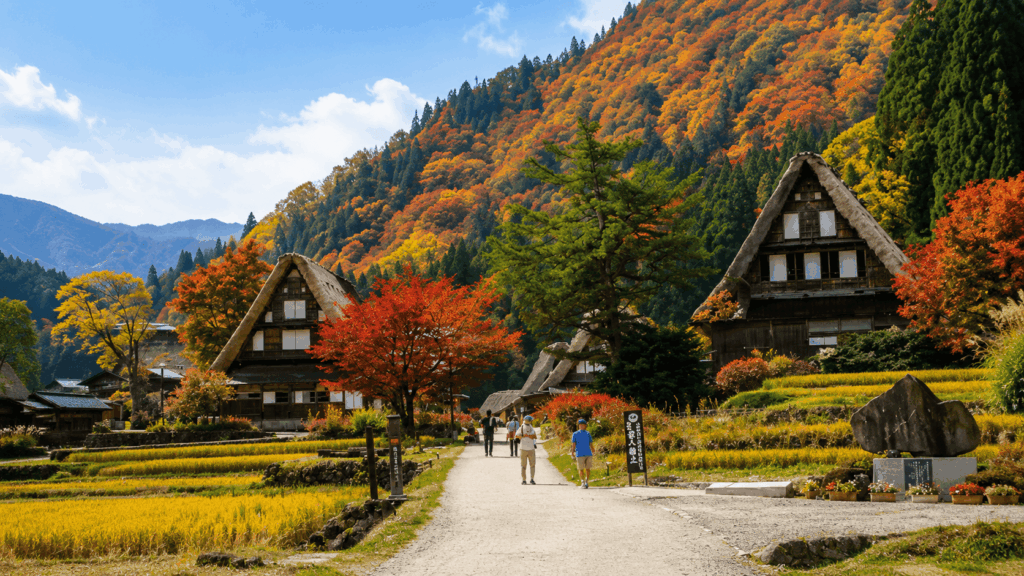
Gokayama doesn’t make a lot of noise. There are no neon signs, no souvenir arcades, no buses idling in a queue. What it has are two small, mountain-locked villages — Ainokura and Suganuma — where gassho-zukuri farmhouses have stood for centuries under some of the heaviest snowfall in Japan.
If you are here, you already know Gokayama is quieter than nearby Shirakawa-go. What you probably want to know is: what is there actually to do? Can you fill a full day? Is it worth staying overnight? And if you only have time for one village, which one should it be?
This guide answers all of that — with real names, real logistics, and the kind of honest trade-offs that help you decide.
Planning this as a day trip from Kanazawa? You can absolutely build Gokayama by bus, but if you want Shirakawa-go, Gokayama, transport, and a hands-on local craft stop handled in one day, compare live dates and recent traveler reviews for the Kanazawa to Shirakawa-go, Gokayama and Wood Carving Art tour before locking in your own bus plan.
Quick Answer: What to Do in Gokayama at a Glance
| Activity | Best For | Approx. Time | Cost (adult) |
|---|---|---|---|
| Wander Ainokura village + viewpoint | Photographers, slow travelers | 1 – 1.5 hr | Free (parking ¥500) |
| Stroll Suganuma village | Short visits, quick taste | 30 – 60 min | Free |
| Murakami House / Iwase House / Yusuke | History & architecture | 20 – 40 min each | ¥300 – ¥500 |
| Gokayama Washi-no-Sato paper making | Hands-on craft lovers | 1 – 1.5 hr | ¥1,000 (reserve ahead) |
| Gorobei / local restaurant meal | Food-focused visitors | 45 – 60 min | ¥1,500 – ¥2,500 |
| Kuroba Onsen | Soaking after a day out | 1 – 1.5 hr | ¥600 |
| Kokiriko dance / sasara craft workshop | Cultural immersion | 1 – 1.5 hr | Varies (reserve ahead) |
| Overnight at a gassho minshuku | Anyone who can book ahead | From 15:00 | From ¥15,000 (2 meals) |
Bottom line: You can comfortably fill half a day with one village, lunch, and a museum. A full day covers both villages plus a meal and onsen. But the one thing most day-trippers miss — and the best argument for staying overnight — is what happens after 5 p.m. We will get to that.
Ainokura vs Suganuma: Which Village Should You Visit?
The two UNESCO-listed villages in Gokayama share the same steep-roofed, thatched aesthetic, but they are not interchangeable. Choosing the right one depends entirely on how much time you have and what kind of experience you want. (If you want a deeper dive, see our detailed Ainokura vs Suganuma comparison).
Ainokura (相倉) — For Those Who Want to Wander
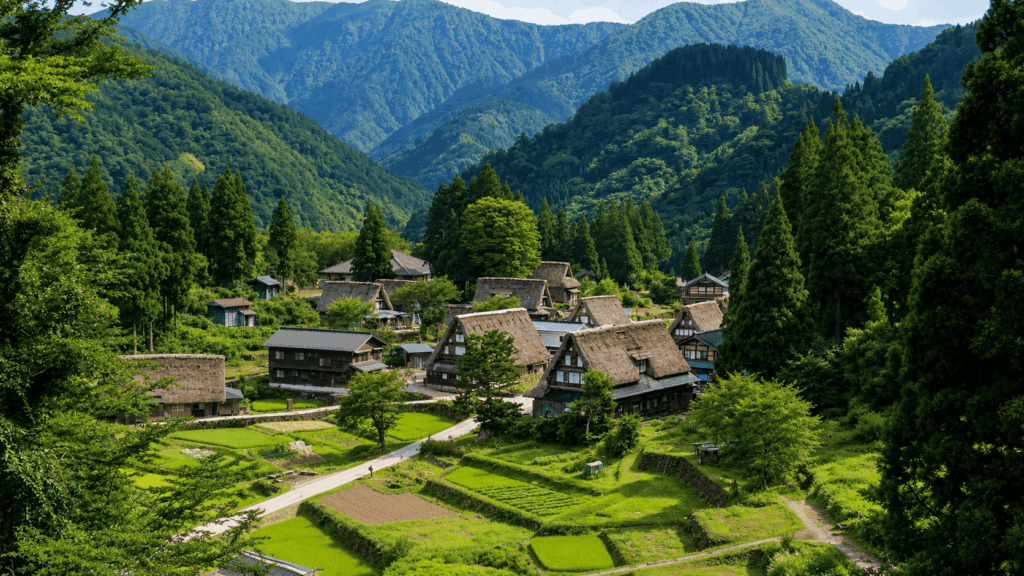
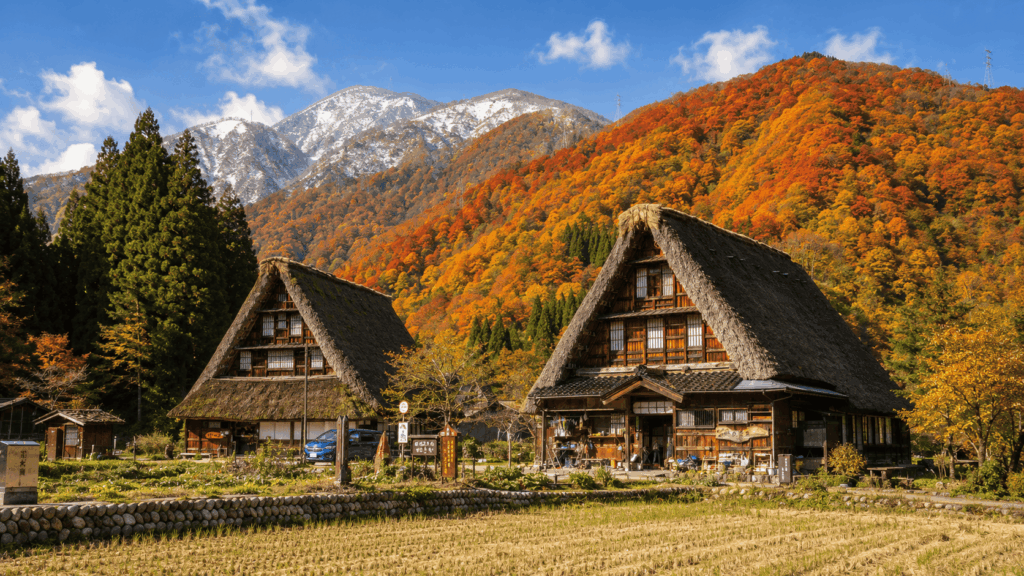
Ainokura is the larger and more remote of the two, tucked deep in the valley with nearly 20 gassho-zukuri houses still inhabited year-round. It has a proper high-point viewpoint (a 5–10 minute walk uphill from the parking area) that gives you the classic postcard panorama of clustered roofs against the mountains.
Best for: Photographers, slow travelers, and anyone who wants to feel the scale of a historic mountain settlement rather than just see it.
Approximate time needed: 1 to 1.5 hours minimum if you do the viewpoint loop and step inside one or two houses.
What is here: Yusuke exhibition hall, Ainokura Folklore Museum, Nakaya and Goyomon (gassho minshuku), a handful of craft shops, Heianraku restaurant (nearby).
Suganuma (菅沼) — For Tight Schedules or a Quiet Sample
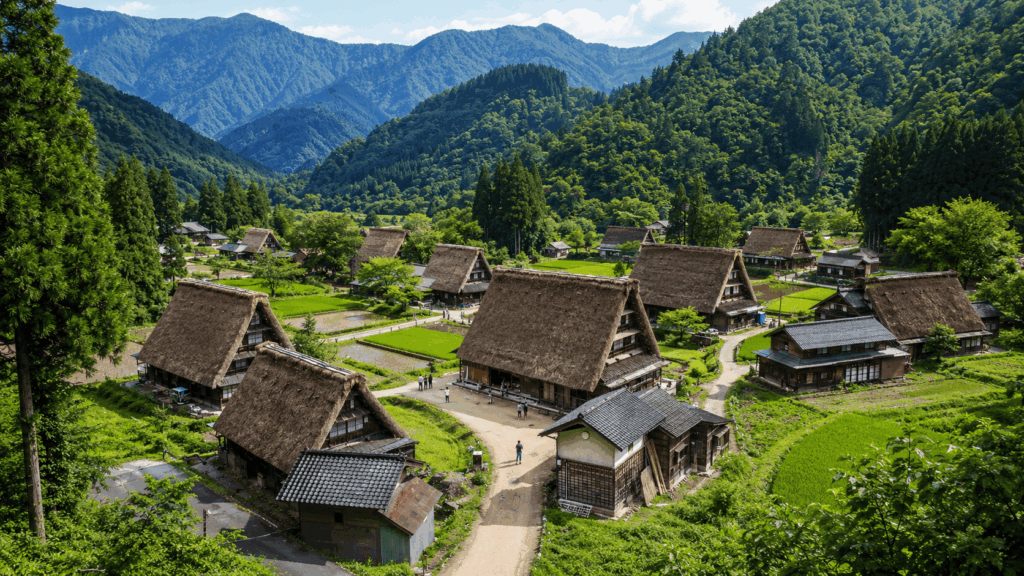
Suganuma is smaller — nine gassho houses clustered beside the Shōgawa River — and you can take in the entire village from a single vantage point near the entrance. It is compact, walkable in minutes, and requires almost no uphill walking.
Best for: Travelers on a tight schedule, anyone who wants a quick authentic taste without committing half a day, or those adding Gokayama as a stop between Kanazawa and Takayama.
Approximate time needed: 30 minutes for a quick walk through; up to an hour if you eat at Gorobei and visit the Folk Museum and Niter Museum.
What is here: Gorobei restaurant, Sabo Tenohira café, Gokayama Folk Museum, Ensho (Niter) Museum, Yohachi restaurant.
Kai’s tip: If you only have time for one, here is a rule of thumb I have found holds up well: Suganuma is the village you see in 30 minutes — a beautiful snapshot. Ainokura is the village you walk through for 1 to 1.5 hours — the one that rewards slow pacing. If your bus schedule gives you 45 minutes, choose Suganuma. If you have two hours, head to Ainokura and take the viewpoint path.
Can You Visit Both in One Day?
Yes — the World Heritage Bus runs between them in about 15 minutes (Suganuma to Ainokura-guchi, ¥260 one way). With a full day, you can do: morning in Suganuma → lunch → afternoon in Ainokura with the viewpoint → late soak at Kuroba Onsen. Just check the return bus times before you start (more on that below).
If you fall into that camp — you want Gokayama and Shirakawa-go in one day, but rural bus gaps and transfers would shape the whole itinerary — this is the guided option to compare first.
Why I’d book this one
- It solves the hardest part of the day: transport between Kanazawa, Gokayama, Shirakawa-go, and the craft stop is handled for you, so the day is less dependent on sparse local bus timing.
- It adds context you would not get by just walking through: recent travelers consistently mention the value of having an English-speaking guide explain the villages, crafts, and regional history rather than simply moving between photo stops.
- It keeps the commitment flexible: the booking page lets you check current availability, start times, cancellation terms, and recent reviews before deciding whether the guided version is worth it for your date.
See live availability, start times, and recent traveler reviews for the Shirakawa-go, Gokayama and Wood Carving Art tour from Kanazawa.
Things to Do in Gokayama: Top Attractions & Experiences
Walk Through the Gassho-zukuri Villages
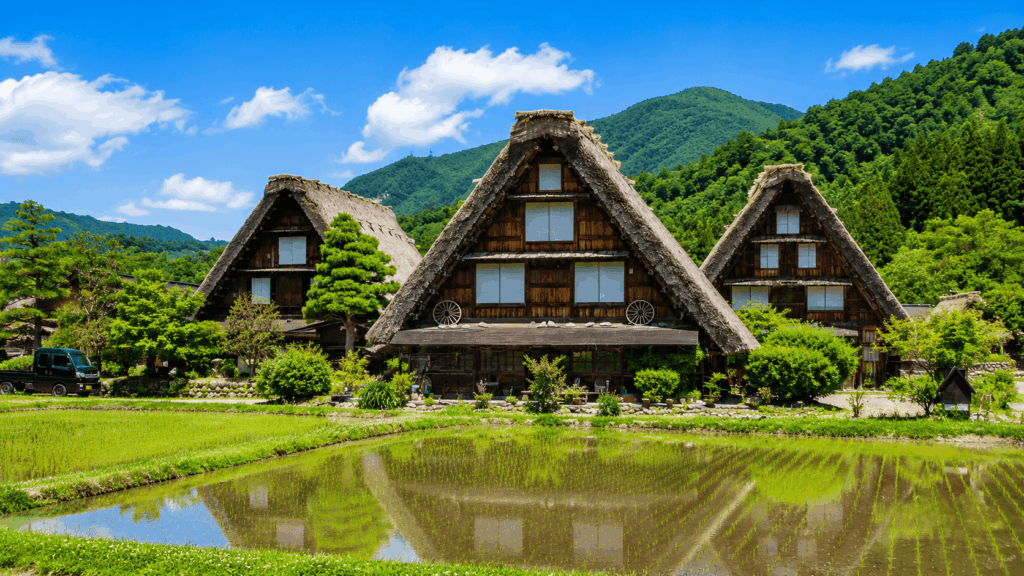
This is the obvious one, but it deserves saying: the best thing to do in Gokayama is simply to walk. The villages are living settlements, not open-air museums. Smoke rises from irori hearths in the morning. Farmers tend vegetable patches between the houses. In winter, snow piles halfway up the first-floor windows, and the roofs shed their load with a deep, resonant thud.
Where to go for the best view: In Ainokura, follow the path up from the parking area (look for the sign pointing toward “瞭望台”). It is a short, gently sloping walk of about 5 minutes, and the platform gives you the full sweep of the village set against the ridgeline. In Suganuma, cross the small bridge near the bus stop for an unobstructed view of all nine houses in one frame.
Step Inside Historic Gassho Houses & Museums
Several houses in both villages are open to the public, and each offers a different angle on life in Gokayama.
Murakami House (上梨 / Kaminashi)
A 350-year-old nationally designated Important Cultural Property, located in the Kaminashi area between the two main villages. The current head of the family often receives visitors around the irori hearth, explaining saltpeter and washi production — two industries that sustained this region. The 300-year-old snow camellia tree in the garden blooms from late April to early May.
Hours: Apr–Nov 8:30–17:00, Dec–Mar 9:00–16:00. Closed Wednesdays.
Admission: ¥300.
Iwase House (西赤尾)
The largest gassho-zukuri house in all of Gokayama — five stories tall, built from keyaki (zelkova) wood without a single nail. It sits slightly outside the main village clusters, about a 5-minute drive or bus stop from Ainokura.
Hours: 9:00–17:00 (Dec–Mar until 16:00). Closed Thursdays.
Admission: ¥400.
Yusuke Exhibition Hall (相倉 / Ainokura)
Built in 1868, this is one of the largest houses inside Ainokura village itself. It now serves as a gallery for photographer Shigeru Ikehata, whose images of Gokayama’s seasons and daily life are displayed across the multi-level interior. If you are lucky, you might catch him sharing stories around the hearth.
Hours: 9:00–16:30 (last entry 16:00). Closed Tuesdays.
Admission: ¥500.
Ainokura Folklore Museum / Gokayama Folk Museum / Ensho (Niter) Museum
These three smaller museums round out the picture. The Ainokura Folklore Museum (inside a converted 150-year-old gassho house) focuses on daily tools and sericulture; the Gokayama Folk Museum in Suganuma covers broader regional life; and the Niter Museum explains the gunpowder industry that once thrived in these roofs.
Admission for each: Around ¥300–¥500. Check seasonal hours at each entrance.
Try Gokayama Washi Paper Making
Gokayama Washi-no-Sato (道の駅たいら / Roadside Station Taira) is about a 20-minute drive or bus ride from the villages. Here you can try making your own washi paper — a craft said to have been brought from Kyoto by fleeing Taira clan members at the end of the Heian period. The experience costs ¥1,000 and yields three postcard-sized sheets in about an hour. It is a good rainy-day option or a handsomely personal souvenir.
Hours: Paper-making experience 10:00–15:00 (reservation required). Closed Dec 28 – Jan 4.
Eat Local: Gokayama Tofu, Iwana Char & Soba
Gorobei (菅沼) — Built in a 170-year-old gassho house, this family-run restaurant serves the definitive Gokayama tofu set: the same local tofu prepared sashimi-style, deep-fried, grilled with miso on a magnolia leaf, and simmered with mountain vegetables. Their gorobei gozen adds salt-grilled iwana char raised in cold mountain streams — netted from the pond outside just before it hits the grill. Walk-ins are welcome, but reservations are advised on busy weekends.
Hours: 10:00–17:00. Irregular holidays.
Sabo Tenohira (菅沼) — A small café run by a father-daughter duo in a converted shed with wide windows framing the village. Hand-brewed coffee served in your choice of ceramic cup, plus soba dango (buckwheat dumplings) that pair surprisingly well with coffee. Soba became a staple here due to historical rice shortages, and these chewy dumplings are a direct taste of that local ingenuity.
Hours: 10:00–17:00 (until 16:00 in winter). Closed Mondays, Tuesdays, and some Thursdays.
Other options: Yohachi and Irori (Suganuma) for casual local meals; Heianraku (near Ainokura) and Soba-Dojo for soba; Gokayama Chaya for a quick bite.
Soak at Kuroba Onsen
Kuroba Onsen (くろば温泉) sits a few minutes upriver from Suganuma, directly beside the Kurobe Dam reservoir. The public bathhouse — all wood, large windows, and faint sulfur — offers separate men’s and women’s indoor baths, a rotemburo (open-air bath), and a sauna.
The real draw is the view: the bath faces a still, mountain-backed lake, and in autumn the hillsides are a steady gradient of red and orange. Most visitors — including day-trippers — pass it on their way between the villages. The World Heritage Bus stops “細島” (Hosojima) is a one-minute walk from the entrance.
Hours: 10:00–21:00. Closed Tuesdays (or the following day if Tuesday is a holiday).
Admission: ¥600 (soap and towels available for a small fee inside).
Kai’s tip: If you are day-tripping, plan the onsen as your last stop before catching the bus back — the bus stops at Hosojima right outside, and a soak is the best way to fill the 30–60 minutes between activities without worrying about filling every minute with sightseeing. Do check the bus timetable first, though, to make sure the return connection still works.
Experience Kokiriko Dance & Sasara Craft
Kokiriko (こきりこ) — a hauntingly simple folk dance performed with bamboo clappers, stick percussion, and a flexible rod called a kokiriko — is said to be one of the oldest surviving folk songs in Japan, dating back over a thousand years. It was once danced to pray for a good harvest and to ward off evil, and it has been passed down through Gokayama families without a break.
The Murakami family in Kaminashi offers private kokiriko performances around their irori hearth, followed by a guided explanation of the dance and a chance to try the clappers yourself. The experience is intimate (limited to small groups, usually by reservation), and the setting inside a 350-year-old gassho house adds a layer of atmosphere no stage show could replicate.
Sasara (ささら) — a related craft using shaved wood strips — can be experienced through a workshop at the Gokayama Information Center in Kaminashi or via pre-arranged sessions at local craft studios.
To arrange: Contact the Gokayama Tourist Information Office (in Kaminashi) at least a few days in advance. Costs vary depending on group size and program length.
Is Gokayama Worth Staying Overnight?
This is the single most useful question a visitor can ask, and the honest answer depends entirely on what you value.
If you are day-tripping: The villages are accessible to day visitors between approximately 8:30 and 17:00. You arrive by bus, spend a few hours walking, eat lunch, visit a museum, and take the return bus. It is a perfectly good visit — many travelers do it every day and leave satisfied. You will see the houses, eat the tofu, take the photo from the viewpoint, and be back in Kanazawa or Toyama by dinner.
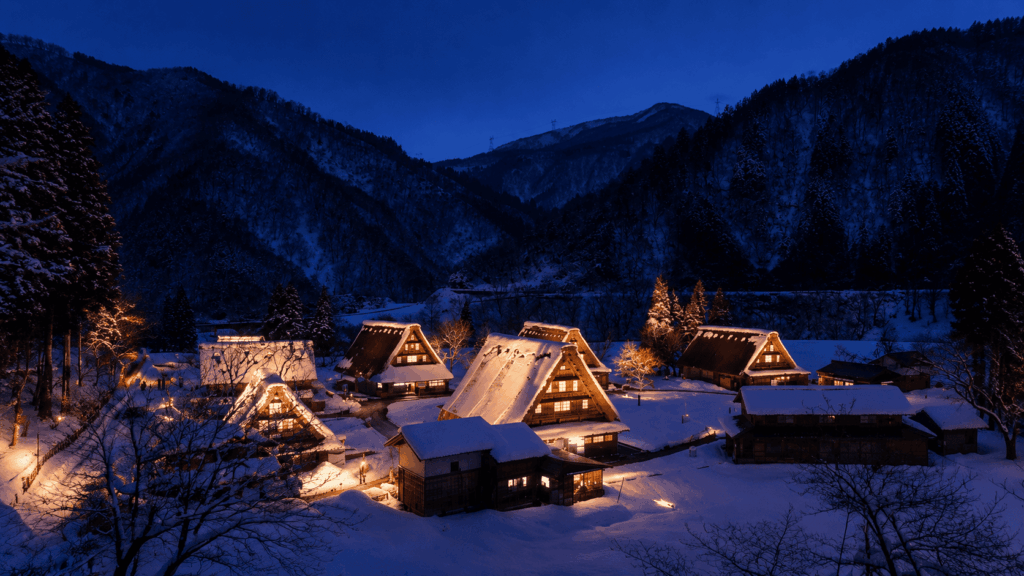
What you miss: After about 17:00, the last day-trippers board their buses, and the villages change character entirely. The tour groups disappear. The souvenir windows go dark. The only sounds are the river and the occasional crackle of a hearth fire. In the early morning, a low fog sits on the valley, and the gassho roofs emerge from the mist like something from another century. In winter, the villages are lit with soft lanterns. None of this is available to the day visitor.
Kai’s tip: If I had to give a single honest takeaway about Gokayama, it would be this: the best thing to do here — the one thing that actually makes it a different experience from Shirakawa-go — is to stay overnight. A day trip lets you see Gokayama. An overnight stay lets you feel it. The villages are not designed for nightlife, shopping, or entertainment; they are designed for quiet. If that sounds restorative, book a gassho minshuku and soak it up.
Who should stay overnight:
- Photographers who want the morning mist and evening light
- Travelers who have seen enough cities and want a true rural immersion
- Anyone visiting in winter (lantern-lit village is unforgettable)
- Travelers who do not want to watch the clock on every bus connection
Who should day-trip:
- Travelers on a tight multi-city itinerary (Kanazawa, Takayama, etc.)
- Anyone who is not keen on shared bathrooms or thin-walled traditional buildings
- Budget-conscious travelers (minshuku rates start around ¥15,000 per person with dinner and breakfast)
- Anyone adding Gokayama as a quick stop before or after Shirakawa-go
Where to stay: Gokayama’s two best-known gassho minshuku are both in Ainokura. Nakaya is the oldest (350 years, 2–3 rooms) and offers dinner around the irori hearth. Goyomon (3 rooms) is run by a welcoming local family. Both include two meals and cost around ¥15,000 per person per night. They book out weeks in advance during autumn leaves and New Year, so reserve as early as possible.
How to Get to Gokayama (By Public Transport)
Gokayama is serviced by two bus systems: the local World Heritage Bus (加越能バス / Kaetsunō Bus) and the highway bus from Kanazawa. They have different routes, different ticket systems, and — critically — one important seasonal restriction that many visitors miss. For the full breakdown of timetables and routes, check our complete Gokayama access guide.
From Kanazawa
The Kanazawa–Gokayama highway bus takes about 1 hour and costs ¥2,200 one way. Crucial note: This bus only stops at Gokayama (Suganuma) from April to November. From December through March, it bypasses Gokayama entirely. Even during operating months, the bus cannot take you onward from Gokayama to Shirakawa-go — you would need to return to Kanazawa or use the World Heritage Bus for that leg. Similarly, you cannot board the highway bus at Gokayama heading toward Shirakawa-go; it is a Kanazawa–Takayama direct service with limited stops.
Reservations: Required (book via Japan Bus Online or at Kanazawa Station Bus Terminal).
From Takaoka / Shin-Takaoka (World Heritage Bus)
The World Heritage Bus (Kaetsunō Bus) runs year-round and does not require reservations. From Takaoka Station to Ainokura-guchi is about 1 hour 15 minutes (¥1,000); to Suganuma is about 1 hour 35 minutes (¥1,200).
You can also take the Hokuriku Shinkansen to Shin-Takaoka Station (from Tokyo: ~2.5 hours, from Kanazawa: ~20 minutes), then take a local train or bus to Takaoka Station where the World Heritage Bus departs. Alternatively, the Johana Line (train from Takaoka) runs part-way toward Gokayama — you can combine rail and bus using discount passes.
From Takayama via Shirakawa-go
From Takayama, take the highway bus to Shirakawa-go (about 50 minutes, ¥2,600, reservation required, limited to passengers with oversized luggage capacity). From Shirakawa-go, transfer to the World Heritage Bus for the onward journey to Gokayama. The bus from Shirakawa-go to Suganuma takes about 35 minutes (¥870); to Ainokura-guchi about 45 minutes (¥1,300).
Discount Passes
| Pass | Price (adult) | Coverage |
|---|---|---|
| Gokayama Free Kippu | ¥2,500 | 2 days — unlimited World Heritage Bus between Takaoka and Gokayama |
| Gokayama–Shirakawago Free Kippu | ¥3,500 | 2 days — all World Heritage Bus between Takaoka, Gokayama, and Shirakawa-go |
| World Heritage 1-Day Free Kippu | ¥2,600 | 1 day — same area as above, for tight schedules |
| Takaoka–Gokayama/Shirakawago One Way Free Kippu | ¥2,000 | Single direction — use with JR pass or other connection |
Tip from the counter: If you are going to both Gokayama and Shirakawa-go, the 2-day Gokayama–Shirakawago Free Kippu (¥3,500) is almost always worth it. A single round trip from Takaoka to Suganuma alone costs ¥2,400.
Kai’s tip: Here is the single most important piece of practical advice for anyone using public transport in Gokayama: check the last bus before you do anything else. The World Heritage Bus runs roughly five round trips per day, and it is not rare for the bus to run 30–60 minutes late, especially in winter when snow or traffic from Shirakawa-go’s parking lot can cause cascading delays. I have heard from travelers who missed their connection by 10 minutes because they assumed the timetable was exact. Find the timetable board at the bus stop, take a photo, and mentally lock in the return time. Plan your walk in reverse from that cut-off.
Gokayama vs Shirakawa-go: Which UNESCO Village Should You Pick?
If you are already looking at Gokayama, you probably know Shirakawa-go is the more famous of the two UNESCO World Heritage villages. The question is whether to do both or pick one. For a more detailed breakdown, read our full comparison of Gokayama vs Shirakawa-go.
| Shirakawa-go (Ogimachi) | Gokayama (Ainokura / Suganuma) | |
|---|---|---|
| Scale | Large (~110 houses) | Small (Ainokura ~20 / Suganuma 9) |
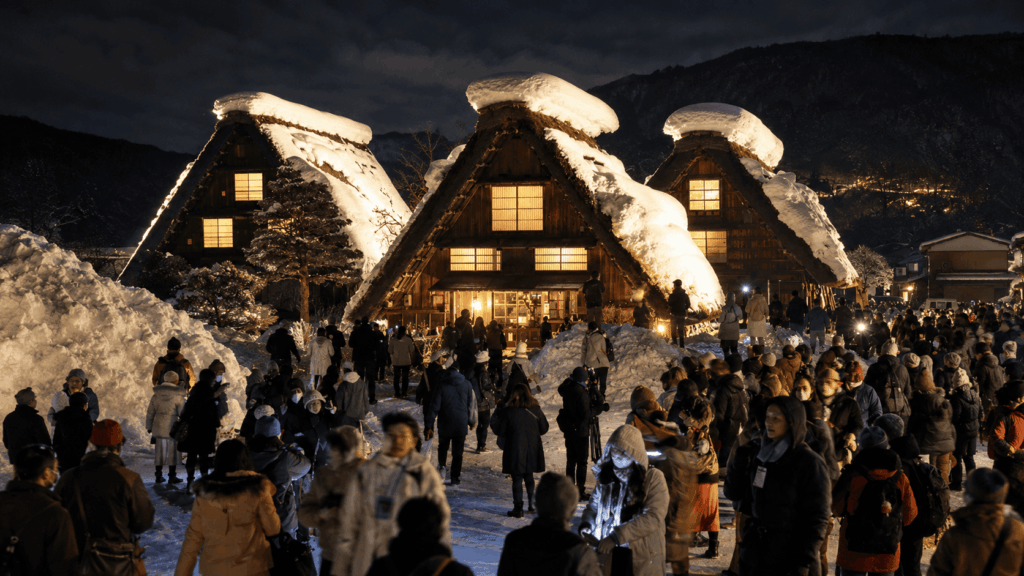
| Atmosphere | Tourist hub — shops, cafes, crowds | Quiet — living village, few facilities |
| Viewpoint | Hilltop observation deck (bus or walk) | Ainokura viewpoint (short walk) |
| Museums / Houses | Wada House, Kanda House, Myozenji, museum | Murakami, Iwase, Yusuke, multiple folk museums |
| Food | Many restaurants, casual dining | 2–3 sit-down restaurants, 1 café |
| Overnight options | Multiple minshuku, some larger inns | 2–3 family-run minshuku, very limited |
| Bus access | Frequent highway + local buses | Limited (5/day World Heritage Bus) |
| Crowds | Heavy (peak: 10:00–15:00) | Light (even peak hours are calm) |
| Typical visit time | 2–4 hours minimum | 30 min – 2 hours per village |
Choose Gokayama if: You want a quieter, more immersive encounter with gassho-zukuri culture. You are a photographer or slow traveler. You value atmosphere over amenities. You plan to stay overnight.
Choose Shirakawa-go if: You have limited time and want the most efficient “UNESCO village” experience with maximum infrastructure. You do not want to deal with infrequent buses. You are traveling with children and need food/restroom options within easy reach at all times.
Do both if: You have a full day (or more) and can afford the slower transport between them. The two villages are complementary — Shirakawa-go gives you scale and variety; Gokayama gives you peace and intimacy. The journey between them is a 35-minute World Heritage Bus ride that is scenic in itself.
Sample Itinerary: Half-Day / Full-Day Options
Half-Day (3–4 hours) — Suganuma & Lunch
- 10:00: Arrive at Suganuma (from Kanazawa or Takaoka). Cross the bridge for the village view.
- 10:15–11:00: Walk through Suganuma at your own pace. Visit the Gokayama Folk Museum and Niter Museum if interested.
- 11:00–11:45: Lunch at Gorobei (Gokayama tofu set).
- 11:45–12:00: Coffee at Sabo Tenohira (optional).
- 12:15: Catch the World Heritage Bus back toward Takaoka or onward to Shirakawa-go.
Full Day (6–8 hours) — Both Villages + Onsen
- 9:00: Arrive at Suganuma (from Takaoka with the first bus).
- 9:00–10:00: Explore Suganuma, visit the museums.
- 10:15: Take the World Heritage Bus to Ainokura (15 min, ¥260).
- 10:30–12:00: Walk Ainokura village. Take the viewpoint path (5 min up). Visit Yusuke.
- 12:00–12:45: Lunch in Ainokura area (Heianraku or pack a bento).
- 12:45–13:30: Bus to Hosojima stop → Kuroba Onsen.
- 13:30–14:30: Soak at Kuroba Onsen (¥600).
- 14:45: Bus from Hosojima back toward the connection of your choice.
Overnight (1.5 days) — The Full Experience
- Day 1 afternoon: Arrive at Ainokura. Check into Nakaya or Goyomon. Walk the village in the late-afternoon light. Evening: irori dinner with local sake.
- Day 2 early morning: Wake early. Watch the mist lift over the village. Walk to the viewpoint before other visitors arrive.
- Day 2 mid-morning: Bus to Suganuma for a quick visit, or to Kaminashi for Murakami House. Head onward to Kanazawa, Takaoka, or Takayama after lunch.
FAQ
How much time do I need in Gokayama?
Half a day (3–4 hours) is enough for one village plus a meal. A full day (6–8 hours) covers both villages, a museum, lunch, and onsen. An overnight stay (1.5 days) gives you the full experience including morning mist, evening quiet, and irori dinner.
Can I visit Gokayama and Shirakawa-go in the same day?
Yes, if you plan carefully. The World Heritage Bus connects them in about 35 minutes. A realistic split: morning at Suganuma → lunch → afternoon at Shirakawa-go (or the reverse). You cannot linger at both, but you can get a meaningful taste of each. The Gokayama–Shirakawago Free Kippu (¥3,500, 2 days) covers the bus between them.
Is Gokayama free to enter?
Yes — walking through the villages is free. You only pay for parking (¥500 at Ainokura), admission to individual houses and museums (¥300–¥500 each), meals, onsen (¥600), and accommodation.
Does the Kanazawa highway bus stop at Gokayama in winter?
No. From December through March, the Kanazawa–Takayama highway bus bypasses Gokayama entirely. During this period, use the World Heritage Bus from Takaoka or Shin-Takaoka, which runs year-round.
Can I take the highway bus from Gokayama to Shirakawa-go?
No. The Kanazawa–Takayama highway bus stops at Gokayama only in one direction (from Kanazawa to Takayama), and you cannot board it at Gokayama heading toward Shirakawa-go. For the Gokayama–Shirakawa-go leg, you must use the local World Heritage Bus (Kaetsunō Bus), which does not require reservations.
Do I need to book Gokayama accommodation far in advance?
Yes, especially for Nakaya and Goyomon — each has only 2–3 rooms. They fill up weeks ahead during autumn leaves (October–November) and the New Year period. Book at least 2–4 weeks in advance for those seasons. Off-season, 1–2 weeks ahead is usually safe.
Is Gokayama suitable for families with young children?
It depends on your comfort level. The terrain is manageable (no steep climbing in Suganuma; a short gentle slope in Ainokura). However, the restaurants are small, the minshuku have shared bathrooms and thin walls, and there are no playgrounds or child-oriented activities. Older children who appreciate nature and history will enjoy it. For toddlers or easily bored kids, Shirakawa-go is easier due to more amenities and space.
Can I do Gokayama as a day trip from Kanazawa?
Yes — the highway bus takes about 1 hour (April–November only). From Takaoka the World Heritage Bus takes about 1.5 hours. In both cases, you will have roughly 3–5 hours in the villages before the last return bus. Plan around the return timetable first, then fill your time in between.
What is there to eat besides tofu?
Gokayama’s local specialties include iwana (mountain char, salt-grilled), sansai soba (buckwheat noodles with mountain vegetables), kuzumochi (arrowroot jelly), and hoba miso (miso grilled on a magnolia leaf). Gorobei and Yohachi in Suganuma, and Heianraku near Ainokura, serve most of these. Sabo Tenohira offers sweet soba dango with coffee.
Are there luggage storage facilities in Gokayama?
Limited. There is no dedicated locker service at the bus stops. Some visitors leave bags at their minshuku (if checking in) or use coin lockers at Takaoka or Kanazawa Station before departing. For the highway bus, luggage can be stored underneath.
Is Gokayama Worth It? — Final Verdict by Traveler Type
Choose Gokayama if:
- You are a photographer or slow traveler. The light changes here in a way that rewards time. The viewpoint at Ainokura at sunset is something you cannot rush through between bus connections.
- You value quiet over convenience. Gokayama is not a polished tourist attraction — it is a living valley with gravel paths, early closing times, and an absence of neon. If that sounds like a feature rather than a bug, you will love it.
- You plan to stay overnight. This is the honest dividing line. If you can stay, Gokayama becomes a completely different experience — arguably more memorable than Shirakawa-go. If you cannot, it is still a worthwhile half-day stop, but you will miss what makes it special.
Choose another option (Shirakawa-go or skip both) if:
- You are on a tight schedule and want the most efficient UNESCO village stop. Shirakawa-go has more to see, more places to eat, and much better transport connections. It is the safer choice for a quick fix.
- You need easy access to restaurants, restrooms, and pavements at all times. Gokayama’s facilities are sparse. Shirakawa-go handles this much better.
- You are visiting between December and March and want the simplest bus route. The highway bus from Kanazawa bypasses Gokayama in winter, and the World Heritage Bus requires a transfer via Takaoka. Shirakawa-go is easier to reach year-round.
Do both if: You have a full day (or two half-days), you are comfortable with infrequent buses, and you want to experience both the scale of Shirakawa-go and the intimacy of Gokayama. They are only 35 minutes apart by World Heritage Bus, and the contrast between them — busy vs quiet, large vs small, polished vs raw — is itself worth the trip.
For first-time visitors to Japan who are deciding between the two: do Shirakawa-go first. It sets the benchmark. Then, if you have even a half-day extra, add Gokayama — not as a substitute, but as the version of the same thing that is lived in rather than shown.
Hi, I’m Kai. I’m a Tokyo-based travel writer, tourism industry insider, and the author of a published guidebook for international visitors to Japan. With over 10 years of professional experience at a leading Japanese tourism company, my mission is to help you skip the tourist traps and navigate Japan’s best destinations like a local. I believe the perfect day trip is like a traditional kaiseki meal: a beautiful balance of precise planning and unforgettable seasonal discovery. When I’m not out conducting field research, you’ll usually find me drafting new itineraries with one of my favorite fountain pens!