
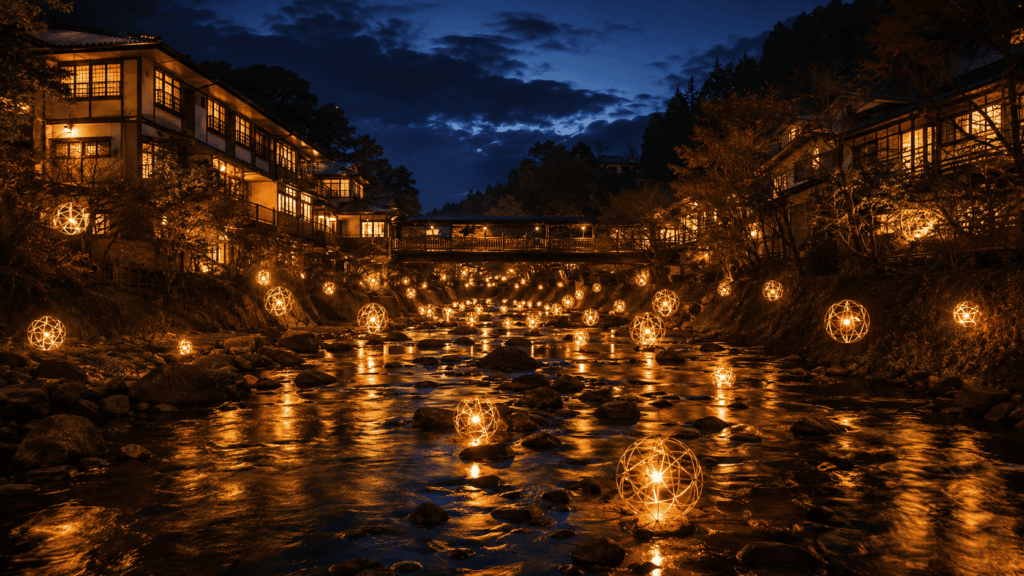
Kurokawa Onsen at a Glance: What You Need to Know
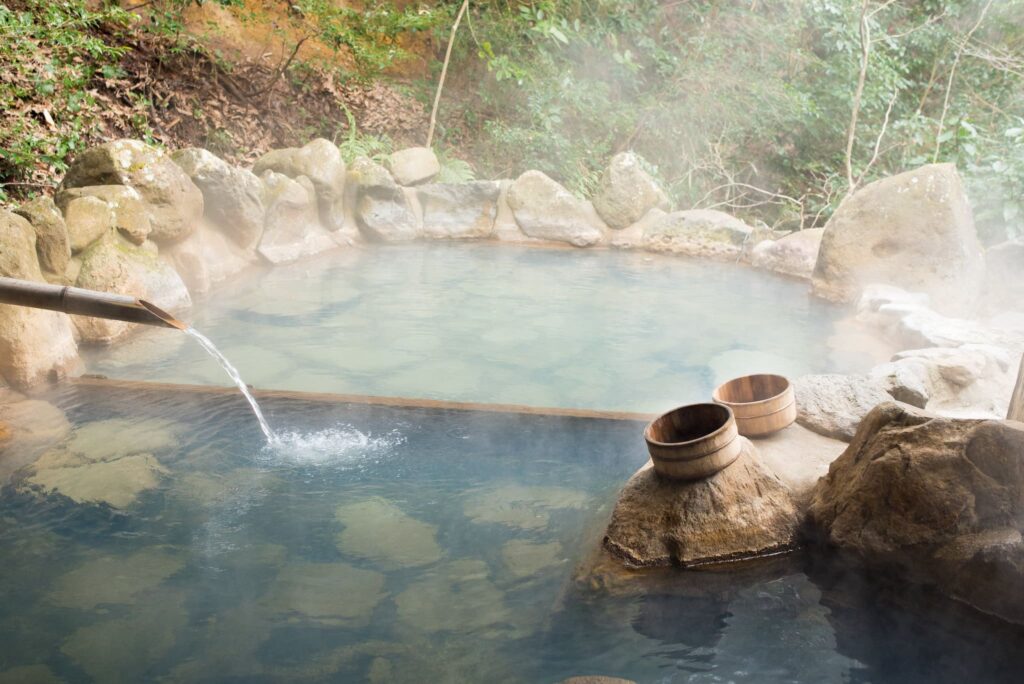
Tucked into a forested valley near Mount Aso in Kumamoto Prefecture, Kurokawa Onsen is the kind of hot spring town that feels deliberately hard to reach — and that’s exactly why it works. There is no train station, no convenience store, no neon. Instead, the Tanohara River runs through the middle of town, stone paths connect traditional wooden ryokan, and steam rises from a dozen open-air baths tucked along the water.
The town operates on a simple philosophy: treat the whole village as one ryokan. Every inn opens its baths to visitors, foot traffic replaces cars on the main street, and the pace slows down naturally. Whether you come for the famous Nyuto Tegata bath-hopping pass, the winter Yuakari bamboo lanterns, or just a day of soaking in mountain-fed hot springs, the question isn’t whether you’ll enjoy it — it’s which three baths you should pick, and whether you can squeeze everything into a single day. This guide answers both, honestly.
Planning from Fukuoka without a car? If you mainly want the Aso + Kurokawa combination with fewer transport decisions — and you’re okay with Kurokawa as a shorter stop rather than a full three-bath afternoon — compare start times and recent traveler reviews for this Mount Aso, Kurokawa Onsen and Shrine day tour from Fukuoka.
Quick Answer: What to Do in Kurokawa Onsen in a Nutshell
| Activity | Details | Estimated Time |
|---|---|---|
| Bath-hop with the Nyuto Tegata pass | Choose 3 open-air baths (rotenburo) from ~25 participating ryokan. Pass costs approximately ¥1,300–¥1,500 for adults, ¥700 for children, valid for 6 months. | 3–4 hours (walking between baths) |
| Stroll Kawabata Dori & the river | Browse small shops, visit Kurokawa Onsen Shrine and Jizodo, grab a sweet from Patisserie Roku. | 1–2 hours |
| Yuakari winter illumination (Dec–Mar) | Free bamboo-lantern display along the Tanohara River and Marusuzu Bridge. Lights up from sunset to around 21:00. | 30–60 minutes (evening) |
| Lunch: Kumamoto specialties | Try akaushi (red beef) or basashi (horse sashimi) at Gondoh Charolais or a local restaurant. | 1 hour |
Can you do it in a day? Yes — if you arrive by 11:00, you can comfortably fit 3 baths, a walk through town, and lunch. The one thing you will not see as a day-tripper is the Yuakari illumination (the last buses leave before sunset — more on that below). If the lanterns are a priority, you need an overnight stay or a rental car.
The Nyuto Tegata Pass: Your Key to Bath-Hopping
The Nyuto Tegata (入湯手形) is a wooden medallion-style pass that lets you soak in three open-air baths at participating ryokan across town. It costs approximately ¥1,300–¥1,500 for adults and ¥700 for children (ages 3 to elementary school), and is valid for six months from purchase. The price has fluctuated in recent years, so check the current rate on the day.
Where to Buy It & What You Get
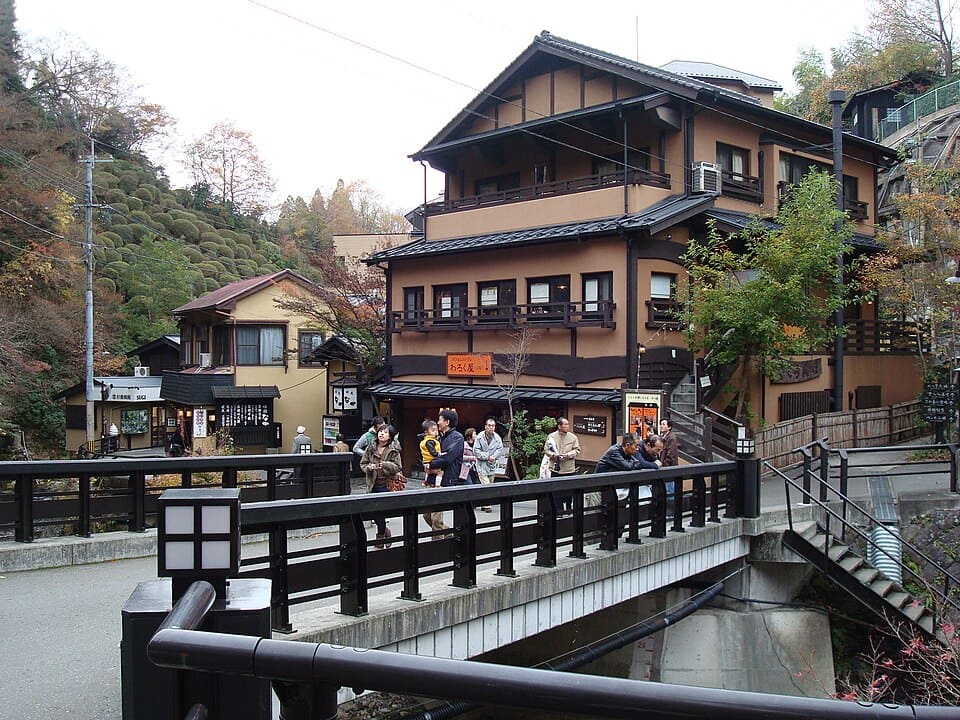
Head straight to Kaze no Ya (風の舎), the tourist information centre run by the Kurokawa Onsen Ryokan Association. It’s hard to miss — it sits right at the entrance of the main street, across the bridge. Here you can:
- Buy the Nyuto Tegata pass (cash only)
- Pick up an English map showing all participating ryokan and their bath types
- Ask about which baths are open for day visitors that day (some close for maintenance or switch hours seasonally)
Kai’s tip: Before you buy the pass, ask the staff at Kaze no Ya to confirm each ryokan’s day-visit reception hours for that day. Some inns stop accepting day bathers as early as 15:00, and the schedule can change without notice. Nothing more frustrating than walking 15 minutes to a bath only to find the gate locked. The English map they hand out also marks which baths have mixed bathing and which have private family options — grab it even if you think you don’t need it.
You can also purchase the pass at individual ryokan fronts, but starting at Kaze no Ya gives you the full picture before you commit to your first soak.
How to Use the Pass on the Day
Walk into any participating ryokan, present your pass at the front desk, and they will stamp one of the three spaces. That’s your first bath used. No time limit — stay as long as you like. The pass is a wooden tag with three blank slots; once all three are stamped, you’re done. Some visitors collect the stamps as souvenirs.
Kai’s tip: Time your first bath for around 11:00–12:00. Most ryokan guests check in at 15:00 and are either still travelling or having lunch, so the outdoor baths are noticeably emptier before noon. I’ve had entire sprawling rotemburo to myself at 11:30 — by 14:00 the same bath had six or seven people. If you only do one thing strategically, make it this.
Which 3 Baths Should You Pick? (By Bath Type)
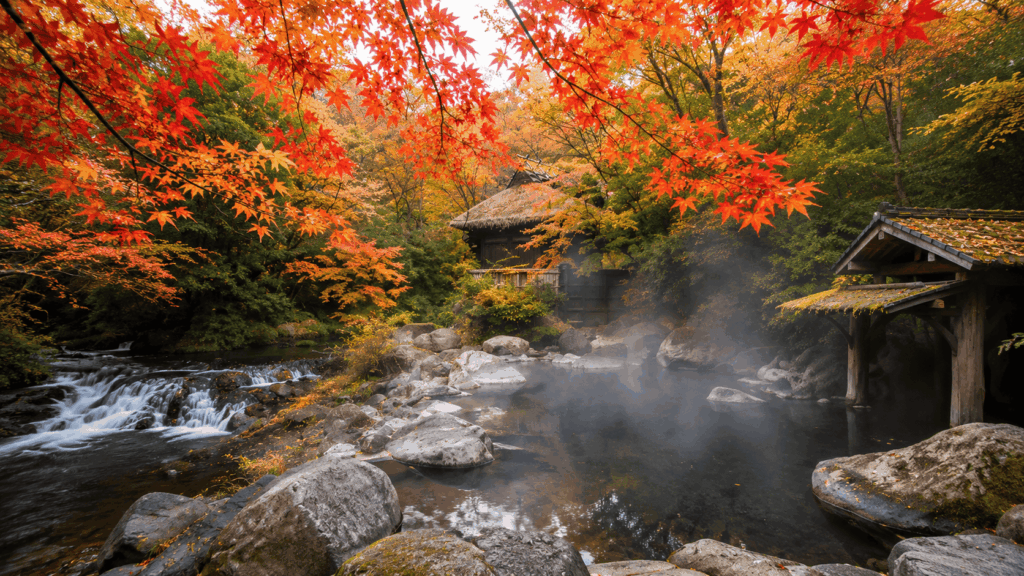
With roughly 25 ryokan accepting the Nyuto Tegata, the hardest part isn’t finding a good bath — it’s deciding which three to commit to. Instead of listing them alphabetically like most guides do, here’s a breakdown by bath type. Identify what you’re in the mood for, then pick your trio from the recommendations below.
1. The Cave Bath (Iwayu) — Yama no Yado Shinmeikan
Shinmeikan’s cave bath is the single most photographed onsen in Kurokawa — and for good reason. The inn’s owner carved a 30-metre tunnel into the rock face by hand, using only a hammer and chisel over years of painstaking work. The result is a dim, narrow passage that opens into a steaming grotto where the hot spring water drips from the ceiling and the only light comes from small openings in the rock.
Best for: Travelers who want a genuinely unusual bathing experience. It’s atmospheric, slightly eerie, and unlike any other bath in town.
Skip it if: You’re claustrophobic or prefer bright, open spaces. The cave is dark and the ceiling is low in sections.
Day-visit fee without pass: ¥500 (adults), ¥300 (children). Private family bath (Kajika no yu): ¥1,500 for 40 minutes.
2. The Standing Bath — Ryokan Kounoyu
Kounoyu claims the title of Japan’s tallest standing bath, and it delivers on the promise. The bath is deep enough that you’ll need to grip the side rail — 162 cm in the deepest section for men, 130 cm for women. The idea is to soak while standing, letting the hot water reach your shoulders, with nothing but forest and sky in front of you.
Best for: Anyone who finds regular sitting baths too shallow or wants a leg-stretching soak after a long bus ride.
Skip it if: You’re shorter than average (the depth is fixed) or prefer a traditional reclining bath. An alternative for the same “standing” feel is Ikoi Ryokan, which has 13 baths including a waterfall-fed rotemburo (rated one of Japan’s top 100 secret onsen) — day visit ¥500, private bath ¥800 per person for 40 minutes.
Day-visit fee without pass: ¥600 (adults), ¥300 (children).
3. The Mixed Bath with a View — Okunoyu
Okunoyu sits on 1.6 acres along the Tanohara River and offers nine distinct bath styles: an open-air rotemburo, a cave bath, a riverside bath, a hot spring pool (yes, swimwear required), and a stone sauna. The mixed-gender (konyoku) outdoor area is what draws most visitors — a large rocky bath with a waterfall view where couples and groups can soak together.
Best for: Couples — this is one of the few places in Kurokawa where you can bathe together without booking a private family bath. The stone sauna (¥1,100) and hot spring pool (free) add variety.
Skip it if: You’re uncomfortable with mixed bathing. Women can rent a yukata-style bathing wrap at the front desk in some cases — call ahead to confirm availability. The men’s and women’s separate baths are also excellent if you prefer single-gender bathing.
Good to know: Okunoyu also has “hell steam cuisine” — eggs and vegetables steamed using natural volcanic steam (¥100 per egg). A nice post-soak snack.
4. The Riverside Forest Bath — Yamamizuki / Hozantei
Tucked slightly upstream from the main street, Yamamizuki offers an open-air bath that feels genuinely remote. The water flows directly from the source into a stone basin beside a small forest stream. It’s quieter here — fewer day-trippers make the extra walk — and the sound of running water is the only background noise.
Hozantei, located further upstream, has a rotemburo overlooking a small waterfall. It’s open for day visitors from 07:00 to 21:00, making it one of the few baths accessible early or late.
Best for: Travelers who prioritise silence and solitude over spectacle. If your idea of a perfect onsen is sitting still and listening to the forest, pick one of these.
Skip it if: You only have time for 3 baths and the cave / standing bath appeal more — save these for a second visit.
5. The Rustic Traditional Bath — Yamabiko Ryokan
Yamabiko Ryokan sits right on the Tanohara River with a large, rocky open-air bath that exemplifies Kurokawa’s old-school charm. Nothing fancy — no cave, no standing depth — just a well-maintained rotemburo with river views and the clack of geta sandals on wooden walkways. It often appears in recommended combos precisely because it’s straightforward and reliably good.
Best for: First-time visitors who want a “classic Kurokawa” bath without any gimmicks. Pairs well with Shinmeikan (cave) and Kounoyu (standing) for a varied trio.
Skip it if: You’re after a specific bath type (cave, riverside, mixed) rather than a generalist soak.
Proposed Combos by Traveler Type
| You Are… | Recommended 3-Bath Combo | Why |
|---|---|---|
| Adventure Seeker | Shinmeikan (cave) → Kounoyu (standing) → Okunoyu (mixed river bath) | Maximum variety: cave, deep standing, and riverside — three completely different textures. |
| Couple | Okunoyu (mixed bath together) → Yamamizuki (quiet riverside) → Shinmeikan (cave — go in separately, meet for the family bath) | Mix of shared and separate experiences with a private family bath as backup. |
| Solo Traveler | Ikoi Ryokan (13 baths — stay long) → Yamabiko (classic river rotemburo) → Hozantei (waterfall view) | Focus on relaxation and variety within walking distance of each other. |
| Family with Kids | Ikoi Ryokan (book a family bath ¥800/pp) → Shinmeikan (family cave bath ¥1,500/40min) → Yamabiko (spacious open-air) | Prioritises private/family baths where parents and kids can bathe together without disturbing other guests. |
Beyond the Baths: Things to Do in Town
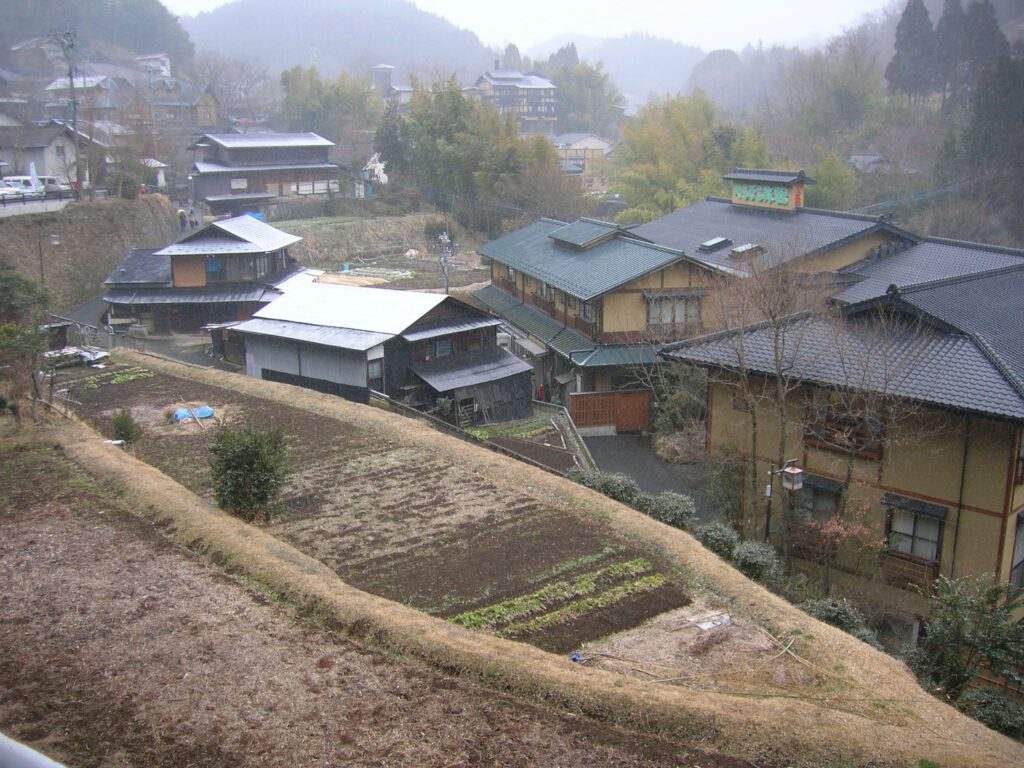
Kurokawa isn’t just about soaking. The town centre is compact — you can walk from one end to the other in about 10 minutes — but it packs in enough to fill the gaps between baths without feeling rushed.
Stroll Kawabata Dori & the Tanohara River
The main pedestrian street is Kawabata Dori (川端通り), which runs parallel to the Tanohara River. This is where you’ll find small souvenir shops selling local sake, onsen manju (steamed buns), and the wooden bath tags that make good keepsakes. A short footpath hugs the riverbank behind the shops — follow it and you’ll cross Marusuzu Bridge, the central landmark where most town photos are taken. In winter, this spot becomes the heart of the Yuakari illumination.
Visit Kurokawa Onsen Shrine & Jizodo
A short uphill walk from the main street leads to Kurokawa Onsen Shrine (黒川温泉神社), a small hillside shrine overlooking the town. It takes about 5 minutes from Marusuzu Bridge. Near the centre of town you’ll also find Jizodo (地蔵堂), a small stone hall where locals leave offerings. Neither requires more than 10 minutes, but both add a low-key cultural layer to the afternoon.
Grab a Sweet Treat: Patisserie Roku & Local Snacks
Patisserie Roku (パティスリー ロク) is a small French-Japanese bakery near the entrance of town. Their cream puffs and seasonal fruit tarts are consistently popular — expect a short queue on weekends. For something savoury, look for the stall selling freshly grilled senbei (rice crackers) near the river. There’s also a soft-serve ice cream stand across from Kaze no Ya that uses local milk; it’s a common post-bath ritual for visitors winding down between soaks.
Try Kumamoto Specialties: Akaushi Beef & Basashi
Kumamoto Prefecture is famous for akaushi (赤牛 — red beef) and basashi (馬刺し — raw horse sashimi). Both are available at Gondoh Charolais (ゴンドー シャロレー), a rustic restaurant on Kawabata Dori that sources locally. A set meal runs around ¥1,500–¥2,500, and the English menu lists the main options clearly. If you’re not ready for raw horse, the grilled akaushi steak set is a safer starting point — rich, lean, and completely different from standard wagyu.
Nighttime in Kurokawa: The Yuakari Illumination
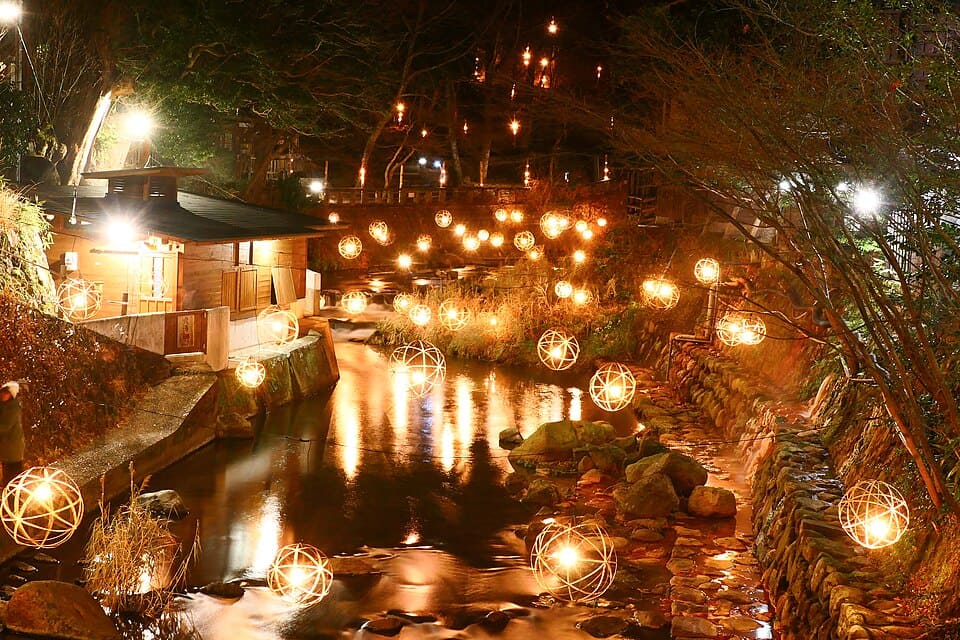
What Is Yuakari?
Yuakari (湯あかり) is Kurokawa’s winter illumination event, running roughly from late December to late March. The town places over 300 bamboo lanterns along the Tanohara River, around Marusuzu Bridge, and across the footpaths. The lanterns are lit by hand each evening around sunset and stay glowing until approximately 21:00. There is no entry fee — you can walk through freely.
The effect is deliberately understated — no lasers or music, just warm light reflecting off the river surface with steam rising from the hot spring water. The most photographed spot is the view from Marusuzu Bridge looking upstream, where the lanterns curve with the river and the ryokan roofs sit against the dark hillside.
Good to know: The exact dates change each year. For the 2026–2027 season, the event is expected to run from around late December 2026 through late March 2027 — check the official Kurokawa Onsen website (kurokawaonsen.jp) for the confirmed schedule as winter approaches.
Can Day-Trippers See the Lanterns? (Honest Answer)
In most cases, no — and this is important to be honest about up front. The Yuakari illumination turns on at sunset, which in winter (December–March) falls between 17:15 and 18:00. The last bus from Kurokawa to Fukuoka departs at approximately 16:30–17:00 depending on the season. The last bus to Kumamoto leaves around 16:00. This means that if you arrive by public bus, you will likely need to leave well before the lanterns are lit.
Kai’s tip: This is the single most common disappointment I hear about from day-trippers. They assume “winter illumination” means early evening, but the bus schedule simply doesn’t cooperate. If the Yuakari lanterns are the main reason you’re visiting Kurokawa, the realistic options are either (a) spend one night at a ryokan, or (b) drive yourself in a rental car so you have full control over departure time. A third option is booking a tour that specifically includes evening access — some Fukuoka-based tours run through the illumination season and time the schedule around the lighting. Without one of these, you’ll arrive in town, soak your three baths, and be back on the bus long before the bamboo lights come on.
If the lanterns are not a priority, none of this matters — a daytime visit gives you plenty. But if Yuakari is on your list, plan for an overnight stay.
Day Trip vs Overnight: The Honest Breakdown
| Day Trip (11:00–17:00) | Overnight Stay (from ~15:00 check-in) | |
|---|---|---|
| Baths | 3 baths with the Nyuto Tegata pass. Stick to baths within walking distance of the main street (Shinmeikan, Kounoyu, Ikoi, Yamabiko). | 3+ baths with the pass, plus your ryokan’s private onsen (usually mornings and late nights are free for guests-only). |
| Yuakari illumination | ❌ Not possible — last buses leave before sunset. | ✅ Walk from your ryokan after dinner. The lanterns and nearly empty streets create a completely different atmosphere. |
| Meals | Lunch at Gondoh Charolais or a riverside café. No evening dining options open late unless you stay. | Kaiseki dinner at your ryokan (multi-course traditional meal, typically included in the rate). Breakfast is also included. |
| Town exploration | Kawabata Dori, Shrine, Jizodo — all doable in 1–2 hours between baths. | Evening walk along the river when the town is at its quietest. Shops close by 17:00–18:00, but the streets are atmospheric. |
| Pace | Slightly rushed. You need to plan which 3 baths you’re heading to before you arrive. | Relaxed. You can spread your baths across arrival afternoon and the next morning. |
| Cost | Nyuto Tegata ¥1,300–¥1,500 + lunch ~¥2,000 + bus ~¥3,000–¥6,000 round trip = ~¥7,000–¥10,000 | Ryokan ¥15,000–¥30,000 per person (dinner & breakfast included) + transport = ~¥20,000–¥40,000 |
The short version: If you only have a day and Yuakari isn’t your priority, a well-planned day trip is absolutely worth it. If you want the full Kurokawa experience — the lanterns, a kaiseki dinner, a morning soak before checkout — you need to stay overnight. There is no “best” option; it depends on whether you value efficiency or depth. If you decide on the latter, our guide on where to stay in Kurokawa Onsen can help you pick the right ryokan.
Essential Know-Before-You-Go
Tattoo Policy: What You Need to Know
Kurokawa Onsen does not have a unified tattoo policy. Each ryokan sets its own rules, and they vary widely. Some explicitly welcome tattooed guests in the open baths; others ask that you cover small tattoos with a patch (available at Kaze no Ya). A few still follow the traditional policy of refusing visible tattoos entirely. If you’re anxious about being turned away, check our dedicated guide to visiting Kurokawa Onsen with tattoos for specific ryokan recommendations.
The most reliable workaround: Book a kashikiri (貸切 — private family bath) at whichever ryokan you visit. These are enclosed baths that you and your group can use privately, and tattoo policies generally do not apply. Shinmeikan charges ¥1,500 for 40 minutes; Ikoi Ryokan charges ¥800 per person for 40 minutes. For day visitors without a reservation, ask at Kaze no Ya which ryokan are currently accepting tattooed bathers that day — they keep a list.
Mixed Bathing (Konyoku) & What to Wear
Several ryokan in Kurokawa maintain mixed-gender baths (konyoku): Okunoyu is the most prominent example, with a large riverside konyoku area. In practice, mixed baths in Kurokawa tend to be quieter than the men’s and women’s separate baths — especially on weekday afternoons.
Women visiting a mixed bath can wear a yukagi (bathing wrap) or bring a small towel for coverage. Some ryokan, including Okunoyu, may have wraps available for rent at the front desk — call ahead or ask at Kaze no Ya to be sure. If you’re uncomfortable with the mixed setup, every ryokan also has same-gender baths that are equally well-maintained.
Towels: Bring Your Own (Seriously)
Here is a practical detail most guides skip: most ryokan do not provide towels for day bathers. You walk in, show your pass or pay the fee, and head to the changing room — where you will find baskets and mirrors but no towel rack.
Kai’s tip: Bring two towels — one small washcloth for the bath itself (you carry it in with you, as is Japanese custom) and one larger towel for drying off afterward. Without a large towel, you’ll be dripping your way back through the changing room and out into the street. A good alternative is to buy a Kurokawa branded tenugui (hand towel) at Kaze no Ya — it doubles as a souvenir, dries quickly, and is large enough to use as a small bath towel. For the larger towel, bring your own. I’ve watched countless travelers finish their soak, realise there’s no towel, and walk back to the entrance doing the wet-clothes shuffle. Don’t be one of them.
What to Pack for a Day at Kurokawa
- Small towel (hand-sized — for the bath itself)
- Large towel (for drying off — not provided for day bathers)
- Change of clothes (underwear, top — you’ll be fully changing between baths if you visit multiple ryokan)
- Coin purse (¥10, ¥100, ¥500 coins for lockers — most are ¥100 refundable)
- Cash (most ryokan and the pass itself are cash-only; there is one ATM at the post office near Kaze no Ya)
- Water shoes (optional — the pebbled bath floors can be slippery)
- Plastic bag (for wet towels between baths)
Getting to Kurokawa Onsen (No Train — Here’s How)
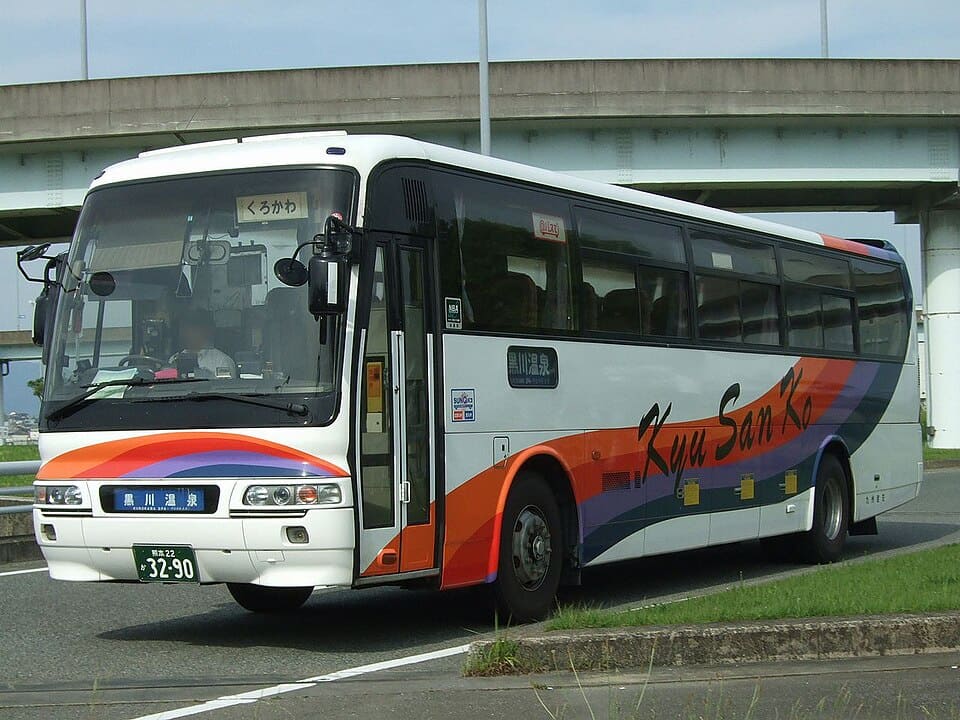
Kurokawa Onsen is not reachable by train. The closest major stations are Fukuoka (Hakata) and Kumamoto, both of which connect to the town by highway bus. Driving is the most flexible option. For a complete breakdown of bus schedules and driving routes, see our detailed guide on how to get to Kurokawa Onsen.
From Fukuoka (Hakata / Tenjin / Airport)
- Bus: Kyushu Odan Bus operates 4 direct services per day from Hakata Station, Tenjin, and Fukuoka Airport. Journey time is approximately 2 hours 40 minutes. One-way fare is around ¥3,090. Reservations are essential — this route sells out, especially on weekends and during the Yuakari season. Book online via the Kyushu Odan Bus website or at the highway bus counter at Hakata Station.
From Kumamoto
- Bus: Kyushu Odan Bus also runs from Kumamoto Station (2 services per day). Journey time is approximately 2 hours to 2 hours 30 minutes. One-way fare is around ¥1,750. Reservations recommended.
From Yufuin / Beppu
- Kyushu Crossroads Bus (九州横断バス): Connects Yufuin Station to Kurokawa Onsen. Limited services — the number of daily runs varies by season. Check the current timetable before planning your itinerary.
By Car (Recommended for Flexibility)
- From Fukuoka Airport: approximately 1 hour 40 minutes via the Kyushu Expressway.
- From Kumamoto Station: approximately 1 hour 15 minutes via National Route 57.
- Parking is available at several lots near the entrance of town (¥500–¥1,000 per day). If you have a rental car, you can also combine Kurokawa with Nabegataki Falls and the Aso caldera in a single day — something that’s nearly impossible by public transport.
Nearby Attractions: Combining Kurokawa with Your Kyushu Trip
Kurokawa’s location puts it within reach of several major Kyushu highlights — useful if you’re planning a longer road trip or looking for a tour that covers multiple stops.
- Nabegataki Falls (鍋ヶ滝) — Approximately 20 minutes by car. A wide, curtain-like waterfall that you can walk behind. Popular with photographers, especially in autumn. The entrance fee is ¥500.
- Mount Aso (阿蘇山) — Approximately 30–40 minutes by car. The active caldera is one of the largest in the world. Access to the crater rim depends on volcanic gas levels — check the day before visiting. The Aso Super Ring road offers panoramic views even when the crater is closed.
- Suzume Jigoku (すずめ地獄) — A smaller hot spring hell along the Aso route, worth a brief stop if you’re heading that way.
- Yufuin (由布院) — About 1 hour 15 minutes by car or the Kyushu Crossroads Bus. Yufuin is more tourist-oriented — think boutiques, galleries, and Lake Kinrin. Many travellers visit both: Yufuin for dining and shopping, Kurokawa for the more traditional onsen atmosphere.
If you fall into that camp — you want the Aso scenery and a taste of Kurokawa, but piecing together rural buses would eat up the day — this is the one booking worth comparing first.
Why I’d book this one
- It solves the no-train problem: transport from Fukuoka, a guide/driver, and scheduled Aso + Kurokawa stops are bundled into one day.
- Recent travelers consistently mention smooth transport, helpful guide communication, and the convenience of not managing rural transfers alone.
- It keeps expectations honest: Kurokawa is a shorter stop, so it suits travelers who want a scenic sample rather than a full three-bath Nyuto Tegata afternoon.
See live availability, start times, route notes, and recent traveler reviews for the Mount Aso, Kurokawa Onsen and Shrine day tour from Fukuoka.
| Self-planned Kurokawa day | Guided Aso + Kurokawa tour | |
|---|---|---|
| Best for | Travelers who want 3 baths, lunch, and a slower onsen-focused day. | Travelers who want Aso scenery plus a shorter Kurokawa stop without renting a car. |
| Transport | Requires bus reservations or a rental car. | Fukuoka departure, guide/driver, and scheduled stops included. |
| Kurokawa time | Enough for the Nyuto Tegata if you arrive early. | Usually better for one bath or a town stroll — check the latest itinerary before booking. |
| Price | Check current bus, pass, and lunch costs separately. | Check current tour price. |
Frequently Asked Questions About Kurokawa Onsen
Is Kurokawa Onsen worth visiting without staying overnight?
Yes, absolutely — with one honest caveat. If you arrive around 11:00 and leave by 17:00, you have enough time for three baths (using the Nyuto Tegata pass), a walk through town, and lunch at a local restaurant. The one thing you won’t see as a day-tripper is the winter Yuakari illumination — the last buses leave before sunset. If the lanterns are the highlight for you, overnight is the way to go. If you’re here for the onsen themselves, a day trip delivers excellent value. For a deeper dive into the pros and cons, read my honest Kurokawa Onsen review.
Can I use the Nyuto Tegata pass for private (kashikiri) family baths?
No — the pass is accepted only for the main open-air baths at participating ryokan. Private family baths must be booked and paid separately at the front desk. Shinmeikan’s Kajika no yu costs ¥1,500 for 40 minutes; Ikoi Ryokan’s family bath costs ¥800 per person for 40 minutes. The price is per group, not per person, in most cases — confirm at check-in.
Is Kurokawa Onsen tattoo-friendly?
There is no single rule. Some ryokan welcome tattooed guests in the main baths; others ask that you cover small tattoos with a patch (available at Kaze no Ya); a few still refuse visible tattoos entirely. The safest option is to book a private family bath (kashikiri) — these are not subject to the ryokan’s tattoo policy. If you’re visiting as a day guest without a reservation, ask at Kaze no Ya which ryokan are currently accepting tattooed bathers.
How long does it actually take to visit 3 baths?
Plan for 10–15 minutes of walking between ryokan (the town is compact), plus 20–40 minutes soaking in each bath, plus changing time. A realistic pace is about 3–4 hours for three baths, including walking and short breaks between them. If you add lunch and a walk through town, budget a minimum of 5 hours from arrival to departure.
What is the best time of year to visit Kurokawa Onsen?
Winter (December–March) is the most atmospheric season — the Yuakari bamboo lanterns are on display, and the contrast between cold air and hot spring water is at its most dramatic. Autumn (November) brings colourful foliage along the Tanohara River. Summer (June–August) is less crowded and the riverside baths are pleasant in warm weather, but the water is still comfortably hot. Spring (March–April) sees cherry blossoms near the shrine and temple areas. Each season offers a different atmosphere, and none is a “wrong” time.
Is there parking in Kurokawa Onsen? (For rental car users)
Yes. There are several pay-parking lots at the entrance of town, within a 3–5 minute walk of Kaze no Ya and the main street. Rates are typically ¥500–¥1,000 per day. Parking fills up on weekends and during the Yuakari season — arriving before 11:00 helps secure a spot.
Can I visit Kurokawa Onsen from Fukuoka in one day?
Yes — but you need to catch one of the 4 daily direct buses from Hakata Station or Tenjin. The bus departs Fukuoka around 08:00–09:00 and arrives at Kurokawa around 11:00–11:30. The return bus leaves Kurokawa around 16:30–17:00. That gives you roughly 5 hours in town — enough for 3 baths, lunch, and a walk. Just be aware that the Yuakari illumination won’t be visible with this schedule (see the night section above).
Are there English signs, English menus and English-speaking staff?
Kaze no Ya (tourist information centre) provides English maps and can answer questions in English. Several ryokan — especially Shinmeikan, Okunoyu, and the larger inns — have English signage at the entrance and basic English-speaking staff at the front desk. Restaurants like Gondoh Charolais have English menus. That said, smaller shops and snack stalls are Japanese-only; pointing and smiling works fine. Cash is more widely accepted than cards in Kurokawa.
Final Verdict: Is Kurokawa Onsen Right for You?
Choose Kurokawa Onsen if…
- You want an onsen town that feels genuinely removed from modern Japan — no convenience stores, no pachinko, no crowds of selfie sticks.
- You value variety in a single day: cave baths, standing baths, mixed baths with waterfall views, and quiet riverside rotemburo are all within a 15-minute walk of each other.
- You’re planning a Kyushu road trip and want a traditional onsen stop that pairs well with Mount Aso, Nabegataki Falls, and Yufuin.
- You’re a couple looking for a mixed-gender bath (Okunoyu) or a solo traveler who enjoys unhurried, meditative soaking.
Skip Kurokawa if…
- You prefer convenience and walkability over atmosphere. Kurokawa has no train, limited bus service, and most shops close by 17:00–18:00. If you want nightlife or shopping, choose Yufuin.
- You’re travelling without a rental car and want to visit multiple nearby attractions in one day. Public bus connections between Kurokawa, Aso, and Nabegataki are sparse — you’ll need a car or a guided tour.
- You have only 2–3 hours to spare. Kurokawa rewards those who can slow down. Rushing through three baths in under three hours will feel more like a checklist than an experience.
For first-time visitors: Start at Kaze no Ya, buy the Nyuto Tegata pass, pick up the English map, and head to Shinmeikan (cave bath) as your first soak — it’s a 5-minute walk from the information centre and sets the tone for the day. Follow with Kounoyu (standing bath) for contrast, then Yamabiko or a second choice based on your preference from the table above. Finish with lunch at Gondoh Charolais and a walk along the river before catching your return bus.
For families: Book private family baths at Ikoi Ryokan or Shinmeikan so the whole family can soak together. The free foot bath near Kaze no Ya is a good warm-up for younger children who may be nervous about the hot water. Pack snacks — food options are limited between late afternoon and dinner.
For repeat visitors: If you’ve already done the standard trio, try the upstream baths — Hozantei and Yamamizuki — which are quieter and rarely crowded even on weekends. Consider visiting in autumn when the foliage along the Tanohara River adds a layer that summer and winter don’t offer.
What I’d tell a friend visiting for the first time: Don’t try to see everything. The temptation is to pack as many baths as possible into the day, but the real value of Kurokawa is in the between — the walk from one ryokan to the next along the river, the steam rising off the water as you cross a stone bridge, the quiet of a bath with no one else in it. Pick three baths that genuinely interest you, take your time in each one, and leave the rest for next time. That’s how Kurokawa gets you to come back.
Hi, I’m Kai. I’m a Tokyo-based travel writer, tourism industry insider, and the author of a published guidebook for international visitors to Japan. With over 10 years of professional experience at a leading Japanese tourism company, my mission is to help you skip the tourist traps and navigate Japan’s best destinations like a local. I believe the perfect day trip is like a traditional kaiseki meal: a beautiful balance of precise planning and unforgettable seasonal discovery. When I’m not out conducting field research, you’ll usually find me drafting new itineraries with one of my favorite fountain pens!