
Is There Really a “Best” Time to Visit Naoshima?
Short answer: yes—but not for the reasons most guides give you. Spring and autumn are comfortable, the light hits Tadao Ando’s concrete just right, and the art looks its best. But the single most important factor in planning a Naoshima visit has nothing to do with weather. It has to do with a day of the week.
If you arrive on a Monday, nearly every museum on the island will be locked. The ferries will still run, the Yellow Pumpkin will still sit by the water, but the Chichu Art Museum, Benesse House Museum, Lee Ufan Museum, Art House Project, and the newly opened Naoshima New Museum of Art—all closed. That is a long way to travel for a photo of a pumpkin.
This guide breaks Naoshima down by season, month, weather, crowds, and—most importantly—by what is actually open. Whether you are planning a day trip from Okayama or Takamatsu, or an overnight stay, you will know exactly when to book your ferry and when to stay home.
Planning Naoshima as a fixed-date art day? If you want fewer moving parts than museum slots, ferries, buses, and closure checks, compare current start times and recent traveler feedback for the Naoshima FullDay Private Tour with Government-Licensed Guide before locking in your date.
Quick Answer: When Should You Go to Naoshima?
| Factor | Best | Avoid |
|---|---|---|
| Day of the week | Tuesday–Sunday | Monday (most museums closed) |
| Weather & comfort | Late March–May, October–November | June (rainy season), August–September (typhoons, humidity) |
| Crowds | December–February, early March, late September | Golden Week (late April–early May), November weekends |
| Museum access | March–December (Tue–Sun) | January (annual maintenance closures), Mondays year-round |
| Art festival | Triennale years (next: 2028) for special exhibits | —off-years are still excellent for permanent collections |
Bottom line for most travelers: Late October to mid-November gives you the best combination of comfortable weather, autumn colors, and fully open museums—as long as it is not a Monday.
First Things First: The One Rule That Overrules Everything — Avoid Monday
Before you look at weather forecasts or cherry blossom forecasts, look at a calendar. The single most common mistake I see first-time visitors make is building their entire Japan itinerary around flight prices and hotel availability, then realizing they have booked Naoshima for a Monday.
Here is the reality: the following major museums on Naoshima are closed on Mondays (or the following day if Monday is a national holiday):
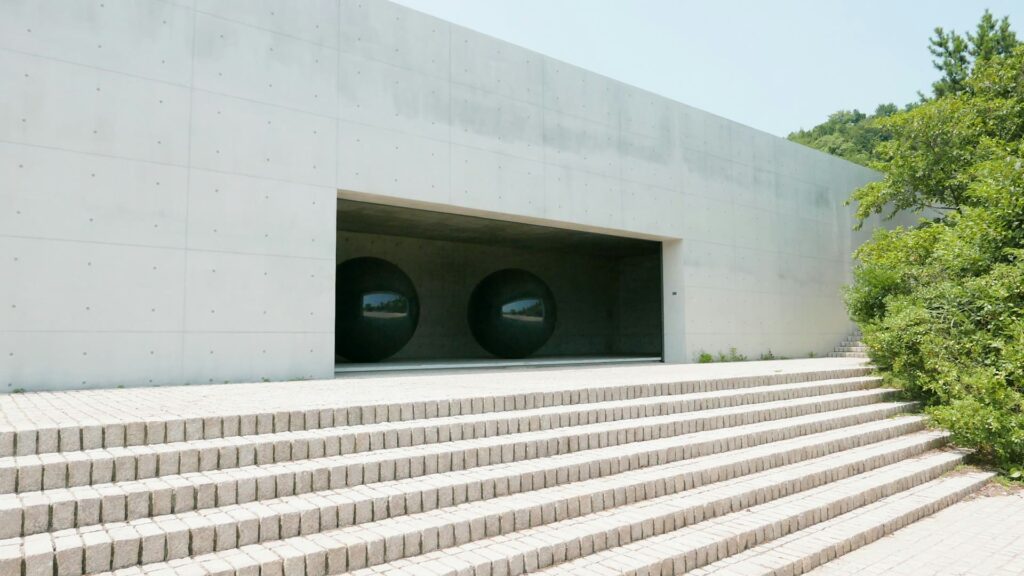
- Chichu Art Museum — Tadao Ando’s underground masterpiece housing Monet’s Water Lilies, James Turrell, and Walter De Maria
- Benesse House Museum — the museum-hotel hybrid with works by Kusama, Sugimoto, and others
- Lee Ufan Museum — minimalist works by the Korean-born Japanese artist
- Valley Gallery — outdoor and indoor installations in the Benesse House complex
- Naoshima New Museum of Art — the newest Ando-designed museum, opened May 2025
- Art House Project — including Minamidera (requires timed entry), Ishibashi, and Kinza
- ANDO MUSEUM — a deep dive into the architect’s work on the island
- Naoshima Bath “I♥湯” — Shinro Ohtake’s eccentric public bathhouse
Important exception: If Monday is a national holiday, the museums open on Monday and close on Tuesday instead. The Benesse Art Site official calendar is worth bookmarking before you book anything.
What you can still do on a Monday: The outdoor installations remain accessible. Yayoi Kusama’s Yellow Pumpkin on the Miyanoura pier and Red Pumpkin at Miyanoura Port are both free to view any day. You can also explore the island’s nature trails, rent a bicycle, and visit the few independent cafés that stay open. But if you have come for the art—and chances are you have—a Monday visit will leave most of Naoshima’s world-class collections behind locked doors.
A note on Teshima and Inujima: The neighboring islands operate on a different schedule. The Teshima Art Museum and Inujima Seirensho Art Museum are closed on Tuesdays, not Mondays. If you are island-hopping, you can pair a Tuesday Naoshima visit with a Monday trip to Teshima—or vice versa (read our guide if you need to decide between Naoshima and Teshima).
Kai’s tip: Decide which day of the week you will visit Naoshima before you decide which month. What catches first-time visitors off guard is that it is not just one or two galleries that close on Monday—it is the entire Benesse Art Site. If your day trip lands on a Monday, you lose access to roughly 80% of what makes Naoshima worth the journey. A Tuesday arrival is worth restructuring your entire itinerary around.
Understanding the Art Festival Cycle: Triennale Years vs. Off-Years
Another factor that shapes the Naoshima experience—and one that confuses many travelers—is the Setouchi Triennale cycle.
The Setouchi Triennale is a sprawling contemporary art festival held every three years across a dozen islands in the Seto Inland Sea, including Naoshima. The festival is split into three sessions: spring, summer, and autumn.
- 2025: The last Triennale has concluded.
- Next: 2028 (expected) — Official dates have not been announced yet, but the three-session format (spring/summer/autumn) is standard.
Visiting Naoshima in a Triennale Year (e.g., 2028)
- More site-specific, limited-run artworks across the island
- Special exhibitions, performances, and events
- Significantly more visitors—popular time slots sell out weeks in advance
- A festival atmosphere with shuttles, volunteers, and energy across the islands
Visiting Naoshima in an Off-Year (2026–2027, now)
- All permanent collections are open and operating normally
- Far fewer crowds—you will have the James Turrell Skyspace to yourself more often
- No Triennale passport or island-hopping pass, but individual museum tickets are easy to buy online
- Restaurants and cafés feel more relaxed, less rushed
Is it worth visiting Naoshima in an off-year? Absolutely. In fact, for first-time visitors, an off-year is often better. The permanent collections at Chichu Art Museum, Benesse House Museum, and Art House Project are the island’s core attractions, and they do not change during the Triennale. An off-year lets you experience Naoshima at its natural pace—quiet, contemplative, and entirely focused on the art-architecture dialogue that made the island famous in the first place.
Spring (March–May): Cherry Blossoms, Golden Week Crowds, and Peak Reservation Season
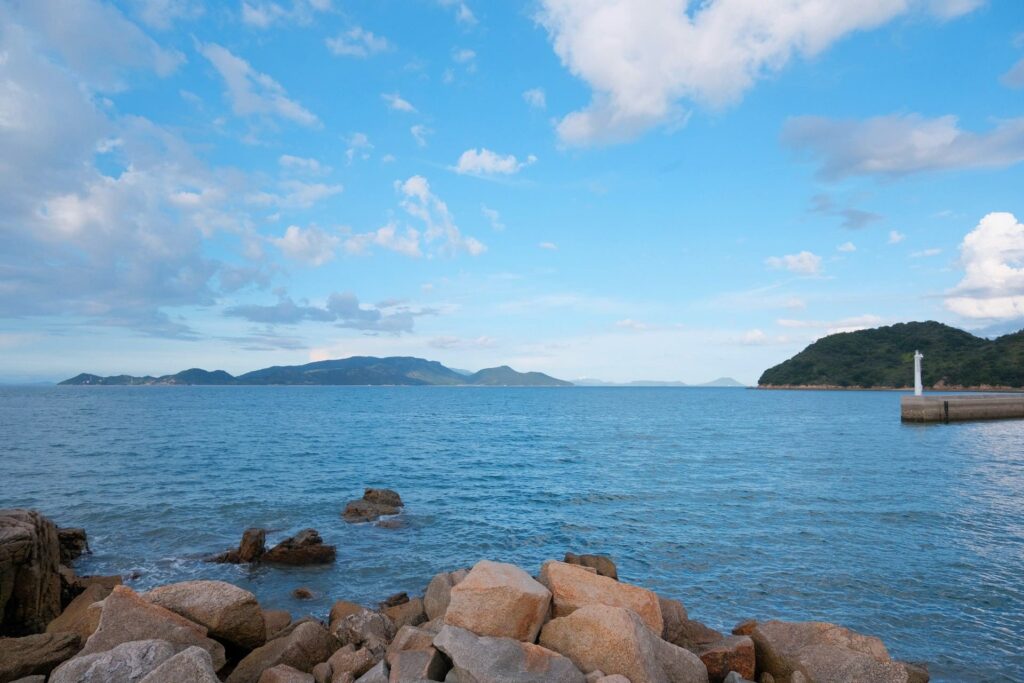
Weather & Atmosphere
Spring on Naoshima is mild and pleasant, with daytime temperatures ranging from around 10°C in March to 22°C in May. The Seto Inland Sea is famously calm, and the light during spring mornings is soft and diffused—ideal for the underground galleries of Chichu, which rely entirely on natural illumination.
Cherry Blossoms
Naoshima’s cherry blossoms typically peak in early to mid-April, roughly a week after the main bloom in Kyoto and Osaka. Spots near Honmura Port and along the road between Miyanoura and the Benesse House area offer scattered sakura views framed by the sea. It is not a famous hanami destination, but the combination of pink blossoms, Ando’s concrete walls, and the blue-green water is quietly stunning.
Crowds & Availability
- March to early April: Manageable crowds. Pleasant weather. A solid window for a relaxed visit.
- Late April to early May (Golden Week): Japan’s busiest travel period. Expect heavy crowds, fully booked ferries, and Chichu tickets that sell out within days of release. Accommodation on the island—including the Benesse House hotels and local minshuku—is booked months in advance.
- Mid-to-late May: Crowds ease after Golden Week. Weather is warm but not yet humid. One of the best hidden windows for a spring visit.
Reservation Reality
Chichu Art Museum’s timed-entry slots during April and May often sell out one to three weeks in advance. This is not an exaggeration—I have heard from travelers who checked two weeks ahead and found only early-morning or late-afternoon slots remaining. If you are visiting in spring, reserve your Chichu ticket the moment your travel dates are fixed.
Best For
- First-time visitors who want classic Naoshima (museums + outdoor art + decent weather)
- Photographers who want sakura in their frame
- Travelers who can plan ahead and book early
Summer (June–September): Rain, Humidity, Typhoons, and the Pumpkin That Washed Away
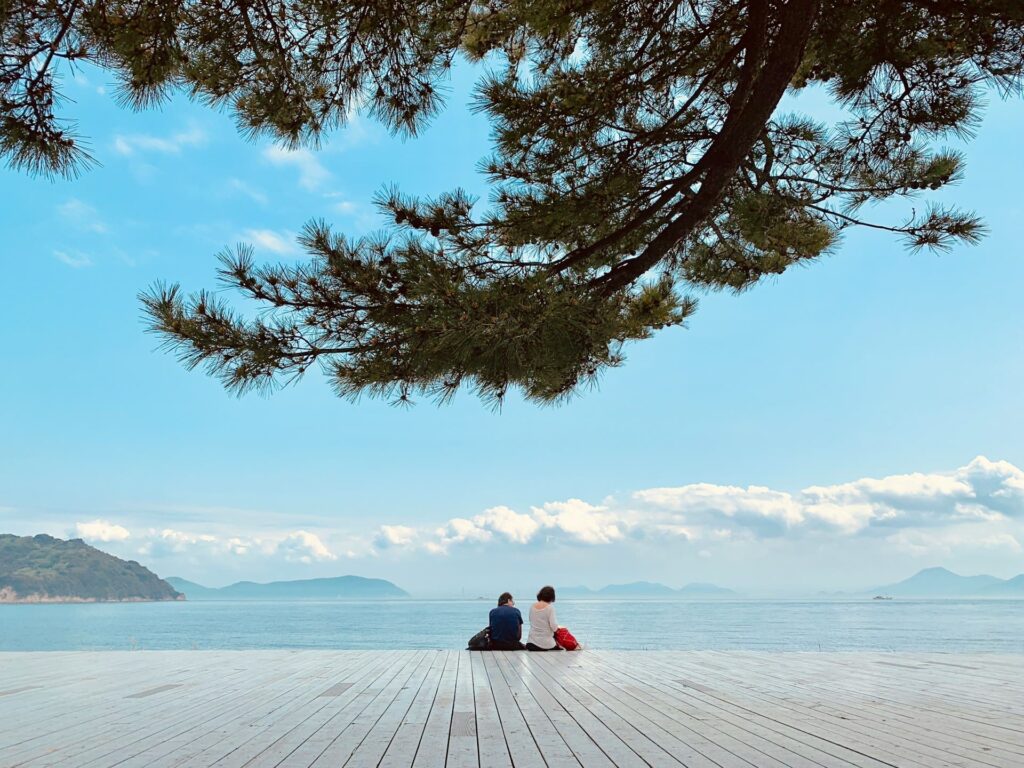
Weather & Atmosphere
Summer on Naoshima is hot and humid. Daytime temperatures regularly hit 30–33°C in July and August, with humidity that makes walking between museums feel heavier than the thermometer suggests.
June is the rainy season (tsuyu) across most of Japan. You will likely encounter overcast skies and intermittent drizzle. Museums are indoor and climate-controlled, which softens the blow, but the outdoor installations and the walk between venues lose some of their appeal.
July is hot but relatively dry. The sea is warm enough for swimming at Gotanji Beach, and the long daylight hours (sunset after 7 p.m.) give you more time to explore.
August and September bring peak heat, humidity, and—critically—typhoon season.
The Typhoon Reality (Kai’s Tip)
Typhoons in the Seto Inland Sea are not just a theoretical risk. In August 2021, a typhoon swept Yayoi Kusama’s iconic Yellow Pumpkin off its pier and into the sea. The sculpture was badly damaged and spent over a year in restoration before returning to its spot in October 2022, rebuilt with reinforced materials.
Kai’s tip: What most guidebooks will not tell you is that Benesse House staff sometimes preemptively remove the Yellow Pumpkin when a large typhoon is forecast. During peak typhoon season (late August to mid-September), you could arrive and find the island’s most photographed artwork simply gone for a few days. On top of that, ferries from Uno and Takamatsu cancel without notice when seas get rough. If you are planning a summer visit, build buffer days into your itinerary—a same-day round trip from Okayama leaves no room for weather delays. Pack light, carry water, and check the Japan Meteorological Agency’s typhoon tracker before you board.
Best For
- Travelers with flexible schedules who can dodge typhoons
- Early risers (museums open at 10 a.m.—arrive at Miyanoura on the 8:22 ferry for a head start)
- Swimmers who want to combine art with Gotanji Beach
Who Should Skip Summer
- Anyone with a rigid, pre-booked day trip (ferry cancellations can derail everything)
- Travelers sensitive to heat and humidity
- Photographers hoping for the Yellow Pumpkin shot at sunset (it may not be there)
Autumn (October–November): The Sweet Spot — But Book Early
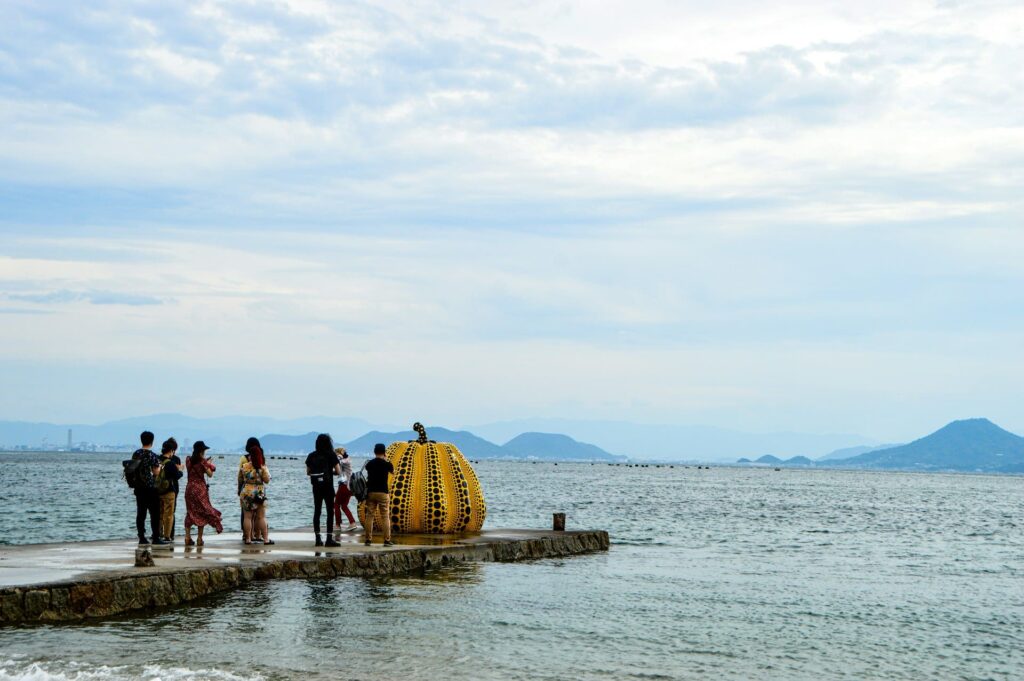
Weather & Atmosphere
If I had to pick one season to send a friend to Naoshima for the first time, it would be late October to mid-November. Daytime temperatures hover between 15°C and 23°C, the humidity vanishes, and the light—low and golden in the afternoon—pours into Chichu’s underground galleries exactly as Ando intended. The Seto Inland Sea is glassy calm, and the island’s pine forests and coastal paths are at their most walkable.
Autumn Foliage
Naoshima’s autumn colors peak in early to mid-November, roughly two weeks after Kyoto. The maple trees around the Benesse House Museum and along the road to the Lee Ufan Museum turn deep crimson and orange. It is not a dramatic mountain kōyō display, but the contrast between red leaves, white concrete, and blue sea is uniquely Naoshima.
Crowds & Reservation Realities
- October: Comfortable crowds. The weather is excellent, but it has not yet hit peak season. A strong window for a relaxed visit.
- November (especially weekends and the Culture Day holiday period around Nov 3): Crowds peak. Chichu Art Museum tickets sell out 2–3 weeks in advance, just like spring. Ferries from Uno and Takamatsu fill up, especially the early morning departures that art travelers want.
- Late November: Crowds thin noticeably after the foliage peak. Weather is cooler but still pleasant (12–18°C). A solid under-the-radar window.
Best For
- First-time visitors who want the most comfortable experience possible
- Photographers chasing golden-hour light on Ando’s concrete surfaces
- Travelers who can plan ahead and book Chichu tickets early
Winter (December–February): Peaceful, Cheap, and Some of It Is Closed
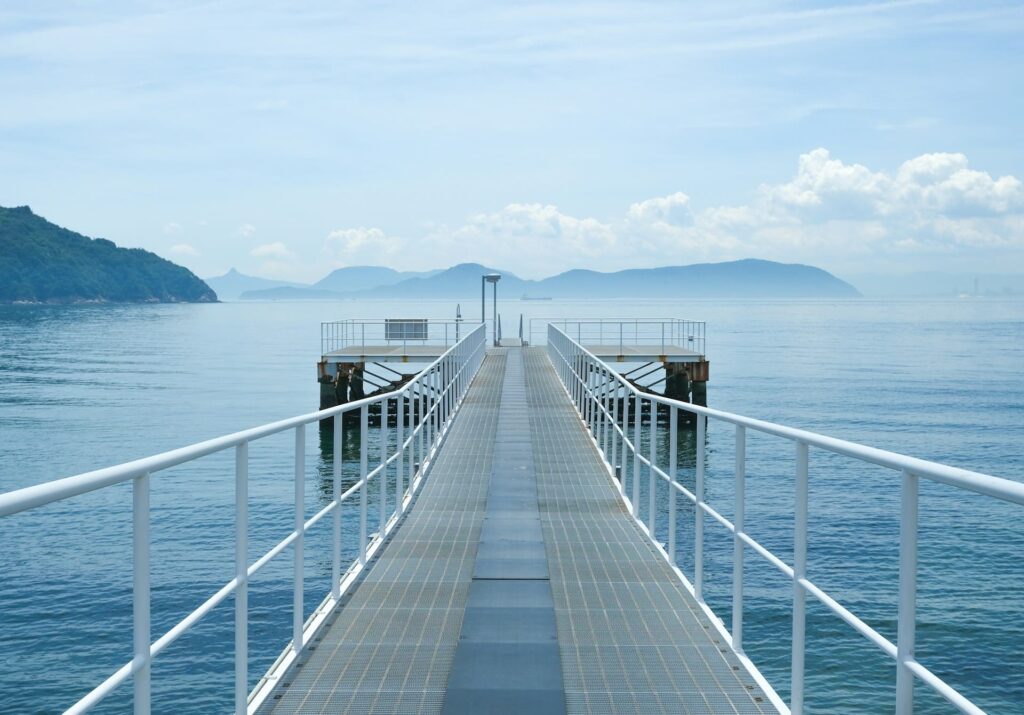
Weather & Atmosphere
Winter on Naoshima is cold but not harsh. Daytime temperatures range from 3°C to 10°C, and the island receives relatively little rain or snow compared to Japan’s northern regions. The sky is often clear, and the winter light—sharp and low—creates dramatic shadows inside the museums. You will have the galleries almost to yourself.
Bicycle rental drops to around ¥500 for a standard bike (e-bikes are also discounted), and island cafés and restaurants are unhurried. If solitude and slow exploration are what you want, winter delivers.
The Maintenance Shutdown Trap (Kai’s Tip)
Here is the catch that many travelers miss: winter is also when Naoshima’s museums close for annual maintenance. The “quiet season” sounds ideal until you arrive and find the doors locked.
Kai’s tip: The biggest mistake I see itinerary planners make is assuming that “off-season = open but quiet.” In winter, especially January, the museums shut down for maintenance in blocks that can last days or even weeks. For example, in January 2026, the Benesse Art Site closed all of its museums (Chichu, Benesse House, Lee Ufan, Valley Gallery, Naoshima New Museum of Art, Art House Project, ANDO MUSEUM, and I♥湯) from January 13–19 for annual maintenance. The Hiroshi Sugimoto Gallery: Time Corridors was closed from January 5 to February 28—nearly two months. These dates change every year, so you must check the Benesse Art Site official calendar before booking anything in winter. December is the safest month for a winter visit; January carries the highest closure risk.
What Is Open in Winter?
- Outdoor installations: the Yellow Pumpkin, Red Pumpkin, and scattered works along the island’s paths remain accessible
- The island itself: walking trails, Honmura village, and the independent cafés are open as usual
- Some museums may be open outside of the maintenance window (typically mid-January is the danger zone)
Best For
- Budget travelers (lower ferry traffic, discounted bike rentals, fewer crowds)
- Photographers who want stark winter light and empty frames
- Repeat visitors who have already seen the museums and want a quiet, contemplative return
Who Should Skip Winter
- First-time visitors with only one day to spend on Naoshima (too much risk of finding museums closed)
- Anyone planning a trip in January without checking the maintenance schedule
Quick Reference: Naoshima by Season — At-a-Glance
| Season | Weather | Crowds | Reservation Difficulty (Chichu) | Museum Status | Overall Verdict |
|---|---|---|---|---|---|
| Spring (Mar–May) | Mild, 10–22°C, cherry blossoms in April | Moderate; heavy during Golden Week (late Apr–early May) | ★★★ (sell out 1–3 weeks ahead) | Open (Tue–Sun) | Great, with caveats on timing |
| Summer (Jun–Sep) | Hot, humid, 25–33°C; June rain; Aug–Sep typhoons | Low–moderate (Jul–Aug, except holidays) | ★★ (easier, but typhoon risk) | Open (Tue–Sun) | Only for flexible travelers |
| Autumn (Oct–Nov) | Cool and comfortable, 15–23°C, foliage in Nov | Moderate; heavy on Nov weekends | ★★★ (sell out 2–3 weeks ahead) | Open (Tue–Sun) | Best overall window |
| Winter (Dec–Feb) | Cold, 3–10°C, mostly clear skies | Lowest of the year | ★ (easy, if museums are open) | ⚠️ Jan maintenance closures | Good for repeat visitors; risky for first-timers in Jan |
Chichu Art Museum Reservations: When You Really Need to Plan Ahead
Since 2023, the Chichu Art Museum has operated on a timed-entry reservation system for all visitors. You select a 30-minute entry window online, and if you arrive late, you risk being turned away. Walk-up tickets are not available.
Reservation difficulty varies dramatically by season:
| Season | How Far Ahead It Sells Out | Strategy |
|---|---|---|
| Spring (Apr–May) | 1–3 weeks in advance | Book as soon as your dates are set. Aim for 10:00 or 14:00 slots. |
| Summer (Jun–Sep) | A few days to 1 week | Easier availability, but verify typhoon forecasts before booking. |
| Autumn (Oct–Nov) | 2–3 weeks in advance | Same as spring—early booking is essential. |
| Winter (Dec–Feb) | Usually available same-week | But check the museum’s maintenance schedule first—it may be closed. |
Practical tip: The 10:00 a.m. and 10:30 a.m. slots are the most popular across all seasons. If those are sold out, check the 15:00 or 15:30 slots—late afternoon light inside Chichu’s James Turrell installation is particularly striking, and some travelers actually prefer it to the morning.
If you fall into that camp — you want the full Naoshima art day, but timing Chichu, Benesse, buses, ferries, and seasonal closures alone feels like too much — this is the one booking to compare before you commit.
Why I’d book this one
- Recent travelers consistently point to the guide’s help with routing, transport, and gallery timing — exactly where a one-day Naoshima plan can fall apart.
- The tour is private and customizable, so it suits art lovers who care about choosing the right 3–4 sites rather than rushing every museum.
- The booking page lets you check current cancellation terms, start times, and recent reviews before you lock in the rest of your island plan.
See live availability, start times, and recent traveler reviews for the Naoshima FullDay Private Tour with Government-Licensed Guide.
Plan Your Visit: A Simple Decision Flow for Choosing Your Dates
Not sure which season fits your travel style? Here is a quick way to narrow it down:
- You are a first-time visitor who wants to see everything → Late October or mid-April (avoid Golden Week). Book Chichu tickets at least 2–3 weeks ahead.
- You hate crowds and want solitude → December (before Christmas) or late February (check for maintenance closures).
- You only have one day and cannot change dates → Make sure it is a Tuesday, Wednesday, or Thursday—and that it is not January. If it lands on a Monday, consider swapping to Teshima instead.
- You want cherry blossoms in your photos → Mid-April. Arrive on the first ferry from Uno to beat the Golden Week rush.
- You are on a tight budget → Winter (December or February, not January). Discounted bike rentals and fewer crowds make up for the cold.
- You are flexible and want the lowest possible risk → Late September or early October. Weather is still warm, typhoon risk is dropping, and crowds have not yet peaked.
Whichever season you choose, the single most important rule for a successful Naoshima visit remains the same: do not go on a Monday.
Frequently Asked Questions
Can I visit Naoshima on a Monday and still have a good experience?
It depends on what you want to do. The outdoor installations—Yayoi Kusama’s Yellow Pumpkin and Red Pumpkin, the scattered sculptures along the coastline, and the island’s walking trails—are all accessible on Monday. You can also explore Honmura village, visit independent cafés, and rent a bicycle to explore the island’s nature. However, the Chichu Art Museum, Benesse House Museum, Lee Ufan Museum, Art House Project, Naoshima New Museum of Art, ANDO MUSEUM, and I♥湯 are all closed. If your primary reason for visiting Naoshima is contemporary art, a Monday visit will leave you seeing less than half of what the island offers.
Is Naoshima worth visiting in an off-year of the Setouchi Triennale?
Yes—and for many travelers, off-years are actually better. The permanent collections at Chichu, Benesse House, and Art House Project are the island’s core attractions, and they remain fully open regardless of the Triennale cycle. You will face fewer crowds, easier reservations, and a more relaxed atmosphere. The Triennale adds site-specific installations and a festival energy, but the essence of Naoshima—the dialogue between Ando’s architecture and the art it houses—is present every day the museums are open.
How far in advance should I book Chichu Art Museum tickets?
In spring (April–May) and autumn (October–November), timed-entry slots sell out 1 to 3 weeks in advance. Book as soon as your travel dates are confirmed. In summer, availability is easier but typhoon season adds risk. In winter, same-week slots are usually available, but you must first confirm that the museum is not closed for annual maintenance.
What is the closest airport for reaching Naoshima?
Two airports serve the island: Okayama Airport (via Uno Port, a 20-minute ferry) and Takamatsu Airport (via Takamatsu Port, a longer ferry ride). Okayama is the more popular gateway because the ferry from Uno to Miyanoura is short, frequent, and affordable (around ¥300 one way). From Okayama Station, take the JR Uno Line to Uno Station (about 50 minutes), then walk to the ferry terminal. For a step-by-step breakdown of ferries and train connections, check our complete guide on how to get to Naoshima.
Can I visit Naoshima and Teshima in the same day?
It is possible but tight. Naoshima needs at least 4–5 hours for a meaningful visit (Chichu, Benesse House, and a quick loop of the Art House Project). Teshima is a separate ferry ride and requires its own 2–3 hours. If you are starting from Uno or Takamatsu early in the morning, you can visit both, but you will be rushing. Most travelers recommend dedicating one full day to Naoshima and, if time allows, a separate day to Teshima.
Do I need a rental car on Naoshima?
No. The island is well served by a town bus (¥100 per ride, running roughly once per hour between Miyanoura Port, Honmura, and the Benesse House area) and bicycle rentals (standard bikes around ¥500 per day, e-bikes around ¥1,000–1,500). A bicycle is the most flexible and enjoyable way to explore, especially in spring and autumn. Electric bikes are strongly recommended if you are visiting in summer or if you plan to cover the hills between Miyanoura and the Benesse House complex.
What should I bring to Naoshima?
Carry cash—many cafés and smaller shops on the island do not accept credit cards. Bring a water bottle (vending machines are available but limited in the museum areas), comfortable walking shoes, and a light jacket even in summer (museums are air-conditioned). In winter, dress warmly; the wind off the sea can be biting. There is no pharmacy on the island and no convenience store comparable to what you find in cities, so pack any essentials you might need.
Final Verdict: Which Season Is Right for You?
Choose Naoshima in spring (mid-April, avoiding Golden Week) if…
- You want cherry blossoms in your travel photos
- You can book Chichu tickets 2–3 weeks in advance
- You do not mind moderate crowds for a mild, classic Naoshima experience
Choose Naoshima in autumn (late October to mid-November) if…
- You want the most comfortable weather and the best light for photography
- You are a first-time visitor who wants the “full” Naoshima experience
- You are willing to book well ahead and handle slightly higher crowds
Choose Naoshima in summer (July, or late September to dodge typhoons) if…
- You have a flexible schedule and can adapt to weather disruptions
- You want to combine art with swimming at Gotanji Beach
- You prefer easier ticket availability and don’t mind the heat
Choose Naoshima in winter (December, not January) if…
- You are on a tight budget and want discounted bike rentals
- You value solitude over convenience
- You have already visited Naoshima before or are comfortable with some museums being closed
Reconsider your Naoshima plans if…
- Your only available day is a Monday (swap to Teshima or another day)
- You are planning a trip in January without checking the maintenance shutdown calendar
- You are visiting during Golden Week (late April–early May) without reservations made months in advance
Naoshima rewards those who plan ahead—not just in terms of tickets and ferries, but in understanding the island’s rhythm. Pick a Tuesday or Wednesday in late October, book your Chichu slot, and give yourself a full day to move between the concrete, the light, and the sea. That is the Naoshima that stays with you long after you have left.

Hi, I’m Kai. I’m a Tokyo-based travel writer, tourism industry insider, and the author of a published guidebook for international visitors to Japan. With over 10 years of professional experience at a leading Japanese tourism company, my mission is to help you skip the tourist traps and navigate Japan’s best destinations like a local. I believe the perfect day trip is like a traditional kaiseki meal: a beautiful balance of precise planning and unforgettable seasonal discovery. When I’m not out conducting field research, you’ll usually find me drafting new itineraries with one of my favorite fountain pens!