
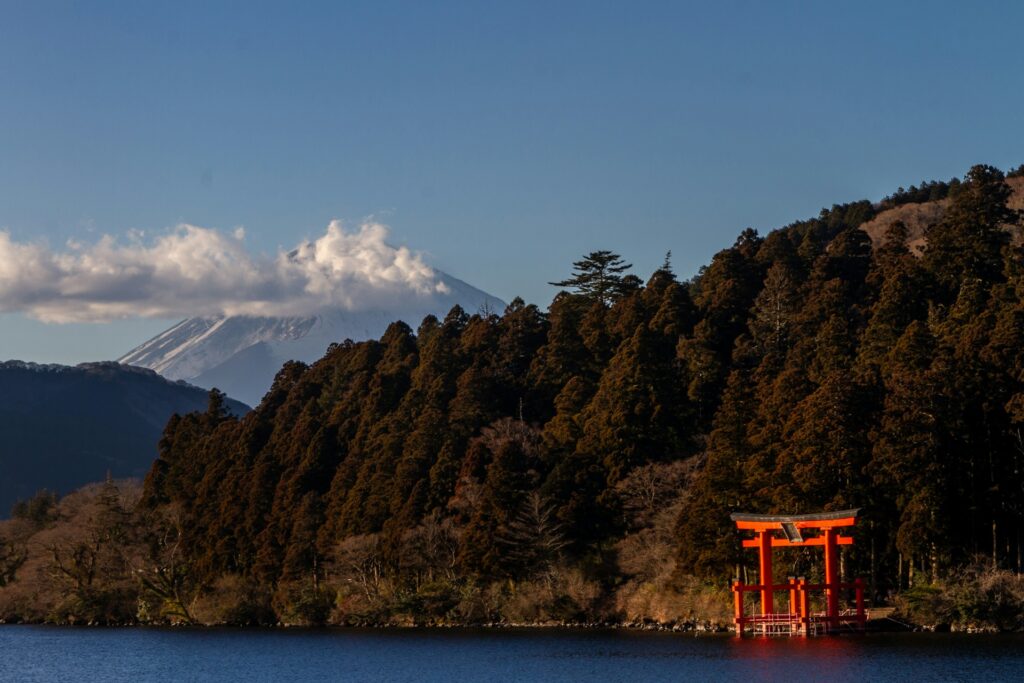
Quick Answer — Is a Hakone Half Day Worth It?
Yes, a Hakone half day from Tokyo is worth it — but only if you choose one experience and skip the rest. The trip fails when you try to squeeze in the full Hakone Loop or chase multiple attractions. It works when you accept the travel time and pick one clear route.
- Choose one priority: lake views and Mt. Fuji, or art and a quick onsen. Do not attempt both.
- Do not attempt the full Hakone Loop: the classic train, cable car, ropeway, boat, and bus circuit needs a full day.
- Expect about 3 hours of round-trip train time: this leaves only about 2.5 to 3.5 hours for actual sightseeing.
- Arrive early for lake views, any time is fine for the art route: the Lake Ashi area depends on daylight and bus connections. The Open-Air Museum and onsen area are more forgiving.
- Check transport and weather before you leave Tokyo: a ropeway closure, traffic jam, or cloudy sky can collapse a short itinerary.
The simplest rule: if your priority is scenery, head straight to Lake Ashi. If you want the least stressful half day, choose the Open-Air Museum and a quick onsen near Hakone-Yumoto.
First, Accept the Time Math
Hakone is not a quick Tokyo suburb. Even the fastest train takes a real bite out of your day. Before you plan anything, understand what you are working with.
- Fastest rail option: the Odakyu Romancecar from Shinjuku to Hakone-Yumoto.
- Travel time: about 80 minutes each way in normal conditions.
- Round-trip cost: approximately ¥5,000 per person (basic fare ¥1,261 + limited express surcharge ¥1,200 each way).
- Reservation rule: the Romancecar has reserved seating only. Book in advance — do not expect to walk on, especially for morning departures and late-afternoon returns.
- What that leaves you: if your total window is about 6 hours door to door, you have roughly 2.5 to 3.5 hours of actual time in Hakone. That is enough for one focused experience, not a full sightseeing day.
If these numbers still feel acceptable, the routes below are designed to work within that window.
Two Routes at a Glance
| Decision Factor | Lake Views Route | Art & Onsen Route |
|---|---|---|
| Best for | Mt. Fuji views, Lake Ashi, iconic photos | Museum time, easier pacing, quick relaxation |
| Round-trip transport (Tokyo → Hakone → Tokyo) | ~¥5,000 per person | ~¥5,000 per person |
| Additional local costs | Bus ~¥1,050 + cruise ¥1,700 | Railway ~¥330 + museum ¥1,800–2,000 + onsen ¥1,700–2,200 |
| Minimum useful time in Hakone | About 3 hours | About 3 hours |
| Weather dependent | High — needs clear skies for Mt. Fuji | Low — museum and onsen work in any weather |
| Traffic sensitive | High — buses can get stuck near the lake on weekends | Low to medium — railway is more reliable |
| Latest realistic arrival in Hakone | Earlier is much better (aim for 10:00 AM or before) | More forgiving — works even with a midday arrival |
| Best chance of Mt. Fuji views | Yes, on a clear day (winter and spring offer the best odds) | No |
| Stress level | Higher — more moving parts | Lower — fewer transfers, less uncertainty |
Route 1: Lake Views & Pirate Ship
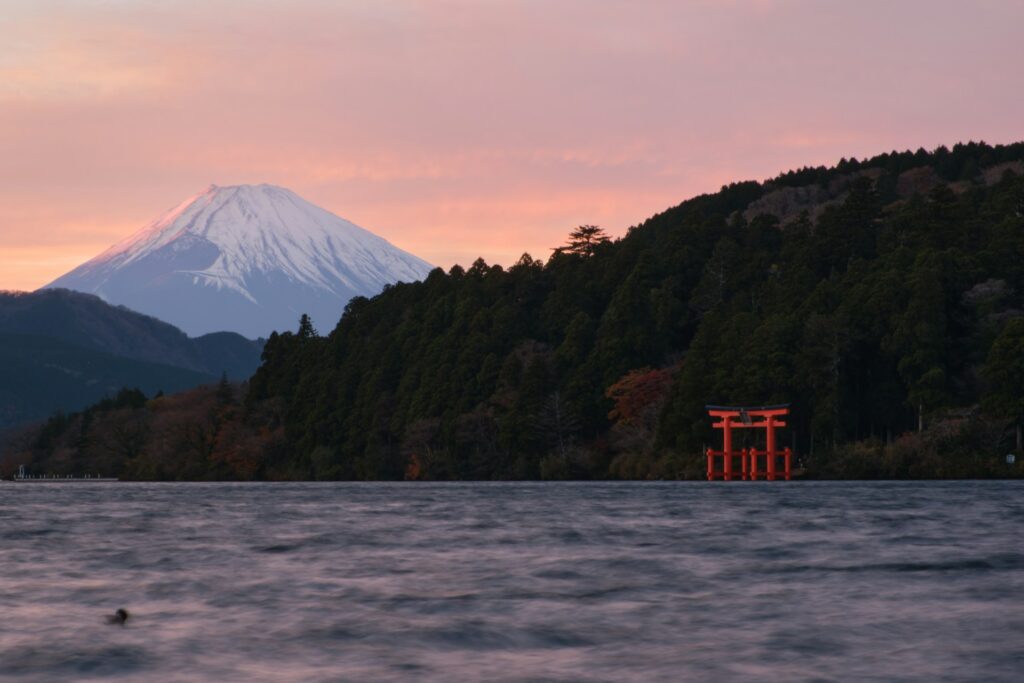
This is the right choice if your only reason for going to Hakone is to see Lake Ashi, catch a possible Mt. Fuji view, and get one of the classic postcard scenes. If the mountain itself is your priority, also check out the best Mt. Fuji photo spots before finalising your plan.
Best Fit for This Route
- Travelers who want lake scenery more than museums or hot springs.
- Visitors leaving Tokyo early enough to arrive in Hakone by 10:00 AM or earlier.
- Anyone willing to skip side stops if buses or queues slow things down.
- Photographers hoping to capture the iconic floating torii of Hakone Shrine.
Skip This Route If
- You are arriving in Hakone after midday.
- The weather forecast shows clouds or rain — Mt. Fuji visibility will be low.
- You dislike queueing, traffic uncertainty, or rigid return timing.
- Your priority is relaxation over sightseeing.
Step-by-Step Route
- Take the Romancecar to Hakone-Yumoto: reserve the earliest possible departure from Shinjuku. This is the fastest and least complicated way to start.
- Transfer to the express bus toward the lake: instead of climbing through multiple train transfers, head directly toward the Lake Ashi area. The bus from Hakone-Yumoto Station to Moto-Hakone takes about 30–40 minutes and costs roughly ¥1,050 one way.
- Focus on Moto-Hakone or Hakone-machi: once you arrive, stay near the lakefront. Walk along the shore, photograph the torii gate, and keep moving — do not queue for a long shrine visit if the line is long. For dedicated photo tips, see our guide on how to capture the iconic floating torii without the crowds.
- Ride the Hakone Sightseeing Cruise (Pirate Ship) if timing works: the 25–40 minute cruise across Lake Ashi costs ¥1,700 per adult one way (as of early 2026). It is one of the fastest ways to make a short visit feel memorable — but only add it if you have the buffer.
- Return before you chase extras: work backward from your reserved return train. Treat any extra stop as optional. If your return is fixed, protect it first.
Cost Snapshot
- Romancecar round trip: ~¥5,000 per person
- Hakone-Yumoto → Moto-Hakone bus: ~¥1,050 one way
- Hakone Sightseeing Cruise: ¥1,700 per adult one way
- Estimated total per person (transport + one cruise): ~¥7,700–¥8,800 depending on return transport choice
- Hakone Free Pass comparison: a 2-day Freepass from Shinjuku costs ¥7,100 but includes round-trip transport and unlimited local rides. For this route, individual tickets often come close to the pass price — check the official Hakone Freepass page to compare your specific combination.
Timing Notes
- Bus time matters more than map distance: weekend traffic near the lake can turn a 30-minute bus ride into 50 minutes. Add buffer.
- The cruise schedule varies by season: generally runs from 9:00 AM to 5:00 PM, but confirm the latest cruise hours on the official site before committing.
- Do not plan this route around the full shrine queue: if the torii photo line is long, take your pictures from the side and keep moving.
- Mt. Fuji is never guaranteed: winter and early spring (December to March) offer the clearest skies and highest visibility. Summer and rainy season (June to July) are the least reliable.
- Your return Romancecar is reserved: if you miss it, you may need to take the slower local train or wait for the next limited express with available seats.
If your half day depends on seeing Lake Ashi and possibly Mt. Fuji, this route works — provided you start early and keep the plan simple. If your half day depends on staying relaxed and avoiding transport stress, the art and onsen route below is usually the better call.
Route 2: Art & Onsen Reset
This is the smarter half-day plan for travelers who want Hakone to feel enjoyable rather than rushed. It trades postcard lake views for a route that is easier to control and less dependent on weather, traffic, and timing.
Best Fit for This Route
- Travelers arriving in Hakone after 11:00 AM or midday.
- Visitors who prefer culture and a calm finish over transport-heavy sightseeing.
- Anyone visiting on a weekend or public holiday when lake-area traffic is worse.
- Travelers looking for the least stressful half-day option from Tokyo.
- Families — the Open-Air Museum is stroller-friendly and has interactive exhibits for children.
Skip This Route If
- Your main goal is seeing Mt. Fuji from Lake Ashi.
- You want the pirate ship cruise or lakeside photos more than anything else.
- You are not interested in modern art, sculpture, or hot springs.
Step-by-Step Route
- Take the Romancecar to Hakone-Yumoto: a mid-morning departure works well here. You do not need to rush.
- Ride the Hakone Tozan Railway to Chokoku-no-Mori Station: the ride takes about 15 minutes and costs roughly ¥330 one way. This is the same scenic mountain train used in the full Hakone Loop — you still get a taste of it without committing to the entire circuit.
- Spend 90 to 120 minutes at the Hakone Open-Air Museum: this is enough time to enjoy the sculpture garden, the Picasso Pavilion, and the foot bath without rushing. The museum is open 9:00 AM to 5:00 PM (last entry at 4:30 PM), and admission is ¥2,000 at the gate or ¥1,800 if purchased online via the official museum website.
- Take the Tozan Railway back to Hakone-Yumoto: another 15-minute ride, same route you just came from.
- Head to Hakone Yuryo for a quick onsen: a free shuttle bus runs from Hakone-Yumoto Station every 10 to 15 minutes. Day-use admission starts at ¥1,700 on weekdays and ¥2,000 on weekends and holidays (as of early 2026). Check the official Hakone Yuryo page for the latest hours and pricing.
- Return to the station with time in hand: grab a snack or bento and board your reserved train back to Tokyo.
Cost Snapshot
- Romancecar round trip: ~¥5,000 per person
- Tozan Railway round trip (Hakone-Yumoto ↔ Chokoku-no-Mori): ~¥660
- Open-Air Museum: ¥2,000 gate / ¥1,800 online
- Hakone Yuryo day onsen: ¥1,700 weekday / ¥2,000–2,200 weekend
- Estimated total per person: ~¥7,400–¥7,900
- Hakone Free Pass note: a 2-day Freepass from Shinjuku (¥7,100) covers round-trip transport and unlimited local rides. If you add the museum (not included), your total with the pass would be higher than individual tickets. For this specific route, point-to-point tickets are usually the better deal.
Timing Notes
- Open-Air Museum closes at 5:00 PM (last entry 4:30 PM). Aim to arrive at the museum by 1:30 PM at the latest to give yourself a full 90 minutes.
- Online tickets save time and money: ¥200 cheaper than the gate price, and you skip the ticket counter queue.
- The museum has free coin lockers (large enough for a carry-on suitcase) and free stroller rental — useful if you are traveling with luggage or young children.
- Hakone Yuryo closes at 8:00 PM on weekdays and 9:00 PM on weekends: even with a later start, this route usually leaves you enough time for a soak before catching your train.
- Onsen rules to know: guests with tattoos are welcome at Hakone Yuryo (no restrictions). Children in diapers or under school age may not use the main bath — private family baths are available instead.
If you want a Hakone half day that still feels relaxing, this route usually gives you the best return on your time — especially if the weather is uncertain or you are starting later in the day.
When Your Window Is Even Shorter — Ultra-Short Fallback Plan
If your actual sightseeing window in Hakone is closer to 2 hours or less, do not force either full route above. Simplify further:
- If you arrive early enough for one paid attraction: choose the Hakone Open-Air Museum only (skip the onsen). It is the most time-efficient experience in Hakone for a short visit.
- If your only priority is one iconic lake view: head straight to the Lake Ashi area by bus, take a short walk along the shore, photograph the torii from the side if the queue is long, and return without adding the cruise or shrine visit.
- If you arrive after 2:00 PM: stay closer to Hakone-Yumoto — explore the station area shops, visit a nearby onsen, or skip Hakone entirely and save the full experience for another trip.
- If it is raining: the Open-Air Museum has indoor galleries and the Picasso Pavilion. The onsen route also works well in rain. Avoid the Lake Views route — the cruise may be cancelled and Mount Fuji will be invisible.
The less time you have, the more dangerous it becomes to chase multiple “must-see” spots. A short Hakone stop only feels worth it when the plan stays brutally simple.
Hakone Half Day FAQ
How much does a Romancecar round trip cost?
Approximately ¥5,000 per person — about ¥1,261 for the basic fare plus ¥1,200 for the limited express surcharge each way. Fares can vary slightly, so check the latest price when booking on the official Odakyu website.
Is the Hakone Freepass worth it for a half-day trip?
Usually not for the tight itineraries in this article. A 2-day Hakone Freepass from Shinjuku costs ¥7,100 — very close to what you would spend on individual tickets for either route above. However, the Freepass works best when you use multiple transport modes (train, cable car, ropeway, bus, boat) throughout a longer visit. For a single-route half day, point-to-point tickets are simpler and often cost about the same or less.
Do I need to book the Romancecar in advance?
Yes. The Odakyu Romancecar has reserved seating only, and popular departures (morning trains out of Shinjuku, late-afternoon returns from Hakone-Yumoto) sell out, especially on weekends and during peak travel seasons. Book at least a few days ahead if possible.
Which season has the best chance of seeing Mt. Fuji?
Winter (December to February) and early spring (March) offer the clearest skies and highest visibility. Summer and the rainy season (June to mid-July) are the least reliable — the mountain is often clouded over. Even in clear seasons, morning hours are better than afternoon.
Also check the Mt. Fuji visibility forecast before you go. It is updated daily and gives you a realistic chance estimate.
What closes early in Hakone?
Most attractions wind down earlier than first-time visitors expect. The Open-Air Museum closes at 5:00 PM (last entry 4:30 PM). The sightseeing cruise stops around 5:00 PM depending on the season. Ropeway and cable car services also stop in the late afternoon. Always check closing times before planning your return.
Can I do Lake Ashi, the ropeway, the museum, and an onsen in one half day?
No. A realistic half-day itinerary from Tokyo cannot cover all of those. The transport connections alone eat too much time, and one delay can collapse the entire plan. Pick one route and protect it.
Is Hakone still worth visiting for only a few hours?
Yes — if you treat it as a focused short escape rather than a complete sightseeing day. Pick one experience, protect your return train, and the trip can still feel worthwhile. Many travelers leave wishing they had more time, but few regret going at all.
DIY vs. Guided Tour — Which Makes More Sense?
Some travelers searching for a Hakone half day are really trying to solve a different problem: they want to see both Mt. Fuji viewpoints and Hakone highlights without spending the whole day figuring out transfers.
If that sounds like you, a guided tour is worth considering — not as a half-day fix, but as a different strategy entirely.
- Choose DIY if: you only have a few hours, you are happy focusing on one area (lake views OR art), and you do not mind navigating trains and local transport yourself.
- Choose a guided tour if: your real goal is to cover Mt. Fuji viewpoints, Lake Ashi, and Hakone highlights in one organised full day from Tokyo. Tours bundle transport, entry fees, and guiding into one package — you trade flexibility for efficiency.
- Do not choose a tour expecting a true half-day return: most Mt. Fuji and Hakone tours run 10 to 12 hours. Tours are better for full-day coverage, not for squeezing Hakone into a short afternoon.
A half-day DIY trip works best when you narrow your ambitions. A guided tour works best when you accept that seeing more requires giving the destination a full day.
If your travel dates are already fixed and you want to compare the latest start times, inclusions, and cancellation rules, read our detailed review here: Is This Mt. Fuji & Hakone Day Tour from Tokyo Really Worth It?
Final Verdict
A Hakone half day from Tokyo is possible — but only when you stop measuring success by how many attractions you can cram in. The trip works when you choose one route, accept the travel time, and leave yourself enough buffer to get back to Tokyo without stress.
Choose the Lake Views route if your main goal is scenery and you can arrive in Hakone by 10:00 AM or earlier. This route offers the classic Hakone experience — Lake Ashi, the sightseeing cruise, and a possible Mt. Fuji view — but it comes with higher weather and traffic risk.
Choose the Art and Onsen route if you prefer the more reliable, lower-stress option that works in any weather and with a later start. This is the better choice for families, rainy days, and travelers who want Hakone to feel relaxing rather than rushed.
Choose neither and save it for another trip if you have less than 2 hours in Hakone, arrive after 2:00 PM, or are visiting on a day with heavy rain and no flexibility. Hakone is worth a proper visit — forcing it into too short a window can leave a worse impression than skipping it entirely.
If what you really want is to combine Hakone with Mt. Fuji highlights efficiently, a full-day guided option will almost always make more sense than forcing a rushed half-day plan. Read our detailed review to see if a tour fits your schedule and budget.

Hi, I’m Kai. I’m a Tokyo-based travel writer, tourism industry insider, and the author of a published guidebook for international visitors to Japan. With over 10 years of professional experience at a leading Japanese tourism company, my mission is to help you skip the tourist traps and navigate Japan’s best destinations like a local. I believe the perfect day trip is like a traditional kaiseki meal: a beautiful balance of precise planning and unforgettable seasonal discovery. When I’m not out conducting field research, you’ll usually find me drafting new itineraries with one of my favorite fountain pens!