
On a first trip to Ishigaki, the real question isn’t what to see — it’s what to prioritize. With two to five nights, you can’t do everything, and you don’t need to. The short version: start with Kabira Bay, add one ocean experience, fit in a viewpoint stop like Tamatorizaki Observatory, spend a little time in downtown Ishigaki — then add Taketomi or Iriomote only if you have days to spare.
If you want to cover several main-island highlights without driving or stitching together bus times, check the current route, start times, and availability for this full-day Ishigaki island tour. It combines transport with several of the stops first-time visitors are likely to prioritize, making it most useful for a one-day sightseeing block.
What are the best things to do in Ishigaki on a first trip?
Ishigaki’s highlights break down into ten experiences, ranked below. None of them require you to be an experienced diver or a confident driver — but each one suits a different traveler, so the table is followed by a simple way to decide what to keep and what to cut.
| Experience | Verdict at a glance | Time needed | Car needed? | Weather risk | Book ahead? |
|---|---|---|---|---|---|
| Kabira Bay lookout | Must do | 30–60 min | Car useful; bus works | Sunny day helps | No |
| Kabira glass-bottom boat | Worth it if you want to see underwater life | ~30 min ride | Same access as above | Sea state; can be suspended | Not required; online booking earns a discount |
| Tamatorizaki Observatory | Worth a stop | 20–30 min | Car or bus | Clear day helps | No |
| One ocean activity (snorkel / SUP / kayak) | Choose one | Half day | Tour pickup or car | High | Yes in peak season |
| Yonehara Beach | Worth it for confident swimmers | 1–2 hrs | Car or taxi best | High | No |
| Cape Hirakubozaki | Skip if you’re short on time | 30–45 min | Car only | Clear day | No |
| Euglena Mall & Ishigaki City Public Market | Do it, keep it short | 1–1.5 hrs | Walkable from downtown | Low | No |
| Taketomi Island day trip | Worth it if you have an extra day | Half to full day | Ferry (~15 min) | High | Ferry, yes |
| Iriomote Island day trip | Choose if you want adventure | Full day | Ferry (~50 min) | Very high | Yes |
| Stargazing | Worth it on clear nights | Evening | Car or tour | Clear skies + moon phase | Tour, yes |
Each experience below gets a Must do, Worth it if, or Skip if verdict, so you can adjust the list to your own schedule, transport, and comfort level. The table shows why most first-time visitors end up renting a car or joining a day tour — the island’s best sights are spread out — but it’s still possible to see a good share of them without one.
1. See Kabira Bay — Ishigaki’s one true must-see
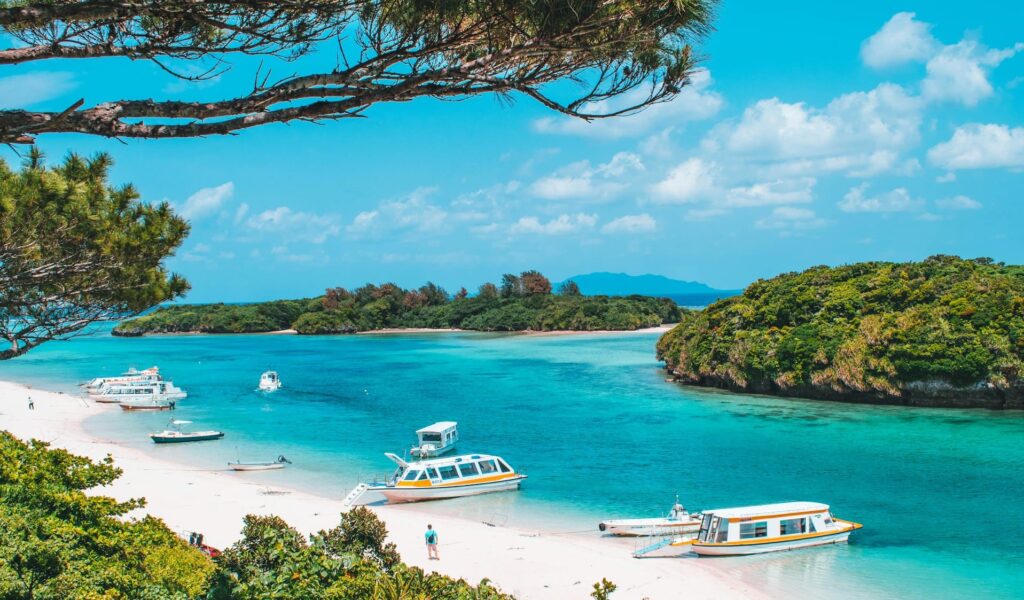
Kabira Bay is the image most people picture when they think of Ishigaki: a calm, emerald bay ringed by small green islands, with a row of wooden fishing boats moored in the shallows. It’s the one place I’d call non-negotiable on a first visit, for a simple reason — there is no other view quite like it on the island, and it costs nothing.
The free Kabira Park Observatory, a short walk above the bay, gives you the classic postcard angle over the water and the islands. For practical details on parking and bus routes, check our detailed guide on getting to Kabira Bay. The bay itself is closed to swimming: it’s a protected area used for black pearl cultivation, so the water stays pristine and the boats stay out of the pearl beds. That’s also why the glass-bottom boat exists — it’s the only way to get out onto the water itself.
Kai’s tip: Kabira is at its calmest in the first hour or two after the boats start running at 9 a.m. Later in the morning, tour groups and school trips arrive, and you’ll share the lookout and the boarding area with a crowd. If you’re prone to seasickness, take motion-sickness medication about 30 minutes before boarding — the boats are stable and the bay is sheltered, but on a choppy day the ride can still catch people out.
Is the Kabira Bay glass-bottom boat worth it?
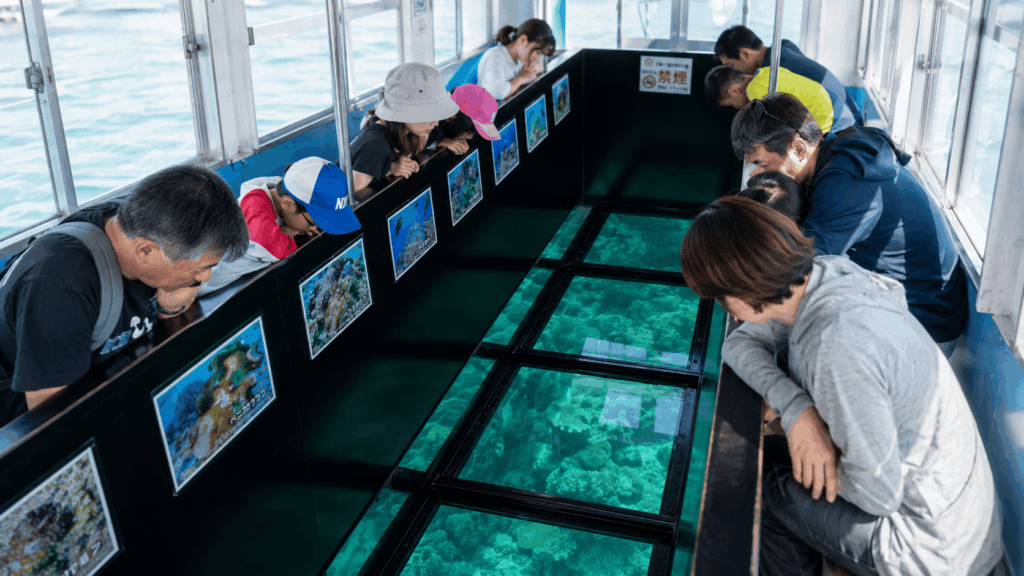
The glass-bottom boat is a roughly 30-minute ride over coral and tropical fish, with boats departing every 15–30 minutes between about 9 a.m. and 5 p.m. year-round. Tickets run around 1,300–1,700 yen per adult (children roughly half), and you can usually board without a reservation — though booking online typically earns a small discount. On rough or windy days, sailings can be suspended, so it’s worth checking the operator’s status before you travel out.
What you see depends on the day: healthy coral, plenty of reef fish, and — if you’re lucky — sea turtles and giant clams. The ride suits everyone from young children to seniors, and it’s also the fallback when the weather is too rough for swimming but the bay itself is still rideable.
Must do: Families with young children, anyone who can’t or doesn’t want to swim, and travelers who want to actually get out on Kabira’s water rather than only photograph it.
Worth it if: You’re curious about the underwater life and have 30 minutes to spare — the price is low and the boats run constantly, so the time cost is small.
Skip if: You’re prone to seasickness, you’re on a very tight schedule, or the view from the lookout already satisfies you. The mistake I see first-time visitors make is either skipping the boat entirely and feeling they missed something, or treating it as a can’t-miss event and getting frustrated by a short wait. It’s a pleasant, low-stakes ride — worth doing, not worth stressing over.
If you’re getting to Kabira Bay independently and only want the boat, check current glass-bottom boat times, availability, and booking conditions on Klook before you go.
2. Stop at Tamatorizaki Observatory for one of Ishigaki’s easiest views
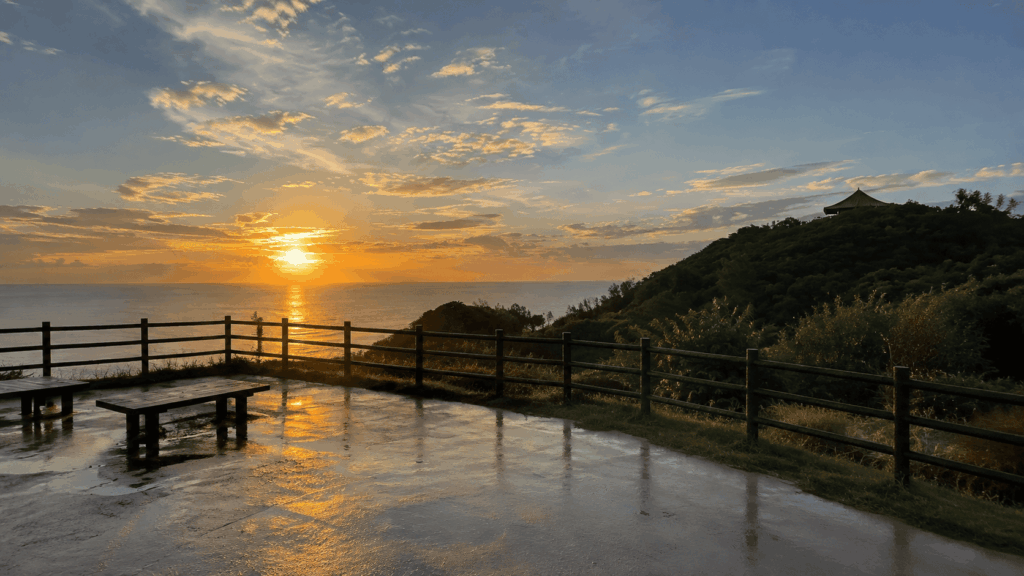
Tamatorizaki Observatory, on the island’s northern half, is the easiest big view on Ishigaki. From the free parking lot it’s about a three-minute walk up to the deck, where you can see both the Pacific Ocean and the East China Sea at once — a rare double view that the island’s flat southern coast can’t offer. There are toilets and vending machines at the lot, and the walkway is kept in good condition, so it’s an easy stop for any traveler.
Plan for 20–30 minutes on site. It’s a viewpoint, not a destination: the value is the scenery and the photo, not the time you spend there. Because it sits along the road between Kabira and the far north of the island, most visitors pair it with Kabira in the same morning or afternoon.
Kai’s tip: Aim to reach Tamatorizaki at least an hour before sunset. The light over both oceans is at its best in late afternoon, and — more practically — you want to be back at the parking lot before dark. The walk from the deck is short, but the road and trail are unlit, and the area is known for Sakishima habu, a venomous snake that becomes active after sunset. It’s not a reason to avoid the spot; it’s a reason to visit it in daylight and save nighttime exploring for well-lit downtown streets.
Must do: Anyone driving or bussing past on the way north — the time cost is almost nothing for the payoff.
Worth it if: You want one elevated panorama of Ishigaki without a long hike.
Skip if: You have only one day on the island and are choosing between Kabira and a full northern drive — Kabira wins, and Tamatorizaki can be saved for a future trip.
3. Pick one ocean experience — don’t just look at the sea
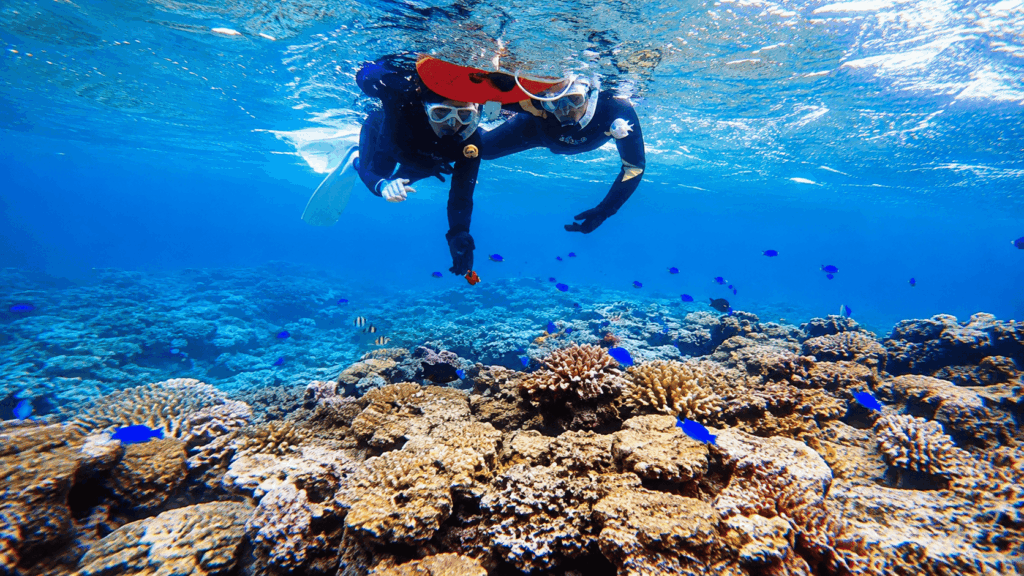
Ishigaki’s water is the whole point of the island, and the travelers who enjoy it most do more than photograph it. A single half-day activity — guided snorkeling, stand-up paddleboarding, or kayaking — turns the trip from a sightseeing loop into an actual island experience. You don’t need multiple activities; one well-chosen one is usually enough.
Guided snorkeling is the most popular option and the easiest to enjoy safely, with tours running from beaches and marinas around the island. SUP and kayak tours are gentler on the body and work well for beginners and families, including on days when the open sea is too rough for swimming. Most operators include gear, a wetsuit or rash guard, and a guide who knows the local currents — which matters more here than on Okinawa’s main island, where patrols and marked swimming areas are more common.
Booking in advance is the norm in peak season (roughly July to September), when good operators fill up days ahead. On windy days, tours shift location or cancel entirely, so build your schedule loosely and let the weather decide which day gets the water activity.
Must do: Anyone who came to Ishigaki for the sea — this is the single best use of a half day on the island.
Worth it if: You’re a nervous or beginner snorkeler; a guided tour removes most of the risk that comes with entering the water on your own.
Skip if: You don’t swim, you’re prone to seasickness, or strong winds are forecast for your whole stay.
4. Visit Yonehara Beach — but understand the safety trade-off
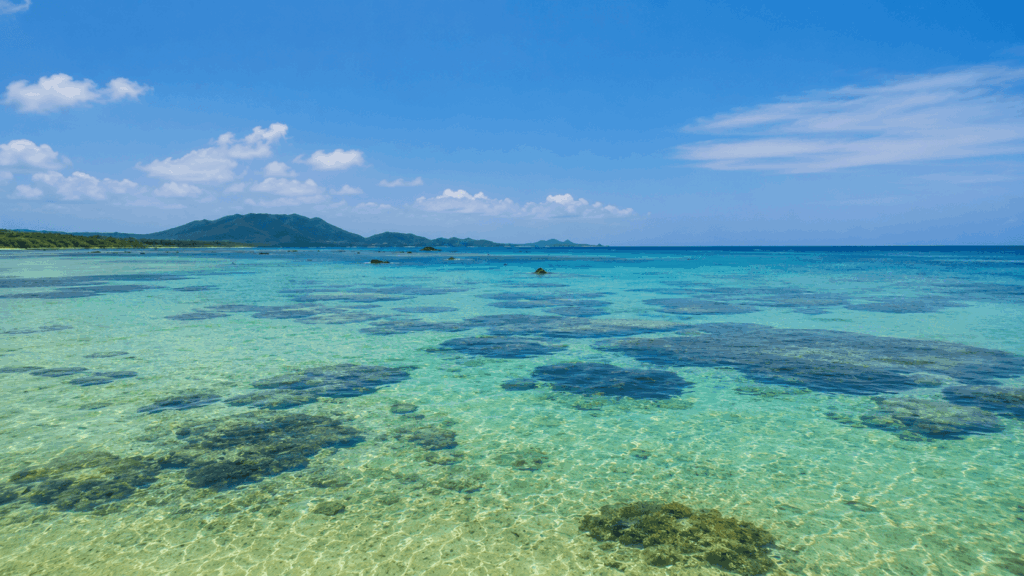
Yonehara Beach, on the west coast, is Ishigaki’s most famous free snorkeling beach, and for good reason: in the shallow water near the shore you can see reef fish and coral without swimming far out. That accessibility is real — recent visitors consistently describe easy, rewarding snorkeling close to the beach.
The trade-off is that Yonehara has no lifeguard and no swimming net. There’s no one watching the water, and the reef channels can create strong currents (rip currents) that pull even good swimmers away from shore. The official advice is straightforward: stay in the shallow area, watch the conditions before you enter, never snorkel alone, and wear reef shoes — the coral is sharp and standing on it damages the reef.
So the decision is about confidence, not about the beach itself. If you’re a comfortable swimmer with a buddy, Yonehara is a fantastic free morning. If you’re a beginner, traveling solo, or unsure about currents, a guided snorkeling tour is the safer way to see the same underwater world — the guide knows where the channels are and keeps you inside the safe zone.
Must do: Experienced snorkelers who want Ishigaki’s best free reef access.
Worth it if: You can swim confidently, you’re not alone, and you check the conditions before entering.
Skip if: You’re a beginner, you’re on your own, or the sea is rough — this is one of the few places on the island where a little caution genuinely changes the experience.
5. Drive north to Cape Hirakubozaki — only if you have the time
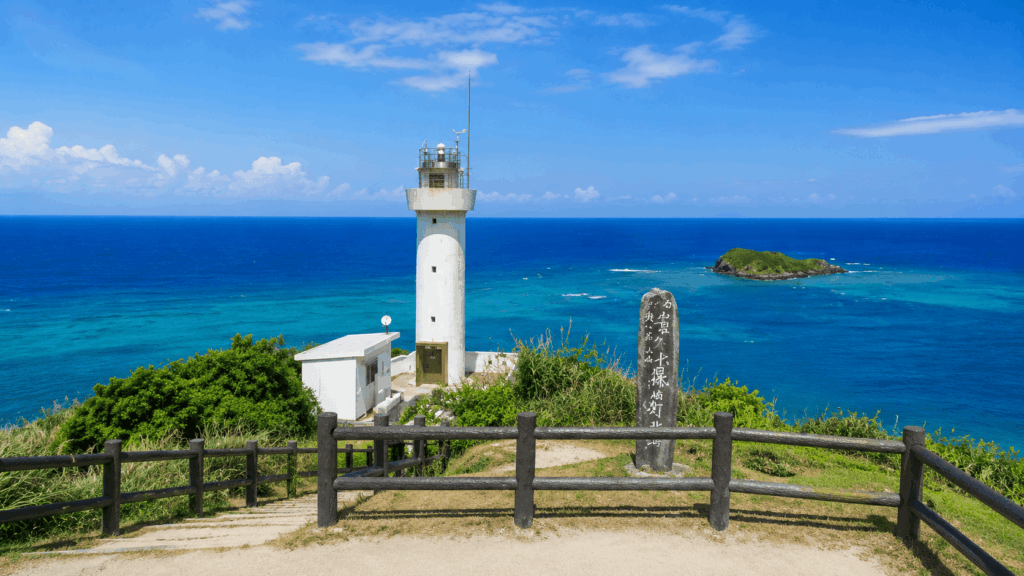
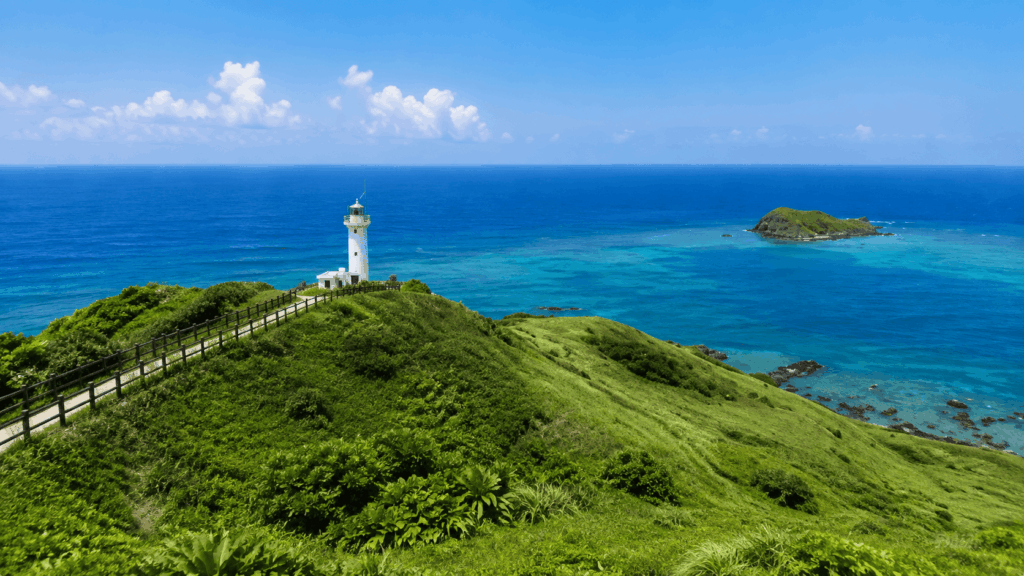
Cape Hirakubozaki, Japan’s westernmost point, is a genuine end-of-the-road experience: a grassy headland with a white lighthouse, strong wind, and nothing between you and Taiwan except open sea. The views are dramatic and the sense of being at a real edge of the country is hard to beat.
What holds it back is logistics. The cape sits at the far northern tip of the island, roughly 40–60 minutes by car from downtown Ishigaki each way, and public transport there is impractical. For most first-time visitors, Tamatorizaki Observatory gives you 80 percent of the visual payoff for a fraction of the driving — which is why I’d rate the cape as a nice-to-have rather than a must-see.
Must do: Drivers who love coastal roads and don’t mind the round trip — the road north of Tamatorizaki is one of the island’s best drives.
Worth it if: You’re already heading north for Tamatorizaki and have an extra 30–45 minutes.
Skip if: You have two days or fewer, or you’re relying on public transport.
6. Save Euglena Mall and Ishigaki City Public Market for late afternoon
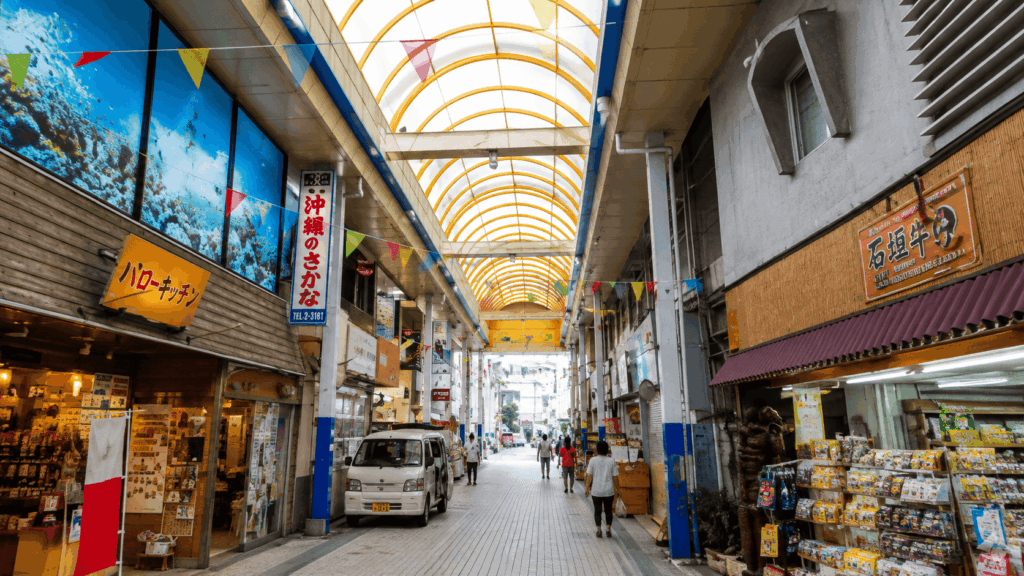
Downtown Ishigaki isn’t a sightseeing district — it’s a working town center, and it’s best treated as a practical, atmospheric stop rather than a half-day attraction. The two places worth your time sit next to each other: Euglena Mall, the covered shopping arcade, and Ishigaki City Public Market, the working fish-and-produce market that reopened after renovation a few years ago.
Ishigaki City Public Market is open daily from around 9 a.m. to 8 p.m. (closed on the second and fourth Sundays), with vendors selling fresh fish, fruit, and local produce. Upstairs, the Ishigaki City Local Products Center carries more than 1,000 regional items — snacks, salt, crafts, shisa figurines, and gifts — under one roof, which makes it the fastest place on the island to finish souvenir shopping.
Kai’s tip: Don’t make a special trip downtown in the morning — you’ll be back before dinner anyway, and the market is at its liveliest in the late afternoon. When I take first-time visitors through, we spend about an hour total: wander the market stalls, let everyone buy snacks, then head upstairs to the products center and finish all souvenir shopping in one pass. It’s the kind of errand that eats a whole morning if you treat it as an attraction, and fits neatly into 60–90 minutes if you treat it as an errand.
Must do: Anyone who wants to buy souvenirs, try local fruit, or see a real Japanese market — it’s free and takes about an hour.
Worth it if: You’re staying near downtown or passing through on your way to dinner.
Skip if: You’re on a two-day itinerary and would rather spend every daylight hour outdoors.
7. Add Taketomi Island for an easy island escape
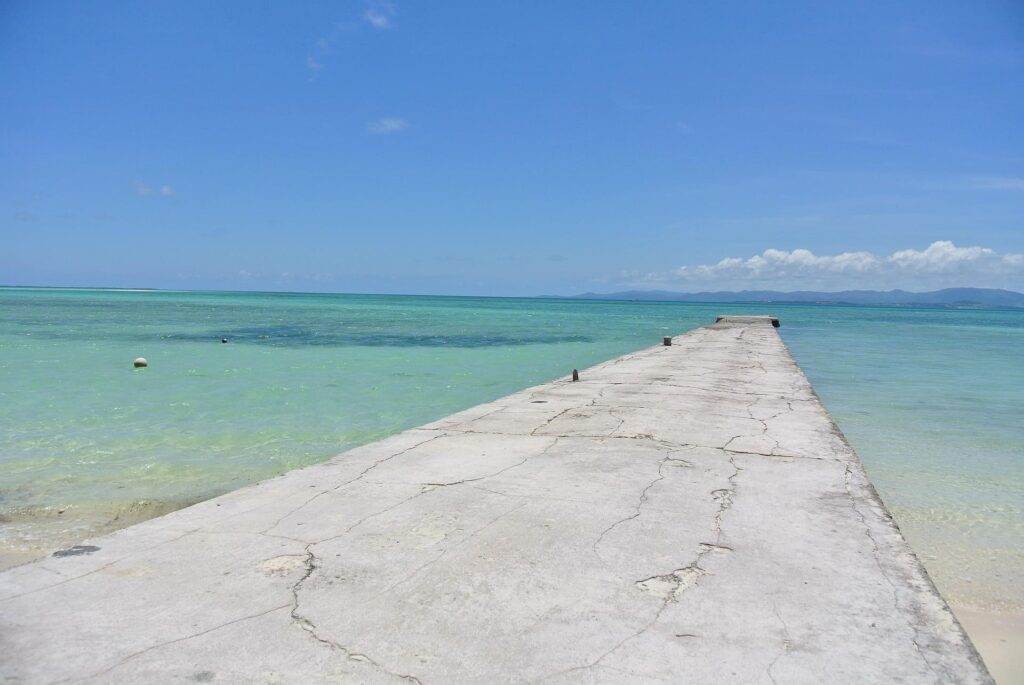
Taketomi Island is the classic short hop from Ishigaki: a high-speed ferry from the Euglena Ishigaki Port Remote Island Terminal reaches it in about 15 minutes, and the island’s sand roads, traditional Okinawan houses, and water-buffalo cart rides feel like a step back in time. You can see the main sights — the preserved village, the beach, the small shrine — in a relaxed half day, or take it slowly over a full day if you want to add cycling or a longer beach stop.
Because it’s so close, Taketomi is the easiest way to add a second island to your trip without sacrificing your Ishigaki time. For tips on cycling and exploring the village, see our day trip guide to Taketomi Island. The main practical notes: ferry schedules can shift with weather, and you’ll likely need to confirm the day’s sailing in the morning, and the island is best explored by foot, bicycle, or buffalo cart — rental cars don’t cross on the ferry.
Must do: Travelers with three or more days who want an authentic, low-effort taste of the Yaeyama islands.
Worth it if: You enjoy traditional villages and don’t mind a half day away from Ishigaki.
Skip if: Your main goal is swimming and snorkeling — Ishigaki’s own beaches and tours cover that better.
8. Choose Iriomote instead if adventure is the priority
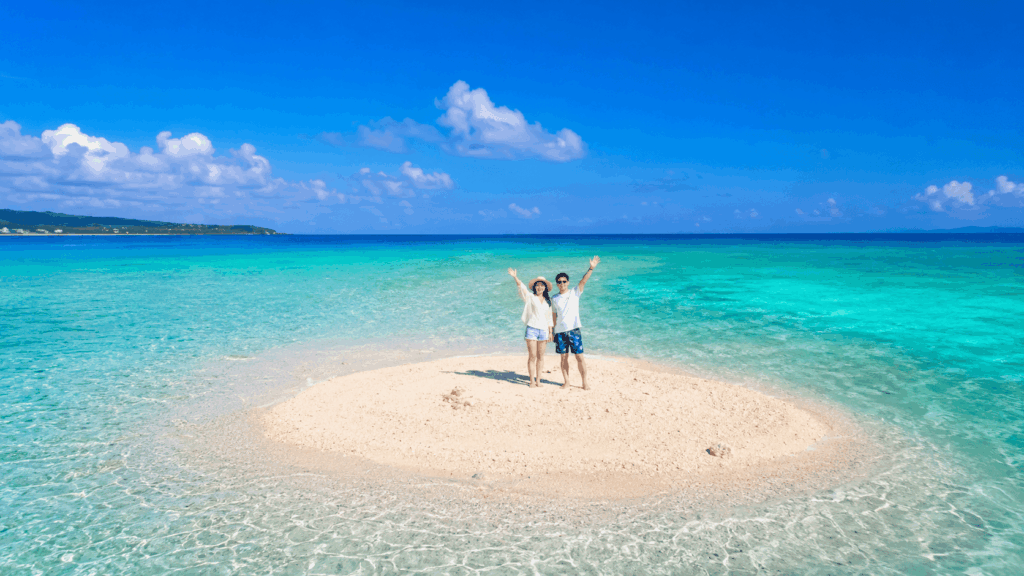
Iriomote Island is the opposite of Taketomi: wild, mountainous, and dominated by the Iriomote-Ishigaki National Park, which covers most of the island. A day trip from Ishigaki is possible but demanding — the high-speed ferry takes around 50 minutes each way, and you’ll typically choose one activity, such as a mangrove kayak tour or a jungle trek, rather than trying to see everything.
Iriomote rewards travelers who want an active, nature-first day: mangrove paddling, waterfall hikes, and dense subtropical forest. It’s less suited to travelers who want to relax, travelers on a tight schedule, or anyone uncomfortable with a full day of outdoor activity in heat and humidity. Weather cancels or reshuffles tours here more often than anywhere else on the list, so keep the day flexible.
Must do: Nature lovers and active travelers with at least three full days on Ishigaki.
Worth it if: You’ve already covered Kabira, a beach, and downtown and want a genuinely wild day.
Skip if: Your stay is two days or less — Iriomote will eat an entire day and leave you rushing the rest of your itinerary.
9. Go stargazing if the sky cooperates

The Iriomote-Ishigaki National Park was certified in 2018 as Japan’s first International Dark Sky Park, and the islands’ lack of urban glow makes them one of the best places in the country to see the Milky Way. You don’t need any equipment — a clear night away from downtown lights is enough, and a star-viewing tour adds a guide who knows the best viewing spots and can work around the weather.
Two honest caveats: the sky needs to be clear, and the moon phase matters — a bright moon washes out faint stars. Check the forecast and moon phase before you commit to a late night. And follow the daylight rule from the Tamatorizaki section: stargazing spots on the island are dark, so go with a tour or a car, and never head out on foot at night to remote viewpoints.
Must do: Anyone who’s never seen a truly dark sky — the Yaeyama night sky is one of the trip’s best free experiences.
Worth it if: You have a clear night and a way to get away from downtown lights.
Skip if: Clouds or a full moon are forecast — save the late night for a clearer stay.
Do you need a rental car in Ishigaki?
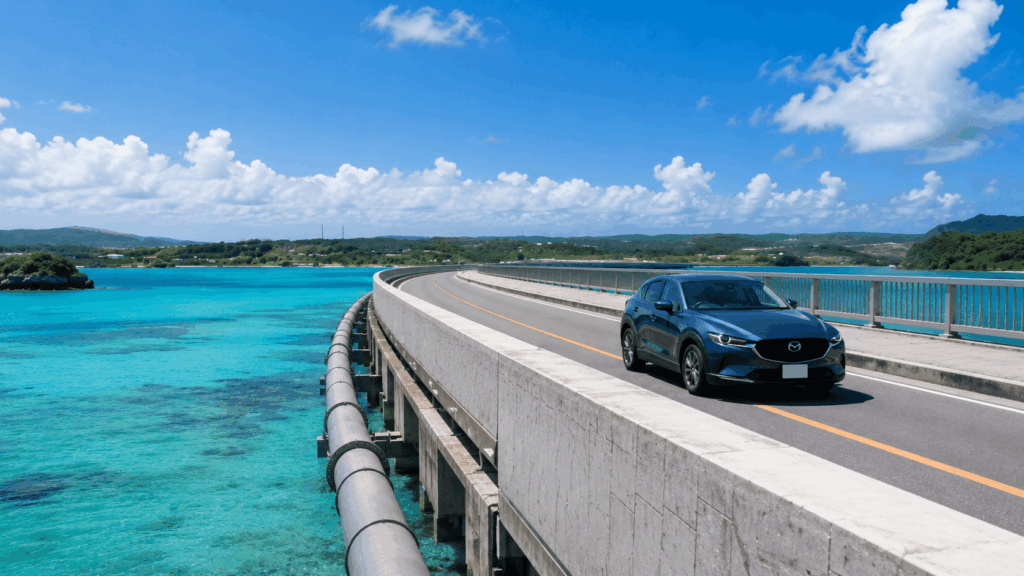
This is the question I hear most from first-time visitors, and the honest answer is: a car makes Ishigaki dramatically easier, but it’s not the only way to see it. The island’s headline sights — Kabira Bay, Tamatorizaki, the beaches — are spread across the north and west, and most of them are fastest to reach by car. Driving here is straightforward: roads are in good condition, traffic is light outside downtown, and rental cars (including foreign-driver-friendly services) are available near the airport and in town.
If you’d rather not drive, a full-day island tour covers several of the headline sights in one day — typically Kabira Bay with its glass-bottom boat, the western-coast lighthouse viewpoint, the observatory with views over both oceans, and a downtown stop for lunch and shopping. It removes the route planning and parking entirely, at the cost of some freedom. For a deeper comparison of your options, read our guide to getting around Ishigaki without a car.
| Option | Cost feel | Freedom | Planning effort | Best for |
|---|---|---|---|---|
| Rental car | Rental + fuel + parking | Highest — go where you want, when you want | You handle routes, parking, and driving on the left | Travelers who enjoy driving and want flexibility |
| Full-day island tour | Single ticket, includes transport | Medium — fixed route, set stops | Low — book once, show up | Non-drivers, solo travelers, short stays |
| Public bus (Azuma Bus) | Cheapest per ride; 1-day pass around 1,000 yen | Low — limited frequency, especially to the north | High — check timetables carefully | Budget travelers with flexible days |
| Taxis | Expensive for long trips | High per trip | Low | Short hops, rainy days, groups splitting fares |
If you want the main sights but don’t want to spend the day checking bus times or driving on the left, this is the one booking that best matches that trade-off.
Why I’d book this one
- Recent verified reviews mention helpful guiding and clear explanations, which matters when you’re trying to understand the island rather than just move between photo stops.
- The itinerary brings transport, Kabira Bay’s glass-bottom boat, and several scenic stops into one day, reducing the route planning that makes car-free sightseeing awkward.
- The booking page lists flexible cancellation and payment options; check the current terms for your travel date before finalising.
The Azuma Bus does reach Kabira Bay (around 770 yen one way from downtown, about 38–53 minutes, roughly hourly) and some northern stops, but the schedule thins out, and a day with several stops means building your day around bus times. Taxis work for point-to-point trips — the airport publishes reference fares around 3,600 yen to Tamatorizaki and around 40 minutes to Kabira Park — but they add up quickly.
One pattern that works well in practice is one anchored route per day. Kabira Bay, Tamatorizaki, and the downtown market sit roughly on the same line — north out, back through town — so they combine naturally into a single day, whether by car, bus, or tour. What doesn’t work is trying to mix a northern route with a southern beach and a ferry departure in one day; the driving and waiting time quietly eats your afternoon. Pick one area per day and let everything else wait.
How many days do you need in Ishigaki?
For a first visit, plan on at least two full days, and three is noticeably more comfortable. With two days, choose: one day for Kabira Bay and a northern drive (Tamatorizaki, and Cape Hirakubozaki if you have time), and one day for an ocean activity or a beach morning plus downtown in the late afternoon. Three days lets you add Taketomi Island as an easy half- or full-day trip, or swap one day for Iriomote. Four to five days is enough to combine everything above without rushing. To see how to piece these together, check out our 3–5 day Ishigaki itineraries.
The main mistake I see in trip plans is overstuffing: trying to fit Kabira, a snorkeling tour, Taketomi, and a northern drive into two days. Each of those blocks is a half day or more by the time you factor in travel, and the island’s weather is fickle enough that you want slack in the schedule — a windy morning that cancels your boat ride is only a problem if the whole day was already full.
What to do in Ishigaki when it rains
Rain doesn’t usually ruin a full day here — it passes, and the island’s weather changes fast — but you’ll want a plan for the hours it does rain. The most reliable indoor option is Ishigaki Stalactite Cave, a limestone cave about 20 minutes from downtown with a 660-meter lit walkway (open around 9 a.m. to 6:30 p.m., adults about 1,200 yen, children about 600 yen). It’s genuinely atmospheric and popular with families.
Euglena Mall and Ishigaki City Public Market double as a dry-hour plan since they’re under cover and close to downtown restaurants and cafes. If the weather is bad at sea, swap your snorkeling or boat day for a driving day — the northern viewpoints are often still fine in patchy weather, while the open water stays rough.
Our recommended priorities for a first Ishigaki trip
If you only remember one thing from this guide: don’t try to see all of Ishigaki. A short, well-chosen list beats a long, rushed one every time, especially with weather in the equation.
- Kabira Bay — the view and the glass-bottom boat. Non-negotiable.
- One ocean activity — guided snorkeling, SUP, or kayaking. Choose the one that matches your confidence.
- Tamatorizaki Observatory — the easy double-ocean viewpoint, in daylight.
- Euglena Mall and Ishigaki City Public Market — one late-afternoon hour for snacks and souvenirs.
- Taketomi or Iriomote — only if you have the days to spare. Taketomi for easy charm, Iriomote for adventure.
That’s a realistic first-trip Ishigaki: one must-see, one water experience, one viewpoint, one short downtown stop, and one optional island day. Everything else on this list is a bonus you can add when the schedule — and the weather — allows.
Frequently asked questions about Ishigaki
Is Kabira Bay actually worth it if you can’t swim there?
Yes — for most first-time visitors, Kabira Bay is still the island’s single must-see. The bay is closed to swimming because it’s a protected area used for black pearl cultivation, but the free Kabira Park Observatory gives you the classic emerald view from above, and the glass-bottom boat lets you get out onto the water to see coral and reef fish. If you’re not interested in the boat, the lookout alone is worth the trip.
Do I need a rental car in Ishigaki?
Not strictly, but it makes things much easier. The island’s headline sights — Kabira Bay, Tamatorizaki, the beaches — are spread out and fastest to reach by car. If you’d rather not drive, a full-day island tour can cover several of the main stops in one day, the Azuma Bus reaches Kabira Bay and some northern stops (around 770 yen one way from downtown), and taxis work for point-to-point trips. Car gives the most freedom; tour gives the least planning.
Is the Kabira glass-bottom boat worth doing?
It’s worth doing for most visitors, but it’s not a can’t-miss event. The ride lasts about 30 minutes, boats run every 15–30 minutes between roughly 9 a.m. and 5 p.m., and tickets are around 1,300–1,700 yen per adult. You’ll see coral and reef fish on most days, with sea turtles and giant clams as a bonus. Skip it if you’re prone to seasickness or very short on time — the view from the lookout is already excellent.
Can I safely snorkel at Yonehara Beach by myself?
Yes, if you’re a confident swimmer with a buddy — but know the conditions first. Yonehara has no lifeguard and no swimming net, and the reef channels can create strong currents. Stay in the shallow water near shore, check the conditions before entering, never snorkel alone, and wear reef shoes. If you’re a beginner or traveling solo, a guided snorkeling tour is the safer way to see the same underwater world.
Should I spend a day on Taketomi or Iriomote instead of staying on Ishigaki?
Only if you have the days to spare. Taketomi is an easy half- or full-day trip (about 15 minutes by high-speed ferry) with traditional villages and sand roads — great for a relaxed escape. Iriomote is a full-day commitment (about 50 minutes each way) of mangroves, jungle, and waterfalls for active travelers. If your stay is two days or less, keep your time on Ishigaki’s main island; add a day trip only with three or more days.
Final verdict: what to choose on your first Ishigaki trip
Ishigaki rewards travelers who plan less and choose better. The island’s weather changes fast, its distances are bigger than they look on a map, and its best moments — a clear morning at Kabira, a calm afternoon in the water, a late-afternoon market stroll — don’t come from squeezing in every sight. Here’s how the list breaks down by traveler type.
For first-time visitors: Follow the priority list in order — Kabira Bay (lookout, plus the glass-bottom boat if you’re not prone to seasickness), one guided ocean activity, Tamatorizaki Observatory in daylight, and one late-afternoon hour at Euglena Mall and Ishigaki City Public Market. That’s a full, satisfying two days without a single rushed stop.
For families: The glass-bottom boat at Kabira Bay is the single best family activity on the island — no swimming skill required, roughly 30 minutes, and fascinating for young kids. Skip self-guided snorkeling at Yonehara Beach and book a guided tour instead, and keep Ishigaki Stalactite Cave in your back pocket for a rainy hour.
For travelers on a tight schedule (two days or fewer): Stay on the main island and don’t add Taketomi or Iriomote — each one will eat most of a day. If you don’t want to drive, a full-day island tour is the efficient choice: it bundles Kabira Bay, the glass-bottom boat, a lighthouse viewpoint, an observatory, and a downtown lunch stop into a single day with hotel pickup from southern Ishigaki.
For repeat visitors: Spend your return trip where the first one didn’t go — a full northern drive to Cape Hirakubozaki, an Iriomote mangrove or trek day, or a stargazing night under the Dark Sky Park skies when the moon is low and the forecast is clear.
Choose a rental car if: you enjoy driving, want to move at your own pace, and don’t mind planning routes and parking. It’s the highest-freedom option on the island.
Choose a full-day tour instead if: you’d rather not drive in Japan, you’re traveling solo, or your Ishigaki sightseeing time is limited to one day — the trade-off of a fixed route is worth the removal of all planning and navigation.

Hi, I’m Kai. I’m a Tokyo-based travel writer, tourism industry insider, and the author of a published guidebook for international visitors to Japan. With over 10 years of professional experience at a leading Japanese tourism company, my mission is to help you skip the tourist traps and navigate Japan’s best destinations like a local. I believe the perfect day trip is like a traditional kaiseki meal: a beautiful balance of precise planning and unforgettable seasonal discovery. When I’m not out conducting field research, you’ll usually find me drafting new itineraries with one of my favorite fountain pens!