
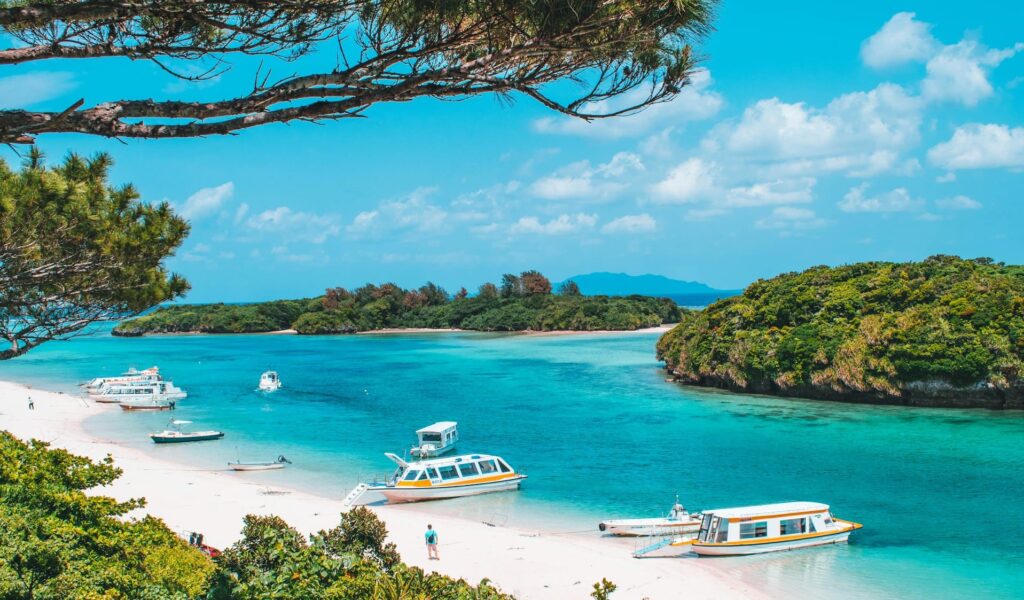
Kabira Bay — the calm, emerald lagoon framed by the green hills of Kabira — is the most-visited sight on Ishigaki Island and a top highlight when planning what to do in Ishigaki. Getting there is straightforward, but the way you choose to travel changes how the whole morning plays out: a rental car gives you freedom, the local bus is cheap but runs only a handful of times a day, and a tour with pickup removes every decision.
Here is the short version. From central Ishigaki, a rental car takes roughly 30–40 minutes door-to-door and is the most flexible option for most travelers. The Azuma Bus (Route 9, the Kabira Resort Line) takes about 40–45 minutes to the Kabira Koen-mae stop for around ¥770 one way — but check the return bus before you set out, because afternoon gaps can stretch to several hours. If you would rather not drive or watch a clock, a tour with hotel or port pickup is the simplest way to fit Kabira Bay into a short stay.
Below I compare each option — rental car, bus, taxi and tour — with current parking details, the glass-bottom boat parking shortcut, and the arrival times that actually work on the ground.
Want to skip both driving and the return-bus gamble? A private Ishigaki tour can handle the transfer while giving you more control over your Kabira Bay stop. Check current pickup options, start times and recent traveler reviews for the Okinawa Ishigaki Island Private Tour.
How to Get to Kabira Bay: Compare Your Options
All four options below start from central Ishigaki (the Ishigaki Port area or the main hotel strip). The nearest bus stop and parking area for the bay itself is Kabira Park (川平公園, Kabira Kōen), where the glass-bottom boat boarding area and the lookout are located.
| Option | Approx. time from central Ishigaki | Best for | Main advantage | Main drawback |
|---|---|---|---|---|
| Rental car | About 30–40 min door-to-door | Travelers who want flexibility and plan to visit other spots on the island | Stop anywhere; easiest way to combine Kabira Bay with a glass-bottom boat | Parking can fill up on busy days; you drive on the left |
| Local bus (Azuma Bus Route 9) | About 40–45 min to Kabira Koen-mae | Budget travelers and non-drivers | Cheap (around ¥770 one way); no driving stress | Only 6 departures a day; you must plan the return bus first |
| Taxi | About 25–35 min | Groups splitting the fare; door-to-door convenience | No waiting, no schedule, no parking | Metered fare adds up on a round trip; no guarantee of a taxi for the way back |
| Guided tour with transfer | 3 hours or more, pickup included | Travelers who want zero planning | Hotel or port pickup, glass-bottom boat, guide and photos in one package | Fixed itinerary; less free time at the bay |
The quick answer: if you are comfortable driving in Japan, rent a car. If you are not, take the bus — and lock in your return time before you leave town. If you want to skip both the driving and the timetable, a transfer-included tour is the option to compare, and I cover it in the taxi and tour section below.
Getting to Kabira Bay by Rental Car
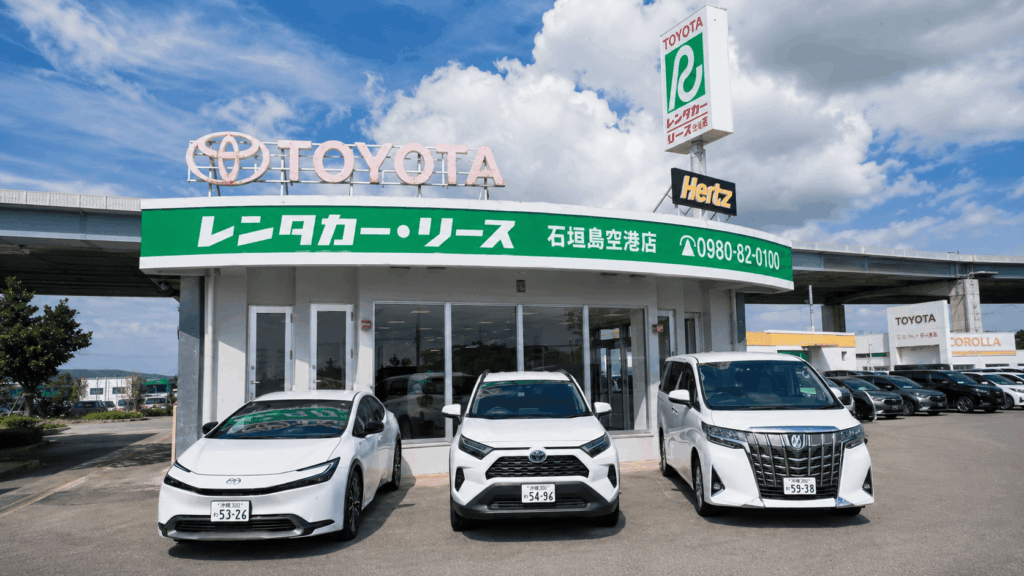
Driving is the most popular way to reach Kabira Bay, and for good reason: it takes about 30 minutes from the Ishigaki Port area and roughly 40 minutes from Painushima Ishigaki Airport, and it lets you combine the bay with other west-coast stops like Kabira’s viewpoints or the mangrove areas without watching a clock.
The drive follows Route 390 out of town, then narrows onto local roads through the Kabira area — expect a relaxed, scenic run rather than a highway. What catches people out is not the distance but the planning: budget the parking, the walk to the boarding area and the wait, not just the drive time. I plan around 40 minutes from central Ishigaki to standing at the glass-bottom boat ticket window, even though the drive itself is shorter.
If you are new to driving in Japan, remember that traffic keeps to the left, and most foreign licenses require an International Driving Permit (IDP) to rent a car. Rental desks at the airport and in town are used to foreign visitors, but book ahead in high season — Ishigaki’s rental fleet is small relative to demand.
Where to Park at Kabira Bay
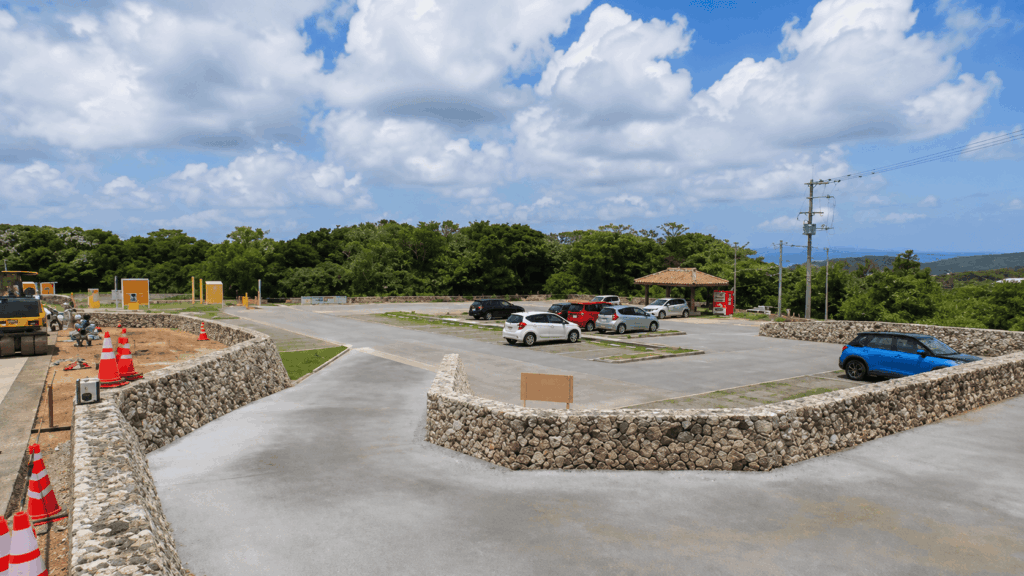
Kabira Bay has a municipal lot run by Ishigaki City, split into two areas right beside Kabira Park:
- Kabira Park No. 1 lot: 46 standard car spaces plus 6 spaces for large buses
- Kabira Park No. 2 lot: 32 standard car spaces
Fees are ¥200 for the first hour, then ¥100 per hour, with entry and exit available 24 hours. Standard cars only — the lot is limited to vehicles under 5 m long, 1.7 m wide and 2.3 m high, which rules out tall roof-top carriers or large vans.
One detail many visitors miss: this lot is cashless only — no cash is accepted. Payment works with major credit cards (Visa, Mastercard, JCB, Amex), transport IC cards such as Suica or ICOCA, and QR payments like PayPay. If you plan to pay with cash, bring a card or IC card instead, or you may be stuck at the exit machine.
On busy weekends and school-trip season, the lot can fill up, with cars waiting for a space to open. Before you set off, check the live parking camera streamed 24 hours a day by Ishigaki City’s tourism office on its official YouTube channel — it shows the actual lot condition in real time and is the single most useful pre-departure check for drivers.
Kai’s tip: The municipal lot is the one most guidebooks mention, and it’s the one that backs up on busy days. If you can, arrive before 9 a.m. — the lot is quiet, the light over the bay is soft, and you will have the lookout to yourself for a while. If you’re arriving later, glance at the city’s live parking camera from your hotel room first; it saves a frustrating loop around Kabira when every space is taken.
A Useful Parking Shortcut If You Plan a Glass-Bottom Boat
If a glass-bottom boat ride is part of your plan — and for most first-time visitors it should be, since swimming is not allowed in the bay — there is a smarter parking move than the municipal lot.
The two main boat operators on the bay both run their own customer parking, which is free and sits right by the boarding area:
- Marine House Gurukun (まりんはうすぐるくん): dedicated free parking for around 40 cars, right at the boarding point; adult fare around ¥2,300 with roughly 20% off for online bookings
- Kabira Marine Service (川平マリンサービス): dedicated free parking for around 10 cars; if full, you use the municipal lot. Adult fare around ¥2,300, with sailings every 15 minutes from 9:00 to 17:00
Both operate year-round, roughly 9:00–17:00, with boats departing every 15–20 minutes and a ride of about 30 minutes. Fares and sailing intervals are seasonal, so confirm the current details on the operator’s own page when you book.
Kai’s tip: When the municipal lot is jammed, the operators’ free lots are the escape route — but they’re meant for passengers, so book your boat first and use the parking as a passenger. The other advantage is practical: from the operator lots the boarding point is a short walk, which matters more than it sounds on a hot Okinawa afternoon, when the walk from the municipal lot to the boat queue can leave you sweating before you even board.
How to Get to Kabira Bay by Bus
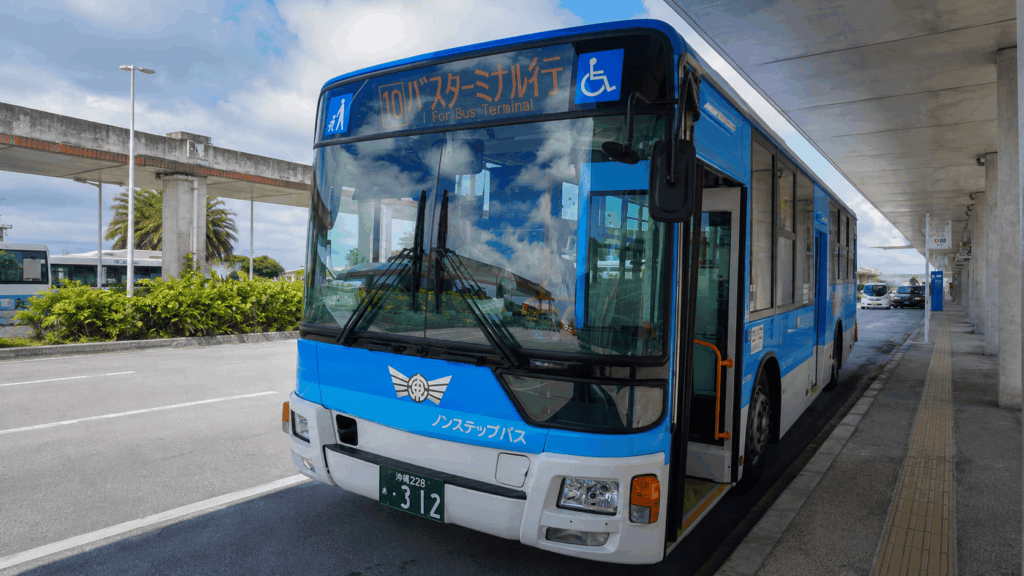
If you do not want to drive in Japan (or are figuring out getting around Ishigaki without a car), the local bus is the realistic budget option — and with a little planning it works well. The service you need is Azuma Bus Route 9, the Kabira Resort Line, which runs from the bus terminal in central Ishigaki through the port area and the main hotels to the Kabira Koen-mae (川平公園前) stop, a short walk from the bay lookout and the glass-bottom boat boarding area.
The ride takes about 40–45 minutes and costs around ¥770 one way from the terminal. The catch is frequency: Route 9 runs only about six times a day in each direction. A typical weekday schedule from the Ishigaki bus terminal is around 6:15, 8:50, 9:45, 12:55, 16:15 and 18:15 — but timetables change with the season, so check the latest times on the Azuma Bus official site before your trip rather than trusting a third-party listing.
Fares are paid in cash or with a contactless-enabled credit card. Note that transport IC cards such as Suica and ICOCA are not accepted on Azuma buses, which surprises many visitors — carry coins or a contactless card for the ride.
Other Azuma routes also stop at Kabira Koen-mae, which can open up timing options: the Miiyara Campground Line (Route 11) runs direct from the airport twice a day, and the circular routes ② and ③ pass through on their loops around the island. These are less frequent, but worth knowing if your hotel or flight timing lines up.
Check Your Return Bus Before You Leave Ishigaki
This is the single most important piece of bus advice for Kabira Bay: plan the return before you board the outbound bus. Route 9 buses back from Kabira Koen-mae leave roughly at 7:19, 9:54, 10:49, 13:59, 17:19 and 19:19 — and the gap between the late-morning bus and the mid-afternoon bus can be several hours. If you take the 9:45 bus out and miss the 13:59 return, you are waiting until 17:19.
The mistake I see first-time visitors make is checking only the outbound time, arriving happily at the bay, and discovering mid-afternoon that the next bus home is hours away. Decide your return bus first, then work out how long you actually have at the bay — that turns the bus from a constraint into a plan.
Kai’s tip: Treat the return timetable as the fixed part of your day and plan everything else around it. If the return gap looks long, it is often smarter to skip the bus entirely and compare a transfer-included tour — when the only bus home is four hours away, the tour’s fixed schedule starts to look like freedom, not a compromise.
Is the Ishigaki Bus Day Pass Worth It for Kabira Bay?
Azuma Bus sells a 1-day free pass for ¥1,000 (adults) and ¥500 (children), valid for 24 hours on all routes. A one-way fare from central Ishigaki to Kabira Koen-mae is around ¥770, so a round trip costs about ¥1,540 — the pass pays for itself on the Kabira run alone. If you also take a bus elsewhere in the same 24 hours, it becomes clearly worthwhile.
The pass is available at the bus terminal window or directly from the driver. Paying the driver means having exact cash or a contactless card ready, as the change machines on board handle coins but the fare itself still follows the same cash-or-contactless rule.
About Glass-Bottom Boat Discounts for Bus Travelers
You may see references online to a discount for bus passengers at one of the glass-bottom boat operators. In the past, Marine House Gurukun has offered a fare reduction to travelers who arrive by Azuma Bus, and the operators occasionally revive such campaigns in high season.
However, this is not a standing, guaranteed deal — current terms change throughout the year, and I could not confirm an active discount on the operator’s official site at the time of writing. If you arrive by bus, it costs nothing to ask at the ticket window whether a bus-passenger discount applies that day. Just do not build your budget around it.
What About a Taxi or Guided Tour?
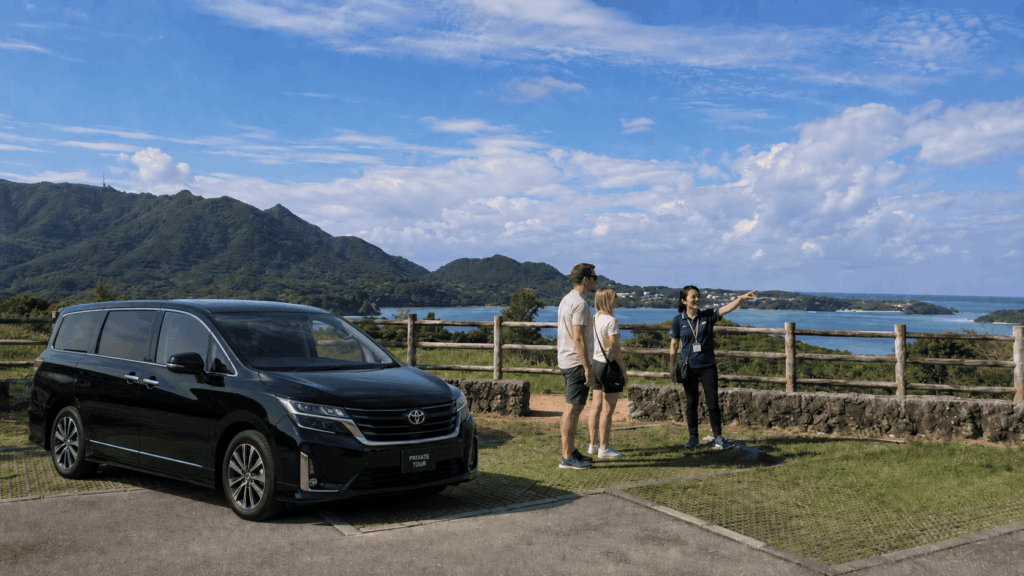
Between the bus and the rental car sits a middle ground: door-to-door transport with none of the scheduling.
Taxi. A taxi from central Ishigaki covers the roughly 19 km to Kabira Bay in about 25–35 minutes. It is metered, so the fare depends on traffic and route — expect a figure in the range of a few thousand yen each way, and confirm the approximate fare with the driver before you set off. The real cost is not the outbound ride but the round trip plus the wait: there is no taxi rank at Kabira Bay, so you need to arrange the return pickup or call a local taxi company when you are ready to leave. For a group of three or four splitting the fare, a taxi becomes more reasonable — but for a solo traveler it is the most expensive way to cover the distance.
Guided tour with transfer. Several half-day tours from Ishigaki include Kabira Bay, and they remove every decision at once: pickup from your hotel or the port, transport, a guide, and usually the glass-bottom boat. One well-reviewed option is the Ishigaki half-day scenic tour operated by ISHIGAKI ADVENTURE PiPi, which runs about 3 hours with hotel or port pickup, a glass-bottom boat ride on Kabira Bay, mangrove views at Nagura Bay and a lighthouse stop, with photos included and free cancellation up to 24 hours before. Pricing fluctuates with season and availability, so compare current rates on the booking page rather than trusting a single price.
If you want fewer moving parts but more flexibility than a shared half-day itinerary, a private tour is the option worth comparing.
Why I’d book this one
- Private transport with pickup options can remove the need to plan parking, a return bus or a taxi pickup.
- Recent travelers consistently mention flexible routing, smooth coordination and useful local context from the guide.
- The booking page lets you check the cancellation and payment terms that apply to your date before committing.
Tours suit travelers who value their time over their budget — if you are on a shorter Ishigaki itinerary and you want Kabira Bay plus a couple of other sights without thinking about parking or timetables, the transfer-included tour is the most honest shortcut. What you give up is flexibility: you see the bay on the tour’s schedule, not yours.
What Time Should You Arrive at Kabira Bay?
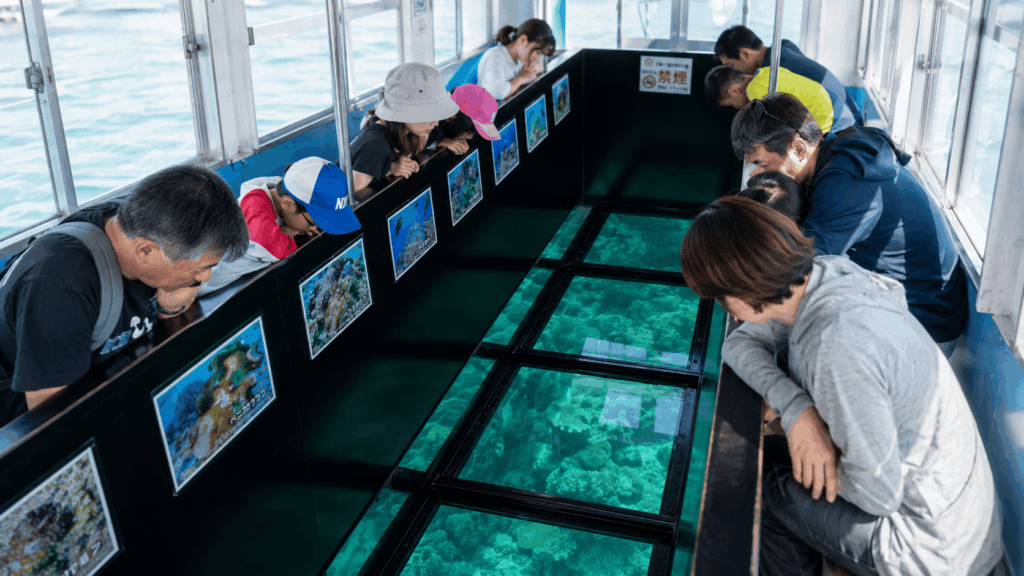
Arrival time is where most visitors overthink it, so here is the practical version. Three things actually matter, and which one wins depends on your plan:
- For crowds and light: arrive in the morning — roughly 9:00 to 10:30 is the calm window, before the tour groups and school trips build up. The bay faces west, so morning light is pleasant for photos and the afternoon sun is harsher.
- For the glass-bottom boat: visibility depends on the tide, the weather and the sea conditions that day. The operators themselves say the best time changes daily and advise asking ahead — a high tide is no guarantee of a clear view if the wind has stirred the lagoon.
- If you came by bus: the return timetable decides everything. Choose your arrival bus so that you have a realistic 2–3 hours at the bay before the return you planned in the previous section.
One pattern I have noticed over years of visits: midday is when the tour groups arrive, and the boat queue can suddenly double. On busy days, a glass-bottom boat operator may sell out the next departure or two, and the wait stretches well past what the schedule suggests. It is not a reason to skip the boat — it is a reason to take an early slot if you can.
Early Morning vs High Tide — Which Matters More?
If you can only control one thing, choose the morning. Here is why: a calm, uncrowded bay with soft light beats a crowded bay at “perfect” tide, and the boat operators adjust their schedules to the sea conditions anyway. Checking the tide chart is useful, but I would not build the entire day around a single high-tide window unless the sea is calm — windy days matter just as much for water clarity.
The one case where timing gets complicated is the bus traveler, because the timetable can force a midday arrival. In that situation, accept the crowds and book the boat in advance if the operator allows it, or arrive at the bay, check the live conditions, and take whatever departure has the shortest queue.
What About Bad Weather or Typhoon Season?
Glass-bottom boats stop running when the sea is rough, and typhoon season runs roughly June to October. On days with strong winds or an approaching typhoon, operators suspend departures for safety — this happens even in otherwise sunny weather, so it is worth checking the operator’s site or social feed the morning of your visit rather than assuming the boat is running.
If the boats are cancelled, the bay itself is still worth the drive: the lookout over the lagoon is free and beautiful in any weather, and the parking and bus logic of this article still holds. Just adjust expectations — the emerald clarity is a calm-sea phenomenon.
My Recommended Access Plan for Most Travelers
Putting it together, here is the plan I would give a friend visiting Kabira Bay for the first time, by traveler type:
- Comfortable driving, want the boat: rent a car, book a glass-bottom boat with the operator first (Marine House Gurukun or Kabira Marine Service), and use their free dedicated parking. Skip the municipal lot entirely on busy days. Target a 9:00–10:30 arrival.
- Not driving, budget conscious: take Route 9 from the terminal, buy the ¥1,000 day pass, and pick your return bus before boarding the outbound. Aim for the 8:50 or 9:45 outbound so you have a comfortable block before the 13:59 return.
- Not driving, short on time: take the transfer-included half-day tour. You give up free time at the bay but gain a full morning with pickup, boat and guide — and zero risk of a four-hour bus wait.
- Groups of three or four: a taxi becomes competitive with the bus once the fare is split, especially if you are already staying near the port.
Whichever way you travel, the two habits that prevent the classic Kabira problems are the same: check the parking camera or the return bus before you leave town, and decide your boat plan before you arrive. Do those two things and the bay itself takes care of the rest.
FAQ: Getting to Kabira Bay
How long does it take to get to Kabira Bay from Ishigaki?
From central Ishigaki (the port or main hotel area): about 25–35 minutes by taxi, roughly 30 minutes by rental car (plan 40 minutes once parking and walking are included), and about 40–45 minutes by Azuma Bus Route 9 to the Kabira Koen-mae stop. From Painushima Ishigaki Airport, add roughly 10 minutes of driving.
Can you visit Kabira Bay without a car?
Yes. The Azuma Bus Route 9 (Kabira Resort Line) runs from the bus terminal to Kabira Koen-mae about six times a day, and the 1-day free pass (¥1,000 for adults) covers the round trip. The key is planning the return bus first — afternoon gaps can run several hours. A transfer-included tour is the no-planning alternative if the timetable feels too restrictive.
How often does the bus run to Kabira Bay?
Route 9 departs the Ishigaki bus terminal roughly six times a day, with typical times around 6:15, 8:50, 9:45, 12:55, 16:15 and 18:15, and the return from Kabira Koen-mae around 7:19, 9:54, 10:49, 13:59, 17:19 and 19:19. Schedules change seasonally, so confirm the current timetable on the Azuma Bus official site before your trip.
How much does it cost to get to Kabira Bay?
By bus, around ¥770 one way from central Ishigaki, or ¥1,000 for the 1-day pass that covers a round trip plus any other bus rides in 24 hours. By rental car, parking at the municipal lot is ¥200 for the first hour then ¥100 per hour (cashless only). By taxi, the metered fare varies with traffic — confirm the approximate fare with the driver before setting off, and remember there is no taxi rank at the bay itself.
Where should I park at Kabira Bay?
The municipal Kabira Park lots (No. 1: 46 standard cars plus 6 bus spaces; No. 2: 32 standard cars) sit right by the bay and accept electronic payments only — no cash. If you are taking a glass-bottom boat, Marine House Gurukun has free dedicated parking for around 40 cars and Kabira Marine Service for around 10, which can spare you the municipal queue on busy days.
Should I book the glass-bottom boat in advance?
It is wise in high season and on weekends, when tour groups can sell out the next departure or two. Both main operators take bookings online, and Marine House Gurukun’s web booking includes a discount (roughly 20%). Note that boats suspend departures in rough weather and typhoon season (roughly June to October), so check the conditions on the morning of your visit.
Final Verdict: Which Way to Kabira Bay Fits You?
There is no single best way to Kabira Bay — there is a best way for your specific situation, and it comes down to two questions: do you want to drive, and how much schedule risk can you absorb?
- Choose the rental car if you are comfortable driving on the left and want the freedom to combine Kabira Bay with other west-coast stops. You get the easiest route to a glass-bottom boat, and the operator parking lots solve the busiest part of the day. This is the most flexible option for most travelers.
- Choose the bus if you want the lowest cost and do not mind a fixed schedule. Take Route 9 from the terminal, buy the ¥1,000 day pass, and lock in your return bus before you board the outbound. The 8:50 or 9:45 outbound gives you a comfortable morning block before the 13:59 return.
- Choose the transfer-included tour if your stay is short or you simply do not want to think about driving, parking or timetables. You trade free time at the bay for a complete morning — pickup, boat, guide and photos with zero schedule risk. When the only return bus is hours away, the tour’s fixed plan becomes the stress-free choice.
- Consider a taxi only for groups of three or four staying near the port, where splitting the metered fare makes it competitive — and arrange the return pickup before you leave town.
For first-time visitors, I would add one honest note: the bay is small, and the difference between a good and a frustrating visit is rarely the transport choice itself — it is whether you checked the parking camera or the return bus before leaving town, and whether you decided your boat plan before arriving. Do those two things, and whichever option you picked will feel like the right one.

Hi, I’m Kai. I’m a Tokyo-based travel writer, tourism industry insider, and the author of a published guidebook for international visitors to Japan. With over 10 years of professional experience at a leading Japanese tourism company, my mission is to help you skip the tourist traps and navigate Japan’s best destinations like a local. I believe the perfect day trip is like a traditional kaiseki meal: a beautiful balance of precise planning and unforgettable seasonal discovery. When I’m not out conducting field research, you’ll usually find me drafting new itineraries with one of my favorite fountain pens!