
Most guides answer “when to visit Ishigaki” with a table of average temperatures. On this island, a more useful question is: which month gives your beach day, snorkeling trip, or manta hunt the best chance of actually happening? Here is the short answer, then the reasoning.
If your dates are fixed and the sea is the priority: check live availability, start times, and cancellation terms for this Kabira Bay + Blue Cave combo tour on GetYourGuide before you lock in the rest of your itinerary. Wind, swell, and tides can matter as much as the month you choose.
What Is the Best Time to Visit Ishigaki?
For most first-time visitors, late June to early July is the best overall time to visit Ishigaki. It usually offers the strongest combination of heat, sunshine, relatively low summer rainfall, and calm conditions for the island’s classic activities: snorkeling at Yonehara Beach, glass-bottom boats at Kabira Bay, and day trips to the surrounding Yaeyama islands. For a full breakdown of these highlights, see our guide on what to do in Ishigaki.
Best for: beach days, easy snorkeling, the start of manta season, and a window when school-holiday crowds have not yet peaked.
Not necessarily best for: travelers who want the lowest possible typhoon risk (the season has already started by July, even if August and September are busier), or anyone booking on a tight budget, since summer rates apply.
One thing I tell people before they book: a sunny weather forecast on Ishigaki does not always mean your sea activity will run as planned. Wind and swell can cancel a tour on a clear day, and tides can change where it departs. The month matters, but so does picking an operator with a flexible plan and clear cancellation terms — check those details before you commit, and leave yourself at least one day on land.
Best Time to Visit Ishigaki at a Glance
The table below compares the main windows of the year. Weather figures are 1991–2020 averages from the Japan Meteorological Agency (Ishigaki station); typhoon figures are averages for the wider Okinawa region, not Ishigaki alone, and each year varies.
| Period | Weather | Sea Conditions | Typhoon Risk | Crowds | Best For |
|---|---|---|---|---|---|
| Late June – early July | Hot and humid; the most sunshine of the year (about 261 hours in July) | Warm, calm lagoons; sea around 28–29°C | Low–moderate (July averages about 1.5 approaches for the Okinawa region) | Moderate, before the school-holiday peak | Beaches, snorkeling, first-time visitors |
| Mid-July – August | Hottest and muggy; more rain than July (about 250mm in August) | Warmest sea of the year (about 29°C); good visibility | High (August averages about 2.2, the annual peak) | High — Japanese summer holidays | Swimming, manta ray tours |
| September | Hot, humid, high rainfall (about 260mm) | Sea still warm, but swell can linger after typhoons | Very high (about 1.9) | Moderate–low | Manta fans who accept typhoon risk and plan a backup |
| October – November | Warm; humidity eases | Sea still warm (about 27.5°C in October); calm spells return | Moderate (October averages about 1.1) | Low | Snorkeling without peak heat; relaxed sightseeing |
| December – February | Mild, cloudy, windy; coolest months (January averages about 18.9°C) | Sea about 23–24°C; strong north winds can make it rough | Low | Low | Sightseeing, quiet beaches, winter snorkeling with a wetsuit |
| March – May | Warm and humid; the rainy season usually starts in May | Sea warming up from about 24°C to 26.5°C | Low–moderate | Low–moderate, except Golden Week (late April–early May) | Spring sightseeing, early-season snorkeling |
Main drawbacks at a glance:
- Late June – early July: summer rates start, and typhoon season has technically begun.
- Mid-July – August: peak crowds and the busiest typhoon month by average.
- September: the highest combination of rain and typhoon activity on the calendar.
- October – November: shorter days and occasional autumn rain fronts.
- December – February: swimming and snorkeling require a wetsuit, and some tours only run in good conditions.
- March – May: cloudier skies, and May can be washed out by the rainy season.
Why Late June to Early July Is the Best Overall Window
The numbers back up the reputation. In the Japan Meteorological Agency’s 1991–2020 averages, July is the island’s sunniest month (about 261 hours of sunshine) while rainfall drops to roughly 142mm — noticeably less than June (about 208mm), August (about 250mm), or September (about 260mm). You are trading a little heat for the most reliable stretch of blue sky on the calendar.
The timing works because of the rainy season. The Okinawa region’s tsuyu typically arrives in early May and clears around mid-to-late June, so late June to early July sits right after the rain band moves north. Note that the exact dates shift every year: the 2025 rainy season cleared in early June, while 2026 dragged on until late June. If your trip falls in that window, keep a flexible itinerary for the first day or two rather than locking in only water activities.
Compared with August, the other strong summer candidate, early July also has two practical advantages: typhoon approaches average lower (about 1.5 for July versus about 2.2 for August across the Okinawa region), and Japanese school holidays have not yet filled the island, so boats, rental cars, and restaurants feel calmer.
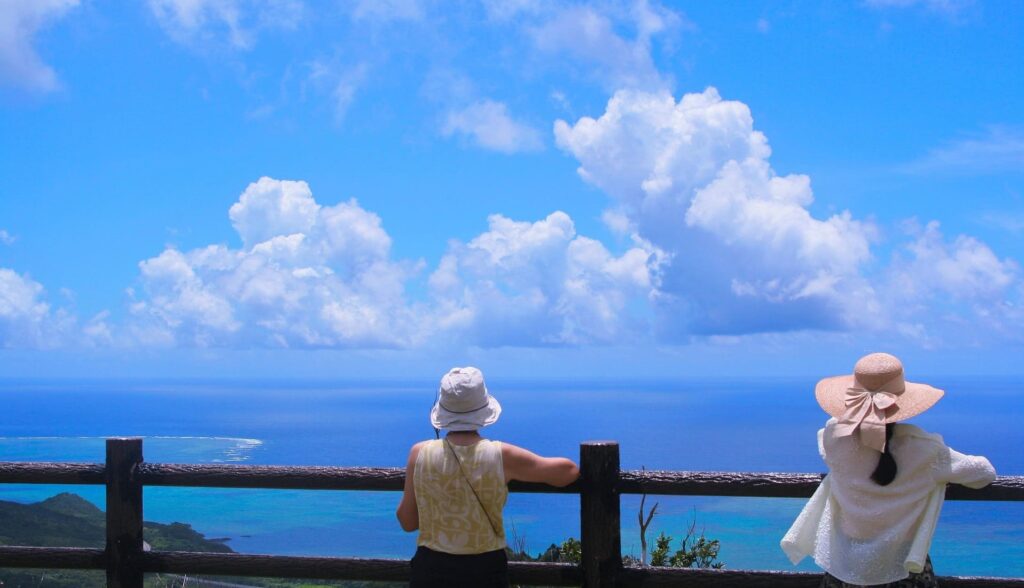
This is the window when Kabira Bay shows off its signature color — the pale turquoise of the lagoon over white sand, with the dark green of the surrounding hills. On a clear late-June morning, the water at the bay really does look like the postcards. The catch, which surprises some visitors, is that you cannot swim at Kabira Bay: swimming is prohibited to protect the black pearl oyster beds, so the classic experience here is a glass-bottom boat over the coral. The swimming happens at beaches like Yonehara and Sukuji instead. If you are planning a visit here, check our guide on how to get to Kabira Bay.
If you only take one thing from this guide: for a first visit built around beaches and the sea, aim for the two to three weeks after the rainy season clears, and treat August and September as the months that need the most careful planning.
Now for the months that need the careful planning — September, winter, and the shoulder seasons that every guidebook treats differently.
Is September a Bad Time to Visit Ishigaki?
Not necessarily — but it is the month that demands the most flexibility. September is warm (averaging about 28°C), the sea is still at its summer warmth, and crowds thin out as Japanese school holidays end. It is also the wettest month on the calendar (about 260mm of rain in the JMA averages) and sits in the middle of the region’s busiest typhoon stretch: the Okinawa region averages roughly 1.9 typhoon approaches in September, with August slightly higher at about 2.2. These are regional averages, not guarantees for Ishigaki in any given year — some Septembers pass almost quietly, others bring two or three systems in a row.
What surprises many first-time visitors is that the risk does not end when the typhoon itself passes. After a system moves through, the ocean around the Yaeyama islands can stay unsettled for days, sometimes a week or more, even while the sky looks perfectly clear. Sea tours are often cancelled or relocated during this window, and operators are cautious about taking groups out in leftover swell.
I learned this the hard way on one September visit: a typhoon had passed well north of the island days earlier and the weather was glorious, but the sea was still rough enough that a sea turtle tour was called off shortly before departure. On the same trip, I also brushed against a jellyfish in the water after that system had gone — I felt the sting and got out immediately, and I was fine, but it was a reminder that the period right after a storm is not just about waves. Jellyfish are common around the Yaeyama islands in summer; the Okinawa Prefectural Government issues a habu-kurage (box jellyfish) warning period from June 1 to September 30 each year, with advice to avoid swimming in areas with warning signs, reduce exposed skin, and carry vinegar.
Best for: travelers who specifically want manta rays (still a strong season), like empty beaches, and are willing to build Plan B into every day.
Not for: short trips with non-refundable tours or a packed itinerary — if you only have three days and one of them gets cancelled, September is the month most likely to test you. Before booking any tour in September, confirm its cancellation terms and whether the operator will offer an alternative site or activity if sea conditions change. Check the latest weather and typhoon forecasts as your departure approaches, and do not rely on a sunny forecast alone.
Kai’s tip: if you travel in September, schedule your sea activities early in the trip rather than on your last day, and keep at least one day on land. A missed snorkel on day two can often be rescheduled; a missed snorkel the day before your flight cannot. On a short stay, I would also avoid booking a tour with strict non-refundable terms, since the odds of a cancellation or a last-minute site change are simply higher in this month.
How to Plan an Ishigaki Trip in Typhoon Season
- Watch the forecast from about a week out. The Japan Meteorological Agency publishes typhoon tracks in English; local news and your hotel can confirm how a system is affecting the island.
- Expect transport disruption, not just cancelled tours. Flights into Painushima Ishigaki Airport and ferries from Euglena Ishigaki Port Terminal can be suspended during strong winds, even if the typhoon does not make direct landfall.
- Build a land-based backup day. Keep one day for rental-car sightseeing, the Yaima Village or Yaeyama Museum, local cafes, or the glass workshop areas — things that run in rain and wind. (Read our guide on getting around Ishigaki if you need transport options.)
- Book flexible. Choose tours with free cancellation windows and operators that state they will switch to an alternative site when conditions are unsafe.
- Split up your sea days. Rather than one all-day trip, spread activities across two mornings so a single cancellation does not wipe out the whole sea portion of your trip.
- Have a ferry plan B. If your itinerary depends on a day trip to Taketomi or Iriomote, know that ferries are the first thing to stop in rough weather — keep a day on Ishigaki itself as the fallback.
Can You Swim and Snorkel in Ishigaki in Winter?
Yes — with a wetsuit and a realistic expectation of what “winter” means here. Ishigaki is Japan’s southernmost inhabited island chain: January averages about 18.9°C and February about 19.4°C (JMA, 1991–2020), and daytime highs usually reach the low 20s. The sea stays around 23–24°C in the coldest months — swimmable for some, too cold for others. Local operators run winter snorkeling tours and note that a wetsuit is essential; several recommend a 5mm suit for January and February, and rentals are usually included.
The bigger issue in winter is not temperature — it is wind. Strong north winds build short, choppy waves, and the sea can look rough even on days the land feels calm. Currents can push you faster than you expect, and on one February snorkel I remember being surprised by how quickly I drifted sideways. It is manageable with a guide, but I would not recommend a winter snorkel to a weak swimmer, and I would always go with an operator rather than swimming off an empty beach alone.
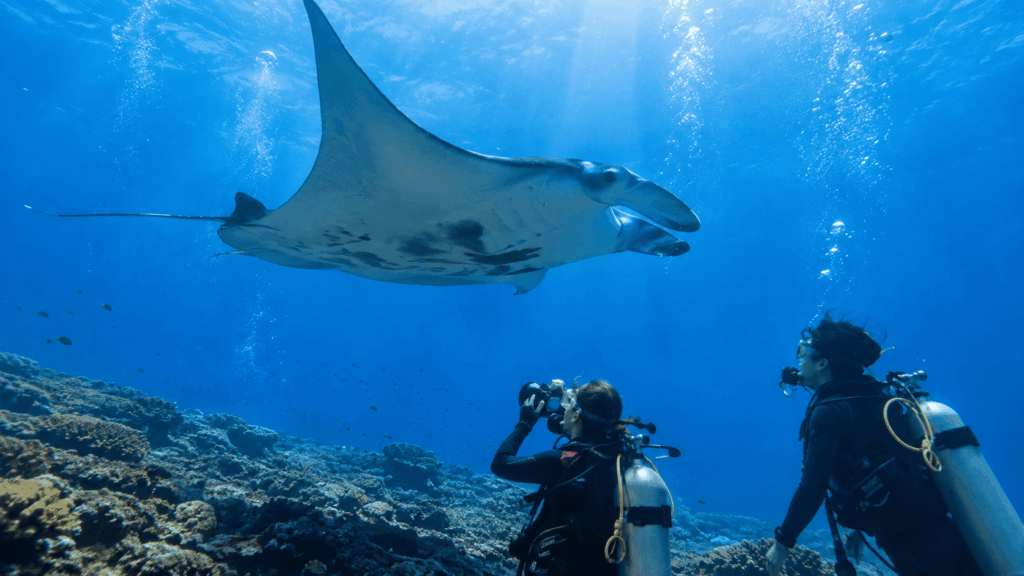
That said, winter has one huge draw: manta rays. While summer to early autumn is the classic manta season around Ishigaki, the mantas that gather near Kuroshima and the points off the island’s west side are often sighted through the winter months as well, and some divers and snorkelers deliberately come in February and March for calmer crowds. I had my own first manta encounter of the year on a February snorkel — a reminder that “off season” does not mean “nothing in the water.” Still, do not book a winter trip expecting a guaranteed manta sighting: encounters depend on the day, the point, and the conditions, and no operator can promise one.
Kai’s tip: when choosing a winter snorkeling operator, ask two questions before booking: is the wetsuit included (and what thickness), and is there warm water on the boat? A company that provides hot showers or warm water after the dive makes a February snorkel genuinely comfortable; one that does not can turn the same conditions into a miserable hour. Winter tours also tend to run smaller groups, which makes the cold-water experience far easier to manage.
What to Ask a Winter Snorkeling Operator
- Is a wetsuit included, and what thickness is recommended for the month I am traveling?
- Is there warm water or a hot shower on the boat or at the shop?
- Do you run the tour in winter winds, or do you reschedule for calm days?
- What is the backup plan if the planned point (for example, near Kuroshima) is too rough?
- Is the guide able to explain the plan in English, and how large is the group?
- What are the cancellation terms if the sea conditions change after I book?
Spring vs Fall: Is April or October Better?
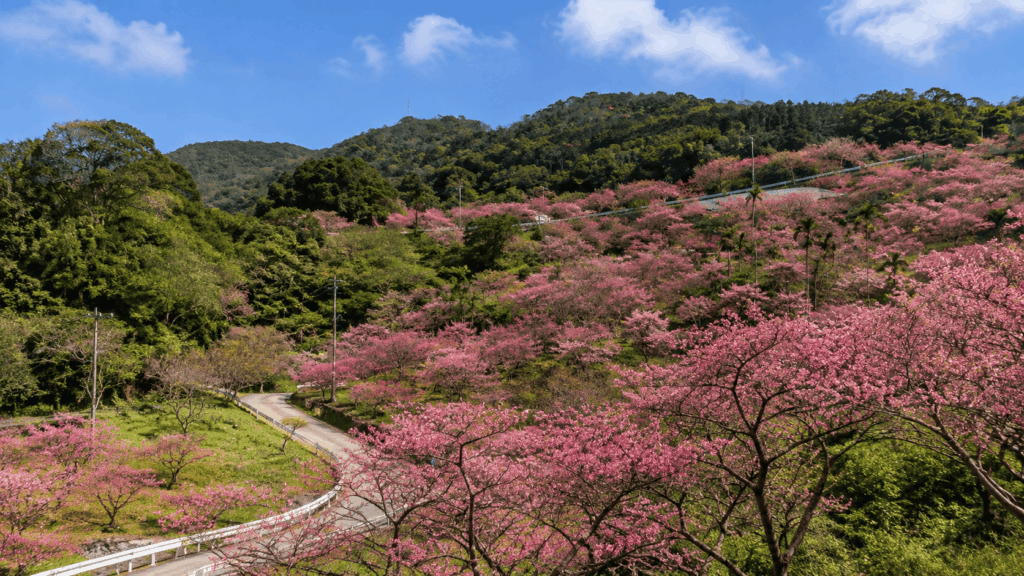
If you are not fixed on snorkeling, these two shoulder seasons are where Ishigaki is at its most relaxed. Both sit outside the peak typhoon months, both have mild temperatures, and both avoid the school-holiday crowds.
April (averaging about 23.4°C) is the safer, more predictable choice: long dry spells, calm sea, and the rainy season usually has not started yet (the Okinawa tsuyu typically arrives in early May). The trade-off is that the sea is still warming up — around 24°C — so swimming is possible but brisk, and full snorkeling comfort really starts in May. April is my pick for travelers who want sightseeing, beach walks, and gentle boat rides without committing to serious time in the water.
October (averaging about 26.0°C) is the better pick for swimmers: the sea is still around 27–28°C from summer, humidity has eased, and typhoon frequency drops compared with August and September (about 1.1 approaches on average for the Okinawa region). The downsides are shorter days and the occasional autumn rain front sweeping through. For most people who want both warm sea and mild air, October beats April — provided you can accept a small typhoon risk that is much lower than September’s.
Best Time to Visit Ishigaki by What You Want to Do
If your trip has one clear priority, choose your month around that first, then accept the trade-offs.
| Your Priority | Recommended Period | Why | Main Caveat |
|---|---|---|---|
| Beaches and relaxed swimming | Late June – early July, or October | Warm sea, calm lagoons, moderate crowds | Summer rates; October has shorter days |
| Best snorkeling conditions | July – October | Warmest, clearest water; Yonehara Beach is at its best | August–September typhoon and jellyfish risk |
| Manta rays | Summer to October (with winter sightings around Kuroshima) | Peak manta season; winter offers quieter encounters | No encounter is ever guaranteed |
| Fewer crowds | October – November, or February – March | Off-peak boats, rental cars, and restaurants | Winter wind; autumn rain fronts |
| Lowest typhoon risk | November – April | Outside the main typhoon months | Cooler sea; winter swimming needs a wetsuit |
| Hottest weather | Mid-July – August | Maximum heat and warmest sea | Peak crowds and highest typhoon averages |
For Beaches & Kabira Bay
Kabira Bay itself is a viewing spot, not a swimming beach — glass-bottom boats run frequently and are the main way to see the coral and fish. For actual swimming, head to Yonehara Beach (the island’s most popular snorkeling beach, with shallow coral, fish, and rental gear, though parts are marked as dangerous due to currents) or Sukuji Beach (a calmer, shallower option about 15 minutes by car from Yonehara). The best months are the same warm, calm window as snorkeling generally: July to October, with late June and early July as the sweet spot.
For Snorkeling
Yonehara Beach is the classic free snorkel spot, but the most spectacular experiences — reefs, the Blue Cave, and marine life — usually need a boat. The main snorkeling season runs roughly from May through October, with the warmest, clearest water from July to September. In that window, jellyfish warnings are active (June 1–September 30), so follow beach signage and ask operators about recent sightings.
Short on time? A half-day Blue Cave snorkel is the lower-commitment option; check current dates, inclusions, and recent reviews for the half-day Blue Cave snorkeling tour on Klook.
For Manta Rays
Summer to early autumn is the core season, with the famous cleaning stations off the island’s western points. From late autumn through winter, mantas often shift toward Kuroshima and surrounding waters as they follow plankton. If manta rays are your main reason to visit, summer maximizes your chances; winter offers quieter, smaller-group trips but less predictability.
For Fewer Crowds
October and November are the sweet spot — summer sea warmth lingers while the crowds disappear. February and March are also quiet, with the bonus of winter manta sightings, if you can handle the wind.
Don’t Ignore Tides When Planning Sea Activities
This is the detail most first-time visitors miss. Many of Ishigaki’s sea activities — especially at Kabira Bay and the west-side points — depend on the tide. The Japan Meteorological Agency publishes a tide table for Ishigaki, and local operators plan their departures around it.
On one visit, my canoe trip at Kabira Bay was switched to a SUP session in a different area because the tide was too low for the original route. Nothing was wrong with the weather — the water level simply would not allow the boat to clear the shallow sections. The operator handled it smoothly, but the lesson stuck with me: the tide, not just the forecast, decides where and when some tours can run.
Kai’s tip: before you book a Kabira Bay canoe, SUP, or any west-side sea activity, check the tide table for your dates and ask the operator how low tide affects the departure time or location. If you have flexibility, choose a day with a mid-to-high tide window in the morning; if your schedule is fixed, at least know in advance that the meeting point or start time may shift.
How Crowded Is Ishigaki in the Best Season?
Less than you might fear, more than you might expect. Ishigaki is not a mass-tourism island like parts of Okinawa’s main island, but the “best weather” weeks do attract the most visitors — and the peak is narrower than you think. Golden Week (late April to early May), the Obon holiday in mid-August, and the school summer holidays from late July through August are the busiest stretches. In those windows, rental cars sell out, popular restaurants queue, and tour slots fill days ahead.
What caught me off guard on a summer visit was the school groups. On one morning at Kabira Bay, a large school excursion arrived just before me, and the glass-bottom boat had a long queue — I ended up waiting much longer than the usual 15–30 minute interval because a dozen busloads had arrived first. The scenery was still gorgeous, but it reshaped my advice: visit Kabira Bay early in the morning (before 9–10am) or in the late afternoon, and if you are on a tour, check whether it schedules the bay before the school groups arrive.
Late June to early July sits in the moderate zone: after the rainy season, before the school-holiday peak. That is one more reason it is the best overall window rather than simply “the sunniest.”
My Month-by-Month Ishigaki Recommendation
January: Mild days, strong winds, quiet island. Great for sightseeing and rental-car exploration; snorkeling only with a good wetsuit and a calm-weather operator.
February: Coldest air temperatures (about 19°C), but the sea is still around 23–24°C. Winter manta sightings happen; crowds are minimal.
March: Warming up, still before the rainy season. A good compromise month for travelers who want quiet beaches and tolerable water.
April: Dry, calm, and stable — the best sightseeing weather of the spring. Sea is still cool (around 24°C), so swimmers should wait.
May: The rainy season usually starts in early May. Early May is still usable; late May gets wet. Watch the daily forecast.
June: Rain through mid-June, then the season breaks. The last two weeks of June are where the best window starts.
July: The winner. Sunniest month, moderate rain, warm sea, and the start of the best overall window — though the second half gets busier.
August: Hottest and most crowded, with the highest average typhoon approaches. Book everything early or avoid the Obon week.
September: Wet and typhoon-prone, but the sea is still summer-warm and manta sightings continue. Only for flexible travelers with Plan B.
October: The best of both worlds: warm sea, easing humidity, low crowds, and much lower typhoon frequency than September.
November: Cooler and breezier, but stable. Good for sightseeing and beach walks; snorkeling needs a wetsuit by late month.
December: Quiet, mild, and windy. A fine month for a slow, non-water trip at off-season prices.
How to Choose the Right Ishigaki Tour for Unpredictable Weather
Because wind, swell, and tides can change what is possible on any given day, the operator matters as much as the destination. The most common complaint I see in recent reviews is not about the scenery — it is about a tour being cancelled or relocated late, or a company insisting on a rough-weather route. The most common praise is the opposite: an operator that quietly switches from the Blue Cave to a sheltered point and still delivers a great morning in the water.
When comparing tours, check these before you book:
- Cancellation terms: free cancellation windows and what happens if the operator cancels (most reputable ones refund or reschedule).
- Weather policy: does the company state it will change the site or time when conditions are unsafe?
- What is included: wetsuit rental, snorkel gear, photos, and pick-up — and whether any of these cost extra.
- English support: is the guide or the briefing in English?
- Group size: smaller groups are more likely to adjust the plan for conditions.
- Combined activities: a half-day or full-day combo (for example, canoe or SUP at Kabira Bay plus snorkeling at the Blue Cave) can reschedule parts of itself more easily than a single fixed activity.
- Recent reviews: look for how the company handled weather-related changes — that tells you more than the photos.
If you want both Kabira Bay and snorkeling but do not want one change in wind or tide to derail the whole day, this is the full-day option to compare first.
Why I’d book this one
- Recent travelers mention guides adjusting the route or activity when wind, tides, or sea conditions made the original plan unsuitable, rather than forcing the planned location.
- Traveler feedback frequently highlights helpful guides and English communication, which matters when safety briefings or last-minute changes need to be clear.
- Combining Kabira Bay with Blue Cave snorkeling reduces the number of separate bookings; check the current inclusions and cancellation conditions for your date before committing.
If you are weighing a specific tour, compare the same activity across platforms (GetYourGuide, Klook, or the operator’s own site) for price, included gear, and cancellation flexibility — the “same” tour can differ in what it includes and how it handles bad weather.
FAQ
What is the absolute best month to visit Ishigaki?
For most first-time visitors, late June to early July. It sits right after the rainy season clears (usually mid-to-late June, though the exact date shifts every year), and July is the island’s sunniest month in the JMA 1991–2020 averages — about 261 hours of sunshine with rainfall dropping to roughly 142mm, noticeably less than June, August, or September. The sea is warm, the manta season is starting, and the school-holiday crowds have not peaked yet.
Is September really that bad in Ishigaki?
It is not automatically bad, but it is the month that needs the most planning. September averages the wettest weather on the calendar (about 260mm) and sits inside the region’s busiest typhoon stretch — the Okinawa region averages roughly 1.9 typhoon approaches in September and about 2.2 in August, though these are regional averages and every year differs. The sea stays summer-warm, crowds are thin, and manta sightings continue. If you go in September, book flexible tours, schedule sea days early in your trip, and keep a land-based backup plan. If you only have two or three days and cannot absorb a cancellation, September is the month most likely to test you.
Can you swim and snorkel in Ishigaki in winter?
Yes, with a wetsuit and realistic expectations. Winter air temperatures average around 18.9–19.4°C (January–February), and the sea stays around 23–24°C — cold enough that local operators recommend a 5mm wetsuit for January and February, and rentals are usually included. The bigger issue is wind: strong north winds build choppy waves and currents, so weak swimmers should skip it. Winter does have a quiet upside — manta sightings near Kuroshima happen, and tours run in small groups.
When is manta ray season in Ishigaki?
The core season runs from roughly July through October, when mantas gather at cleaning stations off the island’s western points. From late autumn through winter, they often shift toward Kuroshima and surrounding waters as they follow plankton, so winter sightings happen too — often in quieter, smaller groups. No operator can guarantee an encounter in any season, so treat manta trips as a highlight, not a promise.
When is the rainy season in Ishigaki?
The Okinawa region’s rainy season (tsuyu) typically arrives in early May and clears around mid-to-late June, but the exact dates vary every year — 2025 cleared in early June, while 2026 dragged on until late June. If your trip falls inside that window, keep your first day or two flexible rather than locking in only water activities.
Should I visit Ishigaki in April or October?
It depends on whether you plan to swim. April (averaging about 23.4°C) is drier, calmer, and more predictable — the best sightseeing weather of the spring — but the sea is still around 24°C, so full snorkeling comfort does not really start until May. October (averaging about 26.0°C) is the better pick for swimmers: the sea is still around 27–28°C from summer, humidity has eased, and typhoon frequency drops well below August and September. Swimmers should choose October; sightseers can choose either.
What should I do if my sea tour in Ishigaki gets cancelled?
First, do not book a single all-day sea trip with no fallback — spread activities across two mornings instead. If a tour is cancelled or relocated, a good operator will offer an alternative site (for example, switching from the Blue Cave to a sheltered point) or a reschedule. Keep one day on land for rental-car sightseeing, museums, and cafes that run in any weather, and remember that ferries to Taketomi or Iriomote stop first when the sea turns rough. Tours with free cancellation windows and clear weather policies give you the most room to adjust.
Final Verdict: When Should You Visit Ishigaki?
What I would tell a friend planning a first trip: do not choose your month by temperature alone. On Ishigaki, wind, waves, tides, and typhoon timing decide whether your plans actually happen — so pick a window that matches how you want to spend your days, then book an operator that can bend with the weather.
Choose late June to early July if this is your first visit and you want the best all-round odds: warm sea, maximum sunshine, manta season starting, and crowds still moderate. It is the safest bet for a short trip.
Choose October (or November) if you want to swim and snorkel without peak heat or crowds. The sea is still summer-warm, the island empties out, and typhoon risk drops well below September — the best shoulder-season compromise for most travelers.
Choose September only if you can absorb a cancellation: flexible tours, an early-trip sea schedule, and a real Plan B on land. Manta fans and empty-beach lovers get a lot here; rigid itineraries do not.
Choose November to April if your priority is stable sightseeing, quiet beaches, and low typhoon risk — and you are fine trading away comfortable swimming, or ready to wear a 5mm wetsuit for it.
For first-time visitors: aim for late June to early July, and put Kabira Bay early in the morning (before 9–10am, when school groups and day-trippers arrive) followed by a snorkel at Yonehara Beach.
For families: summer through October gives the warmest water and calmest lagoons; choose Sukuji Beach for gentle swimming with children. Winter is doable only with wetsuits, and rough seas make it a poor pick for young kids.
For travelers on a tight schedule: avoid September entirely if you only have two or three nights — one cancelled day is too large a share of the trip. Book sea activities for the first full day, keep the last day flexible, and never schedule a flight connection the same afternoon as a tour.
For manta hunters: July through October maximizes your chances around the western points; February and March offer quieter winter encounters near Kuroshima if you accept the wind. Either way, treat the sighting as a bonus, not a guarantee.
For repeat visitors: October, November, February, and March are when Ishigaki feels like your own island — fewer boats, open tables, and the same water, with less company.

Hi, I’m Kai. I’m a Tokyo-based travel writer, tourism industry insider, and the author of a published guidebook for international visitors to Japan. With over 10 years of professional experience at a leading Japanese tourism company, my mission is to help you skip the tourist traps and navigate Japan’s best destinations like a local. I believe the perfect day trip is like a traditional kaiseki meal: a beautiful balance of precise planning and unforgettable seasonal discovery. When I’m not out conducting field research, you’ll usually find me drafting new itineraries with one of my favorite fountain pens!