
Quick Answer: Planning Your Umeda Sky Building Sunset Visit
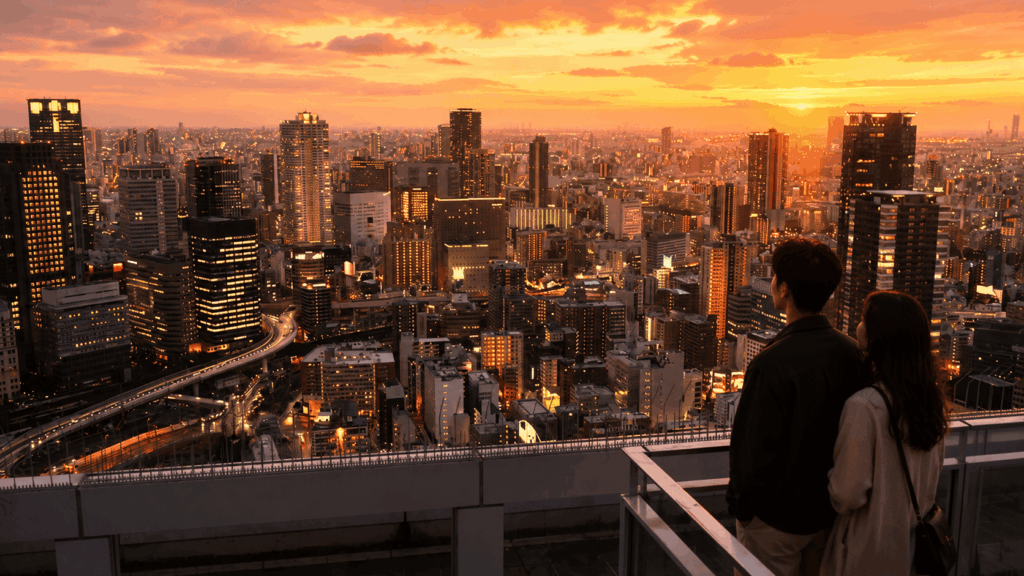
If you are planning a sunset visit to the Umeda Sky Building Kuchu Teien Observatory, timing matters more than anything else. The best plan is to arrive 45 to 60 minutes before sunset so you can see Osaka in daylight, during golden hour, and after the city lights come on.
- Best time to arrive: 45 to 60 minutes before the actual sunset time in Osaka.
- Standard admission: As of June 2026, adults are 2,000 JPY, children ages 4–12 are 500 JPY, and children under 4 enter free.
- Opening hours: As of June 2026, the observatory is generally open from 9:30 to 22:30, with last admission at 22:00.
- Pass rule: Osaka Amazing Pass and Osaka e-Pass holders can usually enter free until 15:00, but sunset visitors should expect a discount rather than free entry after 15:00.
- Best reason to go: The open-air rooftop gives you a breezy, outdoor night-view experience that feels very different from Osaka’s indoor observation decks.
- Best for: Couples, photographers, first-time Osaka visitors, and anyone staying around Umeda or Osaka Station in the evening.
If your Osaka dates are already set, check current Umeda Sky Building ticket availability, prices, and recent reviews before locking in your sunset plan.
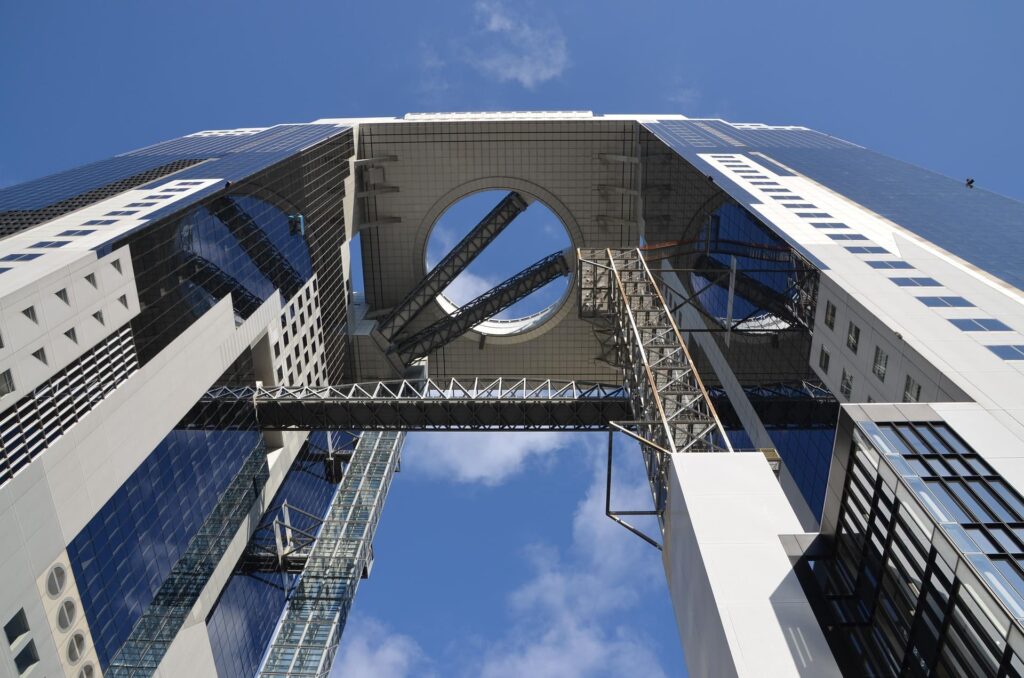
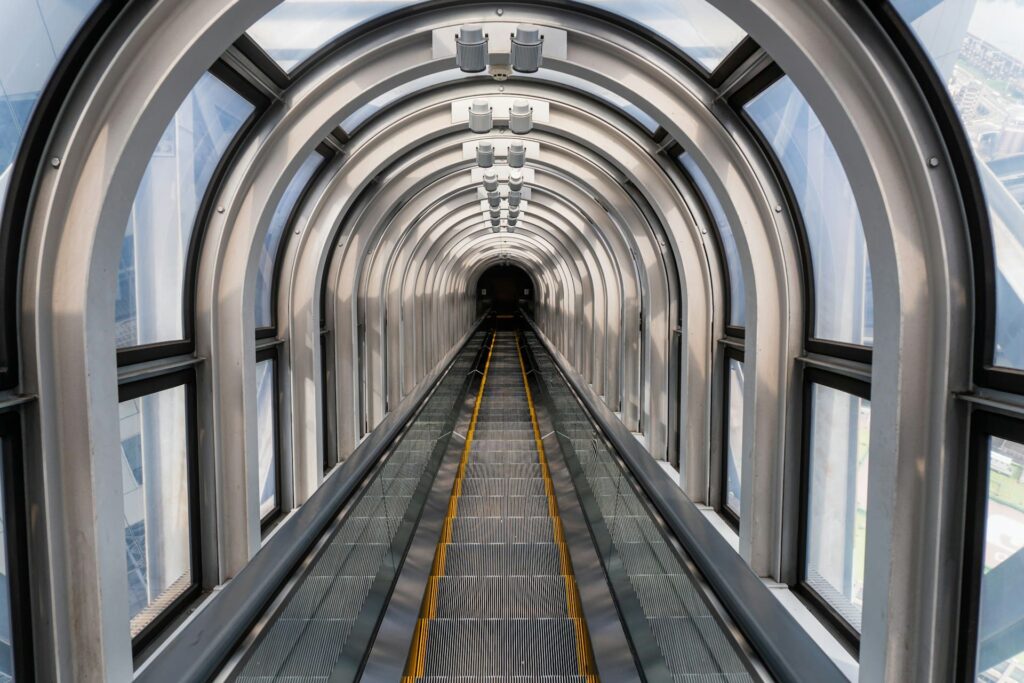
Osaka has taller observation decks, but the Umeda Sky Building is still one of the city’s most memorable viewpoints because of its floating escalator, retro-futuristic architecture, and outdoor rooftop atmosphere.
Umeda Sky Building Sunset: Best Time to Arrive
The most important question is simple: what time should you arrive for sunset? The safe answer is 45 to 60 minutes before sunset. This gives you time to reach the ticket and entrance area on the 39th floor, scan or buy your ticket, take the elevator and escalator up, and find a good viewing spot before the sky starts changing color.
Approximate Sunset Times by Season
| Season | Approximate Sunset in Osaka | Recommended Arrival |
|---|---|---|
| Summer, especially June–July | Around 19:00–19:15 | Around 18:00–18:30 |
| Spring and autumn | Around 17:30–18:00 | Around 16:30–17:15 |
| Winter, especially December–January | Around 16:50–17:00 | Around 15:45–16:15 |
These are only seasonal guidelines. Always check the exact sunset time for Osaka on your travel date, because the difference between summer and winter is huge. Weather also matters: a cloudy evening can still be beautiful, but the classic orange sunset is never guaranteed.
What You Can See with One Ticket
Arriving before sunset lets you enjoy three different views without leaving the observatory:
- Daylight view: You can see the Yodo River, the city grid, surrounding mountains, and Osaka’s dense urban landscape.
- Golden hour: The sky may turn warm shades of orange, pink, and gold as the sun drops toward the horizon.
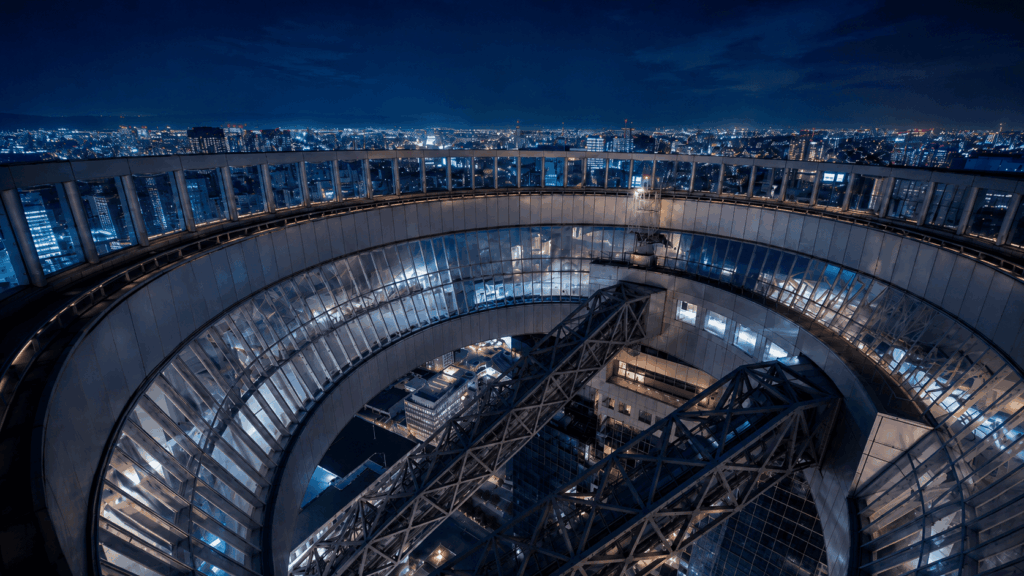
- Night view: After dark, the city lights come on and the rooftop’s Lumi Sky Walk creates a glowing, star-like pathway under your feet.
In normal operation, visitors can usually stay long enough to enjoy both sunset and the night view. However, special business days, events, crowd control, or facility operations may have different rules, so check the latest information before visiting on major event days.
Umeda Sky Building Ticket Prices and Pass Rules
Standard Admission
As of June 2026, standard Kuchu Teien Observatory admission is as follows:
| Category | Price |
|---|---|
| Adults | 2,000 JPY |
| Children, ages 4–12 | 500 JPY |
| Children under 4 | Free |
Standard admission includes access to the indoor observation floor and the open-air rooftop deck when the rooftop is open. Opening hours, ticket prices, special business days, and entry rules can change, so check the official Umeda Sky Building website or your selected booking page before visiting.
Should You Buy Tickets in Advance?
For a sunset visit, buying a ticket in advance is usually a smart move. The sunset slot is one of the busiest times of day, and buying online can help reduce the time you spend at the ticket counter.
Advance tickets do not control the weather, crowds, or rooftop conditions, but they can reduce one source of stress: the ticket-purchase line.
For an evening visit, compare Umeda Sky Building ticket options, current pricing, and traveler reviews before you go.
Can You Use the Osaka Amazing Pass or Osaka e-Pass?
As of June 2026, official pass information states that Osaka Amazing Pass and Osaka e-Pass holders can enter the Umeda Sky Building Kuchu Teien Observatory for free from 9:30 to 15:00. From 15:00 to 22:00, presenting the pass generally gives a 10% admission discount instead of free entry.
This is important for sunset visitors. Since most sunset visits happen after 15:00, you should not assume your pass gives free entry in the evening. Treat it as a possible discount and check the latest pass conditions before finalizing your plan.
Umeda Sky Building vs. Abeno Harukas: Which One Should You Choose?
If you have limited time in Osaka, you may be deciding between the Umeda Sky Building and HARUKAS 300 at Abeno Harukas. Both offer excellent views, but the experience is very different.
| Feature | Umeda Sky Building | Abeno Harukas / HARUKAS 300 |
|---|---|---|
| Main appeal | Open-air rooftop and unique architecture | Very high indoor observatory with wide city views |
| Adult same-day ticket | 2,000 JPY | 2,000 JPY |
| Height | About 173 m | About 300 m building height |
| Viewing style | Indoor floor plus outdoor rooftop | Mostly indoor, climate-controlled viewing |
| Photography | Good for reducing window-glare issues on the open-air rooftop | Excellent height, but glass reflections can appear at night |
| Weather | Rooftop may close in heavy rain or other unsafe weather conditions | More reliable in bad weather because the main observatory is indoors |
| Best area fit | Kita / Umeda / Osaka Station | Tennoji / Abeno / southern Osaka routes |
| Best for | Outdoor atmosphere, sunset, photography, architecture | Height, comfort, rainy days, wide indoor views |
The adult same-day ticket price is similar, but family pricing differs. HARUKAS 300 has separate ticket categories for adults, ages 12–17, ages 6–11, and ages 4–5, while Umeda Sky Building uses a simpler adult and child structure. Families should check the latest official ticket categories before choosing.
Choose Umeda Sky Building If…
- You want an open-air, wind-in-your-hair viewpoint.
- You love photography and want to avoid shooting only through indoor glass.
- You are already spending the afternoon or evening around Umeda or Osaka Station.
- You care as much about the building’s architecture as the view itself.
Choose Abeno Harukas If…
- You want one of Osaka’s highest observation experiences.
- You prefer a fully indoor, climate-controlled environment.
- The weather forecast is bad and you do not want to risk an outdoor rooftop closure.
- Your itinerary is focused on Tennoji, Abeno, or the southern side of Osaka.
If HARUKAS 300 sounds like a better match for your route, you can check HARUKAS 300 ticket details, current prices, and reviews before deciding between the two observatories.
Practical Tips for a Smooth Sunset Visit
Expect the Sunset Slot to Be Busy
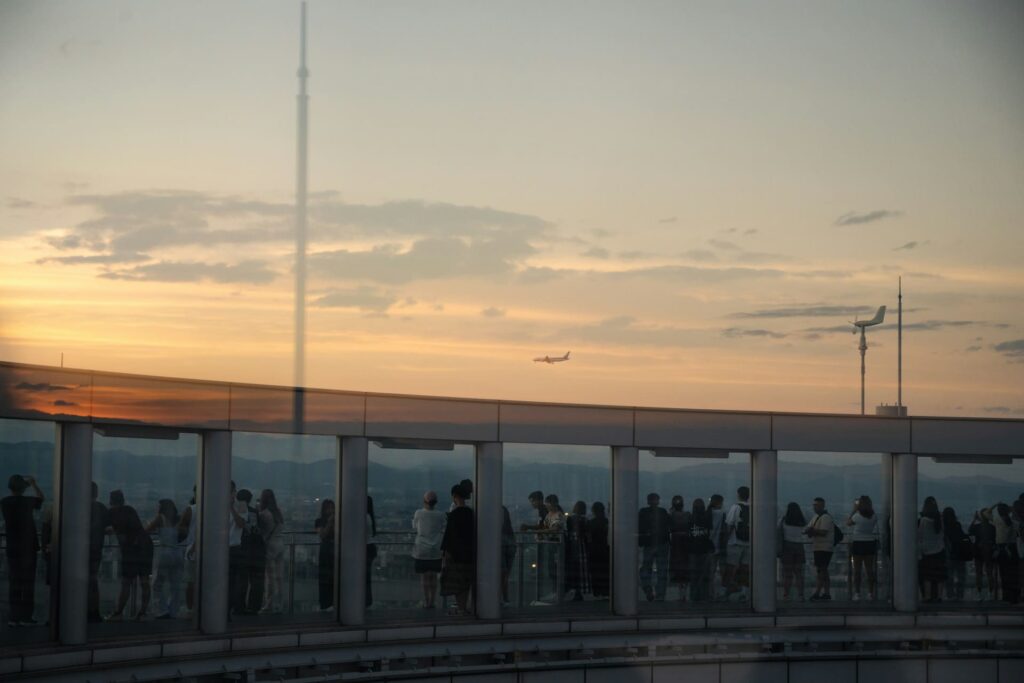
The period from about 30 minutes before sunset to 30 minutes after sunset is usually the busiest part of the day. Weekends, Japanese holidays, cherry blossom season, Golden Week, autumn foliage season, and clear evenings can all make the rooftop feel more crowded.
If sunset is your priority, aim for the earlier side of the 45 to 60 minute window. It is better to arrive a little early than to reach the top just as the best color is disappearing.
Getting There from Osaka Station
Official access guidance and tourism information place the Umeda Sky Building within walking distance of JR Osaka Station, but first-time visitors should allow around 10 to 15 minutes. Umeda and Osaka Station can be confusing, and the route may take longer if you choose the wrong exit, walk with luggage, or visit during evening crowds.
- Head toward the north side of JR Osaka Station.
- Use Grand Front Osaka as your main landmark.
- Follow signs for the Umeda Sky Building or Shin Umeda City.
- Allow extra time if you are navigating with children, luggage, or during peak evening hours.
Pedestrian routes around Umeda can change due to construction and redevelopment, so follow the latest station signs and map directions on the day of your visit.
What to Bring
- An extra layer: The rooftop is exposed and can feel much colder and windier than street level, especially after sunset.
- Secure pockets or a small bag: Hats, scarves, tickets, and loose items can be difficult to manage in strong wind.
- A phone or camera with night mode: The night view is beautiful, but low-light photos are easier with a steady hand and night-mode settings.
- Cash or a backup payment method: Payment methods can change by ticket type or counter operation, so it is sensible to carry some cash in Japan.
Tripods and Photography Etiquette
The rooftop is popular with photographers, but space can be limited at sunset. Small cameras and smartphones are the easiest option. Tripod rules may depend on crowd levels and facility policy, so do not rely on being able to set up a large tripod during the busiest time.
For the best chance of clear photos, arrive early, avoid blocking the walking path, and be patient as people move in and out of the viewing areas.
What Happens If the Weather Is Bad?
The open-air rooftop may close during heavy rain or other unsafe weather conditions. If that happens, you can usually still enjoy the indoor observation area, but the outdoor rooftop experience is not guaranteed.
Rainy evenings are not always a total loss. Visibility may be lower, but Osaka’s lights reflecting on wet streets can create a moody night-view atmosphere. However, if your main goal is a clear sunset photo, check the forecast before you commit to a specific evening.
Bonus: Plan Your Evening Around Umeda
A sunset visit works well as the start of an easy evening in Umeda. After the view, you can stay nearby for dinner instead of rushing across the city.
- Takimi Koji: Located in the basement area of the Umeda Sky Building complex, this retro-style dining street is convenient after your visit.
- Grand Front Osaka: A large shopping and dining complex near Osaka Station, useful if you want more restaurant choices.
- Umeda shopping area: Department stores, underground malls, and station-area restaurants make it easy to continue the evening indoors.
Simple evening flow: arrive 45 to 60 minutes before sunset → enjoy the daylight, sunset, and night view → have dinner around Takimi Koji or Grand Front Osaka → return to your hotel or continue exploring Umeda.
Frequently Asked Questions
What is the best time to visit the Umeda Sky Building?
The best time is 45 to 60 minutes before sunset. This gives you enough time to enter, reach the observation area, find a viewing spot, and enjoy the transition from daylight to night.
Can I see both the sunset and night view with one ticket?
Yes, in normal operation. One ticket usually lets you stay long enough to see both sunset and the night skyline. Special business days, private events, or unusual crowd-control operations may have different rules, so check before visiting on major event dates.
Is Umeda Sky Building worth it if I only have one day in Osaka?
Yes, if your route already includes the Kita area around Umeda and Osaka Station. If your day is focused on Minami, Namba, or Dotonbori, visiting Umeda Sky Building just for the view may take more time than expected, so check your route carefully.
Is the Umeda Sky Building good for families?
It can be a good family stop, especially for children who enjoy elevators, escalators, city views, and outdoor spaces. However, the rooftop can be windy and crowded, so keep children close and secure loose items.
Can I use a stroller or wheelchair?
The building is generally accessible, but routes, elevators, ticket procedures, and rooftop conditions can vary by situation. The official site advises wheelchair users to take the high-floor elevator from the first floor of Tower East. If stroller or wheelchair access is essential for your trip, check the latest official accessibility information before visiting.
Can I use the Osaka Amazing Pass for a sunset visit?
Usually yes, but not always as free admission. As of June 2026, official pass information states that Osaka Amazing Pass holders can enter free until 15:00 and receive a 10% discount after 15:00. Since sunset visits are usually after 15:00, check the current pass rules before assuming free entry.
Can I use the Osaka e-Pass for a sunset visit?
Usually yes, but the evening rule is similar to the Osaka Amazing Pass. As of June 2026, Osaka e-Pass holders can enter free until 15:00, while entry after 15:00 is generally discounted rather than free. Always check the latest e-Pass facility list before visiting.
Is the rooftop open if it rains?
Not always. The rooftop may close in heavy rain or other unsafe weather conditions. The indoor observation area may still be available, but the open-air rooftop experience is not guaranteed.
Final Verdict: Is the Umeda Sky Building Sunset Worth It?
Yes, the Umeda Sky Building sunset is worth it for most travelers, especially if you time it well and the weather cooperates.
Choose Umeda Sky Building If…
- You want an outdoor rooftop view rather than a fully indoor observatory.
- You enjoy photography and want fewer window-glare problems than indoor-only viewpoints.
- You are already planning to spend the late afternoon or evening in Umeda.
- You want an Osaka attraction that combines architecture, views, and atmosphere.
Consider Another Option If…
- You strongly prefer indoor, climate-controlled viewpoints.
- The forecast calls for heavy rain or unsafe weather conditions.
- Your itinerary is entirely around Namba, Dotonbori, or southern Osaka and you are short on time.
- Your main goal is maximum height rather than outdoor atmosphere.
For first-time visitors, the best plan is simple: check the sunset time, arrive 45 to 60 minutes early, stay until the city lights come on, then have dinner nearby in Umeda.
Once your timing is set, check the latest Umeda Sky Building ticket availability, prices, and reviews before finalizing your evening plan.
Prices, opening hours, pass conditions, ticket rules, access routes, payment methods, rooftop operations, weather policies, and special business days can change. Always check official sources and your selected booking page before finalizing your trip.

Hi, I’m Kai. I’m a Tokyo-based travel writer, tourism industry insider, and the author of a published guidebook for international visitors to Japan. With over 10 years of professional experience at a leading Japanese tourism company, my mission is to help you skip the tourist traps and navigate Japan’s best destinations like a local. I believe the perfect day trip is like a traditional kaiseki meal: a beautiful balance of precise planning and unforgettable seasonal discovery. When I’m not out conducting field research, you’ll usually find me drafting new itineraries with one of my favorite fountain pens!