
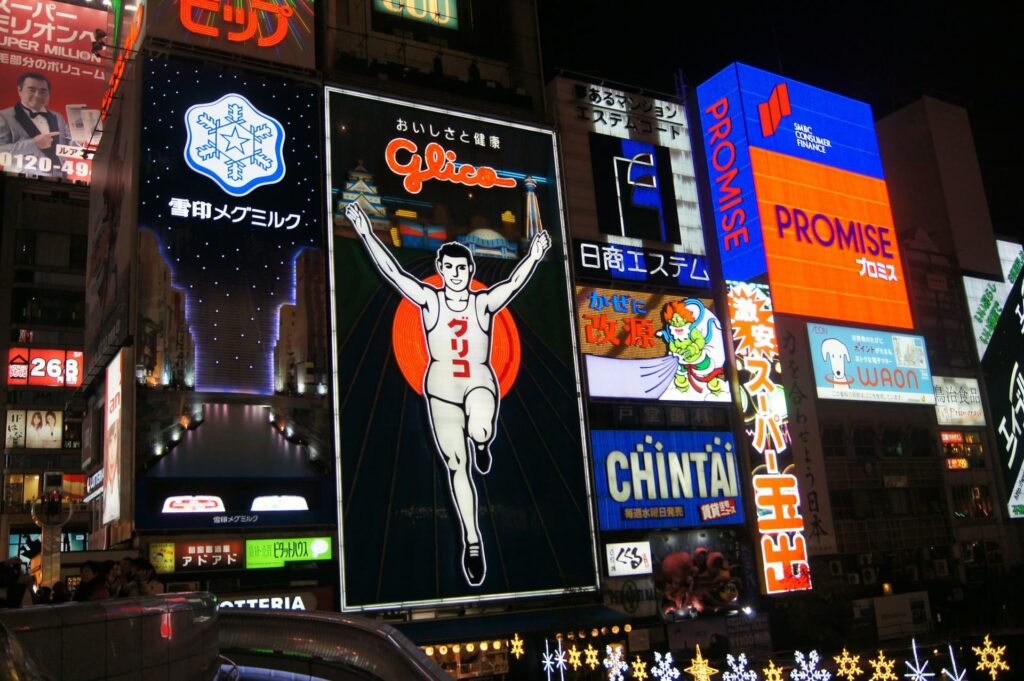
Osaka’s Dotonbori district is famous for one thing above all: eating until you drop — Kuidaore. But with crowded walkways, limited public trash cans, busy food counters, and local etiquette around eating in public, first-time visitors can feel overwhelmed before they even take a bite.
This guide covers the five street foods you should try in Dotonbori, where to look for them, how much to budget, and the local rules that will help you enjoy Osaka’s food scene without awkward moments.
Quick Answer: Osaka Street Food Essentials
- What to eat: Takoyaki, kushikatsu, okonomiyaki, 10-yen cheese bread, and melon pan with ice cream.
- Main etiquette rule: In crowded areas like Dotonbori, avoid eating while walking. Step aside and eat near the shop where you bought the food.
- Trash rule: Public bins are limited. Return packaging to the shop when possible, or carry a small bag for your trash.
- Payment tip: Carry cash, especially 100-yen and 500-yen coins. Some small counters and older casual shops may not accept cards.
- Best for first-timers: Dotonbori is ideal if you want neon lights, famous snacks, and many food options within a short walk.
If this is your first night in Osaka and you want help choosing what to try without managing every stop yourself, it may be worth comparing a short Dotonbori and Namba food walk before finalizing your evening plan.
👉 Check current availability, inclusions, food costs, and reviews for a Dotonbori and Namba food walk
Is Dotonbori the Best Place for Osaka Street Food?
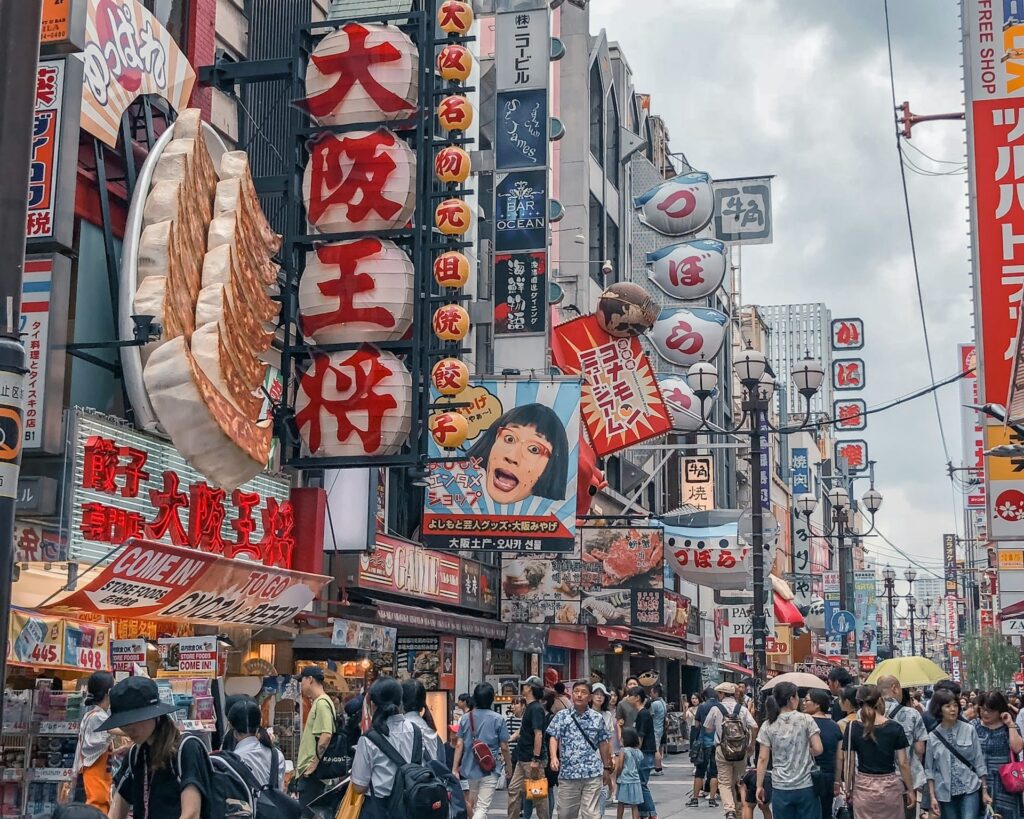
Yes — especially for first-time visitors. Dotonbori and nearby Namba offer one of Osaka’s easiest and most exciting food-hopping experiences, with neon signs, canal views, walk-up snack counters, casual restaurants, takeout windows, and famous food shops packed into a small area.
That said, Dotonbori is not the only food district worth visiting. Each Osaka food area has a slightly different strength.
Choose Dotonbori if: you want the classic Osaka night-food atmosphere, big signboards, crowds, photo spots, and lots of choices within a 10-minute walk. It is especially convenient for first-time visitors staying near Namba or Shinsaibashi.
Choose Shinsekai if: kushikatsu is your priority. Shinsekai is strongly associated with deep-fried skewers and has a retro Osaka atmosphere around Tsutenkaku Tower. For more planning help, read our full Shinsekai guide.
Choose Kuromon Ichiba Market if: you prefer daytime eating, seafood, grilled snacks, and a covered market atmosphere. Individual shop hours vary, so it is better for lunch or daytime snacking than late-night eating. See our Kuromon Market review for details.
5 Must-Try Osaka Street Foods in Dotonbori
You could spend a full evening hopping from shop to shop, but these five foods are the best starting point for most visitors. Prices and menus change, so use the ranges below as planning estimates rather than fixed guarantees.
1. Takoyaki
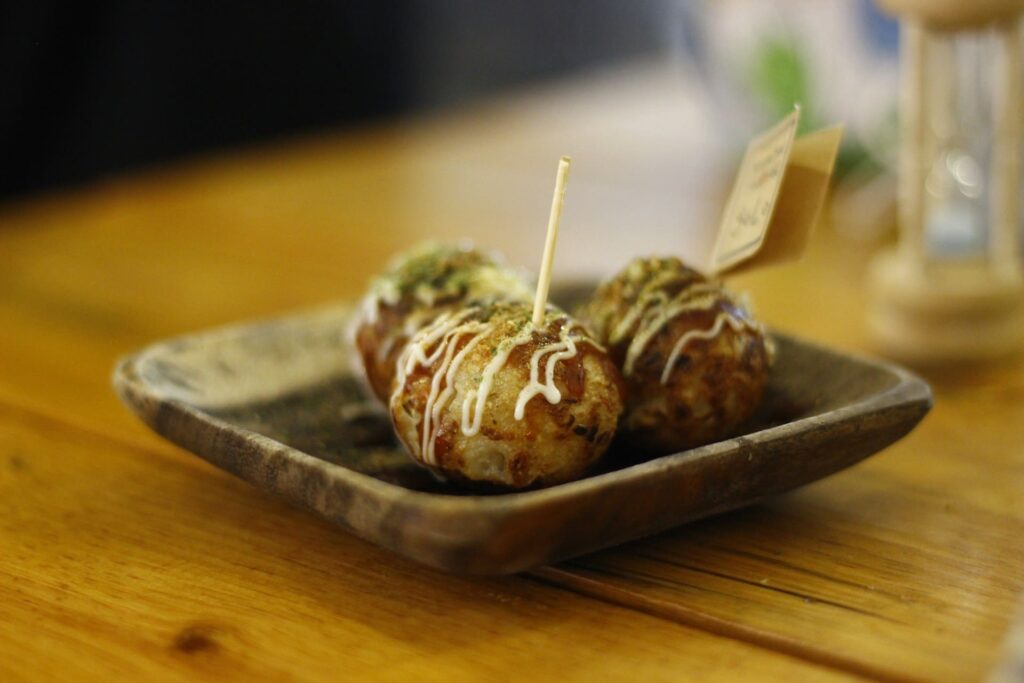
If you eat only one thing in Osaka, make it takoyaki. These round, molten balls of batter are usually filled with diced octopus, pickled ginger, and green onion, then topped with sweet sauce, mayonnaise, dried seaweed, and bonito flakes.
Where to look in Dotonbori: Popular takoyaki options around Dotonbori and Namba include shops such as Takoyaki Juhachiban and Takoyaki Wanaka. Menus, portion sizes, and prices can vary by branch, so check the current board before ordering.
Budget version — takosen: For a cheaper and less messy snack, look for takosen. This is usually takoyaki pressed between large savory crackers. It gives you the takoyaki flavor in a crisp, portable format, though you should still step aside and eat it near the shop.
Best for: First-time visitors, solo eaters, and anyone who wants the most iconic Osaka street food experience.
2. Kushikatsu
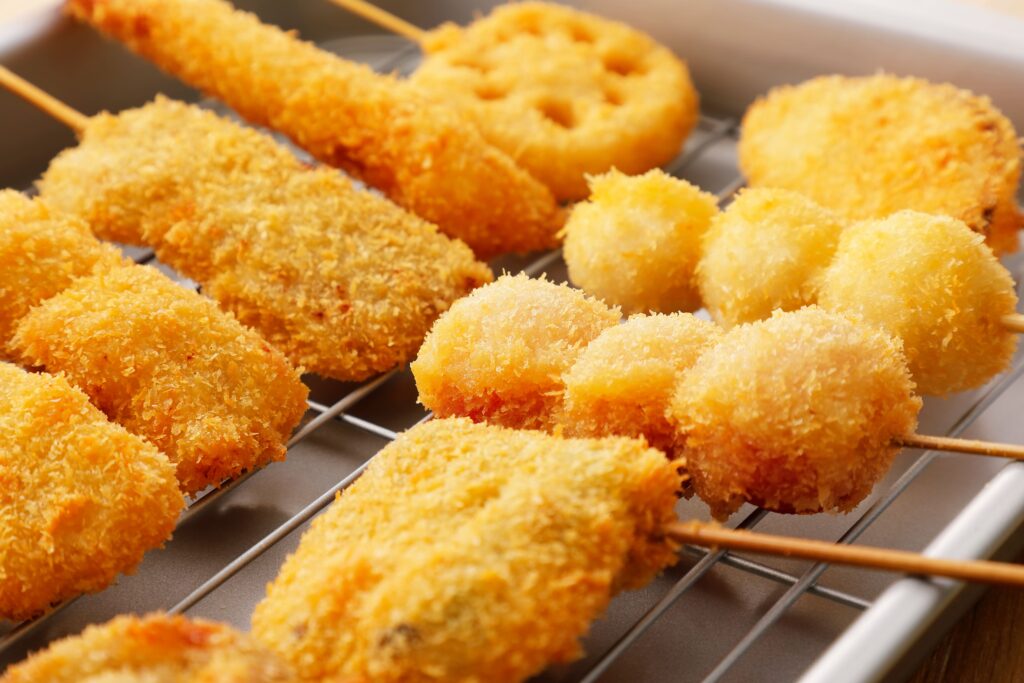
Kushikatsu is Osaka comfort food: meat, seafood, vegetables, or cheese skewered on bamboo sticks, coated in breadcrumbs, and deep-fried until crisp. Common choices include beef, shrimp, lotus root, onion, quail egg, and camembert cheese.
Where to look in Dotonbori: Kushikatsu Daruma is one of the most recognizable names in Osaka, and its Dotonbori-area branches are easy for visitors to find. Shinsekai remains the classic kushikatsu district, but Dotonbori is more convenient if you are already exploring Namba at night.
Etiquette note: Some kushikatsu restaurants use individual sauce containers, while others may have different serving systems. If a shared sauce setup is used, do not dip a skewer again after biting it. Follow the staff’s instructions, and use any provided cabbage or spooning method if you need more sauce.
Best for: Groups, meat lovers, casual drinkers, and anyone who wants a quick but satisfying Osaka snack.
If kushikatsu is a priority and you want to compare Dotonbori with Shinsekai in one guided route, check current availability, inclusions, food stops, and reviews for a combined Dotonbori and Shinsekai food tour before locking in your plans.
3. Okonomiyaki
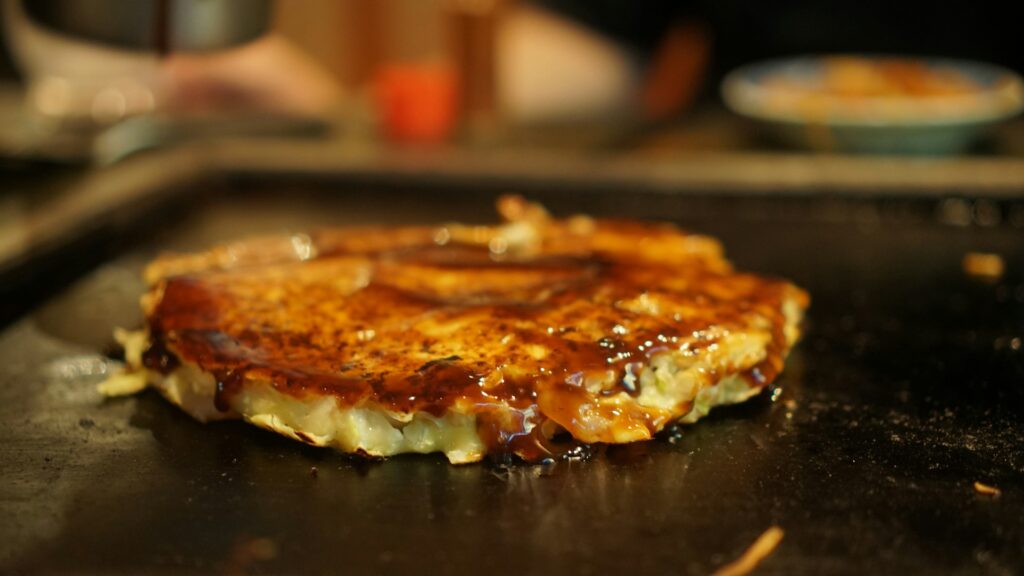
Okonomiyaki is often described as a Japanese savory pancake, but that undersells it. A batter of flour, eggs, grated yam, and shredded cabbage is mixed with ingredients such as pork, squid, shrimp, or cheese, then cooked on a hot iron griddle and finished with sauce, mayonnaise, seaweed, and bonito flakes.
Where to look in Dotonbori: Chibo and Ajinoya are two well-known okonomiyaki names in the Dotonbori and Namba area. Expect queues at popular times, especially for sit-down restaurants with canal-side or central locations.
Dietary note: Okonomiyaki can be difficult for travelers with strict dietary needs because batter, sauces, toppings, and dashi can include wheat, eggs, fish, pork, or seafood. Shared grills and fryers are also common. For Muslim-friendly, vegetarian, or allergy-related needs, check current menus and reservation details in advance.
As of June 2026, CHIBO Diversity Dotonbori is listed by CHIBO as a Muslim & Vegetarian Friendly branch, but opening hours, reservation rules, and menu details can change, so check the official page before visiting. Do not assume every CHIBO branch has the same dietary options.
For more help avoiding hidden ingredients, read our Osaka vegetarian and gluten-free guide.
Best for: Groups, sit-down dining, and anyone who wants a proper meal rather than only snacks.
4. 10-Yen Cheese Bread
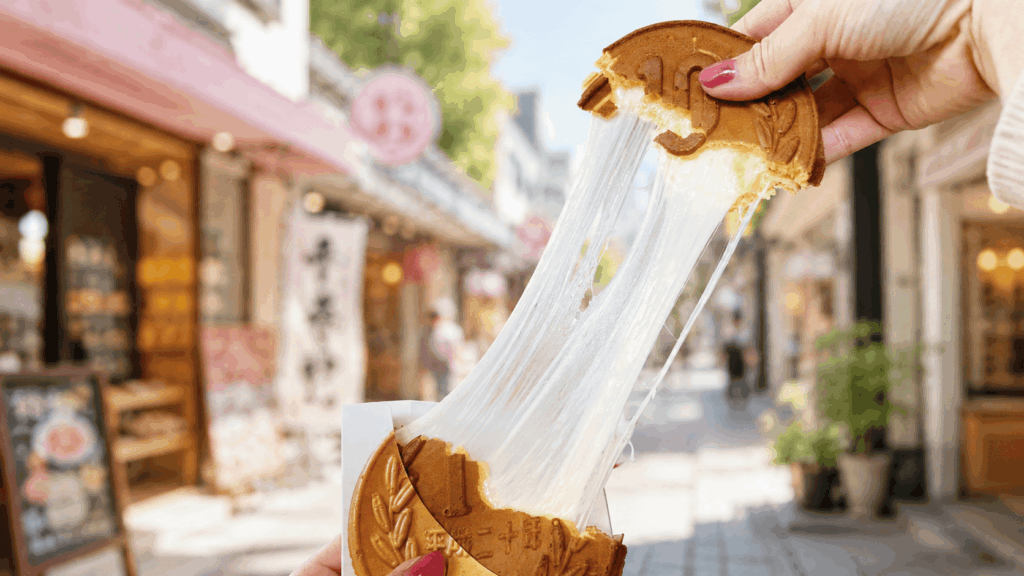
Despite the name, 10-yen cheese bread does not cost 10 yen. The name refers to the shape, which resembles Japan’s 10-yen coin. Break open the warm, waffle-like bread and you will find a stretchy mozzarella-style cheese filling inside.
Where to look in Dotonbori: You can find 10-yen cheese bread around the canal and main tourist streets, including shops such as King Cheese 10 Yen Bread & Chocolate Churros. Shops and menus can change, so look for the coin-shaped signage and check the current price before ordering.
Best for: Cheese lovers, social media photos, and anyone who wants a sweet-and-salty snack between savory dishes.
5. Melon Pan with Ice Cream
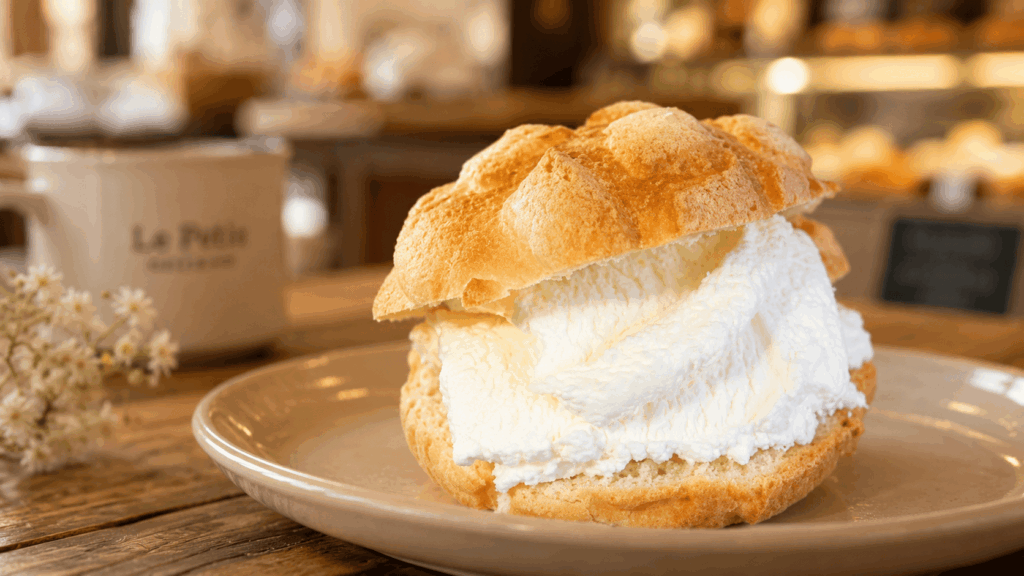
Melon pan is a sweet Japanese bun with a crisp, cookie-like exterior. Around tourist areas, you may find versions sliced open and filled with vanilla, matcha, or other ice cream flavors. The contrast between warm bread and cold ice cream makes it a fun dessert after salty snacks like takoyaki and kushikatsu.
Where to look in Dotonbori and Namba: Small carts, dessert counters, and bakery-style shops sometimes sell melon pan with ice cream around the main shopping and food streets. Availability can vary by season and shop, so treat it as a bonus dessert rather than a guaranteed stop.
Best for: Dessert lovers, hot days, and travelers who want something simple after a heavy meal.
Dotonbori Street Food Etiquette: Rules Tourists Should Know
Knowing what to eat is only half the battle. Dotonbori is busy, narrow in places, and packed with people taking photos, queueing, and carrying hot food. A few simple etiquette rules will make your evening much smoother.
Rule 1: Do Not Walk While Eating
In many countries, street food means eating while walking. In Japan, especially in crowded places, it is better to avoid eating while moving. In Dotonbori, this is partly about manners and partly about safety. Hot sauce, skewers, and crowded walkways are not a good combination.
What to do instead: After buying food, step to the side and eat near the shop where you ordered. Many popular places have a small standing area for customers. Finish your food, return any packaging if possible, and then continue walking.
Rule 2: Return Trash to the Shop When Possible
Public trash cans are limited in many parts of Japan, including busy tourist areas. Do not leave trays, wrappers, cups, or skewers on vending machines, benches, ledges, or the ground.
What to do instead: Return empty containers and skewers to the vendor when possible. If you leave the area with food packaging, carry a small plastic bag and dispose of your trash later at an appropriate bin, such as at your accommodation or where permitted.
Rule 3: Carry Cash and Coins
Japan has become much more card- and mobile-payment friendly, but small food counters and older casual shops may still prefer cash or accept cash only. Even when cards are accepted, coins make small snack purchases faster.
What to do instead: Carry a mix of 100-yen and 500-yen coins, plus a few 1,000-yen bills. Avoid paying for a small snack with a 10,000-yen bill unless you have no other option.
Rule 4: Queue Neatly and Do Not Block the Street
Popular shops can have long lines, especially around dinner. Watch where the queue forms and avoid standing in the middle of the walkway. If you are not sure where to line up, look for signs, staff instructions, or where other customers are waiting.
Best Time to Visit Dotonbori for Street Food
Dotonbori is lively throughout the day, but the atmosphere changes depending on when you visit. Exact opening hours vary by shop, so always check the current hours for any specific restaurant you do not want to miss.
- Late morning to early afternoon: Better for lighter crowds and easier photos, though not every food shop may be open yet.
- Evening: Best for the classic neon-lit Dotonbori atmosphere. This is also when crowds are heavier.
- Weekend nights and public holidays: Expect the busiest conditions, especially around Ebisubashi Bridge, the Glico sign, and the main canal area.
- Late evening: Some places stay open late, but hours vary widely. Do not assume every shop will still be serving after dinner time.
Rainy Day Plan for Dotonbori Food Hopping
The main canal-side streets in Dotonbori are not fully covered, so rain can make food hopping less comfortable. If the weather turns bad, you still have good options nearby.
- Namba Walk: An underground shopping area connected to Namba Station with casual food options and shelter from rain.
- Shinsaibashi-suji Shopping Street: A covered arcade near Dotonbori with shops, cafes, and snack options.
- Department store food halls: Nearby department store basements in Namba and Shinsaibashi are useful for high-quality takeaway food when you want to stay dry.
- Sit-down okonomiyaki or kushikatsu restaurants: A rainy evening can be a good excuse to choose one proper meal instead of hopping between outdoor counters.
DIY vs Guided Food Tour: Which Is Better?
Osaka street food is easy to explore on your own, especially in Dotonbori. But a guided food tour can reduce decision stress, help with etiquette, and make it easier to understand what you are eating.
| Factor | DIY Street Food Hopping | Guided Food Tour |
|---|---|---|
| Cost | Usually cheaper; around 2,000–3,000 JPY can cover several snack-sized items | Higher; prices vary by date, platform, inclusions, and group size |
| Time needed | Flexible; 1.5–3 hours works for most visitors | Usually a fixed route of around a few hours |
| Decision-making | You choose what looks good | The guide chooses or pre-plans the route |
| Language barrier | Pointing and simple English often work, but ingredient details may be limited | The guide can explain ingredients, history, and etiquette |
| Queues | You wait with everyone else | Some tours may pre-arrange stops, but this is not guaranteed |
| Dietary restrictions | You must check menus and ingredients yourself | A guide may help communicate needs, but you should confirm in advance |
| Best for | Budget travelers, confident eaters, repeat visitors | First-timers, short stays, families, and overwhelmed travelers |
If you are visiting Osaka for the first time, have only one evening in Dotonbori, or want to try several local foods without overthinking every stop, compare current start times, food inclusions or extra food costs, prices, cancellation rules, and reviews for a guided Dotonbori and Namba food walk before your trip.
How Much Should You Budget for Osaka Street Food?
Osaka street food can be very affordable compared with a full restaurant meal. Exact prices vary by shop, portion size, and season, but these ranges are useful planning estimates for a casual Dotonbori food walk.
- Takoyaki: around 500–800 JPY for a small tray, depending on portion size and shop
- Takosen: often a few hundred yen
- Kushikatsu: basic skewers are often a few hundred yen each, with premium items costing more
- Okonomiyaki: usually more like a full meal than a snack, often around 1,000 JPY or more depending on toppings
- 10-yen cheese bread: usually several hundred yen, often around 500 JPY despite the name
- Melon pan with ice cream: often several hundred yen, depending on the shop and filling
For a self-guided evening, budgeting around 2,000–3,000 JPY per person is a reasonable estimate if you want to try 4–5 snack-sized items. Add more if you plan to sit down for okonomiyaki, order drinks, or choose premium seafood or meat items.
For a broader trip estimate, see our Osaka budget guide.
Frequently Asked Questions
Is it rude to eat while walking in Osaka?
In crowded places like Dotonbori, it is better not to eat while walking. Step aside, eat near the shop where you bought the food, and then continue walking. This is safer and more respectful in busy areas.
Where do I throw away my trash in Dotonbori?
Return food packaging, trays, and skewers to the vendor when possible. Public trash cans are limited, so carry a small bag in case you need to hold your trash until you find an appropriate bin or return to your hotel.
Do I need cash for street food in Osaka?
Yes, cash is still very useful. Larger restaurants and chains may accept cards or mobile payments, but small counters may be cash-only or cash-preferred. Carry 100-yen and 500-yen coins for quick snack purchases.
What time do street food shops open in Dotonbori?
Hours vary by shop. Many food places are active from late morning through evening, but some open later, close earlier, or change hours by day. If there is a specific shop you care about, check its current opening hours before going.
Is Osaka street food suitable for vegetarians or people with allergies?
It can be challenging. Many popular foods contain fish-based dashi, wheat, egg, pork, seafood, or bonito flakes. Shared grills and fryers are also common. Travelers with strict dietary needs should research in advance, use allergy cards in Japanese, and read our Osaka vegetarian and gluten-free guide before visiting.
Can I bring children to Dotonbori street food shops?
Yes, but plan carefully. Dotonbori can be crowded, seating is limited, and many snacks are eaten while standing. Families often do better earlier in the evening before the heaviest dinner crowds. Strollers are possible on main streets but can be difficult in narrow alleys or dense crowds.
What happens if I accidentally double-dip kushikatsu?
If a restaurant uses a shared sauce system, do not dip a bitten skewer back into the sauce. Staff may correct you because it is a hygiene issue. If you need more sauce, follow the restaurant’s instructions or use any provided cabbage or spooning method.
Final Verdict: Who Should Eat Their Way Through Dotonbori?
Choose DIY street food hopping if: you are on a budget, like spontaneous decisions, and have at least a couple of hours to explore. Dotonbori is easy to navigate on your own, and part of the fun is choosing what looks good in the moment.
Choose a guided food tour if: you are visiting Osaka for the first time, have only one evening, want help understanding ingredients and etiquette, or feel overwhelmed by the number of choices. A guide can make the experience smoother, especially if you want context rather than just snacks.
For families: Self-guided is doable if you visit earlier, keep the route short, and avoid peak crowds. A small-group or private tour may be easier if you want someone else to handle logistics, ordering, and pacing.
For travelers with dietary restrictions: Do extra research before going. A guided tour may help with communication, but you should still confirm dietary requests with the provider in advance and avoid assuming substitutions are possible at every stop.
For repeat visitors: Skip the basic route and explore side streets around Namba, Hozenji Yokocho, Shinsekai, or Kuromon instead. Dotonbori is fun, but Osaka’s food scene is much bigger than the main canal strip.
Dotonbori is loud, crowded, bright, and slightly chaotic — which is exactly why it is one of the best places to experience Osaka food culture. Now you know what to order, where to stand, how to handle your trash, and when a guided tour might be worth it, you can enjoy the city’s Kuidaore spirit with much more confidence.
Prices, opening hours, menus, payment methods, dietary options, tour inclusions, food costs, cancellation rules, and shop operations can change. Always check official sources and your selected booking page before finalizing your trip.

Hi, I’m Kai. I’m a Tokyo-based travel writer, tourism industry insider, and the author of a published guidebook for international visitors to Japan. With over 10 years of professional experience at a leading Japanese tourism company, my mission is to help you skip the tourist traps and navigate Japan’s best destinations like a local. I believe the perfect day trip is like a traditional kaiseki meal: a beautiful balance of precise planning and unforgettable seasonal discovery. When I’m not out conducting field research, you’ll usually find me drafting new itineraries with one of my favorite fountain pens!