
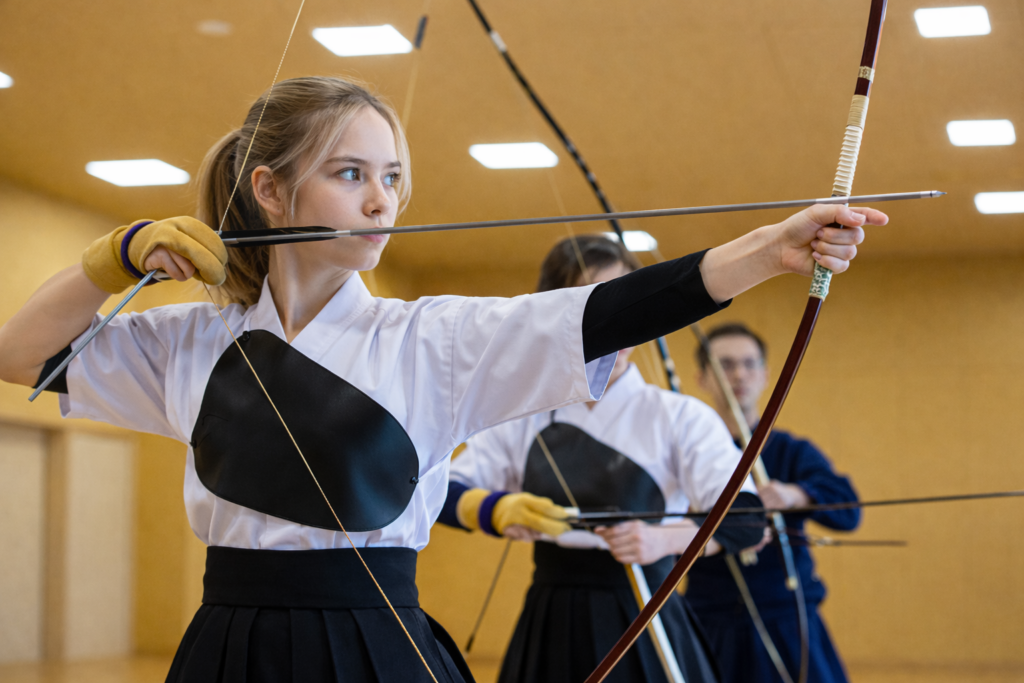
Can Tourists Try Japanese Archery in Tokyo?
Yes. Tourists can try an authentic Japanese Archery Experience, or Kyudo, in Tokyo, even if they have never held a bow before. While regular Kyudo dojos are usually difficult for short-term visitors to access, this guided experience is designed for international travelers who want a real introduction to the Way of the Bow.
You do not need your own equipment or previous archery experience. The session usually includes English instruction, rental of the traditional kyudogi uniform, bow and arrows, and supervised practice in a proper Kyudo setting.
This guide is based on tour and operator information checked in June 2026. Details such as price, availability, meeting point, age rules, and cancellation policies can change, so always confirm the latest details on your selected booking page before you reserve.
What Should You Know at a Glance?
| Question | Answer |
|---|---|
| Can beginners join? | Yes. The experience is designed for first-timers and curious archers alike. |
| How long does it take? | The main guided Kyudo experience usually lasts about 2.5 hours, though some shorter archery-style alternatives exist. |
| Is English available? | Yes. English instruction is normally included for this visitor-focused experience. |
| Is equipment included? | Yes. The bow, arrows, and traditional kyudogi uniform are usually included. |
| Where is the dojo? | The exact dojo location is usually provided after booking. Do not assume Tokyo Station itself is the final meeting point. |
| Who cannot join? | Age rules vary by platform. Some listings allow guests aged 13+, while others may require participants to be 18+. Wheelchair users and anyone unwell on the day may not be able to participate. |
| How much does it cost? | Prices vary by platform, date, and availability. As of June 2026, listings for the main Tokyo Kyudo experience commonly start from around ¥16,000–¥20,000 per person. |
| Can I cancel? | Cancellation policies vary widely by booking platform. Some listings may be non-refundable, so check the policy before paying. |
Is This Tokyo Kyudo Experience Worth Booking in 2026?
For most first-time visitors, yes, this Japanese archery experience is worth booking if you want a hands-on cultural activity that feels more focused and traditional than a simple photo stop.
The main value is access. A regular Kyudo dojo in Tokyo is not usually set up for walk-in tourists, especially if you do not speak Japanese or cannot commit to ongoing lessons. This guided session gives you a structured way to wear the uniform, learn the basic etiquette, practice the form, and shoot under supervision in a single visit.
It is especially worth considering if you are interested in martial arts, Zen-inspired Japanese culture, or slower activities that require concentration rather than speed. It is less suitable if you mainly want casual photos, need a flexible schedule, require wheelchair accessibility, or are traveling with children who do not meet the age rules on your selected booking page.
Who Is It Best For?
- First-time visitors to Japan who want a deeper cultural activity than sightseeing.
- Martial arts fans who want to understand how Kyudo differs from Western archery.
- Solo travelers and couples looking for a small-group cultural experience in Tokyo.
- Mindfulness travelers interested in posture, focus, ritual, and calm movement.
Who Should Skip It?
- Travelers with tight or unpredictable schedules: Punctuality matters. Late arrivals may not be allowed to participate and may not receive a refund.
- Visitors looking only for a costume photo: This is a real practice environment, not a dress-up studio.
- Families with younger children: Age rules vary, and this specific experience may not be suitable for children.
- Travelers with mobility limitations: The dojo setting, changing process, standing posture, and bow movement may make participation difficult or unavailable.
If this sounds like the right fit for your trip, check the latest availability, price, age rules, and cancellation policy before planning the rest of your day around it.
Check Current Availability, Prices, and Booking Details
What Do Travelers Usually Like About It?
Recent traveler feedback for Tokyo Kyudo experiences is generally positive, especially from guests who want something calmer and more traditional than a standard sightseeing activity. Review counts and ratings change often, so it is better to check the live listing than rely on a fixed number.
What guests commonly praise: patient instruction, clear explanations, the chance to wear the full uniform, the quiet atmosphere of the dojo, and the feeling that the activity is more authentic than a quick photo experience.
What guests occasionally note: strict punctuality, limited flexibility once the session begins, platform-specific cancellation rules, and the fact that hitting the target is not guaranteed.
How Much Does a Tokyo Kyudo Experience Cost?
The price of a Tokyo Kyudo experience varies depending on the platform, date, exchange rate, and availability. As of June 2026, listings for the main guided Kyudo experience commonly start from around ¥16,000–¥20,000 per person, but this should be treated as a reference range, not a fixed price.
| Cost Factor | What to Check |
|---|---|
| Base price | Check the live booking page, because prices can differ by platform and date. |
| Included items | Look for English instruction, dojo use, bow and arrows, uniform rental, and taxes or fees. |
| Cancellation policy | Some listings may be non-refundable, while others may offer limited cancellation flexibility. |
| Age rules | Some platforms may list 13+, while others may require participants to be 18+. |
| Meeting point | The exact dojo location is usually sent after booking, so do not plan only around a general Tokyo reference point. |
Because the conditions vary by platform, avoid choosing based on price alone. A slightly cheaper listing may have stricter cancellation terms, a different age rule, or less flexible booking conditions.
Where Is the Dojo? Meeting Point Tips
The exact dojo location is usually provided after your booking is confirmed. Some listings may reference Tokyo Station, the Marunouchi area, or another general Tokyo landmark before reservation, but that does not necessarily mean the activity takes place at that exact spot.
For the main guided Kyudo experience, the dojo is typically in Tokyo or a nearby area and is usually reachable by train. However, the final address may vary by date and availability. Read your confirmation email carefully, check the route the night before, and leave extra time for transfers and walking from the nearest station.
This is especially important because late arrivals may not be accepted. Kyudo starts with etiquette, safety instructions, and group practice, so the instructor may not be able to restart the session for someone who arrives after the beginning.
What Happens During the 2.5-Hour Kyudo Session?
The session is designed to give beginners a safe, structured introduction to Japanese archery. The exact flow may vary slightly depending on the instructor and dojo, but most visitors can expect three main stages.
Changing into the Kyudo Uniform
Before handling the bow, you will usually change into a traditional Kyudo uniform. This often includes a white upper garment and hakama-style pleated pants. The uniform is not only for appearance. It helps create the right mindset and gives your body room to move during practice.
Uniform sizing may not fit every body type. If you are very tall, broad-shouldered, or concerned about fit, check the latest guidance on the booking page before reserving.
Learning the Basic Form
The instructor will introduce the basic posture, dojo etiquette, safety rules, and shooting sequence. You may practice the movements before using a real arrow so that you understand how to stand, draw, aim, and release safely.
Kyudo places strong emphasis on the shooting process, often explained through the eight stages of shooting, or hassetsu. You do not need to memorize these before joining, but understanding that Kyudo is about form as much as accuracy will help you enjoy the session.
Shooting Practice
Unlike a quick photo-based activity, this experience usually gives you time to practice repeatedly under supervision. You should not expect to master Kyudo in one session, and hitting the target is not guaranteed. The value is in feeling the posture, draw, focus, and release for yourself.
How Is Kyudo Different from Western Archery?
If you have tried Western archery, Kyudo will feel very different. Kyudo means the Way of the Bow, and it is usually treated less like a target sport and more like a disciplined martial art shaped by posture, etiquette, breathing, and mental focus.
- The bow is much longer: The Japanese yumi is typically over 2 meters long and has an asymmetrical shape, with the grip placed below the center.
- The draw feels different: Instead of drawing only to the chin or jaw, Kyudo involves a wider expansion that uses the back and shoulders.
- The goal is not just the target: Hitting the target matters, but Kyudo also places strong emphasis on correct form, calm movement, and intention.
- The atmosphere is more formal: You will learn how to move, stand, bow, and handle the equipment respectfully inside the dojo.
This is why Kyudo is sometimes described as standing Zen. The experience is not just about whether your arrow lands in the center. It is about how you prepare, move, focus, and release.
Guided Experience vs. Local Kyudo Dojo: Which Is Better for Tourists?
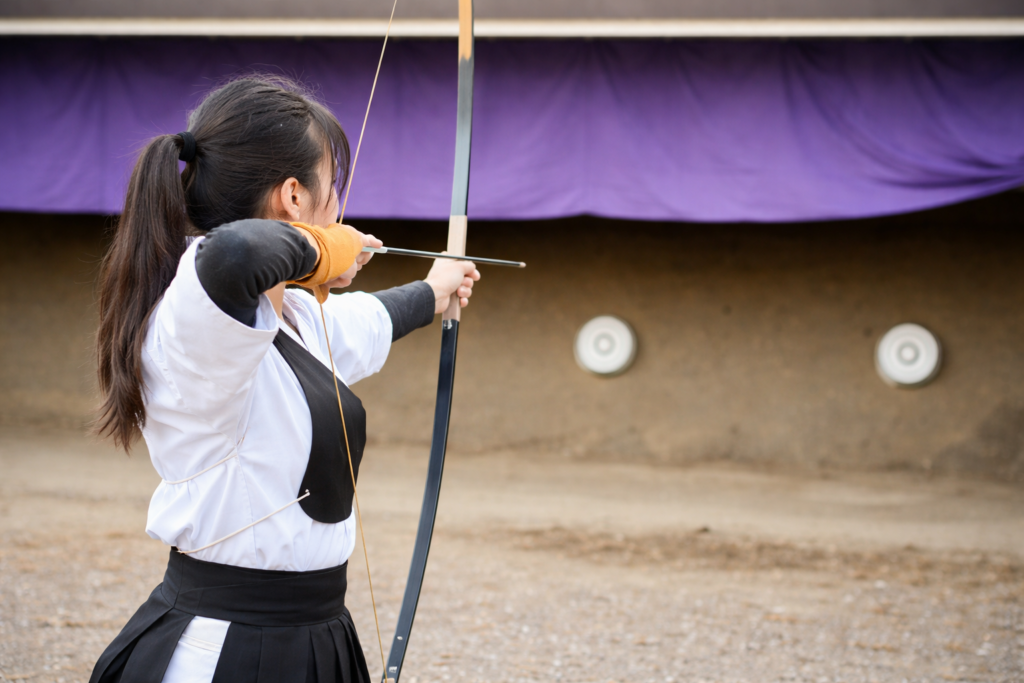
Trying to arrange Kyudo by yourself in Tokyo is difficult for most short-term travelers. Many local dojos are private clubs, school facilities, school-related facilities, or community groups. They may require membership, introductions, Japanese communication, and a longer training commitment.
A guided experience removes those barriers. You can book online, receive English instruction, use the necessary equipment, and practice in a structured session without needing to join a long-term dojo program.
| Booking Factor | Local Kyudo Dojo | Guided Kyudo Experience |
|---|---|---|
| Can tourists book online? | Usually difficult or unavailable. | Yes, designed for visitors. |
| Is English instruction available? | Usually Japanese only. | Yes, English instruction is normally included. |
| Can beginners shoot the same day? | Often no. Beginners may spend a long time on basic form first. | Yes, the session is structured so beginners can practice shooting. |
| Are uniform and equipment included? | Usually no. Members often need their own gear. | Yes, kyudogi rental and equipment are usually included. |
| Is it practical for a short Tokyo trip? | Rarely. | Yes, if you can commit to the scheduled time. |
| Best for | Residents or long-term learners. | Tourists who want a real but accessible introduction. |
Other Kyudo and Archery Options in Tokyo
The guided 2.5-hour Kyudo experience is the most complete option for travelers who want the traditional uniform, formal dojo setting, English instruction, and repeated practice. However, it is not the only bow-related activity in Tokyo.
Depending on your schedule, budget, and group composition, a shorter or more family-friendly archery option may suit you better. Treat the options below as different types of experiences, not as identical versions of the same tour.
| Experience Type | Typical Style | Best For | What to Check |
|---|---|---|---|
| Full guided Kyudo experience | Usually about 2.5 hours with uniform, dojo etiquette, English instruction, and supervised shooting practice. | Travelers who want the most complete introduction to Kyudo. | Price, exact meeting point, age rules, cancellation policy, and accessibility restrictions. |
| Half-bow family archery experience | Shorter, easier bow activity using a smaller bow rather than the full traditional Kyudo format. | Families with younger children or travelers who want something easier and shorter. | Age rules, wheelchair access, duration, and whether the activity is Kyudo or a simplified archery experience. |
| Short budget archery taster | A quick session that may offer a small number of arrows in a casual setting. | Budget travelers or people who only want a brief try. | Whether uniform rental, English explanation, and formal Kyudo instruction are included. |
| Samurai-style activity with archery | A more entertainment-focused martial arts experience that may combine archery with swordsmanship or costume elements. | Travelers who prefer performance, photos, or variety over quiet traditional practice. | What is actually included and whether it is true Kyudo or a themed martial arts activity. |
What Should You Wear and Bring?
You do not need to bring archery equipment, but your clothing still matters. Kyudo involves formal movement, stretching, and careful handling of the bow, so simple and comfortable clothes are best.
What Should You Wear Under the Uniform?
Wear a simple T-shirt or light undershirt under the kyudogi. A V-neck shirt can work especially well because it is less likely to show under the collar. Avoid hoodies, thick sweaters, bulky sleeves, or anything that restricts your shoulders and arms.
Should You Bring Socks?
Yes. Bring clean socks, as you may be walking on a polished dojo floor. White socks are ideal in a traditional setting, but clean regular socks are usually better than arriving without any.
Should You Remove Jewelry?
Remove watches, rings, bracelets, large earrings, and anything that could catch on the bowstring or interfere with the movement. This helps protect both you and the equipment.
Can You Take Photos?
Photo rules depend on the dojo and instructor. Do not assume you can film the whole session. Wait for guidance, avoid disrupting other participants, and never step into the shooting area unless the instructor says it is safe.
In many cases, a few photos before or after the session may be possible, but the practice itself is about focus, safety, and etiquette rather than constant documentation.
How to Plan This Experience into Your Tokyo Day
Because the final dojo location is usually provided after booking, avoid building an overly tight itinerary around a guessed meeting point. Choose nearby plans only after you know the confirmed location.
Option 1: Kyudo as a Calm Morning Activity
- Morning: Attend the Kyudo experience with plenty of buffer time for trains and walking to the dojo.
- Lunch: Eat near the confirmed area or along your route to the next neighborhood.
- Afternoon: Add a flexible sightseeing area such as Asakusa, Ueno, Ginza, or another district that is easy to reach from the final location.
Option 2: Cultural Day Pairing
- Kyudo: Start with a focused, physical cultural activity.
- Tea ceremony: Pair it with a quieter ritual-based experience if you want a slower traditional day. See our traditional Tokyo tea ceremony guide for another calm cultural option.
- Sumo show: If you prefer something more entertaining later in the day, read our guide to a Tokyo sumo show experience.
What Are the Best Alternatives to Kyudo in Tokyo?
A Japanese archery experience is not the only cultural activity in Tokyo. It is a strong choice if you want something calm, physical, and traditional, but other experiences may suit different travel styles better.
If You Want a Shorter Bow Activity
If you are traveling with younger children or want a much shorter bow-themed activity, a half-bow archery experience may be easier to fit into your day. This can be a better family choice, but it is not the same as a full Kyudo session with formal dojo etiquette, traditional uniform, and longer practice time.
If You Want a More Entertaining Martial Arts Experience
If you want something more performance-based, a samurai-style activity or a sumo show experience in Tokyo may feel more accessible. Kyudo is quieter and more inward-focused. It is less about spectacle and more about posture, discipline, and concentration.
If You Want a Slower Traditional Activity
If you are interested in Japanese etiquette and ritual but do not want a physical activity, a traditional Tokyo tea ceremony experience may be a better match. Both activities involve calm movement and attention to detail, but Kyudo requires more body control and timing.
Final Verdict: Should You Book a Tokyo Kyudo Experience?
A Japanese Archery Experience in Tokyo is worth booking if you want a real, beginner-friendly introduction to Kyudo without needing Japanese language skills, your own equipment, or long-term dojo membership.
It is especially worthwhile for travelers who enjoy martial arts, traditional clothing, quiet concentration, and cultural activities that feel more personal than simply watching a performance.
- Choose this experience if: You want authentic Kyudo instruction in English, enjoy calm and focused activities, and can commit to the scheduled session.
- Choose another option if: You are traveling with children who do not meet the age rules, need wheelchair accessibility, prefer a cheaper short taster, or mainly want photos.
- For families: Check shorter half-bow or family-friendly archery options instead of assuming the full Kyudo experience will accept younger children.
- For first-time visitors: This is a strong cultural pick if you want to do more than sightsee.
- For budget-conscious travelers: A short archery taster may be lower risk, but it usually will not offer the same depth, uniform experience, or formal dojo setting.
The most important thing is to check the live booking details before you reserve. Confirm the current price, cancellation rules, meeting point instructions, age requirements, accessibility restrictions, and what is included so there are no surprises on the day.
Check Latest Dates, Prices, and Booking Details
Frequently Asked Questions
Do I need previous archery experience?
No. This Japanese archery experience is designed for beginners. The instructor will explain the basic posture, safety rules, and shooting sequence before you practice with the bow.
How much does a Japanese Archery Experience in Tokyo cost?
The price varies by platform, date, exchange rate, and availability. As of June 2026, listings for the main guided Tokyo Kyudo experience commonly start from around ¥16,000–¥20,000 per person. Always check the live booking page for the current rate.
Can I cancel my booking?
It depends on the booking platform and the specific listing. Some Kyudo experience bookings may be non-refundable, while others may offer limited cancellation flexibility. Always check the cancellation policy before confirming your reservation.
Where is the meeting point?
The exact dojo location is usually provided after booking. Do not assume that a general Tokyo reference point shown before booking is the final venue. Read your confirmation details carefully and plan your route in advance.
Can children join?
Age rules vary by platform. Some listings may allow guests aged 13 and over, while others may require participants to be 18 or older. If you are traveling as a family, check the latest age rules on your selected booking page before reserving.
Is the experience wheelchair accessible?
This activity may not be suitable for wheelchair users. Kyudo involves changing clothes, moving inside a dojo, standing in position, and handling a long bow. Check accessibility details directly with the operator before reserving.
What if I am late?
Late arrivals may not be allowed to join and may not receive a refund. The session starts with safety instructions and group practice that cannot easily be paused for individual arrivals. Leave extra time for train transfers and finding the meeting point.
Can I bring a friend just to watch?
Observers may need to be booked and paid for in advance. Do not bring an extra person to the dojo unless they are included in your reservation.
What if I am very tall or have a larger build?
Traditional Kyudo uniforms may not fit every body type. If the standard uniform does not fit, you may still be able to participate in your own comfortable clothes. Check the latest size guidance on the booking page before reserving.
Is Kyudo the same as Western archery?
No. Kyudo uses a long asymmetrical Japanese bow, called a yumi, and places strong emphasis on form, etiquette, breathing, and mental focus. The target matters, but the process of shooting is just as important as the result.
Is the activity affected by bad weather?
The practice itself usually takes place indoors or in a dojo setting, so rain is not normally the main issue. However, bad weather can affect trains and travel time. Arrive early if heavy rain or typhoon conditions are possible on your day.
Prices, age rules, opening hours, transport conditions, meeting points, cancellation policies, tour inclusions, accessibility information, payment methods, and seasonal operations can change. Always check official sources and your selected booking page before finalizing your trip.
Hi, I’m Kai. I’m a Tokyo-based travel writer, tourism industry insider, and the author of a published guidebook for international visitors to Japan. With over 10 years of professional experience at a leading Japanese tourism company, my mission is to help you skip the tourist traps and navigate Japan’s best destinations like a local. I believe the perfect day trip is like a traditional kaiseki meal: a beautiful balance of precise planning and unforgettable seasonal discovery. When I’m not out conducting field research, you’ll usually find me drafting new itineraries with one of my favorite fountain pens!