
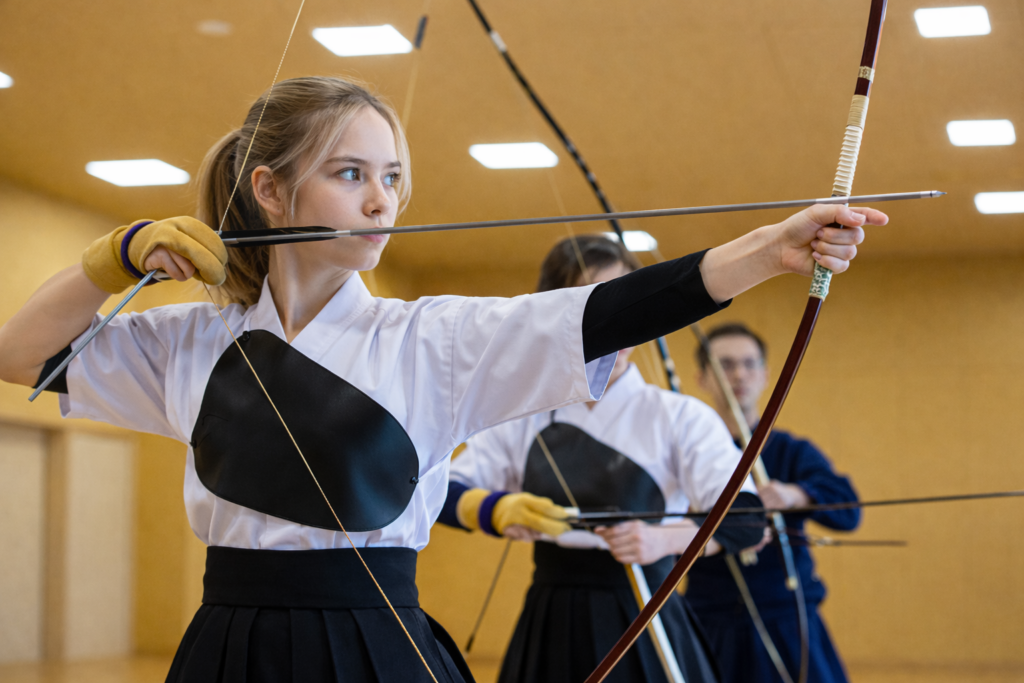
Quick Answer: Can Tourists Try Kyudo in Tokyo?
Yes, absolutely. While traditional Japanese martial arts dojos can be difficult for foreigners to access due to language barriers and membership requirements, there is a dedicated Japanese Archery (Kyudo) Experience in Tokyo designed specifically for international visitors.
You don’t need any prior experience, and you don’t need to bring your own equipment. The experience provides English-speaking instruction from a Dan-ranked master, traditional Kyudo uniforms (Kyudogi), and access to an authentic archery range.
At a Glance: The Recommended Kyudo Tour
- Location: Central Tokyo (Exact location provided after booking)
- Duration: 2.5 hours
- Language: English
- What’s Included: Authentic Kyudogi rental, equipment, instruction by a master, and dozens of practice shots.
- Best For: Beginners, martial arts enthusiasts, and anyone looking to experience the “Dynamic Zen” of Japanese culture.
If you are looking for a hands-on cultural experience that goes beyond typical sightseeing, this is one of the most highly-rated martial arts activities in Tokyo.
Check Availability for the Tokyo: Japanese Archery (Kyudo) Experience
What Makes Kyudo Different from Western Archery?
If you have tried Western archery, you will immediately notice that Kyudo (the “Way of the Bow”) is fundamentally different. It is not just a sport; it is heavily influenced by Zen Buddhism and is often described as “standing Zen.”
- The Bow (Yumi): The Japanese bow is exceptionally long—typically over 2 meters (about 7 feet)—and asymmetrical. The grip is positioned roughly two-thirds of the way down, not in the center.
- The Technique: In Western archery, you typically draw the string to your chin or jaw. In Kyudo, the draw goes much further back, expanding past the ear and behind the head, using the back muscles rather than just the arms.
- The Philosophy: Western archery is primarily focused on hitting the bullseye. Kyudo focuses on Seisha Hichu, a concept meaning that if your mind is calm, your posture is perfect, and your spirit is right, the arrow will naturally find the target. The process is just as important as the result.
Why You Should Book a Guided Kyudo Experience (DIY vs. Tour)
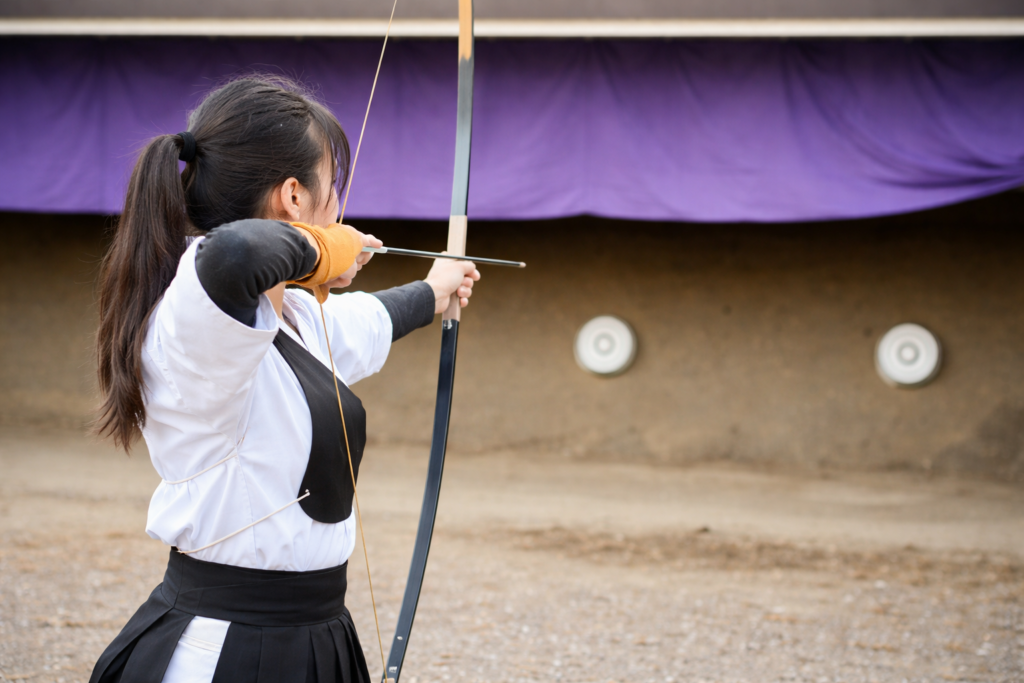
You might wonder if you can simply walk into a local dojo in Tokyo and pay for a quick lesson. In reality, doing it yourself (DIY) is almost impossible for short-term visitors.
Local dojos are usually private clubs or community centers that require monthly memberships, long-term commitment, and Japanese language proficiency. Furthermore, they expect beginners to spend weeks practicing basic forms before ever touching a real bow and arrow.
A guided experience specifically tailored for international visitors bridges this gap entirely.
| Feature | Local Public Dojo (DIY) | Guided Kyudo Tour |
|---|---|---|
| Access for Tourists | Extremely difficult; requires introduction or membership. | Easy; instant online booking. |
| Language | Japanese only. | English-speaking instruction. |
| Equipment & Uniform | Must purchase your own (very expensive). | Included (Kyudogi, bow, arrows). |
| Time to Shoot | Weeks or months of basic training first. | Same day; shoot dozens of arrows in 2.5 hours. |
For travelers, booking a structured tour is the only practical way to wear the traditional uniform, receive proper instruction, and actually shoot an authentic Japanese bow all in one afternoon.
Book Your Japanese Archery (Kyudo) Experience Here
What to Expect: A Step-by-Step Breakdown of the Experience
The 2.5-hour session is carefully structured to give you a complete, safe, and authentic introduction to Japanese archery. Here is what you can expect once you arrive at the designated dojo in central Tokyo.
1. Changing into Traditional Kyudogi
Before you touch a bow, you will change into a traditional Kyudo uniform. This includes a white top (Kyudogi) and black or navy pleated pants called a Hakama. Wearing the uniform is not just for photos; it helps you get into the proper mindset and allows for the necessary freedom of movement. Your instructor will help you put it on correctly.
2. Learning the “Dynamic Zen” Philosophy
The class begins with a brief introduction to the history and spirit of Kyudo. You will learn the correct posture, how to walk in the dojo, and the basic sequence of movements required to shoot an arrow. This is where you practice the “eight stages of shooting” (Shaho Hassetsu) without an arrow first, ensuring you understand the mechanics and safety protocols.
3. Practice and Shooting (Dozens of Arrows)
Unlike some cultural experiences where you only get to try something once or twice, this tour gives you ample time on the range. Under the close supervision of an English-speaking Dan-ranked master, you will load your arrows, draw the longbow, and release. You will have the opportunity to shoot dozens of arrows, allowing you to gradually refine your technique and truly feel the “standing Zen” as your focus sharpens.
Is This Kyudo Experience Right for You?
While this is an incredible cultural immersion, it is important to know if it fits your travel style and expectations.
Who It’s For
- Culture Seekers: If you want to dive deeper into Japanese traditions and martial arts beyond just visiting temples and shrines. For those wanting to watch rather than participate, discovering how to see a sumo show in Tokyo is another excellent cultural deep dive.
- Beginners and Archers Alike: Whether you have never held a bow or are an experienced Western archer curious about the Japanese style, the instruction is tailored to your level.
- Mindfulness Enthusiasts: Anyone interested in Zen philosophy, meditation, or activities that require deep focus and calm. If the “standing Zen” aspect appeals to you, consider pairing it with a traditional Tokyo tea ceremony experience during your trip.
Who It’s Not For
- Travelers with Tight, Unpredictable Schedules: Punctuality is strictly enforced in Japanese martial arts. If you are late, you will not be allowed to participate and there are no refunds.
- Those Seeking a Casual Photo Op: While you can take some photos, this is a real dojo, not a costume studio. There are restrictions on when and where you can film to maintain safety and respect for the practice.
- Young Children: The minimum age to participate is 13 years old.
If you meet the requirements and are ready to embrace the discipline and beauty of the “Way of the Bow,” securing your spot in advance is highly recommended, as small-group sessions sell out quickly.
Check Availability and Book Your Tokyo Kyudo Experience
Essential Tips for Your Kyudo Day
To ensure a smooth and enjoyable experience, keep these practical tips in mind:
- Wear a simple undershirt: You will wear the Kyudogi over your own clothes. A simple T-shirt (V-neck is ideal) or light undershirt is best. Avoid bulky clothing like hoodies or thick sweaters.
- Bring socks: You will be walking on the polished wooden floor of the dojo. Bare feet are generally not permitted, so bring a clean pair of socks (white is preferred in traditional settings, but clean regular socks are fine).
- Remove jewelry: Rings, bracelets, large earrings, and watches should be removed before practice for your safety and to avoid damaging the equipment.
- Respect the Dojo: Follow the instructor’s guidance at all times, especially regarding when it is safe to walk onto the range to retrieve arrows.
Frequently Asked Questions (FAQ)
Do I need previous archery experience?
No, not at all. The experience is designed specifically for beginners. The instructors will teach you everything from how to stand to how to release the arrow.
What if I am very tall or have a larger build?
Because traditional Japanese clothing is sized for average Japanese frames, those who weigh over 150 kg (330 lbs) or have exceptionally thick arms may not fit into the standard Kyudogi. In such cases, you can still participate in the activity wearing your own comfortable clothes.
Can I bring a friend just to watch and take photos?
Yes, but even observers (non-participants) must be booked and paid for in advance. You cannot simply bring an extra person to wait in the dojo for free. Be sure to select the correct number of participants and observers when booking.
Are there any age or physical restrictions?
Participants must be at least 13 years old. Drawing a Japanese bow requires some upper body strength and mobility, but the instructors will provide a bow with an appropriate draw weight for your physical capability.
Hi, I’m Kai. I’m a Tokyo-based travel writer, tourism industry insider, and the author of a published guidebook for international visitors to Japan. With over 10 years of professional experience at a leading Japanese tourism company, my mission is to help you skip the tourist traps and navigate Japan’s best destinations like a local. I believe the perfect day trip is like a traditional kaiseki meal: a beautiful balance of precise planning and unforgettable seasonal discovery. When I’m not out conducting field research, you’ll usually find me drafting new itineraries with one of my favorite fountain pens!