
Yes — Biei works as a day trip from Sapporo, with or without a car. But the train stops at Biei Station, and the Blue Pond is another 17 km beyond it. That single fact decides which transport option is right for you.
The short answer: Biei only, no car — JR plus a local sightseeing or route bus. Biei and Furano in one day, no driving — a day tour from Sapporo. Early Blue Pond and photography — a rental car, and accept the five hours of driving.
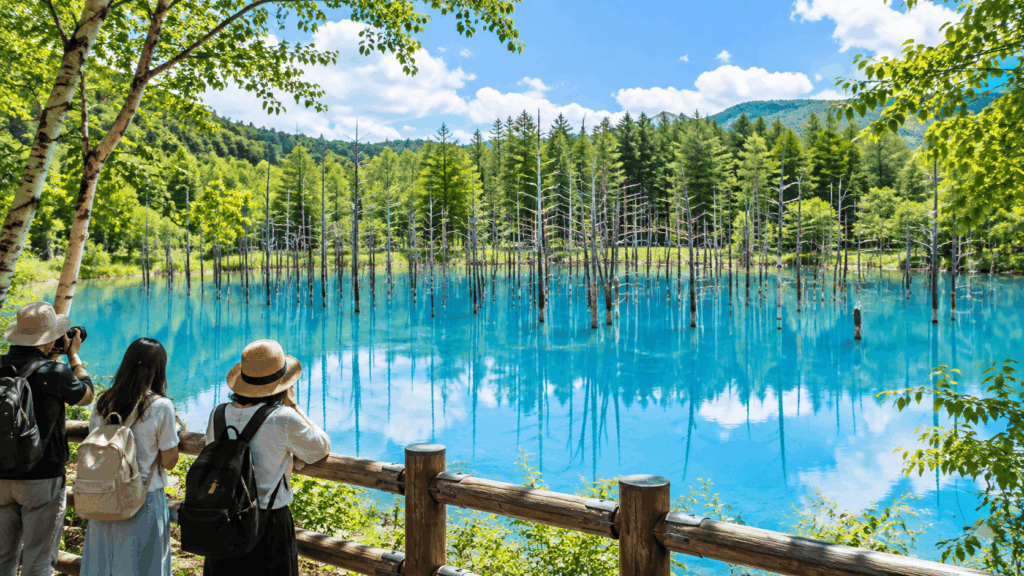
If you want to see the Blue Pond, Shikisai-no-Oka and Furano without driving or coordinating rural bus connections, a Sapporo day tour is worth comparing with the train route. Check available dates, itinerary details and small-group or private options for this Biei–Furano day tour before settling on your transport plan.
Is Biei Worth Visiting as a Day Trip From Sapporo?
Yes, and you can do it without a car. But the honest version is this: the train only solves half the journey. JR gets you to Biei Station; the Blue Pond is about 17 km beyond it, and the flower fields sit out among the hills with no station of their own.
The short answer by traveler type:
- Biei only, no car: JR to Biei Station plus the Biei View Bus or the Dohoku Bus. Realistic, but your day is built around bus times.
- Biei and Furano in one day, no driving: a day tour from Sapporo. It removes the transfers, the local bus connections and the taxi problem in a single booking.
- Early Blue Pond, photography, three or more stops: a rental car. It is the most flexible option, and also the most tiring one — roughly 166 km and 2.5 hours each way from central Sapporo.
What surprises most first-time visitors is not the distance from Sapporo. It is how quickly a comfortable train ride turns into a logistics exercise once the station doors close behind them. Driving up from Sapporo and then walking the hills for a few hours is a genuinely long day; I have done it and would not call it relaxing, even with the freedom a car gives you.
If you are still deciding whether Biei deserves one of your Sapporo days at all, it is worth comparing it against the other day trips within range before you commit.
Sapporo to Biei: Train vs Car vs Day Tour at a Glance
| Option | How the day actually works | Best for | Main advantage | Main drawback | Season it works |
|---|---|---|---|---|---|
| JR + local bus / Biei View Bus | Limited express Sapporo → Asahikawa (about 1h25), local train to Biei (about 30–40 min), then a sightseeing or route bus to the pond and flower fields. | Travelers who want Biei only and will not drive | No driving, predictable cost, no parking stress | You plan around a handful of buses; the station is 17 km from the Blue Pond | Trains year-round; the Biei View Bus runs daily in July–September, on selected June/October dates, and on some winter light-up dates |
| Rental car | Drive Sapporo → Biei, roughly 166 km / 2.5 hours each way, then move between sights on your own schedule. | Early risers, photographers, groups of three or more | Earliest arrival at the Blue Pond and full freedom between stops | Around five hours of driving, plus parking queues in the middle of the day | Year-round, but winter driving needs real experience |
| Sapporo day tour | Coach or minivan from Sapporo covering the Blue Pond, Shirahige Falls, Shikisai-no-Oka and Farm Tomita; roughly 10 hours door to door. | Travelers who want Biei and Furano in one day without driving | No transfers, no navigation, lunch and admission often included | Fixed stops of roughly 20–60 minutes each, and a group pace | Mostly spring to autumn; winter products run different itineraries |
The provisional verdict, before you read the detail: if you want Biei and nothing else, the train plus a local sightseeing bus is a fair plan. If you want the Blue Pond, the flower fields and a taste of Furano in the same day, the tour is the option that removes the most friction. If you want to be standing at the Blue Pond before the coaches arrive, take the car and accept the drive.
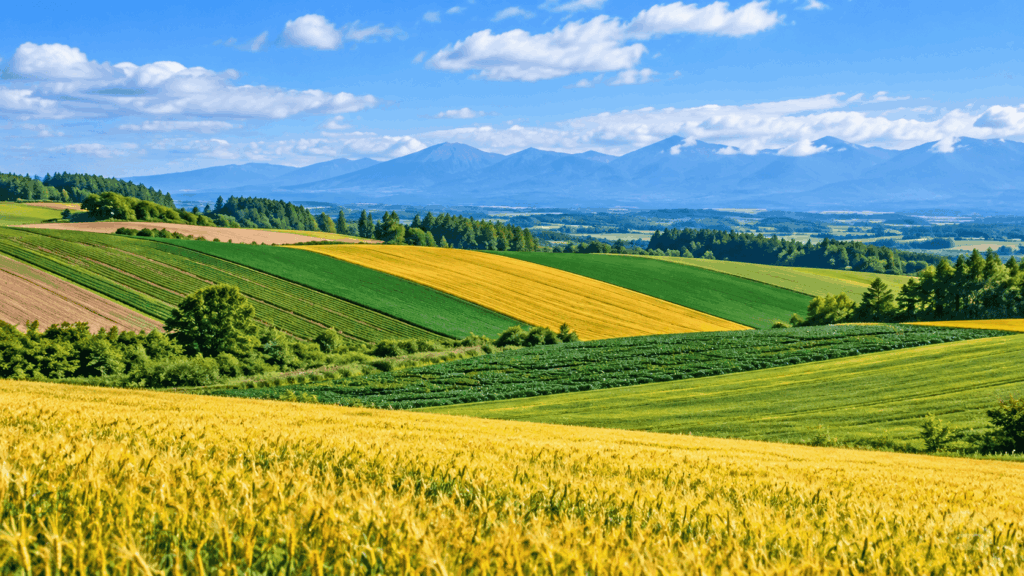
If avoiding transfers matters more to you than complete flexibility, a Sapporo day tour covers the whole chain — station to pond to flower fields and back — in one booking, which is the part the train cannot do for you.
How to Get From Sapporo to Biei by Train
There is no useful direct train from Sapporo to Biei. The route is a two-step: JR Sapporo Station → JR Asahikawa Station on a limited express (Lilac or Kamui), then JR Asahikawa → JR Biei on the Furano Line. The first leg takes about 1 hour 25 minutes; the second is a local train of roughly 30 to 40 minutes.
One example from JR Hokkaido’s own suggested itinerary, which shows how the connection works in practice: depart Sapporo at 8:00, reach Asahikawa at 9:25, change to the 9:38 local, and arrive at Biei at 10:12. Treat those times as an illustration, not a schedule — the timetable changes with each revision, and you should check the current one for your date.
Two practical points that catch people out:
- Limited express trains in Hokkaido have been all-reserved since 14 March 2026. There is no unreserved car to fall back on. You need a reserved seat ticket on top of your basic fare. Reservations generally open at 10:00 one month before travel, and tickets can still be bought on the travel day if available (online purchase cutoffs depend on ticket type). Do not rely on finding a seat at the last minute in peak season.
- Budget roughly ¥6,000–6,500 one way for the limited express plus the Furano Line leg. An all-local combination is closer to ¥4,000, but the time penalty is severe. In summer, JR Hokkaido also runs a seasonal direct service from Sapporo toward Furano, but it does not run directly to Biei Station; for Biei, the Asahikawa transfer remains the straightforward rail route.
Furano Line locals run roughly once an hour rather than frequently, which makes the return leg as much of a design problem as the outbound one. Build the day backwards from the train you can definitely catch.
The Train Only Gets You to Biei Station
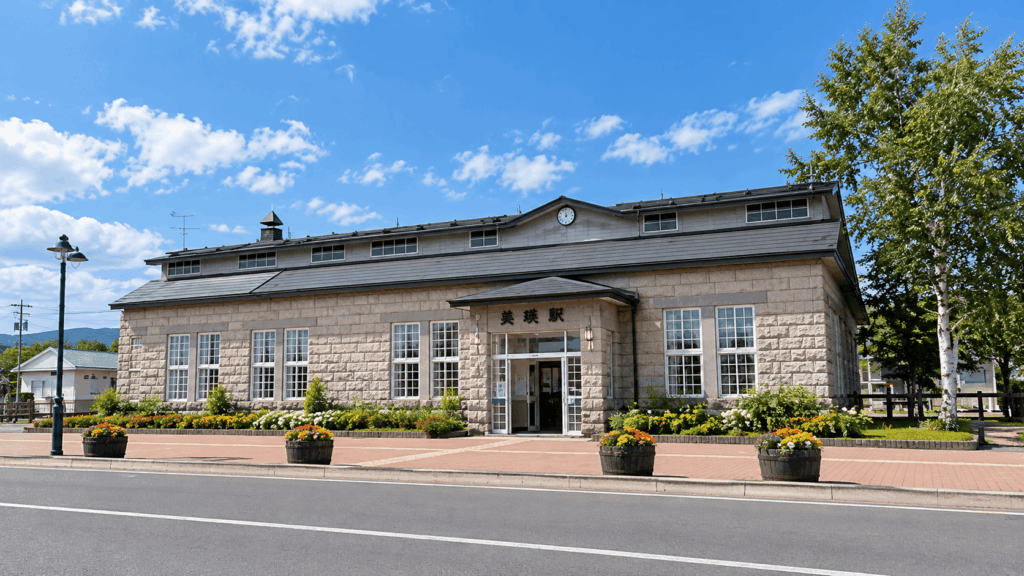
This is the part that decides whether your day works. Biei Station is a small rural station surrounded by shops and guesthouses — not by the scenery you came for.
- Shirogane Blue Pond: about 17 km from the station, roughly 20 minutes by car or route bus. A taxi is over ¥5,000 one way, so a round trip can pass ¥10,000 before you have seen anything else. (See our guide on how to get to the Blue Pond from Sapporo for the detailed logistics.)
- Shikisai-no-Oka: about a 25–30 minute walk from JR Bibaushi Station, one stop along the line. From Biei Station itself, a car or taxi is the realistic way to get there.
Recent visitors keep describing the same moment: the train ride is smooth and scenic, and then the question of how to actually reach the pond turns out to be unanswered. It is not that Biei is hard to reach. It is that the last few kilometres are where the planning has to happen.
Kai’s tip: Most people book the train first and then look for a way to reach the Blue Pond. Do it the other way round. Check whether the Biei View Bus is running on your date, then choose the train that arrives with time to spare before it departs. On days when it is not running, the Dohoku Bus timetable decides the shape of your whole day — including when you have to leave the pond.
How to Visit Biei Without a Car
It is entirely possible — as long as you stop thinking of it as “the train to Biei” and start thinking of it as “the train plus a local bus plan.” There are two workable versions, and they go in different directions from the station, which is the detail most itineraries miss.
Option 1 — JR + the Biei View Bus

The Biei View Bus leaves from Shiki-no-Johokan, about a minute’s walk from JR Biei Station. It is the closest thing to a car-free greatest-hits loop: a morning course running roughly 9:40–12:45 and an afternoon course roughly 14:10–17:10, calling at the Blue Pond, Shirahige Falls and Shikisai-no-Oka over about three hours.
What matters more than the route is the calendar:
- Summer: daily service from July through September, with selected June and October dates. The 2026 service ran on June 6, June 15–30, July 1–September 30, October 1–3 and October 9–12. The 2026 season has finished, and the 2027 dates had not been published when this was written.
- Winter: a light-up course has run on Fridays and Saturdays from mid-November to mid-February in recent seasons, departing in the mid-afternoon to catch the illumination. Confirm the current season’s dates before building a day around it.
- Fares: ¥4,500 and up in June and October, ¥5,000 and up from July to September, based on the 2026 season.
Booking rules are stricter than most visitors expect. Online sales run from 90 days ahead until 17:00 four days before departure. From ten days out, cancellation fees apply and dates or courses can no longer be changed. Check-in closes 15 minutes before departure at the counter on the first floor of Shiki-no-Johokan, and you need the QR code from your booking — screenshot it while you still have signal.
Option 2 — JR + the Dohoku Bus to the Blue Pond
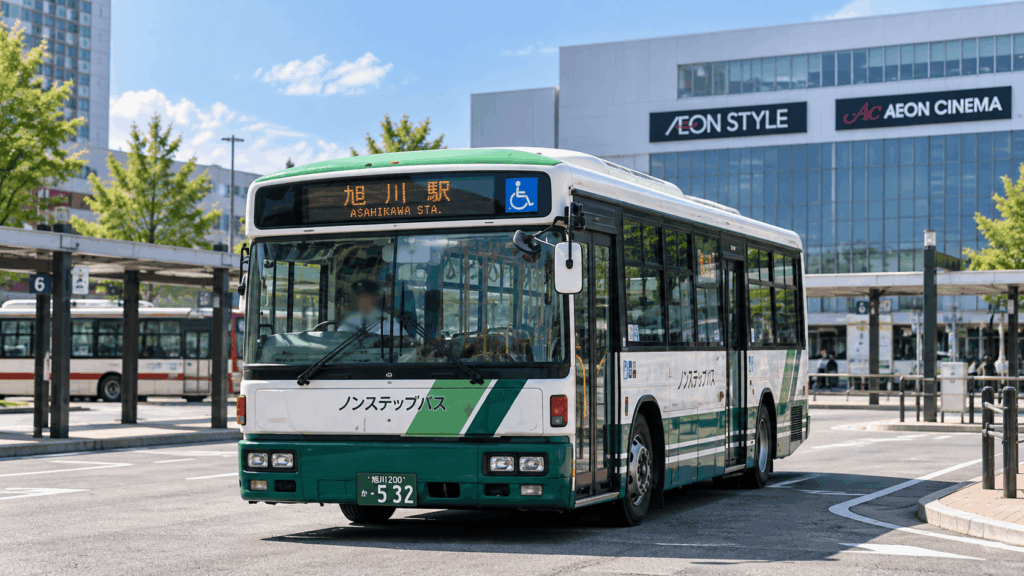
If the Blue Pond is the main event, the ordinary route bus is the simplest tool available. Dohoku Bus routes 39 and 42 run from Biei Station to the Shirogane area: about 20 minutes to the Shirogane Aoiike Iriguchi stop, then a five-minute walk to the water. The fare is around ¥800 one way.
Two things to know. First, the service is infrequent — think a handful of round trips a day rather than a turn-up-and-go bus — so a missed connection costs you an hour or more, not ten minutes. Second, if you plan to combine the Blue Pond with Shirahige Falls or a stop at Shirogane Onsen, the Biei–Shirogane 1-Day Free Pass (¥2,000 for adults, valid on routes 39 and 42 between Biei Station and the Shirogane area) is usually the better buy than three separate tickets.
What You Can Realistically Fit in One Day
| What you want to see | Without a car? | How it actually works |
|---|---|---|
| Blue Pond only | Yes | Dohoku Bus 39/42 from Biei Station, about 20 minutes each way |
| Blue Pond + Shirahige Falls | Yes | Same bus line, one stop further to Shirogane Onsen; a comfortable half day |
| Blue Pond + Shikisai-no-Oka | Awkward | They sit in opposite directions from the station. Workable on Biei View Bus days; otherwise it means a taxi (over ¥5,000 one way) or joining a tour |
| Biei + Furano highlights | Not really | Too many connections for one day; this is where a day tour or a car earns its place |
| Sunrise or an empty Blue Pond | No | The first buses reach the pond mid-morning. You need a car — and in summer the car park itself opens at 7:00 |
If the Blue Pond is your only must-see and you would rather not commit to a fixed sightseeing loop, the station-to-pond bus route is worth planning in detail before you go. For a concrete example of how to link these sights without a rental car, see our detailed Biei day trip itinerary.
Driving From Sapporo to Biei: When a Rental Car Is Worth It
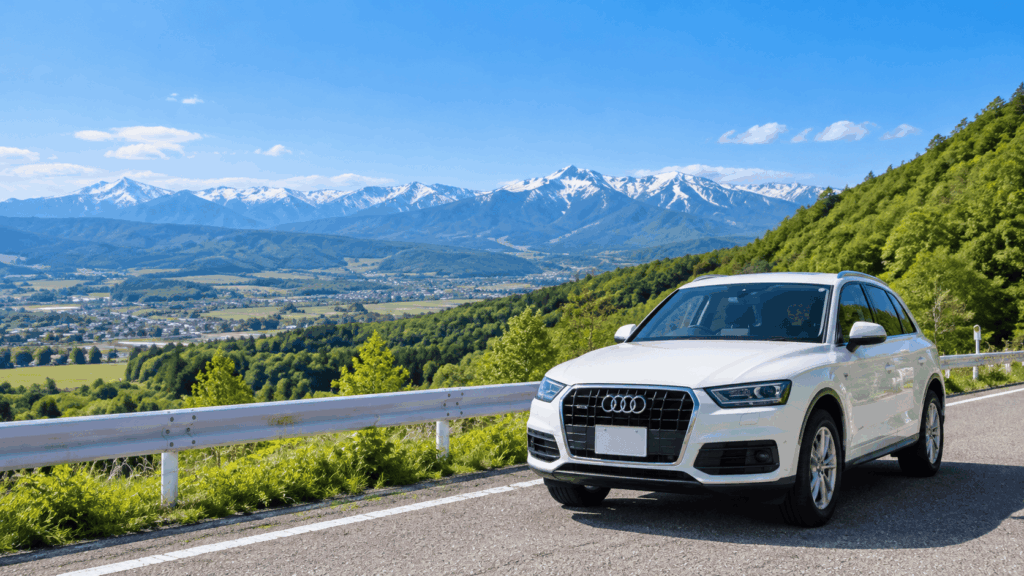
The case for a car is not speed. It is timing and sequence. Sapporo IC to Biei is about 166 km and 2.5 hours each way, which means a car day is a five-hour driving day before you have walked anywhere. What you buy with that is the ability to be at the Blue Pond before the coach schedule arrives, to leave when you are done rather than when the bus leaves, and to string together hills and viewpoints that have no bus stop at all.
It is worth being clear about the trade-off. Three or more people sharing a rental usually come out ahead on cost against train fares plus bus passes. A solo traveler or a couple often does not, once parking and fuel are counted.
Why I Would Aim for the Blue Pond Before 9 a.m.
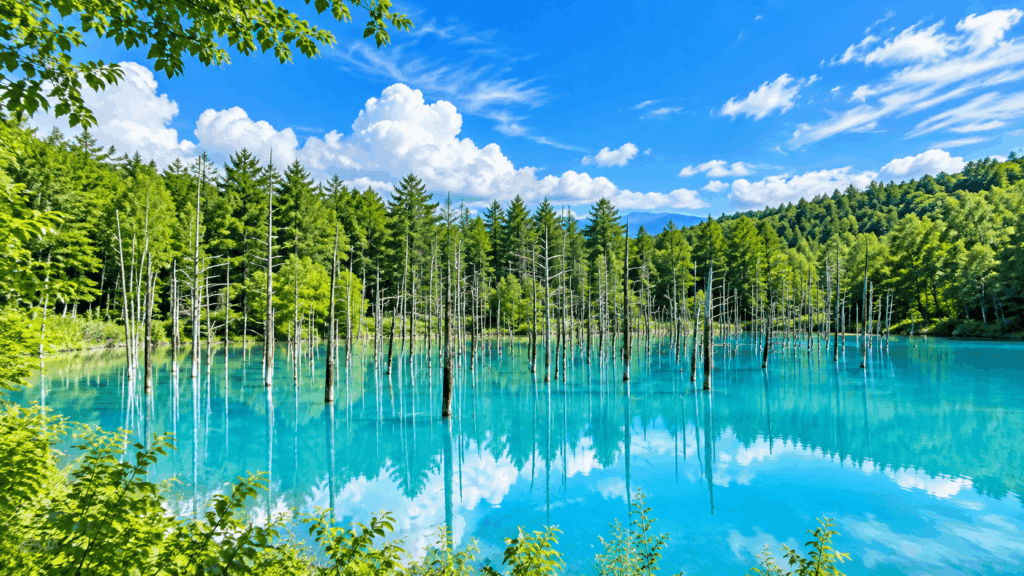
In September 2025 I drove clients up from Sapporo and aimed to reach the Blue Pond before 9:00. We made it. What I remember is what happened next: the coach groups began arriving, and a queue formed around the parking payment area. That is one day’s observation, not a rule — but it matches what the Biei Tourism Association says publicly. Their guidance warns that the area around the pond is congested from roughly 10:40 to 16:00, that waits of 30 minutes to an hour to enter the car park happen even on weekdays, and that early morning (around 7:00–9:00) and after 16:30 are comparatively smoother. Sunny days around 13:00–15:00 are singled out as the worst.
Parking is ¥1,000 per ordinary car per visit as of 1 July 2026, up from ¥500 when I visited in September 2025. The lot holds around 220 cars and 20 buses and opens 7:00–19:00 from May through 22 October, and 8:00–21:30 from 23 October through April for the illumination season.
Kai’s tip: The whole point of paying for a car is that you choose your arrival time — so do not spend that advantage by arriving at 11 a.m. If you are driving up from Sapporo, leave early enough to be at the pond by 8:30 or plan to come after 16:30 instead. The middle of the day is when the car stops feeling like freedom and starts feeling like a queue.
Winter Driving Is a Separate Decision
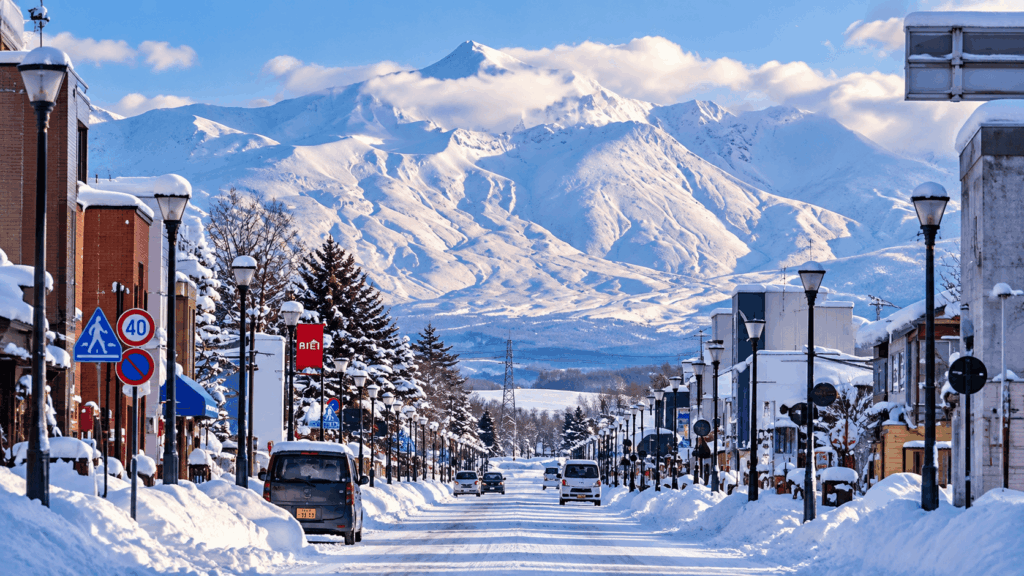
From late October the Blue Pond is lit in the evening (the 2026–27 illumination runs from 22 October 2026 to 21 April 2027, until 21:00), which makes a car tempting in a season when buses thin out. Be honest with yourself about the road. Hokkaido winter driving means snow tyres, ice in shaded corners, and darkness by late afternoon. Rental companies fit winter tyres in season, but that is equipment, not experience. If you have never driven on snow, take the train and a tour, or stay overnight in Biei or Furano rather than driving back in the dark.
Is a Sapporo Day Tour the Easiest Option?
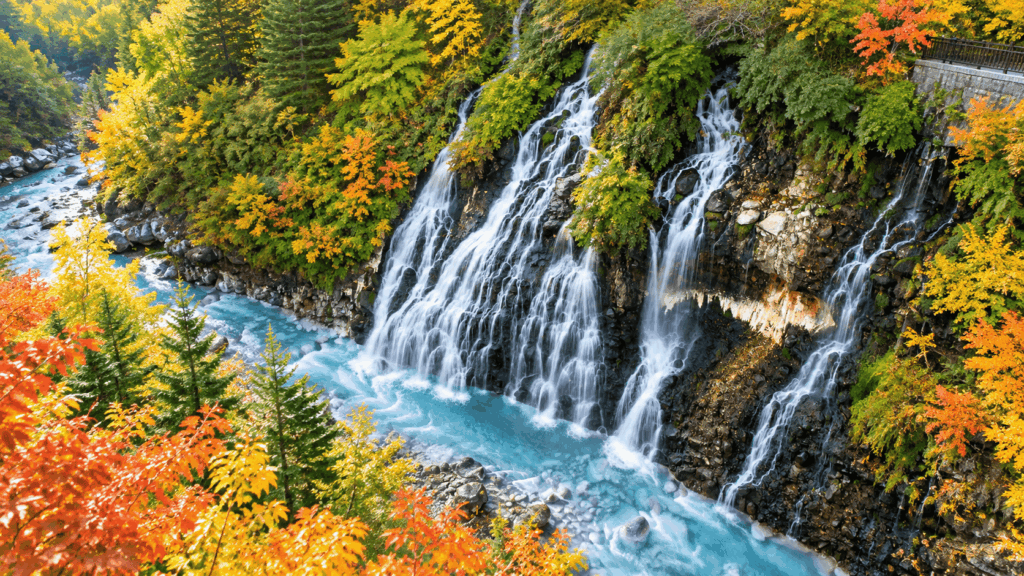
For one specific traveler, yes: someone who wants the Blue Pond, Shirahige Falls, Shikisai-no-Oka and a slice of Furano in a single day, and does not want to drive or watch bus connections. It is not the best choice if Biei itself is the point and you want three unhurried hours in one place — the stops are timed, and they are short.
A current example sold for Sapporo departures runs about 10 hours in a group of up to 13, with a driver-guide rather than a lecturer, buffet lunch and Shikisai-no-Oka admission included, and free cancellation up to 24 hours ahead. The shape of the day looks roughly like this: 8:00 departure from Sapporo, about 30 minutes at the Blue Pond, 20 at Shirahige Falls, an hour for lunch, an hour at Shikisai-no-Oka, 50 minutes at Farm Tomita, and back in the city in the early evening. Hotel pickup is an optional add-on, and solo travelers usually meet at Sapporo Station instead.
Two honest caveats. Reviews of these tours repeatedly mention helpful, punctual drivers but limited commentary — treat it as transport with coordination, not a guided tour in the museum sense. And 30 minutes at the Blue Pond is enough for the classic photograph, not for watching the light change.
The cost comparison is closer than most people assume. Two adults taking the regular limited express via Asahikawa pay about ¥25,000 in return train fares combined (roughly ¥6,320 per person each way at an ordinary reserved-seat fare), before the local bus pass, the Shikisai rides and lunch. Some discounted tickets may cost less. A day tour listed in the US$60–90 range per person can therefore be competitive, depending on its current exchange-rate price and inclusions — and it includes the parts that are hardest to arrange yourself.
If you want the Blue Pond, Shikisai-no-Oka and Furano in one day without monitoring train and bus connections, this is the option I would compare first before booking anything else.
It is also worth checking how the different Sapporo departures compare on stop times and group size, because they are not identical products.
For travelers who want the main Biei and Furano sights in one day without driving, the Sapporo: Biei and Furano Flower Fields and Blue Pond Tour is worth a closer look. It combines the key stops discussed above, with small-group and private options to compare depending on how much flexibility you need.
Why I’d book this one
- Several highlights without separate transport bookings: The itinerary brings together the Blue Pond, Shirahige Falls, Shikisai-no-Oka and Farm Tomita, removing the awkward local connections that make a DIY Biei–Furano day difficult.
- Less driving and coordination: Recent travelers mention helpful drivers and the convenience of covering several countryside sights in one day. It is a practical choice for seeing the highlights rather than spending hours working around rural bus timetables.
- Options worth comparing: The listing offers small-group and private arrangements, along with free cancellation up to 24 hours ahead and a reserve-now-pay-later option. Check your selected package carefully, as meal inclusions and other details can vary by departure.
The trade-off is still a fixed sightseeing schedule. This is better suited to travelers who want a coordinated overview than those hoping for an extended photography session or detailed English-language commentary at every stop.
See live availability, departure details, current prices and recent traveler reviews for this Biei and Furano day tour to decide whether the itinerary and group size work for your travel date.
Blue Pond and Shikisai-no-Oka: Two Things That Decide Your Day
Transport gets you there. These two places decide whether the day was worth it — and both behave differently from how they look online.
The Blue Pond Looks Different When the Weather Changes
The cobalt blue is not a switch that is on whenever you arrive. It depends on light, weather and what is in the water. The Biei Tourism Association notes that after heavy rain or snowmelt the pond can turn cloudy and lose the blue entirely.
I have stood there on an overcast day and found it closer to a pale blue-grey pool than the image on everyone’s phone — a small disappointment that changed how I plan the visit. If the pond is the reason for your trip and you have flexible days, watch the forecast and move the Biei day rather than hoping. A clear, cold morning is a better bet than a warm, hazy afternoon.
Shikisai-no-Oka Is Bigger and More Tiring Than It Looks
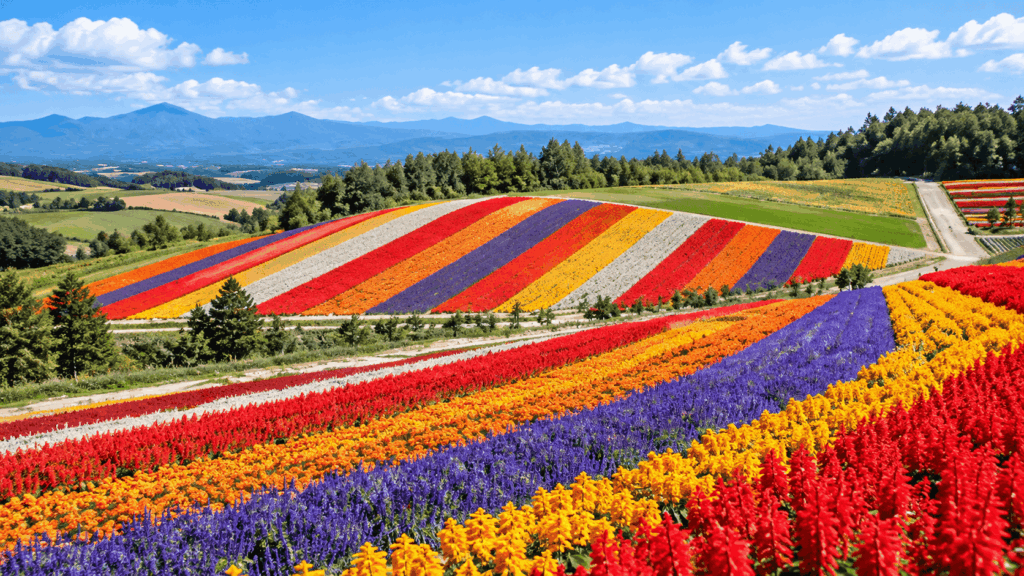
Fifteen hectares of sloping flower fields sounds charming in a brochure. On foot, after a long drive, it is a workout. The gardens are about a 25–30 minute walk from JR Bibaushi Station, and once inside, the rows climb and fall across a hillside.
Costs and practicalities, as currently published:
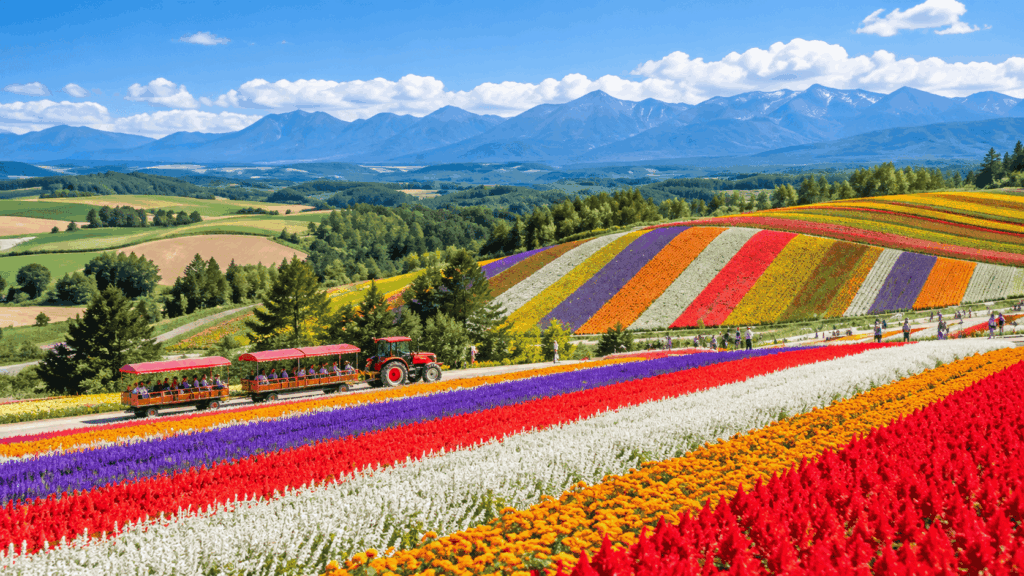
- Admission is charged only from July to September: ¥800 for high school students and above, ¥500 for elementary and junior high students. Outside those months, entry is free.
- Parking is charged only from June to September, ¥500 per car.
- Tractor bus (Norokko): about 15 minutes, ¥500 for adults and ¥300 for school-age children, with one photo stop.
- Cart: ¥2,500 for 15 minutes, four people, and you need an ordinary driving licence. Buggies are ¥800 for a single seater.
- Rides are cash only. Cards are not accepted for the tractor bus, cart or buggy.
Kai’s tip: After driving up from Sapporo I walked the whole garden and felt it far more than I expected; on that visit there were more than ten coaches parked near the entrance, which tells you what the paths feel like inside. If you have a long drive home, take the tractor bus or the cart and save your legs. I would not call it compulsory — fit, budget-conscious travelers can walk it happily — but on a day trip it is the cheapest energy you will buy.
Which Option Fits Your Trip?
| Your priority | Recommended option | Why |
|---|---|---|
| I only want the Blue Pond | JR + Dohoku Bus | Direct, cheap, and you can stay as long as the next bus allows |
| I want the Blue Pond and Shikisai-no-Oka | Biei View Bus if it runs on your date; otherwise a tour | The two sights are in opposite directions, and the loop solves that in three hours |
| I want Biei and Furano in one day | Sapporo day tour | A car-free version of this itinerary is mostly bus stops and waiting |
| I want early morning or serious photography | Rental car, ideally with an overnight nearby | Public transport starts too late for first light or an empty pond |
| I do not want to drive at all | Train + local bus, or a tour | Both remove the driving; the tour also removes the transfers |
| I am traveling with children or older family | Day tour or private tour | Fewer changes of plan, no walking between bus stops in the weather |
| I am visiting in winter | Train plus tour, or an overnight stay | Shorter daylight and icy roads make a same-day self-drive a poor bet for the inexperienced |
If your answer is “Biei and Furano, and I am not driving,” that is precisely the trip a Sapporo departure is built for — and the one place where paying someone else to handle the roads is genuinely the simpler choice.
What Changes With the Season
Most guides describe one version of this day trip. In practice you are choosing between four quite different ones.
- Summer (June to mid-October): the Biei View Bus runs daily in July–September and on selected dates in June and October, the flower fields are the main event, and the Blue Pond car park is at its worst between late morning and mid-afternoon. Lavender around Furano peaks in mid-July, with late varieties until early August.
- Autumn (October to November): the View Bus season winds down in mid-October and Shikisai-no-Oka becomes free to enter from October, while the larch around the Blue Pond turn gold. Days are shorter but the crowds thin noticeably after the first week of October.
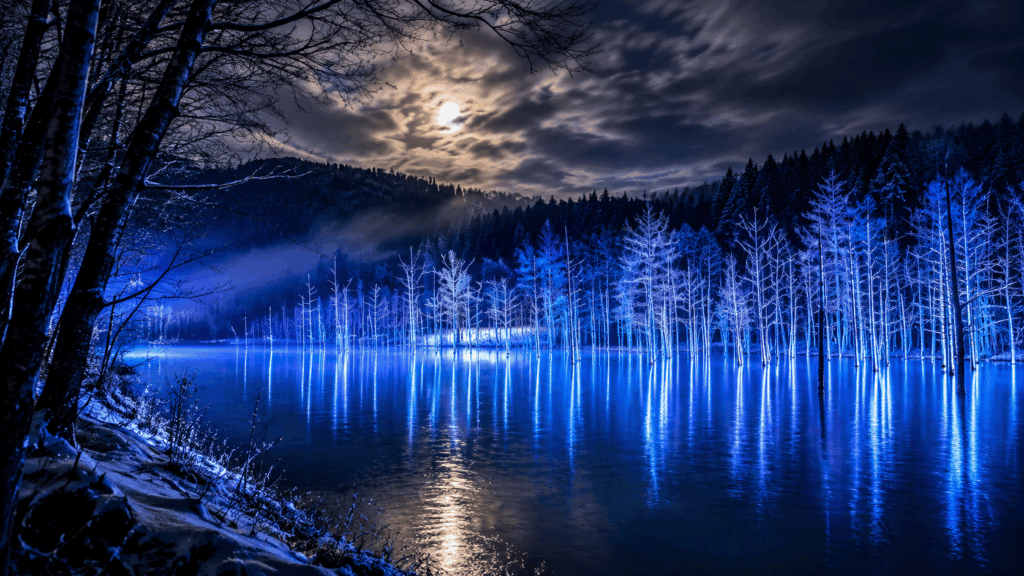
- Winter (late November to March): the pond is illuminated in the evening, Shikisai-no-Oka reopens as a snow park with snow rafting and snowmobile courses, and the emphasis shifts from flowers to snow. Buses are fewer; a tour or an overnight stay is the lower-risk plan. For a realistic look at the conditions and logistics, check what to expect in Biei in winter.
- Spring (April to May): snow is still melting, the pond can be murky from the runoff, and the flower fields are bare. Cheapest and quietest, but the least photogenic.
One piece of outdated advice still circulates widely: the open-air Furano-Biei Norokko sightseeing train, which many blog posts recommend for this route, made its final run on 23 September 2026. Do not plan around it.
The useful habit is simple: check which season you are actually travelling in before choosing a transport option, because the car-free answer in July is not the car-free answer in January.
Frequently Asked Questions
Can you visit Biei from Sapporo in one day?
Yes. Biei is a realistic day trip, but the day is long: roughly 2 to 2.5 hours of travel each way plus the time you need at the sights. A Biei-only day works comfortably. Adding Furano’s main sights to the same day is possible, though it is much easier by tour or car than by public transport.
Can you get to Biei from Sapporo by train?
Yes, with one change. Take a limited express (Lilac or Kamui) from Sapporo to Asahikawa — about 1 hour 25 minutes — then a Furano Line local to Biei, roughly 30 to 40 minutes. Since March 2026 all limited express seats in Hokkaido are reserved, so book ahead rather than relying on turning up.
Can you visit Biei without a car?
Yes, but not by train alone. You need a local plan for the last few kilometres: the Biei View Bus when it is running, or the Dohoku Bus toward the Blue Pond and Shirogane Onsen. The practical limit is that both run on seasonal or infrequent schedules, so the bus timetable, not the train timetable, sets the shape of your day.
How do I get from Biei Station to the Blue Pond?
Take Dohoku Bus route 39 or 42 from the Biei Station stop to Shirogane Aoiike Iriguchi — about 20 minutes — then walk five minutes to the pond. The fare is around ¥800 one way, and buses are infrequent, so check the return times before you get off. A taxi is over ¥5,000 one way.
Is it better to stay overnight in Biei or Furano?
If you want an empty Blue Pond at sunrise, an evening illumination visit, or a slower look at the hills, staying overnight is worth it — it removes the five hours of return travel and lets you use the quiet hours at both ends of the day. If your goal is simply to see the pond and the flower fields once, a day trip from Sapporo is enough and saves a hotel change.
Is a day tour better value than going by train?
For two or more people, often yes. Return limited-express train fares for two adults total roughly ¥25,000 via Asahikawa at ordinary reserved-seat rates, before local buses, Shikisai rides and lunch. A day tour in the US$60–90 per person range can be competitive once inclusions and the exchange rate are considered, and it removes the transfers. For a solo traveler wanting only the Blue Pond, the train and route bus are usually cheaper.
What if it is cloudy or raining on the day?
The Blue Pond is at its most vivid in clear, cold light, and after heavy rain or snowmelt it can look grey and murky. If Biei is the centrepiece of your trip and your dates are flexible, move the day rather than hoping. If your dates are fixed, go anyway — the Shirahige Falls and the drive through the hills still hold up in poor weather, and Shikisai-no-Oka is free to enter outside July to September.
The Verdict, by Traveler Type
Choose the train plus local bus if Biei is your only target, you are comfortable reading a bus timetable, and would rather plan around the ¥2,000 local bus day pass than join a more expensive sightseeing tour. Remember that the pass does not include the train from Sapporo. This is the straightforward independent option, especially on dates when local buses connect well.
Choose a Sapporo day tour if you want the Blue Pond, Shirahige Falls, Shikisai-no-Oka and Furano in one day, and the idea of changing trains and hunting for the right bus stop in a language you do not read holds no appeal. For first-time visitors with two or three Sapporo days, this is the option that reliably delivers the postcard version of Biei — with the trade-off that your 30 minutes at the pond are exactly 30 minutes.
Choose a rental car if you want to be at the Blue Pond at 8:00, shoot the hills in low light, or stop wherever the view justifies it. Be realistic about the cost of that freedom: about five hours of driving and a car park that fills from mid-morning. Photographers and early risers get the most from it; a couple on a tight budget usually does not.
Choose an overnight stay in Biei or Furano if Biei is a highlight rather than a checkbox. It is the only way to combine an early pond, a slow flower-field morning and the winter illumination without spending the day in transit. If you are leaning toward this option, here is where to stay in the Furano and Biei area.
Skip the same-day self-drive in winter if you have no snow-driving experience. Take the train and join a tour, or stay locally. The illumination makes the pond worth the trip in January — it does not make the road easier.

Hi, I’m Kai. I’m a Tokyo-based travel writer, tourism industry insider, and the author of a published guidebook for international visitors to Japan. With over 10 years of professional experience at a leading Japanese tourism company, my mission is to help you skip the tourist traps and navigate Japan’s best destinations like a local. I believe the perfect day trip is like a traditional kaiseki meal: a beautiful balance of precise planning and unforgettable seasonal discovery. When I’m not out conducting field research, you’ll usually find me drafting new itineraries with one of my favorite fountain pens!