
Biei’s Blue Pond sits about 22 minutes by bus from Biei Station, so you don’t need a car to see it — and Shirahige Falls is a four-minute ride further up the same road. From Sapporo, JR Hokkaido publishes a day-trip model that puts you at the pond before 11:00 and back in Sapporo by 16:25. The example is timetable-dependent, and its rail and bus connections should be rechecked for your date, but it shows that “you can’t do it without a car” is simply wrong.
What actually decides your transport is not the distance. It’s how many places you want in one day. Blue Pond alone, or Blue Pond plus Shirahige Falls, works well on public transport. The moment you add Furano’s flower farms or a few of the Biei hills, the timetable becomes the trip rather than the scenery, and a rental car or an organised day tour starts to make more sense.
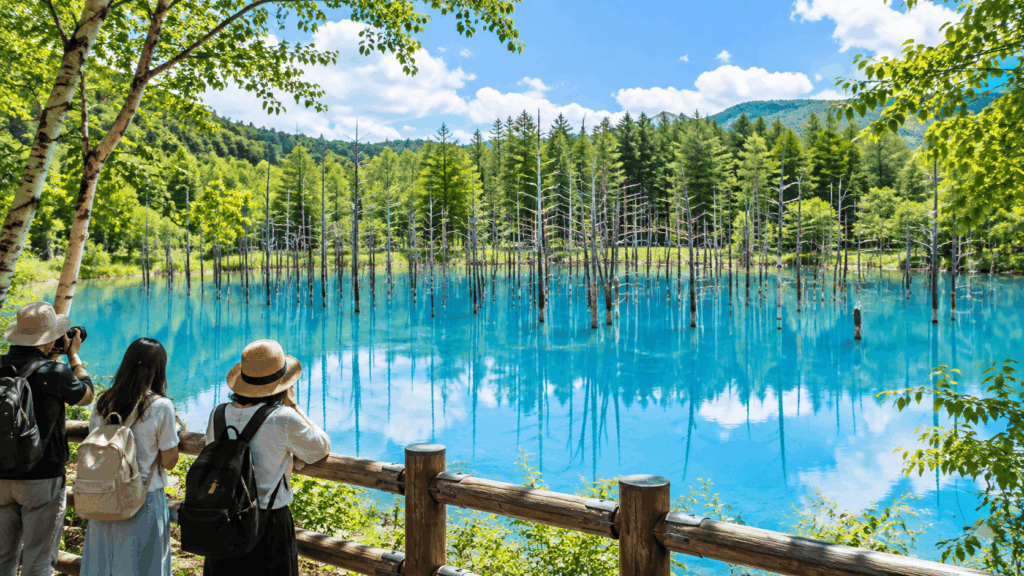
Planning Blue Pond, Shirahige Falls and Furano in one day without driving? A private Biei–Furano day trip from Sapporo lets your group plan the stops without juggling train and bus connections. Check available dates, suggested itineraries and current group pricing for the private day trip before deciding whether the extra convenience is worth it.
Quick Answer
- Best without a car: Dohoku Bus Route 39 or 42 from Biei Station to Shirogane Aoiike Iriguchi, about 22 minutes, ¥800 one way.
- Best from Sapporo for Blue Pond and Shirahige Falls only: limited express to Asahikawa, local train to Biei, then the same bus. Long, but it works.
- Best for Blue Pond, Shirahige Falls and Furano in one day: rental car, or a Sapporo day tour if you’d rather not drive.
- Best arrival time by car: 07:00–09:00 from May to 22 October; 08:00–09:00 from 23 October through April, when the car park opens later. Biei recommends an early arrival to avoid the worst queues.
If your plan is three or more stops in a single day without driving, skip ahead to the Sapporo options — the public-transport answer changes there.
Best Ways to Get to Biei Blue Pond at a Glance
| Option | Best for | Flexibility | Main advantage | Main drawback |
|---|---|---|---|---|
| Dohoku Bus from Biei | Car-free travellers already staying in Biei or Asahikawa | Low to medium — roughly 10 departures a day | Cheapest and simplest; no driving, no parking queue | You build the day around the timetable, and the last bus back is early evening |
| JR + Dohoku Bus from Sapporo | Sapporo-based travellers who only want Blue Pond and Shirahige Falls | Low — every leg is fixed | No car needed; JR Hokkaido publishes a complete day-trip model | Several train-and-bus connections across an approximately eight-and-a-half-hour round-trip itinerary, with limited sightseeing time |
| Rental car | Three or more stops, families, photographers chasing quiet early light | High | You choose your arrival hour and can add Furano or the Biei hills freely | Winter driving, and parking queues at the pond that can run 30–60 minutes in peak periods |
| Day tour from Sapporo | Travellers who don’t want to drive or manage connections | Low — fixed itinerary | Transport and stop-to-stop logistics handled; language support and pickup arrangements vary by tour | Short fixed stops (Blue Pond is often around 30 minutes), and some midsummer departures swap Shirahige Falls for another stop |
For drivers, arrival time matters almost as much as driving time here — more on that in the parking section below.
Who this suits — and who should take a different approach
This works well if you are:
- staying in Biei and travelling without a car, in which case the bus is not a compromise but the obvious choice;
- based in Sapporo and content with Blue Pond plus Shirahige Falls as your whole day out;
- visiting between late spring and autumn, when the road is clear and daylight is long.
This will frustrate you if you are:
- trying to fit Blue Pond, Shirahige Falls, Farm Tomita and a handful of Biei hills into one day using only trains and buses;
- visiting in winter without checking whether the road, the bus and the pond itself are in a state you actually want to see;
- expecting to stay for a midsummer sunset or a late winter illumination and relying on the route bus to get you back; a brief visit after early winter lighting starts can sometimes work, but only if you catch the last return.
How to Get from Biei Station to Shirogane Blue Pond by Bus
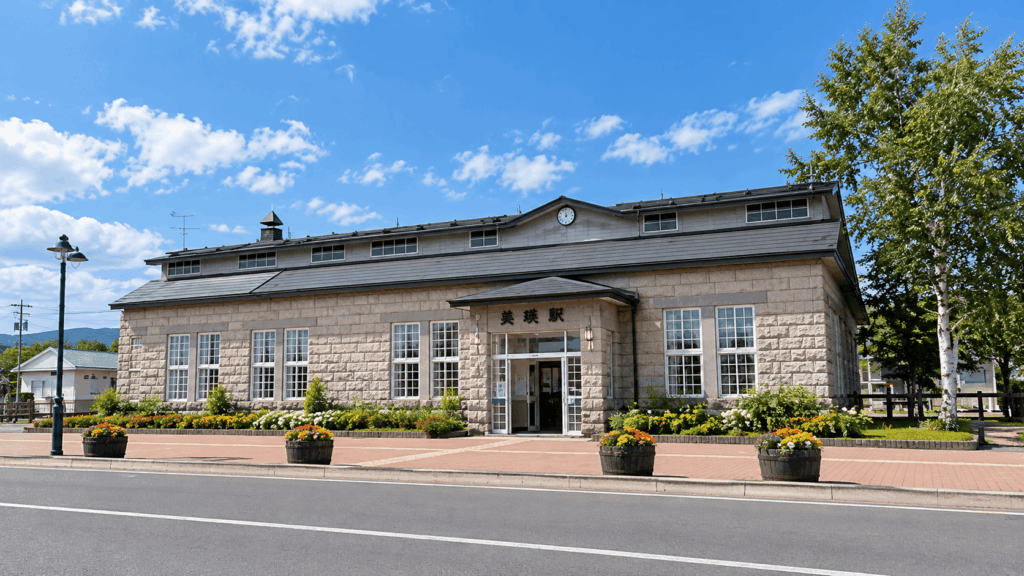
This is the route most people are actually looking for, and it is refreshingly short. Leave JR Biei Station by the main entrance and the bus stop — Bieieki-mae — is right in front of you. Take Dohoku Bus Route 39 or 42, the Biei–Shirogane line, heading for Shirogane Onsen, and get off at Shirogane Aoiike Iriguchi. From there it’s a five to ten minute walk to the water.
The ride takes about 22 minutes and costs ¥800 one way to the Blue Pond stop. If you stay on the bus to the end of the line at Shirogane Onsen, it’s ¥900 — which is what you want if you’re continuing to Shirahige Falls.
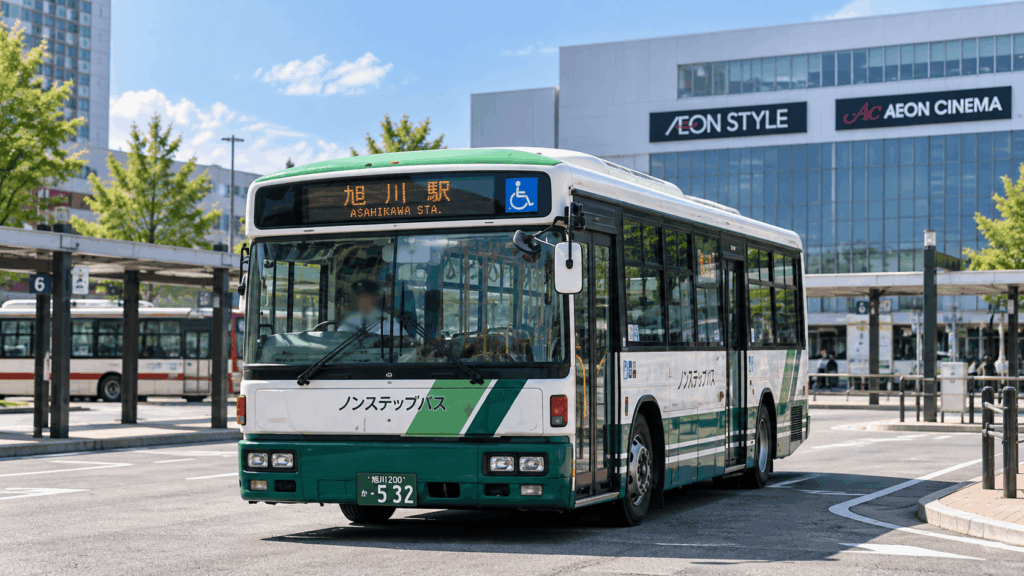
Illustrative bus photo: The bus pictured below is signed for Asahikawa, not specifically the Shirogane service. Follow the Route 39 or 42 destination display when travelling to Blue Pond.
The route, the stop and the fare
- Departure point: Bieieki-mae, directly outside JR Biei Station. The stop is signposted in English.
- Get off at: Shirogane Aoiike Iriguchi (白金青い池入口). Do not get off at Shirogane Onsen for the pond — that stop is four minutes further on and puts you at the falls instead.
- Frequency: around ten departures a day as of the 1 October 2026 timetable revision, with long gaps between some departures. The first leaves Biei at 06:55 and the last at 17:15 on that timetable. An example connection: depart 10:34, arrive at the pond stop 10:56.
- Payment: cash is the standard method. JR Hokkaido’s own model itinerary notes that you can tap a contactless credit card on the local bus, but confirm what’s accepted when you board rather than assuming.
- Biei & Shirogane Area 1-Day Free Pass: ¥2,000 for adults, ¥1,000 for children, covering Routes 39 and 42 within the Biei Station–Shirogane Onsen section. A straight Biei–Blue Pond round trip is ¥1,600 in single fares, so the pass does not pay off for that journey alone. Even a Biei–Shirogane Onsen return is ¥1,800 in single fares; compare the cost of each leg if you plan to hop off at both the pond and the falls. Don’t buy the pass automatically.
These times are a snapshot, not a permanent truth. Dohoku Bus revises this timetable periodically, and the PDF on the operator’s site is the only version worth trusting on the day you travel.
Check your return bus before you leave Biei
Here is the part that catches people out. The last outbound bus from Biei Station leaves at 17:15 on the October 2026 timetable. The latest scheduled return leaves Shirogane Onsen at 18:02 and Shirogane Aoiike Iriguchi at 18:05, reaching Biei Station at 18:30. In midsummer, sunset is well after 19:00, so that is too early for evening light. In winter, however, the illumination begins at 16:30 in December and 17:00 in October, November and January: on some dates, a brief look at the lights may fit before the 18:05 bus. Check the exact date and connections before relying on that possibility; February–April start times are later.
Kai’s tip: Almost every traveller I meet has looked up the bus times for the way out and nothing else. This is a rural line, not a city service, and the gaps between departures are long enough that a missed bus turns into a taxi ride rather than a fifteen-minute wait. Choose your return bus first, then work backwards: that tells you how long you can give the pond, and whether there’s any point continuing to Shirahige Falls.
If you want the falls as well, catch a later Route 39 or 42 bus from Shirogane Aoiike Iriguchi to Shirogane Onsen, a four-minute ride, then walk about two minutes to the waterfall. Check that onward departure before getting off at the pond; the JR model itinerary, for instance, uses the 11:27 departure after its 10:56 arrival.
How to Get to Biei Blue Pond from Sapporo
Sapporo to Blue Pond is a genuine day trip on public transport, and it’s worth saying that plainly because a lot of older advice implies otherwise. JR Hokkaido still publishes a full Sapporo–Blue Pond–Shirahige Falls itinerary on its own site, built entirely from scheduled trains and the local bus. What it does not claim is that the day is efficient. It isn’t. The published example takes roughly eight and a half hours from departure in Sapporo to return there, including all travel, sightseeing and a lunch break.
Option 1 — JR and the local bus (the do-it-yourself route)
The published model runs like this: depart Sapporo at 08:00 on a limited express, change at Asahikawa, reach Biei at 10:12, walk two minutes to the Bieieki-mae bus stop, take Route 39 or 42 at 10:34, and step off at Shirogane Aoiike Iriguchi at 10:56. Five minutes on foot and you’re at the pond. After visiting the pond, the model uses a second bus from Shirogane Aoiike Iriguchi at 11:27, arriving at Shirogane Onsen at 11:31 for Shirahige Falls; a return bus at 12:02 reaches Biei at 12:30 in time for lunch. Do not stay on the original 10:34 bus expecting it to reach Shirogane at 11:31 — that is a later departure. You leave Biei at 13:59 and are back at Sapporo Station at 16:25.
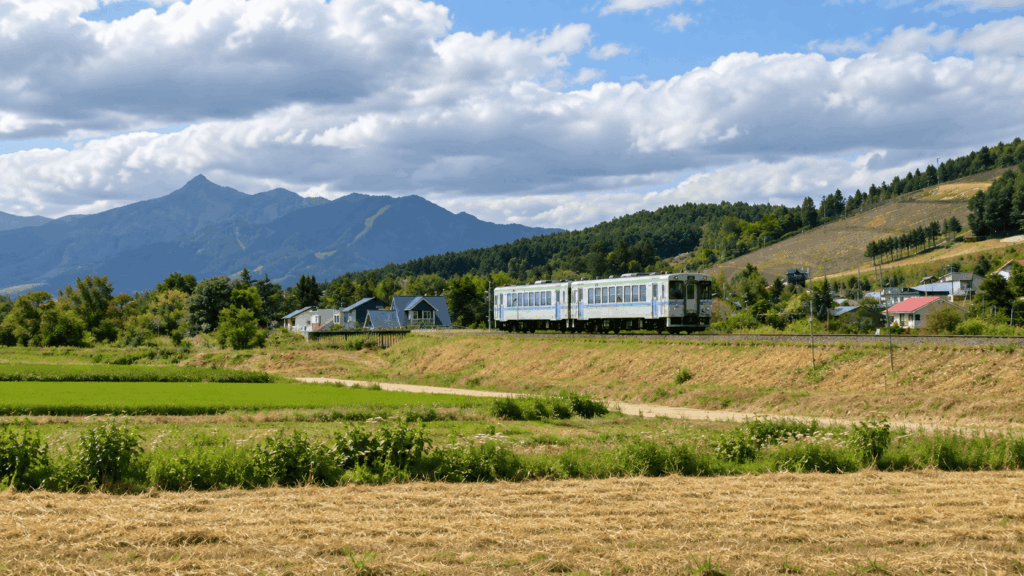
Illustrative railway photo: This shows a local train in the Furano area, not the Sapporo–Asahikawa limited express.
Three details decide whether this day goes smoothly:
- Limited express trains are all-reserved seating. JR Hokkaido recommends reserving a seat before travel, and pass holders should arrange seat reservations before boarding. For ordinary tickets, an eligible seat-unassigned limited express ticket can also permit travel without a preselected seat, subject to the railway’s rules; it does not guarantee a seat. Booking ahead is strongly recommended for this tight itinerary.
- Rail passes do not cover the bus. The Sapporo–Furano Area Pass is valid on JR trains only — not on the Dohoku Bus, not on JR Hokkaido buses, not on the Sapporo subway. Budget the ¥800 separately each way.
- Compare the rail pass with point-to-point fares. The Sapporo–Furano Area Pass is ¥11,000 when purchased in advance through an eligible channel, or ¥12,000 at designated stations in Japan, and lasts four consecutive days. It is available to eligible non-Japanese passport holders. Depending on the train fares for your date, it may be worthwhile even for a Sapporo–Biei round trip, but it does not cover the Dohoku Bus. Check the total before buying normal tickets.
Read the times above as an illustration of what the connections look like, not as a schedule to plan against. Check the current Dohoku Bus and JR Hokkaido timetables before you commit, because both change.
Option 2 — Rental car from Sapporo
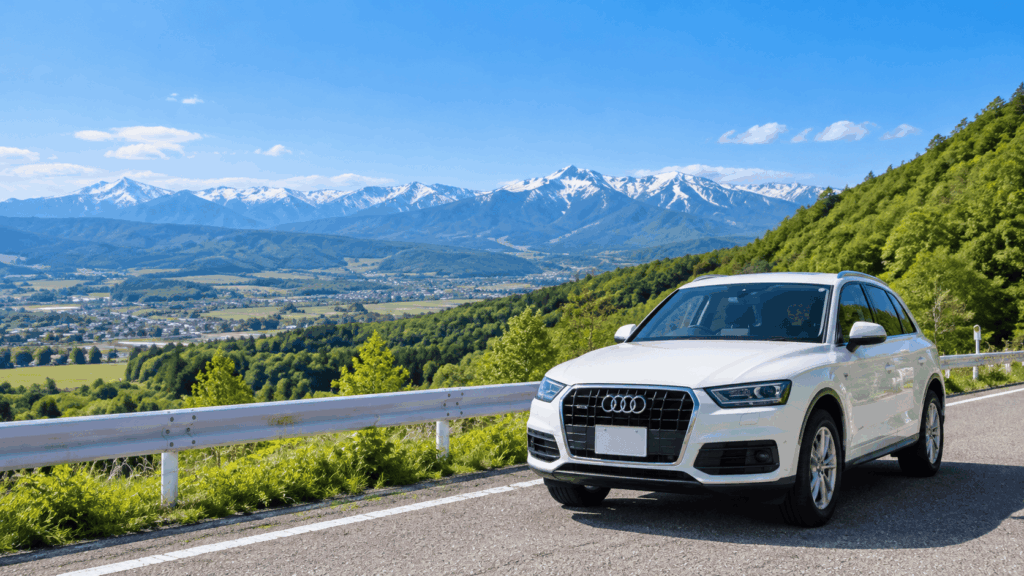
Driving gives you the one thing public transport can’t here: control over when you arrive. Sapporo to the Blue Pond car park is roughly two and a half hours in good conditions, and considerably longer once snow is on the road. That sounds like a lot for a pond, and it is — which is why a rental car only makes sense if you’re turning it into a loop through Furano, the Biei hills and Shirogane rather than a single destination.
The costs are not just the rental. Winter tyres are essential from late autumn, snow and ice slow everything down, and the pond’s car park has its own queue problem in the middle of the day. If you go this route, treat the arrival hour as the most important decision in your plan, not the driving route. There’s a full breakdown in the driving section below.
Option 3 — A day tour from Sapporo
This is the option that solves a specific problem rather than a general one. Blue Pond on its own does not need a tour. But Blue Pond, Shirahige Falls, a flower hill and a lavender farm in one day, without driving and without personally managing three separate timetables, is exactly what an organised tour is for.
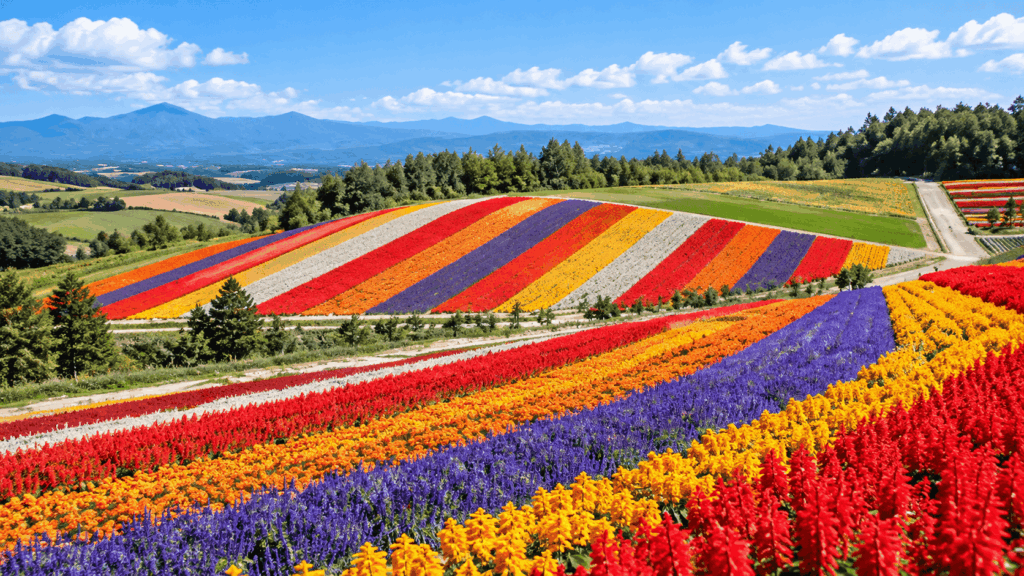
Current Sapporo departures in this style typically run about ten hours, leave around 08:00, and cover the Blue Pond with roughly 30 minutes on site, Shirahige Falls with about 20, a buffet lunch, Shikisai-no-Oka and Farm Tomita. Group sizes are often small — around 13 people — with English-speaking staff and free cancellation up to 24 hours before departure. Hotel pickup is usually available within a few kilometres of Sapporo Station, sometimes with a minimum of two guests.
One trap worth knowing about: some midsummer departures substitute another stop for Shirahige Falls, because the falls are less of a draw in certain weeks. If the waterfall is the reason you’re booking, check the itinerary attached to your specific travel date rather than the general tour description.

If the appeal is skipping the connection puzzle entirely, this is the option to compare against your own DIY plan — the tour pages list exactly which stops are included on each date.
There is also a private, driver-led alternative to the fixed group itineraries above. It is a different proposition: instead of joining a scheduled sightseeing route, your group can discuss which Biei and Furano stops to prioritise. That makes it more relevant if flexibility matters more than having a sightseeing guide.
Why I’d book this one
If you want Blue Pond, Shirahige Falls and other Biei or Furano sights in the same day, but don’t want a fixed group schedule or a long drive from Sapporo, this private day trip is worth comparing with the DIY route.
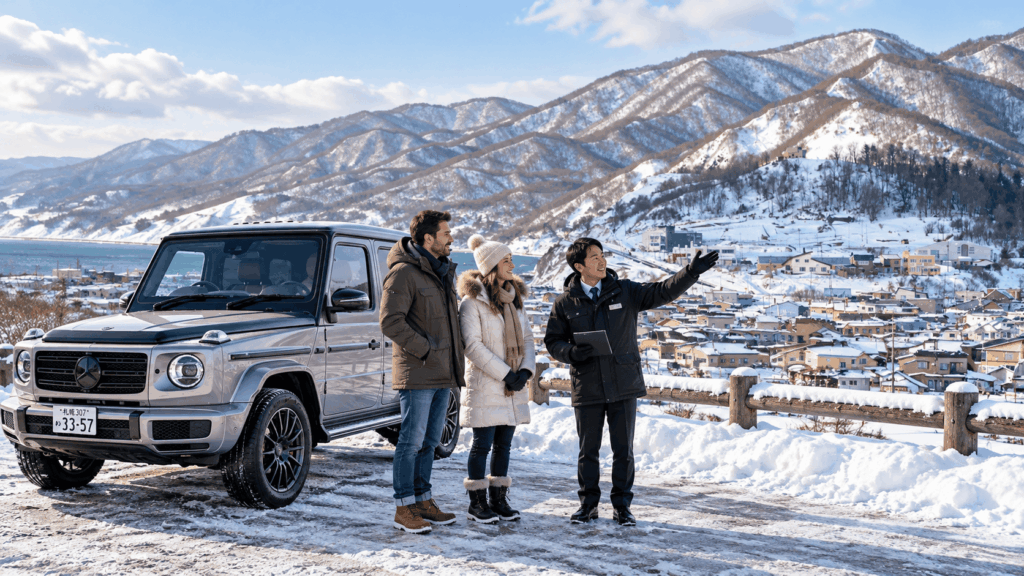
- More control over your stops: Recent travelers highlight the ability to tailor their Biei–Furano itinerary, rather than following a fixed schedule with short sightseeing breaks. Confirm your preferred stops with the operator before booking.
- Less transport planning: Travelers frequently appreciate punctual, careful drivers and comfortable transport. A private vehicle removes the train connections and lets your group focus on the sights instead of bus departure times.
- Clearer booking trade-offs: The listing offers cancellation terms to review before committing. This is a private driver-led trip, not a commentary-led guided tour, and meals and attraction admission fees are extra. Check the latest inclusions and cancellation conditions for your date.
Comparing the three Sapporo options
| DIY: train + bus | Rental car | Day tour | |
|---|---|---|---|
| Timetable flexibility | Very low — every leg fixed | High | None |
| Sights practical in one day | Blue Pond and Shirahige Falls, realistically | Four or five | Three to four, fixed |
| Need to drive | No | Yes | No |
| Planning effort | High | Medium | Low |
| Risk of a missed connection | Real, and it compounds | Low, but traffic and parking queues bite | Handled for you |
| Adding Furano | Impractical in the same day | Easy | Included on most itineraries |
| Best for | Confident planners on a budget | Families, photographers, repeat visitors | First-timers who want the day handled |
How to Get to Shirahige Falls from Blue Pond
Shirahige Falls is on the same road, four minutes further on by bus. Stay on Route 39 or 42 from Shirogane Aoiike Iriguchi to Shirogane Onsen, and the falls are about a two-minute walk — roughly 130 metres — from the stop. By car it’s around five minutes, with parking at the Shirogane Kanko Center public car park rather than at the pond.
Autumn reference photo: Shirahige Falls continues flowing in winter, but this image shows the waterfall in autumn.
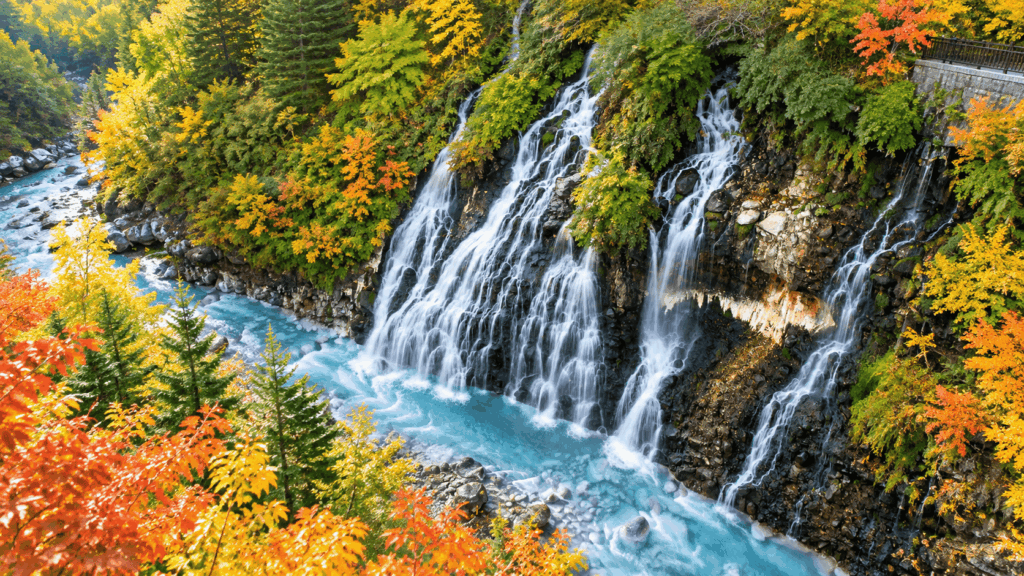
Because the two sit so close together, treating them as separate excursions is a mistake. If you have come from Sapporo, the marginal cost of adding the falls is one extra bus stop and perhaps twenty minutes. The falls are also illuminated year-round from dusk until 21:00, which makes them a more reliable evening subject than the pond in winter.
Should you walk from Blue Pond to Shirahige Falls?
No, and this is worth being direct about. On a map the two look temptingly close, and you will find blog posts describing the walk. Route 966 between them is about 30 minutes on foot, on a road that narrows and has stretches without a proper footpath, with traffic that includes coaches. Save the walking for the flat, marked paths at each site and take the four-minute bus instead. If you’re driving, the five-minute transfer is trivially easy.
Driving to Blue Pond: Parking, Traffic and the Best Arrival Time
The car park at Shirogane Blue Pond holds about 220 cars and 20 buses, and it is not free. As of the July 2026 revision, a standard car pays ¥1,000 per visit, motorcycles ¥300, and vehicles over six metres ¥6,000. Opening hours are 07:00–19:00 from May through 22 October, then 08:00–21:30 from 23 October through April, the later window allowing access during the illumination.
Capacity is not the issue. Timing is. Biei’s own visitor guidance states that waits of 30 minutes to an hour to get into the car park happen even on weekdays depending on weather and day of the week, and names 07:00–09:00 and after 16:30 as the periods when things move comparatively smoothly. The town has separately flagged 10:40–16:00 as the congested core of the day. That is a striking admission from the destination itself, and it should reshape how you plan the morning.
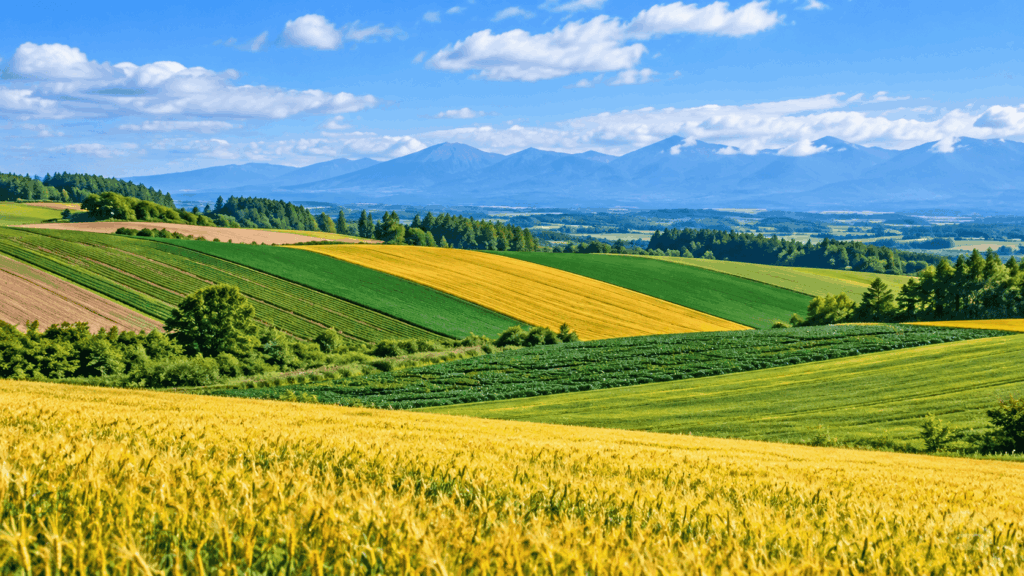
Area reference: This summer photograph shows the Biei hills rather than the Blue Pond car park.
Kai’s tip: When I’m guiding guests by car, I build the day around being at the pond during the 8 a.m. hour, not around how long the drive takes. Arriving then, the road in is quiet, the car park has space, and you can photograph the water before the coach groups work through. Once you get past nine or ten in the morning the character of the place changes — the bay fills with buses, and the viewing points get crowded. Pick your arrival time first, then work out what time you need to leave.
What the parking experience is actually like
This is a paid car park with a barrier, a ticket, and — importantly — a pre-payment machine, which the town asks drivers to use to keep the exit from backing up. That machine is where an otherwise smooth visit can lose time: I’ve stood in a long queue at the pre-payment machine at the end of a visit, which is exactly the moment you least want to be waiting. Settle the ticket before you walk back to the car, not as you’re trying to leave.
A few smaller things that don’t appear in any guidebook. I found the car park entrance less obvious than I expected on approach, so slow down once you’re on Route 966 rather than assuming a big sign will announce it. The walk from the car to the water is only a few minutes, but on my visits the surface was earth rather than paved, so footwear that copes with damp ground is worth having. And when it’s busy, the spots with the classic view fill up first — there is no queueing system for a photograph.
If you’re driving in peak season, the town runs a live congestion map showing current conditions at the pond and other Biei spots. Checking it before you set off is a two-minute habit that can save you an hour in a car park queue.
How Much Time Do You Need at Biei Blue Pond?
Less than most people budget. This is not a park, a trail network or a half-day attraction — it’s a pond with a short path along one edge and a viewing area. For planning purposes, 30 to 60 minutes is a realistic allowance, and that range holds whether you arrive by bus or by car.
Kai’s tip: The planning error I see most often is treating the Blue Pond as the destination of a half-day rather than a stop within one. On my own itineraries I generally allow up to an hour for the pond itself and then move on, because the time is better spent at Shirahige Falls or out among the Biei hills. Arriving early makes this easier: you see what you came for, and you’re gone before the site gets busy.
The hour can stretch. Serious photographers will want longer, and on a crowded day simply getting a clear view of the water takes time. But if you have allowed three hours here, you have probably taken them from somewhere better.
Weather, Winter and What You Might Not See
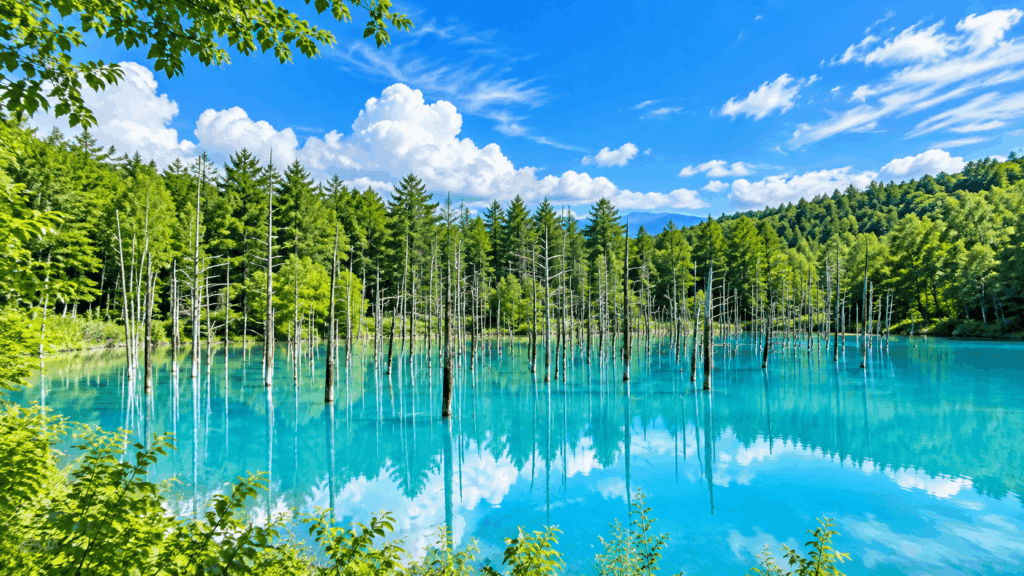
The Blue Pond is famous for a colour that is not guaranteed. The blue appearance is linked to fine particles containing aluminium compounds in the water that scatter light; how vivid it looks depends on the season, water conditions, light and weather. Biei’s own materials note that the appearance shifts through the year, and that in summer the surrounding green forest mutes the blue somewhat compared with the stark white of winter.
On a cloudy visit, I found the colour far less striking than the photographs suggest — closer to a pale grey-blue than the electric cobalt you see online. That’s one person’s experience on one day, not a rule about overcast weather, but it’s the honest version: if the blue is the whole reason for your trip, the light matters. Recent visitors regularly mention the same gap between the images they had in mind and what they saw, which is worth knowing before you commit a long travel day.
Winter changes the attraction, not just the view
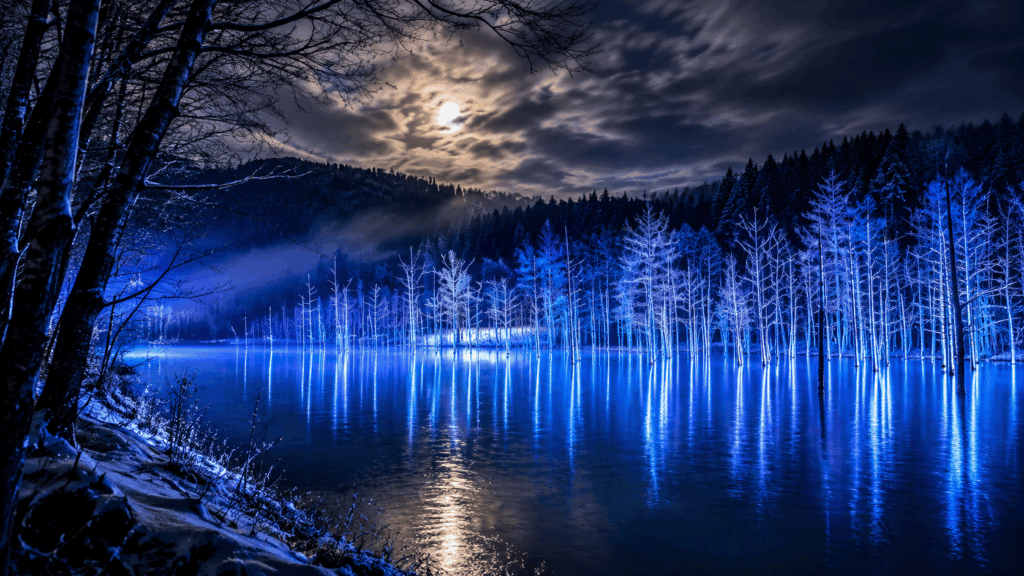
Once the pond freezes and snow settles, you are no longer looking at open blue water. The winter draw is the illumination: for the 2026–27 season it runs from 22 October 2026 to 21 April 2027, lit until 21:00, with start times shifting through the season (around 17:00 in October, November and January, 16:30 in December, 17:30 in February, 18:00 in March and 18:30 in April). Bad weather can cancel it, and the dates shift year to year, so confirm before you build an evening around it.
Lighting reference: Blue tones in the winter illumination are produced by artificial lights; the natural blue water is generally hidden beneath snow after freeze-up.
Two practical consequences. First, the last scheduled route bus from the Blue Pond stop toward Biei is 18:05 on the October 2026 timetable. A brief illumination visit can be possible before that bus in months with a 16:30 or 17:00 start, but you must check the service and allow time to reach the stop; it is too early for the later illumination starts in March and April. A rental car or a confirmed seasonal illumination tour is more flexible. Biei has run a winter illumination bus course in past seasons, with dates and details that change each year. Second, if you are travelling in winter at all, check the road and weather situation before setting out; this is a mountain road above the town.
One more thing worth checking before any visit: the Blue Pond and Shirogane sit at the foot of Mt. Tokachi, which is an active volcano. Its alert level rose to Level 3 in September 2026 and was lowered to Level 2 (crater-area restrictions) on 16 October 2026. Biei Town says the current restrictions apply around the crater, not to the Shirogane residential and onsen area; nearby mountain trails can still have restrictions. Check the JMA and Biei Town pages for the latest information rather than relying on any travel blog, including this one.
Which Way Should You Choose?
There’s no single best way to reach the Blue Pond — only the best way for the number of places you want to see and whether you’re willing to drive.
If you’re staying in Biei or Asahikawa
Take the bus. Route 39 or 42 from Bieieki-mae gets you to Shirogane Aoiike Iriguchi in about 22 minutes for ¥800, and the same line continues to Shirahige Falls. This is the one case where public transport isn’t a workaround — it’s simply the right answer. Ride out on one of the mid-morning departures, check your return time before you walk to the water, and you’ll have a better day than most drivers.
If you’re based in Sapporo and want Blue Pond plus Shirahige Falls, nothing else
The train-and-bus combination works, and JR Hokkaido publishes the connections to prove it. Accept the trade-off honestly: an approximately eight-and-a-half-hour overall itinerary with relatively little sightseeing time, multiple connections and not much slack. If that sounds like a fair exchange for a car-free day, do it. If it sounds exhausting, it probably will be.
If you want Blue Pond, Shirahige Falls and Furano in one day
Stop trying to do this on public transport. The bus frequency and the train connections will eat the day, and you’ll spend it watching timetables instead of scenery. Choose a rental car if you’re comfortable driving in Japan and want to set your own hours, or a Sapporo day tour if you’d rather someone else handled the driving, the lunch and the parking queue. Both put four stops into a day that public transport can only fill with two. For a closer look at how to structure this, see our realistic Furano and Biei day trip itinerary.
If you don’t want to drive in Hokkaido
The day tour is the answer, not a compromise version of one. Snow, unfamiliar road markings and a long return drive in the dark are real reasons to hand over the keys, and the organised options cover Blue Pond, Shirahige Falls and the Furano flower farms in a single loop. Just confirm that the falls are actually on the itinerary for your date — some summer departures swap them out.
If you are renting a car
Plan backwards from the arrival time, not forwards from the departure time. Aim to be in the car park between 07:00 and 09:00 in the May–22 October season, or between 08:00 and 09:00 from 23 October through April, before the coach groups arrive. Pay for your parking before you walk back to the car, and if you’re adding Shirahige Falls, do it on the same outing — it’s five minutes up the road.
If you’re visiting in winter
Reset your expectations before you reset your itinerary. The frozen, snow-covered pond under illumination is a genuinely different attraction from the summer photograph, not a lesser version of it. A car or a confirmed seasonal illumination bus is the more flexible option. With the latest scheduled route bus leaving the Blue Pond stop for Biei at 18:05, a short illumination visit may be possible in months when lighting starts at 16:30 or 17:00; it is not a reliable option for the later starts. Check buses, weather and road reports before setting out.
Frequently Asked Questions
Can you get to Biei Blue Pond without a car?
Yes, and easily from Biei. Dohoku Bus Route 39 or 42 leaves from Bieieki-mae, directly outside JR Biei Station, and reaches Shirogane Aoiike Iriguchi in about 22 minutes for ¥800. From the stop it’s a five to ten minute walk. Buses also run from the Asahikawa side, but the Biei departure point is the simplest car-free option. The limitation isn’t getting there — it’s the return: roughly ten departures a day in each direction, with the last bus from Biei at 17:15.
Can you visit Blue Pond and Shirahige Falls from Sapporo in one day?
Yes. JR Hokkaido currently publishes a Sapporo day-trip model that uses limited expresses to Asahikawa, a local train to Biei, and the Dohoku Bus to both the pond and the falls, returning to Sapporo in the late afternoon. It works, but it is timetable-dependent from the first minute to the last, and JR Hokkaido recommends reserving a seat in advance for the all-reserved limited express; seat-unassigned tickets may also be available under JR rules, though they do not guarantee a seat. Recheck both timetables before you travel, as they are revised periodically.
How do you get from Blue Pond to Shirahige Falls?
After your Blue Pond visit, board another Route 39 or 42 bus for the four-minute ride from Shirogane Aoiike Iriguchi to Shirogane Onsen; the falls are about a two-minute walk from that stop. If you skip the pond, you can of course stay on your original bus to Shirogane Onsen. By car it’s around five minutes, with parking at the Shirogane Kanko Center public car park. Walking between the two takes about 30 minutes along Route 966, a road that narrows with stretches lacking a footpath — the bus is the better choice, even though the distance looks short on a map.
Is Biei Blue Pond worth the trip from Sapporo?
It depends what you’re pairing it with. As a single destination, it’s a short visit — 30 to 60 minutes is a realistic allowance — set against several hours of travel each way. As part of a day that includes Shirahige Falls, and ideally a Furano flower farm or the Biei hills, it earns its place. The travellers who come away disappointed tend to be the ones who made a long journey for one pond and expected the colour from the photographs.
Does the Blue Pond still look blue in winter?
Not in the way the summer photos suggest. Once the pond freezes and snow accumulates, the open blue water is gone and the site becomes a snow-covered landscape, with the illumination as the main attraction from late October to late April. The lighting schedule and dates change each season, and bad weather can cancel a night, so check the current year’s information rather than assuming last season’s dates.
How much does parking at Blue Pond cost?
As of the July 2026 revision, ¥1,000 per standard car, ¥300 for motorcycles and ¥6,000 for vehicles over six metres. The car park holds about 220 cars and 20 buses and opens 07:00–19:00 from May through 22 October, and 08:00–21:30 from 23 October through April. Payment is by ticket with a pre-payment machine, so settle it before returning to your car to avoid the exit queue.
What time should you arrive to avoid the crowds?
Between 07:00 and 09:00 during the May–22 October opening period, or after 16:30 while the car park is open. From 23 October through April, parking only opens at 08:00, so aim for 08:00–09:00 instead. Biei’s visitor guidance names early morning and after 16:30 as comparatively smoother periods, and notes waits of 30 minutes to an hour at busier times — even on weekdays. The middle of the day, roughly 10:40 to 16:00, is the congested stretch. Arriving early also means you’re at the water before the coach groups arrive, which changes the experience more than any other single decision.

Hi, I’m Kai. I’m a Tokyo-based travel writer, tourism industry insider, and the author of a published guidebook for international visitors to Japan. With over 10 years of professional experience at a leading Japanese tourism company, my mission is to help you skip the tourist traps and navigate Japan’s best destinations like a local. I believe the perfect day trip is like a traditional kaiseki meal: a beautiful balance of precise planning and unforgettable seasonal discovery. When I’m not out conducting field research, you’ll usually find me drafting new itineraries with one of my favorite fountain pens!