
Best Time to Visit Furano: Lavender, Summer Crowds & Autumn Colors
Furano is one of those places where the month you choose decides what kind of trip you get. Come in early July and you get the lavender slopes, the Tokachi mountains behind them and the version of Furano that appears on every poster — along with the traffic and the crowds that come with it. Come in early October and you get gold hillsides, cool air and room to breathe, but the purple is gone.
So the useful question is not simply “which month is best,” but which month is best for the trip you are actually taking — and, in July, which time of day you plan around.
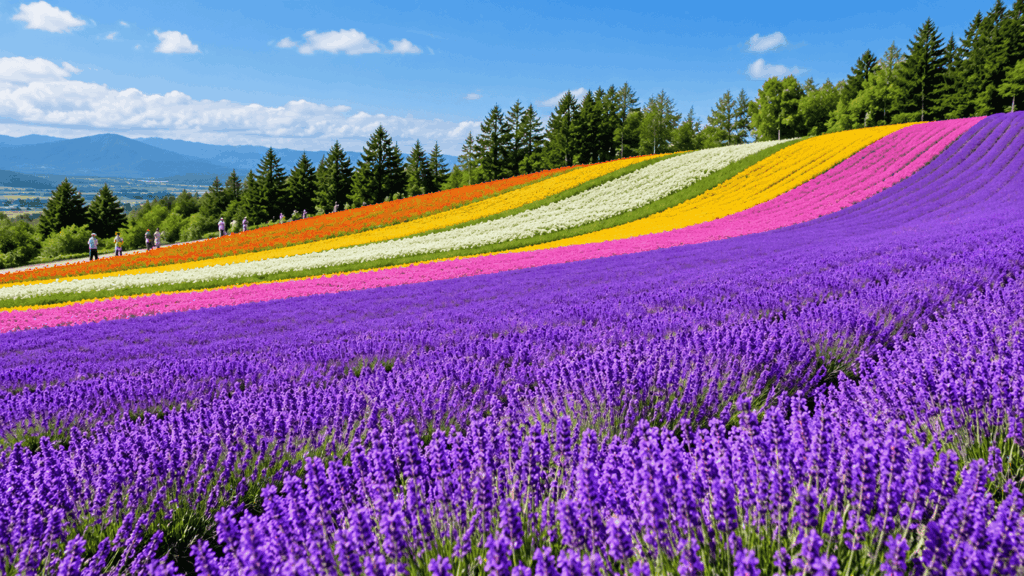
Visiting Furano from Sapporo without a rental car? If you are traveling with family or friends and want to avoid July driving and parking, a private Furano–Biei day trip is worth comparing with a rental car. You can discuss the stops that matter most rather than follow a standard coach itinerary. See the private Furano–Biei tour’s suggested route, departure options, and current group prices.
When Is the Best Time to Visit Furano?
For most first-time visitors, July is the best time to visit Furano if lavender is the reason you are going. Early to mid-July usually gives the most reliable balance of color and atmosphere, though some varieties can peak later in July. The exact timing shifts every year, so check the official bloom reports.
July is also the busiest month for lavender sightseeing, and individual days can be hotter than many visitors expect. If cooler weather, quieter roads or autumn color matter more to you than purple fields, late September to early October is the better answer.
One practical warning before any planning starts: the old advice about slipping into Farm Tomita at dawn no longer applies. The farm states that admission is not allowed outside opening hours, so build your morning around the official opening time rather than around a 6 a.m. arrival.
July is best for lavender, but not necessarily for every traveler. The table below is the short version of the decision.
| Travel goal | Best period | What you’ll see | Crowds | Main drawback |
|---|---|---|---|---|
| Lavender | Late June for early varieties; early to mid-July for the main fields | Purple slopes at Farm Tomita and Lavender East, with the Tokachi range as a backdrop | Heaviest of the year, especially weekends and late morning | Heat, traffic and full car parks |
| Other summer flowers | Late June through August | Lavender gives way to salvia, marigolds and other seasonal beds | Heavy in July, noticeably lighter in August | Main lavender fields are past peak, though some late varieties can still flower in early August; still warm at midday |
| Fewer crowds, cooler sightseeing | Late August to mid-September | Green rolling hills, quieter farms and easy driving | Much lighter once the lavender rush ends | Misses the iconic purple entirely |
| Fall foliage | Late September in the mountains; early to late October at lower elevations | Birch and oak turning gold and red, especially toward the Tokachi range and Rokugo | Light compared with July | Shorter days; some farm facilities on reduced hours |
| Skiing | December to early spring | Furano’s ski slopes and powder snow | Busy during holiday periods | No flowers; road and clothing logistics change completely |
Read the table by what you would regret missing. If the answer is “the lavender fields,” accept the July trade-offs and plan around them. If it is “driving without stress,” pick the shoulder season and forget the purple.
If you are based in Sapporo and the idea of driving in peak July is the part you dread, a guided Furano and Biei day trip is the alternative worth pricing against a rental car. The detail that decides whether it suits you is stop times, not the headline price.
Why July Is the Best Time for Lavender in Furano
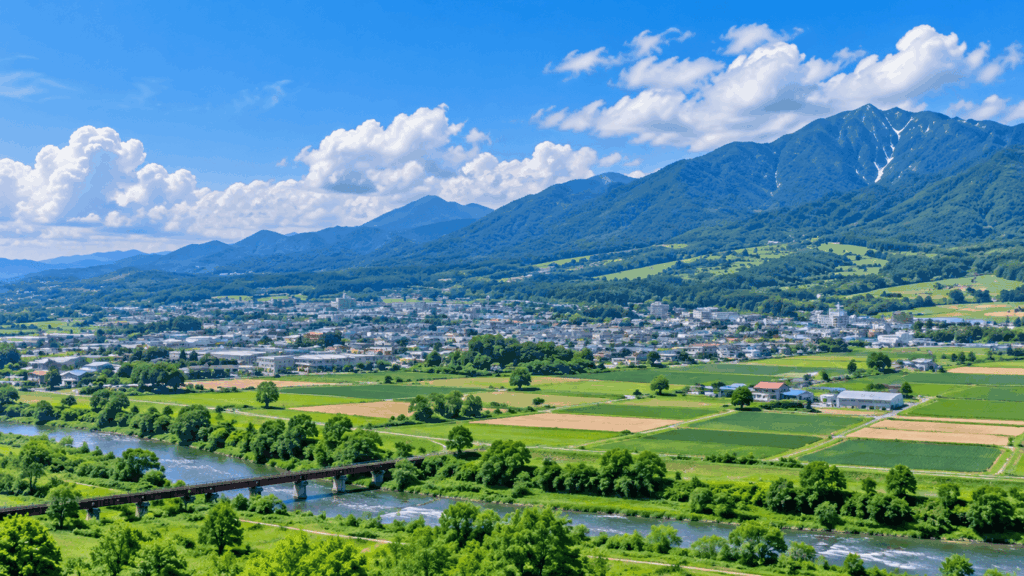
Farm Tomita grows several lavender varieties that bloom in sequence rather than all at once, which is why “lavender season” in Furano is a stretch of weeks, not a single weekend. Early varieties usually start coloring in late June. The main field varieties — including Okamurasaki, the variety that covers the largest area around Furano — typically reach their best color around mid-July, while some fields remain colorful later in July depending on the weather and harvest schedule.
Lavender East, the farm’s second site about 4 km east toward the Tokachi range, is a working field rather than a garden and opens only for a short window. In 2026 it ran from 20 June to 20 July, 9:30 to 16:30, with the best viewing listed as early to mid-July. Those dates are set each year, so check the current season before you build a day around it.
Bloom timing is the one thing in this article that cannot be pinned down in advance. The Furano Tourism Association and Nakafurano Town both publish bloom reports through the season, and Farm Tomita posts its own field updates. Read those rather than any article — including this one — if you are choosing between two possible weeks.
Is Early July or Mid-July Better?
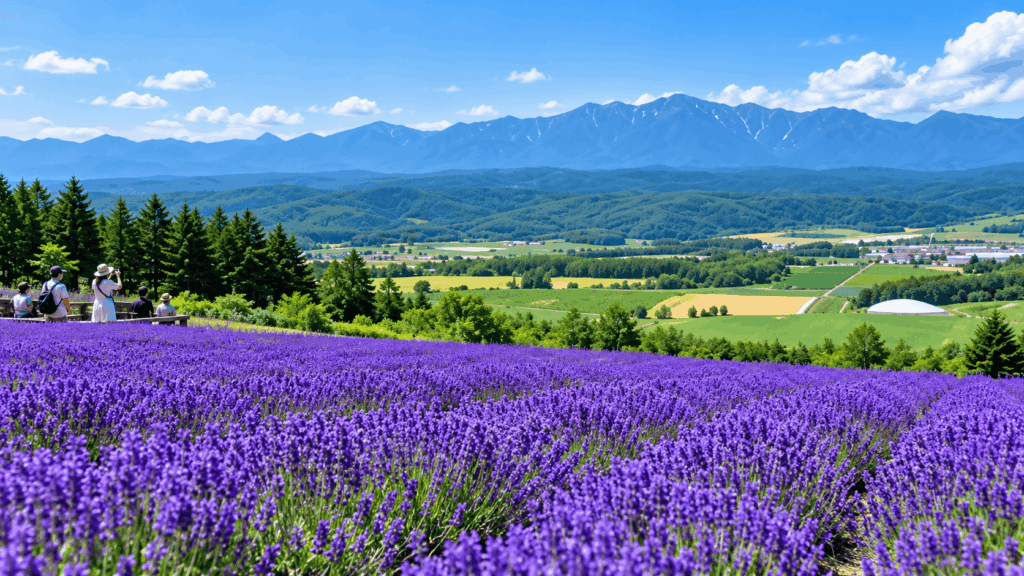
Early July carries the risk of half-colored fields, particularly on the large main slopes that come into their own a little later. Mid-July carries a different risk: the color is usually at its best, but so is the demand, and harvesting begins on some varieties from late July. In 2025, Nakafurano Town’s own bloom index was still rating its main lavender at full bloom on 24 July, days before cutting — a reminder that the peak can land later than the calendar suggests.
If your dates are locked and you cannot check reports, the first half of July is the safer bet for color. If your dates are flexible, the stronger move is to book accommodation early and decide the exact days in the final week, once the official bloom reports are running. That is a less tidy answer than a fixed date, but it is the accurate one. If you need help choosing a base, check out our guide on where to stay in Furano.
The Best Time of Day to Visit Farm Tomita in July
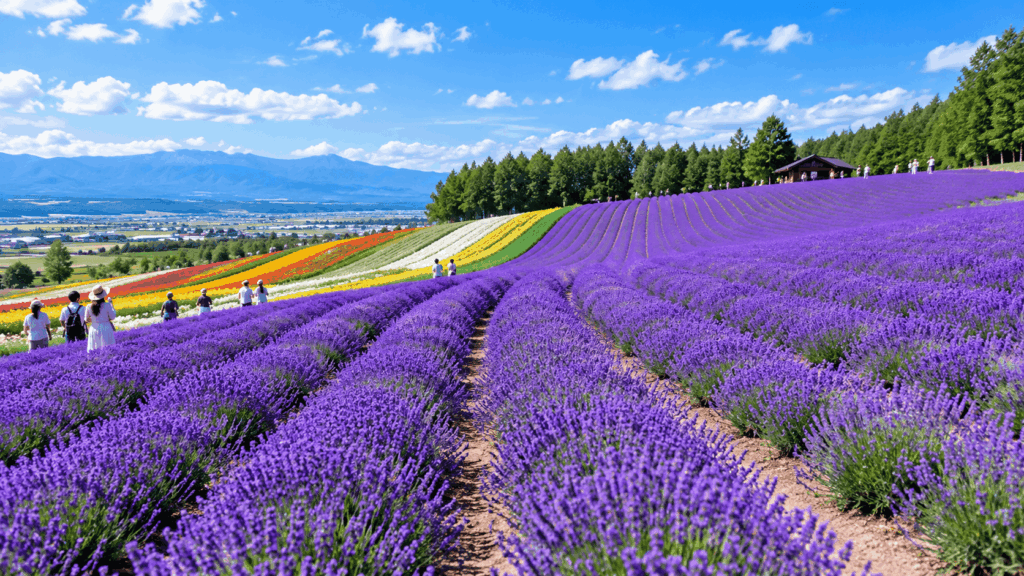
Entrance to Farm Tomita is free, parking is free, and the site is open every day — but the hours move with the season, and the individual buildings keep shorter hours than the grounds. The official seasonal schedule lists 8:30–18:00 for July, while individual cafés, counters and shop services can differ or finish earlier. Check the current times on the official site before you go — the farm’s hours change with the season, and October–November is typically 9:30–16:30. The farm explicitly asks visitors not to enter outside opening hours.
Within those hours, the experience changes more than most visitors expect. The same field at 8:40 and at 11:30 feels like two different places.
Early Morning: Aim for Opening Time, Not 6 a.m.
I once walked from Nakafurano Station — about 25 minutes on foot, which is the walking time the farm itself lists — and arrived around 6:30 in the morning. The field was almost empty. It was quiet enough to hear a woodpecker working somewhere behind the trees, the lavender smelled stronger than at any other time I have been there, and the shops were firmly shut.
That is a memory, not a plan. Farm Tomita now asks visitors not to enter outside opening hours, so the realistic version of that quiet morning is the first stretch after the gate opens. If photographs of empty rows matter to you, that is the window to use.
Kai’s tip: What catches people out is treating “early” as a fixed time. The useful window is the first hour after the gate opens: the rows still photograph cleanly and the car park is still manageable. Coach groups and rental cars tend to build from mid-morning, and by then the same slope reads completely differently. Arriving at opening also means accepting that some buildings may not be serving yet.
Reviews from other travelers consistently point the same way: mornings are calmer, and the site gets busier as the morning goes on. That is a pattern rather than a promise — a rainy Tuesday and a sunny Saturday in the same week will not behave alike.
Late Morning to Midday: Heat, Crowds, and Queues
By late morning, the tour buses and rental cars have usually arrived, and this is where July’s reputation comes from. The farm sits on a slope, and the paths between the flower houses climb; in the middle of the day that walk costs more than it looks like it will on the map. The Japan Meteorological Agency’s 1991–2020 average July daytime high for Furano is 26.2°C, though individual hot days can exceed 30°C. That still surprises visitors who packed for “cool Hokkaido.”
Queues are the other midday feature. The farm’s own facility information directs visitors to the separate grass-roof toilet when the main ones are busy, which tells you something about arrival peaks. Plan a toilet stop when you arrive rather than when you are already halfway up the hill.
Afternoon: Better for Shopping, but Watch the Clock
The afternoon is the sensible time for the shops, once the worst of the heat has passed: the cut melon, the soft-serve, the small buildings selling lavender goods. The lavender soft-serve gets the attention, but the plain milk version is the one I keep going back to — a personal preference, not a ranking.
The mistake to avoid is leaving shopping to the last twenty minutes. The grounds may be open until early evening, but the buildings close earlier, and closing time at Farm Tomita is enforced politely and firmly.
Kai’s tip: I have been walked to the exit at closing time, and it was handled with a smile and no room for negotiation. Decide what you want to buy before you go back for a final look at the fields. If you arrive at opening, remember the shops operate on their own schedule, so the “photograph first, shop later” order works better than the reverse.
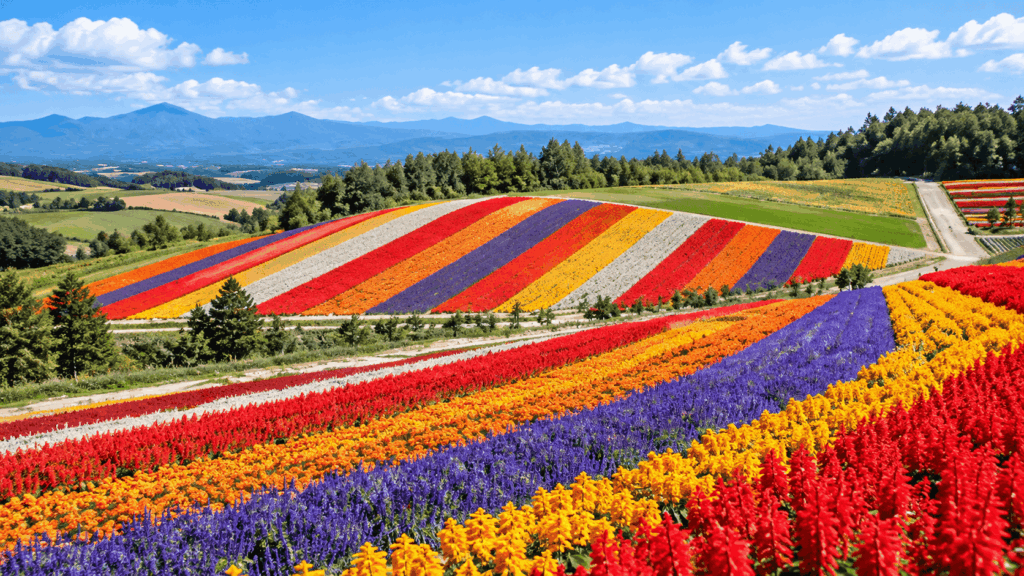
Furano in Summer vs Furano in Autumn
These two seasons are usually presented as rivals, with autumn cast as the consolation prize for people who missed the lavender. That framing is wrong. Autumn in Furano is not a faded version of summer; it is a different trip, with a different set of pleasures and a different set of things you give up.
| Category | Summer (late June to August) | Autumn (late September to October) |
|---|---|---|
| Scenery | Patchwork flower fields against green hills and the Tokachi range | Gold, copper and deep red hillsides; harvested fields and clear mountain air |
| Lavender | The reason to come; peak color early to mid-July | Gone. Some farms keep small late plantings, but not as a destination |
| Weather | Warm to hot at midday; July averages a 26.2°C daytime high, with occasional days above 30°C; cooler mornings and evenings | Comfortable by day, cold at dawn and after dark; September days often swing more than 10°C |
| Crowds | Heaviest of the year, concentrated in July and around major farms | Much lighter outside foliage weekends |
| Driving | Congestion around Nakafurano and Route 237, full car parks at peak | Generally easy; watch for early snow on mountain roads |
| Photography | Strong color but hard to shoot empty frames after mid-morning | Better light, fewer people, longer shadows; shorter usable daylight |
| Clothing | T-shirt weather at midday, a layer for the evening, shoes for slopes | Layers, a warm outer layer, wind and rain protection |
| Best for | First-timers, lavender seekers, anyone wanting the postcard Furano | Repeat visitors, photographers, drivers, anyone who dislikes crowds |
| Biggest drawback | Heat, traffic and the feeling of sharing every viewpoint | No lavender; some farm buildings on reduced hours or closed |
Summer: The Furano You Came For, With a Cost
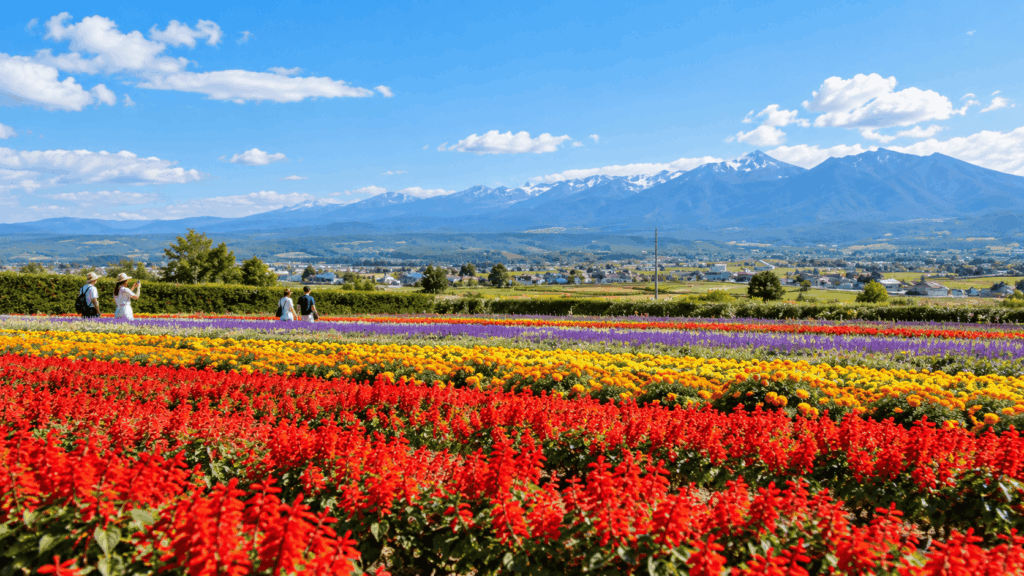
Summer delivers what the images promised. Farm Tomita’s slopes, the lavender fields at Lavender East, the long views toward the Tokachi range, and the particular pleasure of driving Route 237 with the windows down and fields on both sides. If this is your first trip and lavender is the point, nothing else in the year substitutes for it.
The cost is concentrated rather than spread out. Traffic backs up on the roads into Nakafurano, car parks fill, midday heat makes the hillside walks harder than expected, and the most photographed spots are the most crowded ones. None of that ruins the trip, but all of it shapes the day, and it is the reason the time-of-day advice earlier in this article matters as much as the month.
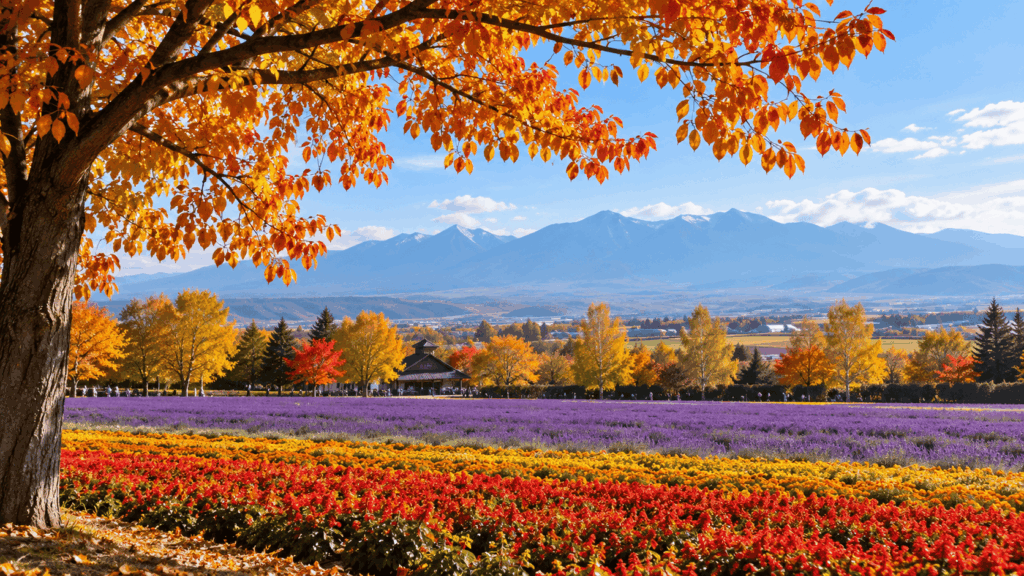
Autumn: A Different Trip, Not a Consolation Prize
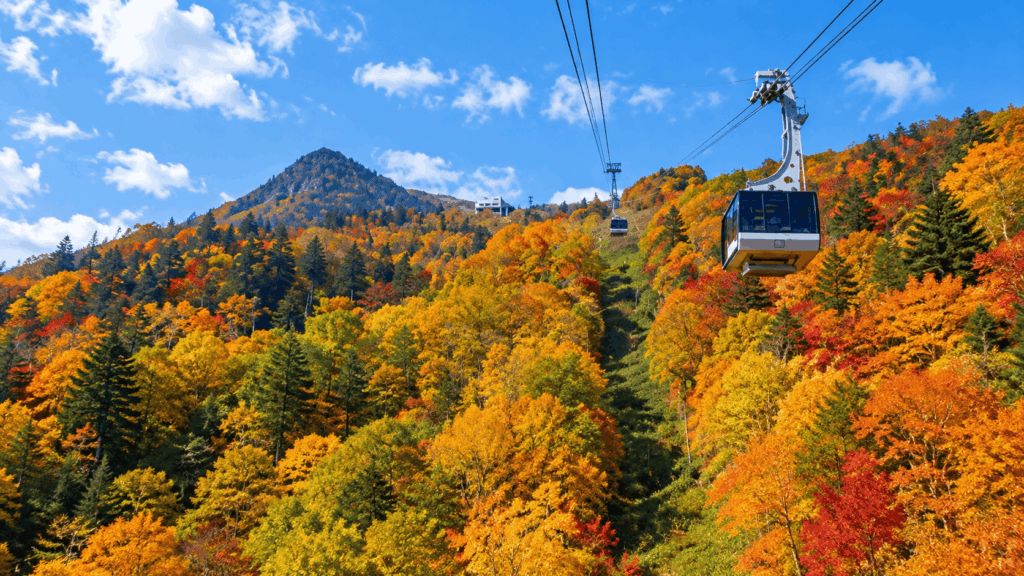
Autumn works on a delay that catches people out. The mountains color first: around the Tokachi range, including the higher viewpoints above Biei and Kamifurano, foliage typically starts in late September and peaks in early October. Lower ground follows later — the farmland around Rokugo and the Furano basin generally runs from early October into late October, and the exact timing moves with the year.
That gap is the practical point. Booking “autumn in Furano” in the first week of October and expecting mountains in full color is reasonable; booking the last week of October for the same view usually is not. Decide whether you are chasing high-elevation color or the low farmland, and set the date from there. Farm facilities also start shortening their hours, and some close for the season, so check before you plan a day around one.
What autumn does not offer is lavender. If someone in your group is traveling specifically for the purple fields, October will disappoint them no matter how good the foliage is.
If July is fixed but the driving is not something you want to handle during peak season, a guided day trip removes the parking and Route 237 problem entirely — at the cost of controlling your own schedule.
Furano Month by Month: Which Month Fits Your Trip?
This is deliberately short. A month-by-month climate table will not tell you more than the trade-offs below.
Late June
Early lavender varieties begin to color, and the main slopes are still building. You get lighter crowds and easier parking, but you cannot count on the full-field purple that most people picture. Best for travelers who would rather have a quiet visit than a guaranteed postcard.
July
The strongest month for lavender and the busiest month overall. Peak color generally lands in early to mid-July, with harvesting starting on some varieties from late July. Plan the time of day as carefully as the date: opening time at Farm Tomita is a different experience from late morning, and the difference is larger than most guides admit.
August
The main lavender fields are being cut, with Farm Tomita saying that harvesting is usually finished by early to mid-August, so August is a risky month if lavender is your only reason for coming. It is still a good month for the rest of the flower fields, for the hills, and for a slower pace once the July rush subsides. Choose it for summer in Furano, not for lavender in Furano.
Late September to Early October
This is the autumn window, and it splits by elevation. Late September favors the mountains and higher viewpoints; early October favors the farmland and lower slopes around Furano and Rokugo. If you can only pick one week and want both, the turn of the month is the compromise — accepting that neither will be at its absolute peak.
Winter
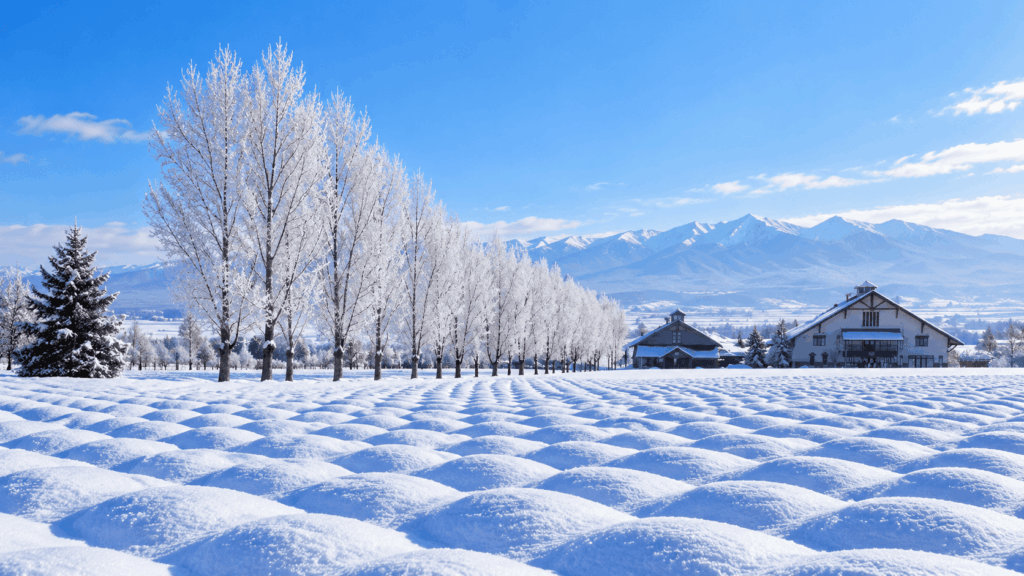
Winter belongs to skiers. Furano’s ski area and the surrounding snow country are the draw, and almost everything discussed in this article — flower fields, farm shops, seasonal rail stops — is out of season. Come in winter for snow, not for scenery of the floral kind. For details on the ski season and snow activities, see our guide to Furano in winter.
Is July Too Crowded to Visit Furano?
No, but you should expect congestion and plan around it rather than hope to avoid it. The crowds are real and they are concentrated: Nakafurano Town’s own guidance warns of traffic heading for the lavender farms, singles out Saturdays, Sundays and public holidays in July as the worst, and notes that car parks are limited.
What that guidance also tells you is where the pressure actually sits. It is not evenly spread across the day or the week. Weekday mornings and evenings are calmer; the middle of a July weekend is the opposite. The town suggests using public car parks — the town office, Flower Park — and walking or cycling to the farms when the main lots are full, which is a genuinely useful fallback if you arrive by rental car and find the entrance road backed up.
Drivers should also know that the farm roads here are not forgiving of casual attention. Nakafurano’s guidance points out several stop signs along the main approach roads and notes that accidents from missed signs happen every year. If you are used to wide-open rural driving, this is a place to slow down.
My own experience fits the pattern the town describes. The field was near-empty early, and by late morning the coaches and cars had arrived and the atmosphere changed completely. The lesson is not “avoid July” but “use July differently”: pick the weekday, pick the opening hour, and let the middle of the day be for eating and shopping rather than for the headline viewpoints.
Should You Drive, Take the Train, or Join a Tour in Peak Season?
Once the date is set, transport becomes the real decision — and in peak season it decides how much of the day you actually enjoy. For a detailed breakdown of your options, see our guide on getting from Sapporo to Furano.

Rental car. The most flexible option, and the only realistic way to combine Farm Tomita, Lavender East, the Biei hills and the Blue Pond in one day at your own pace. The cost is July traffic, full car parks and the need to stay alert on narrow farm roads. Best for travelers who want to be somewhere at opening time and stay as long as they like.
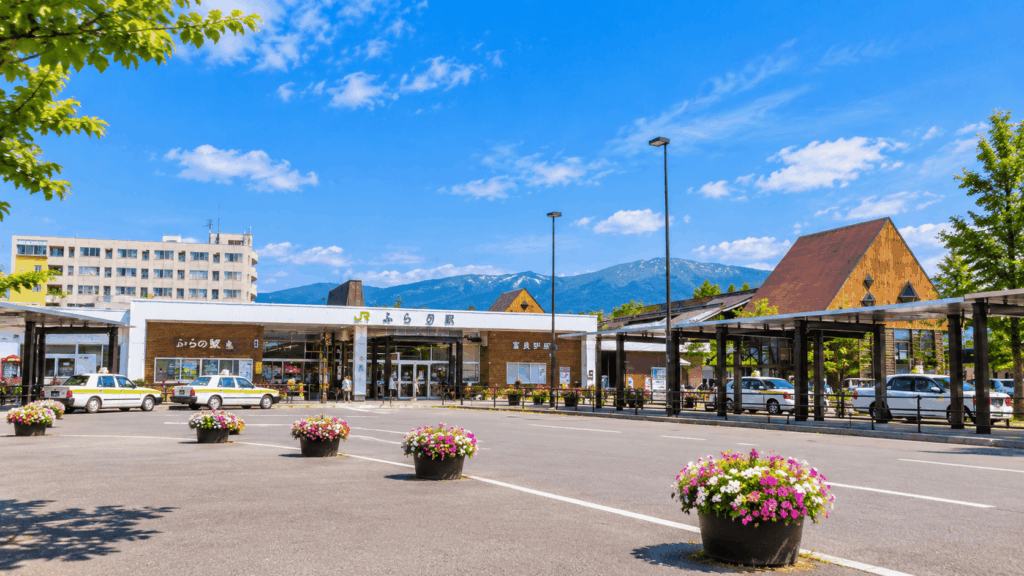
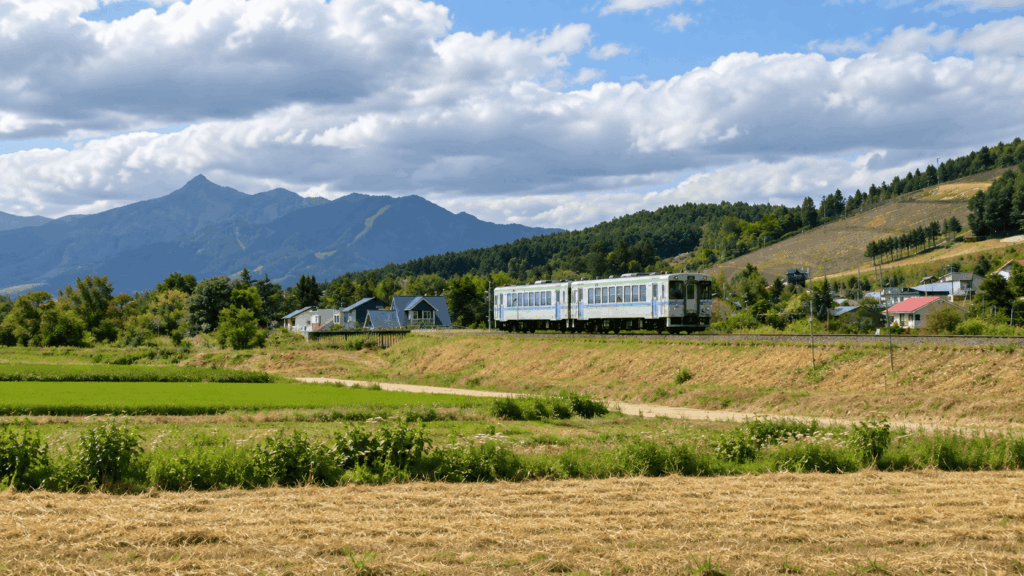
Train. The Furano Line connects Asahikawa and Furano, with connections from Sapporo via Takikawa or Asahikawa. Nakafurano Station is about 25 minutes on foot from Farm Tomita. The seasonal Lavender-Farm Station is only about 7–8 minutes away, but it does not have normal year-round local-train service. It was served by the Furano–Biei Norokko train in 2026; JR Hokkaido has also announced planned stops there for its special June 2027 trains and the new summer sightseeing service. Verify the exact 2027 operating dates and train stops before relying on it. The Furano Line is outside JR Hokkaido’s usual IC-card area, so plan to buy the appropriate ticket rather than assuming you can tap a Suica or ICOCA card.
One piece of outdated advice is still circulating: the Furano–Biei Norokko sightseeing train made its final run on 23 September 2026 after 28 years. For summer 2027, JR Hokkaido instead plans the limited express Kunpu no Oka on selected June dates (5–6 June and 12–30 June), followed by the new Aoi Hoshi: Oka no Irodori sightseeing train starting 1 July 2027. Both are planned to stop at Lavender-Farm Station, but these are special trains with their own schedules and fares, not a replacement for every local service. Regular Furano Line trains also continue; check the official 2027 timetable for the exact service you need.
Guided day tour. The simplest option from Sapporo if you do not want to drive. Most Furano and Biei day tours run around ten hours from Sapporo and typically combine Farm Tomita, Shikisai-no-Oka, the Blue Pond and Shirahige Falls, often with lunch and farm admission included. What varies — and what matters — is how long you get at each stop. Some products allow roughly half an hour at the farm; others allow more. Check the itinerary times, not just the list of stops.
This is also where a tour stops being the right answer. If you want to photograph Farm Tomita at opening time, walk the slope before the coaches arrive, or stay more than an hour in the fields, self-planning is the better fit. A tour makes sense when avoiding July driving and parking matters more to you than controlling the schedule.
For travelers staying in Sapporo without a car, comparing a current Furano and Biei day tour against the train-plus-local-transport alternative is the fastest way to see which one actually fits your day.
If you are traveling with family or friends and want to avoid July driving without being tied to a standard coach schedule, the private Furano–Biei day trip is worth a closer look. The main benefit is having a dedicated vehicle and driver, rather than an attraction-by-attraction guide. It is especially relevant if your group wants to discuss the route and sightseeing priorities before setting off.
Why I’d book this one
- Less driving stress: Recent travelers mention punctual drivers, comfortable transport and helpful adjustments when traffic or crowds affect the day. You can leave the parking and rural-road navigation to someone else.
- More say in the itinerary: The suggested summer route covers Furano and Biei highlights such as Farm Tomita, Shikisai-no-Oka and Blue Pond. Private travel gives you more scope to discuss which stops matter most, although changes remain subject to the driving schedule and operator approval.
- Simpler logistics from Sapporo: Hotel pickup removes the need to coordinate train connections and local transport. Check the meeting arrangements, cancellation conditions and language support before choosing, as the driver does not accompany you as a specialist guide inside each attraction.
The important check is whether your preferred departure time and time at Farm Tomita will fit the day’s route. A private vehicle gives you flexibility, but it does not automatically mean arriving at the farm when the gates open.
What to Wear in Furano in Summer and Autumn
Summer. Breathable clothing for the middle of the day, a light layer for mornings and evenings, sun protection, and more water than you think you need. Furano’s normal July daytime high is 26.2°C and individual days can pass 30°C, while its average daily low is 16.0°C. Footwear matters more than most packing lists suggest: the flower farms are built on slopes, and the paths between the buildings climb.
Autumn. Layers, a warmer outer layer, and wind and rain protection. September days can be mild while mornings sit near 10°C, and the temperature swing within a single day is often more than 10°C. Mountain viewpoints are colder and windier than the valley floor, and early snow on higher roads is not unusual by mid-October.
Kai’s tip: I underestimated the July heat at Farm Tomita. The slope between the lower fields and the upper viewpoints left me sweating far more than the temperature suggested, and I was glad to be in trainers rather than anything with a smooth sole. Take water up with you rather than leaving it in the car, and use the toilet when you arrive — the queues build around the same late-morning window as the coach arrivals.
For anyone combining Furano with a Biei day trip, the same advice holds with more force: you will spend more time on your feet and in the sun than the itinerary suggests.
Frequently Asked Questions
What is the best month to visit Furano?
For travelers whose main goal is lavender, July is the strongest month, with early to mid-July usually offering the best balance of color and atmosphere. If your priorities are cooler weather, quieter roads or fall foliage, late September to early October is a better fit. There is no single best month, only a best month for a particular trip.
Is Furano worth visiting in September?
Yes, if you are going for cooler sightseeing and the start of the mountain foliage. Around the Tokachi range, color typically begins in late September and peaks in early October. It is not worth planning September around lavender: the main fields are cut by then, and the farm season is winding down. Check opening hours before building a day around any specific farm building.
Is Furano worth visiting in October?
Yes, for autumn scenery at lower elevations — the farmland around Rokugo and the Furano basin generally colors from early October into late October, depending on the year. Mountain viewpoints peak earlier, so late October is usually too late for high ground and roughly right for the valley. October is too late for lavender under any circumstances.
What time should I visit Farm Tomita?
Aim for the official opening time, not for a pre-dawn arrival. The farm states that admission is not allowed outside opening hours, and older advice about entering at 6 a.m. no longer applies. Opening time gives you the quietest fields and the easiest parking; crowds usually build from mid-morning as coach groups arrive. Opening hours change with the season, so confirm them for your dates.
Is Furano crowded in July?
Yes, particularly at the major lavender farms, on weekends and public holidays, and during the middle of the day. It is manageable if you shift the timing: weekdays are calmer, mornings are calmer, and Nakafurano Town advises using public car parks and walking or cycling to the farms when the main lots fill. Expect the pressure to be concentrated rather than constant.
Can you still see lavender in Furano in August?
Only at the margins. Lavender harvesting takes place progressively, with Farm Tomita saying it usually finishes by early to mid-August. Early August can still offer some later varieties, but do not count on the iconic full-field purple. August is a good month for Furano’s other flowers and for the landscape, but not a month to choose if lavender is the reason for the trip.
So, When Should You Visit Furano?
The decision comes down to what you would regret missing, so here it is by traveler type.
- If this is your first Furano trip and lavender is why you are going: choose July, and treat the time of day as part of the plan. Be at Farm Tomita for the official opening rather than mid-morning, keep the middle of the day for food and shops, and check the bloom reports in the final week before you travel rather than trusting a fixed date.
- If you are traveling with young children or heat-sensitive travelers: late August to mid-September is the easier trip. You lose the lavender, but you gain shorter queues, easier parking and midday temperatures you can walk in. If July is unavoidable, start early, carry water, and do not attempt the upper slopes at midday.
- If you have one day from Sapporo and no car: a guided Furano and Biei day tour is the realistic option, and the itinerary’s stop times are the thing to check. If you specifically want Farm Tomita at opening, or more than an hour in the fields, a tour will frustrate you and the train-plus-local-transport route is the better plan.
- If you have seen the lavender fields before, or dislike crowds: come in early October for the farmland color and the empty roads, and accept that the farm experience is a quieter, partly closed version of summer. Check which buildings are still open.
- If photography is the main goal: July at opening time for the iconic shots, or late September to early October for light and emptiness. Those are two different portfolios, and only one of them involves purple.
- If you are coming for snow: winter, and skip the rest of this article. The flower farms and seasonal rail stops are out of season.
What I would tell a friend planning their first trip is this: the difference between a good and a disappointing July day in Furano is rarely the date. It is whether they arrived at the gate when it opened or rolled in behind a coach at eleven, and whether they booked the transport that matches how they actually want to spend the day. I have seen the same field almost empty in the early morning and crowded a few hours later, and they were not the same experience.
Bloom dates, opening hours and seasonal transport change every year — and one sightseeing train has already stopped running. Check the official sources shortly before your trip rather than planning from any guide, including this one.

Hi, I’m Kai. I’m a Tokyo-based travel writer, tourism industry insider, and the author of a published guidebook for international visitors to Japan. With over 10 years of professional experience at a leading Japanese tourism company, my mission is to help you skip the tourist traps and navigate Japan’s best destinations like a local. I believe the perfect day trip is like a traditional kaiseki meal: a beautiful balance of precise planning and unforgettable seasonal discovery. When I’m not out conducting field research, you’ll usually find me drafting new itineraries with one of my favorite fountain pens!