
Furano is small enough that you can drive across it in twenty minutes, which is why so many travelers assume the base doesn’t matter. It does — not because one area is better, but because the wrong base quietly costs you an hour a day in buses, taxis and waiting.
If you’re visiting without a car, staying around JR Furano Station is usually the easiest choice. For a ski trip, Kitanomine offers the best balance of slope access and restaurants you can walk to. If you want skiing, an onsen, dinner and Ningle Terrace without leaving the property, Shin Furano Prince Hotel is the simplest option. There isn’t one best area for everyone, and the answer changes between winter and summer.
I’ve stayed at Shin Furano Prince Hotel, and it’s the only property in this guide I can describe from my own experience. The other hotels are assessed from their official access and bath information plus consistent patterns in guest reviews — not from nights I’ve spent there.
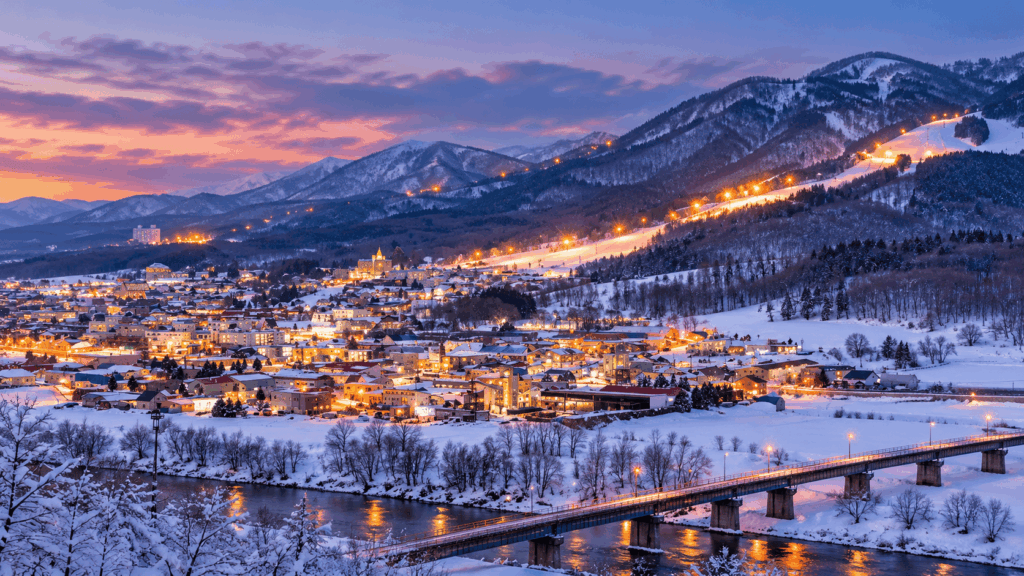
Where Should You Stay in Furano? The Short Answer
Furano has three practical bases, and each one solves a different problem.
- Furano Station and the town center solve transport. Trains, buses, taxis, the widest choice of restaurants within walking distance, and the shortest transfer to Biei or Asahikawa the next morning. What it doesn’t solve is skiing: you cannot walk to a lift from town.
- Kitanomine solves the ski-day morning. Some hotels are a three-minute walk from the Kitanomine Gondola, and there’s a compact cluster of restaurants and bars in the village for the evening. It’s the least compromised winter base — and the least useful one in summer.
- Shin Furano Prince Hotel and the Furano Zone side solve decisions. Lift, ropeway, onsen, breakfast, dinner and Ningle Terrace are all on one property. The trade-off is that leaving becomes a small project rather than a stroll.
One caveat before you compare hotels: the best area in January is not automatically the best area in July. (If your dates are flexible, check the best time to visit Furano first.) Summer travel in Furano is usually about flower fields, Biei and getting an early start the next morning — priorities that point back toward the station or a rental car, not a ski village.
Furano’s Three Main Areas at a Glance
| Area | Best for | Without a car | Ski access | Restaurants | Main drawback | Hotel example |
|---|---|---|---|---|---|---|
| Furano Station / town center | First trips, summer, rail and bus travelers, one-night stops | Easiest — station, buses, taxis on the doorstep | None on foot; roughly 10–17 minutes by bus or taxi to the slopes | Widest walkable choice | You commute to the mountain every morning | La Vista Furano Hills, Furano Natulux Hotel |
| Kitanomine | Winter ski trips that also want dinner outside the hotel | Workable in winter via shuttle and taxi; walkable to the gondola | Strongest — a short walk from several hotels | Good but compact; much quieter than town | Little advantage in summer; the gondola side opens later in the season | Nozo Hotel, Hotel Naturwald Furano |
| Furano Zone / Shin Furano Prince Hotel | Skiers, families and travelers who want one base and no decisions | Possible, but you’re on the hotel’s and the bus’s schedule | Ski-in / ski-out on the Furano Zone side, next to the ropeway | Mostly inside the hotel; town is a bus or taxi ride away | It’s a resort bubble — easy to stay inside, awkward to leave at night | Shin Furano Prince Hotel |
Large resort hotels like the Prince buy you convenience and charge you in crowds: the lobby, the breakfast room and the lifts all get busy at the same predictable times. That’s not a reason to avoid them — it’s a reason to plan around them. If the bottom row of the table describes the trip you actually want, it’s worth pricing Shin Furano Prince Hotel for your dates before you go deeper into this guide, simply so you know what the resort option costs. If a walkable dinner scene matters more than a lift outside the door, the next two sections are the ones that count.
Staying Near Furano Station: The Easiest Choice Without a Car
Furano Station is not the center of a sightseeing district. It’s the center of the town’s transport decisions: the train to Asahikawa and Sapporo, the buses to Biei and the surrounding farm areas, the taxi rank, and the largest cluster of restaurants and shops within walking distance. (If you haven’t booked your transit yet, our guide on how to get from Sapporo to Furano covers the options.)
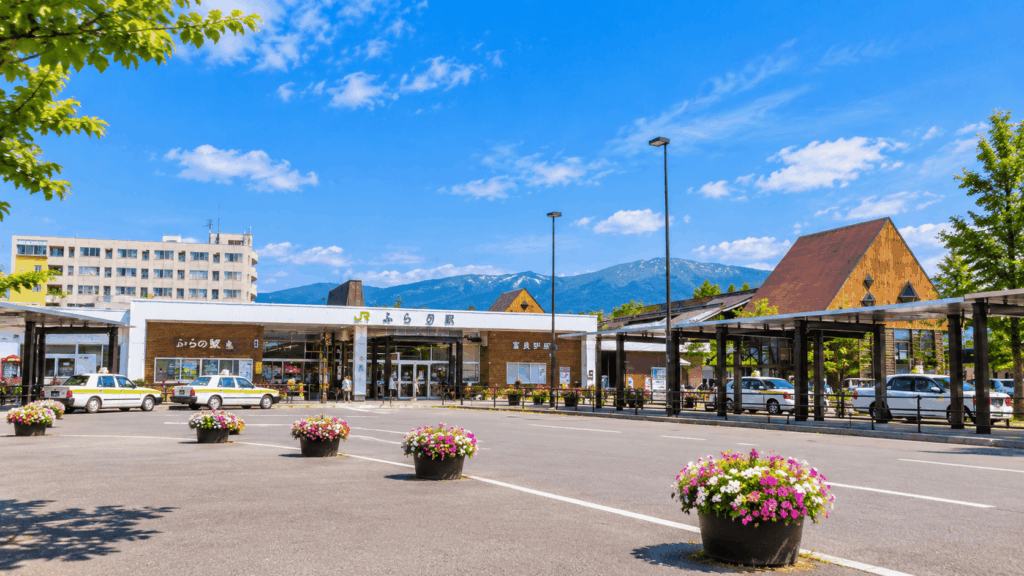
Who this area suits — and who should skip it
Stay here if you’re arriving by train, treating Furano as a one- or two-night stop on a Hokkaido loop, travelling in summer, or you’d rather end the day with a fifteen-minute walk between dinner options than a hotel corridor.
Skip it if your reason for coming is powder. Town hotels are comfortable, but every ski morning starts with a bus, a shuttle or a taxi, and every evening ends with the same trip in reverse.
Kai’s tip: The mistake I see first-time visitors make is reading “station area” as “central to everything.” It’s central to transport, not to the mountain. If you book here for a ski trip, budget for taxis on the days you want first lift — the early buses fill with people who had the same idea.
Practically, the useful radius is small: the densest cluster of restaurants and bars sits within roughly five to ten minutes on foot of the station, and the further you go from that cluster, the more you’ll be walking in the dark on a road with no sidewalk lighting worth relying on.
Hotels within walking distance of the station
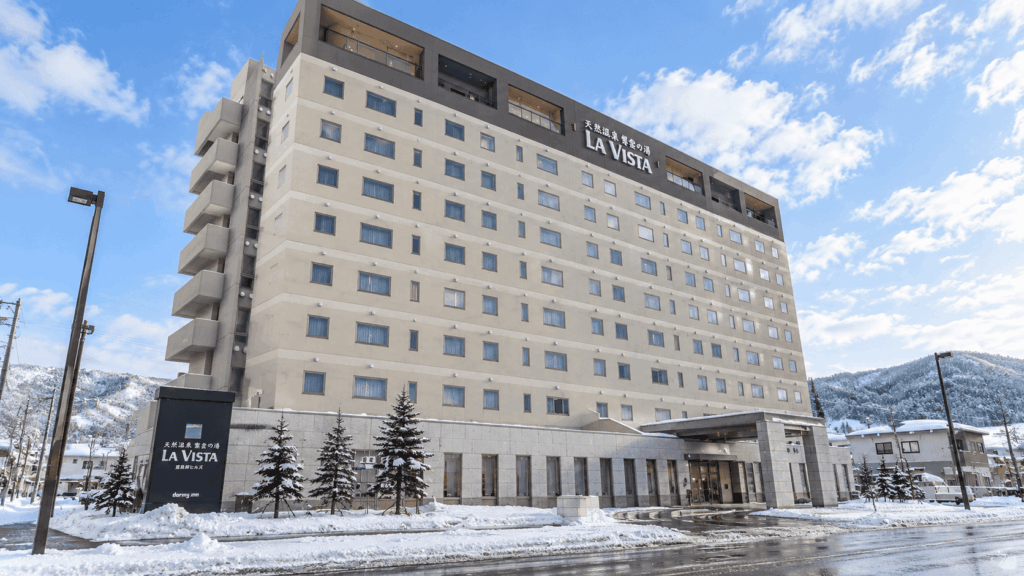
La Vista Furano Hills is about a three-minute walk from JR Furano Station, which makes it the most practical choice in Furano if you’re arriving late or leaving early. Its main draw is on the top floor: a natural hot spring bath with an open-air section looking over the town, plus three free private baths that guests use on a first-come, first-served basis, typically for around thirty minutes at a time. Rooms are on the compact side — that’s the recurring complaint in reviews, not the location.
Furano Natulux Hotel is effectively across from the station, about a minute on foot. It’s the simplest option if your priority is dropping bags and walking to dinner, and it’s a sensible base for a single night between train legs. Rooms are functional rather than spacious.
Neither is a ski hotel, and neither pretends to be. You’re trading slope access and resort facilities for the ability to walk out of the door and be somewhere.
Getting from town to the slopes without a car
This is the part that changes the calculus. Preliminary information for winter 2026–27 describes a ¥500 ski shuttle from 1 December 2026 to 31 March 2027, with no reservation required. The proposed departures from JR Furano Station are 08:08, 09:00, 10:00, 11:20 and 17:00, passing downtown stops, Hotel Naturwald and the New Prince Hotel area. The initially described return service includes a noon departure from New Furano Prince Hotel. As of October 2026, verify the final 2026–27 route and timetable directly with Furano Bus or the tourism association before relying on any of those times.
If the announced shuttle runs as described, it will help solve the biggest gap in the town-base plan: getting up the hill in the morning without a taxi. Two practical notes. First, the 08:08 and 09:00 departures are likely to suit skiers, so arrive at the stop early. Second, the preliminary return options are much thinner than the outbound ones, so do not assume a ride back after the lifts close. The regular Lavender Bus and any separately announced evening service may help, but their timetables must be checked individually.
The regular Lavender Bus also serves the station and the Prince hotel area, but the timetable has been revised more than once and seasonal services differ, so check the current schedule from Furano Bus or the tourist association rather than relying on an old blog post.
A taxi from the station to the Prince hotel area takes roughly ten minutes and costs a few thousand yen — worth it once, not twice a day for a week.
Kitanomine: The Best Balance for a Winter Ski Trip
Kitanomine is the side of Furano Ski Resort where the gondola is, and the village around it is the closest thing Furano has to a ski base that isn’t a single large hotel. For a winter trip, it’s the base I’d compare against the Prince first.
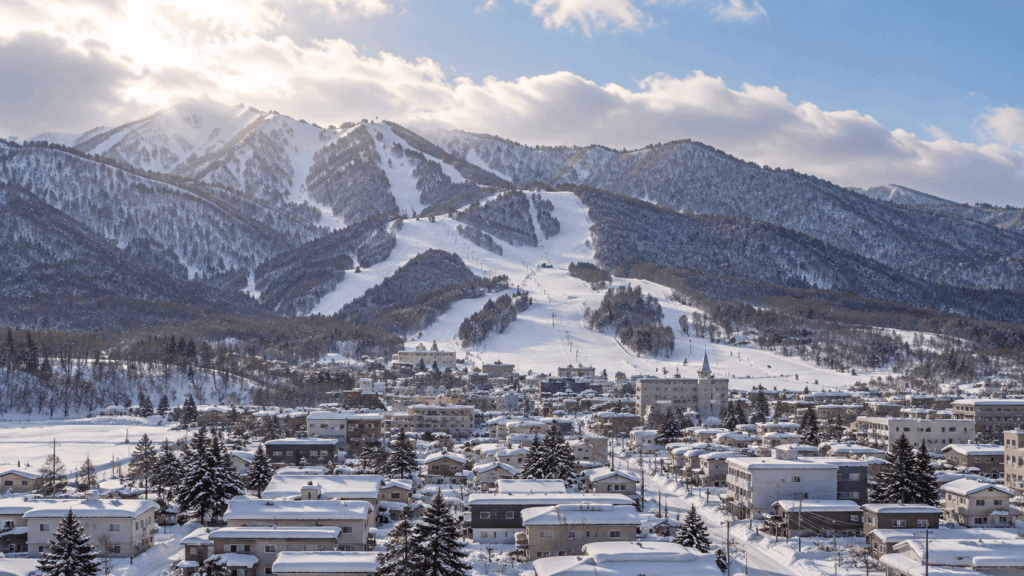
Why Kitanomine works in winter
The obvious reason is proximity. Nozo Hotel is a three-minute walk from the Kitanomine Gondola according to the hotel’s own access information, and Hotel Naturwald Furano sits at the base of the Kitanomine side with ski-in / ski-out access to the slopes.
The less obvious reason is the evening. Kitanomine has a compact cluster of restaurants and bars within the village — fewer than town, but enough that you’re not committed to hotel dining every night. That’s the specific thing the Prince can’t offer: you get independence without giving up the morning.
What you give up in return is the resort’s closed loop. Bath facilities vary by hotel rather than being absent: Nozo has the Sugi Spa communal bathing area with a sauna, and Naturwald also advertises indoor and outdoor communal baths. Neither is the same proposition as the Prince’s natural hot spring and its wider resort facilities. You also give up Ningle Terrace at the end of the corridor. Kitanomine is an excellent base; it is not a self-contained resort in the Prince sense.
The early-season catch almost nobody mentions
The two zones of Furano Ski Resort do not open on the same day. For the 2026–27 season, the Furano Zone side (the Prince and ropeway side) is scheduled to open on 28 November 2026, while the Kitanomine Zone is expected to follow in late December. A Hokkaido tourism listing gives 21 December 2026 as the target, while the ski resort itself describes the opening more broadly as late December; snow conditions can change it.
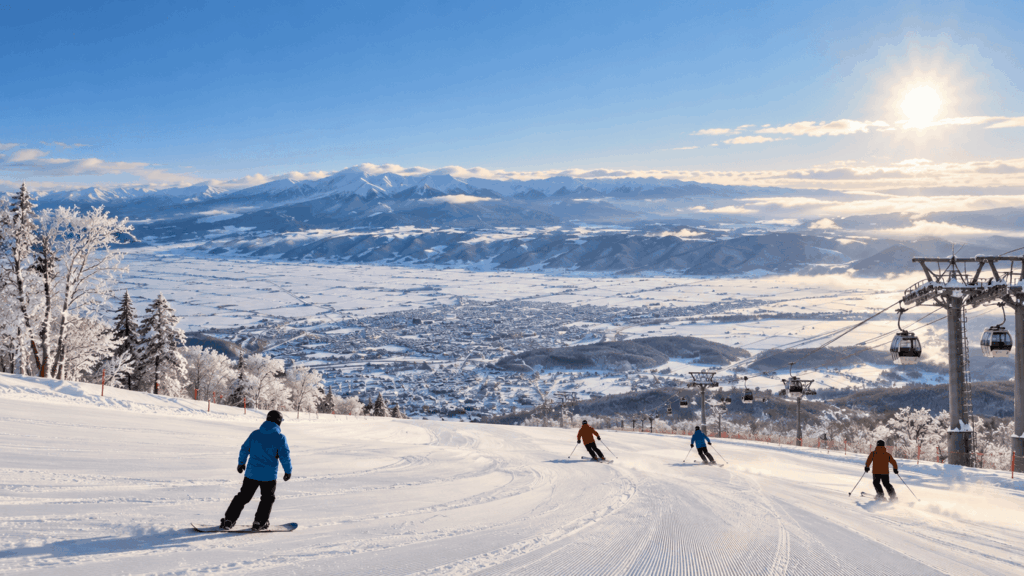
That matters more than it sounds. If you book a Kitanomine hotel in early December expecting to walk to the gondola, you may find that side of the mountain isn’t running yet and you’re shuttling around to the Furano Zone instead. From late December through March, the gondola advantage is exactly as advertised. Before then, Kitanomine’s main selling point is on hold. Check the planned opening dates for your travel window before you commit — they’re planned dates, not guarantees, and snow decides the rest. (For a deeper look at month-by-month conditions, read our guide on what to expect in Furano in winter.)
Night skiing follows a similar pattern: it typically starts in mid-December on the Furano Zone side and later in December on the Kitanomine side, running into late March. Lift and night passes have published 2026–27 seasonal rates, but check the resort’s current official price and operating-status pages before your ski day, especially around the opening period.
Kitanomine hotels worth comparing
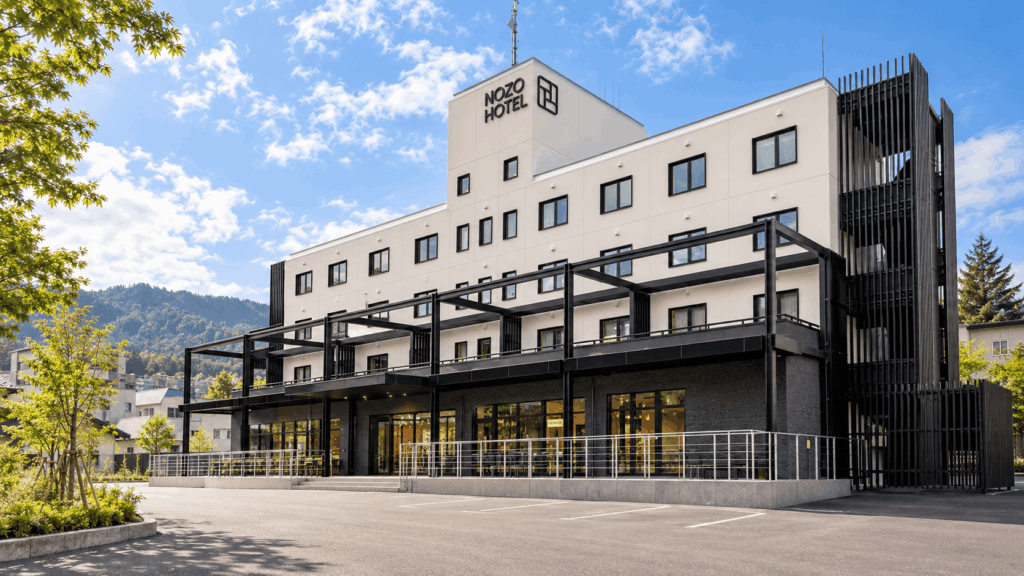
Nozo Hotel is the modern, design-led option and the one I’d shortlist for a couple or a small group that wants the gondola on foot and a real breakfast. Its weakness is parking — spaces near the building are limited, with overflow parking a short walk away — and it isn’t ski-in / ski-out, so you’re carrying gear for those three minutes. The hotel also has Sugi Spa, with a communal bath and sauna; it should not be confused with a private or necessarily natural hot spring. The official site lists a whole-property maintenance closure from 15 to 19 November 2026.
Hotel Naturwald Furano is the family-oriented, slope-side option, with ski rental in the building and a location that lets you step out onto the snow. It is listed on the proposed 2026–27 station-shuttle route, which could make it easier to reach by train if the planned service operates. The trade-off is age: rooms and common areas read as dated in a lot of guest feedback. You’re paying for position rather than new-build polish, though the hotel also has an indoor public bath and an outdoor milk bath.
Kai’s tip: Travelers book Kitanomine for the gondola and then discover how quiet the village gets after dinner. If your ideal evening involves choosing between six restaurants rather than two, stay in town and take the shuttle up in the morning — the commute is shorter than a week of underwhelming dinners.
Shin Furano Prince Hotel: The Easiest Self-Contained Resort
Shin Furano Prince Hotel sits at the base of the Furano Zone side of the mountain, next to the Furano Ropeway, and it is the only place in Furano where you can ski out of a locker room, eat, bathe and walk through a lit-up craft village without getting in a vehicle.
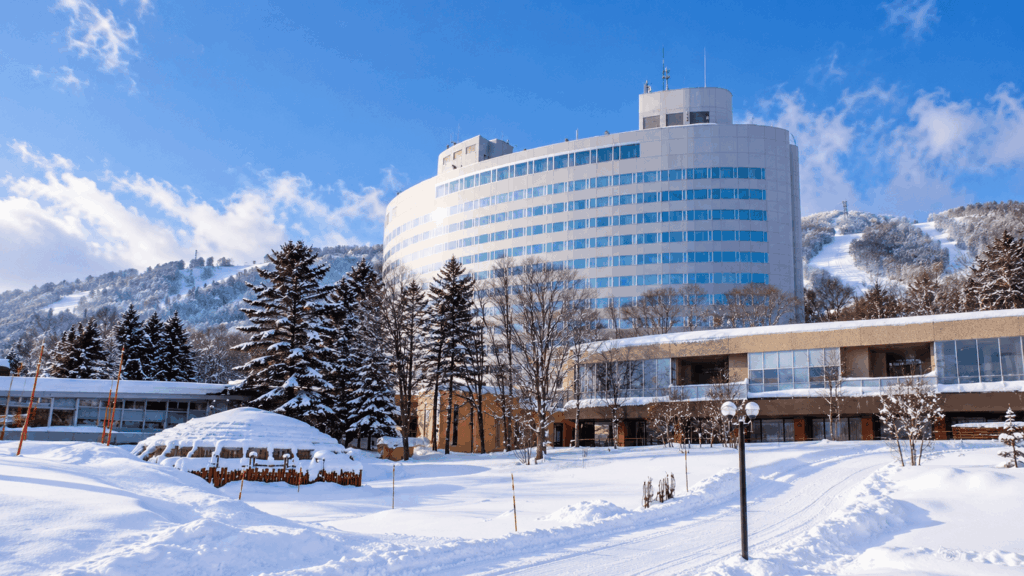
One practical note before you search for it: the hotel’s official English name is Shin Furano Prince Hotel, but several booking sites still list it as New Furano Prince Hotel. It’s the same property. If a rate looks suspiciously different between two sites, check the address — Nakagoryo, Furano — rather than assuming you’ve found two hotels.
The hotel is roughly 10 to 17 minutes from JR Furano Station by bus or taxi, depending on the route and the traffic. That distance is the whole story of this property: close enough to be convenient, far enough that you stop casually going into town.
What I Liked About Staying Here
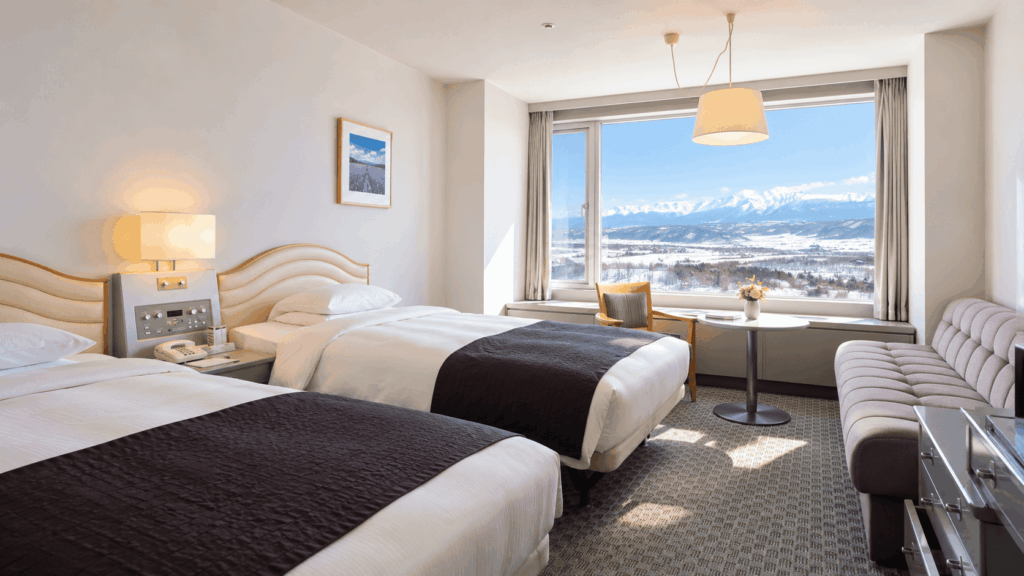
The room I booked faced the slopes, and that turned out to be the best decision of the stay. From the window you look straight up the mountain — you can see the shape of the runs, watch the light change, and understand the weather before you commit to it. I spent a while sitting there with a Furano local beer, doing nothing in particular, and it’s the memory I’d keep if I could only keep one. Not every room faces that way, so if the view matters to you, ask specifically rather than assuming.
The second thing I liked was how little I had to decide. Indoor wear is acceptable in most of the hotel, so the day has a different rhythm: ski, bath, dinner, room, without changing clothes three times or working out where to go. The top-floor restaurant was the exception — indoor wear isn’t allowed there, which is worth knowing before you turn up in slippers.
The third thing is also the drawback. At peak times the lobby area feels busy in a way that small properties never do. That’s the honest trade for a hotel this size: you get facilities, and you share them. If you want quiet, book a small property and accept that you’ll be driving to dinner.
Breakfast Is a Highlight — but Timing Matters
The breakfast buffet is genuinely one of the reasons to stay. It leans hard on Hokkaido produce, the selection is broad enough that a multi-night stay doesn’t get boring, and during my stay there was a milk tasting corner where you could compare several local milks side by side — a small thing that tells you a lot about how the hotel thinks about local food.
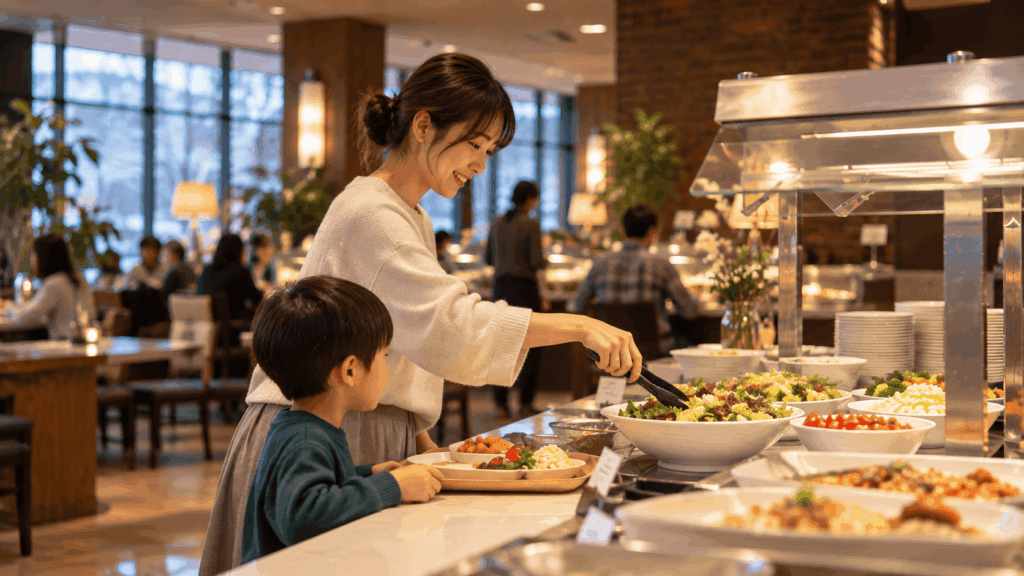
The catch is the timing. On my stay, the room was noticeably busy around 7 a.m., with queues forming at the live stations, and it eased later in the morning. I started going slightly later and the experience improved immediately. I wouldn’t tell you that 7 a.m. is always the worst time — it depends on the season and how full the hotel is — but if you’re on a ski morning and want to be on the snow by opening, either go early or accept a short wait.
Two things to confirm when you book, because they change: the buffet is served in the Main Banquet Hall, which is part of the hotel’s current renovation program, and published hours at the time of writing were 6:30–10:00 with last orders at 9:30. Both the venue and the hours may differ once the refurbished space reopens, so check the current information rather than relying on this page.
The Onsen Is Convenient — but Check the New Access Route
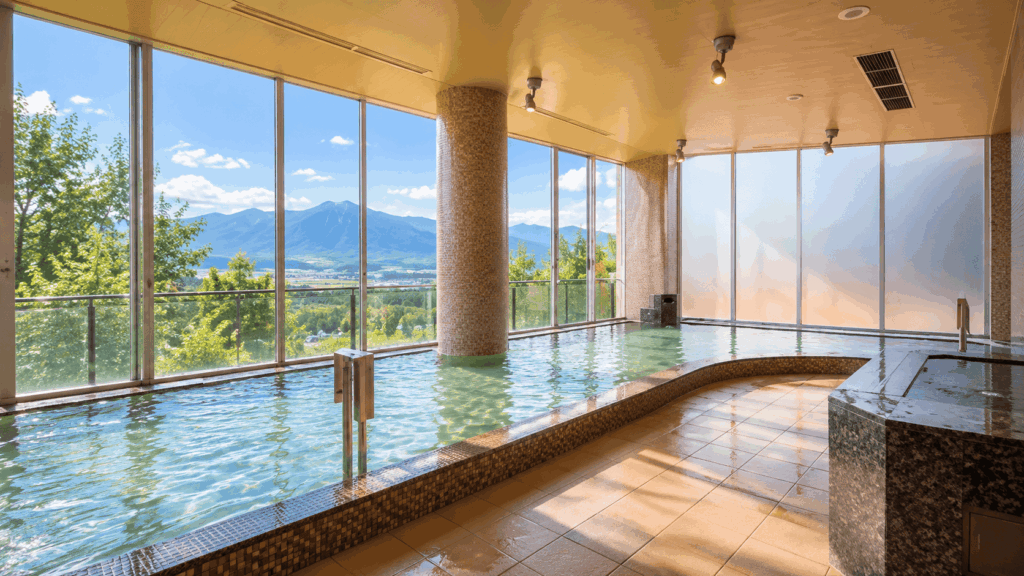
Furano Onsen Shisai no Yu is a proper hot spring facility with indoor and open-air baths, and it’s one of the reasons people choose this hotel over a town property. It is also a large shared bath, not a private one — more on that distinction further down, because it trips people up when they search for a “private onsen.”
The part that surprised me was the walk. On my stay, getting from the room to the bath felt long, and when I escorted an older member of our group, the distance and the stairs were clearly a burden rather than a minor inconvenience. I ended up checking how busy the bath was from the room before walking over, and timing our visits for the quieter windows, which worked well.
That experience is worth putting in context, because the hotel is actively fixing it. As announced, a new direct pathway from the guest wing to Shisai no Yu has been under construction, with completion scheduled for late November 2026. The numbers the hotel published are specific: the existing route is about 240 metres and roughly three and a half minutes, while the new glass-sided route is about 120 metres and roughly one minute forty, with fewer stairs. Construction began in May 2026, alongside a refurbishment of the Main Banquet Hall and a new outdoor terrace.
Kai’s tip: If you’re travelling with someone who finds stairs or long indoor walks difficult, ask at the time of booking whether the new direct pathway is open yet — it changes the calculus for older guests and for anyone carrying a small child. Until it is, the old route is the one you’ll use, and it’s the single most useful thing to know before you choose this hotel for a multi-generational trip.
Ningle Terrace Is Right There — and Busy at the Wrong Times
Ningle Terrace is a cluster of small wooden craft huts in the forest beside the hotel, lit after sunset, and it’s the reason a lot of people book this property in the first place. Staying on site means you can walk over after dinner rather than arranging transport back to town.
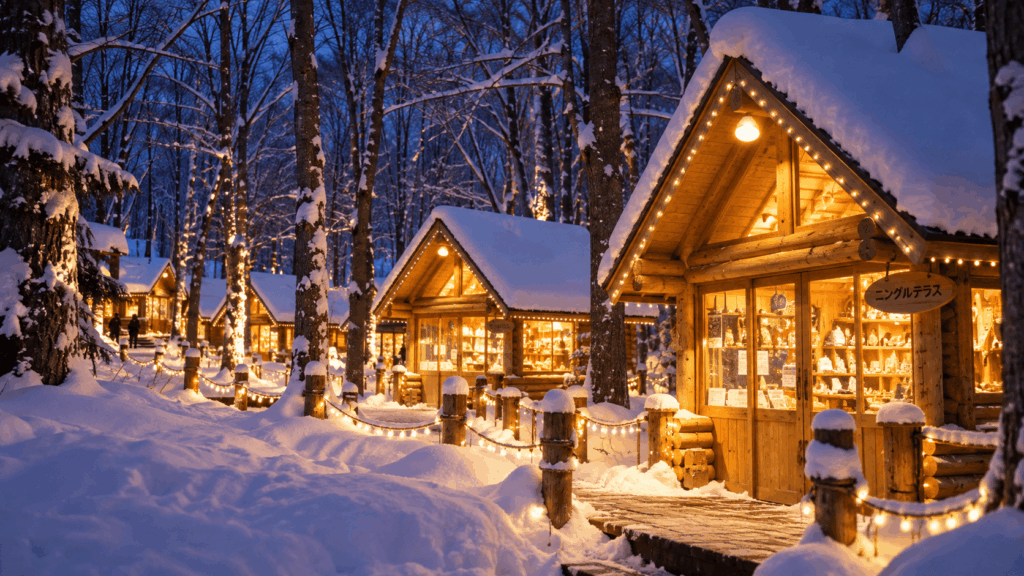
I went at night, on a weekend, and it was busy enough that we gave up on browsing properly and settled for walking through. That’s a specific experience, not a universal rule — but it points at the right strategy: go earlier in the evening, before the post-dinner crowd arrives, and you’ll actually be able to look at what the workshops are selling.
Hours vary by season and by individual hut: the hotel lists 10:00–20:45 in July–August, 11:00–19:45 in other summer months, and generally 12:00–20:45 in winter. The November 2026 schedule includes a maintenance closure from 5 to 26 November, with reopening planned for 27 November. Confirm the current hours before you build an evening around it, especially outside the ski season, when some huts keep irregular days off.
Who the Prince Suits — and Who Should Skip It
It suits families who want the day to run on rails, skiers who value ski-in / ski-out over village atmosphere, first-time visitors who’d rather not plan evening logistics, and anyone travelling with someone who tires easily — provided the new pathway is open, or you’re willing to use the hotel’s internal transport and take the bath slowly.
It doesn’t suit travelers who want a quiet boutique stay, people whose evenings revolve around trying different restaurants, or anyone whose main reason for visiting Furano is a private onsen. In those cases the hotel’s greatest strength — that you never have to leave — becomes the thing working against you.
If you’ve read the last few sections and the resort model still sounds like your trip rather than a compromise, this is the point to check availability for your dates at Shin Furano Prince Hotel before the winter weekends fill. If it doesn’t, the next table will point you somewhere better suited.
The Best Furano Hotel by Traveler Type
There’s no single best hotel in Furano, so here’s the short version by trip style. Every option below comes with its drawback attached, because a list of hotels with no weaknesses is a list nobody can use.
| Traveler type | Best pick | Why it works | Main drawback | Bath situation |
|---|---|---|---|---|
| First trip, family, wants zero logistics | Shin Furano Prince Hotel | Ski-in / ski-out, onsen, breakfast, dinner and Ningle Terrace on one property | Resort bubble; town dinners require a bus or taxi | Large shared onsen at Shisai no Yu — not private |
| Train traveler who still wants a hot spring | La Vista Furano Hills | About three minutes on foot from JR Furano Station, top-floor natural onsen | Compact rooms; no slope access on foot | Top-floor public bath plus three free private baths, first come, first served |
| Couple or small group on a ski trip | Nozo Hotel | Three-minute walk to the Kitanomine Gondola, modern rooms, village restaurants nearby | Limited parking; not ski-in / ski-out | Sugi Spa communal bath and sauna; not an in-room private onsen |
| Couple or group wanting a genuinely private soak | Furano Lofts & Chalet | Exclusive private-use onsen reserved by guests, in the Kitanomine ski village | Self-catering apartments and chalets; onsen only for registered guests aged 18+ | Private use, booked same day — not in your room |
| Traveler who wants the bath inside the room | Furano La Terre | Selected rooms with a private open-air bath (not natural hot-spring water), plus a separate natural hot spring facility | In Nakafurano, not Furano town; limited rooms of this type | Private in-room open-air bath in selected rooms; water is not natural hot spring water |
Furano Hotels With a Private Onsen: Know What You’re Booking
Here’s the thing about searching for a “private onsen” in Furano: the phrase covers at least three different products, and only one of them means what most people think it means. What travelers usually want isn’t an onsen — it’s the ability to soak without sharing with strangers. Plenty of listings can deliver that. Plenty of others use the word loosely and leave you in a large shared bath.
The three types, explained
- In-room private bath. The tub is inside your room or on your room’s terrace. You can use it privately without booking a communal slot, but that does not necessarily mean the water is from a natural hot spring. This is the rarest and most expensive version, and it’s usually attached to a specific room category — not to the hotel as a whole.
- Reservable or first-come private-use bath. A separate bath that one party uses at a time. It may be free or charged, may require a reservation or operate on a first-come basis, and usually has a time limit. You get privacy, but not on demand — you get it when a slot is free.
- Guest-only public bath. A large shared bath reserved for hotel guests. Excellent, often the best bathing in the building, and not private in any sense. If a listing says “private onsen” and shows a big indoor pool, it’s probably this.
Which Furano properties offer which
| Property | Bath type | Inside your room? | Private use? | Best for | Location caveat |
|---|---|---|---|---|---|
| Shin Furano Prince Hotel (Shisai no Yu) | Large shared hot spring, indoor and open-air | No | No | Guests who want a full onsen facility next to the slopes | Furano Zone; a walk or internal transfer from the guest wing |
| La Vista Furano Hills | Top-floor public onsen plus three private-use baths | No | Yes — free, first come, roughly 30 minutes per use | Train travelers and couples who want privacy without a suite | Furano Station area; no ski access on foot |
| Furano Lofts & Chalet | Guest-only private-use onsen | No | Yes — reserved through guest services on the day | Adult guests who want an exclusive soak (maximum two bathers per booking) | Kitanomine ski village; private-use bath restricted to adults |
| Furano La Terre | Private in-room open-air bath in selected rooms (not natural spring water), plus separate natural hot spring communal baths | Yes | Yes, because it’s yours | Travelers who want to bathe privately at any hour | Nakafurano — a different town, not Furano’s center |
What to check before you book
Four questions will save you from almost every disappointment here. Is the bath in the room, or is it a shared facility you reserve? Is it a reservation or first come, first served? First-come baths are genuinely free and genuinely unavailable at the moment you want them, and that’s the most common source of complaints about private baths in Japan. Is there a time limit? Thirty minutes is typical for a reservable bath. Are there age or access restrictions? Furano Lofts’ private-use onsen is for registered guests aged 18 or older, with a maximum of two bathers at once. That restriction applies to the bath, not necessarily to every accommodation booking; check its separate family-stay rules.
I’ve bathed at Shisai no Yu, so I can describe that one directly. For the other three, I’m describing what their official policies say rather than personal stays — which is exactly what you should do too, before paying for a room based on a single word in a listing.
If an in-room open-air bath is the thing you actually want, that narrows the field sharply, and Furano La Terre is the property to check availability on — keeping in mind that it is in Nakafurano, and its room-attached outdoor bath is explicitly described as non-natural hot-spring water in its room listing. The hotel has separate natural hot spring communal baths. Confirm the exact room category before paying. If privacy matters more than having the tub in your room, La Vista’s private baths and Furano Lofts’ private-use onsen are both closer to town life than the Prince’s shared facility. For options beyond your hotel, see our wider guide to the best onsen in Furano.
Facility reference: The photo shows the public outdoor bath at Furano La Terre, not one of its private in-room baths.

Where to Stay in Furano in Winter vs Summer
Most Furano accommodation guides are written for skiers and quietly assume everyone is one. If you’re visiting between June and September, half of the advice in this article points the wrong way — including some of mine above.
Winter: slope access beats everything
In winter, decide by how you want to start the morning. If the answer is “on the gondola within ten minutes of leaving my room,” Kitanomine is the base, provided you’re travelling after the Kitanomine Zone opens — targeted for around 21 December 2026, with the resort officially stating late December. If the answer is “I don’t want to think about it,” the Prince delivers that better than anywhere else in Furano, with ski-in / ski-out access and the ropeway next door.
If the answer is “I’m on a budget and arriving by train,” stay in town and use the new shuttle. If the proposed ¥500 shuttle operates on your dates, the morning trip could help keep a cheaper town-based room viable. Confirm the return journey separately rather than assuming the same service runs after skiing.
Two winter realities to plan around. Public buses thin out in the evening, so a late dinner in town can leave you dependent on taxis that aren’t always waiting. And the two zones of the resort open and close on different schedules, so a hotel’s “ski access” claim is only true for the dates you’re actually there. What I’d tell a friend booking their first winter trip is to fix the dates first and the hotel second — in Furano, the calendar decides which hotels are actually convenient.
Summer: the base matters less than the next morning’s route
In summer, Kitanomine’s biggest advantage — the gondola — is irrelevant for most visitors, and the ski village is quiet. That doesn’t make it a bad place to sleep; it makes it a base you choose for other reasons, like a specific hotel or a quieter setting.
If you have a rental car, the whole question mostly dissolves. Furano’s accommodation is spread out, parking is generally free at hotels, and the constraint becomes whether you want to drive after dinner rather than which area you’re in.

Without a car in summer, the station area wins on the same logic as winter: buses to Biei and the flower areas, the train onward, and dinner within walking distance. If lavender is the reason for the trip, the more useful question isn’t “which Furano hotel” but “which direction am I driving or riding the morning after” — the farms worth seeing are spread across Furano, Nakafurano and Biei, and the base that shortens that first morning is the right one.
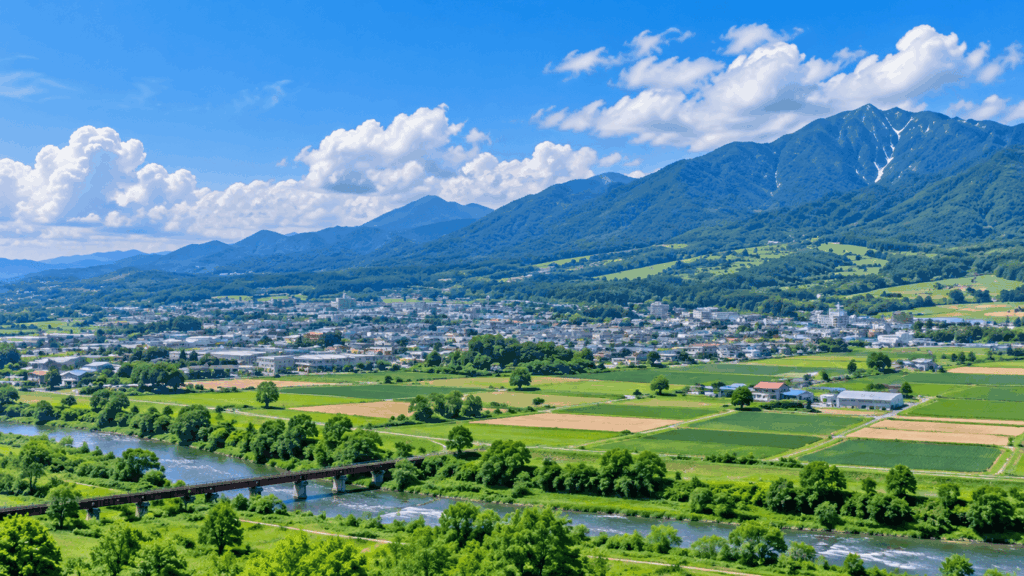
If you’re staying in Furano without a rental car and want to explore Biei’s scattered sights, a private charter is worth comparing with the time and cost of arranging separate buses and taxis.
Why I’d book this one
- Furano hotel pickup: Furano is listed among the pickup locations, so you can check whether your accommodation is covered.
- Fewer transport connections: A private vehicle makes it easier to reach sights that are awkward to combine by public transport.
- A full-day option: The listed 10-hour charter gives you a starting point for comparing routes, driver language and cancellation terms.
The Prince is a reasonable summer choice for families, since Ningle Terrace and the ropeway are on the doorstep and the property is pleasant when it’s green rather than white. Just go in knowing that dinner is a drive or a bus ride, not a stroll.
If you’re still deciding how Furano fits into a wider Hokkaido route, that’s a different planning problem from this one, and worth solving before you book a hotel — the base that suits a two-night stop is not the base that suits a five-night stay.
Frequently Asked Questions
What is the best area to stay in Furano without a car?
The area around JR Furano Station is the most practical base if you don’t have a car. You get the train, the buses toward Biei and Asahikawa, taxis at the rank, and the largest cluster of restaurants within walking distance. For skiing, a ¥500 winter ski shuttle has been announced for 2026–27, but its final operating details and afternoon return options should be verified, so it does not eliminate every transport disadvantage. Staying in Kitanomine without a car also works in winter, but your evenings are limited to the village and your mornings depend on the shuttle or a taxi.
Should I stay near Furano Station or at the ski resort?
Choose the station if your trip mixes Furano with other places, if you’re travelling in summer, or if dinner choice matters. Choose the resort side — either Kitanomine or the Prince — if skiing is the point of the trip. The dividing question is simple: do you want to walk to a lift in the morning, or walk to a restaurant in the evening? Very few properties in Furano let you do both well, and the ones that come closest are in Kitanomine.
Is Shin Furano Prince Hotel worth staying at?
It’s worth it if you want one base for everything: ski-in / ski-out access on the Furano Zone side, a full onsen, breakfast, dinner and Ningle Terrace without leaving the property. Families and first-time visitors tend to get the most out of it. It’s not worth it if you want a quiet small hotel, if your evenings are about trying different restaurants in town, or if a private onsen is your main priority — Shisai no Yu is a large shared bath. The walk to the onsen is also worth checking on, since a new direct pathway was scheduled for completion in late November 2026 but may not have been open during your dates.
Which Furano hotels have a private onsen?
It depends what you mean by private. Furano La Terre in Nakafurano has selected rooms with their own private open-air baths, usable without reserving a separate bath slot. However, its room listing specifies that the private in-room bath does not use natural hot-spring water, unlike the hotel’s communal hot spring facilities. La Vista Furano Hills near the station has three free private-use baths available on a first-come basis, typically for about thirty minutes. Furano Lofts & Chalet in the Kitanomine ski village has a private-use onsen reserved on the day, limited to registered guests aged 18 or older (two people per reservation). Shin Furano Prince Hotel’s Shisai no Yu is a large shared onsen, not a private one.
Is Kitanomine a good place to stay in summer?
It’s fine, but its main advantage disappears. The gondola and slope access that make Kitanomine the best winter base aren’t relevant for most summer trips, and the village is quiet in the evening. If you have a rental car and like the look of a specific hotel there, it’s a perfectly comfortable choice. If you’re relying on public transport and want dinner options and easy departures, the station area serves you better between June and September.
When does the Kitanomine side of Furano Ski Resort open?
For 2026–27, the Furano Zone, where Shin Furano Prince Hotel sits, is scheduled to open on 28 November 2026. The resort officially lists Kitanomine as a late-December opening; a Hokkaido tourism listing names 21 December as a target, not a guaranteed first day. That gap matters if you’re booking a Kitanomine hotel in early December, because the gondola on that side may not be running yet. These are planned dates, so confirm them against the resort’s official snow report before you commit, especially for a trip in the first half of December.
So, Where Should You Stay in Furano?
Pick the base that removes the decision you least want to make every day. That’s the whole test.
- First trip to Furano, no car, or a summer visit: stay around JR Furano Station. La Vista Furano Hills if you want a top-floor onsen and private baths three minutes from the platform; Furano Natulux Hotel if you want the shortest possible walk with your luggage. You’ll commute to the mountain, and you’ll eat well without planning.
- A ski trip where the evening matters too: stay in Kitanomine, and pick Nozo Hotel for the three-minute walk to the gondola or Hotel Naturwald Furano for slope-side access and an easy shuttle connection. Book this only for dates after the Kitanomine Zone opens — targeted for around 21 December 2026, with the resort officially stating late December.
- A family trip, a short stay, or a trip where you’d rather not plan anything after breakfast: stay at Shin Furano Prince Hotel. It’s the only place here where ski-in / ski-out, onsen, dinner and Ningle Terrace are all within a walk — with the caveat that the walk to the onsen is changing, and that leaving the property in the evening takes effort.
- A private bath is the reason you’re going: skip the Prince. Check Furano La Terre for a room with its own open-air bath (not natural hot-spring water), knowing you are in Nakafurano rather than Furano town, or La Vista and Furano Lofts if a separate private-use bath is enough; Furano Lofts limits its private onsen to adult guests.
- You want quiet, small and design-led: none of the five above is really that hotel. Use Kitanomine’s smaller properties and chalets as your comparison set, and accept that you’ll be driving or shuttling for dinner.
If I’m honest about my own choice: I’d stay at the Prince again when I wanted an easy resort stay — a winter trip where the point is to ski, bathe and not think about logistics. I wouldn’t automatically choose it for every Furano trip. In summer, or on a trip where the evenings are half the reason for going, I’d rather be near the station with a shorter walk to dinner and a shorter drive the next morning.
That’s the honest version of “where to stay in Furano”: not the best hotel, but the base that matches the trip you’re actually taking.

Hi, I’m Kai. I’m a Tokyo-based travel writer, tourism industry insider, and the author of a published guidebook for international visitors to Japan. With over 10 years of professional experience at a leading Japanese tourism company, my mission is to help you skip the tourist traps and navigate Japan’s best destinations like a local. I believe the perfect day trip is like a traditional kaiseki meal: a beautiful balance of precise planning and unforgettable seasonal discovery. When I’m not out conducting field research, you’ll usually find me drafting new itineraries with one of my favorite fountain pens!