
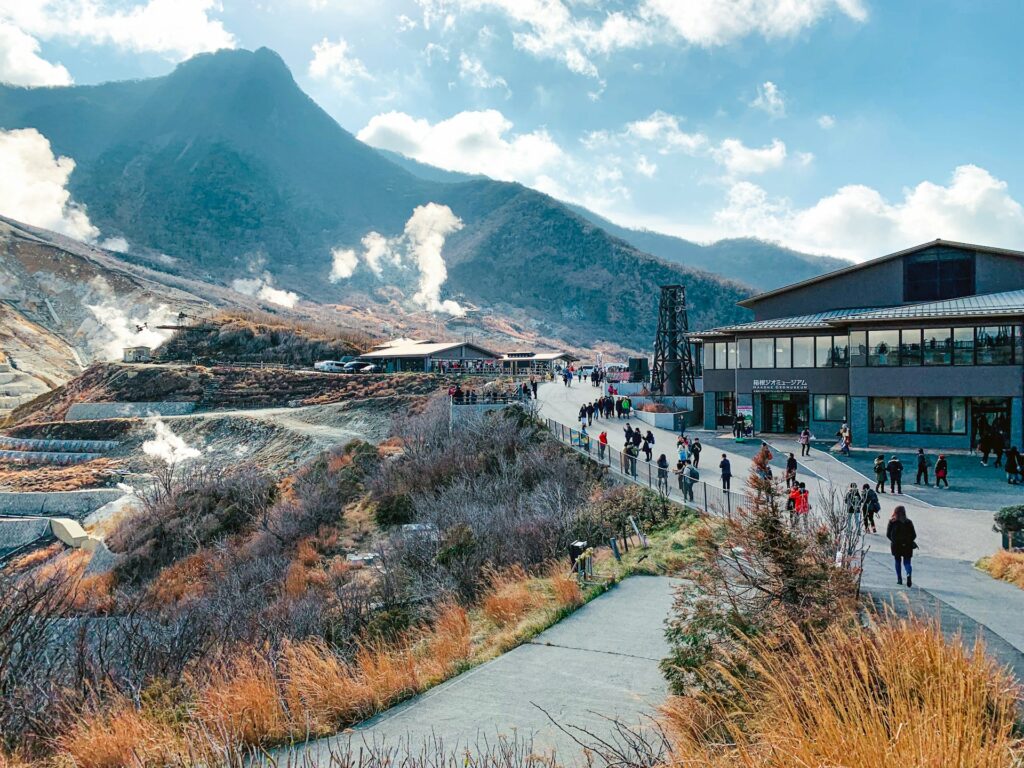
Japan is famous for its serene temples and neon cityscapes, but Owakudani (the “Great Boiling Valley”) offers something entirely different: the raw, untamed power of the earth. Located in the heart of the Hakone region, this active volcanic zone is shrouded in white steam, smells distinctly of sulfur, and offers spectacular views of Mount Fuji on clear days.
However, reaching this mountain peak isn’t as simple as hopping on a single train from Tokyo. It requires navigating a complex network of mountain trains, cable cars, and ropeways—a journey that can be an adventure for some, but a logistical nightmare for others.
If you are currently searching for an Owakudani guided tour, you might be wondering if the complicated access is worth tackling alone or if it’s better to leave the planning to a professional.
In this guide, we’ll break down the reality of visiting Owakudani, compare the DIY experience with organized tours, and help you decide which option fits your travel style best.
➡️ [Check availability & prices]
The Reality of Visiting Owakudani DIY
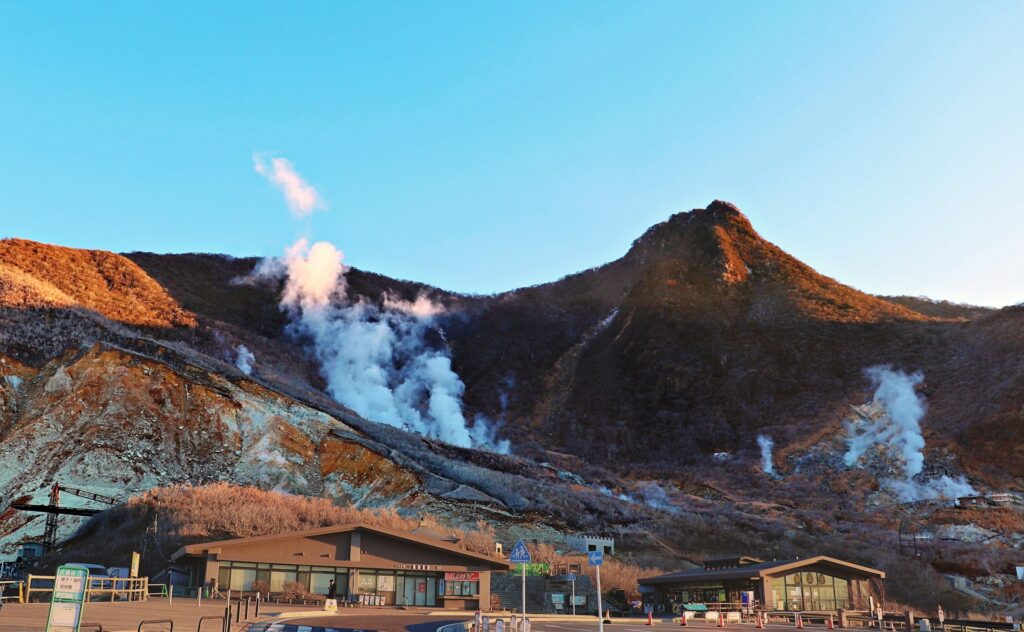
Before booking a tour, it is important to understand what visiting “Do It Yourself” (DIY) looks like. While the Hakone transport system is efficient, it is also multi-layered and time-consuming.
The Transport Relay
Owakudani is located at an elevation of over 1,000 meters. To get there from Tokyo (Shinjuku) on your own, the journey usually looks like this:
- Train: Take the Odakyu Line (Romancecar or Express) to Hakone-Yumoto Station (approx. 85 mins).
- Mountain Train: Transfer to the Hakone Tozan Railway to Gora Station. This zig-zags up the mountain (approx. 40 mins).
- Cable Car: Transfer to the Hakone Tozan Cable Car to Sounzan Station (approx. 10 mins).
- Ropeway: Finally, board the Hakone Ropeway, which lifts you over the volcanic vents to Owakudani Station.
This “relay” is fun if you love trains, but it involves constant transfers, schedule checking, and hauling your belongings if you haven’t stored them.
Weather & Volcanic Activity Risks
This is the biggest “pain point” for DIY travelers. Owakudani is an active volcanic zone. The Hakone Ropeway—the primary way to access the valley—frequently suspends operations due to strong winds or high concentrations of volcanic gas.
When the ropeway closes, you must navigate alternative bus routes. These buses can be confusing, often have limited English signage compared to the trains, and get incredibly crowded when the ropeway shuts down. If you are on a guided tour, the guide handles this contingency plan instantly; if you are alone, you may find yourself stranded at a station trying to decipher a Japanese bus map.
The Crowds
Hakone is one of the most popular day-trip destinations in Japan. On weekends and holidays, the queue to board the ropeway or cable car can exceed 45 minutes to an hour. If you are trying to squeeze Hakone into a single day, spending two hours waiting in lines can severely eat into your sightseeing time.
Why Consider an Owakudani Guided Tour?
Given the logistics above, many travelers opt for a guided tour to streamline the experience. Here is why a tour might be the better choice for your specific situation.
Zero Logistical Stress
The primary benefit of a coach tour is eliminating the “transfer fatigue.” Instead of five different trains and cable cars, a tour bus takes you directly from central Tokyo (usually Shinjuku or Tokyo Station) to the key spots in Hakone.
You don’t need to worry about missing the last connection or buying the right tickets. You simply sit back, enjoy the scenery, and get off at the destination. This is particularly valuable if you are traveling with children, elderly relatives, or anyone with mobility issues who might struggle with the many stairs at rural train stations.
Context & Safety
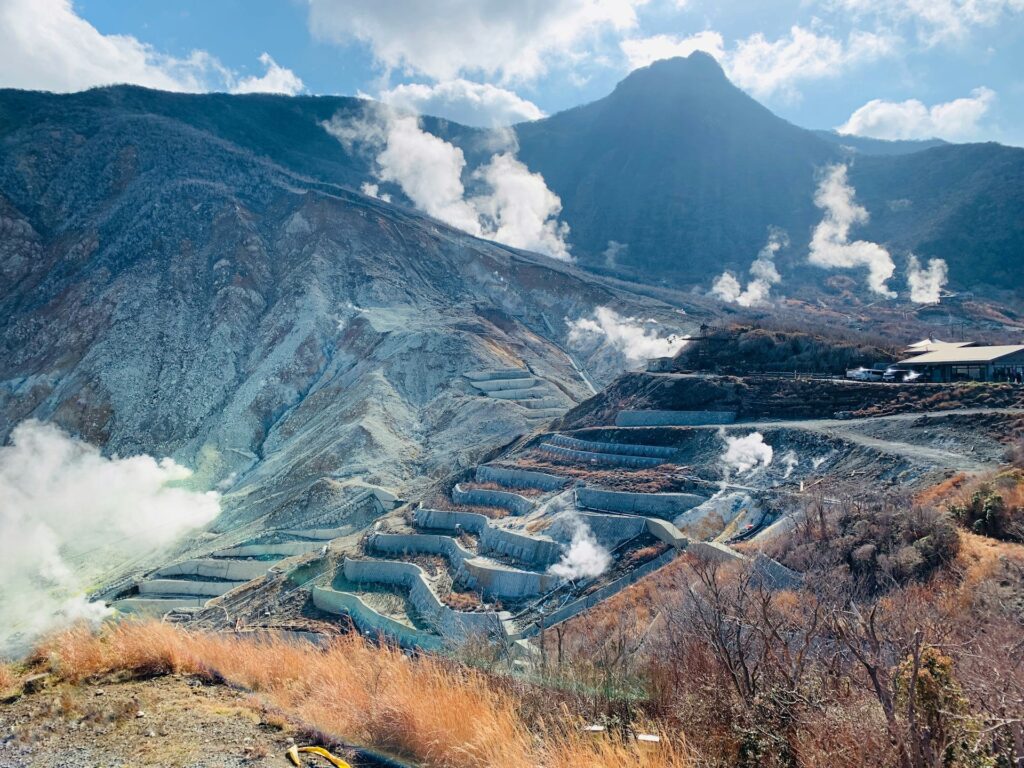
Owakudani is fascinating geologically—it was created by the explosion of the Hakone volcano around 3,000 years ago. A good guide adds depth to the scenery, explaining the history of the sulfur mining and the local legends.
More importantly, guides are updated in real-time regarding safety. The area has monitors for sulfur dioxide levels. If gas levels rise, access is restricted. A tour guide will keep you safe and informed, ensuring you don’t accidentally wander into restricted zones.
Combining with Mt. Fuji & Lake Ashi
If you check most itineraries, you’ll notice that very few tours visit only Owakudani. Most are comprehensive “Fuji-Hakone” day trips.
Trying to visit Mount Fuji’s 5th Station, Lake Ashi, and Owakudani all in one day by public transport is physically exhausting and requires perfect timing. A tour bus can cover these three distinct areas efficiently because it doesn’t have to follow the rigid train tracks or wait for connections.
[Is This Mt. Fuji & Hakone Day Tour from Tokyo Really Worth It?] > Check our detailed breakdown of the best Hakone itineraries here.
Tour Types: What’s Available?
If you decide a tour is the right path, you generally have two categories to choose from.
Private Walking Guides
If you are already staying at a hotel in Hakone (ryokan), you might hire a private local guide. They will meet you at your hotel and accompany you on the public transport loop.
- Pros: Highly personalized, deep historical knowledge.
- Cons: You still have to pay for and use public transport; it doesn’t solve the crowding or transfer issues.
Coach Tours from Tokyo (Recommended for Efficiency)
For most travelers starting their day in Tokyo, a coach tour is the most practical solution. These tours typically include:
- Round-trip bus transport from Tokyo.
- A stop at Mt. Fuji (5th Station if weather permits).
- A cruise on Lake Ashi (the pirate ship or similar boats).
- The Hakone Ropeway ride to Owakudani.
This covers the “Golden Route” of the area without the hassle of planning.
DIY vs. Guided Tour: Which Should You Choose?
Still on the fence? Here is a quick checklist to help you decide.
Choose a DIY Trip if:
- You want to stay overnight in a Hakone ryokan (hot spring inn).
- You want to hike the trails extensively (e.g., hiking from Owakudani down to the lake).
- You prefer a slow pace and don’t mind missing some spots if you run out of time.
- You enjoy the novelty of riding different types of trains and cable cars.
Choose a Guided Tour if:
- You only have one day allocated for this region.
- You want to see both Mt. Fuji and Owakudani in a single trip.
- You are traveling with family members who cannot walk long distances or stand in long queues.
- You want to avoid the stress of navigating Japanese transportation during a potential ropeway suspension.
Practical Tips for Owakudani (Regardless of How You Go)
Whether you go by bus or ropeway, keep these tips in mind to enjoy your visit safely.
- Eat the Black Eggs (Kuro-Tamago): This is the signature experience. These are regular chicken eggs boiled in the natural hot sulfur springs, which turns their shells jet black. Local legend says eating one adds seven years to your life. (They taste like normal boiled eggs, perhaps with a faint sulfur aroma).
- Check Your Health: Because of the volcanic gases (sulfur dioxide), visitors with asthma, bronchitis, or heart disease are strongly advised not to visit Owakudani. If you have these conditions, stay at the lower elevation around Lake Ashi.
- Dress Warmly: Even in summer, Owakudani is windy and often much cooler than Tokyo. Bring a light jacket.
Conclusion
Owakudani is one of the few places in Japan where you can feel the earth “breathing.” It offers a stark, impressive contrast to the peaceful forests surrounding it. However, the journey there is not without its challenges.
If you value freedom and have plenty of time, the DIY “Hakone Loop” is a fun railway adventure. But if your goal is to see the highlights—the volcano, the lake, and Mount Fuji—without the headache of transfer schedules, a guided coach tour is the smartest investment of your time.
Ready to book your trip?
For those who want to skip the planning and ensure a smooth ride to the volcanic valley, this tour covers the Ropeway, Owakudani, and Mt. Fuji in one comprehensive package:
[View tour details] > Recommended: Tokyo: Mt. Fuji, Hakone, Lake Ashi Cruise & Bullet Train Option