
Okinawa is Japan’s tropical island escape, but planning your first trip is not as simple as picking a few beaches. Okinawa Main Island is long, spread out, and much easier to explore by car than by train. A good Okinawa itinerary needs to balance Naha, northern highlights like Okinawa Churaumi Aquarium, beach time, and realistic travel times — especially when the island stretches over 100 kilometers from south to north.
This guide gives you a practical 3- to 5-day Okinawa itinerary for first-time visitors, with separate options for travelers who rent a car, travelers who want a driver, and travelers who plan to use tours and public transit. It focuses on Okinawa Main Island only, so you can plan a realistic first trip without wasting half your vacation in transit.
My honest take: if you have 3 days, you can see the essentials, but it will be busy. If you have 4 or 5 days, Okinawa becomes a much better trip because you can add snorkeling, southern history, and a weather buffer. And whichever length you choose, the decision that shapes the whole trip is not which beach you pick — it is how you are getting around the island.
Quick Answer — Okinawa Itinerary at a Glance
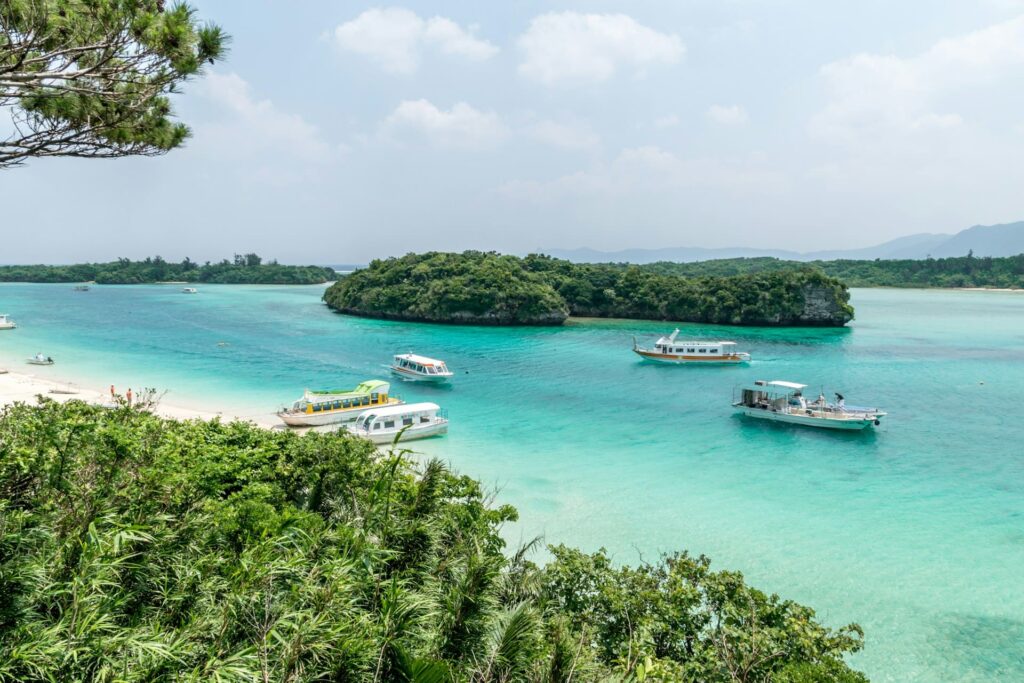
For most first-time visitors, 3 full days is the minimum for an Okinawa itinerary. This gives you enough time for Naha, a northern day trip to Okinawa Churaumi Aquarium, and one central coast or beach day. However, 4 to 5 days is much better if you want time for snorkeling, resort beaches, southern historical sites, or a weather buffer.
- Best short trip: 3 days for Naha, Shuri Castle Park, Kokusai Dori, Churaumi Aquarium, Kouri Island, Cape Manza, and American Village.
- Best relaxed trip: 4 to 5 days with Blue Cave snorkeling, Onna Village, Okinawa World, and Peace Memorial Park.
- Best transport option: A rental car gives you the most freedom, especially for northern Okinawa.
- Best no-car options: Stay in Naha and use either a private car charter with a driver or a guided group day tour for the northern route.
- Best season for sightseeing: March to early May and late October to November.
- Main weather risk: Rainy season usually falls around May to June, while typhoons are most likely in summer and early autumn.
If you remember only one thing from this guide, make it this: do not plan northern Okinawa as if it were a quick side trip from Naha. Churaumi Aquarium, Kouri Island, Cape Manza, and American Village can fit into one day, but only if you treat the route as a full-day plan.
What to lock in first: trip length is the easy part. The decision that actually shapes your Okinawa itinerary is transport, and it is also the thing that sells out first. Okinawa has a genuinely tight vehicle supply — rental cars and drivers both disappear early during Golden Week, Obon, and the July–August school holidays. Sort that out before you finalize hotels, and the rest of the itinerary falls into place around it.
How Many Days Do You Need in Okinawa? 3 Is the Minimum, 4 to 5 Is Better
The short answer: three full days is the realistic minimum for Okinawa Main Island, and four to five days is the sweet spot for a first trip. Two days is possible only if you stay near Naha and skip the north entirely.
The reason is geography, not sightseeing volume. Okinawa Main Island runs roughly 100 to 135 kilometers from the southern tip to the far north, and the highlights sit at opposite ends of it. Naha and the historical sites are in the south, the aquarium and the best island views are in the north, and the resort beaches are in the middle. You cannot combine those into a single day without spending most of it in a vehicle.
| Trip Length | Best For | What You Can Cover | Main Trade-Off |
|---|---|---|---|
| 2 Days | Stopover travelers adding Okinawa to a larger Japan trip | Naha, Shuri Castle Park, Kokusai Dori, and either southern Okinawa or one central beach area | You will almost certainly have to skip Churaumi Aquarium and Kouri Island. |
| 3 Days | First-timers with limited time | Naha, Shuri Castle Park, Kokusai Dori, Churaumi Aquarium, Kouri Island, Cape Manza, American Village | You will need to move efficiently and cannot spend long at every beach. |
| 4 Days | Travelers who want one ocean-focused day | Everything in the 3-day route, plus Blue Cave snorkeling or a slower Onna Village beach day | Water activities can be canceled due to wind, waves, or poor sea conditions. |
| 5 Days | Travelers who want a balanced trip | Everything above, plus southern Okinawa, Okinawa World, Gyokusendo Cave, and Peace Memorial Park | You may want to split your hotel stay between Naha and a beach area. |
Count nights carefully, not days. If your arrival day is late or your departure day is early, count only your full usable days. A “3-night trip” can easily become just 2.5 sightseeing days once airport transfers, hotel check-in, meals, and traffic are included. A 4-night trip with a morning arrival and an evening departure gives you more usable time than a 5-night trip with two bad flight times.
Kai’s tip: The question I get asked most is whether 3 days is “enough.” It is enough to see the main island’s highlights, but it is not enough to feel relaxed. If you can only take 3 days, the fix is not to cram harder — it is to drop the southern history day entirely and accept that this is a north-and-Naha trip. Travelers who try to squeeze all four regions into 3 days usually come back saying they spent the whole trip driving.
Best Time to Visit Okinawa: March to May and Late October to November for Sightseeing
Deciding the best time to visit Okinawa depends on whether your priority is beaches, sightseeing, or lower weather risk.
- Best for swimming and beaches: Late June to October, when the water is warm and many public beaches are in full seasonal operation.
- Best for comfortable sightseeing: March to early May and late October to November, when temperatures are usually easier for walking around castles, markets, and coastal viewpoints.
- Rainy season: Usually around May to June. It does not always rain all day, but you should keep some flexibility in your itinerary.
- Typhoon season: Summer to early autumn brings the highest disruption risk. Flights, ferries, outdoor attractions, and marine tours can be delayed or canceled.
One timing note that affects cost, not weather: Golden Week (late April to early May), Obon (mid-August), and the Japanese summer school holidays are the three periods when Okinawa’s rental cars, drivers, and resort rooms are hardest to get. Prices rise and availability drops well before the dates themselves. If your trip falls in any of these windows, book transport first and sightseeing second.
Kai’s tip: The mistake I see travelers make is putting their one must-do ocean activity on the final full day. If Blue Cave snorkeling, a boat trip, or a beach resort day matters to you, schedule it earlier and keep a flexible backup day later. Okinawa weather can be beautiful one hour and completely change the plan the next.
If your trip is only 3 days, avoid packing every day with non-refundable outdoor activities. A flexible indoor backup plan is especially useful during rainy season and typhoon season.
Okinawa Driving Times: Naha to Churaumi Is a 2-Hour Drive, Not a Side Trip
One of the most common mistakes first-time visitors make is underestimating travel times on Okinawa Main Island. Distances on the map look manageable, but normal roads, traffic around Naha, parking, and coastal detours can slow the day down. Use these as planning estimates only, and check live map times before you set out.
Driving Times from Naha
- Naha to Kouri Island: Often around 2 hours each way in normal conditions. This is the longest single drive in this itinerary.
- Naha to Okinawa Churaumi Aquarium: Often around 1.5 to 2 hours each way, depending on route and traffic.
- Naha to Cape Manza: Often around 1 hour each way.
- Naha to American Village (Chatan): Often around 40 to 50 minutes each way.
- Naha to Okinawa World: Often around 30 minutes each way.
- Naha to Peace Memorial Park: Often around 30 to 40 minutes each way.
Driving Times Between Stops
These are the connections that decide whether a day works or falls apart. Most first-time visitors plan their day from Naha and forget to check the legs in between.
| Route | Rough Driving Time | Why It Matters |
|---|---|---|
| Churaumi Aquarium to Kouri Island | Around 30 to 40 minutes | Short enough to do both in one day, which is why this pairing is the standard northern route. |
| Onna Village to Churaumi Aquarium | Around 1 hour to 1 hour 15 minutes | Staying in Onna cuts roughly 45 minutes off the northern day compared with basing in Naha. |
| Onna Village to Motobu | Around 1 hour | Useful if you are splitting your stay between a resort area and the aquarium area. |
| Cape Manza to American Village | Around 40 minutes | Makes Chatan a natural dinner stop on the way back south from the north. |
| American Village to Okinawa World | Around 50 to 60 minutes | Longer than most people expect, so avoid combining Chatan and southern Okinawa in one afternoon. |
| Naha Airport to Naha city center | Around 15 to 25 minutes | The Yui Rail monorail is often faster than driving during rush hour. |
How Long Does It Take to Drive Around Okinawa?
Driving the full length of Okinawa Main Island, from Naha in the south to Cape Hedo at the northern tip, is roughly 130 kilometers one way and takes about 2.5 to 3 hours without stops. A full round trip is a 250 to 300 kilometer day and realistically 6 to 8 hours of pure driving before you add a single stop.
That is why the itineraries below do not include Cape Hedo or the far northern Yanbaru region. On a 3- to 5-day first trip, the practical northern boundary is the Motobu Peninsula, where Churaumi Aquarium and Kouri Island are. Anything beyond that needs a night in the north to be worth the drive.
Kai’s tip: For the northern route, distance is only half the issue. What catches people out is the return drive after a full day of aquarium crowds, viewpoints, meals, and beach stops. I always tell readers to choose one “main event” for the day — usually Churaumi Aquarium or Kouri Island — and treat the other stops as supporting stops, not equal priorities.
These estimates assume you are driving yourself. If you are joining a guided tour or hiring a driver, your pickup location will affect your total touring time. Without any vehicle at all, the northern day trip alone will take most of your daylight hours, so plan accordingly.
Getting Around Okinawa: A Car Saves the Most Time, but Two No-Car Options Work
The most important planning question is whether you need a rental car in Okinawa. The practical answer is: a car is strongly recommended, but you can still plan a good Okinawa itinerary without driving yourself — as long as you stay in the right area and pick the right no-car option for your group size.
Naha has the Yui Rail monorail, which is useful for the airport, Kokusai Dori, and Shuri Castle Park. However, it does not reach the central and northern parts of the island, including Onna Village, Cape Manza, Kouri Island, or Okinawa Churaumi Aquarium. Local buses exist, but they can be slow and inconvenient for a short trip.
| Transport Method | Best For | IDP Needed? | Best Hotel Base | Main Risk |
|---|---|---|---|---|
| Rental Car | Travelers who want maximum freedom and efficient access to northern Okinawa | Usually yes for foreign visitors, but rules vary by license country or region. | Naha, Chatan, Onna, or Motobu | Naha traffic, left-side driving, parking, and needing the correct driving documents |
| Private Car Charter with Driver | Families, groups of 3 or more, and travelers who want a custom route without driving | No | Naha, Chatan, or Onna | Higher cost for solo travelers and couples, since the price is per vehicle, not per person |
| Guided Group Day Tour | Solo travelers and couples who want the northern highlights at a per-person price | No | Naha or Chatan | Fixed schedule and fixed route, with limited time at each stop |
| Public Transit | Travelers staying mostly in Naha | No | Naha near a Yui Rail station | Long travel times and limited flexibility outside Naha |
If you do not drive, the easiest strategy is to stay in Naha near a Yui Rail station. Use the monorail and walking for Day 1, then book either a private driver or a guided day tour for the northern highlights on Day 2. Staying at a remote beach resort without any transport can be relaxing, but it makes sightseeing much harder and can leave you dependent on taxis.
For driving, most foreign visitors need a valid International Driving Permit issued before arriving in Japan, plus their original driver’s license and passport. Japan generally requires a booklet-style paper IDP, not a digital or card-style version. Some countries and regions follow different rules and require an official Japanese translation instead. Confirm the latest requirements with your rental company and official driving guidance before booking a rental car.
The Northern Day Decides Your Transport — Here Are the Three Ways to Do It
Everything else in this itinerary can flex. The northern day cannot. Churaumi Aquarium, Kouri Island, and Cape Manza are spread across roughly 100 kilometers of coastline, and there are only three approaches that actually work on a short trip. Piecing it together by local bus is the one option I would not recommend on a 3- or 4-day itinerary.
Option 1 — Drive yourself (best for most first-time visitors)
- Book earlier than you think. Okinawa runs one of Japan’s tightest rental car markets. Compact cars go first during Golden Week, Obon, and the July–August school holidays.
- Confirm the IDP rule for your license country before you reserve. Japan requires a booklet-style paper permit, and some countries need an official Japanese translation instead.
- Consider the ETC card and full insurance if you plan to use the Okinawa Expressway for the northern run. It meaningfully shortens the Naha to Motobu leg.
- Pick a compact car for Naha. City streets are narrow and hotel parking is tight, so bigger is not better unless you have a large group.
Compare Okinawa rental car rates, pickup points, and insurance options — Naha Airport pickup is the simplest choice if you are starting Day 1 in the city.
Option 2 — Hire a private car with a driver (best for families and groups of 3 or more)
- You set the route, not a tour company. A 5, 8, or 10-hour charter lets you build the northern day around your own priorities — aquarium first, or Kouri Island first, or a slower version of both.
- The maths change with group size. Charter pricing is per vehicle rather than per person, so once you are three or four travelers it often lands close to group tour pricing while giving you far more control.
- It removes the two hardest parts of the day: the long return drive after a full day out, and parking at the busiest photo stops.
- Useful with young children, since you can adjust timing around naps and meals instead of following a fixed schedule.
Check vehicle sizes, charter durations, and pickup areas for an Okinawa private car with an English-speaking driver — confirm the passenger count and luggage allowance before booking, since child seats take up roughly one and a half adult seats.
Option 3 — Join a guided group day tour (best for solo travelers and couples)
- It solves the hardest transport problem: Churaumi Aquarium, Kouri Island, Cape Manza, and American Village are all possible in one day, but awkward to connect independently without a car.
- It is built for first-timers: The route matches the exact northern highlights most visitors want on a short Okinawa itinerary.
- It is the cheapest no-car option for one or two people, because you pay per seat rather than for the whole vehicle.
- It reduces decision fatigue: Instead of checking bus transfers, parking, and return times all day, you can focus on the stops themselves.
Check pickup options, availability, and recent reviews for this Northern Okinawa Full-Day Tour — best for travelers who want Churaumi Aquarium, Kouri Island, Cape Manza, and American Village without renting a car.
Sample 3-Day Okinawa Itinerary (Core Route)
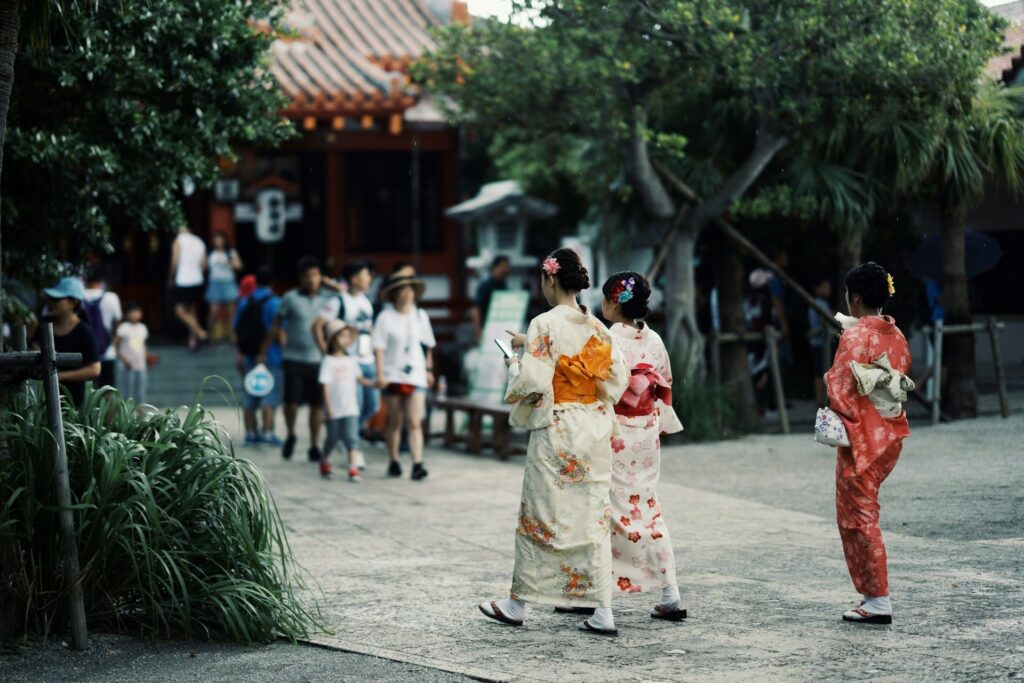
This 3-day Okinawa itinerary is the core route for a first visit. It works best if you have three full days on the island. If your arrival day is late or your departure day is early, consider adding one extra night so you do not have to rush the northern day trip.
Day 1 — Naha, Shuri Castle & Kokusai Dori
Start your Okinawa trip in Naha, the easiest base for first-time visitors and no-car travelers. If you arrive at Naha Airport around midday, you can use the Yui Rail to reach your hotel, drop your bags, and spend the afternoon exploring the city.
- Afternoon: Shuri Castle Park. Visit one of Okinawa’s most important cultural sites and learn about the Ryukyu Kingdom. The main hall has been under reconstruction after the 2019 fire, so check the latest restoration status before you go. Even during reconstruction, the park can still be worth visiting because you can understand the scale of the former royal capital and see the rebuilding process from designated visitor areas.
- Late afternoon: Tsuboya Yachimun Street. Walk through a quieter historic area known for Okinawan pottery shops, traditional kilns, and small galleries. It is a good place to buy higher-quality souvenirs than you may find on the busiest shopping streets.
- Evening: Kokusai Dori and Makishi Public Market. End your first day with Okinawa soba, local snacks, souvenir shopping, and izakaya-style dining. Kokusai Dori is touristy, but it is convenient, lively, and easy for a first night in Naha. If you want a quick and authentic dinner, try the crowded yatai-style food streets near Makishi Market.
If your flight arrives late, keep Day 1 simple. Go straight to Kokusai Dori for dinner and move Shuri Castle Park to the morning of Day 3 or Day 5.
A note on picking up your car: if you are renting, consider collecting the vehicle on the morning of Day 2 rather than at the airport on arrival. Day 1 is entirely walkable and monorail-accessible, and Naha hotel parking is often charged nightly. Skipping one night of parking and one evening of city driving usually makes the first day easier.
Day 2 — Northern Okinawa Day Trip (Churaumi Aquarium & Kouri Island)
Day 2 is the longest and most important sightseeing day in this Okinawa itinerary. Northern Okinawa has some of the island’s best views, but the distances are easy to underestimate. If you are driving from Naha, plan to leave early to avoid traffic and give yourself enough time at each stop. The drive from Naha to Kouri Island and back via the aquarium is a full-day route, not a casual half-day outing.
- Morning: Kouri Island. Drive across Kouri Bridge for one of Okinawa’s classic ocean views. The water around the bridge is bright blue on clear days, and Kouri Beach is an easy stop if you want a short beach break. Parking conditions can change on weekends and holidays, so avoid assuming you can always stop immediately at the busiest photo spots.
- Midday: Okinawa Churaumi Aquarium. Visit the Kuroshio Sea tank, manta rays, whale sharks, and the wider Ocean Expo Park area. Ticket prices, opening hours, last admission times, and temporary closures can change by season or due to severe weather, so check the latest official opening hours before your visit.
- Optional nearby stop: Bise Fukugi Tree Road. If you want a quieter break near Ocean Expo Park, this peaceful village lane of Fukugi trees is a good add-on before heading south.
- Afternoon: Cape Manza. Stop at this dramatic coastal viewpoint on the way back down the west coast. It is usually a quick visit, but the ocean view is worth the detour in clear weather. Check local parking and access conditions before you go.
Which ticket to buy for Churaumi: if you are visiting two or more paid attractions inside Ocean Expo Park — the aquarium plus the Oceanic Culture Museum, Tropical Dream Center, or Native Okinawan Village — the combination pass costs less than buying separately. If the aquarium is your only stop, buy the single ticket instead. Check current Churaumi ticket and TokuToku pass prices and buy in advance either way — the ticket counter queue on weekends and holidays can easily cost you 30 minutes of aquarium time.
Kai’s tip: If I had one northern Okinawa day, I would not try to give every stop equal time. Choose your priority before you leave Naha. Families often do best by making Churaumi Aquarium the anchor; photographers may care more about Kouri Bridge and Cape Manza; travelers without a vehicle should prioritize a route that minimizes transfers.
If you are not driving, this is the day when a driver or a tour makes the biggest difference. Doing Naha to Churaumi Aquarium, Kouri Island, Cape Manza, and American Village by local bus can turn into a very long day with limited time at each stop, especially on a 3-day trip. Couples and solo travelers usually get better value from a guided group tour of the northern route, while families and groups of three or more often do better with a private car and driver they can route themselves.
Day 3 — Central Coast, Onna Village & American Village
Use your final core day for Okinawa’s central west coast. This area works well after the long northern day because you can choose how active or relaxed you want to be. Driving times between stops on this day are shorter than the northern route, so it is easier to adjust the plan based on weather and energy.
- Morning: Ryukyu Mura. Visit this cultural theme park to see traditional Okinawan houses, craft demonstrations, and performances. It is a useful stop if you want more cultural context beyond beaches and shopping streets. Check current hours and performance schedules before going.
- Afternoon: Onna Village beach stop. Choose one beach or coastal activity rather than trying to visit too many places. Moon Beach, Tiger Beach, and other resort-area beaches can work well depending on where you are staying and the season. If you want lunch nearby, look for beachfront cafes along Route 58 for Okinawan tacos, seafood plates, or casual resort-area meals.
- Evening: Mihama American Village. Finish the day in Chatan with sunset views, casual restaurants, shops, and a lively seaside atmosphere. It is touristy, but it is easy, fun, and convenient for dinner after a central Okinawa day. Parking rules and fees can vary by area, so check signs carefully.
If you only have 3 days in Okinawa, this route gives you the best balance: Naha culture, northern highlights, coastal scenery, and one relaxed sunset evening. If you have 4 or 5 days, use the extra time for snorkeling, resort beaches, and southern Okinawa instead of trying to squeeze everything into these first three days.
4-Day & 5-Day Okinawa Itinerary Add-Ons
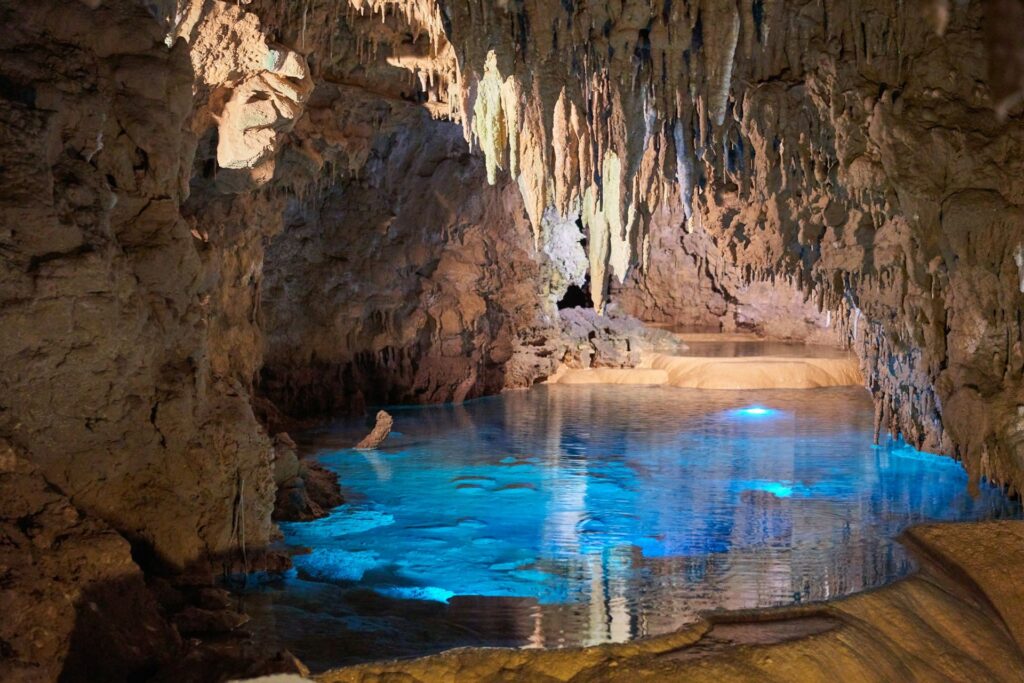
If you have 4 or 5 days in Okinawa, do not simply add more stops to the same rushed route. Use the extra time to slow down, add ocean activities, and include southern Okinawa’s historical sites. This makes the trip feel much more balanced than trying to see the whole island in 3 days.
Day 4 — Snorkeling & Resort Beach Day
Day 4 is best used as your ocean-focused day. While there are many great Okinawa snorkeling spots, the most popular option is snorkeling or diving at the Blue Cave near Cape Maeda, where sunlight can create a glowing blue effect inside the cave. It is one of Okinawa’s classic marine activities, especially for first-time visitors who want something more memorable than a simple beach stop.
However, Blue Cave tours depend heavily on sea conditions. Wind, waves, poor visibility, or typhoon-related weather can lead to changes or cancellations, even if it is not raining in Naha. If this is a must-do activity for you, schedule it earlier in your trip rather than leaving it until your final full day. Most tours run year-round, but winter months can have a higher chance of rough sea conditions.
- Morning: Blue Cave snorkeling or diving. Book a guided tour if you are new to snorkeling, not confident in the water, or unfamiliar with local sea conditions. Most tours provide wetsuits, masks, fins, and an instructor. Total activity time varies by operator, so confirm the schedule before booking.
- Afternoon: Onna Village resort beach. Spend a slower afternoon at a beach, pool, or cafe in the Onna area. This is the day to relax instead of adding another long drive. If you are staying at a resort hotel, take advantage of the beach access rather than driving somewhere else.
- Evening: Chatan or Onna Village. Choose Chatan if you want restaurants and nightlife, or stay around Onna if you want a quieter resort-style evening.
Check start times, inclusions, meeting points, and cancellation policies for Blue Cave snorkeling and diving tours before booking — this helps you plan the rest of your day around the tour schedule.
If the sea is too rough for snorkeling, switch to an inland or indoor plan such as Okinawa World, Gyokusendo Cave, Tsuboya Yachimun Street, Makishi Public Market, or a slower cafe and shopping day in Naha or Chatan.
Day 5 — Southern Okinawa: Caves, Culture & History
Use Day 5 for southern Okinawa. This part of the island gives your Okinawa itinerary more depth because it covers both natural scenery and the history of the Battle of Okinawa. It is a quieter, more reflective day than the beach and aquarium route. Driving distances in southern Okinawa are shorter than the northern route, so it is a good final-day plan if your flight is not too early.
- Morning: Okinawa World and Gyokusendo Cave. Explore the limestone cave, traditional craft areas, and cultural performances. This is also a useful rainy-day option because a large part of the visit is not beach-dependent. Check current ticket types, workshop availability, and accessibility details before you go.
- Afternoon: Peace Memorial Park. Visit this important memorial area to better understand Okinawa’s wartime history. Give yourself enough time to walk slowly and keep the tone of this stop respectful. The onsite museum is worth considering if you want deeper context.
- Optional stop: Southern coast viewpoints. If you have a rental car and the weather is clear, add a short coastal viewpoint at Cape Kyan or Nirai Kanai Bridge before returning to Naha.
Plan Day 5 around your flight, not the other way round. Okinawa World sits roughly 30 minutes from Naha and about 20 minutes from Peace Memorial Park, so the whole southern loop is close to the airport. If you are returning a rental car, allow an extra 45 to 60 minutes on top of your drive time — most Okinawa rental offices are off-airport and run shuttle buses to the terminal, and that shuttle leg is what people forget to budget for.
If you are traveling without a car, southern Okinawa is easier to manage than the far north, but public transit can still be slow. For a short trip, consider using a taxi for part of the day or choosing one main southern attraction instead of trying to visit every stop.
Okinawa Itinerary for Families — What to Know
If you are traveling with children, a few adjustments can make this Okinawa itinerary much easier to manage:
- Stroller accessibility: Okinawa Churaumi Aquarium, Shuri Castle Park, and Okinawa World are generally easier with strollers than beaches and rocky viewpoints. Kokusai Dori is walkable but can be crowded on weekends. Cape Manza and Kouri Island viewpoints may have uneven surfaces in some areas.
- Naps and driving time: The northern day trip involves the longest drive of the trip. If your child naps in the car, this can actually work in your favor. Plan the aquarium visit around your usual meal and nap schedule.
- Child seats are a legal requirement: In Japan, children under six must use a child seat. Rental companies supply them, but you have to request one at the time of booking rather than at pickup. If you are hiring a driver instead, note that a child seat takes up roughly one and a half adult seats, so check the passenger count on the vehicle you choose.
- Beach choice for families: Sheltered resort beaches in Onna Village are generally easier with young children than exposed natural beaches. Look for lifeguards, seasonal swimming areas, showers, and rental facilities.
- What to pack: Sunscreen, insect repellent, hats, refillable water bottles, and water shoes are essential for beach days. Okinawa’s sun is stronger than many first-time visitors expect, and reef shoes help protect feet from sharp coral and rocks.
Kai’s tip: For families, the northern day is where the itinerary usually breaks down. Two hours each way is a long time with small children, and it comes on top of a full day at the aquarium. If your group is three or more and nobody wants to drive that stretch, a private car with a driver lets you set your own timings instead of following a group tour’s schedule — which matters more than it sounds when the whole day depends on one nap going well.
Rainy Day & Typhoon Backup Plans
Okinawa weather can change your itinerary quickly. A flexible plan is not just a nice extra — it is one of the best ways to avoid disappointment, especially if your trip includes beaches, snorkeling, ferries, or long-distance driving.
Kai’s tip: I always tell readers to separate “weather-sensitive” days from “weather-resistant” days. Blue Cave, beaches, and coastal viewpoints are weather-sensitive. Okinawa World, Makishi Public Market, Tsuboya Yachimun Street, and many Naha food plans are much easier to move around if the forecast changes.
| Original Plan | Main Weather Risk | Better Back-Up Option |
|---|---|---|
| Blue Cave snorkeling | Wind, waves, poor visibility, or tour cancellation | Okinawa World, Gyokusendo Cave, Tsuboya Yachimun Street, or a Naha food day |
| Beach hopping in Onna | Rain, strong wind, or unsafe swimming conditions | Ryukyu Mura, cafes in Chatan, shopping, or pottery streets in Naha |
| Northern Okinawa drive | Long travel times, heavy rain, or typhoon-related closures | Move the northern route to a clearer day and keep Naha or Chatan as a lighter backup |
| Outdoor sunset viewpoints | Clouds, rain, or poor visibility | American Village restaurants, Makishi Public Market, or an indoor dinner plan |
During typhoon season, do not plan a tight connection immediately after your Okinawa stay if you can avoid it. Flights, ferries, attractions, and tours may be disrupted. Always check the latest weather forecast and official attraction notices during your trip. Keep at least one afternoon or evening completely flexible as a buffer.
One practical note on cancellation terms: weather flexibility is worth more in Okinawa than in most Japanese destinations. When you compare rental cars, drivers, and marine tours, check the free-cancellation window as carefully as the price. A slightly more expensive booking that you can cancel the day before is usually the better deal during rainy season and typhoon season.
Frequently Asked Questions About This Okinawa Itinerary
Is 2 days enough for an Okinawa itinerary?
Two days is possible, but it is not ideal for a first Okinawa itinerary. With only 2 days, you should stay focused on Naha and either southern Okinawa or one nearby coastal area. The northern route to Okinawa Churaumi Aquarium and Kouri Island takes too much time unless you are comfortable with a very long day or use an organized tour.
How many days do you need in Okinawa for a first trip?
Three full days is the minimum for a first trip to Okinawa Main Island. Four to 5 days is better because it gives you time for beaches, snorkeling, southern historical sites, and weather flexibility. If you want to visit outer islands such as Ishigaki or Miyakojima, treat that as a separate trip or add several more days — a 5-day trip focused on the main island does not leave enough time for a worthwhile outer island visit.
Is it worth renting a car in Okinawa?
For most first-time visitors, yes. Okinawa Main Island has no train network outside the Naha monorail, and the highlights sit at opposite ends of a 100-kilometer island. A car turns the northern day from a logistical problem into an ordinary drive, and it is the only option that lets you change plans on the day when the weather does. The exceptions are travelers staying entirely within Naha, and anyone who is not comfortable driving on the left — for them, a private driver or a guided tour is the better answer.
How much does it cost to rent a car in Okinawa?
Compact cars in Okinawa often start around US$25 to US$30 per day before insurance and extras, which is inexpensive by Japanese standards. The variables that move the price most are the season, how far ahead you book, and whether you add full insurance and an ETC card for the expressway. Rates rise sharply during Golden Week, Obon, and the July–August school holidays. Check current Okinawa rental car rates for your dates — prices for the same car can differ meaningfully between suppliers on the same day.
Can you do this Okinawa itinerary without a car?
Yes, but you need to plan carefully. Stay in Naha near a Yui Rail station, use the monorail for city sightseeing, and use a driver, a guided tour, or taxis for places that are difficult to reach by public transit. The hardest part to do without a car is the northern route covering Okinawa Churaumi Aquarium, Kouri Island, Cape Manza, and other coastal stops. Solo travelers and couples usually get the best value from a guided group day tour, while families and groups of three or more often do better hiring a private car and driver.
Should you hire a driver or join a group tour in Okinawa?
It comes down to party size and how much control you want over the route. A guided group tour is priced per person, so it is the cheaper option for one or two travelers, but the route and timings are fixed. A private car charter is priced per vehicle, so the per-person cost drops as your group grows — by three or four people it often lands close to group tour pricing, and you can build the day around your own priorities rather than a set itinerary. If you are traveling with young children or older relatives, the flexibility usually matters more than the price difference.
Is a northern Okinawa guided tour worth it without a car?
For most no-car travelers on a short trip, yes. The northern route is where a guided tour can save the most time and stress because Churaumi Aquarium, Kouri Island, Cape Manza, and American Village are far apart. It is less necessary if you have a rental car, several extra days, or a hotel base in Motobu or Onna.
Where should first-time visitors stay in Okinawa?
If you are deciding which Okinawa hotel area is best without a car, Naha is the easiest base for first-time visitors. It has airport access, the Yui Rail, restaurants, shops, and better tour pick-up options. Chatan is good for travelers who want an easy seaside evening around American Village. Onna Village is better for resort stays and beach time, but it is much more convenient with a car. If you are driving, basing in Onna or Motobu for one night cuts roughly 45 minutes each way off the northern day.
Do you need an International Driving Permit to rent a car in Okinawa?
Most foreign visitors need a valid International Driving Permit issued before arriving in Japan, along with their original driver’s license and passport. Japan generally requires a booklet-style paper permit, not a digital or card-style version. Some license holders need an official Japanese translation instead of an IDP. Check the latest requirements before making a rental car reservation, and confirm what documents your chosen supplier requires at pickup, since requirements can differ slightly between rental companies.
When is typhoon season in Okinawa?
Typhoons can affect Okinawa from summer to early autumn, with disruption risk often higher around late summer. A typhoon can lead to canceled flights, ferry suspensions, closed attractions, and canceled marine tours. If you travel during this period, keep your itinerary flexible and avoid relying on one final day for your most important outdoor activity.
What food should I try in Okinawa?
Okinawan food is distinct from mainland Japanese cuisine. Must-try dishes include Okinawa soba (thick noodles in pork broth), taco rice (a local fusion dish), goya champuru (bitter melon stir-fry), rafute (braised pork belly), and sata andagi (Okinawan donuts). For a full selection, visit Makishi Public Market in Naha or the food stalls behind Kokusai Dori. Vegetarians should note that many Okinawan dishes use pork or fish-based broth — check with the restaurant before ordering.
Is Okinawa safe for solo travelers?
Yes, Okinawa is generally very safe for solo travelers, including solo female travelers. Violent crime is rare, and the main risks are practical ones: watching your belongings in crowded areas, avoiding swimming alone, and checking weather and sea conditions. Staying in Naha or Chatan gives you easier access to restaurants, convenience stores, and other solo-friendly amenities. Guided tours are a good way to meet other travelers while covering the harder-to-reach spots.
Final Verdict — Which Okinawa Itinerary Should You Choose?
The best Okinawa itinerary for first-time visitors is 4 to 5 days if your schedule allows it. Three days is enough for the main island highlights, but it will feel busy. With 4 or 5 days, you can add snorkeling, beaches, southern Okinawa, and a weather buffer without turning every day into a race.
- Choose the 3-day route if: You only have a long weekend or you are adding Okinawa as a stop within a larger Japan trip. You will need to move efficiently and skip most beach time.
- Choose the 4-day route if: You want one relaxed ocean day with snorkeling or a resort beach. This is the sweet spot for many first-time visitors.
- Choose the 5-day route if: You want a well-rounded trip that includes history, culture, marine activities, and southern Okinawa without rushing. This option also gives you the most weather flexibility.
- Rent a car if: You are comfortable driving on the left and have the correct documents. You will cover more ground and have better flexibility, especially in the north and south.
- Skip the car if: You plan to stay mostly in Naha and use a driver or guided tours for the far-apart stops. This works best with a 4- or 5-day itinerary so you have time for slower public transit on the non-tour days.
Your Transport Decision, Side by Side
The northern sightseeing day is the hardest part of this itinerary to organize, and it is the part that decides which transport option makes sense for your trip. Here is how the four approaches compare.
| Option | Best For | What to Check Before Booking |
|---|---|---|
| Rental car | Travelers who want full flexibility and are comfortable driving in Japan | IDP or translation requirements, insurance level, ETC card, fuel policy, child seats, and hotel parking |
| Private car with driver | Families and groups of 3 or more who want a custom route without driving | Charter length (5, 8, or 10 hours), vehicle size and luggage limits, driver language, and pickup area |
| Northern guided tour | Solo travelers and couples who want the northern highlights at a per-person price | Pickup location, itinerary, inclusions, recent reviews, cancellation policy, and current price |
| Public bus | Budget travelers with extra time and patience | Timetables, transfers, last return bus, and whether you are comfortable with a very long day |
How I would choose: if you can drive, drive — nothing else gives you the same freedom to move a beach day because the forecast changed. If you cannot or would rather not, the deciding factor is your group size. One or two people should take the group tour and pay per seat. Three or more should hire the vehicle and set their own route, because at that point you are paying similar money for a much better day.
If you rent a car, you can comfortably combine Naha, northern Okinawa, Onna Village, Chatan, and the southern coast. If you do not want to drive, base yourself in Naha and use a driver or a guided day tour for the northern highlights. That approach gives you the best balance of convenience, sightseeing, and realistic travel time.

Hi, I’m Kai. I’m a Tokyo-based travel writer, tourism industry insider, and the author of a published guidebook for international visitors to Japan. With over 10 years of professional experience at a leading Japanese tourism company, my mission is to help you skip the tourist traps and navigate Japan’s best destinations like a local. I believe the perfect day trip is like a traditional kaiseki meal: a beautiful balance of precise planning and unforgettable seasonal discovery. When I’m not out conducting field research, you’ll usually find me drafting new itineraries with one of my favorite fountain pens!