
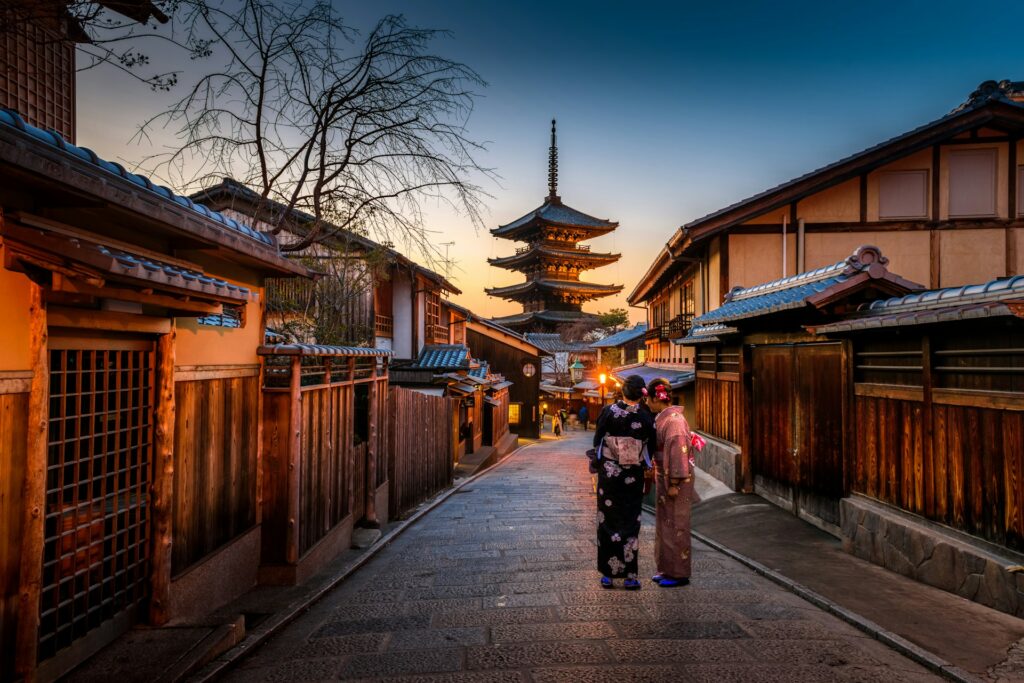
If you have seen recent photos or news about Kyoto, you likely share the same major concern: the overwhelming crowds. The city’s legendary temples and shrines are beautiful, but standing shoulder-to-shoulder with thousands of other tourists can quickly ruin the magic. However, you do not have to cancel your trip or resign yourself to the chaos.
This guide provides a practical, tested blueprint for reclaiming the tranquil, historic Kyoto you came to see by strategically shifting your schedule and taking advantage of specialized, crowd-free routes.
Quick Answer: Is It Possible to Avoid Crowds in Kyoto?
Yes, absolutely. But it requires throwing away the standard 9-to-5 sightseeing schedule. To experience Kyoto without the masses, you must adopt at least one of these three core strategies:
- Time-Shifting: Visit major landmarks extremely early (before 7:00 AM) or late at night.
- Smart Guided Tours: Invest in specialized tours that use local knowledge and backstreets to bypass heavy foot traffic and public bus nightmares.
- Place-Shifting: Skip the famous names entirely and explore spectacular, overlooked “hidden gem” temples.
Strategy 1: Shift Your Time (Early Mornings & Nights)
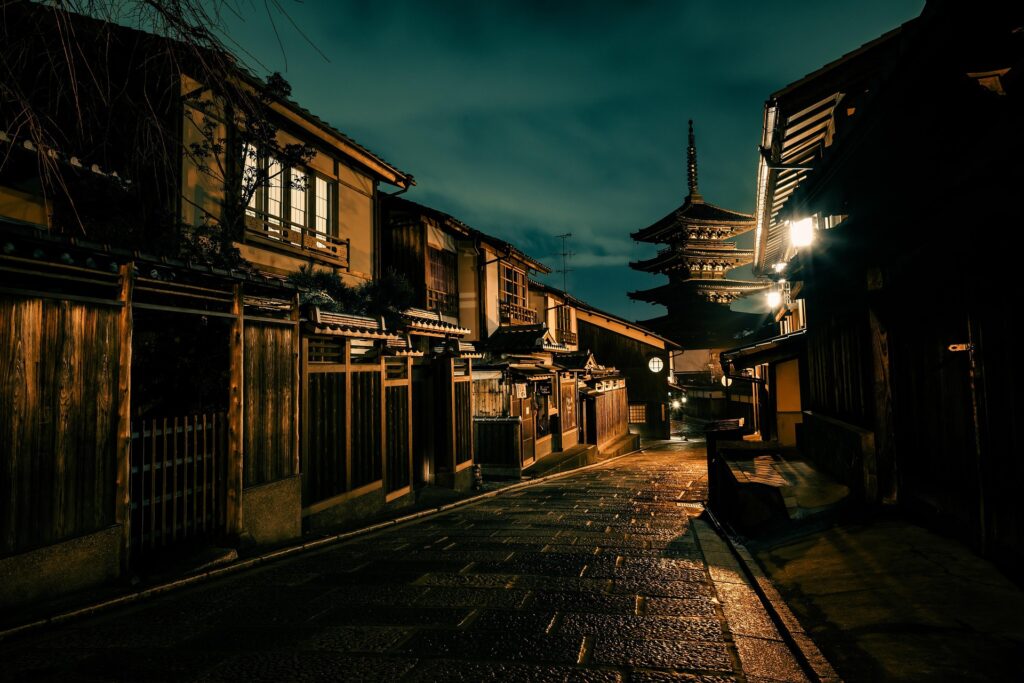
The simplest way to beat the crowds at Kyoto’s most famous sites is to visit when the majority of tourists are still sleeping or eating dinner, making it a great time to tackle the best things to do in Kyoto early in the morning.
Arashiyama Bamboo Grove (Aim for 6:30 AM)
The Arashiyama Bamboo Grove is open 24 hours a day and is completely free to enter. If you arrive mid-day, you will find a dense sea of selfie sticks instead of peaceful nature. To capture the serene beauty of the towering bamboo, you must arrive early.
- The Reality: Crowds start forming by 7:30 AM. By 9:00 AM, it is packed.
- The Solution: Arrive at the grove no later than 6:30 AM to 7:00 AM.
- Access: Take the JR Sagano Line from Kyoto Station (the earliest trains start running in the 5:00 AM hour) to Saga-Arashiyama Station. It is a 10-minute walk from the station to the grove.
Kiyomizu-dera Temple (6:00 AM Openings)
Unlike most temples that open at 8:00 AM or 9:00 AM, Kiyomizu-dera famously opens its gates at 6:00 AM daily. The entrance fee is 400 JPY.
Arriving right at 6:00 AM means you can enjoy the stunning panoramic view from the wooden stage accompanied only by early morning worshippers and a few dedicated photographers. Keep in mind that reaching the temple early requires an uphill walk from the bus stop, but the reward of a silent, misty morning over Kyoto is well worth the effort. Additionally, during certain seasons (spring cherry blossoms and autumn foliage), the temple hosts special night illuminations, which offer another window to visit outside peak daytime hours and are a highlight of exploring Kyoto after dark.
Fushimi Inari Taisha (Experience the Magic at Night)
Fushimi Inari Taisha, famous for its thousands of vermilion torii gates, is another site that is open 24/7 with no admission fee. During the day, the lower paths are heavily congested. However, visiting after sunset transforms the shrine into a mystical, quiet experience illuminated by soft lanterns.
While the crowds disappear at night, hiking the mountain paths in the dark can be intimidating. The trails are dimly lit, and it is easy to miss the rich historical context of the shrines without a guide. If you want the eerie, beautiful atmosphere of Fushimi Inari at night without the worry of getting lost, joining a specialized night walking tour is highly recommended.
Who this is for: Travelers who want stunning, crowd-free photos of the glowing torii gates and prefer the safety and insight of a local English-speaking guide at night.
Who this is not for: Those who want to hike completely alone to the very top of the mountain (the peak is completely dark and usually not covered in guided night highlights).
👉 Check availability for the Kyoto Fushimi-Inari Night Walking Tour
Strategy 2: Book a “Crowd-Free” Specialized Tour
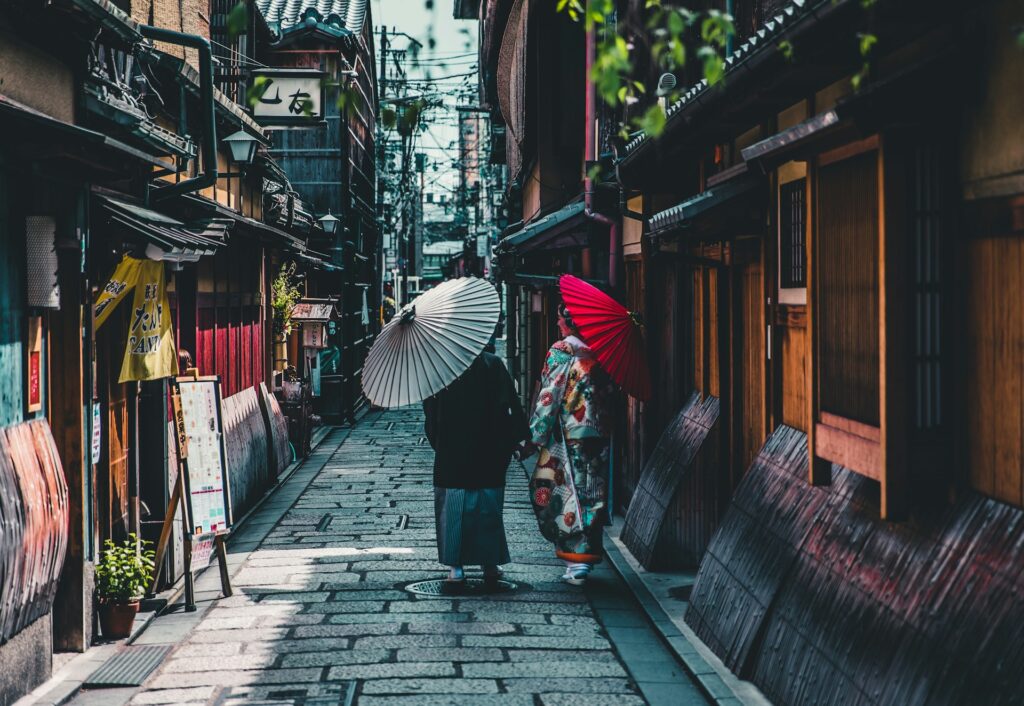
If you cannot wake up at 5:00 AM but still want to see the major daytime sights like Kiyomizu-dera, the Philosopher’s Path, and Ginkaku-ji, you will face Kyoto’s notorious public transit problem. The city buses connecting these eastern (Higashiyama) hotspots are often so packed that they skip stops entirely, leaving tourists stranded and frustrated.
Instead of wasting hours waiting in line for a cramped bus, the smartest investment you can make is booking a walking tour specifically designed to avoid the masses. Local guides know the residential backstreets, hidden staircases, and quiet shortcuts that Google Maps will never show you.
DIY Public Bus vs. Crowd-Free Guided Tour
| Feature | DIY (Public Bus) | Crowd-Free Tour |
|---|---|---|
| Stress Level | High (Navigating crowded stops, standing shoulder-to-shoulder) | Low (Following a guide through quiet backstreets) |
| Time Efficiency | Poor (Frequent delays, waiting for multiple buses) | Excellent (Optimized walking routes, zero wait time) |
| Sightseeing Quality | Basic (Sticking only to the main, crowded arteries) | High (Learning local history, discovering hidden spots) |
Who this is for: Travelers who want to see Kyoto’s biggest highlights comfortably and efficiently, without the physical exhaustion of fighting through daytime crowds and bus queues.
Who this is not for: Budget backpackers who prefer to spend only a few dollars on a daily bus pass, even if it means losing hours to transit.
👉 Check availability for the Kyoto: Crowd-Free Tour of Kiyomizu & Ginkaku-ji Temples
Strategy 3: Explore Kyoto’s Hidden Gems (Place-Shifting)
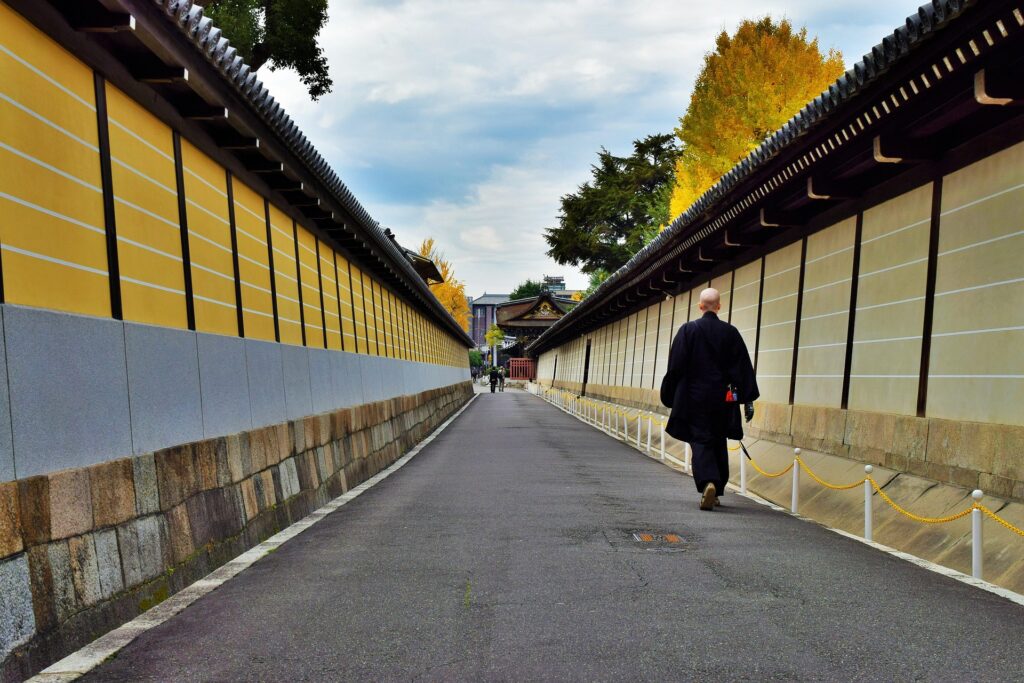
Kyoto has over 1,600 Buddhist temples. You do not need to squeeze into the top three most famous ones to experience authentic Japanese history and Zen architecture. By shifting your focus to slightly less famous, yet equally magnificent locations, you can discover hidden gems in Kyoto and enjoy true serenity.
Kurodani Temple (Konkai Komyoji)
Located on a hill in the eastern part of the city, Konkai Komyoji (often called Kurodani by locals) offers a massive, awe-inspiring wooden gate that rivals the scale of Kiyomizu-dera. Despite its historical significance—it was the headquarters for the Shinsengumi samurai police force in the 1860s—it remains largely off the radar for international tourists. You can stroll its vast grounds, admire the traditional gardens, and enjoy sweeping views of the city below in near total silence.
Daitoku-ji Temple (Zen Gardens Without the Masses)
If your goal is to sit peacefully on a wooden veranda and gaze at a pristine dry landscape (karesansui) rock garden, skip the crowded Ryoan-ji. Instead, head north to Daitoku-ji. This is a large walled complex containing nearly two dozen sub-temples, several of which are open to the public. Temples like Daisen-in and Zuiho-in inside this complex offer world-class Zen gardens with only a fraction of the foot traffic, allowing you the quiet space needed for actual reflection.
Frequently Asked Questions (FAQ)
Is Fushimi Inari safe to visit at night?
Yes, Japan is remarkably safe, and Fushimi Inari remains open and accessible after dark. The main sections of the torii gates are softly illuminated by lanterns. However, the paths are uneven and the mountain can feel quite isolated and dark the higher you climb. If you are prone to tripping or feel uneasy in dark, unfamiliar places, booking a guided night walking tour is highly recommended for peace of mind.
What time does the crowd start arriving at Arashiyama?
Domestic travelers and large tour buses begin arriving at the Arashiyama Bamboo Grove around 7:30 AM to 8:00 AM. By 9:00 AM, the main path is congested. To get clear photos and experience the intended tranquility of the grove, you must plan to be there between 6:00 AM and 7:00 AM.
Do I need to book these guided tours in advance?
Yes. Because “crowd-avoidance” has become the number one priority for visitors to Kyoto, specialized small-group tours (like the night walk at Fushimi Inari or the backstreet Kiyomizu-dera tour) sell out weeks in advance. It is best to secure your spot as soon as your Kyoto dates are confirmed to guarantee a stress-free experience.

Hi, I’m Kai. I’m a Tokyo-based travel writer, tourism industry insider, and the author of a published guidebook for international visitors to Japan. With over 10 years of professional experience at a leading Japanese tourism company, my mission is to help you skip the tourist traps and navigate Japan’s best destinations like a local. I believe the perfect day trip is like a traditional kaiseki meal: a beautiful balance of precise planning and unforgettable seasonal discovery. When I’m not out conducting field research, you’ll usually find me drafting new itineraries with one of my favorite fountain pens!