
If you are planning a trip to Tokyo, you have probably noticed that Harajuku and Shibuya are right next to each other on the map. You might be wondering: Can I just walk between them?
The short answer is yes. In fact, walking from Harajuku to Shibuya is one of the most rewarding half-day itineraries you can do in Tokyo. Instead of taking the crowded train for a single stop, walking allows you to experience the fascinating cultural transition from serene shrines and quirky pop culture to trendy backstreets and the world’s busiest intersection.
At a Glance: Harajuku to Shibuya Walk
- Direct Distance: About 1.5 km (0.9 miles)
- Walking Time (Direct): 20 minutes
- Recommended Time (Sightseeing): 3 to 4 hours
- Best Route: Meiji Shrine → Takeshita Street → Omotesando → Cat Street → MIYASHITA PARK → Shibuya Scramble Crossing
- Difficulty: Easy (Mostly flat or slightly downhill if starting in Harajuku)
Why You Should Walk from Harajuku to Shibuya (Instead of Taking the Train)
Taking the JR Yamanote Line from Harajuku to Shibuya takes only 3 minutes. However, by taking the train, you miss the “in-between” neighborhoods that define Tokyo’s youth and street culture.
The true magic of this area lies in the alleys connecting the main avenues. If you walk, you get to experience a seamless timeline of Tokyo: starting with the traditional tranquility of Meiji Shrine, plunging into the teenage “Kawaii” chaos of Takeshita Street, transitioning into the upscale boulevards of Omotesando, strolling down the pedestrian-friendly Cat Street, and finally arriving at the futuristic neon glow of Shibuya.
The Best Direction: Harajuku First or Shibuya First?

While you can easily walk this route in either direction, starting in Harajuku and ending in Shibuya is highly recommended for two practical reasons:
- The Topography: Tokyo is surprisingly hilly. The walk from Harajuku towards Shibuya via Omotesando and Cat Street is a very gentle downhill slope. It is much easier on your legs, especially after a few days of walking around Japan.
- The Grand Finale: Shibuya is most impressive as the sun goes down. By starting your morning or early afternoon in the peaceful forests of Meiji Shrine in Harajuku, you perfectly time your arrival in Shibuya for dusk. Watching the Shibuya Scramble Crossing light up with neon signs at night is an unforgettable experience.
DIY Walking vs. Guided Local Tour
Because Harajuku and Shibuya are major tourist hubs, navigating the main streets on your own is entirely possible. However, the real charm of this route—specifically the Ura-Harajuku (backstreet Harajuku) area and Cat Street—lies in its hidden boutiques, local street food stalls, and complex maze of narrow pedestrian alleys.
If you just follow Google Maps for the fastest route, it will likely direct you down Meiji-dori (a loud, heavily trafficked main road), causing you to miss the best parts of the walk.
Here is a quick comparison to help you decide how to tackle this route:
| Feature | DIY Self-Guided Walk | Guided Private Tour |
|---|---|---|
| Navigation | Requires constant checking of Google Maps; easy to miss backstreets. | Zero stress. A local guide leads you directly through the best pedestrian paths. |
| Cultural Context | You see the sights, but miss the history behind Tokyo’s street fashion and shrines. | Deep insights into how the area evolved from a quiet village to a global fashion hub. |
| Hidden Gems | Limited to what is already famous on social media. | Access to hidden shrines, vintage shops, and local-only street food spots. |
| Pace | Completely up to you. | Fully customizable (it is a private tour tailored to your walking speed). |
Who is the guided tour for?
If this is your first time in Tokyo, if you want to understand the unique subcultures of these neighborhoods, or if you simply want to put your phone away and enjoy the sights without worrying about getting lost, a private walking tour is highly worth the investment. (If you are still debating the costs versus the benefits, you can read our breakdown on whether an English private tour guide in Tokyo is worth it).
Our Recommendation: The Shibuya & Harajuku: Hidden Gems & Highlights Private Tour offers a fully customizable itinerary. It includes a dedicated local guide to navigate the labyrinth of Cat Street, plus a local food tasting (like authentic Harajuku crepes or Taiyaki) and a drink.
Check Availability for the Shibuya & Harajuku Private Tour →
The Step-by-Step Harajuku to Shibuya Walking Itinerary
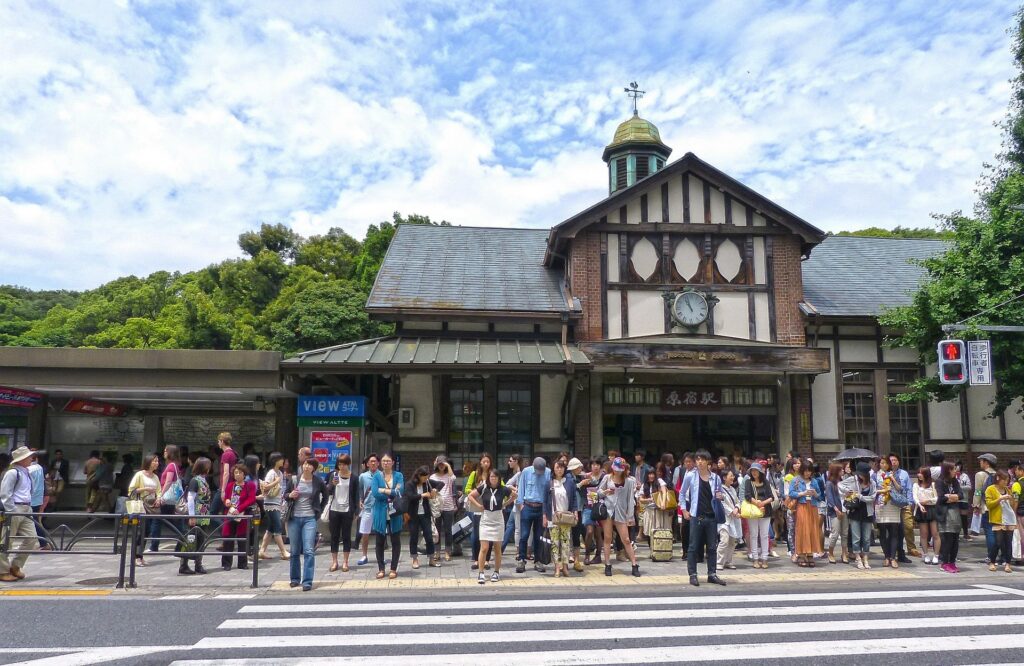
If you decide to tackle this route on your own, here is the most efficient and enjoyable path to take. Plan for this to take about 3 to 4 hours, depending on how much you shop and snack.
Stop 1: Meiji Shrine (Morning Serenity)
Start your day at Harajuku Station (JR Yamanote Line). Right behind the station is the entrance to Meiji Shrine. If you want to know more about the history and etiquette before entering, check out our detailed guide to visiting Meiji Shrine. The shrine grounds are a massive, tranquil forest right in the middle of the city. Walking the wide, gravel path up to the main complex takes about 15 to 20 minutes each way. It is completely free to enter and opens at sunrise, making it the perfect early-morning activity before the city wakes up.
Stop 2: Takeshita Street (Kawaii Culture Hub)
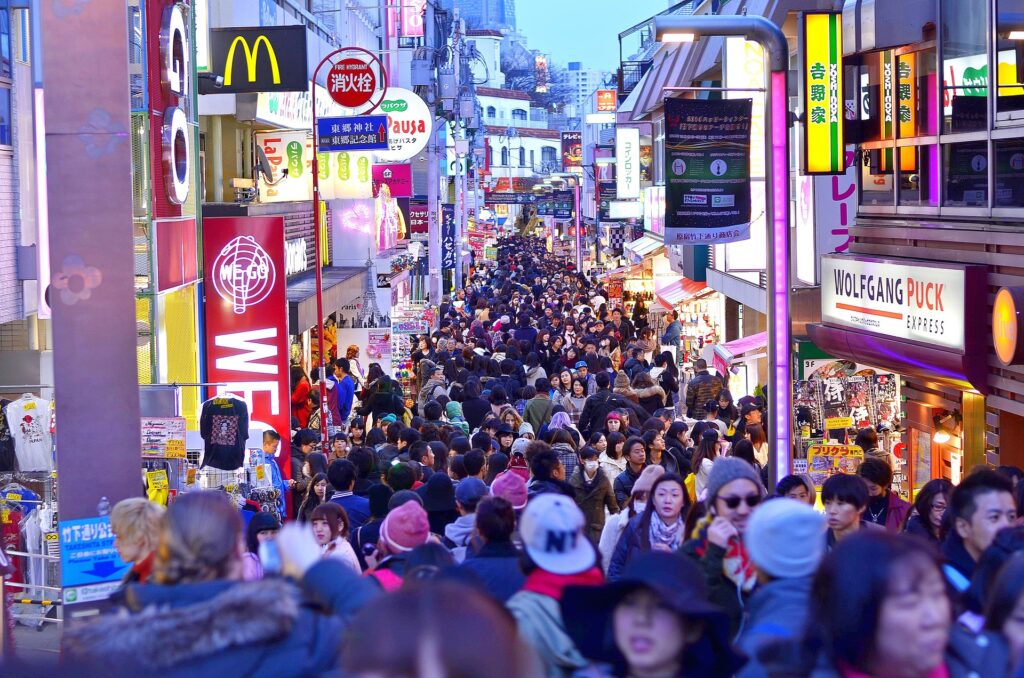
After leaving the quiet forest of Meiji Shrine, cross the street from Harajuku Station and dive into Takeshita Street. This narrow, 400-meter street is the historic epicenter of Japan’s “kawaii” (cute) youth culture. It is packed with colorful boutiques, 100-yen shops, and famous Harajuku crepe stands. Most shops here open between 10:00 AM and 11:00 AM.
Stop 3: Omotesando to Cat Street (The Ultimate Backstreet Stroll)
Walk to the end of Takeshita Street and you will hit the broad, tree-lined avenue of Omotesando, often called Tokyo’s Champs-Élysées. Walk down the gentle hill past the high-end flagship stores. Instead of walking all the way down the busy main road (Meiji-dori) to Shibuya, keep an eye out for the entrance to Cat Street.
Cat Street is a winding, pedestrian-friendly promenade that physically connects Harajuku and Shibuya. Built over an old river, it is lined with trendy cafes, vintage clothing stores, and unique streetwear boutiques. This is the absolute best way to walk between the two neighborhoods without dealing with heavy car traffic.
Stop 4: MIYASHITA PARK (Rest & Rooftop Vibes)
As you emerge from the southern end of Cat Street, you are officially in Shibuya. Your first major landmark will be MIYASHITA PARK, a modern complex with a sprawling rooftop park. This is an excellent place to sit on the grass, rest your legs, and grab a coffee. The complex also has plenty of clean, free public restrooms, and the shops here generally open at 11:00 AM while the rooftop park opens at 8:00 AM.
Stop 5: Shibuya Scramble Crossing (The Grand Finale)
Just a 5-minute walk from MIYASHITA PARK is your final destination: the world-famous Shibuya Scramble Crossing. If you timed your half-day walk right, you should be arriving here in the late afternoon or early evening. The energy shift from the quiet morning at Meiji Shrine to the overwhelming neon lights and thousands of crossing pedestrians is the perfect way to wrap up your itinerary before grabbing dinner or diving into some tax-free shopping with our MEGA Don Quijote Shibuya survival guide.
Is the “Hidden Gems” Private Tour Worth It?
While the step-by-step route above is entirely doable on your own, the maze of Ura-Harajuku (the backstreets) and Cat Street can be confusing. It is very easy to walk right past a historically significant shrine or an incredible local food stand simply because it does not have a big English sign.
Who it is for: The private tour is ideal for travelers who want to maximize their time, families who want a stress-free walk without constantly checking a map, and anyone interested in learning why Harajuku became a fashion capital. The included local food tastings (like authentic taiyaki or crepes) add great value.
Who it is not for: If you are on a strict budget and simply want to window-shop at your own pace without engaging with the cultural history, you might prefer the DIY route.
If you want a seamless, insightful experience, having a local expert guide you through the backstreets transforms a simple walk into one of the best days of your Tokyo trip.
Book the Shibuya & Harajuku Hidden Gems Private Tour →
Essential Tips for Your Walk
- Wear Comfortable Shoes: You will be walking at least 3 to 4 kilometers (2 to 2.5 miles) in total. The path approaching Meiji Shrine is made of loose gravel, so avoid high heels or open-toed sandals.
- Restroom Planning: Public restrooms in Tokyo are generally very clean. The best places to use the restroom on this route are inside Omotesando Hills (midway) and MIYASHITA PARK (near the end).
- Start Time: If you plan to shop, start your Meiji Shrine visit around 9:30 AM. By the time you finish and walk over to Takeshita Street and Cat Street, it will be around 11:00 AM, which is when most local boutiques and cafes open their doors.
Frequently Asked Questions (FAQ)
How long does the walk take?
If you walk directly without stopping, it takes about 20 to 25 minutes. However, as a sightseeing route exploring Meiji Shrine, Takeshita Street, and Cat Street, you should allocate 3 to 4 hours.
Is Cat Street actually full of cats?
No. Despite the name, you will rarely see actual cats here. The street got its nickname in the 1990s, likely because the narrow, winding path resembles a “cat’s forehead” (a Japanese idiom for something small and narrow) or because of stray cats that used to roam the area before it was highly developed.
Is the walk hilly?
If you follow our recommended route starting in Harajuku and walking toward Shibuya, it is mostly flat with a slight, gentle downhill slope toward Shibuya. It is a very easy and accessible walk.
Final Thoughts
Walking from Harajuku to Shibuya is much more than just a way to get from point A to point B. It is a cultural journey through Tokyo’s most dynamic neighborhoods. By skipping the train and taking the backstreets like Cat Street, you get a genuine feel for the city’s unique blend of tradition and hyper-modern youth culture.
Whether you choose to navigate the alleys with your smartphone or enlist the help of a knowledgeable local guide to uncover the area’s secrets, this half-day walking route is a must-do on any Tokyo itinerary.
Explore Tokyo’s Backstreets: Check Tour Availability →

Hi, I’m Kai. I’m a Tokyo-based travel writer, tourism industry insider, and the author of a published guidebook for international visitors to Japan. With over 10 years of professional experience at a leading Japanese tourism company, my mission is to help you skip the tourist traps and navigate Japan’s best destinations like a local. I believe the perfect day trip is like a traditional kaiseki meal: a beautiful balance of precise planning and unforgettable seasonal discovery. When I’m not out conducting field research, you’ll usually find me drafting new itineraries with one of my favorite fountain pens!