
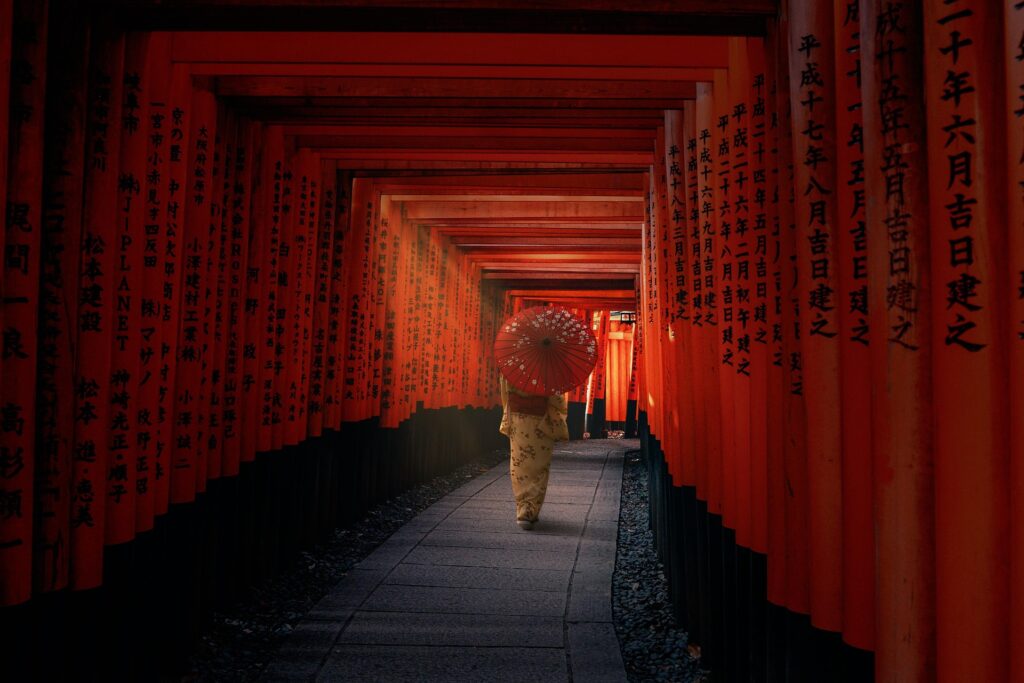
Fushimi Inari Taisha is arguably Kyoto’s most iconic destination, famous for its thousands of vibrant vermilion torii gates winding up the sacred Mount Inari. However, its immense popularity brings overwhelming daytime crowds, and its sheer size often leaves first-time visitors wondering how long the hike actually takes.
This practical guide breaks down the route map, explains realistic time commitments, and explores the best strategies for escaping the crowds—including why a nighttime visit might be your smartest choice.
Quick Answer: Fushimi Inari at a Glance
- Opening Hours: Open 24 hours a day, 365 days a year.
- Admission Fee: Completely free.
- Time Needed: Anywhere from 45 minutes to 3 hours, depending on how far you choose to hike.
- The Crowds: Peak congestion is between 9:00 AM and 4:00 PM. Expect shoulder-to-shoulder traffic in the lower sections.
- Best Time to Visit: Early morning (before 7:00 AM) or after sunset for a mystical, crowd-free experience.
Want to avoid the massive crowds and the daytime heat? If you want to experience the hauntingly beautiful torii gates safely after dark while learning the fascinating history of Shintoism, joining a small-group Kyoto Fushimi-Inari Night Walking Tour is an excellent, time-efficient option.
How Long Does the Fushimi Inari Hike Take? (Route Map Explained)
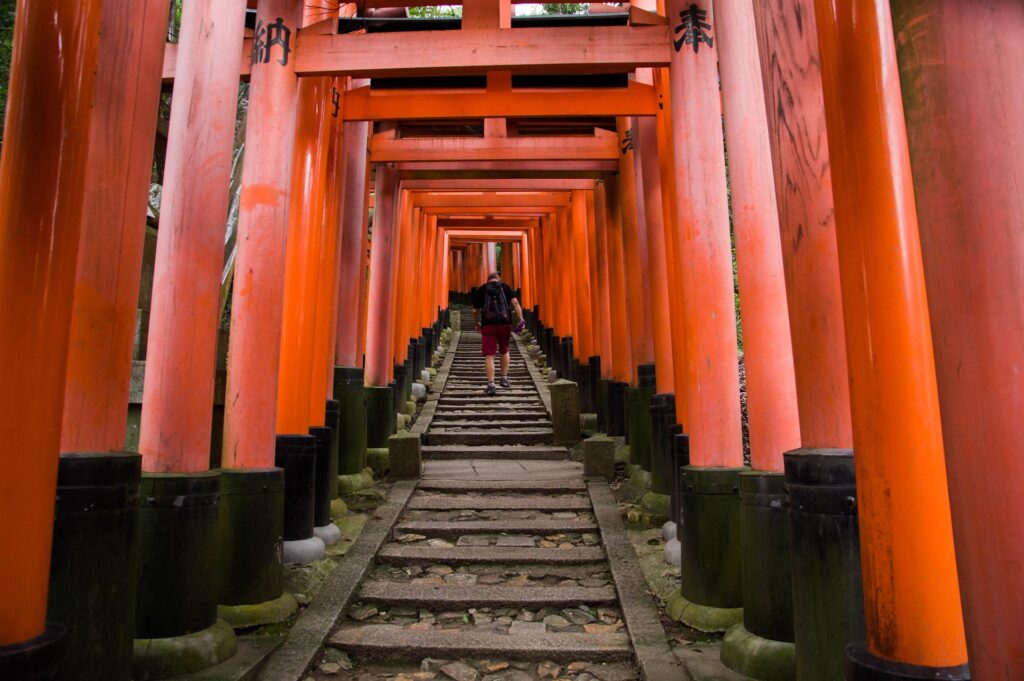
One of the biggest misconceptions about Fushimi Inari is that you must walk the entire trail. Mount Inari is 233 meters tall, and the full looping trail spans about 4 kilometers. The good news is that you can turn back at any point.
Here is a breakdown of the three most common routes based on your time and fitness level:
Level 1: The Main Shrine & Senbon Torii (30-45 Minutes)
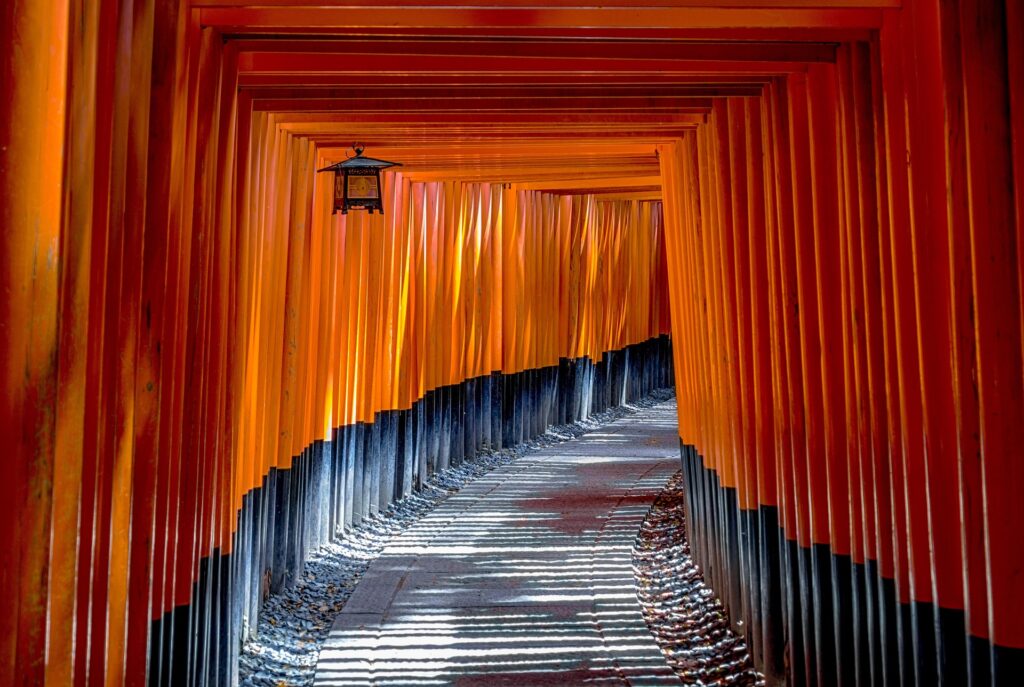
This is the most accessible route, perfect for those short on time or traveling with small children. You will see the massive Romon Gate, the main shrine building, and walk through the famous “Senbon Torii” (thousands of tightly packed, parallel torii gates).
- The Vibe: Flat, highly photogenic, but incredibly crowded during the day.
- Where to turn back: Okusha Worship Precinct (the inner shrine just after the parallel gates).
Level 2: Yotsutsuji Intersection (1.5-2 Hours Round Trip)
If you want a rewarding hike without exhausting yourself, this is the sweet spot. The trail involves quite a few stairs as you ascend the mountain, passing tranquil bamboo groves, smaller fox shrines, and atmospheric stone steps.
- The Vibe: A moderate workout. The crowds thin out significantly the higher you climb.
- The Reward: The Yotsutsuji intersection offers a fantastic panoramic view over Kyoto city. There are also benches to rest. Most visitors make this their turning point.
Level 3: The Full Summit Loop (2.5-3 Hours Round Trip)
For hikers and completists, the trail continues past Yotsutsuji in a circular route to the summit (Ichinominé).
- The Vibe: A serious stair-climbing workout in the forest. The torii gates are spaced further apart here, and the atmosphere feels much more secluded and spiritual.
- Keep in mind: There is no sweeping city view from the actual summit, just a highly revered shrine. Do this for the sense of achievement rather than the view.
Beating the Fushimi Inari Crowds: When to Visit
Because Fushimi Inari is free and never closes, timing is everything. If you arrive at 10:00 AM, you will be caught in a slow-moving river of tourists, making it nearly impossible to capture a clean photograph of the torii gates without dozens of people in the background.
The Reality of Daytime Crowds
The lower section (Level 1) acts as a bottleneck. While the crowds naturally thin out as the stairs get steeper towards Yotsutsuji, the initial experience can feel chaotic and overwhelming, especially during the hot and humid summer months.
Early Morning vs. Nighttime
To get those pristine, empty shots, you have two choices:
- Early Morning (Before 7:00 AM): Excellent for natural lighting and photography. However, it requires waking up extremely early, which can be tough if you have a packed travel itinerary, though making use of jet lag is a great strategy for crossing off the best things to do in Kyoto early in the morning.
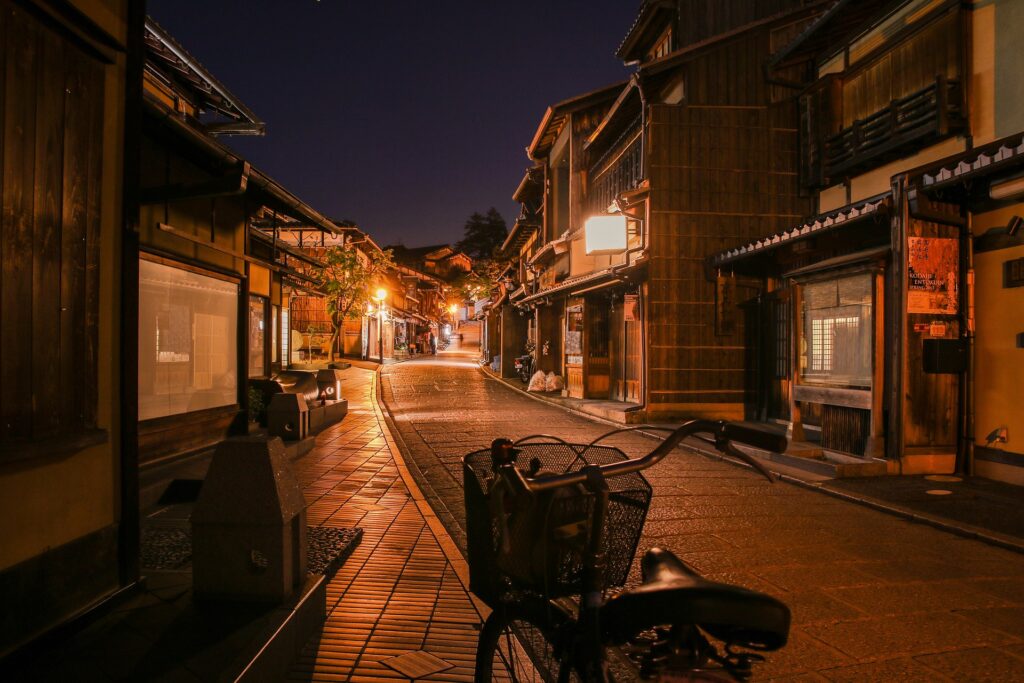
- Nighttime (After Sunset): The ultimate hack for a peaceful experience. The path up to Yotsutsuji is illuminated by lanterns, casting a mystical, slightly eerie glow on the vermilion gates. It is incredibly quiet, much cooler, and offers a completely different perspective of the shrine.
Fushimi Inari at Night: Is It Worth It?
Visiting after dark transforms Fushimi Inari from a bustling tourist trap into a deeply spiritual, tranquil sanctuary. However, before you head up the mountain at night, it is important to weigh your options.
Pros & Cons of a DIY Night Hike
Exploring the shrine on your own at night is entirely possible, but it comes with a few caveats:
- Pros: It is free, completely at your own pace, and you can enjoy the eerie, beautiful silence of the lanterns against the torii gates.
- Cons: The path past Yotsutsuji gets significantly darker. Signage is harder to read, some smaller shrines look genuinely spooky, and there are occasional warnings about wild boars in the area. Furthermore, without a guide, you miss out on the rich Shinto history that makes the gates meaningful.
Why a Guided Night Tour is the Best Choice
If you want the magic of a nighttime visit without the stress of navigating a dark mountain alone, booking a guided tour is highly recommended. You get the perfect balance of safety, cultural insight, and crowd-free photography.
| Feature | DIY Night Hike | Guided Night Tour |
|---|---|---|
| Navigation & Safety | Can be confusing in the dark; wild boar risk. | Stress-free. Guide knows the safest, best-lit routes. |
| Cultural Insight | None (unless you read signs in the dark). | High. Learn about Shintoism, fox deities, and local history. |
| Crowd Level | Low | Low |
| Time Efficiency | Varies (easy to get lost). | Optimized. Usually a focused 1.5 to 2-hour walking route. |
Who is this tour for? Travelers who want stunning, people-free photos of the torii gates, those who want to avoid the exhausting daytime heat, and anyone curious about the deep history of Japanese shrines.
Who is it not for? Strict budget backpackers, or hardcore hikers who want to run the full 3-hour summit loop in the pitch black.
👉 Secure your spot here: Kyoto Fushimi-Inari Night Walking Tour
Practical Tips for Your Visit
How to Get to Fushimi Inari Taisha
Access is incredibly straightforward. You have two main train options:
- JR Nara Line: Take the local train from Kyoto Station to JR Inari Station (about 5 minutes). The shrine entrance is directly across the street. Note: Do not take the Rapid train, as it skips this station!
- Keihan Main Line: Get off at Fushimi-Inari Station. It is a slightly longer walk (about 5 minutes) through a lively street filled with food stalls and souvenir shops. If you are pairing this visit with the bamboo forest, we have a separate guide on the fastest way to get from Fushimi Inari to Arashiyama.
What to Wear & Bring (Toilets, Vending Machines)
Even if you only plan to do Level 1, treat this as a light hike.
- Footwear: Wear comfortable, closed-toe walking shoes. The stone steps can be uneven.
- Hydration: There are vending machines along the trail, but prices increase the higher you climb. Buy water at the base or bring your own bottle.
- Toilets: Public restrooms are available at the base, near the Okusha Worship Precinct, and just before the Yotsutsuji intersection. There are no modern restrooms at the very top.
Frequently Asked Questions (FAQ)
Is Fushimi Inari Taisha free to enter?
Yes. Unlike many temples in Kyoto, Fushimi Inari Taisha does not charge an entrance fee. You can walk the entire mountain completely free of charge.
Do I have to hike all the way to the top?
Not at all. The vast majority of visitors only walk the first 30 to 45 minutes to see the densest concentration of torii gates (Senbon Torii). The Yotsutsuji intersection (about halfway up) is the most popular turning point because it offers a great city view.
Are there toilets and vending machines on the trail?
Yes, there are a few public restrooms, primarily in the lower and middle sections. Vending machines are scattered along the path, though drinks cost more as you go higher up the mountain.
Is it safe to visit Fushimi Inari at night?
Generally, yes. The main paths up to the Yotsutsuji intersection are illuminated by lanterns and are safe to walk. However, it can be quite dark and isolating further up. For the safest and most informative experience, joining a guided night tour is the smartest way to enjoy the shrine after dark.

Hi, I’m Kai. I’m a Tokyo-based travel writer, tourism industry insider, and the author of a published guidebook for international visitors to Japan. With over 10 years of professional experience at a leading Japanese tourism company, my mission is to help you skip the tourist traps and navigate Japan’s best destinations like a local. I believe the perfect day trip is like a traditional kaiseki meal: a beautiful balance of precise planning and unforgettable seasonal discovery. When I’m not out conducting field research, you’ll usually find me drafting new itineraries with one of my favorite fountain pens!