
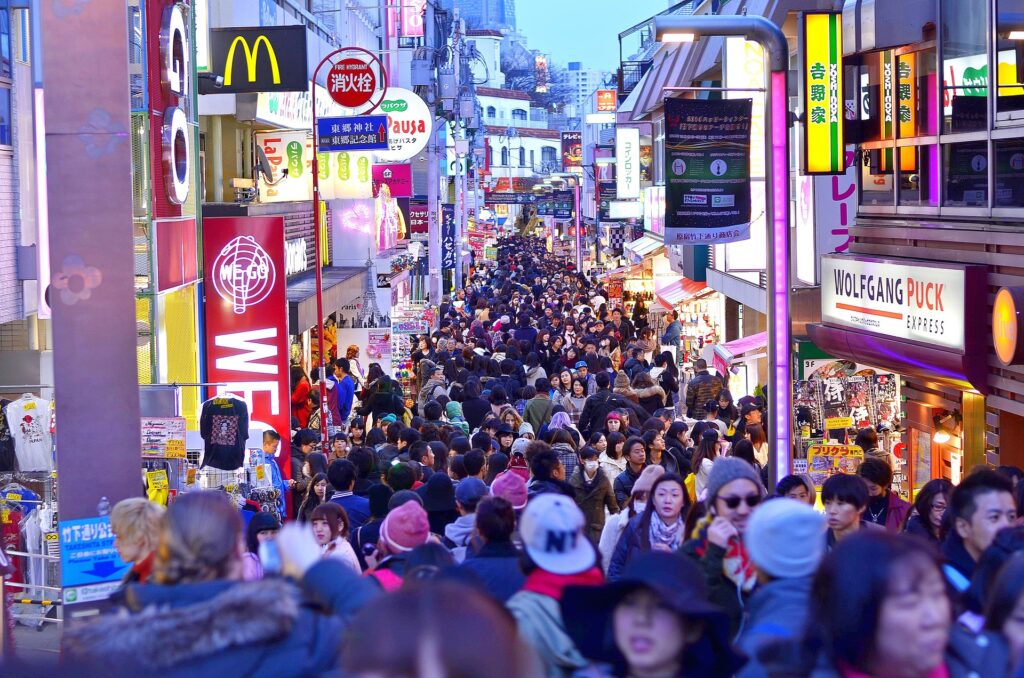
If you are planning a trip to Tokyo, you have probably noticed that Harajuku and Shibuya are right next to each other on the map. So, can you walk from Harajuku to Shibuya instead of taking the train?
Yes. For most visitors, it is one of the best short walks in Tokyo. The direct walk takes about 20 to 25 minutes, but the more rewarding version is a 3 to 4 hour sightseeing route via Meiji Shrine, Takeshita Street, Omotesando, Cat Street, MIYASHITA PARK, and Shibuya Scramble Crossing.
Can You Walk from Harajuku to Shibuya?
Yes. The Harajuku to Shibuya walking route is easy, mostly flat, and much more interesting than taking the JR Yamanote Line for just one stop.
| Question | Quick Answer |
|---|---|
| How far is Harajuku from Shibuya? | About 1.5 km, or roughly 0.9 miles, by the most direct walking route. |
| How long does the walk take? | About 20 to 25 minutes if you walk directly, or 3 to 4 hours as a sightseeing route. |
| What is the best route? | Meiji Shrine → Takeshita Street → Omotesando → Cat Street → MIYASHITA PARK → Shibuya Scramble Crossing. |
| Which direction is better? | Start in Harajuku and finish in Shibuya, especially if you want to reach Shibuya later in the day. |
| Is it difficult? | No. It is an easy urban walk, although Meiji Shrine has gravel paths and Takeshita Street can be crowded. |
The key is not to follow only the fastest main-road route on your map app. The best experience is to walk through Cat Street, a quieter and more stylish backstreet route that connects Harajuku and Shibuya without keeping you beside heavy traffic the whole way.
What Is the Best Harajuku to Shibuya Walking Route?
The best route for most first-time visitors is the Cat Street route. It gives you the clearest transition from traditional Tokyo to youth culture, fashion backstreets, and modern Shibuya.
| Route | Best For | Trade-Off |
|---|---|---|
| Cat Street route | First-time visitors, street fashion, cafes, boutiques, and a more relaxed walk. | Slightly less direct than walking straight down Meiji-dori. |
| Meiji-dori direct route | Getting from Harajuku to Shibuya as quickly as possible. | More traffic, fewer charming backstreets, and less of a sightseeing feel. |
| Omotesando and Aoyama route | Luxury shopping, architecture, and a more polished Tokyo atmosphere. | Longer detour if your main goal is Shibuya Crossing. |
| Train route | Heavy rain, extreme heat, limited mobility, large luggage, or no time for sightseeing. | You miss Cat Street and the gradual neighborhood change between Harajuku and Shibuya. |
For a half-day itinerary, the Cat Street route is the best balance. You can start with the quiet forest around Meiji Shrine, step into the color and crowds of Takeshita Street, pass through Omotesando, wander down Cat Street, rest at MIYASHITA PARK, and finish at Shibuya Scramble Crossing.
Harajuku to Shibuya at a Glance
Before you set out, here is a quick reference for distances, times, and practical details along the route.
| Detail | Information |
|---|---|
| Direct walking distance | About 1.5 km, or roughly 0.9 miles. |
| Sightseeing route distance | Usually around 3 to 4 km once you include Meiji Shrine grounds, shopping streets, and small detours. |
| Direct walking time | About 20 to 25 minutes. |
| Recommended sightseeing time | About 3 to 4 hours at a relaxed pace. |
| Recommended start time | Late morning, around 10:00 to 11:00 AM, for a good balance of shrine time and open shops. |
| Best direction | Harajuku → Shibuya, because the route builds toward the Scramble Crossing finale. |
| IC card needed? | Not for the walk itself, but bring Suica or Pasmo in case you decide to take the train for any segment. |
Meiji Shrine Opening Hours: Check Before a Late Visit
Meiji Shrine is free to enter and is generally open every day. The shrine opens around sunrise and closes around sunset, so the exact hours change by month. As of June 2026, the official Meiji Jingu opening hours are listed as follows.
| Month | Opens | Closes |
|---|---|---|
| January | 6:40 AM | 4:20 PM |
| February | 6:20 AM | 4:50 PM |
| March | 5:40 AM | 5:20 PM |
| April | 5:10 AM | 5:50 PM |
| May | 5:00 AM | 6:10 PM |
| June | 5:00 AM | 6:30 PM |
| July | 5:00 AM | 6:20 PM |
| August | 5:00 AM | 6:00 PM |
| September | 5:20 AM | 5:20 PM |
| October | 5:40 AM | 4:40 PM |
| November | 6:10 AM | 4:10 PM |
| December | 6:40 AM | 4:00 PM |
Indoor facilities within the shrine grounds, such as the Meiji Jingu Museum and the Inner Garden, have separate hours, closing days, and fees. If you are visiting late in the day or planning to add paid facilities, check the official Meiji Jingu opening hours before you go.
Should You Start in Harajuku or Shibuya?

You can walk this route in either direction, but starting in Harajuku and ending in Shibuya is the better choice for most travelers.
First, the route has a better sense of progression. Harajuku gives you Meiji Shrine, Takeshita Street, and Omotesando at the beginning, while Shibuya gives you the bigger city finale: MIYASHITA PARK, the Scramble Crossing, neon signs, department stores, and dinner options.
Second, walking from Harajuku toward Shibuya via Omotesando and Cat Street often feels more natural because you are moving from a shrine and shopping-street area into a larger city center. It is still an easy walk either way, but this direction works especially well if you want to end your route with Shibuya’s evening energy.
If you can, start around late morning. That gives you time for Meiji Shrine before the shopping streets become too busy, while still bringing you into Shibuya later in the day when the area feels more energetic.
DIY Walk vs Guided Tour: Which Is Better?
This is an easy route to do independently. You do not need a guide just to get from Harajuku to Shibuya. However, a guide can be useful if you want local context, a smoother route through the backstreets, or help finding food stops and smaller shops that are easy to miss.
| Decision Point | DIY Self-Guided Walk | Guided Private Tour |
|---|---|---|
| Best for | Travelers who like flexible shopping, slow wandering, and using map apps. | Travelers who want local context, less navigation stress, and a planned route. |
| Cost | Free, apart from food, shopping, and any optional paid attractions. | Paid tour, with price and inclusions depending on the current tour listing. |
| Navigation risk | Low, but you may accidentally end up on busier roads instead of Cat Street. | Lower, because the guide can keep you on the more interesting pedestrian-friendly route. |
| Flexibility | Highest. You can shop, snack, skip stops, or change direction at any time. | Usually flexible, especially for private tours, but you still follow an agreed route. |
| Local context | You will understand less unless you research the area in advance. | Better for learning how Harajuku, Omotesando, Cat Street, and Shibuya developed. |
| Booking required | No booking needed. | Advance booking recommended, especially during busy travel seasons. |
If this is your first time in Tokyo, a private walking tour can make sense because the most interesting parts of this area are not always the most obvious ones. A local guide can take you through the backstreets of Ura-Harajuku and Cat Street while explaining the culture and history behind the neighborhoods. If you are still comparing the value of hiring a guide, read our breakdown of whether an English private tour guide in Tokyo is worth it.
Verdict: Do the walk yourself if you enjoy independent exploring. Consider a guided option if you want the route to feel more like a local-led introduction to Harajuku, Cat Street, and Shibuya rather than just a transfer between two stations.
If your travel dates are already fixed, check the latest availability, start times, cancellation terms, and what is included before finalizing the rest of your day. Compare current options for a Shibuya and Harajuku private walking tour →
Step-by-Step Harajuku to Shibuya Walking Itinerary
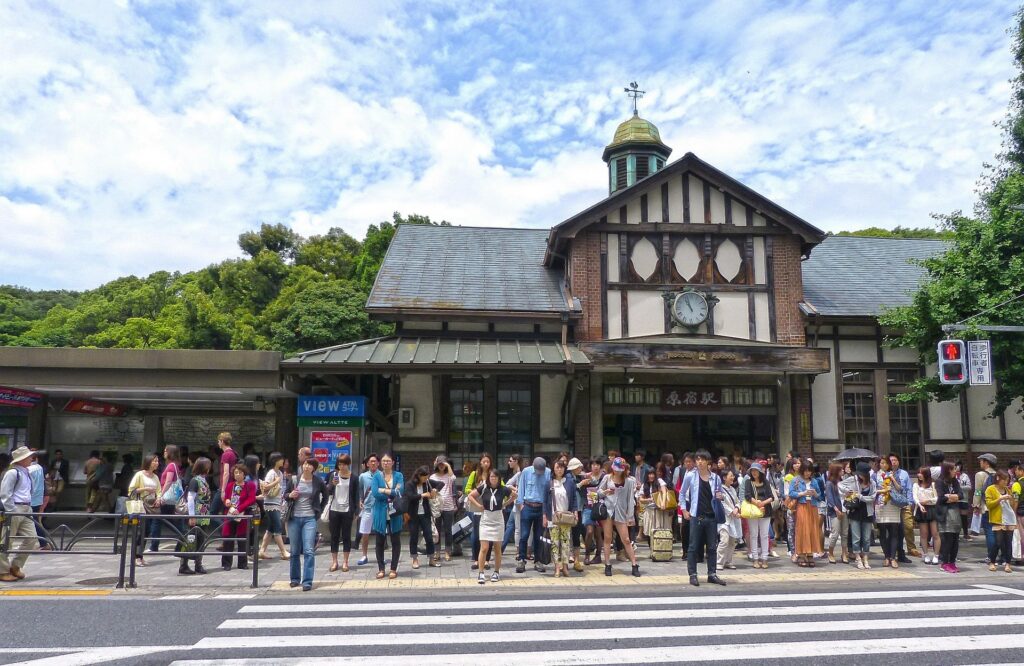
This version of the Harajuku to Shibuya walking route is designed as a half-day itinerary rather than a direct transfer. Plan around 3 to 4 hours if you want to visit Meiji Shrine, walk through Takeshita Street, explore Cat Street, and arrive in Shibuya without rushing.
Stop 1: Meiji Shrine
Suggested time: 45 to 60 minutes for the main shrine visit, or closer to 2 hours if you also want to visit the Inner Garden and Meiji Jingu Museum.
Start at Harajuku Station on the JR Yamanote Line. The entrance to Meiji Shrine is just beside the station, making it the easiest and calmest place to begin the walk.
Meiji Shrine is surrounded by a large forest, so it feels completely different from the shopping streets you will visit later. The walk from the entrance torii gate to the main shrine buildings takes time, so do not treat it as a quick five-minute stop. Allow around 45 to 60 minutes if you want to walk in, visit the main shrine area, and return toward Harajuku Station without rushing.
The main shrine grounds are free to enter, but opening and closing times vary by month because the shrine generally opens around sunrise and closes around sunset. For more history, etiquette, and route details, read our detailed guide to visiting Meiji Shrine.
Practical note: The main approach to Meiji Shrine is a wide gravel path. Comfortable shoes are strongly recommended, and travelers with strollers or mobility needs should allow extra time.
Stop 2: Takeshita Street
Suggested time: 20 to 40 minutes, depending on crowds and shopping stops.
After leaving Meiji Shrine, cross back toward Harajuku Station and enter Takeshita Street. This narrow street is one of the most famous places in Tokyo for youth fashion, character goods, colorful snacks, and Harajuku crepes.
Takeshita Street is only about 400 meters long, but it can take much longer than expected because of crowds. Most shops tend to open around late morning, often from about 10:00 or 11:00 AM, but hours vary by store. If there is a specific cafe, crepe stand, or character shop you care about, check its current hours before you go.
Crowd warning: Weekends, school holidays, and mid-afternoon are usually the busiest times. If you prefer a calmer visit, aim for late morning soon after shops begin opening. If you dislike crowds entirely, consider spending less time on Takeshita Street and exploring the quieter side streets around Ura-Harajuku instead.
Stop 3: Omotesando to Cat Street
Suggested time: 30 to 60 minutes, depending on cafes, photos, and shopping.
At the end of Takeshita Street, continue toward Omotesando, the broad tree-lined avenue often compared with a luxury shopping boulevard. This is where the atmosphere changes again: Harajuku’s youthful energy gives way to flagship stores, polished architecture, and a more grown-up shopping scene.
How to find Cat Street: From Omotesando, do not simply follow the main road, Meiji-dori, straight toward Shibuya. Instead, look for the smaller side streets that lead toward Cat Street, which runs roughly parallel to Meiji-dori on the Shibuya side. A useful landmark is the Kiddy Land toy store on Omotesando; the smaller streets nearby can help you angle into the Cat Street area. Use your map app for the final turn, because the backstreets can be slightly confusing the first time.
Cat Street is the most enjoyable way to walk between Harajuku and Shibuya because it is calmer, more pedestrian-friendly, and lined with independent boutiques, vintage shops, streetwear stores, cafes, and small galleries. Despite the name, Cat Street is not a street full of cats. It is a nickname for a winding backstreet route that has become one of the most popular fashion and cafe areas between Harajuku and Shibuya.
This is the section where it is easiest to slow down. Even if you are not shopping, Cat Street is worth taking for the atmosphere alone. It gives the walk its strongest sense of discovery and helps you avoid spending the whole route beside traffic.
Stop 4: MIYASHITA PARK and RAYARD MIYASHITA PARK
Suggested time: 15 to 30 minutes for a quick rest, longer if you stop for food or shopping.
As you leave the southern end of Cat Street, you are already entering Shibuya. One of the easiest places to pause before the final stretch is MIYASHITA PARK, a modern complex near Shibuya Station with a rooftop park, shopping, dining, and public facilities.
It is useful to separate the names here. The rooftop public park is Shibuya Ward Miyashita Park, while the shopping and dining complex is RAYARD MIYASHITA PARK. As of June 2026, the rooftop park is generally open from 8:00 AM to 11:00 PM, while shops and restaurants in RAYARD MIYASHITA PARK usually keep separate hours and some stores vary. If you are planning a specific meal, store visit, or late-night stop, check the official RAYARD MIYASHITA PARK information before you go.
This is a useful rest stop because it gives you cafes, shops, restrooms, and places to sit before you continue to the busiest part of Shibuya. It is especially helpful on hot, rainy, or crowded days, when you may want a break from walking outdoors. From here, the final part of the route is short and easy.
Stop 5: Shibuya Scramble Crossing
Suggested time: 15 minutes for a quick look, or longer if you want photos, shopping, or dinner nearby.
From MIYASHITA PARK, walk toward Shibuya Station and the famous Shibuya Scramble Crossing. This is the natural finale for the route, especially if you arrive in the late afternoon or early evening when the lights, screens, and crowds make the area feel more dramatic.
The contrast is what makes this walk memorable. In a few hours, you move from the quiet forest paths of Meiji Shrine to Takeshita Street, Cat Street, and finally one of Tokyo’s most famous city scenes.
After crossing the Scramble, you can continue with dinner, shopping, or a Shibuya night walk. If you plan to stop at Don Quijote, read our MEGA Don Quijote Shibuya survival guide before you go.
Sample Walking Schedule
Not sure how to fit this walk into your day? Here are two sample schedules based on different start times. Use them as flexible models rather than fixed timetables.
Late Morning Start: Recommended
| Approx. Time | Activity |
|---|---|
| 10:00 – 10:50 | Meiji Shrine — Visit the main shrine grounds while it is still relatively calm. |
| 10:50 – 11:20 | Takeshita Street — Browse shops and grab a snack as more stores open. |
| 11:20 – 12:10 | Omotesando and Cat Street — Stroll through the backstreets at a relaxed pace. |
| 12:10 – 12:30 | MIYASHITA PARK — Take a short rest stop or rooftop break. |
| 12:30 onward | Shibuya Scramble Crossing — Arrive, explore, and find lunch in Shibuya. |
Afternoon Start: Shorter Option
| Approx. Time | Activity |
|---|---|
| 1:00 – 1:30 | Meiji Shrine — Make a quicker visit to the main shrine area. |
| 1:30 – 2:00 | Takeshita Street — Expect more crowds, but many shops are likely to be open. |
| 2:00 – 2:40 | Cat Street — Walk through at a steady pace. |
| 2:40 – 3:00 | MIYASHITA PARK or direct to Shibuya — Skip the park if you are short on time. |
| 3:00 onward | Shibuya — Explore the crossing and surrounding area. |
Both schedules can be stretched or shortened depending on how much time you spend shopping, taking photos, or stopping for food.
What to Know Before You Go
- Wear comfortable shoes: Even though the direct walk is short, the sightseeing version can easily become 3 to 4 km once you include Meiji Shrine, shopping streets, and detours. The Meiji Shrine approach also has gravel paths.
- Start late morning for the best balance: This lets you visit Meiji Shrine before the busiest shopping period, then reach Takeshita Street and Cat Street when more shops and cafes are open.
- Expect crowds on Takeshita Street: Weekends, holidays, and mid-afternoon are usually the busiest times. If you dislike crowds, pass through earlier or use the surrounding side streets as a calmer alternative.
- Have a rainy-day backup: Cat Street is still walkable in light rain, but in heavy rain you may prefer to shorten the route, use Omotesando or MIYASHITA PARK for indoor breaks, or take the train for the final stretch.
- Plan restroom stops: Good places to pause include larger shopping complexes around Omotesando and MIYASHITA PARK near the Shibuya end of the route.
- Check Meiji Shrine hours before a late start: The shrine’s opening and closing times vary by month, so do not leave it until evening without checking current hours.
- Travel light if possible: This route is much easier without large luggage. Takeshita Street and Shibuya can be very crowded, and gravel paths around Meiji Shrine are not ideal for rolling suitcases.
- Carry cash as a backup: Many places accept cards or digital payments, but small food stands, older shops, or temporary stalls may vary.
- Bring an IC card: You will not need Suica or Pasmo for the walk itself, but it is useful if you decide to take the train for any segment of the route.
Frequently Asked Questions
How long does the walk from Harajuku to Shibuya take?
The direct walk takes about 20 to 25 minutes. If you follow this sightseeing route with Meiji Shrine, Takeshita Street, Cat Street, MIYASHITA PARK, and Shibuya Scramble Crossing, allow about 3 to 4 hours.
Is Cat Street actually full of cats?
No. You should not expect to see cats along the route. Cat Street is a nickname for the winding backstreet area between Harajuku and Shibuya, now known for cafes, fashion boutiques, vintage shops, and a more relaxed walking atmosphere.
How do I find Cat Street from Omotesando?
Cat Street runs roughly parallel to Meiji-dori on the Shibuya side. From Omotesando, look for smaller side streets around the Kiddy Land area and use your map app to angle toward the quieter backstreet route. Once you are on narrower pedestrian-friendly lanes heading toward Shibuya, you are in the right area.
Is the Harajuku to Shibuya walk hilly?
It is an easy urban walk. Starting in Harajuku and walking toward Shibuya feels mostly flat for many visitors, with the main challenge being crowds rather than hills. Takeshita Street and Shibuya can be busy, and Meiji Shrine has gravel paths.
Is this route good on a rainy day?
It depends on the rain. In light rain, the route is still enjoyable with an umbrella because Cat Street, Omotesando, and Shibuya all have plenty of shops and cafes where you can pause. In heavy rain, consider shortening the walk, spending more time indoors around Omotesando or MIYASHITA PARK, or taking the train between Harajuku and Shibuya.
Can you walk from Shibuya to Harajuku instead?
Yes. The route works in both directions. Walking from Shibuya to Harajuku is useful if you are starting your day in Shibuya or want to finish near Meiji Shrine and Yoyogi Park. For most first-time visitors, though, Harajuku to Shibuya has the better finale because you end at the Scramble Crossing.
Is the route stroller-friendly?
Parts of the route are stroller-friendly, especially Omotesando, Cat Street, and MIYASHITA PARK. Meiji Shrine has wide paths but they are gravel, so it can be less smooth with a stroller. Takeshita Street can also be difficult when crowded.
Do you need to book anything for this walking route?
No booking is needed for the DIY route. You can walk from Harajuku to Shibuya at any time of day, although individual shops, cafes, Meiji Shrine, and MIYASHITA PARK facilities have their own hours. A guided tour should be booked in advance.
Check current availability for the Shibuya and Harajuku private walking tour →
Final Verdict
The best Harajuku to Shibuya walking route is not the fastest road between the two stations. It is the Cat Street route, with enough time to enjoy Meiji Shrine, Takeshita Street, Omotesando, MIYASHITA PARK, and Shibuya Scramble Crossing along the way.
Choose this route if:
- You are a first-time visitor who wants to experience quiet Tokyo, youth culture, fashion backstreets, and Shibuya city energy in one walk.
- You have at least 3 hours for a relaxed sightseeing pace.
- You enjoy neighborhood walks where the scenery changes every few blocks.
Choose a different option if:
- You only need to get from Harajuku to Shibuya as quickly as possible. In that case, take the direct Meiji-dori route or the JR Yamanote Line.
- You are traveling with very limited mobility or heavy luggage. The train or a shorter route may be easier.
- You prefer luxury shopping and architecture. The Omotesando and Aoyama route may suit you better.
For families: Omotesando, Cat Street, and MIYASHITA PARK work well with a stroller. Meiji Shrine’s gravel paths require a bit more effort, and Takeshita Street can be challenging in peak hours. Plan rest stops at MIYASHITA PARK.
For first-time visitors: This route is a perfect introduction to Tokyo’s neighborhood contrasts. Start late morning, take the Cat Street route, and give yourself time to wander rather than rushing to the next stop.
For travelers on a tight schedule: The direct walk takes just 20 to 25 minutes. If you have a free hour, you can still fit in a quick taste of Cat Street before heading into Shibuya.
Prices, opening hours, transport schedules, store operations, tour inclusions, payment methods, and seasonal conditions can change. Always check official sources and your selected booking page before finalizing your trip.

Hi, I’m Kai. I’m a Tokyo-based travel writer, tourism industry insider, and the author of a published guidebook for international visitors to Japan. With over 10 years of professional experience at a leading Japanese tourism company, my mission is to help you skip the tourist traps and navigate Japan’s best destinations like a local. I believe the perfect day trip is like a traditional kaiseki meal: a beautiful balance of precise planning and unforgettable seasonal discovery. When I’m not out conducting field research, you’ll usually find me drafting new itineraries with one of my favorite fountain pens!