
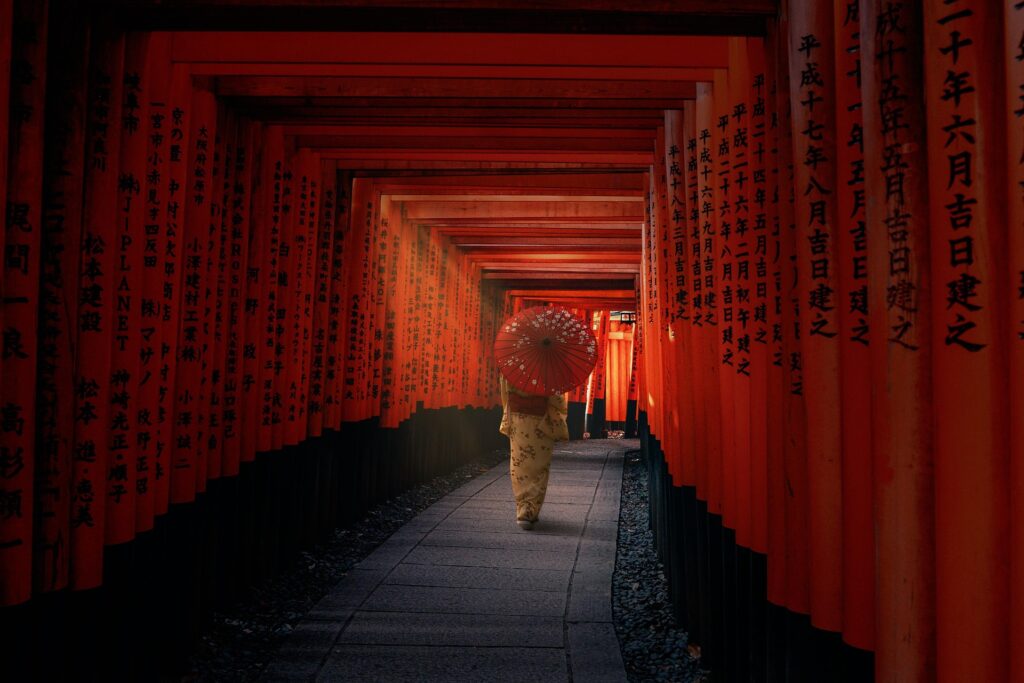
Fushimi Inari Taisha is one of Kyoto’s busiest and most photographed sights, famous for its thousands of vermilion torii gates climbing the sacred slopes of Mount Inari. The shrine grounds have no closing gate, admission is free, and you can visit at any hour.
But knowing when to go and how far to hike can make the difference between a magical experience and a crowded disappointment. This guide breaks down the main route options, realistic hiking times, crowd patterns, night visit safety, and whether a guided night tour is worth it.
Fushimi Inari at a Glance
- Opening Hours: The shrine grounds are accessible 24 hours a day. Prayer services, amulet counters, shops, and food stalls operate mainly during daytime hours.
- Admission Fee: Free. No ticket or reservation is required to enter the shrine grounds.
- Time Needed: Around 30–45 minutes for the main gates, 1.5–2 hours to Yotsutsuji, or 2.5–3 hours for the full summit loop.
- Best Short Visit: Main shrine and Senbon Torii.
- Best Balanced Route: Yotsutsuji intersection for gates, atmosphere, and a Kyoto city view.
- Best Time to Visit: Early morning for natural light and fewer people, or after sunset for a quieter lantern-lit atmosphere.
- Nearest Stations: JR Inari Station or Keihan Fushimi-Inari Station.
How Long Does the Fushimi Inari Hike Take?
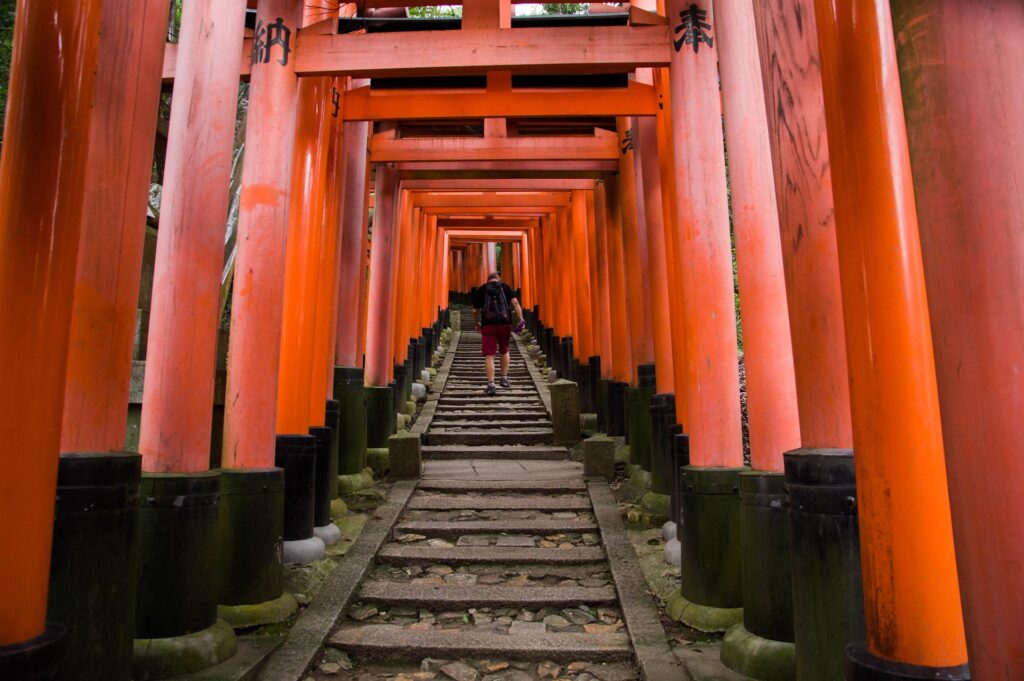
Mount Inari is 233 meters tall, and the full mountain route is roughly 4 kilometers. You do not need to hike the whole trail to enjoy the shrine. Most visitors choose one of three route levels depending on time, fitness, weather, and crowd tolerance.
Level 1: Main Shrine & Senbon Torii — 30–45 Minutes
This is the easiest and most popular route. It works well if you are short on time, traveling with young children or a stroller, or mainly want to see the iconic torii gates without doing a full hike.
- The Route: Enter through the Romon Gate, visit the main shrine area, then walk through the famous Senbon Torii gate tunnels.
- Terrain: Mostly flat at first, with gentle slopes and steps near the inner shrine area.
- Turning Point: Okusha Worship Precinct, just after the densest section of parallel torii gates.
- Best For: First-time visitors, families, quick itineraries, and anyone who wants the classic photos without committing to a longer climb.
- Drawback: This lower section is the most crowded part of Fushimi Inari during the day.
Level 2: Yotsutsuji Intersection — 1.5–2 Hours Round Trip
This is the sweet spot for most visitors. You get the famous gate experience, a real sense of climbing Mount Inari, smaller shrines, quieter forest sections, and a view over Kyoto without committing to the full summit loop.
- The Route: Continue past Okusha and climb through stone steps, smaller shrines, lanterns, and forested paths toward Yotsutsuji.
- Terrain: Moderate. There are many stairs, but you can rest along the way.
- Turning Point: Yotsutsuji intersection, a popular rest point with a city view.
- Best For: Most first-time visitors, casual hikers, photographers, and travelers who want fewer crowds.
- Why Choose This: The crowds thin noticeably as you climb, and the experience feels much more atmospheric than the lower gate tunnels alone.
Level 3: Full Summit Loop — 2.5–3 Hours Round Trip
For hikers and completists, the trail continues beyond Yotsutsuji in a loop toward the summit area, Ichinominé. This route is quieter and more physically demanding.
- The Route: Continue around the upper mountain loop through more widely spaced torii gates, forest paths, and smaller shrine areas.
- Terrain: Strenuous compared with the lower sections. Expect many stairs and fewer casual visitors.
- Keep in Mind: The best city view is at Yotsutsuji, not the summit itself. Do the full loop for the atmosphere and sense of achievement rather than a dramatic viewpoint.
- Best For: Hikers, repeat visitors, and travelers who want a quieter spiritual walk.
Route Comparison: Which Level Should You Choose?
| Route | Time | Difficulty | Best For | Crowds | Photo Potential |
|---|---|---|---|---|---|
| Level 1: Main Shrine & Senbon Torii | 30–45 min | Easy | Short visits, families, first-time photos | Very crowded in daytime | High, but people-free shots are hard |
| Level 2: Yotsutsuji | 1.5–2 hr | Moderate | Most visitors, casual hikers, photographers | Moderate; thins as you climb | Excellent: gates plus city view |
| Level 3: Full Summit Loop | 2.5–3 hr | Strenuous | Hikers, completists, solitude seekers | Low outside peak periods | Atmospheric, but less iconic than lower gates |
Most first-time visitors should aim for Level 2. If you feel tired, crowded, or short on time, you can turn back earlier without missing the essence of Fushimi Inari.
Best Time to Visit Fushimi Inari: Early Morning vs Night vs Daytime
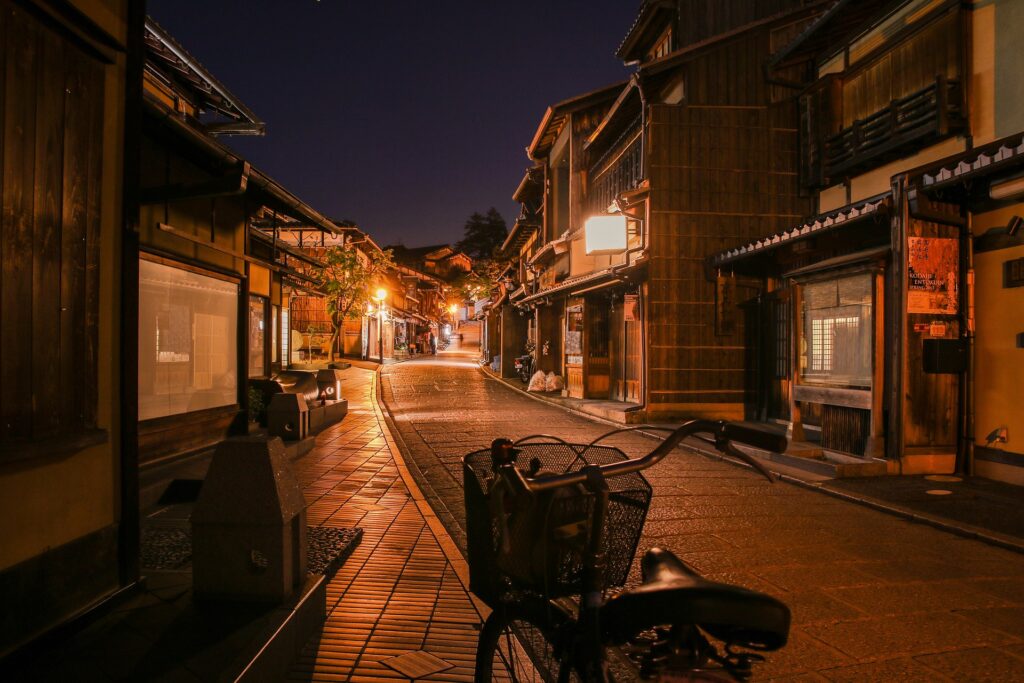
Because Fushimi Inari is free and accessible at any hour, timing matters more here than at almost any other major Kyoto sight. The lower Senbon Torii section can become extremely congested from mid-morning through the afternoon, especially on weekends, holidays, and cherry blossom or autumn foliage periods.
| Factor | Early Morning | Nighttime | Daytime |
|---|---|---|---|
| Crowds | Usually very low | Usually low after the main day crowds leave | High, especially in the lower section |
| Photography | Best natural light and empty paths | Dramatic lantern-lit atmosphere | Difficult to avoid people in photos |
| Safety | Best visibility | Main paths are manageable, but darker and quieter | Busy and easy to navigate |
| Atmosphere | Peaceful and fresh | Quiet, mysterious, and spiritual | Lively but often crowded |
| Temperature | Cooler, especially useful in summer | Cooler, but can feel isolated in winter | Hot and humid in summer |
| Facilities | Some shops may not be open yet | Most shops and stalls are closed | Best access to food stalls and shops |
Choose Early Morning If…
- You want the best chance of people-free photos in natural light.
- You are already awake early because of jet lag.
- You want cooler hiking conditions in summer.
- You prefer daylight visibility for the stairs and forest path.
Early morning also pairs well with other quiet starts in Kyoto. For more ideas, see our guide to things to do in Kyoto early in the morning.
Choose Nighttime If…
- You want a completely different atmosphere from daytime Fushimi Inari.
- You are mainly interested in lantern-lit gates and a quieter shrine experience.
- You want to avoid daytime heat and crowds.
- You are comfortable walking in dimmer conditions or prefer going with a guide.
Visit During the Day If…
- Your schedule leaves no other option.
- You want food stalls, shops, and a lively approach street.
- You are visiting with young children and prefer daylight.
- You only plan to do the lower shrine area and Senbon Torii.
If your travel dates are fixed and you want to experience Fushimi Inari after dark with a local guide who can help with navigation and explain the history of Shintoism, fox deities, and the meaning behind the gates, check the latest availability, start times, inclusions, and reviews for the Kyoto Fushimi-Inari Night Walking Tour here.
Visiting Fushimi Inari at Night: Is It Worth It?
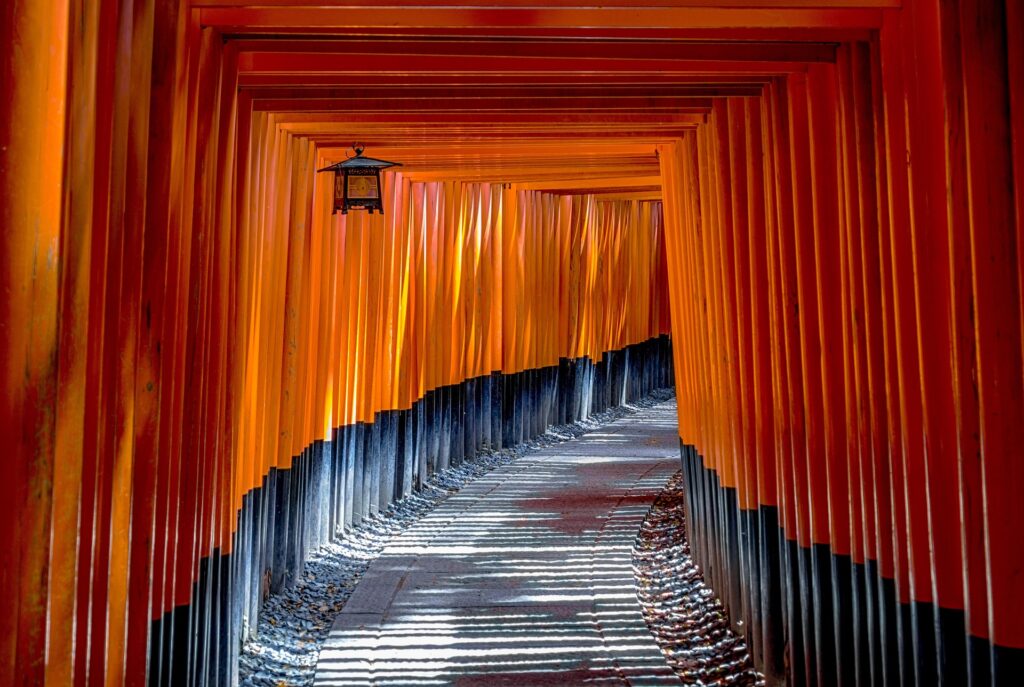
Yes, Fushimi Inari can be very rewarding at night, especially if you want a quieter and more atmospheric visit. The crowds drop, the torii gates glow under lantern light, and the forested mountain feels much more spiritual than it does during peak daytime hours.
However, a night visit is not the same as a daytime visit with fewer people. The path is darker, some areas feel isolated, signs are harder to read, and shops are usually closed. Treat it as a light night hike, not just a casual photo stop.
DIY Night Hike: Pros
- Free and self-paced.
- Far fewer people than daytime.
- Cooler temperatures in warmer months.
- Beautiful lantern-lit atmosphere around the gates and shrines.
DIY Night Hike: Cons & Safety Notes
- The trail becomes darker and quieter as you climb higher.
- Signage is harder to follow at night, especially above the lower shrine area.
- Stone steps can be slippery after rain.
- Wild animals can appear in forested areas, so do not approach or feed animals.
- Most food stalls and shops will be closed, so eat beforehand or bring water and a small snack.
Night Safety Tips
- Stay on the main route and avoid side trails or shortcuts.
- Consider turning back at Yotsutsuji rather than continuing into darker upper sections.
- Bring a small flashlight or headlamp; do not rely only on your phone battery.
- If you see a wild boar or other wild animal, do not run, approach, feed it, or try to take a close photo. Move away slowly and calmly.
- Wear proper walking shoes, especially after rain.
- Let someone know your plan if you are visiting alone at night.
DIY Night Hike vs Guided Night Tour
| Factor | DIY Night Hike | Guided Night Tour |
|---|---|---|
| Cost | Free | Paid; price varies by date and platform |
| Navigation | You handle the route yourself | Guide leads a planned route |
| Safety Support | No support if you feel uncomfortable | Group setting can reduce navigation stress |
| Cultural Context | Limited unless you research beforehand | Learn about Shintoism, Inari, fox statues, and torii gate symbolism |
| Photography | You find your own spots and settings | Guide may help identify good photo locations and timing |
| Flexibility | Fully flexible | Fixed meeting time and route |
| Best For | Budget travelers and confident walkers | Solo travelers, culture-focused visitors, and anyone nervous about walking after dark |
Who Should Consider a Guided Night Tour?
- Solo travelers who do not want to walk the mountain paths alone after dark.
- Visitors who want the atmosphere of Fushimi Inari at night but prefer a planned route.
- Travelers interested in the meaning behind the torii gates, fox statues, and shrine rituals.
- Photography-focused visitors who want quieter timing without figuring everything out alone.
- Anyone visiting Kyoto in summer who wants to avoid daytime heat.
Who Should Skip the Guided Tour?
- Strict budget travelers who are comfortable visiting independently.
- Hardcore hikers who want to complete the full summit loop at their own pace.
- Travelers who prefer total solitude and do not need cultural explanation.
A guided tour does not remove every risk of walking after dark, but it can reduce navigation stress and add useful cultural context. If that fits your travel style, compare the latest start times, inclusions, cancellation policy, and reviews for the Kyoto Fushimi-Inari Night Walking Tour here.
How to Get to Fushimi Inari Taisha
Access is simple from central Kyoto, and the train is usually the easiest option.
By JR Train
- Take the JR Nara Line from Kyoto Station to Inari Station.
- The ride takes around 5 minutes.
- The shrine entrance is directly across from JR Inari Station.
- As of the March 2026 timetable revision, rapid services also stop at Inari Station, but always check the platform display before boarding.
By Keihan Train
- Take the Keihan Main Line to Fushimi-Inari Station.
- The shrine is about a 5-minute walk from the station.
- This is often convenient if you are coming from Gion, Sanjo, or other areas along the Keihan Line.
By Bus or Taxi
- Kyoto city buses can reach the area, but trains are usually faster and easier for most visitors.
- A taxi can be convenient late at night, with luggage, or for travelers who prefer door-to-door access, but fares vary by traffic, time of day, and starting point.
If you are combining Fushimi Inari with Arashiyama, see our separate guide on the fastest way to get from Fushimi Inari to Arashiyama.
What to Wear & Bring
Even if you only plan to visit the lower section, treat Fushimi Inari as a walking route rather than a flat photo stop. The stone steps can be uneven, and the mountain trail becomes more tiring than many first-time visitors expect.
- Shoes: Wear comfortable walking shoes or trainers. Avoid flip-flops or unstable sandals.
- Water: Bring a bottle or buy one near the entrance. Vending machines are available in some areas, but do not rely on them as your only water source.
- Night Light: For after-dark visits, bring a flashlight or headlamp.
- Power Bank: Useful if you plan to use your phone for photos, maps, or light.
- Rain Gear: The shrine can be beautiful in light rain, but the steps may become slippery.
- Cash: Carry some cash for food stalls, small shops, vending machines, or transport backup.
Practical Tips for Your Visit
Photography Tips
- Visit early morning for the best chance of natural light and empty gate photos.
- At night, use a phone night mode or a camera with good low-light performance.
- Avoid blocking narrow paths when taking photos.
- Do not set up a tripod where it obstructs worshippers or other visitors.
- Follow posted signs and avoid commercial-style shoots without permission.
- For portraits, early morning is usually easier than night because the light is softer and the path is safer to frame.
Food Along the Approach
- Inari sushi: Sushi wrapped in sweet tofu skin, connected with the fox imagery of Inari shrines.
- Kitsune udon: Udon topped with sweet fried tofu.
- Street snacks: Food stalls and small shops operate mainly during the day and may close by evening.
If you visit at night, eat before arriving or bring a small snack. Do not assume food stalls will be open after dark.
If You Can Only Visit During the Day
- Arrive as early as your schedule allows.
- Walk through the crowded lower gate section first, then stop for photos higher up where the path is quieter.
- Continue toward Yotsutsuji if you want the crowds to thin out.
- Visit on a weekday if possible.
- Avoid major holidays and the first days of January if you dislike crowds.
Rainy Day Tips
- Light rain can make the vermilion gates look more vivid and reduce crowds.
- Wear shoes with grip because the stone steps can become slippery.
- Bring a compact umbrella or rain jacket.
- Be extra cautious if visiting at night in wet conditions.
Frequently Asked Questions
Is Fushimi Inari Taisha free to enter?
Yes. The shrine grounds are free to enter, and no ticket is required to walk through the torii gates or hike the mountain trail.
Is Fushimi Inari open 24 hours?
The shrine grounds have no closing gate and can be accessed at any hour. However, shrine services, amulet counters, shops, and food stalls operate mainly during daytime hours.
How long does Fushimi Inari take?
A quick visit to the main shrine and Senbon Torii takes around 30–45 minutes. Hiking to Yotsutsuji usually takes 1.5–2 hours round trip. The full summit loop usually takes about 2.5–3 hours, depending on pace, weather, photos, and rest stops.
Do I have to hike all the way to the top?
No. Most visitors do not complete the full summit loop. Many stop at Okusha after the main gate tunnels or continue to Yotsutsuji for the city view before turning back.
Is Fushimi Inari safe at night?
The main route is commonly visited after dark and is generally manageable for prepared travelers, but it is still a mountain shrine with stairs, dim lighting, quiet sections, and possible wildlife. Stay on the main path, bring a light, wear proper shoes, and consider turning back at Yotsutsuji. A guided night tour can reduce navigation stress, especially for solo travelers.
What should I do if I see a wild boar?
Do not run, approach it, feed it, or try to take a close photo. Stay calm, avoid provoking it, and move away slowly. Give wild animals plenty of space.
Can I use a tripod at Fushimi Inari?
Be careful. The paths are narrow in many places, and visitors should not block worshippers or other travelers. Follow posted signs, avoid obstructing the route, and use a small setup whenever possible.
Are there toilets and vending machines on the trail?
There are public toilets and vending machines in some areas, especially around the lower and middle sections, but availability can vary by time and location. Use the facilities near the base before climbing, especially if you plan to continue toward Yotsutsuji or visit after dark.
Are food stalls open at night?
Usually not. Most food stalls and nearby shops operate during the day and may close by evening. If you plan a nighttime visit, eat beforehand or bring water and a small snack.
Final Verdict: Which Visit Style Is Right for You?
| Traveler Type | Recommended Visit | Why |
|---|---|---|
| Photography Enthusiast | Early morning | Best natural light and the best chance of people-free gate photos. |
| Atmosphere Seeker | Nighttime visit or guided night tour | Lantern-lit gates feel quiet, mysterious, and very different from daytime. |
| Budget Traveler | DIY early morning or DIY lower night route | The shrine is free, and you can choose how far to walk. |
| Family with Young Children | Early morning or daytime Level 1 | The lower section is easiest to shorten if children get tired. |
| Solo Traveler | Early morning or guided night tour | Daylight or a group setting can feel more comfortable than walking the mountain alone after dark. |
| Hardcore Hiker | Early morning full summit loop | Cooler conditions, fewer crowds, and full flexibility. |
| Limited Mobility Traveler | Lower shrine area and Senbon Torii only | The upper trail has many stairs and is not suitable for all mobility needs. |
Bottom line: Fushimi Inari rewards travelers who time their visit well. If you only visit during the middle of the day, you will still see the famous gates, but the lower section can feel crowded and rushed. Early morning gives you the cleanest photos and safest visibility. Nighttime gives you the most atmospheric experience, especially if you are comfortable walking after dark or prefer the support of a guide.
If you are leaning toward a nighttime visit and want cultural explanation, a planned route, and a less stressful after-dark experience, check the latest availability and reviews for the Fushimi Inari Night Walking Tour here.
Opening conditions, transport schedules, shrine service hours, shop hours, food stall availability, tour start times, prices, group size, inclusions, and safety conditions can change. Always check official sources and your selected booking page before finalizing your trip.

Hi, I’m Kai. I’m a Tokyo-based travel writer, tourism industry insider, and the author of a published guidebook for international visitors to Japan. With over 10 years of professional experience at a leading Japanese tourism company, my mission is to help you skip the tourist traps and navigate Japan’s best destinations like a local. I believe the perfect day trip is like a traditional kaiseki meal: a beautiful balance of precise planning and unforgettable seasonal discovery. When I’m not out conducting field research, you’ll usually find me drafting new itineraries with one of my favorite fountain pens!