
Yes — you can still ski in Hokkaido in March, and late March is not the dead end that many itineraries assume. Niseko Tokyu Grand Hirafu and Niseko Annupuri are scheduled to stay open until May 5, 2027, and Kiroro is scheduled to run into early May. What changes in March is not whether snow exists, but what kind of snow you get, which lifts and runs are actually turning, and how much of your day the weather lets you use.
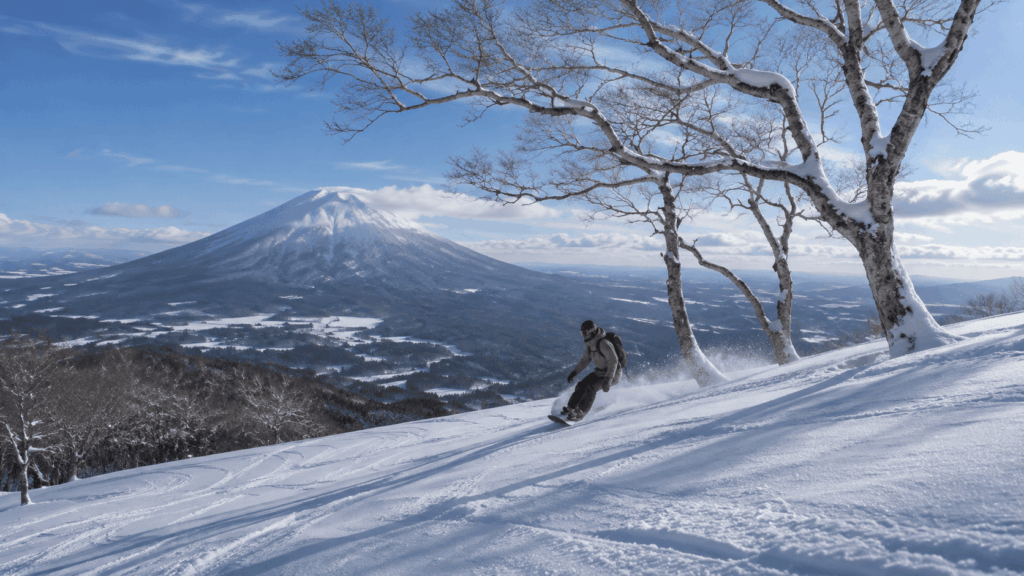
That distinction matters more than any ranking of “best resorts“. March rewards skiers who want long, sunny days on groomed runs and don’t need waist-deep powder to enjoy themselves. It punishes anyone who books late March expecting January conditions across the whole mountain.
This guide compares the three resorts most English-speaking visitors shortlist — Niseko United, Kiroro Snow World and Rusutsu Resort — and pins down the dates that actually affect a booking: night-skiing cut-offs, the spring lift-pass switch, and the buses that stop running before the season does.
New to skiing, returning after a break, or travelling with mixed-ability skiers? A private instructor can help tailor the day to your group’s level. Check available dates and lesson options for this Niseko private ski lesson before finalising your plans.
Is March a Good Time to Ski in Hokkaido?
Yes, with a condition: March is a good time to ski in Hokkaido if you are happy with groomed runs, spring snow and a flexible plan. It is a poor time to book if powder is the entire point of the trip.
The confusion usually comes from mixing up two different measurements. Snow cover in Hokkaido in March is still deep — at the JMA weather station in Kutchan, the town below Niseko, March averages around 122 cm of snowfall and a monthly maximum snow depth near 170 cm. That is a town-level observation, not a summit reading, but it explains why the mountain is still white when Tokyo is already into cherry-blossom weather.
Snow quality is a different question. By March the snowpack has been through months of accumulation, and the surface starts responding to sun, rain and overnight refreezing rather than to fresh storms. Some March weeks deliver cold, light snow. Others deliver a firm crust in the morning that turns to wet, heavy snow by early afternoon.
One more data point worth holding loosely: the Japan Meteorological Agency’s outlook for winter 2026–27 (December through February) put the Japan Sea side of Hokkaido at a 40% chance of below-normal snowfall, 40% near-normal and 20% above-normal, with a 40% chance of above-normal temperatures across Hokkaido. Those probabilities describe the December–February season, not a specific forecast for March 2027. They are another reason not to treat a March powder trip as guaranteed.
Who March Suits — and Who Should Book Earlier
March works well for: intermediate and advanced skiers who enjoy carving groomed runs in warm weather; families who want shorter lift queues and softer afternoons; travellers combining skiing with sightseeing in Sapporo or Otaru; anyone who values a cheaper lift pass more than fresh snow.
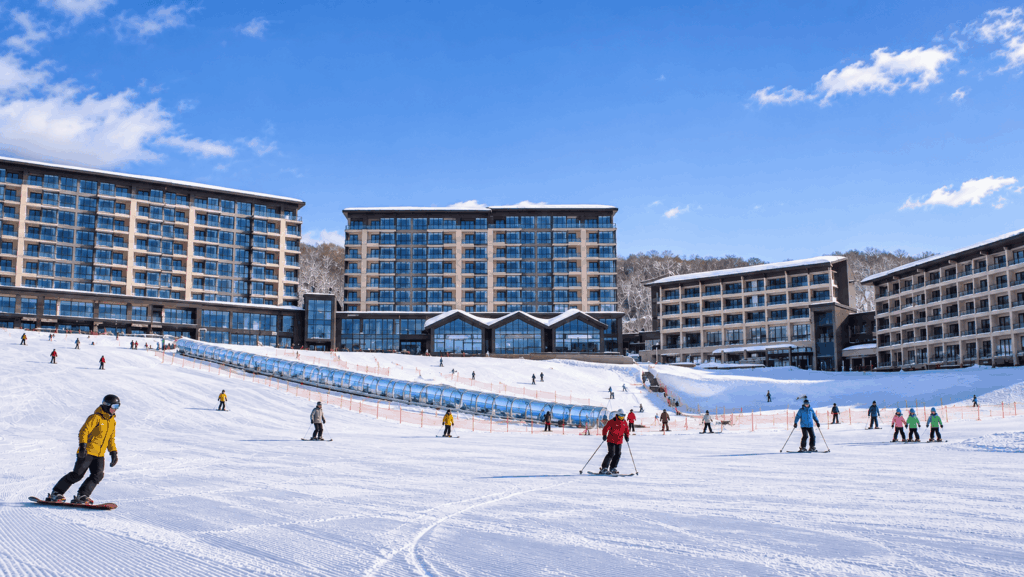
March is a gamble for: skiers whose main goal is deep powder; groups who cannot move their dates if a warm spell or rain event hits; anyone planning to ski Rusutsu after March 31, when the resort’s season is scheduled to end.
What catches people out is not a lack of snow. It is the gap between how the mountain looks from the car park and how it skis above the tree line — a full-white slope can be bulletproof at 8 a.m. and heavy by 1 p.m. Plan for the surface to change during the day, not just during the week.
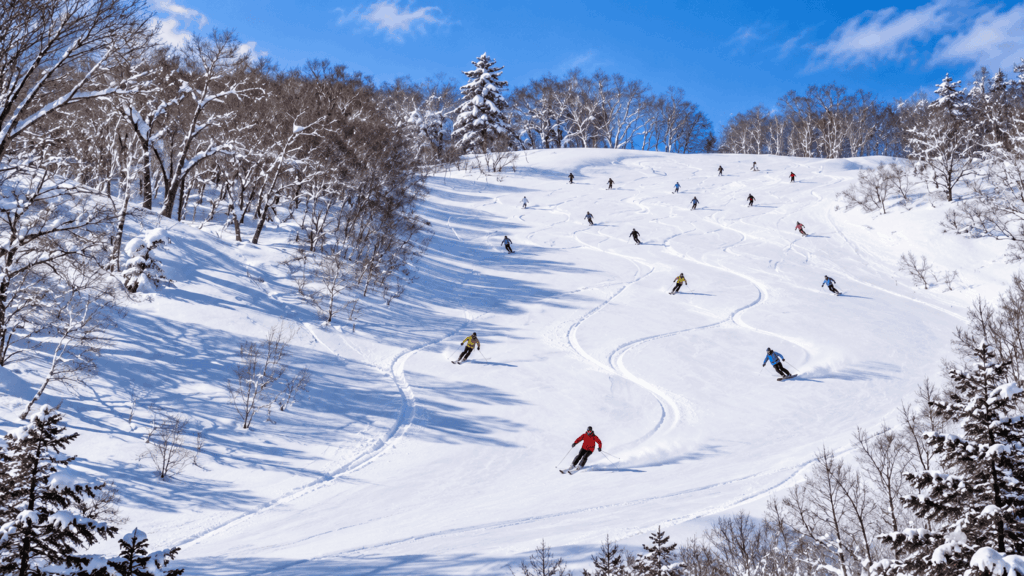
Early, Mid or Late March? How the Snow Changes
The single most useful decision you can make is picking your week. The three parts of March behave differently, and the difference is bigger than the difference between the resorts.
Early March: Your Best Shot at Winter Snow
Early March is still winter in all but the calendar. Nights stay cold enough to preserve a firm base, storm cycles can still drop light snow, and the whole mountain — including the steeper, higher terrain — is normally in play. If you want the best odds of skiing something that feels like January, this is the window.
Two caveats. “Best odds” is not a guarantee: a mild, rainy week in early March is entirely possible, and no resort will tell you otherwise. And early March weekends and holiday-related travel can still keep accommodation in Hirafu and on-mountain hotels at Kiroro and Rusutsu expensive; Japan’s main spring school break generally falls later in March.
Late March: Still Skiable, More Variable
Late March is where the trip either works beautifully or disappoints, and the deciding factor is usually expectation rather than snow depth. The snowpack can still be substantial, even though average peak snow depth in nearby Kutchan is higher in February than in March, but the surface is now doing daily freeze-thaw cycles: firm and fast first thing, soft and forgiving around midday, heavy or slushy on low, sun-facing runs by mid-afternoon.
Practical consequences stack up in the last ten days of the month. Niseko’s night skiing is scheduled to finish on March 22, 2027, and its spring lift-pass rate starts the following day. Rusutsu’s season is scheduled to close on March 31, 2027, with night skiing ending March 30. Kiroro keeps running into May, but its published 2026–27 spring lift-ticket pricing does not begin until April 12.
Reports from late-March visitors tend to split into two camps rather than clustering in the middle: people who caught a cold snap and had excellent skiing, and people who hit rain followed by a refreeze and found the mountain icy and heavy. Both are normal. Neither can be predicted from a date on a calendar.
| Period | Likely snow character | Main advantage | Main trade-off | Best for |
|---|---|---|---|---|
| Early March | Most winter-like. Cold nights, firm base, fresh snow still possible | Best odds of full-terrain, winter-feeling skiing | Still priced like winter; busier weekends | Powder-focused and advanced skiers |
| Mid-March | Transition. Cold mornings, softening afternoons, a substantial remaining snowpack | Balance of coverage, comfort and slightly thinner crowds | Freeze-thaw cycles begin; afternoon snow gets heavy | Mixed-ability groups and families |
| Late March | Variable. Firm early, soft midday, wet lower down; groomers hold up best | Longest days, cheapest lift passes at Niseko from March 23, quietest slopes | No night skiing at Niseko after March 22; Rusutsu closes March 31 | Flexible skiers, scenery-seekers, budget-conscious families |
Niseko, Kiroro or Rusutsu?
There is no single best resort in March, because the three candidates are optimised for different things. Niseko gives you the widest choice of terrain and the most English-language infrastructure. Kiroro gives you the strongest snow reputation and the least backup when the weather turns. Rusutsu gives you the most self-contained resort experience — and the hardest deadline.
The comparison below is deliberately not a snow-depth ranking. Lift passes at the three resorts cover different terrain, so a cheaper ticket is not automatically better value.
Niseko United — Best for Choice, Scenery and Convenience
Niseko United is four connected resorts under one All Mountain Pass: Niseko Tokyu Grand Hirafu, Niseko Annupuri, Niseko Village and Niseko Hanazono. For a first Hokkaido ski trip, that breadth is the argument. You can spend a morning on long groomers under the Ace Gondola and an afternoon on a different mountain without moving your accommodation.
The March-specific strength is that the areas close at different times. In the 2026–27 season, Niseko Village is scheduled to finish on April 4, Hanazono on April 11, and Grand Hirafu and Annupuri on May 5. Late March therefore sits comfortably inside the season for all four, and the views toward Mt. Yotei from the upper runs are at their most reliable as the weather settles.
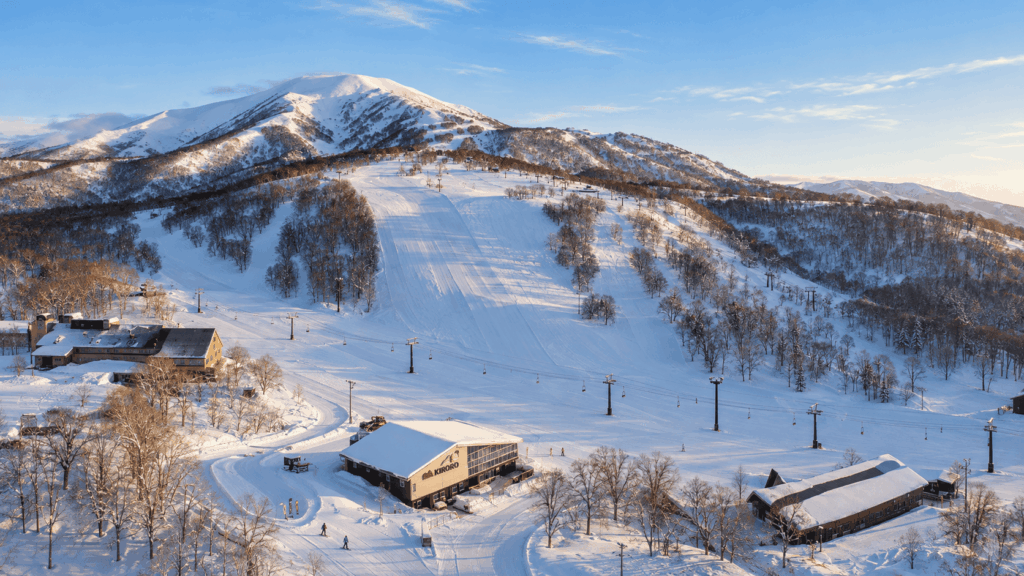
The trade-off is exposure. Niseko’s lower, sun-facing terrain is the first to soften and the first to lose coverage, so a warm spell thins out the mountain from the bottom up even while the summit stays white. It is also the busiest and most expensive of the three, prompting some visitors to seek out less crowded alternatives.
Kiroro — Best for Snow, If You Can Be Flexible
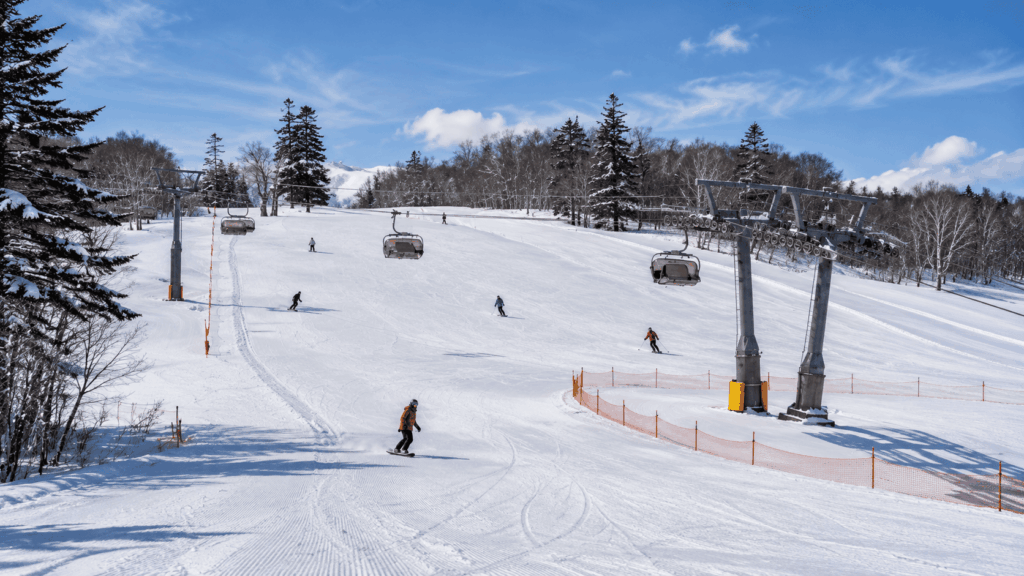
Kiroro Snow World, in Akaigawa village over the ridge from Otaru, has built its reputation on snowfall rather than scale. The skiing is concentrated around the Asari and Nagamine areas and the Kiroro Mountain Center, and the resort is designed around on-mountain hotels, which makes it unusually easy to be first in the lift line.
That concentration cuts both ways in March. When a cold system arrives, Kiroro can offer the best snow of the three. When fog or wind shuts the upper mountain, the remaining terrain is limited, and there is no second resort next door to absorb a bad day.
The access pattern reflects that isolation. Kiroro is reachable by bus from Otaru and Sapporo, or by taxi from Otaru Chikko Station — roughly ¥12,000 one way and about 40 minutes, with no taxis waiting at the resort, so your return needs booking in advance. There are no rental car counters at Kiroro itself.
Rusutsu — Best for Groomed Runs and Resort-Based Trips
Rusutsu Resort spreads across three peaks — West Mt., East Mt. and Mt. Isola — with a style that suits families (making it a staple among family-friendly ski resorts in Hokkaido) and skiers who like long, well-groomed runs punctuated by tree skiing. Because the hotel, restaurants, onsen and slopes sit in one place, it is the easiest of the three to do without a car.
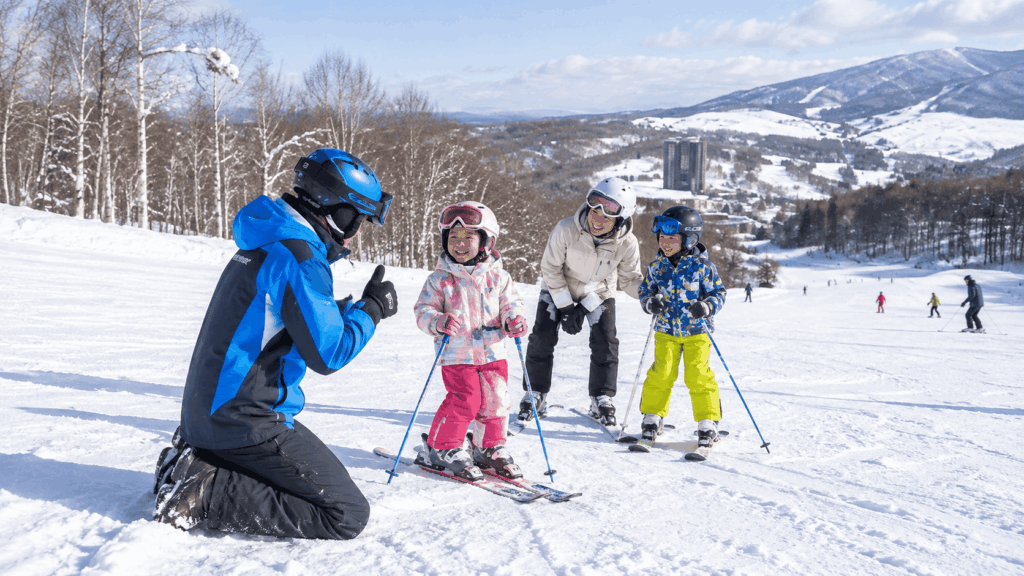
Its March advantage is price and pacing: the spring rate applies from March 15, and the resort is generally calmer than Niseko. Its March problem is a hard stop. The 2026–27 season is scheduled to end on March 31, and night skiing ends on March 30 — so anyone planning to ski into the first week of April needs a different base.
| Resort | Best for | Late-March strengths | Main drawback | Transport consideration |
|---|---|---|---|---|
| Niseko United | First-timers, groups wanting choice, English-language services | Four connected areas, long vertical, Mt. Yotei views, village dining and nightlife | Most exposed to sun and warm spells low down; busiest and priciest passes | Direct buses from Sapporo and New Chitose to Hirafu; note the Niseko–Kiroro bus stops in February |
| Kiroro Snow World | Snow-focused intermediate and advanced skiers who can be flexible | Strong snowfall reputation, quieter slopes, on-mountain hotels, season runs into May | Limited terrain when upper lifts close; fog and wind can take out most of the mountain | Bus from Otaru (to late April) or Sapporo (to mid-April); taxi about ¥12,000 from Otaru, return must be pre-booked |
| Rusutsu Resort | Families, groomed-run skiers, resort-based stays without a car | Three peaks, good tree skiing, everything in one village, spring rate from March 15 | Season ends March 31, 2027; night skiing ends March 30 | Rusutsu Express from Sapporo, roughly ¥3,000 and 105 minutes, bookable online until 15:00 the day before |
What’s Open in Late March 2027: Dates, Prices and Night Skiing
This is where most March trips go slightly wrong. The resort is open, the snow is there, and the price has dropped — but the night skiing has finished, one area has closed, or the spring rate starts three days after you leave. The dates below are the ones that change what you get for your money in the last two weeks of March 2027.
| Resort | Period (2027) | Adult 1-day pass | Night skiing | Planned closing |
|---|---|---|---|---|
| Niseko United | March 1–22 (regular season) | ¥12,600 (All Mountain Pass) | Scheduled to run until March 22 | Grand Hirafu and Annupuri May 5; Hanazono April 11; Niseko Village April 4 |
| Niseko United | March 23–April 4 (spring season) | ¥8,800 (All Mountain Pass) | Finished for the season | As above — areas close at different dates |
| Kiroro Snow World | March (winter rate applies) | ¥9,200 at the counter (5% off the standard one-day price when purchased through the official webstore) | Check the resort’s current schedule | Scheduled through May 5; spring pricing starts April 12 |
| Rusutsu Resort | March 1–14 (regular season) | ¥16,700 at the counter / ¥13,200 online | Scheduled until March 30 | March 31 |
| Rusutsu Resort | March 15–31 (spring season) | ¥10,500 | Scheduled until March 30, 16:00–20:00 | March 31 |
Two things to read carefully. First, the Niseko pass covers four connected areas; the Rusutsu and Kiroro passes cover one resort each. Comparing their prices directly is misleading, because you are not buying the same product. Second, “planned” is doing real work in that table. Opening and closing dates, night-skiing schedules and prices are all subject to change with snow conditions and operational decisions, and the resort’s own page is the only version that counts on the day.
Kai’s tip: A resort’s price change date and its terrain availability are two separate calendars, and conflating them is the most common March booking mistake. I would check the lift and trail status page on the morning you ski, before buying anything at the ticket window — a full-mountain pass is poor value on a day when the upper lifts are on wind hold. It is also worth buying online where the resort offers it: at Rusutsu, the online one-day pass runs about ¥3,500 below the counter price in regular season.
Getting There in March: Transport That Stops Before the Snow Does
Hokkaido’s ski buses are seasonal, and “seasonal” does not mean “the ski season”. Several routes finish in February or early March while the resorts are still running into May. If you are assembling a multi-resort trip, this is the constraint that decides your itinerary, not the snow.
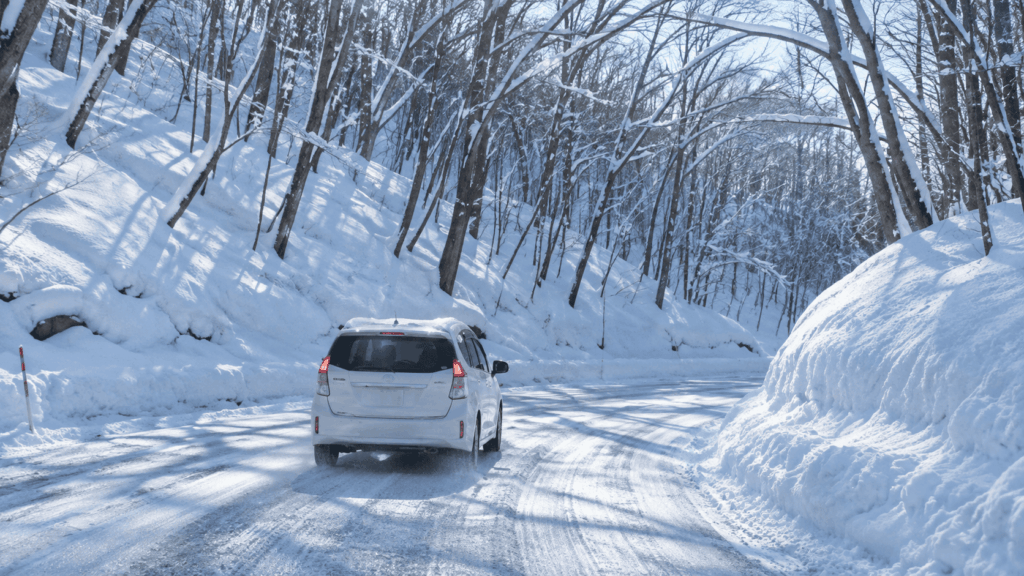
New Chitose Airport is the main gateway for all three resorts, with Sapporo as the usual overnight base. For Niseko, the standard approach is the JR line to Kutchan Station followed by a local bus or taxi to Hirafu — Grand Hirafu’s own access information puts the airport-to-resort journey at around 3 hours 30 minutes by train and bus, or about 2 hours 10 minutes by car. From Sapporo, road access is roughly two hours via Nakayama Pass.
Rusutsu is served by the Rusutsu Express, a paid reserved bus from central Sapporo: about 105 minutes, ¥3,000 one way, departing at 8:00 from the Kamori Building about two minutes’ walk from JR Sapporo Station’s south exit and arriving at the resort hotels between 9:45 and 10:05. The return leaves between 16:40 and 17:00 and reaches Sapporo at 18:45. Online booking closes at 15:00 the day before travel, payment is in advance, and the exact boarding point is announced on the morning of departure — worth knowing, because the building is scheduled for renovation work from late October 2026.
Kiroro has three separate bus routes, and they do not end at the same time. The Otaru–Kiroro service is scheduled to run until April 25, 2027; the Sapporo–Kiroro bus until April 11. The Niseko–Kiroro bus is scheduled to finish on February 20, 2027, with some suspension days inside that window anyway.
Kai’s tip: The bus linking Niseko and Kiroro stops running in late February, weeks before either resort closes. A plan that reads “three days in Niseko, then two in Kiroro” quietly turns into a long taxi or a train-and-bus connection back through Otaru. Choose your base first and build the days around it, rather than assuming you can hop between resorts the way you can in January.
Airport transfers to Niseko are the least predictable piece. Services and timetables vary by operator and date, and I would not rely on a schedule remembered from a previous winter — confirm the specific run for your arrival date with the operator before you book accommodation around it.
What Spring Snow Actually Feels Like
Spring skiing in Hokkaido is not a milder version of winter skiing. It is a different surface that changes on an hourly rhythm, and the skill that matters most in March is reading it.
The mechanism is simple: overnight cold refreezes the top layer into a firm, sometimes glassy crust; morning sun and rising air temperature soften it; by afternoon, low-altitude and sun-facing runs can be wet and heavy. Add rain or a sudden cold snap and the sequence breaks — which is why two people can ski the same resort on consecutive days and describe completely different mountains.
Elevation and aspect matter as much as the clock. North-facing upper runs hold colder, drier snow longer. Low, sun-facing runs soften first and are the first to develop bare patches. That is the practical reason a late-March day often works best as a loop: start where the snow is holding, follow the sun around the mountain, and finish on terrain that stays firm.
Morning vs Afternoon
Mornings are fast, and fast is not the same as easy. A refrozen groomer at 8:30 a.m. rewards a sharp edge and confident technique and punishes rusty legs; by 11 a.m. the same run may be the most forgiving surface of your trip. Beginners often have a better morning on lower, softer groomers than on a summit run that looks inviting on the trail map.
Afternoons are softer and more forgiving, but heavier — which is tiring on the legs and harder on knees. If you are skiing multiple days, the usual pattern is to front-load your mileage and treat the last two hours as optional.
Kai’s tip: “First gondola, top of the mountain” is advice written by strong skiers, for strong skiers. In late March the summit is often the firmest, least forgiving surface on the mountain at opening time, while the lower groomers are just coming into condition. If you are rusty, or skiing with children, start low and work your way up as the surface softens — and let the confident skiers in your group go high first and report back.
Fog, Wind and a Plan B
Poor visibility is the most underrated March risk in Hokkaido. It rarely looks dramatic from the base area; it appears as a white wall once you are above the tree line, on terrain where you cannot judge gradient or snow texture. Wind adds lift closures on top of that, and the combination can shut most of a mountain for a morning.
The workable routine is unglamorous: check the resort’s lift and trail status before leaving your accommodation, ski the terrain that is actually open rather than the terrain you planned, and follow ski patrol instructions without negotiating. Niseko publishes its mountain rules and a daily avalanche information bulletin, and both are worth reading even if you are staying on piste, because they tell you what is closed and why.
Treat no single run as a guaranteed escape route. A lower, sheltered area may be open while the upper mountain is closed, but that can change within an hour, and a route that worked in the morning is not a plan for the afternoon.
What March Skiing in Hokkaido Actually Costs
March is cheaper than February at some resorts and not at others. That is the whole answer, and it is why “spring skiing is good value” is only half true.
Niseko is the clearest case: the adult All Mountain one-day pass drops from ¥12,600 to ¥8,800 when the spring season starts on March 23, 2027 — about 30% off for the same pass. Rusutsu’s spring rate starts earlier, on March 15, at ¥10,500 for a one-day adult pass, against ¥16,700 at the counter in regular season. Kiroro is the exception: winter pricing continues through March, and the published spring rate starts on April 12.
The lift pass is usually the smallest line in a ski trip budget. Accommodation, flights, rental equipment, lessons and transfers all move the total more, and in late March some of those do not get cheaper just because the lift ticket did. Accommodation in Hirafu in particular does not automatically fall with the snowpack — weekends and Japanese school holidays still price accordingly.
Two practical notes for budgeting. Prices quoted here are in yen, include tax, and are the published 2026–27 rates as of October 2026; treat them as a planning baseline, not a quote. And some costs are locked in early: the Rusutsu Express requires advance online payment, and rental gear at popular Hirafu shops is worth reserving rather than assuming you can walk in during a holiday week.
Which March Trip Should You Choose?
The right answer depends on four things: your ability, what you want from the snow, how much moving around you are willing to do, and whether your dates are fixed. Below is the short version for each case.
First ski trip to Hokkaido: choose Niseko. The four connected areas, the density of English-language rental shops and schools, and the village around Hirafu reduce the number of things that can go wrong. Accept that late March may mean groomers rather than powder.
Intermediate or advanced skier who wants snow: choose Kiroro, provided you can be flexible about which day you ski. It has the strongest snow reputation of the three and a season that runs into May, but a bad-visibility day leaves you with limited alternatives. Build in a spare day.
Family or groomed-run trip: choose Rusutsu, and finish before March 31. Everything — hotel, restaurants, onsen, slopes — sits in one place, the grooming is consistent, and the spring rate from March 15 helps. The hard season end is the one thing to plan around.
Locked into late March with modest expectations: base yourself in Niseko or Kiroro and decide day by day. Check the lift status each morning, ski the open terrain, and treat a short day as a normal outcome rather than a failure.
Powder or nothing: move your trip earlier if you can. Early March still has a chance of winter conditions; late March does not reliably deliver them, and no resort can promise otherwise.
Do You Need an English-Speaking Instructor?
For some travellers a lesson is the difference between a good trip and a frustrating one, and for others it is money spent on something they do not need.
A lesson makes sense if you are new to skiing or snowboarding, if you have not skied for several seasons, if your group has mixed abilities and one person would otherwise spend the week waiting, or if you want to ski terrain that requires a local read on conditions. It makes less sense if you are a confident, self-directed skier who is comfortable reading a trail map and a lift-status page.
Private lessons covering Niseko, Rusutsu and Kiroro are bookable in English, with some operators also offering Mandarin and Cantonese. A typical private booking runs up to five participants for a six-hour day including a one-hour break, with an age range of roughly 7 to 65. What is included varies by package — lift pass, equipment and transport are not automatically part of the price — so confirm those details, along with the meeting point and cancellation terms, at the time of booking.
If you decide you want an instructor, sort it out alongside your accommodation rather than after: availability differs by resort, date and group size, and late March is not the busiest period but it is also not the deepest inventory of the season.
For beginners, returning skiers or groups with different confidence levels, a private lesson is worth comparing with a self-guided day. This Niseko option is particularly relevant if you want instruction tailored to your group rather than the fixed pace of a shared class.
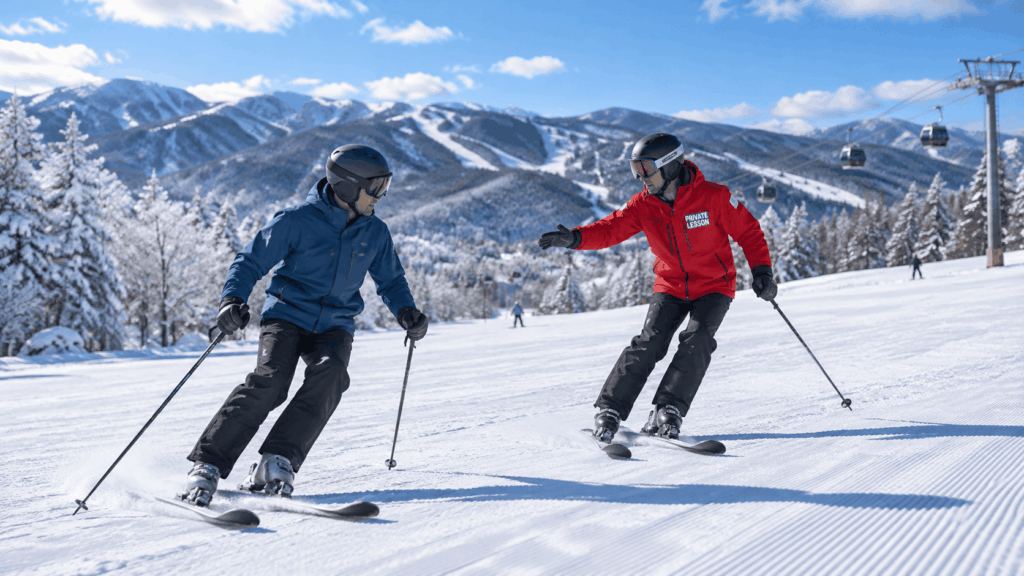
Why I’d book this one
- Instruction matched to your group: A certified private instructor can adapt the lesson to different experience levels, making it useful for first-time skiers, returning visitors and groups that want individual attention.
- Encouraging but limited traveler feedback: Available traveler reviews include positive comments about the instructor and lesson experience. The review sample is small, so it is worth reading the latest feedback rather than relying on the overall rating alone.
- Clear details to check before committing: The listing lets you review the lesson format, duration, meeting arrangements and cancellation conditions. Lift passes and equipment are not automatically included, so factor those into your plans.
See current availability, lesson details and recent traveler reviews for this Niseko private ski lesson. Check that your March 2027 date and preferred meeting location are supported before making a reservation.
Frequently Asked Questions
Can you ski in Hokkaido in late March?
Yes. In the 2026–27 season, Niseko Tokyu Grand Hirafu and Niseko Annupuri are scheduled to stay open until May 5, Kiroro into early May, and Rusutsu until March 31 — so late March is comfortably inside the season at all three. What you cannot assume is full-terrain skiing or winter snow. Expect a deep base, firm mornings, softening afternoons, and some lower runs losing coverage if the weather turns warm.
Is there still powder snow in Hokkaido in March?
Sometimes, but it is not something to plan around. March storm cycles can still deliver cold, light snow, particularly in early March and at higher elevations. Equally, a March week can pass with rain, refreezing and no fresh snow at all. If deep powder is the main reason for your trip, January and February give you better odds, and early March is a reasonable compromise. Late March is a poor bet for powder specifically.
Is Niseko or Kiroro better for skiing in March?
They solve different problems. Niseko gives you four connected areas, more English-language services and more to do off the snow, which makes it the safer choice for a first trip or a mixed-ability group. Kiroro has the stronger snow reputation and a longer season, but the terrain is concentrated, so fog or wind can remove most of your options. If you can keep a spare day and check conditions each morning, Kiroro rewards that flexibility; if you want choice regardless of weather, Niseko does.
Are Hokkaido ski resorts cheaper in March?
At some resorts, from specific dates. Niseko’s adult All Mountain one-day pass falls from ¥12,600 to ¥8,800 on March 23, 2027, and Rusutsu’s spring rate of ¥10,500 starts on March 15. Kiroro keeps winter pricing through March, with spring rates from April 12. Because the passes cover different terrain, comparing the three prices as if they were the same product is misleading — and the lift ticket is usually a small share of the total trip cost anyway.
Can you visit Hokkaido ski resorts without a car in March?
Yes, but the routes are seasonal and they do not all last until the snow goes. Kiroro is served by buses from Otaru until late April and from Sapporo until mid-April; Rusutsu has a reserved express bus from Sapporo until March 31; Niseko is reached by train to Kutchan followed by a local bus or taxi. The route that catches people out is Niseko to Kiroro, which is scheduled to stop on February 20 — so a two-resort March itinerary usually needs a different plan.
The Bottom Line
March in Hokkaido is not a compromise month so much as a different sport. You are trading the chance of deep powder for longer days, softer afternoons, thinner lift lines and, at Niseko and Rusutsu, a cheaper pass in the second half of the month.
Choose Niseko if it is your first Hokkaido ski trip, your group has mixed abilities, or you want the mountain to still work on a bad-weather day. Four connected areas and a village at the base absorb a lot of problems that would end a day elsewhere.
Choose Kiroro if snow quality is your priority and your dates have some slack in them. It has the best snow reputation of the three and a season that runs into May, but it is the least forgiving choice when visibility closes in.
Choose Rusutsu if you are travelling with family, you like long groomed runs, and you want everything in one place. Book the earlier half of late March, not the last week — the season is scheduled to end on March 31, and night skiing on March 30.
Choose an earlier date if powder is the whole point. Nothing about a March booking guarantees fresh snow, and the seasonal outlook for 2026–27 does not lean toward a big-snow year.
The travellers who enjoy March most are rarely the ones who got lucky with a storm. They are the ones who picked a base, kept a spare day, and treated the morning lift report as the plan rather than an interruption to it. If you go in expecting a firm start, a soft middle and an early finish — with a long lunch in between — Hokkaido in March delivers far more than its reputation suggests.

Hi, I’m Kai. I’m a Tokyo-based travel writer, tourism industry insider, and the author of a published guidebook for international visitors to Japan. With over 10 years of professional experience at a leading Japanese tourism company, my mission is to help you skip the tourist traps and navigate Japan’s best destinations like a local. I believe the perfect day trip is like a traditional kaiseki meal: a beautiful balance of precise planning and unforgettable seasonal discovery. When I’m not out conducting field research, you’ll usually find me drafting new itineraries with one of my favorite fountain pens!