
Hokkaido’s ski season runs from late November into early May at the snowiest resorts, but the month you book decides what kind of trip you actually get. If light, reliable powder is the goal, January is the safest first choice, with February close behind. If you are skiing with beginners or young children, or you simply want room to turn, March is often the better month. And if the trip is really about sightseeing with a ski day attached, mid-December can work well — provided you check snow and lift conditions before you commit.
“Best month” only means something once you decide which of four things matters most: snow quality, crowds, cost, and what else you want from the trip. A powder obsessive and a family of first-timers should not book the same week, and in Hokkaido they usually don’t.
I have skied Sapporo Kokusai in January, in March and in mid-December, and the differences between those trips had as much to do with queues, visibility and where I slept as with the snow itself. That gap between “best snow” and “best day” is what this guide is built around.
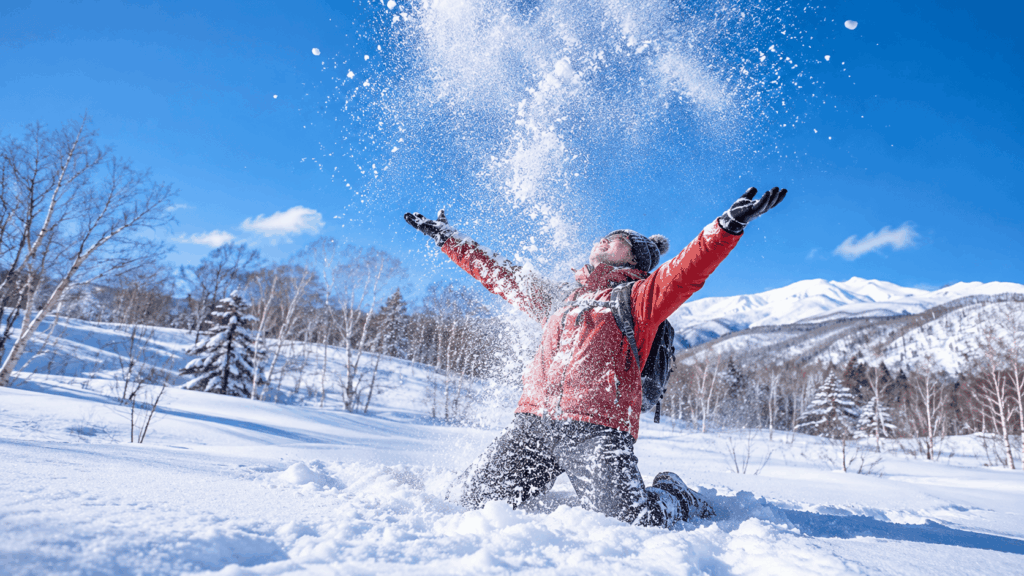
If you’re planning one ski day from Sapporo rather than a full week in Niseko, a guided ski package can take some of the transport, equipment and lesson planning off your list. For a beginner-friendly option at Sapporo Teine, compare the available guided ski and snowboard packages, inclusions and dates before settling on your itinerary. Sapporo Teine is a different resort from Sapporo Kokusai, which is discussed in detail below.
What Is the Best Month to Ski in Hokkaido?
Quick Verdict
- Best for powder: January, with February a close and sometimes better alternative once the snowpack has built.
- Best for families, beginners and fewer crowds: March.
- Best for an early-season ski-and-sightseeing trip: mid-December, at snow-reliable resorts such as Sapporo Kokusai, if conditions allow.
Who should book a different month
- If avoiding crowds is your top priority: skip late December and the first days of January entirely, and look at mid-to-late January or March instead.
- If you only care about fresh snow: March should not be your first choice. Snowfall drops noticeably and the snow you get is more weather-dependent.
- If you need guaranteed coverage and every lift running: mid-December carries real risk. Some seasons start late, and beginner conveyor lifts may not be running yet.
- If your dates are fixed by a holiday: you are choosing a crowd level, not a month. The advice below still applies, but plan transport and rentals first.
Hokkaido Skiing by Month
| Period | Snow Conditions | Crowds | Best For | Main Trade-Off |
|---|---|---|---|---|
| Early December
(to about Dec 11) |
Base still building; highly variable by resort and year | Low | Cheap lift passes, quiet slopes, flexible travelers | Limited terrain and a real chance of thin cover |
| Mid-December
(about Dec 12–23) |
Reliable at high-snowfall resorts; variable elsewhere | Low to moderate | Skiing plus sightseeing, early deals before the holidays | Some facilities and beginner areas not yet open |
| Late December–early January
(about Dec 24–Jan 5) |
Deep and cold, often excellent | Highest of the season | Travelers locked into school holidays | Queues, packed restaurants, peak accommodation rates |
| Mid-to-late January | Cold, dry, frequent overnight snowfall | Moderate | Powder-focused skiers and riders | Cold snaps and storm days can close upper lifts |
| February | Deepest snowpack of the season; snowfall easing but base at its thickest | Moderate, spiking around Lunar New Year and the Sapporo Snow Festival | Powder with more terrain open and a settled base | Early February holiday overlap; peak lift prices |
| Early-to-mid March | Still deep at snow-reliable resorts; less frequent fresh snow | Noticeably lower | Families, beginners, relaxed skiing, mixed ski-and-city trips | Snow gets heavier and more sun-affected through the day |
| Late March–April | Spring conditions; softening snow, patchy lower runs | Low | Spring skiing, long sunny days, budget trips | Not a powder trip; closing dates vary by resort |
Read the table by picking the trade-off you can live with, not the row that looks best. A family that books late December gets great snow and the worst queues of the year; a powder skier who books mid-March gets empty lifts and may go a week without a deep snowfall.
If your trip comes down to a single ski day out of Sapporo, it is worth comparing a Sapporo Kokusai day trip that bundles round-trip transport with the equipment and lift options you actually need before you fix your dates.
Hokkaido Ski Season Month by Month
The season is usually described as one long powder window, which is misleading. Snowfall, snow depth, snow quality and open terrain all peak at different times. A resort can receive less new snow in February than in January and still have the deepest base of the year. That distinction matters more than any single “best month” claim.
December — Early Powder, but Check Conditions
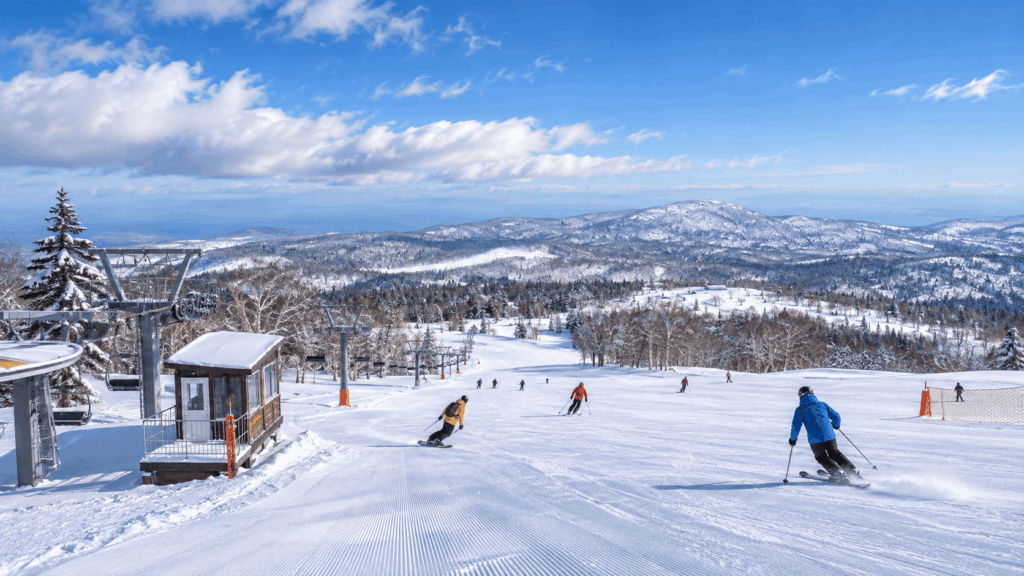
December is three different months in one. Early December is a gamble: some years deliver excellent snow, others are still building a base, and terrain is often limited. Mid-December is the interesting window — resorts with heavy snowfall, including Sapporo Kokusai, can be skiing well while the holiday crowds have not yet arrived. From roughly December 24, you are in the busiest period of the Hokkaido season.
Sapporo Kokusai plans to open on 20 November 2026 and run to 31 March 2027, with a spring season from 1 April to 5 May 2027. Its beginner conveyor, the Snow Escalator, is scheduled to start in late December — so a mid-December visit with young children may mean no conveyor and a thinner choice of beginner terrain. At Niseko United, the 2026–27 season opens on 28 November, and the early-season rate (¥8,800 for an adult one-day All Mountain pass) ends on 11 December. From 12 to 23 December the regular rate of ¥12,600 applies, so mid-December is not a bargain month at Niseko.
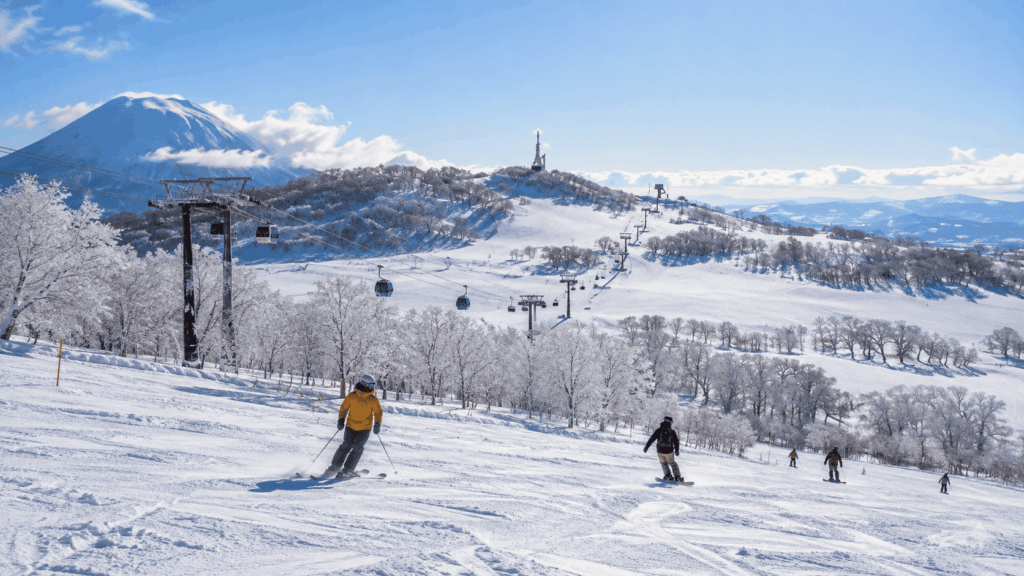
Treat mid-December as a conditional recommendation: excellent when the snow arrives early, ordinary when it doesn’t. Check the resort’s snow report and open-course list for your exact dates rather than assuming a good month means good conditions. For more on early season conditions and where to go, read our guide to skiing in Hokkaido in December.
January — The Classic Hokkaido Powder Month
January is the month most people mean when they say Hokkaido powder. At the Kutchan observation point in Niseko’s nearest town, the 1991–2020 average is 253 cm of snowfall for the month and a deepest snow depth of 155 cm — cold, consistent, and dry. Siberian storm cycles refresh the mountain overnight often enough that even a week-long trip usually catches at least one deep day.
The month is not uniform. The Christmas-to-New Year window behaves like peak season everywhere: full restaurants, busy lifts and the highest accommodation rates. From roughly the second week of January the pressure eases, and mid-to-late January is the sweet spot for powder-focused travelers who can choose their dates.
Kai’s tip: The last time I skied Sapporo Kokusai in January, guiding a small group, the snow was as light as the reputation suggests — but the rental area was so busy I genuinely could not see the end of the queue, and we lost a big chunk of the morning standing in it. If you are renting on site in January, arrive before opening or sort your gear somewhere else the day before. The snow will still be there at 11 a.m.; your legs won’t be.
January rewards preparation more than any other month. The snow is the reason to come; the queues are the reason people come back from a January trip saying they only skied half as much as they expected.
February — Deep Snow and Excellent Powder
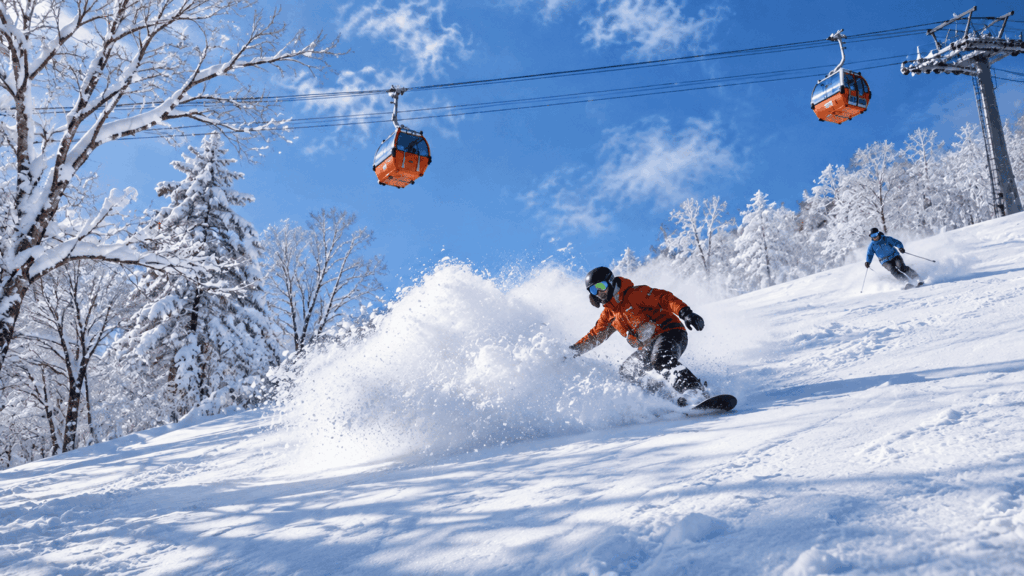
February is not January’s understudy. Average monthly snowfall at Kutchan drops to 187 cm, but the deepest snow depth rises to 181 cm — the highest of any month — because the base has been building since November. In practice that means more terrain is comfortably covered, obstacles are buried, and the mountain handles a busy day better than it does in December.
The catch is the calendar. In 2027, Lunar New Year falls on 6 February, and the Sapporo Snow Festival is scheduled for 4–11 February. Those two events overlap in the same week, which affects Sapporo accommodation, airport transfers and restaurant bookings even if you are skiing elsewhere. Niseko’s peak-season lift pricing also runs through 28 February, so February is not a cheaper alternative to January.
I have not skied Hokkaido in February myself, so I won’t pretend to describe it first-hand. Based on the official climate data and resort season notes, February’s case rests on snow depth and terrain coverage rather than on more frequent snowfall.
March — Quieter Slopes and Spring Sunshine
March is where the numbers get misread. Average snowfall falls to 122 cm, but the deepest snow depth is still 170 cm — deeper than January’s average peak. The base does not disappear; what changes is the frequency of fresh snow and the way the surface behaves as the sun gets stronger. Niseko United’s own season notes describe March as the month when crowds thin noticeably and blue-sky days become more common, while the snowpack stays deep.
Kai’s tip: I spent a March week at Sapporo Kokusai a couple of seasons ago and got the version of the resort I would recommend to most families: no January-style scrum, long wide runs I could actually finish without dodging anyone, and a restaurant where finding a seat was not a project. Visibility near the summit was poor at times, but the lower mountain was fine — which is worth knowing, because on a cloudy March day you can often ski the bottom half comfortably while the top is socked in.
March is not a guaranteed sunny, empty month. Weekends, school holidays and late-season events still fill the slopes, and snow quality changes through the day as temperatures rise. But for beginners, families and anyone who values a relaxed pace over fresh tracks, it is the most forgiving month of the core season. See our detailed guide to skiing in Hokkaido in March for more on what to expect.
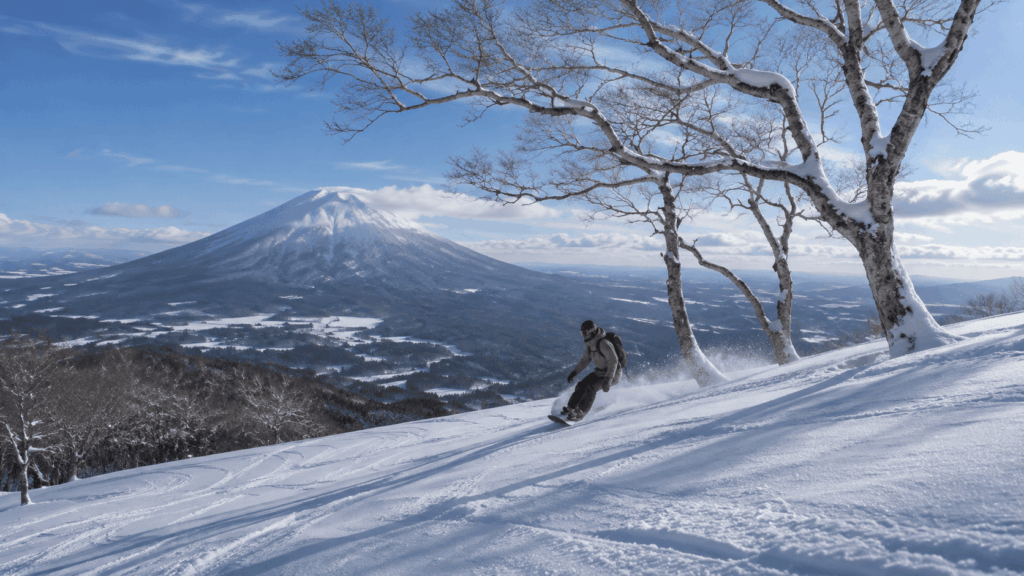
April and Beyond — Spring Skiing, Not Peak Powder
Spring skiing continues at several resorts, but it is a different sport: softer snow, warmer afternoons, and closing dates that vary by mountain. Sapporo Kokusai runs to 5 May 2027, while in Niseko the Annupuri and Grand Hirafu areas plan to stay open to 5 May, Niseko Village to 4 April and Hanazono to 11 April. If you are traveling in April, check which lifts and courses are still operating before booking — and don’t plan the trip around powder.
January vs February: Which Month Has Better Powder?
This is the comparison most powder-focused travelers actually need, and the honest answer is that January wins on reputation while February often wins on coverage. January brings the cold, dry snowfall that built Hokkaido’s name. February brings a deeper base, which means more of the mountain is skiable and the terrain you booked the trip for is more likely to be open.
The Japan Meteorological Agency’s 1991–2020 normals for Kutchan, the town below Niseko, show why the two months feel different:
| Month | Monthly snowfall total | Deepest snow depth |
|---|---|---|
| December | 253 cm | 99 cm |
| January | 253 cm | 155 cm |
| February | 187 cm | 181 cm |
| March | 122 cm | 170 cm |
Three things get lost when people quote these figures. First, snowfall is not the same as snow depth: January and December receive the same average snowfall, but January’s colder temperatures and settled base produce a much deeper pack. Second, these are Kutchan town observations, not measurements from the top of a resort — the mountain gets more snow than the town, so treat the numbers as a pattern, not a forecast. Third, a 30-year average cannot tell you what a specific week will do. You can book January and hit a rain event, or book late February and catch a two-day storm cycle.
What the pattern does support is this: if you want the highest chance of light, dry snow falling during your trip, January — especially mid-to-late January — is the best bet. If you want the mountain to be fully covered, with fewer rocks and more open terrain, February edges ahead.
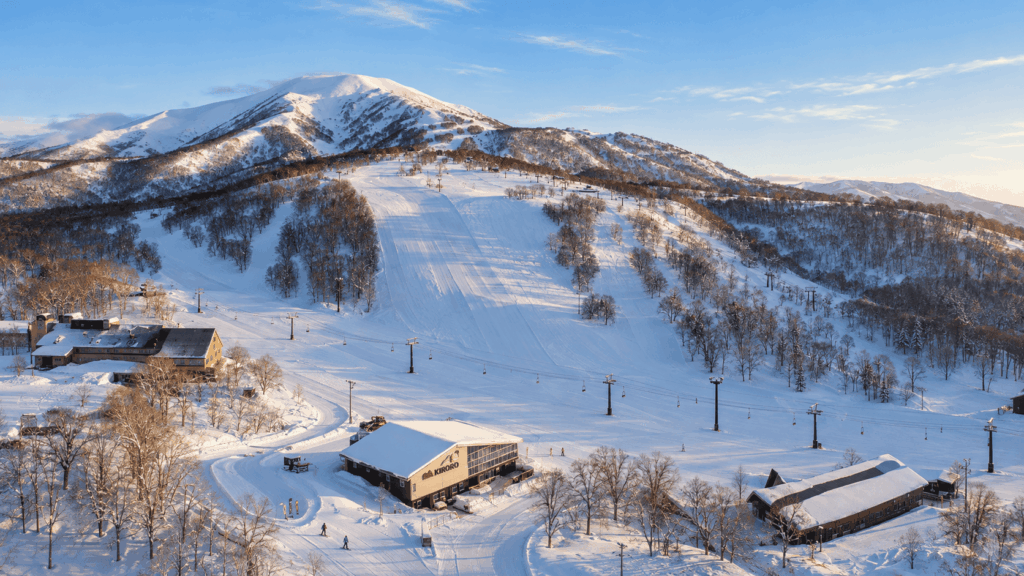
January vs February vs March at a Glance
| Factor | January | February | March |
|---|---|---|---|
| Fresh powder potential | Highest; frequent overnight snowfall | High, but less frequent than January | Lower; occasional storm cycles rather than a pattern |
| Established snowpack | Deep | Deepest of the season | Still deep at snow-reliable resorts |
| Weather and visibility | Cold; storm days bring flat light and upper-lift closures | Similar, with slightly longer days | More sunshine and warmer afternoons; wet snow and fog possible |
| Holiday crowd risk | Very high from about 24 December to 5 January | High around 4–11 February (Sapporo Snow Festival and Lunar New Year overlap in 2027) | Low outside weekends and school breaks |
| Beginner and family suitability | Moderate — cold, busy, and poor visibility is harder with children | Moderate to good, once the holidays pass | Best — more space, softer pace, easier breaks |
| Budget considerations | Peak pricing at most resorts | Peak pricing continues to 28 February at Niseko | Cheaper at some resorts from 1 March, but not all |
| Recommended traveler | Powder chasers who can pick their week | Powder skiers who want maximum terrain open | Families, beginners, and travelers who want a calmer trip |
Reviews of Niseko and Sapporo Kokusai point to the same trade-off from the other direction: travelers rave about the snow, then mention wind holds, flat light and crowded rental counters in the same breath. The snow is not the variable you need to worry about most — the day-to-day weather and the logistics are.
If Niseko is on your shortlist, it is worth comparing it directly against Rusutsu before you commit, because the two resorts suit different kinds of trips even in the same month.
Is March a Good Time to Ski in Hokkaido for Beginners and Families?
Yes — often better than January. But the reason matters. March is not recommended because the snow is guaranteed to be excellent; it is recommended because the conditions around the skiing are easier. Fewer people on the hill means more room to practice, shorter lift queues, and a much better chance of finding a table when a child needs a break.
At Sapporo Kokusai, the official course ratings are worth reading before you book. Forest Trail (1.2 km) and Märchen Trail (2.4 km) are rated beginner, and they are genuinely long, gentle runs rather than token bunny slopes. Family Trail, despite the name, is officially rated intermediate, with a maximum gradient of 20° — it is wide (over 100 m in places) and forgiving, but it is not a beginner run. Woody and Swing are intermediate, and Echo and Downhill are advanced, with the longest continuous run in the resort reaching about 3.6 km.
Two practical caveats. The Snow Escalator, the conveyor used for first-timer lessons, is scheduled to start in late December, so by March it should be running — but confirm on the day. And March snow changes through the day: mornings are firmer and faster, afternoons softer and heavier, which is fine for learners but tiring for small children late in the day.
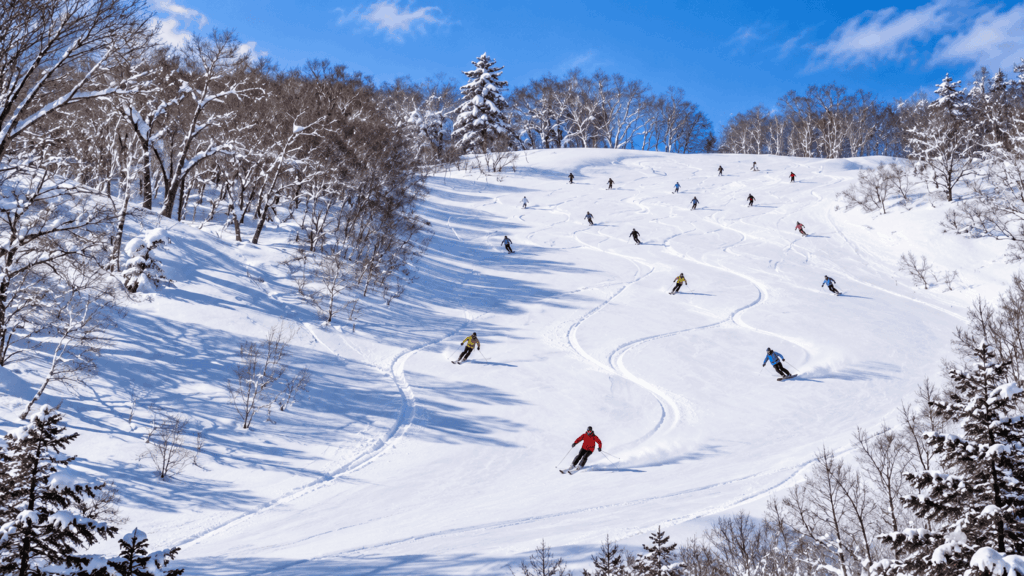
Who March suits: first-timers, families with children under 12, mixed-ability groups where one person wants to cruise and another wants to explore, and anyone pairing skiing with Sapporo or Otaru sightseeing. Who it doesn’t: advanced skiers chasing deep powder who will spend the week waiting for a storm that may not come.
If you are choosing a resort around beginners rather than around snow records, checking out the best family-friendly ski resorts in Hokkaido or a shortlist of ski resorts near Sapporo is a more useful starting point than a month-by-month ranking.
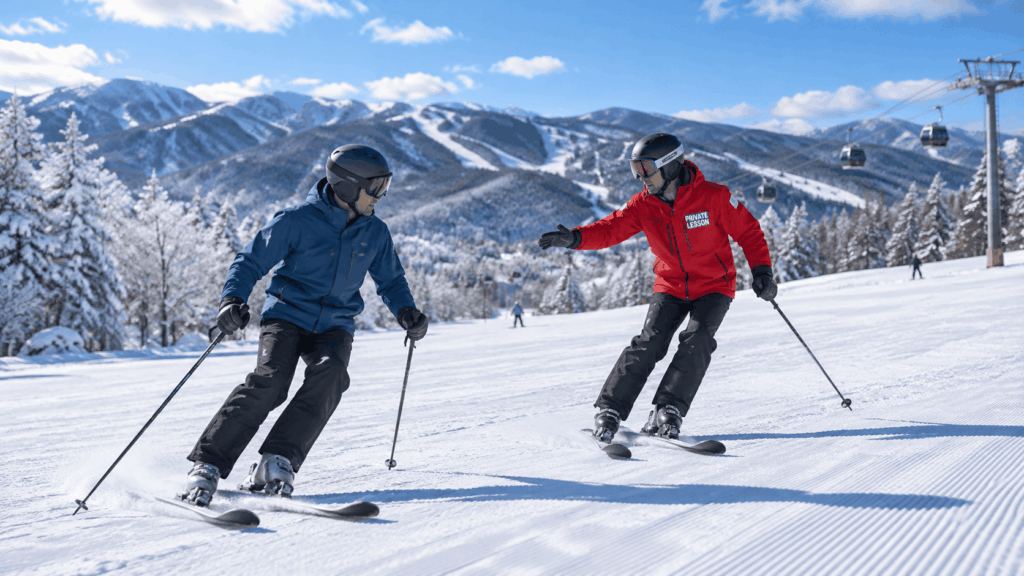
When Is Hokkaido Skiing Less Crowded and More Affordable?
Crowds and cost move together, but not always in the way people expect. The quietest weeks are usually mid-to-late January (after the New Year rush) and March (outside weekends and school holidays). The most crowded are late December to early January, and — in 2027 — the week of 4–11 February, when the Sapporo Snow Festival and Lunar New Year on 6 February land together. That week affects Sapporo hotels, airport transfers and restaurant bookings even if you are skiing an hour away.
On price, the common assumption that March is cheap is only partly true, and it depends entirely on the resort:
| Resort and pass | Period | Adult one-day price |
|---|---|---|
| Niseko United All Mountain Pass | 28 Nov–11 Dec 2026 (early) | ¥8,800 |
| Niseko United All Mountain Pass | 12–23 Dec 2026, 1–22 Mar 2027 (regular) | ¥12,600 |
| Niseko United All Mountain Pass | 24 Dec 2026–28 Feb 2027 (peak) | ¥13,500 |
| Niseko United All Mountain Pass | 23 Mar–4 Apr 2027 (spring) | ¥8,800 |
| Sapporo Kokusai one-day lift ticket | 20 Nov 2026–31 Mar 2027 (regular) | ¥7,000 (¥6,700 online) |
| Sapporo Kokusai one-day lift ticket | 1 Apr–5 May 2027 (spring) | ¥6,500 (¥6,200 online) |
Two important notes. These are 2026–27 season prices and should be re-checked before booking. And the Niseko pass is an all-mountain pass covering four connected areas, while the Sapporo Kokusai ticket covers one resort — so this is not a like-for-like comparison of value. What the table shows is timing: at Niseko, March gets cheaper from 1 March; at Sapporo Kokusai, the regular price holds all the way to 31 March. A ¥500 IC card deposit also applies to lift tickets at Sapporo Kokusai and is refunded when the card is returned.
Accommodation is where the real price differences sit, and they vary too much by property and date for a single figure to be honest. Book early for the holiday weeks, and expect the first week of February to price like a peak period in Sapporo.
Niseko or Sapporo: Does the Best Month Depend on Where You Ski?
Partly, yes. Hokkaido is not one ski destination, and the month that suits a two-week Niseko trip is not necessarily the month that suits a single day out of Sapporo. The two most common trip shapes are a dedicated stay in Niseko United — four connected areas: Grand Hirafu, Hanazono, Niseko Village and Annupuri — and a day trip from Sapporo, most often to Sapporo Kokusai. Other options such as Kiroro Snow World, Rusutsu Resort and Furano Ski Resort exist and suit different itineraries, but they are not needed to make the month decision.
Niseko — Best for a Dedicated Powder Ski Trip
If skiing is the reason for the trip, Niseko is the obvious base: four areas on one pass, extensive side-country access, and enough terrain to fill a week. January and February are the core powder months, with Niseko United’s own season notes describing the period outside the holiday peaks as the most reliable window. The trade-off is cost and crowding: peak pricing runs to 28 February, the Christmas–New Year period is the busiest of the season, and early February brings the Lunar New Year surge. Late March is the value window, with spring pricing from 23 March and night skiing finishing on 22 March.
Sapporo Kokusai — Best for a Ski Day from Sapporo
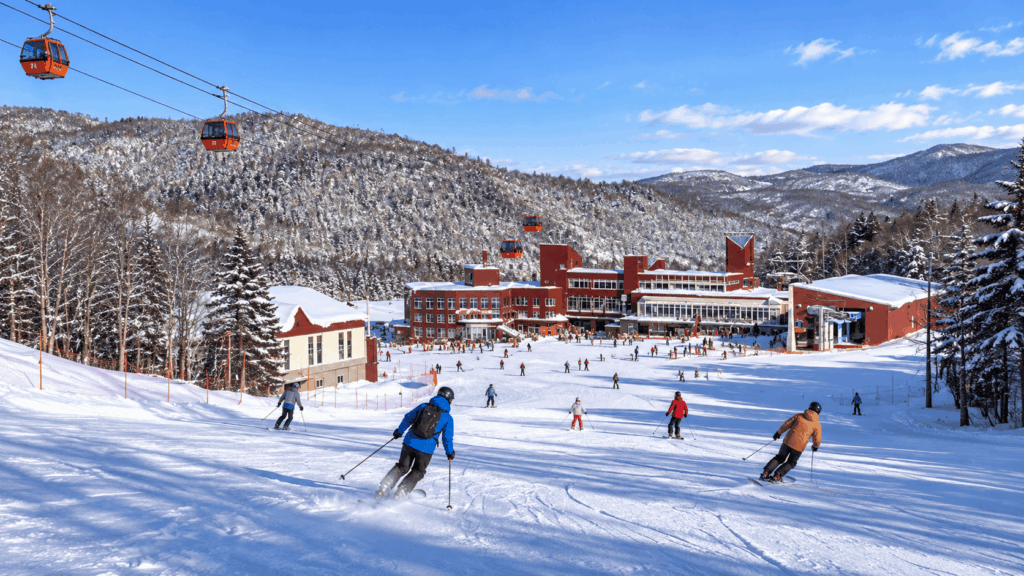
If you are based in Sapporo and want one day on snow without relocating, Sapporo Kokusai is the practical choice. The resort quotes about 60 minutes from downtown Sapporo, roughly 40 minutes from central Otaru and about 100 minutes from New Chitose Airport, all subject to weather and road conditions. The 2026–27 season is scheduled from 20 November to 5 May, with lifts running 9:00–17:00. It is a genuinely snow-reliable mountain with long beginner runs, which is why it works both as a first-timer day and as a powder day — the two just require different preparation.
This is also the resort I know best: my January, March and mid-December experiences in this guide are all from Sapporo Kokusai, not from Niseko. A separate resort guide covers the mountain in more detail, and the broader comparison of ski resorts near Sapporo is useful if you are deciding between Kokusai, Teine and the Rusutsu option.
How to Avoid Rental and Transport Delays at Sapporo Kokusai
The most common way a good snow day goes wrong at Sapporo Kokusai is not the weather. It is arriving without a plan for equipment and the return bus. On a busy January morning, the rental counter can swallow most of the skiing time you had planned for the morning, and the return bus can leave full if you have not reserved a seat.
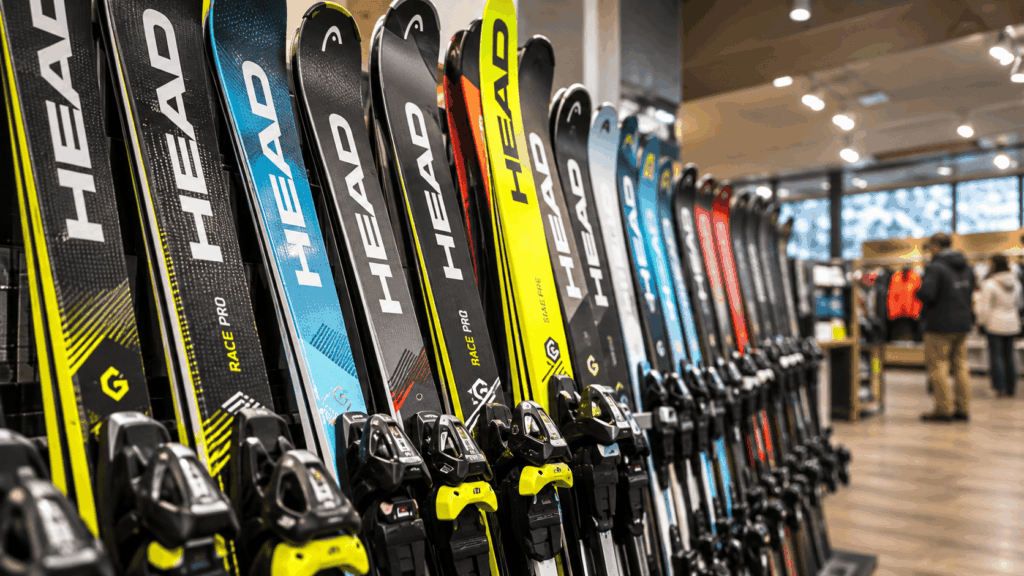
Rental now has three realistic routes. You can rent on site and queue. You can reserve online in advance: the official flow is to book online, receive a QR code, scan it at the resort to issue a receipt, then hand the receipt to the rental counter. That shortens the paperwork but does not guarantee an empty counter — fitting boots and skis still takes time, and peak mornings are peak mornings. The third option is to arrange gear before you travel, either through a package or a rental shop in the city, so your resort time is spent skiing.
For transport, the resort is explicit: a return bus reservation is strongly recommended, and arriving without one risks being unable to board if the bus is full. That is a practical warning, not a marketing line — the last bus of the day is not a good place to discover you have no seat.
- On-site rental: simplest, no planning, but the longest potential wait on peak mornings.
- Online rental reservation: less paperwork at the counter, same physical fitting time, still worth arriving early.
- Bus and lift package (Hokkaido Access Network): runs 2 December 2026–31 March 2027, adult ¥9,500, child ¥7,400, and includes round-trip bus plus a one-day lift ticket. Rental and lessons are not included, and the lift pass is collected at the information desk on the first floor of the ski centre.
- Guided day trip from Sapporo: bundles round-trip transport with optional equipment, lift and lesson components, which suits travelers who would rather not assemble the pieces themselves.
If sorting buses and rental paperwork is the part of the trip you would rather not manage, it is worth comparing a Sapporo Kokusai day trip that includes round-trip transport, and checking exactly which equipment, lift and lesson options each plan covers before you choose. Inclusions differ between products, and “ski day trip” can mean anything from transport only to a fully equipped day.
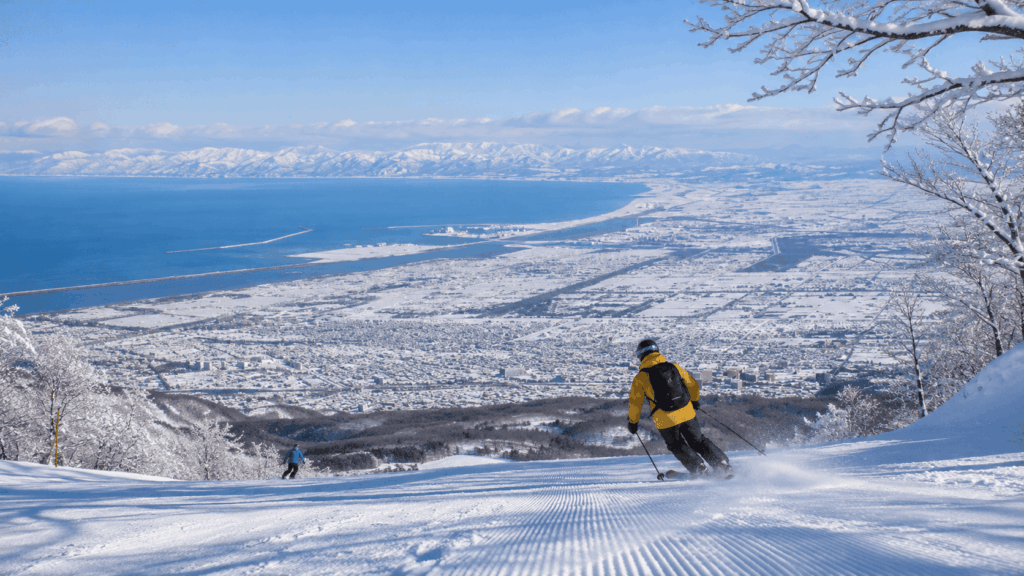
If avoiding separate transport, rental and lesson arrangements matters more than skiing at one particular resort, a guided day at Sapporo Teine is worth comparing. This is a Teine experience, not a transfer package to Sapporo Kokusai, so it suits travelers who are flexible about which Sapporo-area mountain they visit.
Why I’d book this one
- Beginner-focused instruction: Recent travelers frequently mention patient instructors, clear explanations and a supportive environment for people trying skiing or snowboarding for the first time.
- Fewer separate arrangements: Selected packages combine Sapporo-area transfers, equipment and instruction, making it easier to organize a single ski day without managing every booking independently.
- Options to compare before committing: The available packages let you check lesson formats, equipment, lift-pass inclusions and cancellation terms. Confirm the exact plan details, as not every package includes the same services.
For travelers who want a structured first ski day with English-language instruction, see live availability, package options and recent traveler reviews for the Sapporo Teine guided ski experience. Check the age requirements and included services before choosing a date.
Is Mid-December Worth It for Skiing and an Otaru Stay?
For a certain kind of trip, mid-December is the best-value window of the season — but only if the snow cooperates. The appeal is not just quieter slopes. It is that you can ski a real mountain in the morning and be in a different town with a completely different atmosphere by evening, before the holiday crowds arrive.
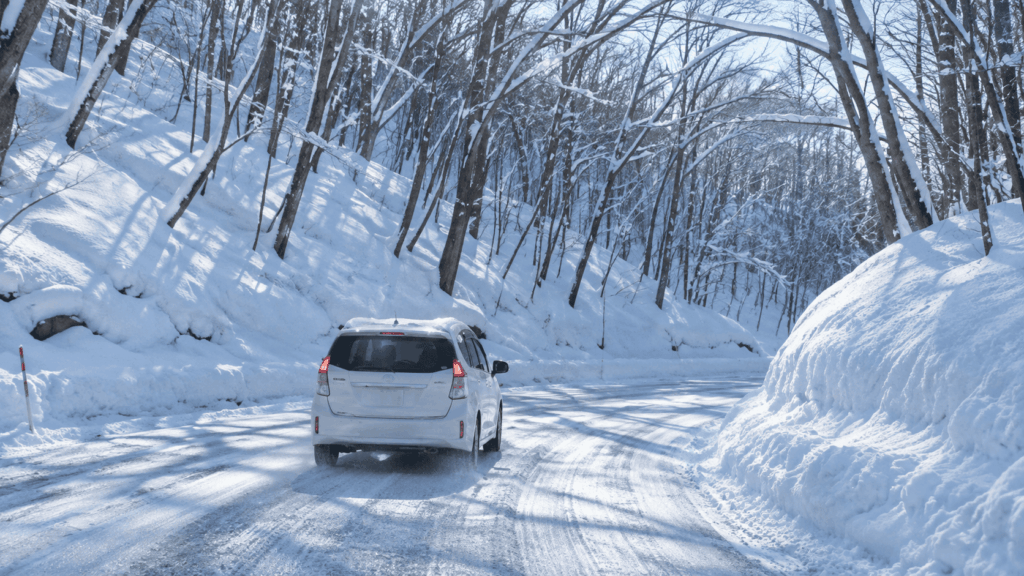
Kai’s tip: My own mid-December pattern is to ski Sapporo Kokusai and then drive to Otaru to stay the night, finishing with sushi and seafood in the evening. The drive feels like about 40 minutes in good conditions, and the contrast — a snowy mountain in the afternoon, a port town with canals and seafood at night — is the reason I keep coming back to this route rather than staying in Sapporo. Two things to plan around: winter roads add time, and Hokkaido Route 1, the Otaru–Jozankei road over Asari Pass, has a scheduled overnight closure from November 2, 2026 to April 20, 2027, between 19:00 and 07:00. You cannot use the restricted section during those hours; restrictions may change with road and weather conditions.
The trade-offs are real. In mid-December the snow base may still be thin, some courses may not be open, and the Snow Escalator at Sapporo Kokusai is not scheduled to start until late December — so a family with young beginners may find the learning area incomplete. Check the resort’s opening status and course list for your exact dates, and keep the itinerary flexible enough to swap the ski day if conditions are poor.
One thing this route does not suit is a round-trip day tour from Sapporo, which returns you to the city the same evening. If you are sleeping in Otaru, plan the transport accordingly. A winter itinerary in Otaru is the natural next read if you are building the trip around the town rather than the mountain.
How to Choose Your Hokkaido Ski Dates Before Booking
Once you have picked a month, the remaining decisions are about the specific week and the logistics. Work through these in order:
- Choose your priority: powder, quieter slopes, or sightseeing. You cannot optimize for all three in the same trip.
- Choose the resort and confirm its scheduled opening and closing dates. They differ by weeks between mountains.
- Look at the week, not just the month. Mid-January and late January behave differently; 4–11 February 2027 is not a normal February week.
- Compare transport, rental and lesson arrangements. Decide what you will book in advance and what you will arrange on the day.
- Check the snow report, weather forecast and lift status in the days before you leave. Storm days close upper lifts, and a flexible plan is worth more than a perfect itinerary.
For a single ski day from Sapporo, check current transport options, rental arrangements and availability for Sapporo Kokusai before you lock in the rest of the itinerary — the bus and the rental counter are the two things that most often decide how the day goes.
If you already know you want to ski specifically at Sapporo Kokusai, compare the available Sapporo Kokusai ski day-trip packages and current availability. Check which options include transport, equipment, lift access or lessons, as the inclusions differ by package.
Frequently Asked Questions
Is January or February better for skiing in Hokkaido?
January usually delivers the most frequent light, dry snowfall, which is why it is the first choice for powder-focused trips. February has the deepest snowpack of the season, so more terrain tends to be open and covered. If you can choose your week, mid-to-late January is the best bet for fresh snow; February is the safer bet for coverage.
Is March too late to ski in Hokkaido?
No. Most major resorts stay open well into March, and snow depths remain substantial at snow-reliable mountains — the Kutchan average deepest snow depth in March is still 170 cm. What changes is the snow itself: fresh snowfall becomes less frequent and the surface softens through the day. March suits relaxed skiing better than powder hunting.
Can you ski in Hokkaido in mid-December?
Yes, at resorts with reliable early snow such as Sapporo Kokusai, which plans to open on 20 November 2026. But mid-December is conditional: the base may still be building, some courses may be closed, and beginner conveyor lifts at Sapporo Kokusai are not scheduled to start until late December. Check the snow report and open-course list for your dates.
When is Hokkaido skiing the least crowded?
Mid-to-late January, after the New Year holiday, and March outside weekends and school breaks are usually the quietest. Late December through early January is the busiest period, and in 2027 the Sapporo Snow Festival (4–11 February) overlaps with Lunar New Year on 6 February, creating a second peak week that affects Sapporo especially.
What is the best month to ski in Hokkaido for beginners?
March is usually the best month for beginners and families. The snow is still deep at most resorts, but slopes are quieter, lift queues are shorter and it is easier to take breaks. Confirm that your resort has appropriate beginner runs and that lessons or conveyor lifts are operating — at Sapporo Kokusai, Forest Trail and Märchen Trail are the official beginner courses.
Final Verdict: Which Month Should You Book?
There is no single best month, only the best month for the trip you are actually taking. Here is how the decision usually lands.
For first-time visitors to Hokkaido
Book mid-to-late January. You get the snow that Hokkaido is famous for, the widest choice of resorts, and — if you avoid the New Year week — manageable crowds. Base yourself in Niseko if skiing is the main event, or in Sapporo with a day at Sapporo Kokusai if you want the city as well.
For powder-focused advanced skiers
Book January or February and choose the week, not the month. January has the higher chance of fresh overnight snow; February has the deeper base and more reliable access to steeper terrain. If your dates are flexible, mid-to-late January is the sharpest choice; if you need maximum terrain open, February after the 11th avoids the holiday overlap.
For families with young children
Book March. Sapporo Kokusai’s Forest Trail and Märchen Trail give you long, genuinely gentle beginner runs, the mountain is calmer, and finding a table at lunch stops being a challenge. Avoid relying on the Snow Escalator before late December, and plan around firmer mornings and softer afternoons.
For travelers with one ski day out of Sapporo
Book any core-season month, but fix the logistics first. Sapporo Kokusai is about 60 minutes from downtown Sapporo, and the return bus reservation matters more than the date. If you are visiting in January, reserve rental online or arrange gear in the city; if you are visiting in March, you get the easier version of the same day.
For repeat visitors who want something different
Book mid-December and pair Sapporo Kokusai with a night in Otaru. You trade guaranteed coverage for quiet slopes, a different town, and a trip that is about more than vertical metres. Just check the snow base and the Otaru–Jozankei road closure before you commit to an evening drive.
Whichever month you choose, the pattern is the same: the snow is rarely the problem. The queues, the bus, the rental counter and the visibility are what decide whether a good month turns into a good trip.

Hi, I’m Kai. I’m a Tokyo-based travel writer, tourism industry insider, and the author of a published guidebook for international visitors to Japan. With over 10 years of professional experience at a leading Japanese tourism company, my mission is to help you skip the tourist traps and navigate Japan’s best destinations like a local. I believe the perfect day trip is like a traditional kaiseki meal: a beautiful balance of precise planning and unforgettable seasonal discovery. When I’m not out conducting field research, you’ll usually find me drafting new itineraries with one of my favorite fountain pens!