
Furano has an evening. What it does not have is a nightlife district in the Sapporo or Niseko sense, and if you arrive expecting a strip of bars you will spend most of the night checking your watch. What it does have is an illuminated craft village in the forest, a ski hill that keeps lifts turning after dark, a hotel onsen, and a handful of small bars spread across three separate parts of town.
The catch — and the reason this guide exists — is that the quality of a Furano evening depends almost entirely on the season and the clock. In winter the sun is gone by late afternoon and the lights have hours to work with. In early July the sun sets at about 7:14 p.m., but Ningle Terrace has extended July–August hours until 8:45 p.m. That gives you a genuine after-dark window, not just a few minutes of dusk. Outside July and August, the earlier 7:45 p.m. summer closing time can make timing much tighter. Same place, same lights, different experience depending on the month.
Is Furano Worth Visiting at Night?
Yes, if what you want is a quiet, atmospheric evening. Ningle Terrace lit up in the forest, dinner without a reservation scramble, a soak in the onsen, one drink somewhere small — that is a genuinely good night, and it is the reason staying overnight here makes sense.
No, if your main goal is clubs, bar-hopping or late-night energy. Furano’s bars are few, spread out, and mostly close around midnight. There is no district where you can walk out of one door and into the next ten.
- Winter is the stronger season after dark. Sunset comes early, the lights read properly against snow, and night skiing is running.
- Summer needs timing, not enthusiasm. You have to match your visit to sunset rather than assume the lights will be at their best whenever you arrive.
- One night is enough for most travelers. Two if you are skiing and want a rest day, or if you are using Furano as a base for Biei the next morning.
If seeing Ningle Terrace after sunset is a priority, the logistics of getting back are what usually decide the trip — not the attraction itself. Staying within walking distance of the terrace removes that problem entirely, which is why the hotel area around New Furano Prince comes up repeatedly in this guide. Travelers who try to build the evening around the last bus tend to end up leaving early.
Summer vs Winter: What Furano’s Evenings Actually Feel Like
This is the single most useful table in this article. Almost every disappointment people report about Furano at night traces back to one of these two rows being different from what they assumed (for a deeper dive into the snowy season, see what to expect in Furano during winter).
| Factor | Summer (June–August) | Winter (December–March) |
|---|---|---|
| Sunset | Around 7:15 p.m. in early July (civil twilight until roughly 7:50 p.m.); nearer 6:20 p.m. by late August | Shortly before 4:00 p.m. around the winter solstice; around 4:30 p.m. by late January |
| Ningle Terrace after dark | July–August: closes at 8:45 p.m., leaving time after twilight in early July. Other summer months: usually 7:45 p.m., so check the sunset time | Closes at 8:45 p.m., with several hours of darkness beforehand in midwinter |
| Night skiing | Not operating | Mid-December to March 21, generally 4:00–6:00 p.m.; until 7:30 p.m. on weekends, holidays and the New Year period |
| Onsen (day use) | 1:00–6:00 p.m. only in July and August | 1:00–11:30 p.m. |
| Walking conditions | Wooden walkways generally dry, but the steps and slopes are unlit in places | Snow and ice on the walkways and stairs; proper footwear matters |
| Best for | Drive-based itineraries, late-sunset Ningle Terrace visits (especially July–August), and a relaxed dinner | Skiers, couples, anyone who wants a genuinely dark, snowy evening |
| Main drawback | Outside July–August, an earlier closing time can leave a shorter after-dark window | Cold, slippery underfoot, and much of the area shuts down in November |
A note on those hours: the hotel’s detailed Ningle Terrace shop listing gives 10:00 a.m.–8:45 p.m. in July and August, 11:00 a.m.–7:45 p.m. in the other summer months, and 12:00–8:45 p.m. in winter. A more general hotel facility page does not show the July–August extension, so check the current notice for your exact date; individual shops also set their own hours and closing days. For November 2026, the terrace is scheduled to close on November 1, open November 2–4, close again November 5–26, and reopen at noon on November 27. Sunset times shift over the season, so confirm the actual time before planning your visit.
What Is Furano After Dark Like?
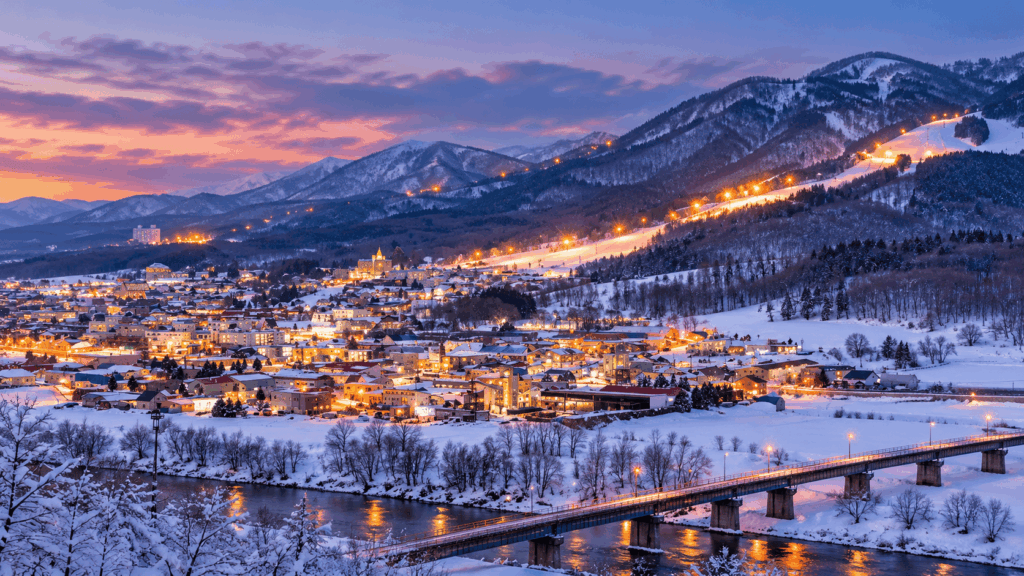
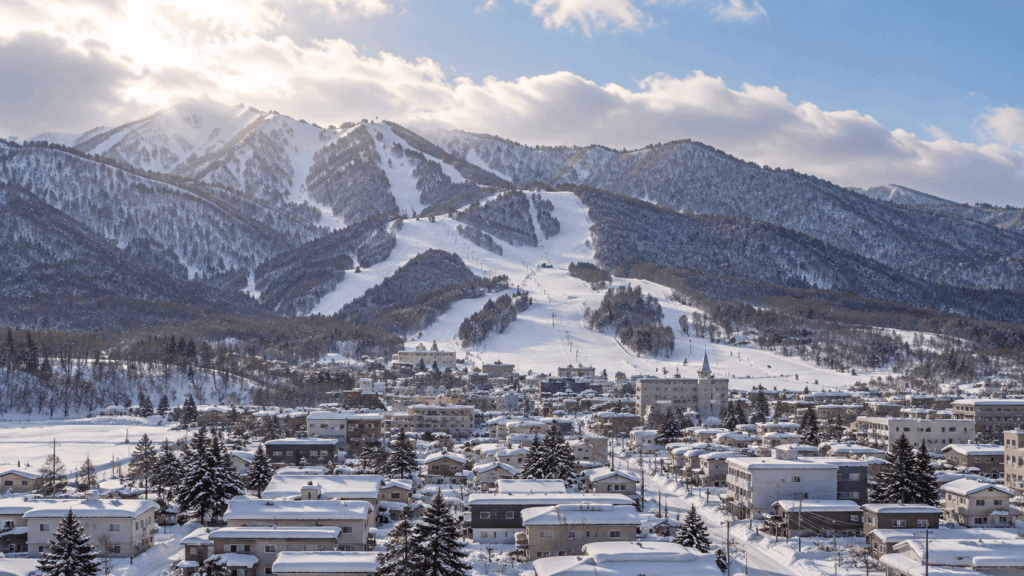
Furano is not one town at night; it is three separate places, and knowing which one you are in explains most of what you will or won’t find.
- The resort area around New Furano Prince Hotel. Ningle Terrace, the onsen, Soh’s BAR and, in winter, the ski slopes and the snow-lit Kan Kan Mura area are all here. Quiet, walkable within itself, and almost entirely dependent on the hotel for evening life.
- Kitanomine. The other ski base, with pensions, a gondola, and a small cluster of dining and bar options that cater to people coming off the hill. Livelier in winter than in summer.
- The station area and downtown. Around JR Furano Station and Furano Marche you find the largest concentration of restaurants and the town’s small music and cocktail bars. This is the closest thing to a night out, but it is still a few streets, not a district, and many kitchens close earlier than visitors from Tokyo or Osaka expect.
The reviews I read before my first visit split along a predictable line, and they still do. People who came for a quiet night with good food and a lit-up forest tend to describe it warmly. People who came expecting entertainment, or who arrived in summer assuming they could turn up at 9 p.m. after the terrace had closed, tend to describe it as “nothing much.” Both are accurate descriptions of the same town — the difference is expectation, and it is worth setting yours before you book.
1. See Ningle Terrace at Dusk and After Dark
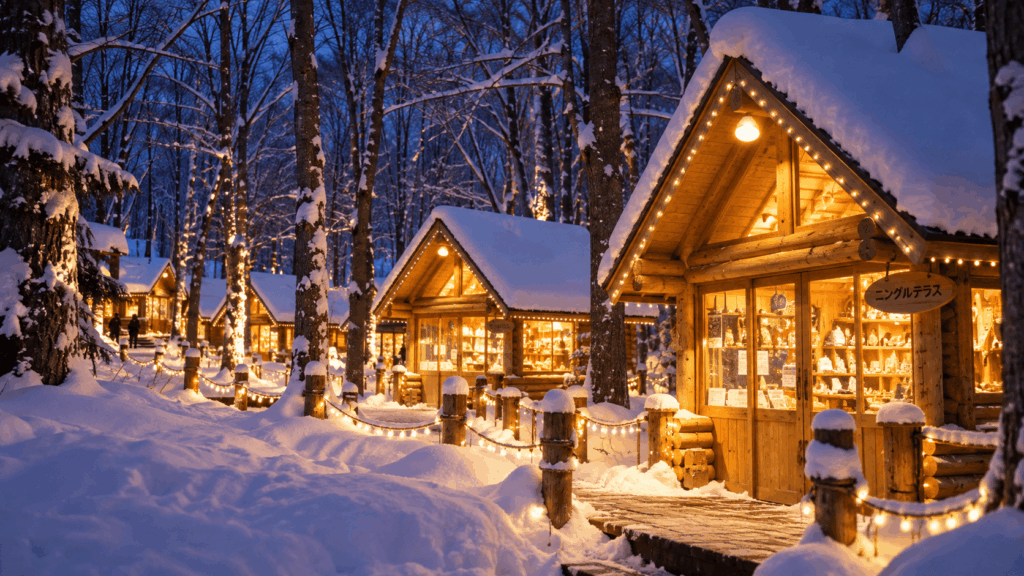
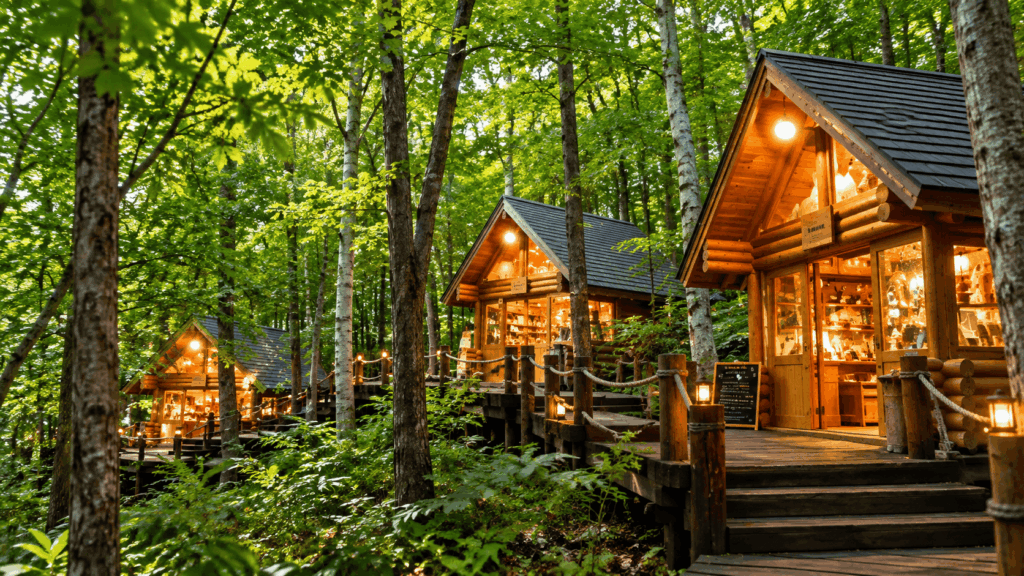
Ningle Terrace is the anchor of any Furano evening: 15 log cabins set in forest about a two-minute walk from New Furano Prince Hotel, selling Hokkaido craft rather than souvenirs — wood candles at Mori no Rousokuya, silver snowflake jewellery at Yukino Kesshou, glasswork at Mori no Garasuya. Entry is free. The shops are small, individually run, and several close on irregular days, so treat the full row as a bonus rather than a guarantee.
What makes it work at night is the lighting: warm orange light spilling from the cabins onto the walkways, with the forest going dark around them. It is a genuinely lovely half hour to an hour, and it photographs well. It is also compact — travelers who expect a large illuminated park are usually surprised by how quickly they reach the far end.
One practical warning: COFFEE HOUSE Chuchu no Ie, the little café inside the terrace that appears in a lot of older blog posts, has a separate limited schedule. The hotel listed it as open July 4–August 23, 2026, from noon to 7:45 p.m. (last order 7:30 p.m.), even though the craft shops could remain open later. Do not assume the café follows the terrace’s closing time; check its current opening dates before planning around a drink there.
When Is the Best Time to Visit Ningle Terrace?
There is no single best time. It depends on what you came for, and in summer the answer is constrained by the closing time.
| Your goal | Best timing | What to expect |
|---|---|---|
| Photographs with the lights clearly visible | 20–40 minutes after sunset | Best colour in the sky, but also the busiest window |
| Fewer people | Later in the evening, or right at opening | Quieter, but outside July–August you may run into the earlier closing time |
| Older travelers or anyone unsteady on stairs | Shortly before sunset, while there is still ambient light | Easier to see the steps; still atmospheric |
| Shopping rather than atmosphere | At least 45 minutes before closing | Shops begin winding down near the end of the day |
In winter the math is forgiving: the sun is down by mid-afternoon and the terrace stays open until 8:45 p.m., so arriving at 5:00 or 6:00 p.m. still gives you full darkness and fewer people than the immediate post-sunset rush. July and August also have a genuine after-dark window thanks to the extended 8:45 p.m. closing time. In early July, arriving around 7:30 p.m. means you can watch the sky darken and still have roughly an hour to enjoy the lights. In June or September, when the usual summer closing time is 7:45 p.m., the window can be shorter; do not plan from a July timetable if you are travelling in another month.
Kai’s tip: The thing that catches people out here is that darkness and crowds move in the same direction. The light gets more dramatic as the sky goes properly dark, and that is exactly when the tour groups and day-trippers arrive. If you want the photograph, accept the company. If you want the forest to yourself, go earlier and accept a paler sky. Trying to get both at once is what leaves people frustrated.
Is Ningle Terrace Difficult to Walk Around at Night?
Yes, more than the photos suggest — and this is the detail most guides leave out. The walkways between the cabins are raised wooden boardwalks, and they are not flat. There are steps, short slopes and changes in level as the path follows the forest floor, and once the surrounding trees go dark, the contrast between the lit cabins and the unlit path makes those changes harder to read than they would be in daylight.
In winter, add snow and ice. The boardwalks are cleared and maintained, but they are still wooden surfaces in freezing conditions, and a compacted layer of snow at the edges of the steps is normal. Anyone in smooth-soled shoes, heels or fashion boots will notice it immediately.
Kai’s tip: I have walked groups through here where the fit twenty-somethings were fine and the guests in their seventies were visibly working hard on the stairs, and it had nothing to do with fitness — it was the unlit level changes and the cold. If you are travelling with older parents, go while there is still some light in the sky, take the route slowly, and do not treat it as a quick photo stop on the way to dinner. Sturdy shoes with tread are the single easiest thing you can change.
Practical read: young adults and couples will have no trouble at all. Families with toddlers should use a carrier rather than a stroller, since the steps make wheels awkward. Anyone with limited mobility should treat Ningle Terrace as a short, slow visit rather than a full evening, and should not count on doing it comfortably after dark in winter.
2. Go Night Skiing in Winter
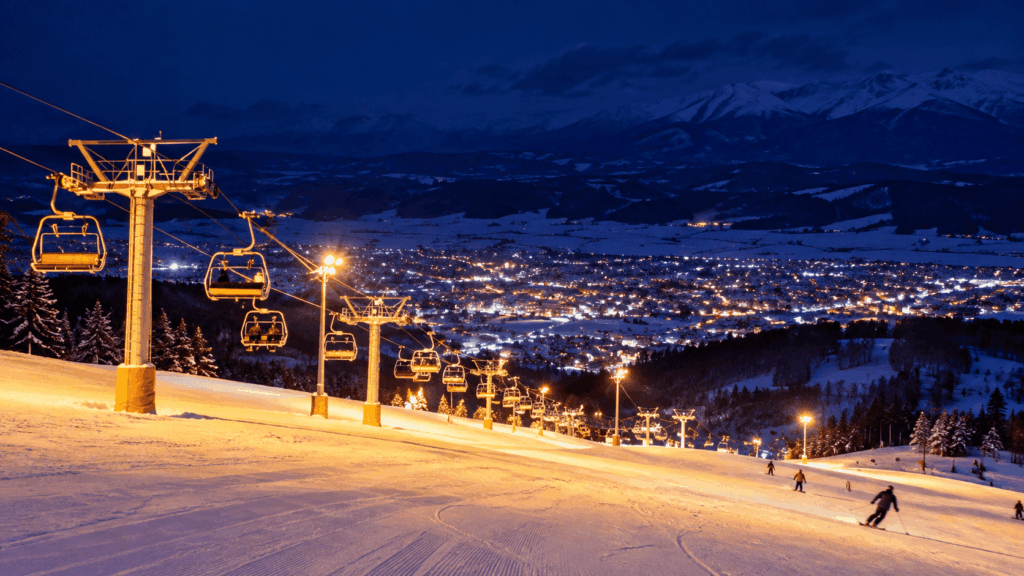
For the 2026–27 season, Furano Ski Resort plans night skiing from mid-December to March 21 in the Furano Zone, and from late December to March 21 in Kitanomine. Hours are generally 4:00–6:00 p.m. on weekdays, extending to 7:30 p.m. on weekends, public holidays and December 26–January 3. The two zones start on slightly different dates — the Furano Zone side typically opens night skiing first, with Kitanomine following in late December — so check the current season’s schedule rather than assuming both are running on the same night.
For the 2026–27 season, published night tickets sit around 3,100 yen for weekdays and 3,900 yen on weekends and holidays, with children of elementary school age and younger free. Day passes are separate. Prices change season to season, so treat those as a guide.
The important thing to understand is that night skiing is a skiing product, not a sightseeing one. You are paying for lit groomed runs, not for a view. Non-skiers will get more out of the terrace and the onsen. Skiers, on the other hand, get something genuinely useful: two extra hours on snow without burning daylight, followed by a soak and dinner within walking distance. If you are staying at New Furano Prince Hotel, you can be off the hill and in the onsen without getting back in a car.
3. Warm Up in an Onsen After a Day Out
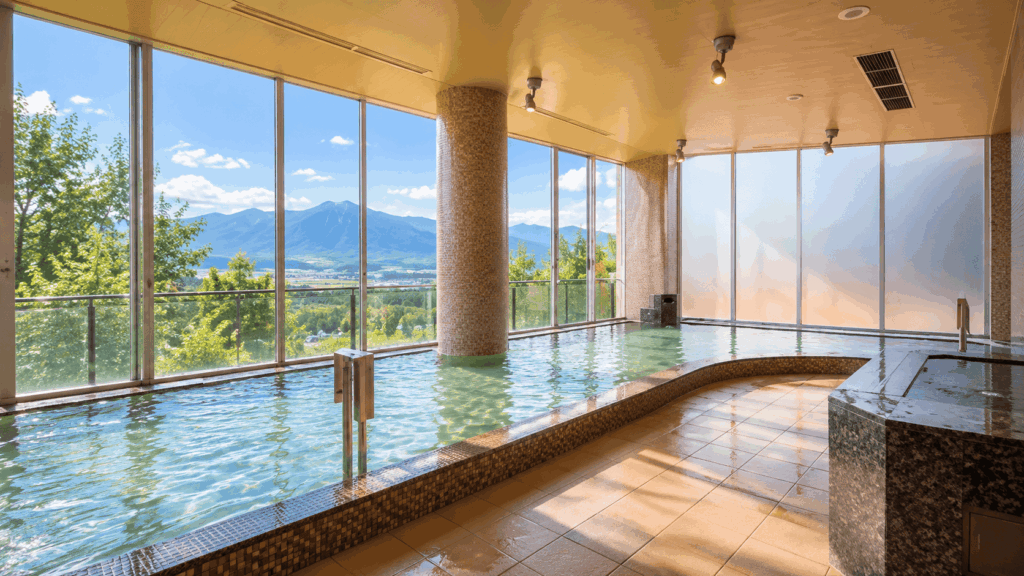
Furano Onsen Shisai no Yu, inside the New Furano Prince Hotel complex, is the obvious choice for an evening soak (though you can find other onsen options in the area). Outside July and August, day visitors can enter from 1:00 p.m. until the last admission at 11:30 p.m. (bathing ends at midnight). The published day-use price is ¥1,700 for adults and ¥850 for children aged 4 through elementary school. In July and August, day use ends at 6:00 p.m., so it is not a late-night option for non-guests.
Hotel guests can use the bath in the morning too, from 5:30 to 10:00 a.m. (last admission 9:30 a.m.), which can be a particularly pleasant way to start a ski day.
There is a seasonal catch that matters more than most guides admit: in July and August, day-use bathing finishes at 6:00 p.m. If you are visiting in summer and picturing a late-evening outdoor bath after dinner, that plan does not exist. Winter is the reverse — last admission is 11:30 p.m. and bathing closes at midnight, so an onsen after night skiing or Ningle Terrace works comfortably.
Two housekeeping notes. The onsen has maintenance closures, including some dates in November, so check before making a special journey. And as is common in Japan, guests with tattoos may face restrictions, and cameras and phones are not permitted in the bathing areas. If either is a concern, ask at the front desk before paying.
This is where the geography of Furano really pays off. Ningle Terrace, the onsen and a bar are all within a short walk of each other at the resort end of town. That combination — lights, hot water, one drink, bed — is the version of a Furano evening that most people are actually looking for, and it is very hard to assemble if you are staying downtown without a car.
4. Have a Drink: Furano’s Small Bar Scene
Furano does have bars. What it does not have is a bar district. The options are scattered across the resort area, Kitanomine and the streets around the station, which means one or two drinks in one place is a realistic evening and a crawl across all of them is not.
| Evening option | Best for | Time needed | Area | Main caution |
|---|---|---|---|---|
| Ningle Terrace | Couples, photographers, anyone wanting atmosphere without a cover charge | 45–90 minutes | New Furano Prince Hotel | Earlier closing in June and September; steps and winter ice underfoot |
| Kan Kan Mura (winter only) | Families, travelers who want a winter night outdoors without skiing | 45–60 minutes | Beside Ningle Terrace | 2026–27 dates: December 23–February 28, 4:00–8:00 p.m. (last entry 7:30 p.m.); ¥500 per adult, children through elementary school free |
| Shisai no Yu onsen | Non-drinkers, skiers, anyone sore from a day out | 60–90 minutes | New Furano Prince Hotel | Day use ends at 6:00 p.m. in July and August |
| Night skiing | Skiers and snowboarders with their own gear or rentals | 2 hours | Furano Ski Resort | Not a sightseeing activity; separate night ticket required |
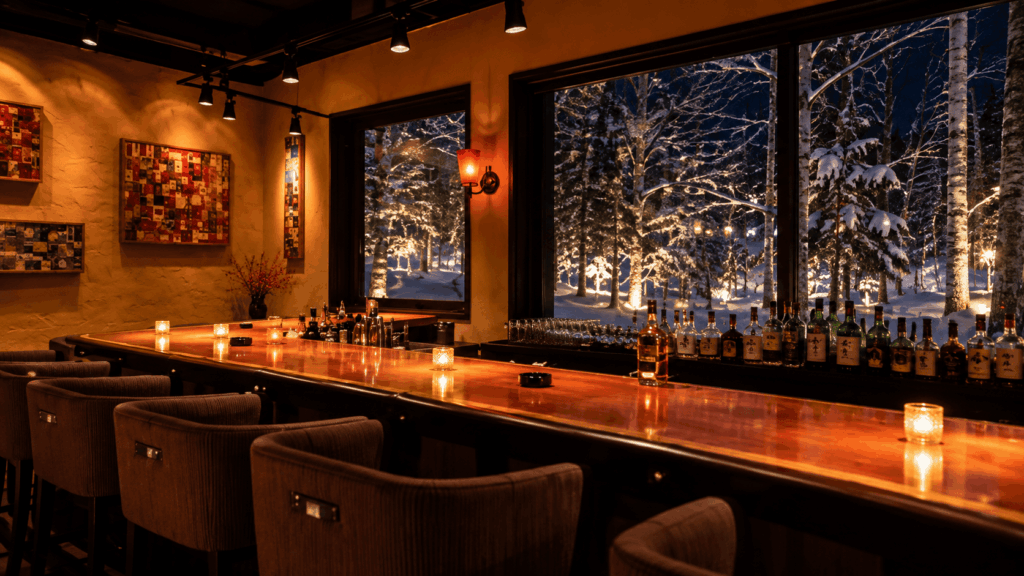
| Soh’s BAR | Couples and adults wanting a quiet, grown-up drink | 60–90 minutes | Forest near New Furano Prince Hotel, about 7 minutes on foot | Aged 20 or over only; 36 seats; confirm winter opening and maintenance dates |
| BAR&DINING AJITO | Skiers after a casual dinner, small groups | 90 minutes | Kitanomine | Generally closed Mondays; food orders finish before midnight |
| TEIRYUJO FURANO MUSIC & BAR | Music-minded travelers, solo drinkers, people staying near the station | 60–90 minutes | Downtown, about 5 minutes from JR Furano Station | Irregular closing days; check before walking over |
| the bridge bar | Cocktail drinkers staying downtown | 60 minutes | Downtown, Saiwai-cho | Limited opening days; small room |
In character: Soh’s BAR is the most distinctive of the four, a log-and-stone cabin set in the trees a short walk from the hotel, with a cigar-bar feel and a strict age-20-and-over rule that makes it unsuitable for families. AJITO in Kitanomine is the après-ski option, with darts and billiards and a menu built for hungry people. TEIRYUJO near the station is the one with a DJ booth and a younger, more local crowd. the bridge bar is a small cocktail room in the downtown grid, the kind of place you go for one good drink rather than a long night.
Opening hours in Furano are not set in stone. Several of these places run irregular closing days, close earlier in summer, or shut entirely in the shoulder season, and a bar that is busy in February can be dark in June. Check the day before, or ask your accommodation — they will usually know who is open that week. And expect the town’s restaurants to wind down earlier than in Japan’s big cities; a 9:00 p.m. dinner is late here, not normal.
Which Area Should You Stay In for the Evening?
Because the bars are spread out, where you sleep decides what your evening looks like far more than any single venue does. For a full breakdown of neighborhoods, see our guide to where to stay in Furano.
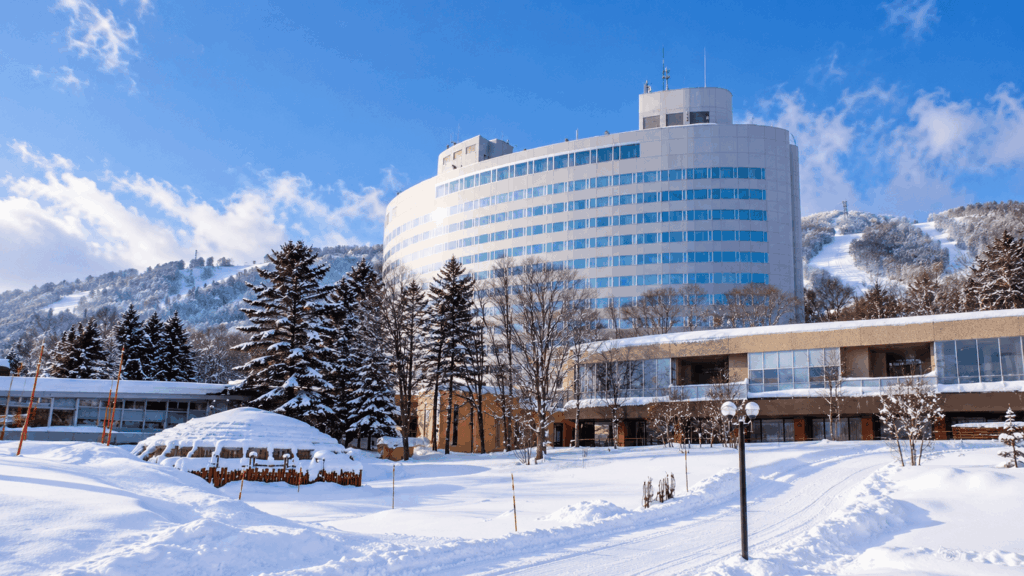
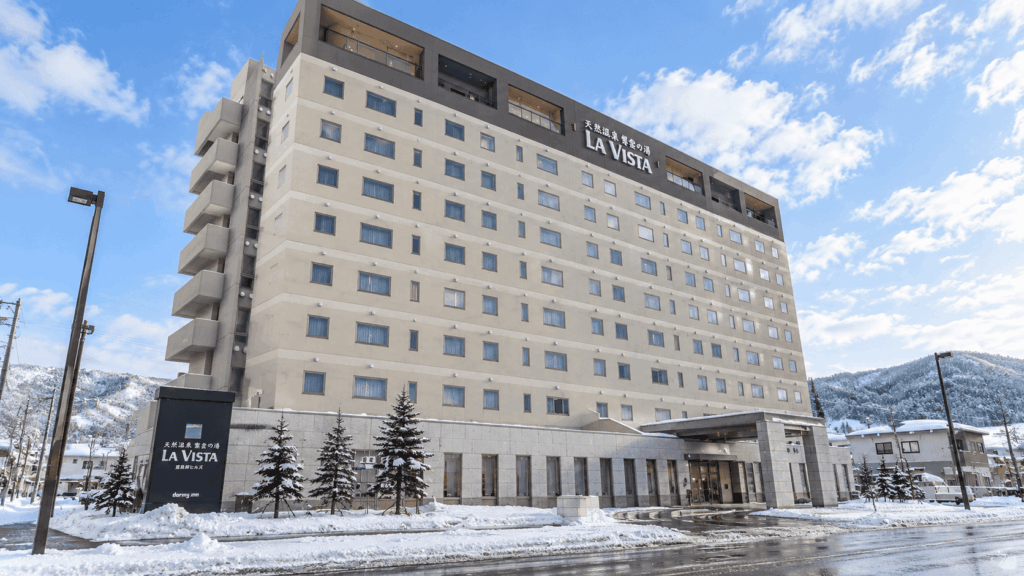
- New Furano Prince Hotel area. Best if your evening is Ningle Terrace plus onsen plus one quiet drink. Everything is walkable, the ski slopes are at the door, and you never have to think about a return trip. The trade-off is that you are dependent on the hotel and its immediate neighbours for food, and there is nothing resembling a town to wander into. The hotel is also mid-way through a renovation scheduled to finish in late November 2026, adding a new outdoor terrace and a direct path to the onsen — worth knowing if you are booking the 2026–27 winter.
- Kitanomine. Best for skiers who want a gondola at the door and a handful of restaurants and bars within a few minutes’ walk. More independent dining than the resort area, less atmosphere after dark, and still a taxi or shuttle ride from Ningle Terrace.
- Furano Station and downtown. Best if you want to eat and drink without a plan, or if you are arriving or leaving by train. You get the widest choice of restaurants and the two downtown bars, but you lose the forest-at-night experience unless you drive or take a taxi out to the resort and back.
If a quiet, scenic evening is the point of your stay, the resort area is the logical base. If you want to eat your way through town and fall into bed afterwards, stay downtown and treat Ningle Terrace as a taxi excursion rather than a stroll.
If you want Ningle Terrace, the onsen and a quiet evening without arranging a return taxi, staying at the resort is the simpler choice. Check current room rates and guest reviews for Shin Furano Prince Hotel on Klook before finalising your dates.
How to Get Around Furano at Night Without a Car
This is the part of the planning that most visitors get wrong, and it is worth reading before you book accommodation rather than after.
The regular Lavender Line bus connects New Furano Prince Hotel with Kitanomine, JR Furano Station, Biei, Asahikawa Airport and Asahikawa. It is useful, cheap and requires no reservation. But look at the direction of travel: on the current timetable, the last departure from New Furano Prince Hotel toward the station and Asahikawa leaves at 3:55 p.m. Buses do reach the hotel from the Asahikawa side until around 9:20 p.m., so getting out here in the evening is possible. Getting back to town after dinner is not.
In winter, Furano has also run an Evening Shuttle Bus linking the resort area, Kitanomine and downtown. The confirmed 2025–26 service ran December 19–March 15, charged ¥500 per ride, and did not operate on several holiday and event dates. That is a previous-season schedule, not confirmation for 2026–27; look for a new timetable before assuming you can return after dinner. Separately, a new ¥500 ski shuttle is scheduled from December 1, 2026 to March 31, 2027, but the initially announced departures are mainly morning trips toward the ski area plus one noon return. Do not confuse that ski shuttle with a guaranteed evening ride back to town.
That leaves taxis, of which Furano has a limited number, especially late at night and in heavy snow. Hotels can book one for you; flagging one down on a quiet street is not a plan. If you are driving, note that winter roads here demand real caution and that Japan’s drink-driving rules are strict and enforced, which effectively means one of you is not drinking.
Kai’s tip: The mistake I see most often is an itinerary built around the last bus without checking which direction it runs. People assume a resort this size must have an evening service into town, book a downtown restaurant for 7:00 p.m., and then discover the only way back is a taxi that has to be ordered. Treat your accommodation choice as your transport plan: if you want a late, relaxed evening, sleep within walking distance of it.
Sample Furano Evening Itineraries
Three versions, depending on season and appetite. Adjust the order to the closing times on your dates rather than following them literally.
A Quiet Summer Evening
Finish your sightseeing in the late afternoon and eat dinner early — around 6:00 p.m. is normal here. In July or August, head to Ningle Terrace around sunset, watch the lights come into their own as the sky darkens, and enjoy the extended opening until 8:45 p.m. Then either a short drink at Soh’s BAR or an early night. In June or September the usual closing time is 7:45 p.m., so adjust the dinner order and arrive earlier. This can be a genuinely dark summer evening in July and August, not just a brief dusk visit.
A Winter Evening for Skiers
Ski through the afternoon, take the 4:00–6:00 p.m. night session if the lifts are running on your dates, then walk to Ningle Terrace for the 6:30–8:00 p.m. window while the shops are still open. From there, either the onsen (last admission 11:30 p.m. outside July and August) or a drink at Soh’s BAR, and dinner wherever you can get a table. If you are travelling with children, swap the bar for Kan Kan Mura, the snow-and-ice illumination area next door to the terrace. For 2026–27 it is scheduled December 23–February 28, 4:00–8:00 p.m. with final entry at 7:30 p.m.; admission is ¥500, free through elementary school age. In practice the terrace, the onsen and dinner will fill the whole evening — you will not need all of it.
A Night Out Near Downtown Furano
For travelers who are not interested in the illuminated forest at all: dinner downtown around 6:30 p.m., then TEIRYUJO for music or the bridge bar for a cocktail, and walk back to your accommodation. Two venues is a good night here. Three is ambitious given the spacing and the closing times. This version works best if you are staying near the station, and it is the one itinerary that does not require a car, a shuttle or a taxi.
Should You Stay Overnight in Furano?
Stay overnight if:
- You want to see Ningle Terrace after sunset rather than at midday
- You are skiing and would rather not drive back down a mountain road in the dark
- You are travelling as a couple and a quiet dinner plus a lit forest sounds like a good evening
- You want onsen, dinner and a drink without arranging transport between them
- You are heading to Biei or the Furano countryside the next morning and want to start from here
Consider a day trip instead if:
- Nightlife is your only reason to stay
- You are expecting clubs, late-night venues or a street of bars
- Your itinerary already requires returning to Sapporo or Asahikawa that evening and you do not especially value a slow night (if so, see our guide on planning a day trip from Sapporo)
The honest version: Furano is not worth a night for the nightlife. It is worth a night because the alternative — a rushed afternoon visit to Ningle Terrace, a drive back in the dark, and no onsen — is a worse version of the same day. Families with young children get the extra option of Kan Kan Mura in winter, while July and August offer a comparatively mild evening with extended Ningle Terrace hours. Couples and solo travelers tend to prefer the resort area for exactly the reasons it bores people who wanted a town.
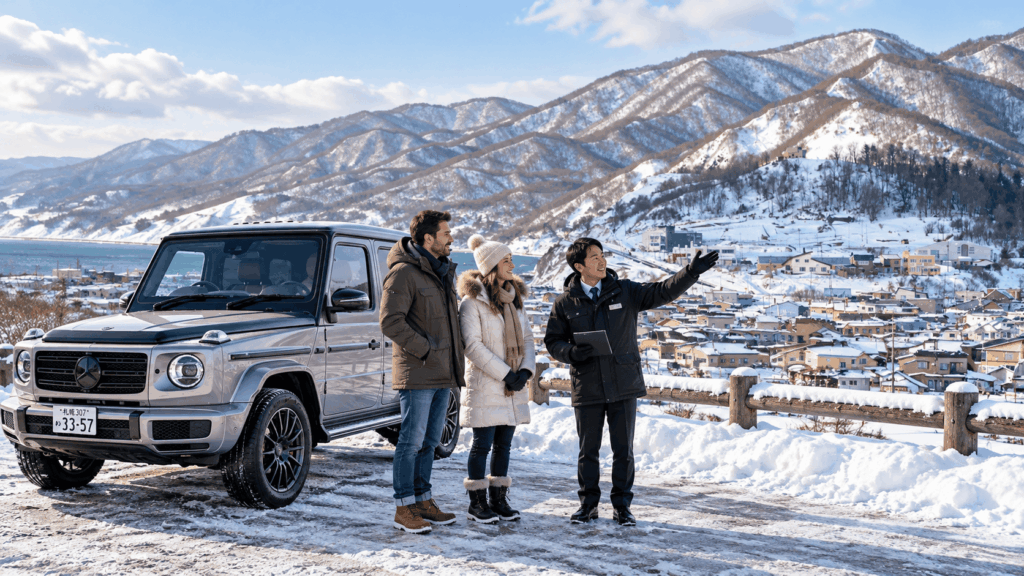
For travelers based in Sapporo who want to cover Furano and Biei without driving, a private sightseeing car can remove much of the transport planning. It is a different experience from staying overnight, and the timing at Ningle Terrace needs checking before booking.
Why I’d book this one
- Less transport planning: A private vehicle lets a family or small group visit dispersed Furano and Biei sights without coordinating rural buses or driving unfamiliar roads.
- A more flexible itinerary: The route can be adjusted around preferred stops, subject to the operator’s agreement and the day’s conditions. That flexibility matters if Ningle Terrace is a priority.
- Positive driver feedback: Recent travelers mention professional, punctual and accommodating drivers, with flexibility and comfortable travel among the recurring positives.
See current group prices, departure options and recent traveler reviews for the Furano & Biei private sightseeing tour. Before booking, confirm directly with the operator whether a dusk or after-dark stop at Ningle Terrace is possible on your date. A private daytime sightseeing tour does not automatically include an evening visit.
Frequently Asked Questions
Is Ningle Terrace better at night or during the day?
They are different experiences rather than better and worse. In the evening the cabins are lit and the forest goes dark around them, which is what most photographs are trying to capture. In daylight you can actually see the craftwork in the shops, read the labels, and talk to the makers, and the walkways are much easier to navigate. If you only have one visit and photography matters, go at dusk. If you are buying something or travelling with someone who struggles on stairs, daylight or early dusk is the more comfortable choice.
What time should I go to Ningle Terrace to see the lights?
Aim to arrive around sunset or 20 to 40 minutes afterwards, when the sky still holds some colour and the cabin lights read clearly against it. In winter that often means roughly 4:30 to 5:30 p.m. In July and August you can generally stay until 8:45 p.m., so a 7:30 p.m. arrival in early July is viable; in June and September the usual 7:45 p.m. closing time leaves a tighter window. Check the sunset and opening hours for your dates rather than relying on one fixed hour.
Does Furano have nightlife?
It has bars, not nightlife in the urban sense. Soh’s BAR near the New Furano Prince Hotel, AJITO in Kitanomine, and TEIRYUJO and the bridge bar downtown cover the ground between them, and most close around midnight. They are spread across three areas, so plan on one or two venues in a single evening rather than moving between them. Anyone looking for clubs, late-night streets or a dense bar district will be disappointed, and should probably not choose Furano for that reason alone.
Can I visit Ningle Terrace at night without a car?
Yes, but you need a return plan. The regular bus from New Furano Prince Hotel toward the station and Asahikawa leaves around 3:55 p.m., which is well before the lights are worth seeing, so relying on that bus for an evening return to downtown does not work. In winter a seasonal evening shuttle has connected the resort area with Kitanomine and downtown, but the 2025–26 dates cannot be assumed for 2026–27. The new 2026–27 ski shuttle does not itself guarantee an evening return. Otherwise you are relying on a taxi. Staying within walking distance of the terrace is the simplest solution by a wide margin.
Is Ningle Terrace suitable for young children or older travelers?
It is manageable for both, with adjustments. The boardwalks have steps and short slopes, so a stroller is awkward — a carrier is easier with small children. For older travelers, the main issues are the unlit level changes and, in winter, snow and ice on the boards; visiting before the sky goes fully dark and wearing shoes with proper tread solves most of it. It is a short walk rather than a hike, but it is not a flat, barrier-free promenade, and it should not be treated as one.
What is there to do in Furano at night in summer?
It is quieter than the winter ski season, but there is more after-dark time than many older guides suggest. In July and August, Ningle Terrace’s extended hours run until 8:45 p.m., so you can see the huts properly lit after sunset, then have a drink at a small bar. The onsen’s day-use hours end at 6:00 p.m. in those months, so bathe earlier unless you are a hotel guest. In June or September, when the terrace normally closes at 7:45 p.m., plan around dusk and confirm the operating hours.
Final Verdict
Furano at night is a specific pleasure, and it rewards people who match their plans to the season instead of to the photographs.
- First-time visitors: stay one night at the resort end of town, do Ningle Terrace at dusk, eat early, and take the onsen. That single evening is the reason the stop is worth making, and it is also the version of Furano that is hardest to reproduce on a day trip.
- Couples: the resort area around New Furano Prince Hotel is the strongest choice — a lit forest, a quiet bar in the trees at Soh’s BAR, and no transport to arrange. Winter is the more atmospheric season; July and August also allow a proper after-dark visit thanks to extended hours.
- Families with children: winter adds the early sunset and Kan Kan Mura’s snow-and-ice area next to the terrace; the resort onsen also stays open late for day visitors outside July and August. The 2026–27 Kan Kan Mura dates are December 23–February 28. Summer can still work after dark in July and August thanks to the 8:45 p.m. closing time, and note that Soh’s BAR admits adults aged 20 or over only.
- Skiers: the night session from 4:00 to 6:00 p.m. plus the onsen plus a walk through the terrace is one of the better evenings available in Hokkaido, and it only works if you are sleeping at the base rather than driving back to Asahikawa.
- Travelers who want nightlife: do not stay in Furano for this. Two small bars and a midnight closing is the honest summary. Sapporo is the answer to that search, not Furano.
- Travelers without a car: choose your accommodation by the evening you want, because the regular Lavender Line’s last bus out of the resort area runs in the late afternoon. A winter evening shuttle has operated in past seasons, but 2026–27 dates must be checked before relying on it. Downtown gives you restaurants and small bars on foot; the resort gives you the terrace and onsen on foot. Without a confirmed evening connection, plan on a taxi between them.
- Repeat visitors: skip the terrace at peak time and go later within the posted opening hours, when the tour groups may have gone and the lights are still on. It is a fifteen-minute walk that becomes memorable precisely because nobody is standing in front of it.
If you take one thing from this guide, take the timing. The difference between a magical evening and a disappointing one in Furano is rarely the place — it is whether you arrived an hour before sunset or three hours after it.

Hi, I’m Kai. I’m a Tokyo-based travel writer, tourism industry insider, and the author of a published guidebook for international visitors to Japan. With over 10 years of professional experience at a leading Japanese tourism company, my mission is to help you skip the tourist traps and navigate Japan’s best destinations like a local. I believe the perfect day trip is like a traditional kaiseki meal: a beautiful balance of precise planning and unforgettable seasonal discovery. When I’m not out conducting field research, you’ll usually find me drafting new itineraries with one of my favorite fountain pens!