
Furano rewards a plan more than most Hokkaido destinations, because its best-known sights are spread across Furano City, Nakafurano, Kamifurano and Biei, and almost none of them are within walking distance of each other.
If this is your first visit in summer, put Farm Tomita at the top and build the day around it. Add the Furano Cheese Factory for lunch and Ningle Terrace for the hour after sunset, then choose one more stop — the Garden of Wind, the Furano Ropeway or a short winery visit — depending on how much time is left. Two add-ons is plenty. Four stops in a day is the realistic ceiling.
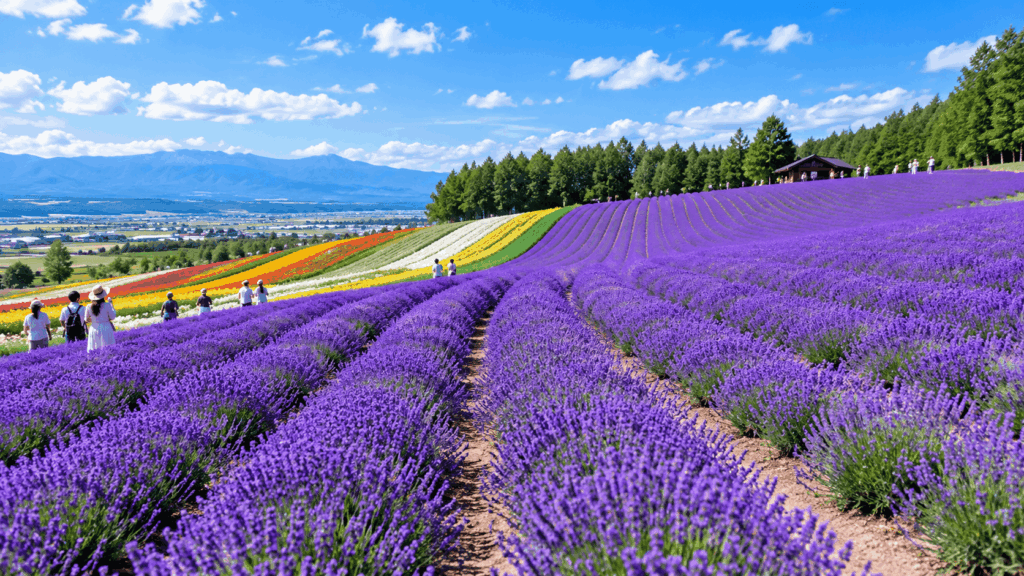
Two things catch people out. The Blue Pond and Shikisai-no-Oka are in Biei, not Furano; depending on the stop and traffic, reaching them from Furano town can take roughly 40–70 minutes by car. And the free sights are not the cheap ones in terms of time: Farm Tomita costs nothing to enter and can cost you an hour in coach traffic, footpaths and toilet queues.
A rental car gives you the most freedom. If you are coming from Sapporo without one and only have a single day, an organised Furano–Biei tour is a fair trade — less freedom, far less planning.
Travelling from Sapporo with family or friends and prefer not to drive? A private Furano–Biei driver-guide tour can take care of the long transfers while giving your group some flexibility over the stops. Check the available dates, route details and current group price for this private Furano–Biei tour before deciding whether the extra flexibility is worth it.
The Best Things to Do in Furano at a Glance
Furano’s sights are spread across Furano City, Nakafurano and Kamifurano, with Biei sitting further north. The table below is not a ranking of quality. It is a ranking of what each stop will cost you in time, and what it gives back.
| Place | Best for | Time to allow | Best season | Car helpful? | Main downside |
|---|---|---|---|---|---|
| Farm Tomita | First-time visitors, flower fields | 1.5–2 hours | Late June–early August | Helpful; bus and train reach it | Peak-season crowds, coach traffic, toilet queues |
| Furano Cheese Factory | Lunch, couples, families | 1–1.5 hours, longer with a queue | Year-round | Helpful | Pizza waits in July and August |
| Ningle Terrace | Evening atmosphere, couples | 45–60 minutes | Year-round; lights after sunset | Helpful | Shop hours vary; busy around dusk |
| Garden of Wind | Quiet garden walks | 1–1.5 hours | Late April–mid October | Helpful | Paid entry; weather-dependent |
| Furano Ropeway | Mountain views on clear days | 1–1.5 hours | Early July–late August; selected October dates | Helpful | Cloud removes the reason to go |
| Furano Winery | Adults, wet afternoons | 30–45 minutes | Year-round | Helpful | Small; the driver cannot taste |
| Furano Marche | Food and shopping near the station | 30–60 minutes | Year-round | Not needed | A practical stop, not a sight |
| Rokugo and Furano Jam Garden | Repeat visitors, drivers | Half a day including the drive | Year-round; best in warmer months | Essential | About 30 minutes each way from town |
| Sorachi River activities | Active travellers, older children | Half a day | Late April–October | Helpful | Weather and age limits |
| Furano Ski Resort | Skiers and snowboarders | A full day | Late November–early May | Helpful | Only relevant in winter |
Best for first-time visitors: Farm Tomita, the Furano Cheese Factory and Ningle Terrace, in that order, with one optional fourth stop.
Best if you only have one day: pick a maximum of four places and accept that Biei is a separate decision, not a free extra.
Reconsider the plan if: you are visiting in peak August with a fixed lunch reservation, or you are trying to fit Farm Tomita, Biei’s Blue Pond and Shikisai-no-Oka into one day without a car.
If you are visiting from Sapporo without a rental car and only have one day, the arithmetic changes: linking Furano and Biei by train and bus eats most of the daylight, and a coach tour that covers both is often the simpler call. There is more on that comparison further down.
Furano, Nakafurano, Kamifurano, Biei — What’s Actually Where
This is the single most common source of wasted time in Furano itineraries, so it is worth thirty seconds.
Furano City is the town itself: JR Furano Station, Furano Marche, the Cheese Factory, Furano Winery, and the New Furano Prince Hotel area with Ningle Terrace, the Garden of Wind and the Ropeway. Nakafurano, north of Furano City, is where Farm Tomita stands — the farm is often described as being “in Furano”, but it is in Nakafurano. Kamifurano, farther north, holds Farm Tomita’s Lavender East. Biei is a separate town farther north again, roughly 40 minutes by car from central Furano to Biei town, and that is where the Blue Pond and Shikisai-no-Oka are.
Practically: Farm Tomita to the Cheese Factory is a short drive, but Farm Tomita to the Blue Pond is a completely different trip. Treat any itinerary that lists all three as a Biei day with a Furano stop, not the other way around.
1. Farm Tomita — The One Stop Worth Planning Around
Farm Tomita is free to enter, which makes it the easiest thing in Furano to add to a plan and the hardest thing to leave on time. It is also the only sight here that genuinely justifies rearranging your morning around it.
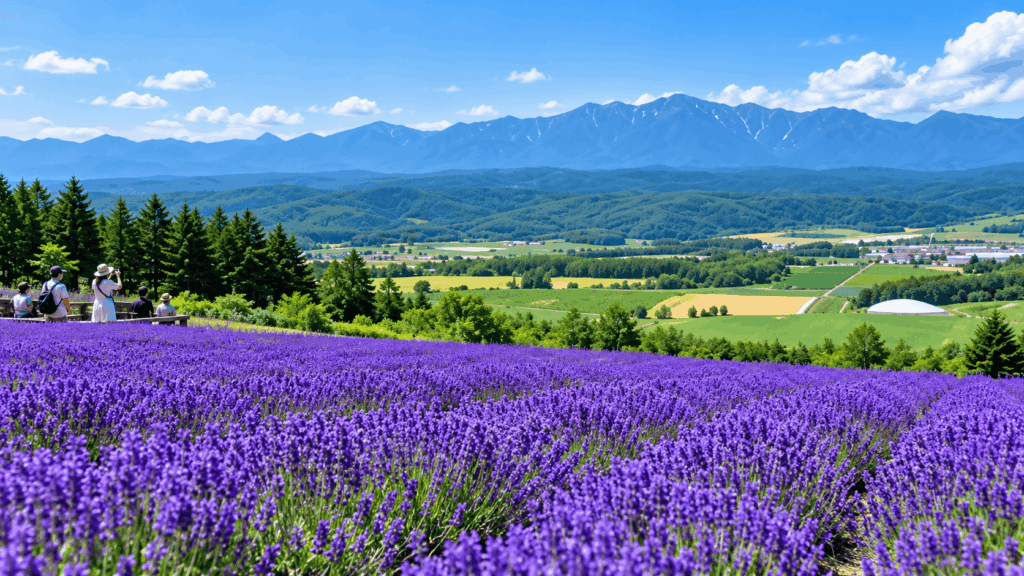
Why it earns the top spot
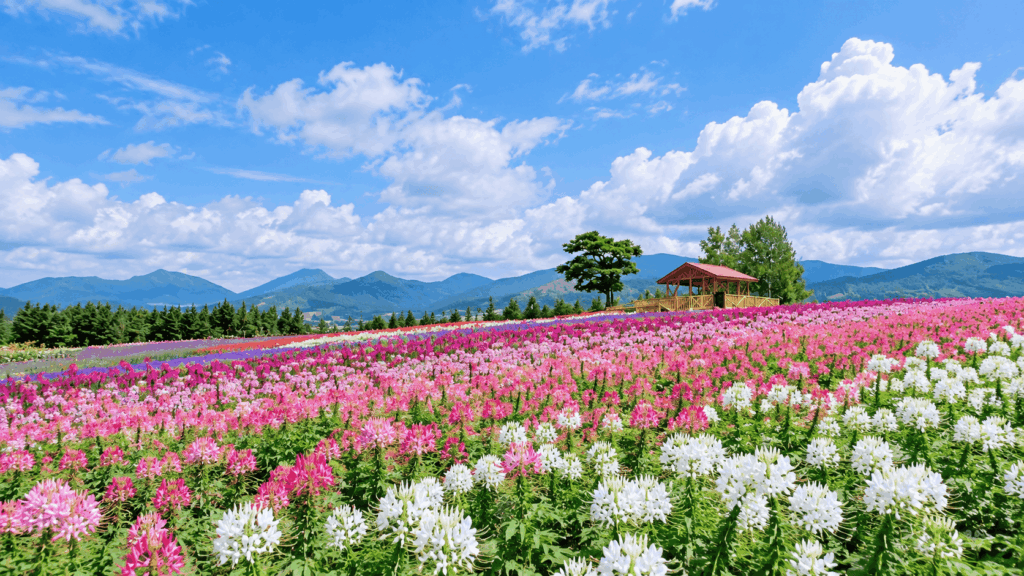
This is not a single field but a set of gardens, with the Traditional Lavender Field — the slope in most photographs — at its centre. Lavender runs from late June into early August, with different varieties flowering in succession; the traditional field is usually at its best from late June to late July. If lavender is the reason you came, aim for early to mid July and accept that the exact week moves with the weather each year.
Best for: first-time summer visitors, photographers, anyone who wants the postcard and does not mind sharing it.
Skip it if: flowers are not your thing, you are travelling outside the flowering window, or you have less than an hour and would rather spend it somewhere quieter.
When the crowds actually arrive
The farm opens early by Hokkaido standards, but not as early as people assume. When I checked in October 2026, the published hours were 9:30 to 16:30, with a clear statement that entry is not allowed outside opening hours. Summer hours can run longer, so check the current time before you build a morning around it.
Kai’s tip: I used to bring clients here well before breakfast, and on those early visits the lavender slope was almost empty — you could walk the rows slowly and hear the whole farm. That memory is worth keeping for one reason only: it shows how much of a visit here is timing rather than flowers. It is not a plan you can copy today, because entry outside opening hours is no longer allowed. The version that still works is to confirm the current opening time and be at the gate for it, then walk straight to the lavender slope before the coach groups reach it. And use the toilet before you start, not when you finish — the queue at the main block can be longer than the queue for soft cream.
Practical details
Entry is free and there is no ticket to book. Lavender soft cream and melon are the usual purchases, and both are pleasant rather than essential.
- By train: the seasonal Lavender Farm Station on the JR Furano Line is a 7-minute walk away. Nakafurano Station is about a 25-minute walk. Note that the Furano–Biei Norokko sightseeing train made its final run in September 2026; in 2026 the seasonal station was also served by a small number of regular trains, but confirm the current arrangement before relying on it.
- By bus: Furano Bus’s seasonal Lavender-go takes about 12 minutes from JR Furano Station to the Nakafurano stop, from where it is a 25-minute walk or a 5-minute taxi ride.
- By car: about 45 minutes from Asahikawa Airport, roughly 2.5 hours from central Sapporo. Do not park on the surrounding roads.
- Lavender East: Farm Tomita’s second site, 4 km east in Kamifurano, is a much larger working lavender field. In 2026 it opened only from 20 June to 20 July, 9:30 to 16:30, and there is no practical rail access — it is a car or taxi trip, about 7 minutes from the main farm.
If you want the full walk-through of fields, timing and food, there is a dedicated Farm Tomita guide on this site.
2. Furano Cheese Factory — Lunch Stop, or Schedule Risk?
The Cheese Factory is the most useful non-flower stop in Furano, and the one most likely to derail an afternoon. Both things are true.
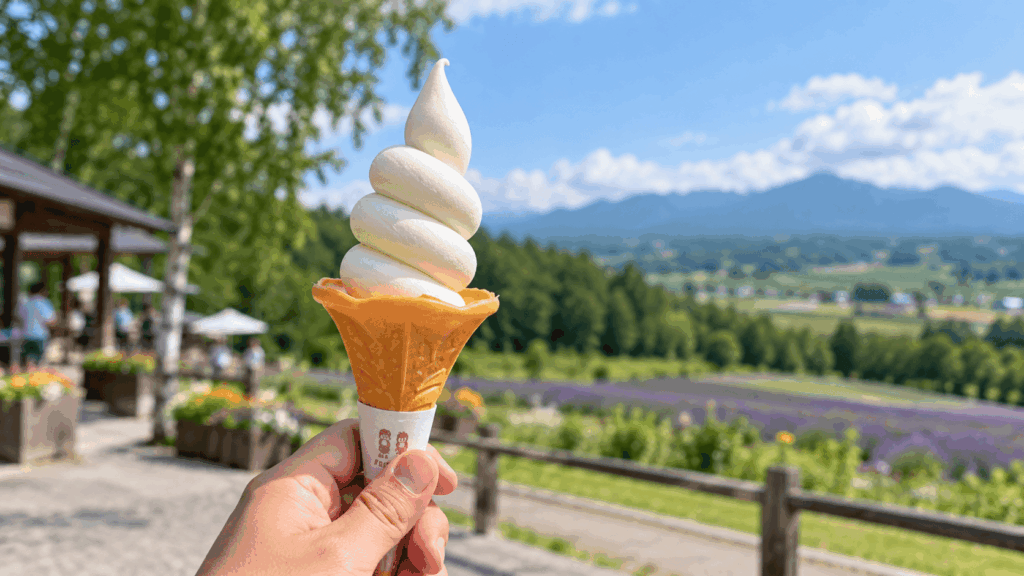
What you actually go for
Entry is free. You can watch cheese being made through glass, sample before you buy, and see wheels ageing in the next room. That part takes about 15 minutes. The draw is the on-site pizzeria, the cheese soft cream, and the hands-on workshops — cheese making runs about 40 minutes and is bookable on the day if space allows.
The setting helps: it sits on a wooded hill about 3 km from Furano Station, and the terrace seats catch a breeze in summer, which matters more than it sounds when you are waiting.
Best for: couples, families, anyone who wants a sit-down lunch between flower stops.
Skip it if: you need lunch at a fixed time, or you are travelling with someone who cannot wait 45 minutes for a table.
The queue problem
Opening hours are 9:00 to 17:00, dropping to 16:00 from November to March. The pizzeria keeps shorter hours than the rest of the building — roughly 10:30 to 16:00 in recent seasons — so a late-afternoon arrival can mean no pizza at all. The complex closes over New Year and takes occasional maintenance days, and in January and February it typically closes on Mondays.
Kai’s tip: I arrived at about 11am one August and still waited around 20 minutes just to order. It was not unpleasant — the terrace under the trees was cool, and we shared a Margherita and a cheese pizza before finishing with cheese soft cream and spending time at the upstairs tasting counter. But 20 minutes is not a number to plan around. Travellers regularly report 30 to 60 minutes in July and August, and reports of waits over an hour are not rare. Treat this as a schedule risk rather than a quick lunch: do not book an afternoon activity to the minute, and do not make pizza the only acceptable outcome. If the queue is long, buy cheese and soft cream, eat outside, and move on.
3. Ningle Terrace — Go for the Hour After Sunset
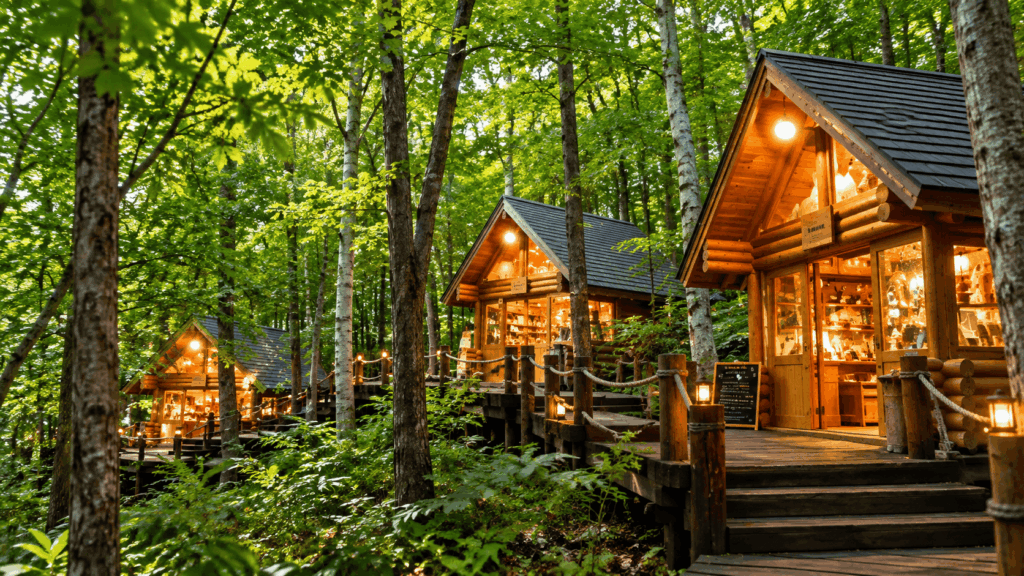
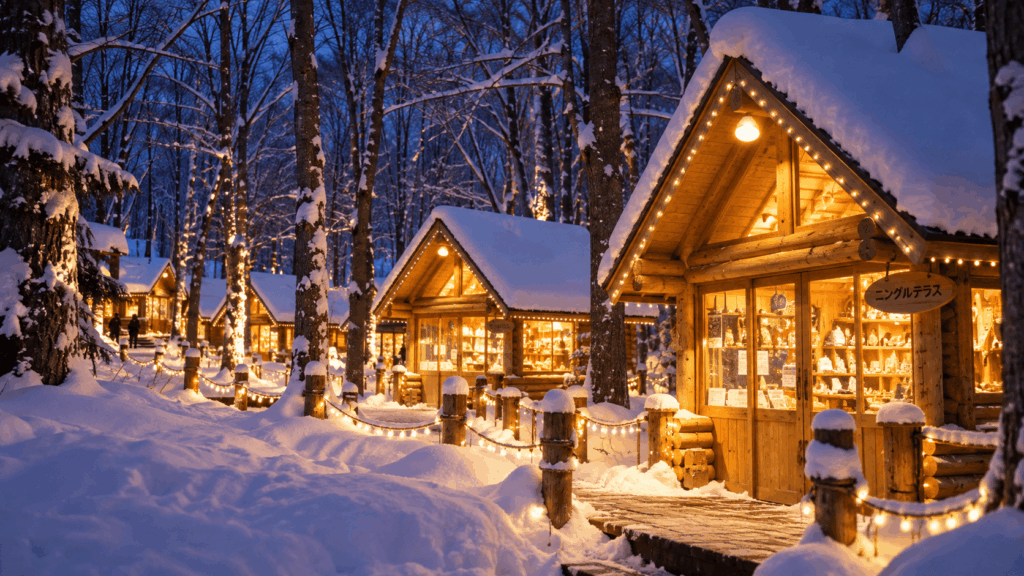
Ningle Terrace is a cluster of small timber craft huts in the forest behind the New Furano Prince Hotel. Judged as shopping, it is modest. Judged as an evening walk, it is one of the better half-hours in Furano.
Daytime versus evening
In daylight you see the huts clearly and can browse properly. After sunset the paths and cabins are lit, and the forest closes in around them — which is the version most people remember. The lights usually come on around dusk, which in summer means a late finish and in autumn means late afternoon.
There is no entry fee and no ticket. Opening hours vary by season and by shop. The hotel lists standard summer hours of 11:00–19:45, extended to 10:00–20:45 in July and August, and winter hours of 12:00–20:45. Individual huts keep their own hours and some close out of season, so check the board at the entrance rather than planning around one shop.
Best for: couples, anyone staying at or near the Prince Hotel, travellers who want one gentle evening rather than another sight.
Skip it if: you are hoping for serious craft shopping, or you cannot be there after dark.
What to expect from the shops
Most huts sell small handmade goods — woodwork, glass, leather, paper — at prices that reflect the craft rather than the location. COFFEE HOUSE Chu Chu no Ie, in the middle of the cluster, is known for its baked milk drink; it keeps its own hours and may close seasonally, so treat it as a bonus rather than a reason to come.
Kai’s tip: I usually brought clients here just before or after dinner, when the lit huts and the dark trees do most of the work and you do not need to buy anything to enjoy it. One caution from a summer visit: there were several signs warning about caterpillars on the trees, and a client who disliked insects did not want to linger. That was one visit, not a permanent feature, but if insects bother you, go after dark when you notice them less, and keep to the main path.
4. Garden of Wind — The Quieter Alternative, and the 6:30 Head Start
The Garden of Wind sits behind the New Furano Prince Hotel, a few minutes from Ningle Terrace, and is the answer for anyone who finds Farm Tomita too crowded or too photographed.
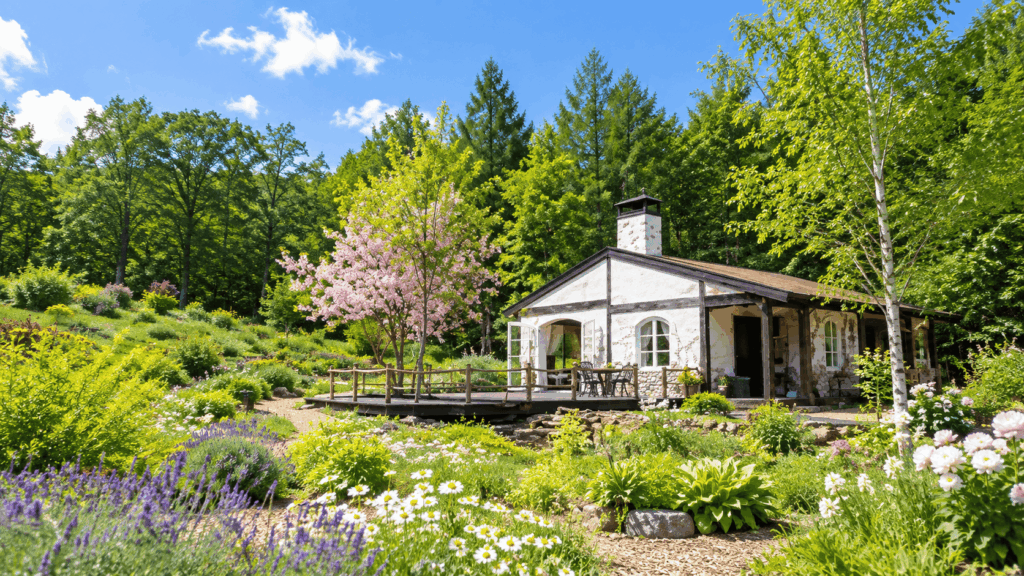
It is an English-style garden of roughly 450 flower varieties rather than a lavender slope, with paths that wind through planting rather than rows that lead to a viewpoint. There is a reception building with a courtesy car from the hotel, an admission fee (1,200 yen for adults, 700 yen for ages 7 to 12, free for younger children in 2026), and a season that runs from late April to mid-October.
The detail worth knowing: from 1 July to 31 August the garden opens at 6:30, roughly two hours before Farm Tomita’s typical 8:30 opening in July. If you wake early and want to use the morning, this is where to go first — then drive to Farm Tomita for opening time. Outside midsummer it opens at 8:00.
Best for: garden lovers, early risers, anyone who wants flowers without coach groups.
Skip it if: you are chasing the lavender postcard specifically, or your trip falls outside the season. Check the current dates and hours before you go; the garden closes entirely in winter.
5. Furano Ropeway — Worth It Only on a Clear Day
The ropeway climbs from beside the New Furano Prince Hotel to a station around 900 metres up, in about seven minutes. From the top there are short walking trails and a view across the Furano basin towards the Daisetsuzan range.
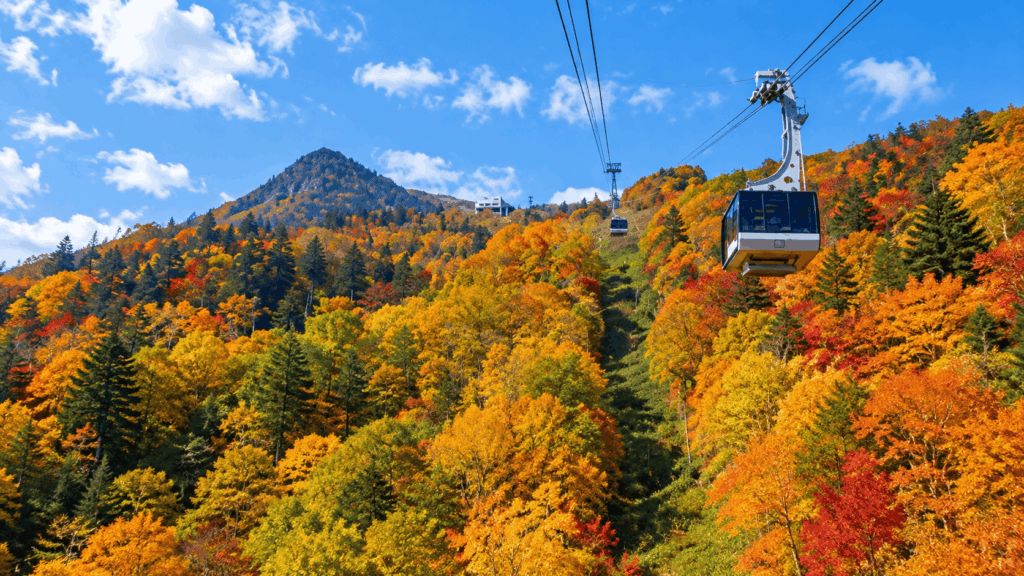
The catch is that the whole experience depends on visibility. On a clear day it is the best mountain view in the area. On a cloudy one you ride up into white, walk a damp path, and come back down. There is no version of this that is worth doing in poor weather just because it is on a list.
In 2026 the round trip cost 3,300 yen for adults and 1,600 yen for primary school children, with preschoolers free. In 2026, the ropeway ran from 4 July to 30 August, with a separate autumn operation from 3 to 18 October — it did not run continuously through September. Hours were 8:00–16:00 in early July, extended to 19:00 in peak summer, and shorter during the autumn operation. It does close for weather, so check the operating status on the day.
Best for: clear-weather mornings, hikers wanting a head start on the trails, anyone who has already seen the flower fields.
Skip it if: the forecast is poor, or you are short of time — this is the first stop to cut when the day tightens.
6. Furano Winery — A Short, Low-Effort Add-On
Furano Winery is a small, old-fashioned facility on the edge of town, and it takes less time than almost anything else on this list. Entry and tasting are free, and the tasting counter pours from barrels rather than bottles, which is the one detail that makes it feel different from a standard winery tour.
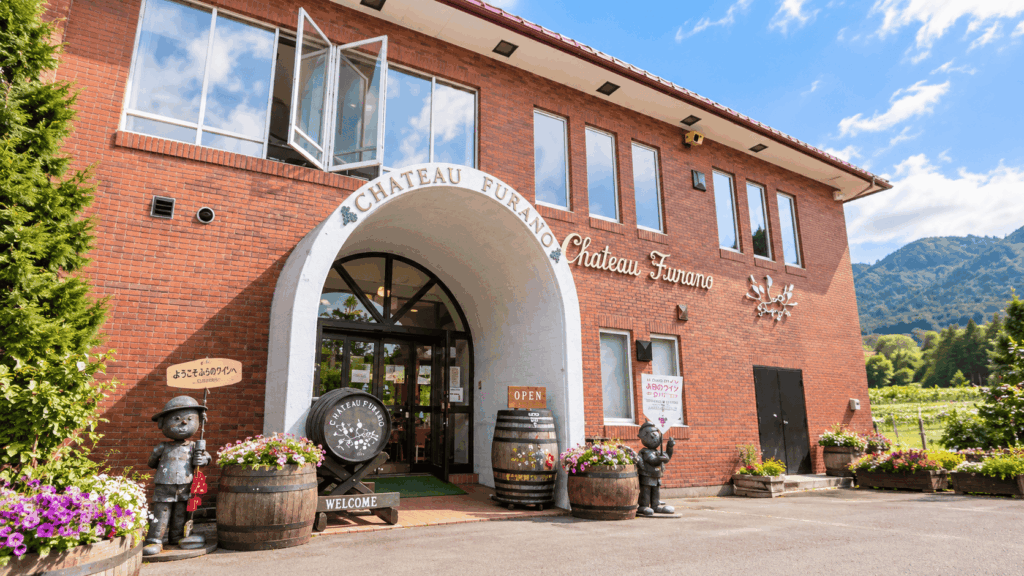
Hours are generally 9:00 to 17:00, with tasting wrapping up around 16:30, and it closes over the New Year period. Allow 30 to 45 minutes unless you get talking to someone.
Best for: adults, a wet afternoon, anyone who has finished the flower fields by early afternoon.
Skip it if: you are driving. The tasting is free and the pours are not token-sized, so the driver sits this one out. It is also not worth crossing town for on a one-day visit.
7. Furano Marche — The Practical Stop Near the Station
Furano Marche is two low buildings of shops and food counters about seven minutes’ walk from JR Furano Station, and it is best understood as infrastructure rather than an attraction. It is where you buy local produce, cheese, jam and wine to take home, eat something quick, and shelter from rain while waiting for a train.
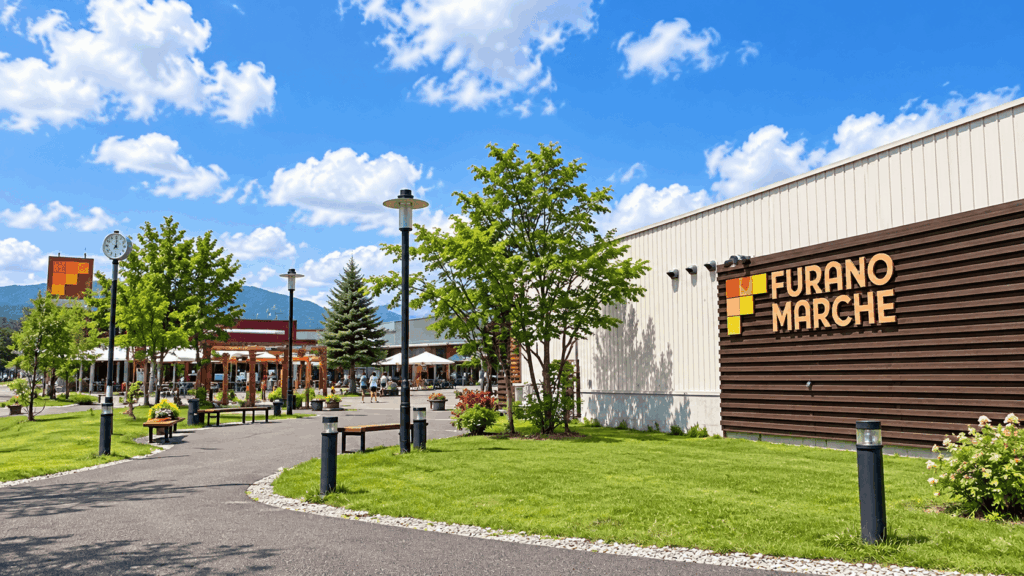
Hours are generally 10:00 to 18:00, extended to 19:00 from mid-June to late August, with some closures in mid-November and over New Year.
For travellers without a car this is the most useful address in Furano after the station itself: it is walkable, it is indoors, and it solves lunch without a taxi ride. It is not, however, a reason to build a day around Furano.
Best for: anyone arriving or leaving by train, rainy hours, souvenir shopping at the end of the trip.
Skip it if: you have a car and a tight schedule — you will find the same products at the farm shops you are already visiting.
Getting between Furano Station, the flower fields and the Prince Hotel area without a car is the part most guides skip. There is a separate guide to visiting Furano without a car on this site if that is your situation.
8. Rokugo and Furano Jam Garden — Only With a Car and Spare Time
Rokugo is a rural district about 20 km from central Furano, roughly 30 minutes by car, and the draw is the Furano Jam Garden: a jam shop with 35 varieties, a jam-making class, and an observation platform on the hill behind it.
Practical details matter here. The jam shop is generally open daily in the warmer season, from 9:00 to 17:30. The operator’s visitor guide lists Tuesday closures for the jam workshop during the winter period (late November to mid-April), as well as New Year closures; check current arrangements before driving out. The observation platform is open daily, 9:00 to 17:30. The jam-making class costs around 2,000 yen, runs at 10:00 and 14:00 for about an hour, is open to junior high school age and up, and asks for a reservation by 5:30pm the day before. The site also holds a small Anpanman shop, which is the actual reason some families make the trip.
Best for: repeat visitors, families with young children, anyone who enjoys a rural drive more than another queue.
Skip it if: this is your first visit and you have one day. Thirty minutes each way is an hour you could spend at Farm Tomita or Ningle Terrace instead, and the drive itself is the main event.
9. Swap One Sight for Something Active
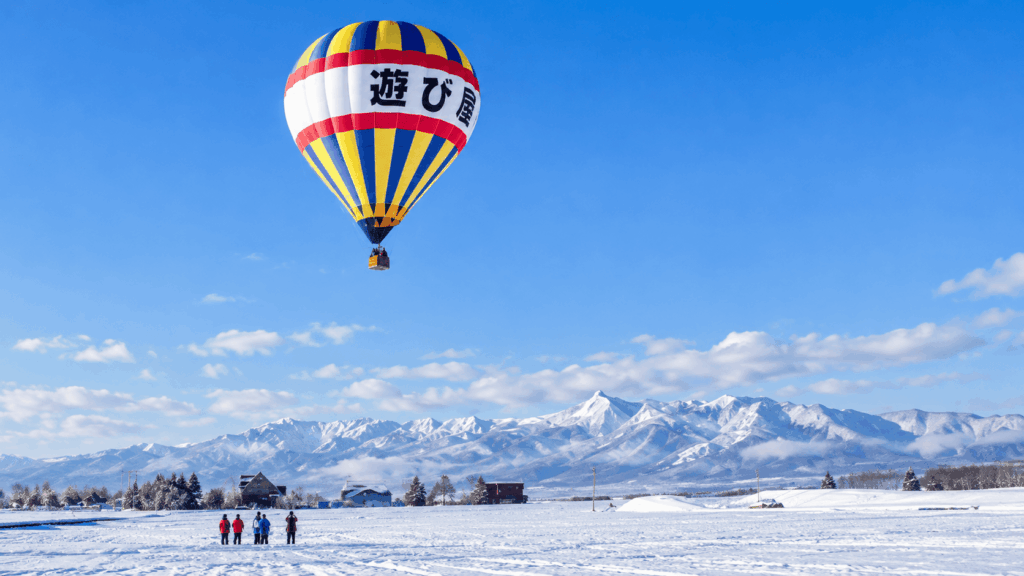
Furano is not only a place to look at. The Sorachi River runs through the valley, and several operators run rafting, canoeing, cycling and hot-air balloon flights from around town.
Leisure Guide Asobiya is the best-known local operator, with rafting slots in the morning (roughly 9:00 to 13:00) and afternoon (roughly 13:30 to 17:00), plus balloon flights and winter snowmobile tours. Other established options include Sportpia Furano and Flying Dolphins, which both run Sorachi River rafting with different age limits and prices — Flying Dolphins, for example, has published adult and child rates with a minimum age of 6 on its standard rafting trip, while Asobiya offers family-oriented versions from younger ages. Prices in the region generally land somewhere between 6,000 and 8,000 yen per adult for a half-day trip.
Best for: travellers staying two nights or more, families with children old enough to paddle, anyone who finds a third flower field one too many.
Skip it if: you have one day, or you are visiting outside late April to October. Confirm the age limit and meeting arrangements directly with the operator — they differ by tour, and this is not something to guess at with children.
10. Furano Ski Resort — The Winter Priority
In winter the order of this entire article changes. Farm Tomita is under snow, the Garden of Wind is closed, and Furano Ski Resort becomes the reason people come.
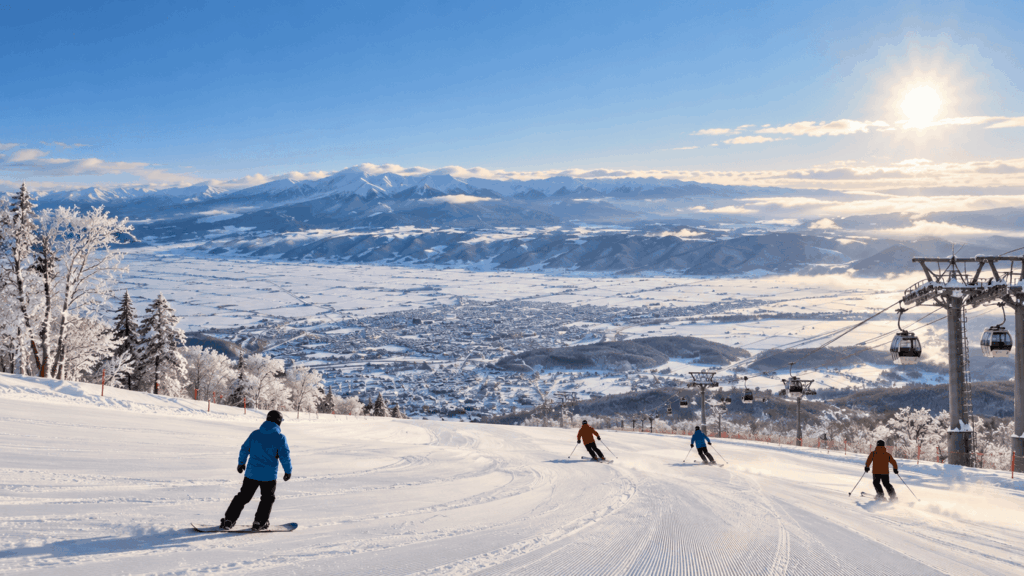
The resort is split between the Furano Zone, served by the New Furano Prince Hotel and the ropeway, and the Kitanomine Zone on the other side of town, connected by lifts at the top. The 2026–27 season is scheduled to open on 28 November 2026 and run into early May 2027, with Kitanomine opening later in December; a one-day adult lift pass is published at around 9,000 yen, and night skiing is available on part of the mountain. Snowfall and lift openings vary by week, so treat those dates as plans rather than promises.
Non-skiers are not stranded: the Ningle Terrace lights run through winter, and there are snow activities and winter tours based around the hotel. What you should not expect is a lavender trip with snow on it.
Furano in winter is a genuinely different trip, and worth planning separately.
Best for: skiers and snowboarders, couples combining a ski day with an evening at Ningle Terrace.
Skip it if: you are visiting between May and November, or you want flowers rather than snow.
If You Only Have One Day in Furano
The most common mistake on a one-day visit is trying to collect stops. Furano’s sights are spread out, the queues are unpredictable, and the cost of moving between them is real. Four places is a good day. Five is a rushed one.
Here is a realistic summer day with a car:
- Early morning: Farm Tomita at opening. Go straight to the lavender slope, then the shops. Allow 1.5 to 2 hours.
- Late morning to lunch: Furano Cheese Factory. Arrive before noon if you want pizza without a long wait; if the queue is already 45 minutes, buy cheese and soft cream and eat outside instead.
- Afternoon: either the Garden of Wind (quieter, more varied planting) or the Furano Ropeway (better view, entirely weather-dependent). Pick one, not both.
- Evening: Ningle Terrace after sunset, then dinner in Furano town or at the hotel.
If you have no car, cut this to Farm Tomita plus Ningle Terrace, with Furano Marche as the lunch and waiting room. Trying to add the Cheese Factory and the Ropeway by bus and taxi will consume the day in transit.
What to cut first, in order: the Ropeway (weather risk), the winery (short but out of the way), the Garden of Wind (beautiful but similar in purpose to what you have already seen), Rokugo (an hour of driving). What you should not cut is Farm Tomita, because it is the reason most people come.
If you want the hour-by-hour version, with transport times built in, there is a full one-day Furano itinerary on this site.
Do You Need a Car in Furano?
Short answer: a car is the most efficient way to see Furano, but it is not the only way, and for a Sapporo-based day trip it is often not the best way.
| Option | Best for | Flexibility | Planning effort | Main limitation |
|---|---|---|---|---|
| Rental car | Two or more days, families, anyone combining Furano and Biei | Highest | Medium — book early in summer | Driving fatigue; winter road conditions; the driver cannot taste wine |
| Public transport | Budget travellers, solo visitors, station-based stays | Low | High — timetables dictate the day | Few buses, long walks, no direct service to some sights |
| Organised day tour | Sapporo-based travellers with one day and no car | Low | Lowest | Fixed itinerary and limited free time at each stop |
If you’re visiting from Sapporo as a group and want more flexibility than a standard coach tour, a private driver-guide option is worth comparing. It costs more than joining a shared tour, but the convenience can matter when several people are travelling together and want to avoid managing transfers.
Why I’d book this one
- Less transport planning: Private transport from Sapporo removes the need to coordinate rural trains, buses and taxis between Furano and Biei.
- More control over the day: Farm Tomita and the Blue Pond are part of the suggested route, with some flexibility to discuss stops and sightseeing time in advance. Changes remain subject to the tour’s duration and conditions.
- English-speaking driver-guide support: The listing includes an English-speaking driver-guide rather than a separate dedicated sightseeing guide. This is also a newer activity with limited traveler review history, so check the latest feedback and inclusions carefully.
What public transport actually looks like
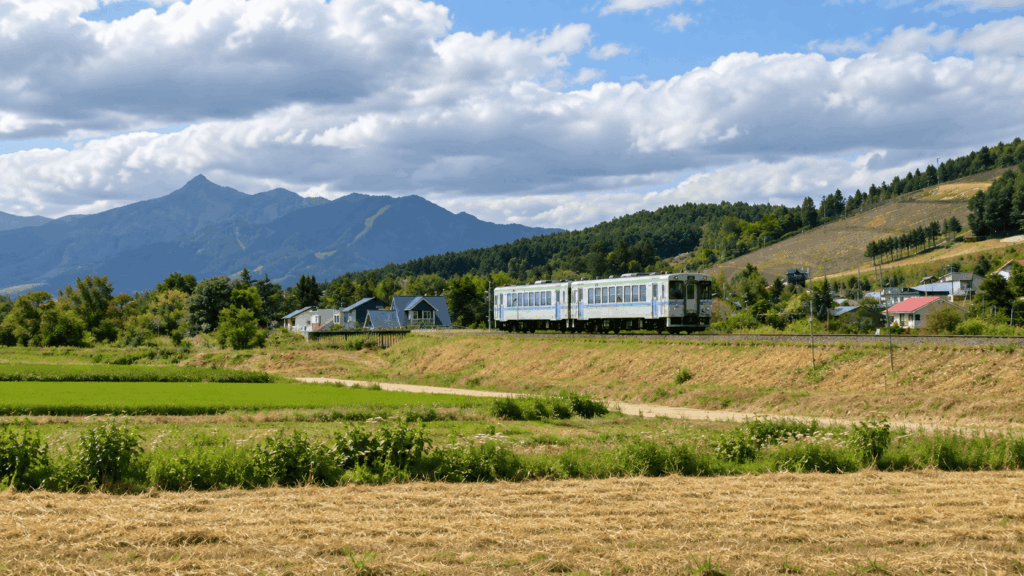
Trains reach Furano from Sapporo via Takikawa (about 55 minutes, then around 1 hour 10 minutes) or via Asahikawa (about 1 hour 25 minutes, then about 1 hour 5 minutes). From JR Furano Station, Furano Bus’s seasonal Lavender-go reaches the Nakafurano stop in about 12 minutes; from there it is a 25-minute walk or a 5-minute taxi to Farm Tomita. The seasonal Lavender Farm Station is a 7-minute walk from the farm, but service patterns changed after the Furano–Biei Norokko train made its final run in September 2026, so confirm what is stopping there in your season.
Ningle Terrace, the Garden of Wind and the Ropeway are all at the New Furano Prince Hotel, reachable by bus or a short taxi ride from the station. The Cheese Factory is about 3 km out and realistically a taxi. Coverage is workable but sparse, and a missed bus can cost an hour.
If you are coming from Sapporo without a car and only have one day, coordinating trains and buses across Furano and Biei usually leaves very little time at each stop. A coach tour that departs Sapporo in the early morning and covers the Blue Pond, a flower garden and Farm Tomita in around ten hours removes the planning problem entirely — you trade freedom for a fixed schedule, which for a single day is often the right trade.
Should You Add Biei to Your Furano Trip?
Biei is a separate town, about 40 minutes by car from central Furano, and the Blue Pond is another 20 minutes beyond Biei Station. It is not a suburb of Furano and should not be treated as one.
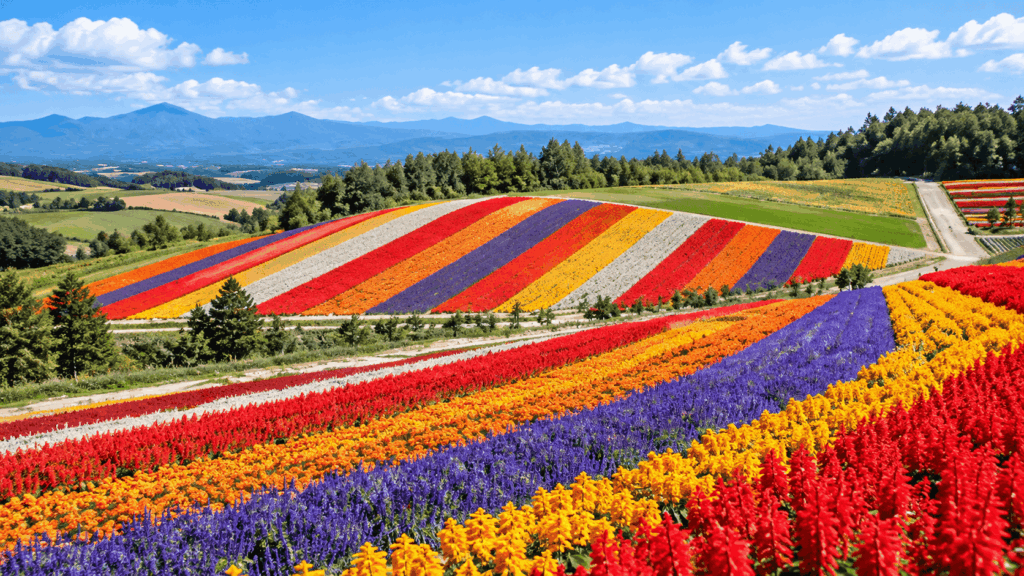
What it adds is landscape: the Blue Pond’s colour, the wide flower hills at Shikisai-no-Oka, and the patchwork of farmland that appears in most Hokkaido photographs. Entry to the Blue Pond itself is free, though the car park is charged in season; Shikisai-no-Oka charges admission from July to September (reported at around 500 to 800 yen for adults in recent years) plus a seasonal parking fee.
Add Biei if: you have a car or a tour, you have a full day rather than half of one, and you care about landscape photography as much as flowers.
Do not add Biei if: you are travelling with small children, you want a sit-down lunch and unhurried stops, you only have half a day, or you are relying on trains and buses. In each of those cases, two Furano stops done properly beat four done badly.
Adding Biei typically means cutting either the Garden of Wind or the Ropeway, and shortening lunch. If you are weighing Furano against Biei rather than combining them, there is a separate Furano versus Biei comparison on this site.
For travellers who want both in one day without driving, a combined Furano–Biei coach tour is the most practical format: one early departure from Sapporo, a fixed loop through the Blue Pond, a flower garden and Farm Tomita, and no timetable to manage.
Best Things to Do in Furano by Season
Summer (late June to August)
This is peak Furano, and the only season where the flower fields justify the trip on their own. Farm Tomita and Lavender East are the priorities; the Garden of Wind and the Ropeway add variety; the Sorachi River adds activity. Expect the longest queues of the year at the Cheese Factory and the heaviest coach traffic at Farm Tomita, and book accommodation and rental cars well ahead. The lavender peak moves each year — early to mid July is the usual centre of it, not a guarantee.
Autumn (September to October)
The crowds thin, the light improves, and the ropeway becomes worth the money for the autumn colour rather than the summer view. Farm Tomita stays open with later-flowering varieties and autumn gardens, but the lavender is gone. The winery and the Ningle Terrace evening walk suit this season better than midsummer, when it stays light very late.
Winter (late November to early May)
Skiing replaces sightseeing. Furano Ski Resort is the destination, Ningle Terrace is at its most atmospheric under lights and snow, and the Garden of Wind and Lavender East are closed. Drive only with winter tyres and experience of snow; otherwise base yourself at the resort and use its shuttle services.
Spring and shoulder season
Late April to early June is the honest gap. Some gardens open, lavender does not, and several seasonal facilities are still closed or on reduced hours. Come for quiet roads and cheap accommodation, not flowers — and check opening dates for each individual sight rather than assuming.
If timing is the main question, there is a fuller guide to the best time to visit Furano on this site.
Frequently Asked Questions
What is Furano best known for?
Lavender and flower fields first, but that is a summer answer to a year-round question. Furano is also a ski destination from late November to early May, a cheese and wine producing area, and a base for walking and river activities in the green season. Visitors who arrive in October expecting lavender are usually disappointed; visitors who arrive in February for the snow are not.
Is one day enough for Furano?
Enough for the main highlights, yes. Farm Tomita, the Furano Cheese Factory, one garden or the ropeway, and Ningle Terrace in the evening is a full, unhurried day with a car. It is not enough to also cover Biei comfortably: Biei town is about 40 minutes from Furano, with the Blue Pond around 20 minutes farther from Biei Station, so adding it means cutting something else and shortening lunch.
Can you visit Furano without a car?
Yes, with limits. Trains reach Furano from Sapporo via Takikawa or Asahikawa, and seasonal buses run from JR Furano Station towards the Nakafurano area, with a 25-minute walk or short taxi ride at the end. Ningle Terrace, the Garden of Wind and the Ropeway are all at the New Furano Prince Hotel and reachable by bus or taxi. Expect to see two or three sights in a day rather than four, and check the current seasonal bus and rail arrangements — service patterns changed after the Norokko sightseeing train was retired in September 2026.
What is the best month to visit Furano?
For lavender, early to mid July is the usual centre of the season, with the flowering window running from late June into early August depending on variety and weather. For colour without the crowds, September is excellent. For skiing, January and February are the most reliable months. There is no single best month, only a best month for what you want to do.
Is Biei part of Furano?
No. Biei is a separate town about 40 minutes by car from central Furano, and the Blue Pond and Shikisai-no-Oka are both in Biei. They appear in the same itineraries because they are commonly combined on a day trip, not because they are the same place.
Is Farm Tomita free, and can you go before it opens?
Entry is free and no ticket is needed. You cannot enter outside opening hours — the farm states this explicitly, and the published hours when checked in October 2026 were 9:30 to 16:30, with longer hours possible in summer. Arriving before the gate opens means waiting outside, not walking an empty field.
Is Furano worth visiting outside lavender season?
Yes, if you adjust what you are going for. Autumn brings colour and thinner crowds, winter brings skiing and the lit huts at Ningle Terrace, and the cheese factory, winery and Marche operate year-round. What does not work is visiting in spring or late autumn expecting flower fields: several gardens close entirely and the lavender is months away.
Final Verdict: Which Furano Plan Fits You?
What I would tell a friend visiting Furano for the first time is this: decide how many stops you can genuinely enjoy, then protect the best one. Almost every disappointing Furano day I have seen involved five stops and no time at any of them.
First-time visitor in summer: Farm Tomita at opening, the Furano Cheese Factory for a flexible lunch, Ningle Terrace after sunset. Add the Garden of Wind if you have a spare afternoon and prefer planting to postcards. That is the plan that produces the fewest regrets.
One day only, coming from Sapporo, no car: a Furano–Biei coach tour is the realistic choice. Ten hours, an early start, a fixed loop through the Blue Pond, a flower garden and Farm Tomita, and no timetable to manage. You will get less time at Farm Tomita than you would alone, and you will see more of the region than public transport allows in a day.
Staying in Furano without a car: Farm Tomita by train or seasonal bus in the morning, Furano Marche for lunch and shopping, Ningle Terrace in the evening, with a taxi for the Cheese Factory if the queue looks short. Two solid sights beats four rushed ones.
Couples: Farm Tomita early, the Garden of Wind mid-afternoon, dinner in town, then Ningle Terrace after dark. Skip the ropeway unless the sky is completely clear.
Families with children: the Cheese Factory first — the workshops are the part children remember — then a shorter Farm Tomita visit, and Rokugo’s jam garden and Anpanman shop if you have a car. Cut the ropeway and the winery; neither rewards impatient company.
Two nights or more: now the rest of the list opens up. Add the ropeway on a clear morning, the winery, a half-day on the Sorachi River, and a separate Biei day for the Blue Pond and Shikisai-no-Oka. This is the itinerary length Furano is actually built for.
Winter visitors: ignore most of this article. Base yourself at Furano Ski Resort, ski the Furano and Kitanomine zones, and spend an evening at Ningle Terrace under the lights. Check the season dates and lift operations before booking, since opening days depend on snow.
Consider skipping Furano if: you have three days in Hokkaido, no car, and you are travelling outside both the flower season and the ski season. In that window, Asahikawa, Biei or a Sapporo-based trip will give you more for the same travel time.

Hi, I’m Kai. I’m a Tokyo-based travel writer, tourism industry insider, and the author of a published guidebook for international visitors to Japan. With over 10 years of professional experience at a leading Japanese tourism company, my mission is to help you skip the tourist traps and navigate Japan’s best destinations like a local. I believe the perfect day trip is like a traditional kaiseki meal: a beautiful balance of precise planning and unforgettable seasonal discovery. When I’m not out conducting field research, you’ll usually find me drafting new itineraries with one of my favorite fountain pens!