
Sapporo and Furano sit about 120 km apart across central Hokkaido. That is close enough for a realistic day trip and far enough that the way you get there decides what you can actually see once you arrive.
This is where most planning goes wrong. “Furano” is not one place. Furano Station is a small town centre. The lavender fields everyone pictures are at Farm Tomita, in Nakafurano, roughly 10 km north. Biei is another 30 km or so beyond that, and Shirogane Blue Pond sits further up the mountain again. Choosing a bus or a train gets you to the town. It does not get you to the fields.
I drive this route myself rather than taking the bus, so my instinct is not neutral. But having done the drive repeatedly, I would not tell every reader to rent a car — the right answer genuinely changes with your destination, the season, and whether you are willing to drive in Hokkaido at all. The comparison below is built around that, not around which option is fastest on paper.
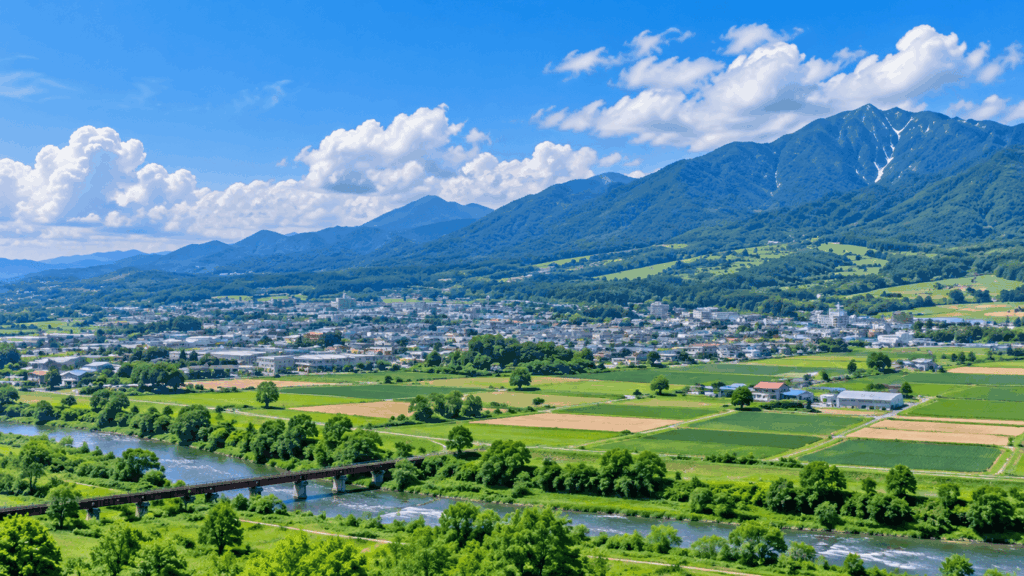
Travelling as a family or small group and want to explore Furano and Biei without driving? A private day trip gives you a dedicated vehicle and more flexibility than a fixed-schedule group tour. Check the private Furano–Biei day trip’s itinerary options, Sapporo pickup details and current group price before deciding whether to rent a car.
What Is the Best Way to Get from Sapporo to Furano?
There is no single best way from Sapporo to Furano. There is a best way for the places you actually want to see.
- Furano town only: the highway bus is usually the simplest option. One seat, no transfers, and it drops you at Furano Station.
- Farm Tomita or several countryside stops: a rental car gives you the most control, because local buses between the fields are infrequent and stop early.
- Furano and Biei in one day without driving: a guided day tour from Sapporo is usually the easier compromise than stringing together local transport.
- Rail pass holders and summer travellers: the seasonal direct train is comfortable and quick, but it does not run year-round, and the dates change each year.
The useful way to compare is not “which is fastest” but total friction: how long the door-to-door trip takes, how many times you change, how much freedom you have after arrival, and what happens if something runs late. A bus that takes 20 minutes longer but leaves you in the right place beats a faster train that strands you 10 km from the flowers.
If you are not planning to drive and your list includes both Farm Tomita and Biei, it is worth comparing a Sapporo departure day tour before you commit to a bus or train timetable — the transport is the part that usually breaks a one-day plan, not the sightseeing.
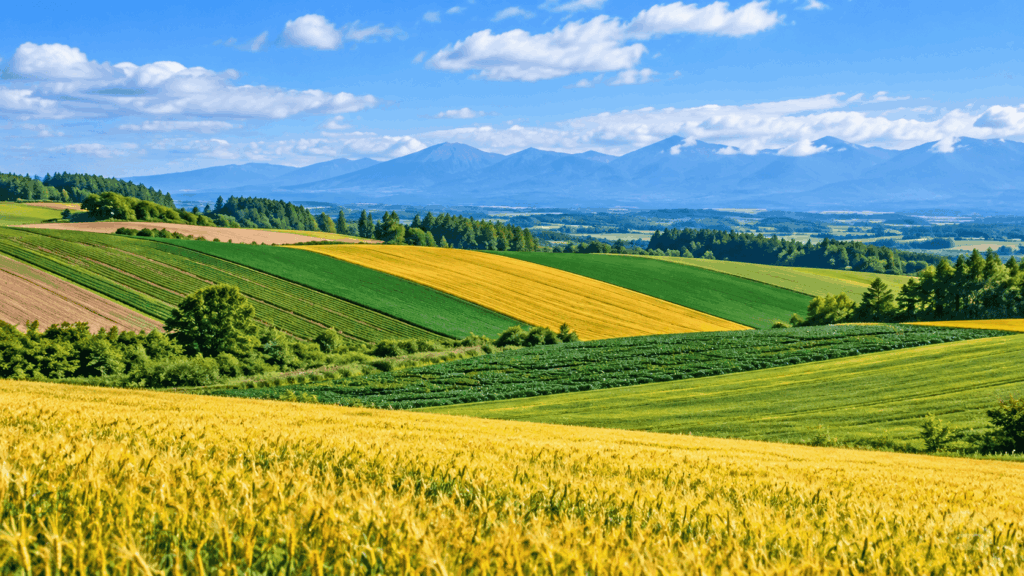
Sapporo to Furano Options at a Glance
Four realistic options, compared on the things that actually affect a day trip. Times are typical, not guaranteed — traffic, weather and timetable revisions all move them.
| Option | Approx. travel time | Transfers | Best for | Main drawback | Flexibility after arrival | Typical booking need |
|---|---|---|---|---|---|---|
| Highway bus (Highway Furano-go) | About 2 h 55 min | None | Furano town, budget travellers, simple point-to-point trips | No onward flexibility; departures are spread through the day but not frequent | Low to medium | No reservation required; pay on exit |
| JR train | About 2 h direct in season; roughly 2 to 2.5 h via Takikawa otherwise | None on the seasonal direct service; one at Takikawa on the standard route | Rail pass holders, travellers who prefer trains | Direct service is seasonal; fixed timetable with few alternatives | Low to medium | Reserved seat required on limited express services |
| Rental car | About 2.5 h in normal conditions | None (self-drive) | Multiple rural stops, couples, families, flexible travellers | Cost, parking, July congestion, winter road conditions | High | Book the car well ahead for July and August |
| Guided day tour | Roughly 10 h round trip from Sapporo | None (you are driven) | Non-drivers who want Furano and Biei in one day | Short time at each stop; fixed itinerary | Low | Book ahead in peak season; group size is often capped |
Which Option Fits Your Itinerary?
Find your plan in the left column and work from there. This is the decision most readers actually need, and it is not the same as the fastest option.
| Your plan | Best option | Why |
|---|---|---|
| Furano town only | Highway bus, or JR if you have a rail pass | Both end at Furano Station, which is what you wanted. A car adds cost with no benefit. |
| Farm Tomita only | Bus or train to Furano or Nakafurano, then local bus or taxi | Farm Tomita is in Nakafurano, north of Furano town. The last leg is short but needs planning. |
| Farm Tomita plus Furano countryside | Rental car | Rural stops are spread out and local services are thin. A car turns three connections into one drive. |
| Furano and Biei | Rental car, or a guided day tour | Furano and Biei towns are roughly 30 km apart, with additional travel needed for the countryside sights. Public transport connections can eat up the day. |
| Travelling with children | Rental car, or a day tour | Nap timing, toilet stops and luggage all favour being in control of the vehicle. |
| Solo traveller | Highway bus, or a day tour | A car’s fixed costs land on one person. Per-person, the bus or a shared tour is usually cheaper. |
| Winter trip without snow-driving experience | Bus, train, or a tour | Snow and ice, an early sunset and seasonal road closures make this the wrong season to learn. |
| Peak lavender season | Rental car with an early start, or a day tour | Traffic and parking near the farms are the constraint, not the drive from Sapporo. |
Option 1 — The Highway Bus from Sapporo to Furano
The Highway Furano-go, run by Hokkaido Chuo Bus, is the simplest way to reach Furano town without driving. It leaves from the Sapporo Station area and runs to Furano Station in about 2 hours 55 minutes, covering roughly 144 km.
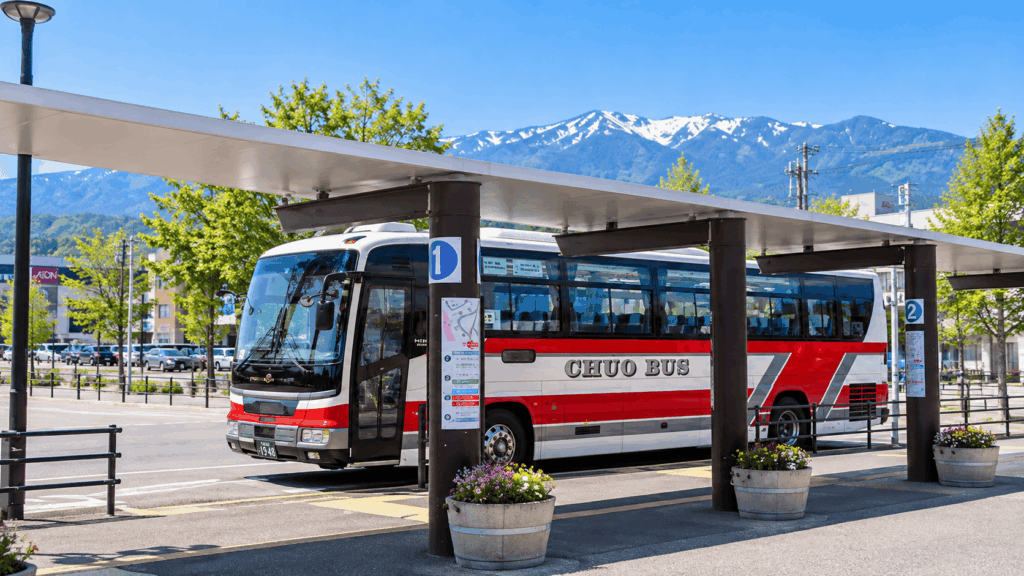
Under the summer 2026 timetable there were seven departures a day from Sapporo Station, spread from early morning to early evening — enough to plan around, but not enough to treat as turn-up-and-go. The one-way adult fare was 2,700 yen, with a return ticket around 5,100 yen.
- Boarding: no reservation is required. You pay when you get off, and IC cards work.
- On board: four-across reclining seats, a toilet, and free Wi-Fi. There is no rest stop, so the toilet matters more than you might expect.
- If the bus is full: you may be seated in an auxiliary seat or moved to the next departure. In peak season, that is a real risk rather than a technicality.
- Where it ends: Furano Station. Farm Tomita is a further 10 km or so north, in Nakafurano.
Who it suits: anyone whose Furano plan is the town itself — the station area, the cheese factory, a walk along the Sorachi River, lunch, and back. It also suits budget-conscious travellers and anyone who simply does not want to drive in Japan.
Who should skip it: travellers planning to tick off Farm Tomita, a couple of countryside stops and Biei in the same day. The bus does its job perfectly and then stops being useful.
The misunderstanding I see most often in trip reports is the assumption that arriving at Furano Station means arriving at the lavender fields. It does not. The bus is excellent at what it does; it is not a sightseeing vehicle.
Option 2 — The Train from Sapporo to Furano
The train is the most comfortable way to cover the distance, and in summer it can also be the fastest — with one important caveat about dates.
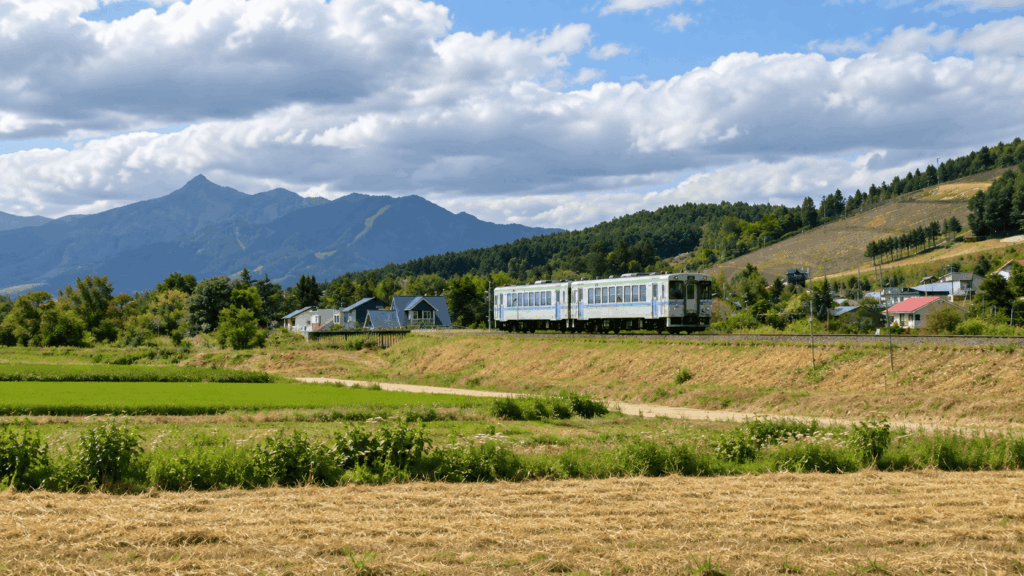
In the 2026 season, JR Hokkaido ran the Furano Lavender Express, a direct limited express from Sapporo to Furano in about two hours with no transfer, via Iwamizawa, Takikawa and Ashibetsu. It is a genuinely pleasant ride, and it removes the one thing that makes the standard route slightly annoying.
Outside that seasonal window, the standard route is a transfer at Takikawa: a limited express from Sapporo to Takikawa (roughly 55 minutes), then the Nemuro Main Line on to Furano (roughly 1 hour 10 minutes). With a good connection that is around two hours in total; with a poor one, closer to two and a half.
- Fare: expect roughly 4,700 to 5,300 yen one way, depending on the service and seat type. A limited express ticket is required on top of the basic fare.
- Reserved seats: since March 2026, all JR Hokkaido limited express trains are all-reserved. There are no non-reserved cars, so you need a seat reservation before boarding.
- IC cards: they cannot be used between Takikawa and Furano. Buy a paper ticket rather than relying on tapping in.
- Rail pass: the Sapporo–Furano Area Pass covers four consecutive days for around 11,000 to 12,000 yen and includes a reserved seat on these trains at no extra charge. It only pays off if you are also riding to Otaru, Biei or New Chitose within those four days — a single Furano round trip on its own is roughly break-even.
- Where it ends: Furano Station, with Nakafurano one stop or a short bus ride further north.
Who it suits: rail pass holders, travellers who would rather not sit on a highway bus, and anyone visiting during the lavender season when the direct service runs.
Who should skip it: anyone assuming a direct train runs every day of the year, and anyone whose plan depends on being somewhere at a specific hour — the timetable is thin, and a missed connection costs more than it would on the bus.
Is the Furano Lavender Express a Year-Round Train?
No. It is a seasonal service, and the operating dates are announced each year rather than carried over. In 2026 it ran between June and September, with the exact dates set by JR Hokkaido.
This matters more than it sounds. Plenty of older trip reports describe the direct train as if it were permanent, and readers then build an itinerary around a service that is not running on their dates. Before you lock in a train-based plan, check the current year’s operating dates on JR Hokkaido’s site and confirm the departure time for your specific day.
There is a second change worth knowing if you are travelling from 2027 onward. The summer sightseeing train that served the temporary Lavender Farm Station, a seven-minute walk from Farm Tomita, ran its final season in 2026. JR Hokkaido has announced a new sightseeing train, Blue Star, for the Furano Line from 1 July 2027, running between Asahikawa, Biei and Furano (following a one-month delay announced on 28 October 2026) — but whether the temporary station is served in your travel year is something to confirm rather than assume. If it is not, Nakafurano Station plus a 25-minute walk or a short taxi ride is the fallback.
Option 3 — Driving from Sapporo to Furano
If your Furano plan involves more than the town — Farm Tomita, a couple of the smaller farms, maybe Biei the same day — a rental car is the option that actually fits the itinerary. Not because it is faster, but because it removes the waiting.
The drive is straightforward by Japanese rural standards: expressway most of the way, then two-lane roads through towns and one mountain stretch. In normal conditions it takes about two and a half hours from central Sapporo, which is the same figure Farm Tomita’s own access page gives for the Mikasa IC route.
What a car buys you is sequencing. You can arrive at Farm Tomita before the tour coaches, leave when the light changes rather than when the timetable says, stop at a roadside view you did not plan for, and eat lunch somewhere that is not the designated buffet. On a one-day trip to a place this spread out, that flexibility is the whole point.

What it costs you is everything that comes with driving: a car booked months ahead in July, parking that fills, a designated driver, and — in winter — conditions that are genuinely less forgiving than the summer postcards suggest. Those are covered further down rather than glossed over here.
My Usual Driving Route via Mikasa
The route I take is the Dō-Ō Expressway east, exit at Mikasa IC, then Hokkaido Route 116 into the Mikasa area, National Route 452 east through Ashibetsu, and Hokkaido Route 135 across to Furano. It is not the only way, but it is the one I default to: the navigation is simple, the expressway section is quick, and the mountain road on the far side is scenic without being technical.
One detail worth knowing is that a separate approach from Bibai was completed recently: the missing section of Hokkaido Route 135 between the Bibai Dam area and National Route 452 near Sandandaki opened in August 2024. It is an alternative to the Mikasa IC approach described above, rather than an extra leg of that route. Some older maps may not show the connection, but it closes in winter, so check current road restrictions instead of relying on the shortest route shown on your phone.
Another detail: National Route 452 does not run all the way through to Biei. There is an unopened section between Ashibetsu and Biei, so you cannot cut across from the 452 to the Biei hills. From this route you reach Biei via Furano, or by staying on the expressway and approaching from Asahikawa.
Kai’s tip: I buy drinks and something to eat in Sapporo before setting off. Once you leave the Mikasa area, places to stop thin out considerably, and the mountain section is not where you want to be thinking about lunch. It is a small habit, but it is the difference between a relaxed drive and arriving at the lavender fields hungry and behind schedule.
Who it suits: couples and small groups with two or more stops on their list, families, anyone staying overnight in Furano or Biei, and confident drivers visiting outside the snow season.
Who should skip it: solo travellers watching their budget, anyone who has never driven on the left, and — emphatically — winter visitors without snow-driving experience.
Sandandaki Park Is a Useful Break — but Wear Proper Shoes
Roughly two-thirds of the way along the mountain stretch, Sandandaki Park in Ashibetsu is the natural place to break the drive. There is a large car park and toilets, which on this road is not a small thing.
From the car park a short path leads down to the falls — a few minutes of walking, not a hike. The reward is bigger than the effort suggests: a broad curtain of water dropping into the Ashibetsu River, with the kind of volume that makes you stop talking for a moment.
Kai’s tip: wear closed-toe shoes for this stop, not sandals or slides. The path down is short but it is not a paved promenade — there are tree roots and exposed rock, and it can be slick. I have also seen the local warning signage about vipers in the summer months, which is worth reading rather than walking past. You are not on a trail for long, but you are on a trail.
The park is a rest stop, not a destination. Twenty minutes is plenty. But on a route where the alternative is arriving at Farm Tomita stiff and impatient, twenty minutes well spent is worth more than it looks on an itinerary.
Option 4 — A Sapporo Departure Day Tour
Here is the honest case for a tour. If you do not want to drive, and your list includes both Furano and Biei, the public transport version of that day involves a highway bus, a local bus, possibly a taxi, and a timetable where one missed connection quietly deletes a stop. A day tour removes that entire layer of coordination.
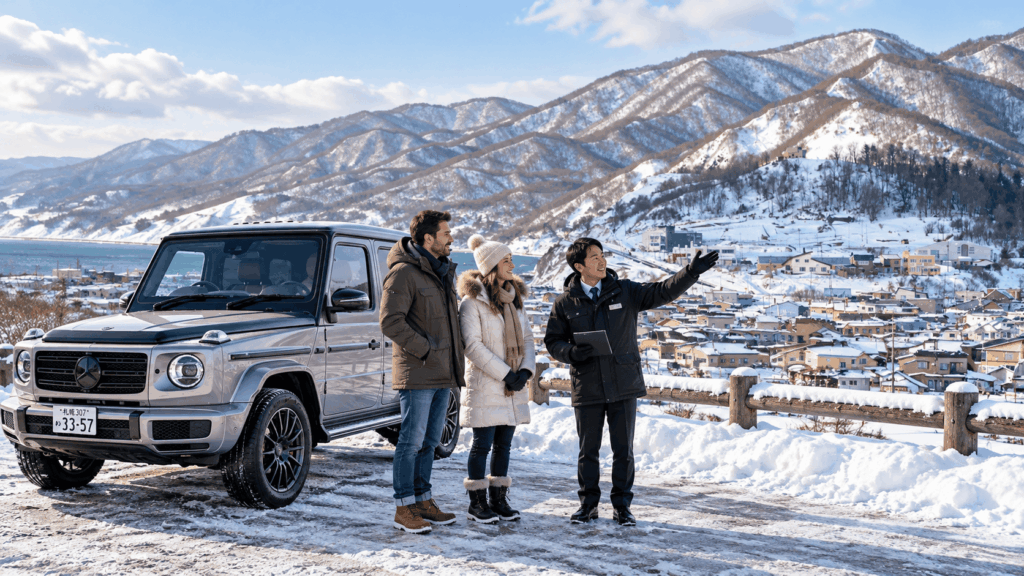
The typical product runs about ten hours from Sapporo, departing around 8:00 in the morning and returning in the early evening. A representative 2026 itinerary looked like this: Shirogane Blue Pond (about 30 minutes), Shirahige Falls (about 20 minutes), a drive along the Roller Coaster Road, a buffet lunch (about 60 minutes), Shikisai-no-Oka (about 60 minutes, admission included), then Farm Tomita (about 50 minutes) before the return drive.
- Group size: often capped small — the product above takes up to 13 people.
- Language: driver-guides commonly cover English, Chinese and Japanese. Note the word “driver-guide”: several reviews mention that commentary is limited, and that the value is the transport and timing rather than narration.
- Included: transport, lunch, and admission to at least one paid flower farm, depending on the package.
- Cancellation: commonly free up to 24 hours before, which is useful in a region where weather changes plans.
- Pickup: hotel pickup is often limited to a radius around Sapporo Station, sometimes with a minimum of two guests. Solo travellers may need to meet at the station.
The trade-off is time at each stop. Fifty minutes at Farm Tomita in July is enough to walk the main lavender rows and buy a soft cream. It is not enough to wander the whole farm, sit with a coffee, and wait for the light to soften. If Farm Tomita is the reason for your trip rather than one stop among several, that constraint will bother you.
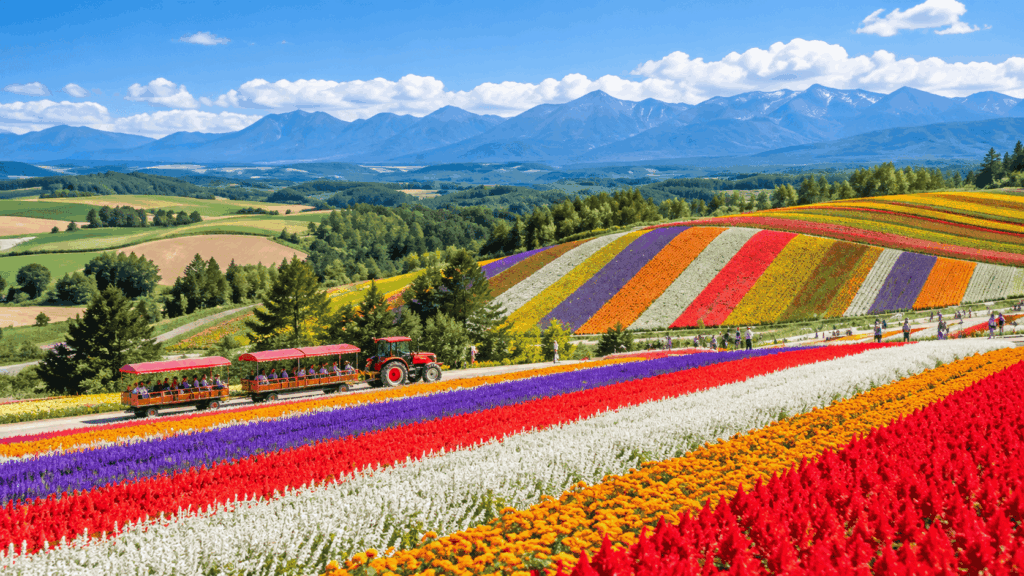
If you want Furano and Biei in one day without renting a car, compare a Sapporo departure day tour that genuinely includes Farm Tomita and the main Biei stops, and check the time allowed at each one before you book. The itinerary matters more than the price.
There is another option if the fixed schedule is the sticking point: a private day trip with a dedicated driver. It costs more than joining a shared group, but it can make more sense when several people are travelling together and want greater control over the stops.
If you are travelling as a family or small group, want to include both Furano and Biei, and would rather not spend the day driving or following a coach schedule, this is the private option worth comparing before you settle on a rental car.
Why I’d book this one
- More control over the itinerary: the private Furano–Biei day trip offers scope to discuss your preferred stops rather than following a large group’s fixed timetable. Confirm that Farm Tomita, Shirogane Blue Pond and any other priorities are included in your selected itinerary before booking.
- Less driving and coordination: a dedicated vehicle and Sapporo pickup remove the need to navigate rural roads, find parking or work around infrequent local buses. Recent travellers particularly mention punctual drivers and the convenience of having transport arranged for the day.
- A clear trade-off to understand: this is primarily a private driver service, not a fully narrated English-language guided tour. Traveller feedback suggests that driver communication and English support can vary, so check the service description and recent reviews if detailed commentary matters to you.
For a group splitting the vehicle cost, the relevant comparison is the current total group price against renting a car and handling the driving yourself. See current group prices, pickup options, available dates and recent traveller reviews for the private Furano–Biei day trip. Check the cancellation terms and confirmed stops before finalising your plan.
Furano Station Is Not the Same as Visiting Farm Tomita
This is the gap that catches people, and it is worth stating plainly: getting to Furano Station and getting to the lavender fields are two different problems.
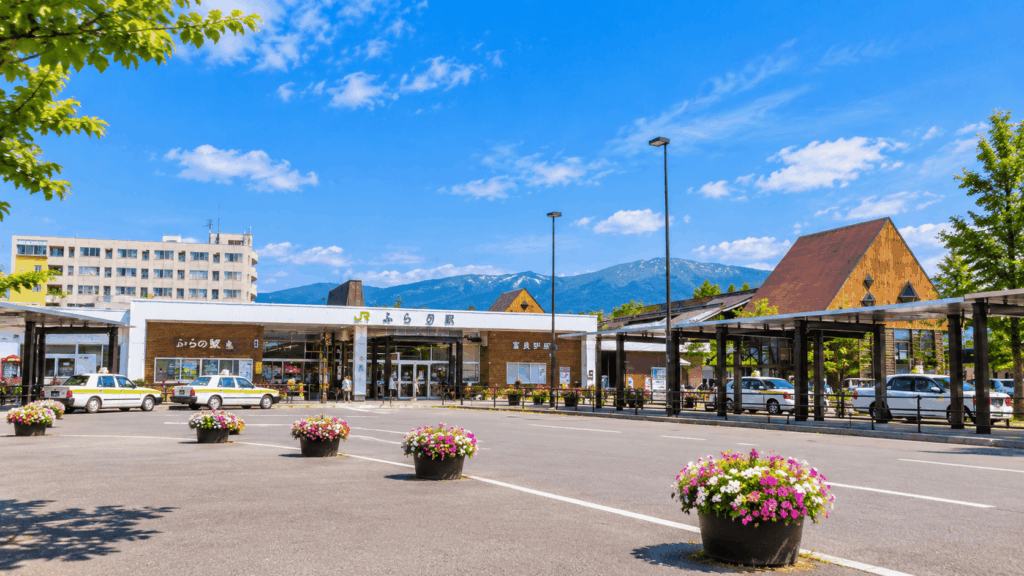
Farm Tomita sits in Nakafurano, north of Furano along the JR Furano Line. From Furano Station you have four practical choices:
- Train: about 10 minutes to Nakafurano Station, then roughly 25 minutes on foot or a short taxi ride.
- Local bus: the Furano Bus Lavender-go runs year-round, needs no reservation, and takes about 12 minutes from Furano Station to the Nakafurano area. From the bus stop it is a 25-minute walk or a five-minute taxi.
- Taxi: around 15 minutes from the Furano bus terminal area, and the most direct option if you are short on time.
- Seasonal rail: the temporary Lavender Farm Station is a seven-minute walk from the farm, but it was served only by the summer sightseeing train, which ran its last season in 2026. Do not assume it will be operating on your dates.
None of this is difficult. But it is 30 to 50 minutes of movement on each end, and it is the reason a “Furano day trip” built on public transport can feel like a day of waiting rather than a day of looking at flowers. Recent visitor accounts repeatedly describe the same pattern: the trip to Furano worked, and then the onward movement did not.
If You Also Want to Visit Biei, the Best Option Changes
Furano and Biei get planned together because they sit in the same part of the map and appear in the same photographs. In practice they are separate areas, roughly 30 km apart, with the Blue Pond a further 20 km or so beyond Biei up toward Shirogane.
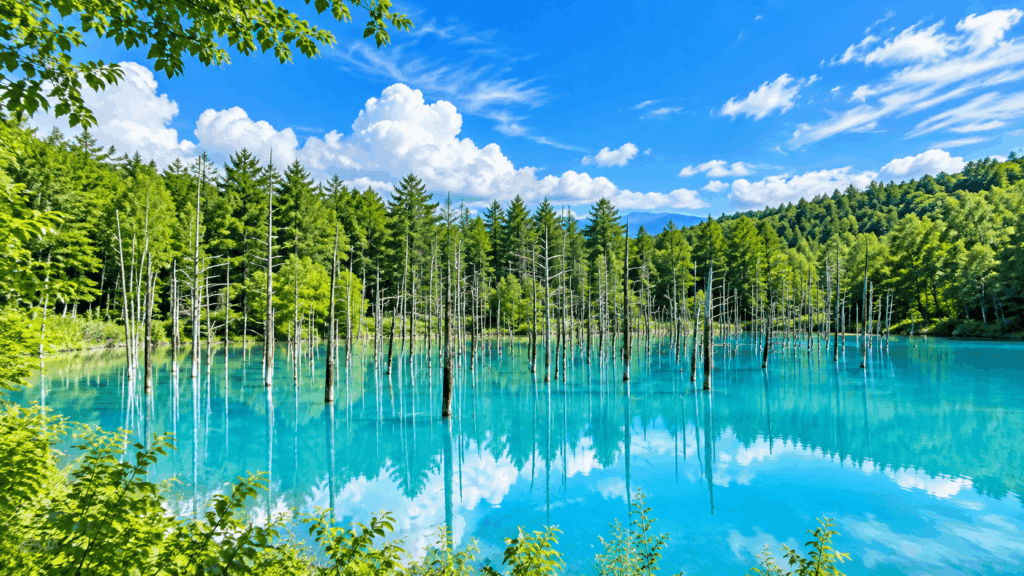
That distance is what breaks public-transport itineraries. Buses between the two towns exist, but they are not frequent enough to absorb a slow start, a long lunch, or a stop that runs over. Add the Blue Pond and you are dependent on a connection that may run a few times a day.
So the decision rule is simple. Furano town alone, or Furano plus Farm Tomita, can work on public transport with planning. Furano plus Biei plus the Blue Pond in a single day is a car day or a tour day. Trying to do it on local buses usually produces a day spent watching timetables instead of landscapes.
If you are set on seeing both and you are not driving, this is the point where a tour stops being a convenience and starts being the only realistic version of the plan.
Visiting Farm Tomita in July: Allow More Time Than Google Maps Says
In peak lavender season, the constraint is not the drive from Sapporo. It is the last two kilometres.
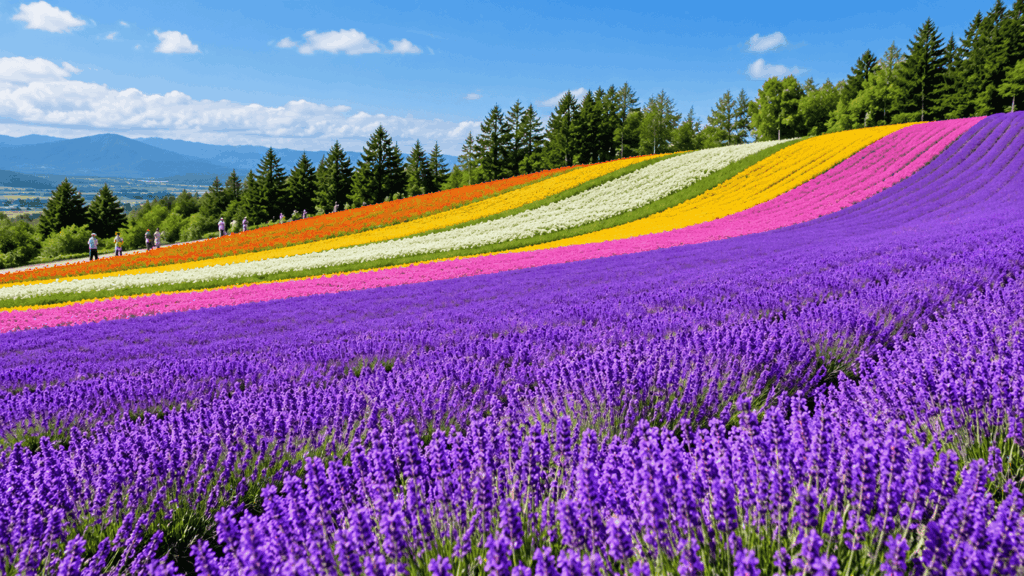
Farm Tomita itself is free to enter, which surprises people, and its hours change with the season — earlier opening and later closing in July, shorter days by October. The farm publishes its hours daily, and entry outside opening hours is not permitted. Parking is free but is limited to those same business hours, so arriving early to “beat the queue” by sitting in the car park is not an option.
What actually happens in mid-July is a queue of vehicles on the approach road. Kai’s tip: I have been in that queue before midday, with traffic crawling for several hundred metres before the car park entrance, and it changed how I plan the day. I now aim to arrive at opening time, check that day’s official hours beforehand, and treat everything after Farm Tomita as movable. The same visit also showed me a long line at the women’s toilets, which is worth factoring in if you are travelling with children or on a tight schedule.
The planning consequence is this: if you build a July itinerary from drive times alone, Farm Tomita will consume more of the day than you budgeted, and whatever comes next gets squeezed. Give the farm a real time block, put it early, and leave slack on either side.
Summer vs Winter: When I Would Not Recommend Driving
Everything above about the car assumes normal road conditions. Winter is a different proposition, and it would be dishonest to recommend the same choice in January.
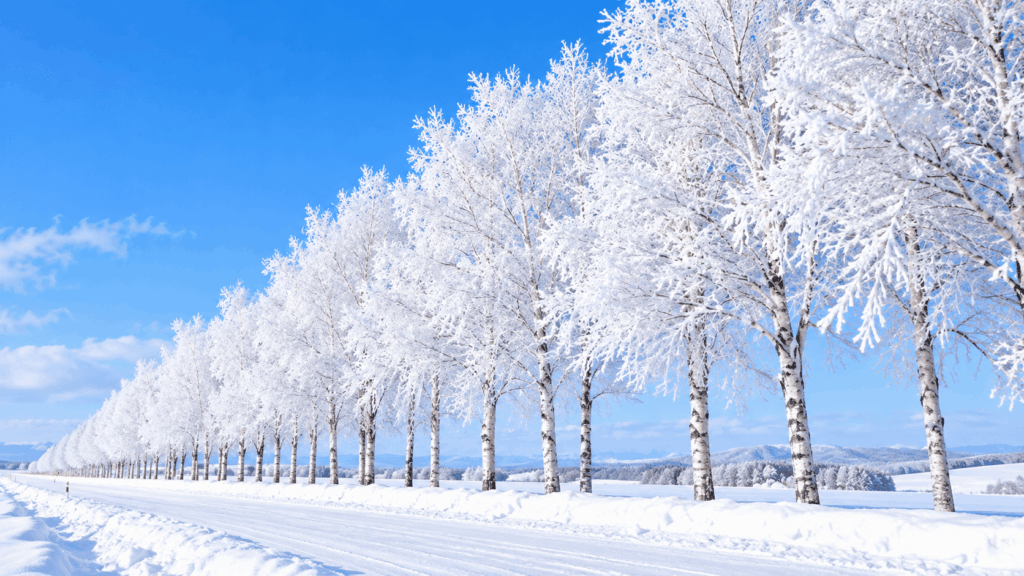
From late October, parts of this road network close for the season. The stretch of Hokkaido Route 135 between the Bibai Dam area and National Route 452 is typically shut from around the end of October until spring — in 2026 the closure was moved forward from the planned 30 October start to 27 October at 11:00 because of freezing conditions. The affected section is scheduled to remain closed until 23 April 2027; this season, restrictions also begin near Bibai Ski Area because of road works. Snow and ice sit on the remaining roads, daylight is short, and a mountain section that is pleasant in July becomes a place where a small mistake has larger consequences.
I drive this route in normal conditions, not in winter, so I am not going to dress up winter driving as an adventure I have personally mastered. What I can say is that the risk profile changes enough that the recommendation flips:
- Summer, multiple stops: a car is the most efficient way to see Furano and Biei.
- Winter, experienced snow driver: a car is workable with winter tyres and a flexible plan, but build the day around daylight.
- Winter, no snow-driving experience: take the bus, take the train, or take a tour. The scenery is still there from a heated seat.
The highway bus and the JR line run through the winter, and a day tour removes the driving question entirely. If your trip falls between December and March and you are unsure, that is the answer, not a rental car with all-season tyres.
Practical Details Before You Book
A few small things that cause disproportionate problems:
- Highway bus payment: you pay on exit, and IC cards work. Have the fare ready anyway — not every visitor’s card works on every route.
- Train tickets: limited express services are all-reserved, and IC cards cannot be used between Takikawa and Furano. Buy a paper ticket before boarding rather than sorting it out on the platform.
- Rental car paperwork: many overseas visitors need a 1949 Geneva Convention International Driving Permit plus their home licence. Licence holders from Belgium, France, Germany, Monaco, Switzerland and Taiwan can instead use their original licence with an approved Japanese translation. Check Japan’s official driving requirements for your issuing country before renting. Book the car early for July and August — this is not a route where you turn up and choose.
- Luggage: the highway bus takes large bags in the hold, but you are responsible for them. If you are moving between hotels, send luggage ahead rather than hauling it around the farms.
- Timing: all four options assume you are starting from central Sapporo. If your hotel is near Sapporo Station, add nothing. If it is further out, add 20 to 30 minutes and plan accordingly.
FAQ
What is the easiest way to get from Sapporo to Furano?
If “easiest” means fewest decisions, the highway bus is the answer. It leaves from the Sapporo Station area, runs directly to Furano Station in about 2 hours 55 minutes, needs no reservation, and you pay when you get off. If “easiest” means least total effort for a day that includes Farm Tomita and Biei, the easiest option is usually a guided day tour, because the local connections are handled for you.
Is there a direct train from Sapporo to Furano?
Sometimes. The Furano Lavender Express runs directly in roughly two hours, but it is a seasonal service — in 2026 it operated between June and September, and the dates are announced fresh each year. Outside that window you change trains at Takikawa, which takes about two to two and a half hours in total. Check the current year’s operating dates rather than relying on an older blog post.
Is there a direct bus from Sapporo to Furano?
Yes. The Highway Furano-go, operated by Hokkaido Chuo Bus, runs from the Sapporo Station area to Furano Station with no transfers, taking about 2 hours 55 minutes. Under the summer 2026 timetable there were seven departures a day and the adult one-way fare was 2,700 yen. It is not a reservation-based service, which is convenient — but in peak season a full bus can mean an auxiliary seat or the next departure.
Can you visit Farm Tomita from Sapporo without a car?
Yes, but it takes planning, because Farm Tomita is in Nakafurano rather than Furano. The realistic version is a highway bus or train to Furano, then the local Lavender-go bus (about 12 minutes, no reservation needed) or a taxi to the Nakafurano area, then a 25-minute walk or a short taxi ride to the farm. It works as a focused half-day. It becomes strained if you also want Biei on the same day.
Can you visit Furano and Biei in one day from Sapporo?
In a car or on a tour, yes — a long day, but doable. On public transport, it is technically possible and rarely enjoyable. The two areas are roughly 30 km apart with the Blue Pond further beyond Biei, and local buses are too infrequent to absorb delays. If you do not want to drive, a day tour is the version of this plan that actually holds together.
Travelling solo or looking for a lower-cost alternative to a private vehicle? Compare the stops, departure dates, guide languages and current prices for this shared Furano–Biei day tour from Sapporo. It is worth checking how much time the itinerary allows at Farm Tomita.
Do I need to book the highway bus in advance?
No. You board, then pay on exit, and IC cards are accepted. What you cannot do is guarantee a seat: if a departure is full, you may be given an auxiliary seat or directed to the next bus. In July and August, that is worth planning around by arriving early at the stop rather than cutting it fine.
Is Furano too far for a day trip from Sapporo?
No. At roughly 2.5 to 3 hours each way, it is a full day but a reasonable one. The limit is not the distance — it is how much you try to fit in after arriving. Furano town and Farm Tomita in one day is comfortable. Furano, Farm Tomita and Biei in one day is where the schedule starts to break.
Final Verdict: Which Option Should You Choose?
After all of the above, the decision comes down to four honest sentences.
Choose the highway bus if your Furano plan is the town itself — the station area, lunch, a walk, maybe the cheese factory — and you would rather not drive. It is direct, cheap, and the timetable is generous enough for a town day. It stops being the right answer the moment Farm Tomita and Biei enter the plan.
Choose the train if you hold a rail pass, you are travelling during the lavender season when the direct service runs, or you simply prefer trains to highway buses. It is the most comfortable way to cover the distance. Just verify the operating dates for your year and remember that all limited express seats are reserved.
Choose a rental car if you have two or more stops beyond Furano Station, you are travelling as a couple or a family, and you are visiting outside the snow season. This is the option that lets a day trip feel like a day out rather than a series of connections. It is also the option with the most ways to go wrong: July traffic near the farms, parking that fills, and a winter road network that closes sections from late October.
Choose a day tour if you are not driving, you want Furano and Biei in the same day, and you would rather accept a fixed schedule than manage four connections. Fifty minutes at Farm Tomita is the price of admission. For a first trip where you want to see the headline landscapes without any logistics, that is often a fair trade.
By traveller type
- First-time visitors: a day tour if you are not driving; the highway bus if Furano town is the whole plan. First trips are where a stranded connection hurts most.
- Families: a rental car, unless it is winter. Nap timing, toilets and luggage all point the same way, and the Sandandaki stop is a useful pressure valve on the drive.
- Travellers on a tight schedule: the seasonal direct train in summer if it fits your dates, otherwise a tour. Both remove the transfer at Takikawa and the local-bus wait.
- Repeat visitors: a rental car, and start earlier than you think you need to. The second trip is usually about the smaller farms and the roads between them, not Farm Tomita itself.
- Winter visitors without snow-driving experience: bus, train or tour. This is the one recommendation I would not soften. The scenery does not require you to be the one holding the wheel.

Hi, I’m Kai. I’m a Tokyo-based travel writer, tourism industry insider, and the author of a published guidebook for international visitors to Japan. With over 10 years of professional experience at a leading Japanese tourism company, my mission is to help you skip the tourist traps and navigate Japan’s best destinations like a local. I believe the perfect day trip is like a traditional kaiseki meal: a beautiful balance of precise planning and unforgettable seasonal discovery. When I’m not out conducting field research, you’ll usually find me drafting new itineraries with one of my favorite fountain pens!