
Kyoto in winter is worth it — for the right traveler. From December to February, average highs sit between 9°C and 12°C (48–53°F), the days are short, and mornings can drop close to freezing. What you get in return is a calmer city than in cherry-blossom or autumn-leaf season, at least outside the New Year holiday. Snow does fall, but be precise about what that means: in central Kyoto, snow that settles is occasional rather than routine, and the 30-year average for the season’s deepest snow cover is under 10 cm. January and February give you a better chance of wintry scenery than December, though no month guarantees it. Winter suits travelers who want quiet mornings, temple atmosphere and clean light for photographs, and who can handle a near-freezing start. It does not suit anyone whose trip only works if it snows.
- Best overall winter month: January for atmosphere, February if you also want events and a slightly better shot at snow.
- Mildest of the three: December.
- Best chance of wintry scenery: January to February — with no guarantee attached.
- Best crowd strategy: early morning, not the season itself.
- Biggest mistake: building the itinerary around guaranteed snow.
If you want to cover Kyoto’s spread-out sights without spending the coldest part of the day waiting at bus stops, a private driver-guide is worth comparing against doing it yourself in winter — there’s a fuller comparison of self-guided versus private touring further down.
Traveling with a group or hoping to avoid long outdoor transfers? Compare hotel pickup, customizable routes, and current dates for the Kyoto Private Customizable Day Tour with Driver-Guide before deciding whether private transport is worth the extra cost.
Is Kyoto Worth Visiting in Winter?
Yes, with a condition. Winter rewards travelers who are willing to change their route according to the weather that morning. It frustrates travelers who have fixed five temple visits into a single day and then meet a cold rain at the second one.
The honest trade is this: you give up comfortable temperatures and long daylight, and you get back breathing room at the sites that are unbearable in spring and November, plus the chance — only the chance — of seeing Kinkaku-ji, Kifune Shrine or the Higashiyama lanes under snow. That chance is the reason many people book. It should not be the reason the trip succeeds or fails.
The pattern I notice is that visitors who fix two sights and leave one slot open enjoy winter more than those who book a full day. The open slot is where the snow, or the warm-up, or the extra hour at a temple actually fits.
Who winter in Kyoto suits
- Travelers who will happily start at 6:30 am to see Kiyomizu-dera and the Sannenzaka lanes before the shops open.
- Photographers who care more about empty stone lanes and low winter light than about warmth.
- Repeat visitors who have already done the spring and autumn checklist and want the temples to feel like temples.
- Anyone combining sightseeing with an onsen or a long bath at the end of the day — Kyoto in winter is built for that rhythm.
- Travelers who treat snow as a bonus rather than a deliverable.
Who should choose another season
- Travelers who feel the cold badly and don’t want to manage layers, hand warmers and two pairs of socks.
- Anyone whose main reason for coming is a snowy Kinkaku-ji photo. Book for the season you want, not for a weather event.
- Families with very young children who need long, warm indoor breaks between sights.
- Visitors who assume “low season” means “empty”. Central Kyoto is quieter in January, not deserted.
Recent visitors consistently describe January as manageable rather than empty: the famous sites still draw a crowd by mid-morning, and the calm is concentrated in the first hour or two of the day. That matches what the numbers say, and it’s the single most useful expectation to carry into planning.
Kyoto in December vs January vs February: Which Month Is Best?
There is no single best month, only a best month for your priorities. The table below uses the Japan Meteorological Agency’s 1991–2020 normals for central Kyoto, so the temperatures are long-run averages rather than a forecast for your dates.
| Month | Typical average temperature | Snow potential | Crowd pattern | Best for | Main drawback |
|---|---|---|---|---|---|
| December | 7.2°C average (11.6°C high / 3.5°C low) | Lowest of the three: about 2 cm of snowfall across the month on average | Quiet until the last week, then busy through New Year | Travelers who want winter atmosphere without the coldest weeks | Shortest days and New Year closures |
| January | 4.8°C average (9.1°C high / 1.5°C low) | Moderate: about 5 cm on average, with roughly 1.6 days of 1 cm or more | Very busy around New Year, then among the quietest weeks of the year | The full winter experience, and the Winter Special Openings | Coldest month, and holiday closures in the first days |
| February | 5.4°C average (10.0°C high / 1.6°C low) | Highest of the three: about 7 cm on average, with roughly 2.2 days of 1 cm or more | Moderate, with weekend spikes during plum season | Snow odds plus non-snow reasons to come: Setsubun, plum blossoms, special openings | Still genuinely cold, and snow remains a gamble |
December is the gentlest entry into the season. Average highs still reach 11–12°C, and the pre-Christmas weeks are some of the least pressured of the year. The catch is the back end of the month: from roughly December 28 into the first days of January, domestic travel, shrine visits and adjusted opening hours change the city’s rhythm. If your dates land there, plan around it rather than assuming normal service.
January is the coldest month and, for many travelers, the most rewarding. Once the New Year crowds clear, you get the quietest stretch of the Kyoto year, and the Kyoto Winter Special Openings usually run from early January into mid-March, opening heritage buildings that are closed the rest of the time. The 2026 edition ran from January 9 to March 18; dates for the coming winter are typically announced in late autumn, so check before you build a day around a specific building.
February is the month to choose if you want a second reason beyond snow. Setsubun falls on February 3 in 2027, and shrines across the city mark it with bean-throwing and crowds of their own. Kitano Tenmangu’s plum garden usually opens in early February and runs into late March, with dates and admission changing year to year. February also has the highest snowfall average of the three months — but as the next section explains, “highest” is a relative word in Kyoto.
Does It Snow in Kyoto? What to Realistically Expect
Yes, it snows in Kyoto. No, central Kyoto does not reliably turn white. Kyoto City’s own tourism guidance puts it plainly: snow can fall in the coldest weeks, but it is very rare for it to pile up on the ground. The climate normals tell the same story from a different angle.
Across the 30 years to 2020, Kyoto averaged about 2 cm of snowfall in December, 5 cm in January and 7 cm in February — a seasonal total of roughly 14 cm. The number of days with at least 1 cm of new snow averages 0.6 in December, 1.6 in January and 2.2 in February. And the average deepest snow cover for the month is just 2 cm in December, 3 cm in January and 4 cm in February.
Read those figures the right way: they are not a promise of a snowy trip, and they are not a reason to skip winter either. They tell you that a white Kyoto is a real possibility on a handful of days each season, that February is the best bet of the three months, and that a plan which depends on snow will usually fail. The snow that does fall in the city is often gone by the afternoon.
The bigger divide is not month to month — it’s downtown versus the mountains. Ohara, Keihoku and the Kibune valley sit higher and colder, and Kyoto City itself notes that the northern mountain districts can be under heavy snow while the urban area gets nothing. The Hanase pass, north of Kurama, sits at 759 m and the city advises winter tyres or the Kyoto Bus for winter access. Kifune Shrine is not as remote as Hanase, but it is still a mountain shrine reached by a valley road, and its conditions are not downtown’s conditions.
Practical consequence: use the seasonal normals to set expectations, and a five-to-seven-day forecast to make decisions. On the morning itself, Kinkaku-ji runs a live camera that refreshes every three minutes, which is a far better guide than a photo from a previous winter.
Where to Go in Kyoto When It Actually Snows
If you wake up to fresh snow in central Kyoto, treat it as a scheduling event rather than a sightseeing day. Three places justify reordering your plan.
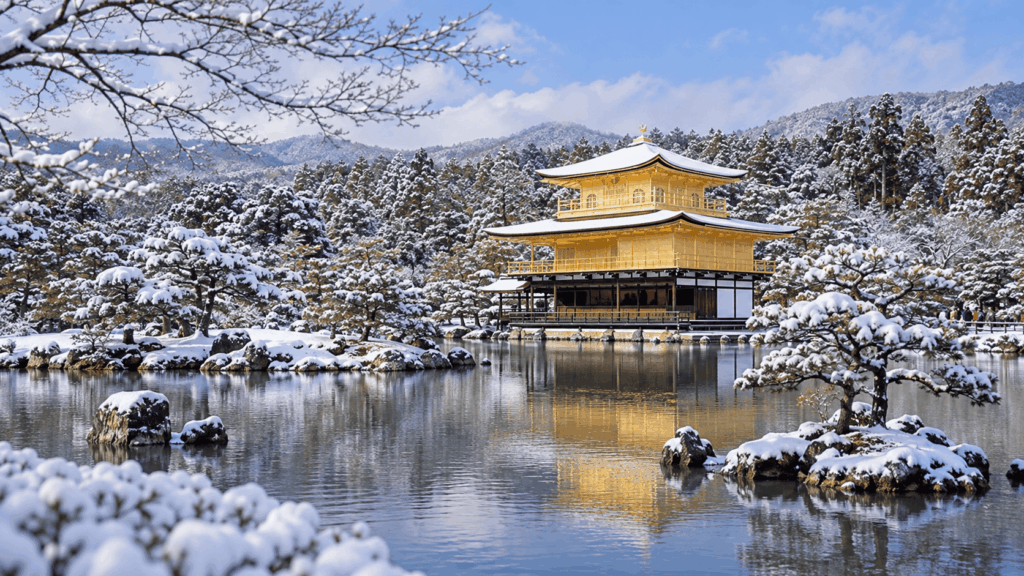
Kinkaku-ji is the first call. The pavilion opens at 9:00 and closes at 17:00, with admission around ¥500 (see our honest guide to visiting Kinkaku-ji for details on navigating the crowds), and the contrast between gold and fresh snow is the image most travelers are chasing. Go early, because the snow may not last and the coach groups arrive mid-morning.
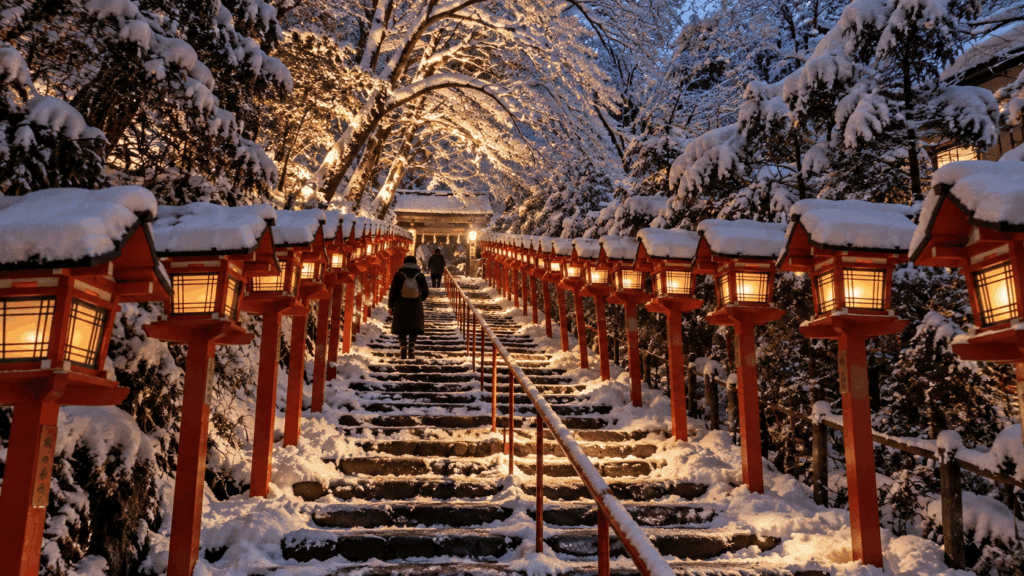
Kifune Shrine is the second, but only with conditions attached. The shrine sits at the end of a valley north of the city, reached by the Eizan Railway to Kibuneguchi and then Kyoto Bus 33, followed by about five minutes on foot. Winter hours run to 18:00 from December 1 to April 30 — confirm this on the shrine’s site before making the trip. The stone lanterns along the approach are lit every day from sunset until closing, which is worth knowing even if you visit without snow.
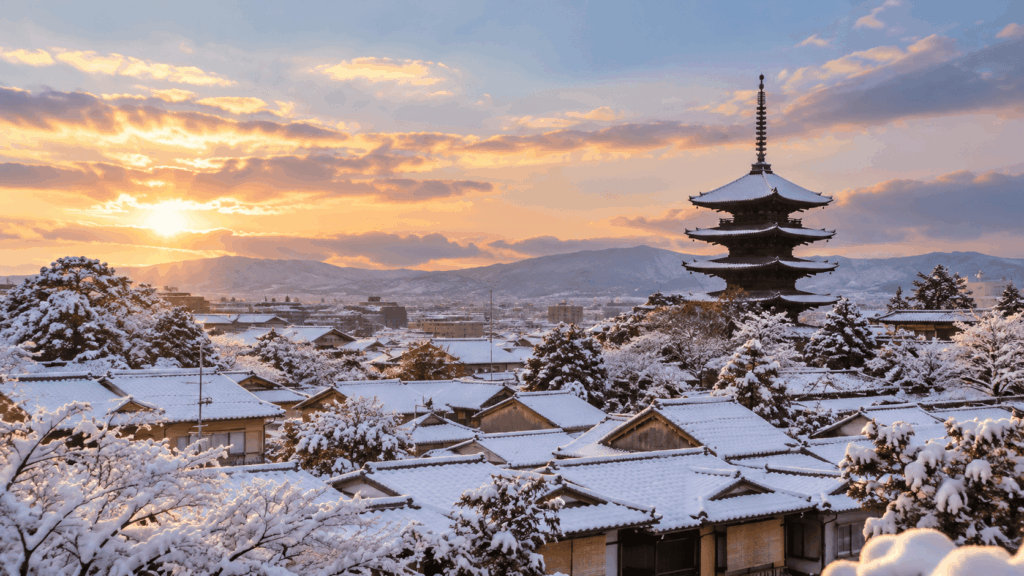
The Higashiyama lanes are the third. Snow on Sannenzaka, Ninenzaka and the slope below Yasaka Pagoda is the classic Kyoto winter photograph, and it is a ten-minute walk from Kiyomizu-dera rather than a separate expedition.
Kai’s tip: On a snowy day, I guided a British couple to Kinkaku-ji and then up to Kifune Shrine. The contrast of the gold pavilion against fresh snow was as striking as those photographs suggest, and the red lanterns on the Kifune approach were the part that surprised them. What we hadn’t prepared for was the walk up from the parking area — by the top, one of them was shivering and said the cold had gone through to her knees. Ever since, I’ve treated thick socks and shoes with real grip as part of the price of a snowy day in the hills.
If It Snows, Change Your Plan: A Simple Decision Table
| Situation | Prioritize | Avoid or reconsider | Why |
|---|---|---|---|
| Fresh snow in central Kyoto | Kinkaku-ji first thing in the morning | Booking a long transfer north for the same day | City snow is often gone by the afternoon |
| Clear but very cold morning | Kiyomizu-dera and the Higashiyama lanes at opening | A late start after a slow breakfast | The quiet hour is a time-of-day advantage, not a seasonal one |
| Cold afternoon after walking around Arashiyama | A warm indoor stop before the next sight | Adding a third consecutive outdoor site | Cold accumulates over a day of standing and walking |
| Heavy snow or transport disruption in the north | Checking road, rail and bus updates before leaving | Assuming Kifune is automatically a good snow-day call | Mountain roads and footing are a different problem from city snow |
The Best Things to Do in Kyoto in Winter — Even Without Snow
This is deliberately not a list of twenty attractions. Winter changes what is worth doing and when, and a short list of actions that gain value in the cold months is more useful than an inventory of temples. Each of the following works on a dry, grey day as well as a white one.
- Kiyomizu-dera and the Higashiyama lanes at opening. The single highest-return move in winter, and it costs you nothing but an alarm.
- Kinkaku-ji on a snow day. Not worth rearranging a trip for, but worth rearranging a morning for if the snow is already falling.
- Kifune Shrine, if access and footing allow. A valley shrine with lanterns and cold air; better as a half-day than a rushed add-on.
- Arashiyama with a warm-up stop built in. The bamboo grove is short; the walking around it is not.
- Seasonal openings and Setsubun. Winter’s cultural calendar is the reason to come in January or early February rather than December.
The common thread is timing and routing rather than a checklist of names. The travelers who enjoy Kyoto in winter are usually the ones who moved their day earlier and built in somewhere warm to sit down.
Start Kiyomizu-dera Before the Crowds
Kiyomizu-dera opens at 6:00 am year-round and closes at 18:00 in December. That early opening is the most underused advantage in Kyoto. Kyoto City’s official travel guide builds an entire dawn itinerary around it, photographed in early February, when the city is at its least crowded: the temple gates at 6:00, then the stone-paved descent through Sannenzaka and Ninenzaka, with the view of Yasaka Pagoda opening up partway down.
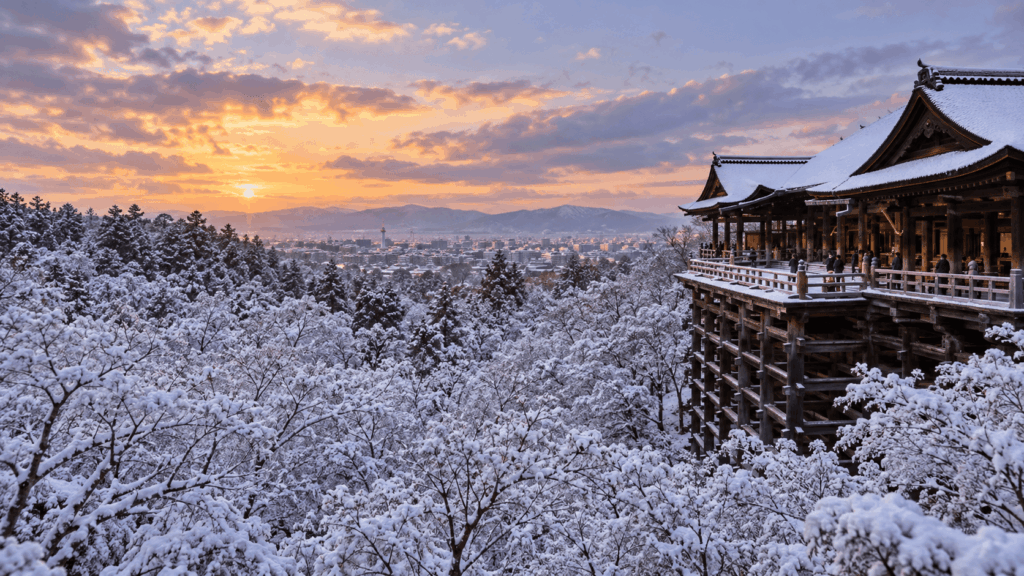
The trade-offs are real and worth stating. At that hour it is cold, most shops on the slopes are shuttered, and breakfast options are thin. The official route suggests Maeda Coffee’s Kodai-ji shop, which opens at 7:00 and is closed on Mondays, as a place to wait for Kodai-ji’s 9:00 opening. If you want a hot sit-down breakfast at 7:00, plan it in advance rather than hoping to find one.
Kai’s tip: In winter I usually put Kiyomizu-dera first, before the rest of the city is moving. The trade is real: on a cold morning the air can sting your face, and you’re standing on stone in gloves and a hat. What I get back is the stage and the lanes below without having to shoot around other people — the kind of frame that is difficult at eleven o’clock. Eat before you go, though, because most of Sannenzaka is still shuttered at that hour.
Warm Up After Walking Around Arashiyama
The bamboo grove itself is a short walk — ten to fifteen minutes end to end — but the district around it is not, and most visitors end up on their feet for two hours or more between the grove, the riverbank, Togetsukyo Bridge and the temples behind the main street. On a cold day that is a lot of standing and slow walking in the open.
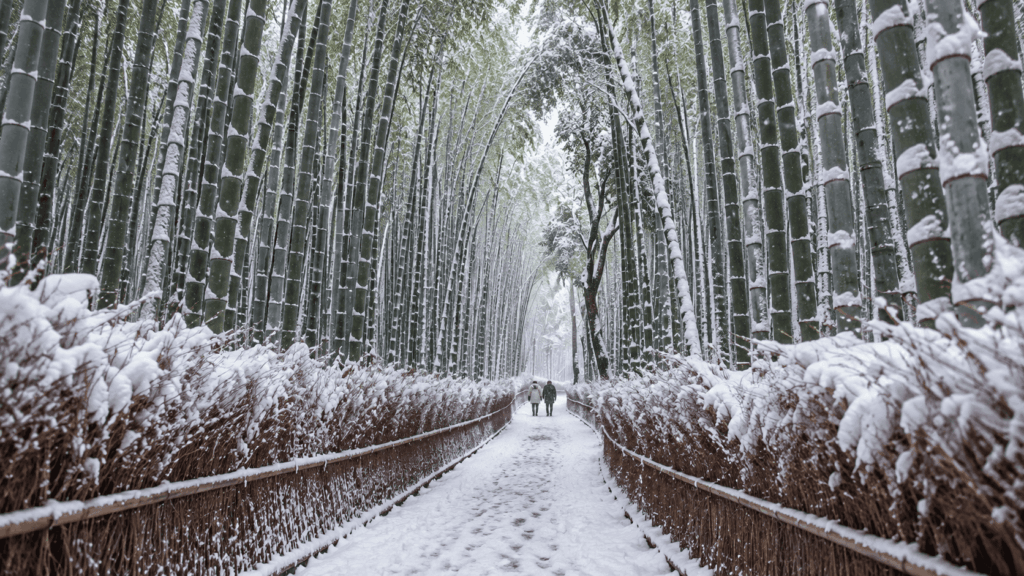
The fix is to treat a warm indoor stop as part of the route rather than as an indulgence. Fufu-no-yu, the day-use onsen a minute’s walk from Hankyu Arashiyama Station, is the most convenient option in the district: it’s open from 12:00 to 22:00 with the last reception at 21:30, and day-use admission runs roughly ¥1,100 to ¥1,400 depending on the day. Check current hours and rates before you go.
One detail changes how you build the day: Fufu-no-yu opens at noon. It cannot rescue a freezing morning. If you arrive in Arashiyama at 8:00, plan the grove and the river first, then use the onsen after lunch as the hinge into the afternoon — or choose a cafe or a temple hall for the morning warm-up instead.
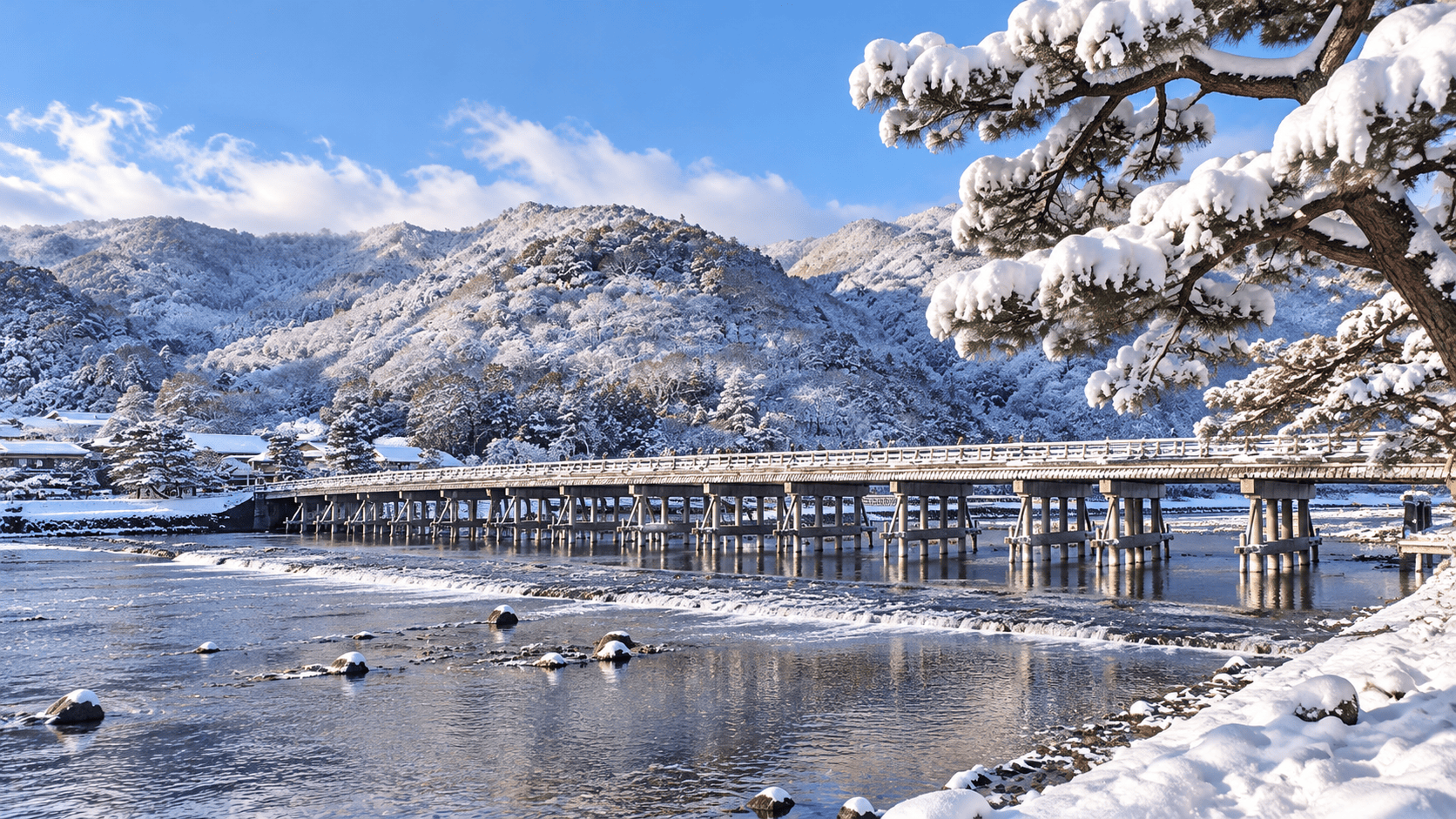
Kai’s tip: I’ve walked Arashiyama in winter with guests who were fine for the first hour and then hit a wall somewhere around the second. On one of those days I took them to Fufu-no-yu, partly because it sits right by Hankyu Arashiyama Station and costs you almost no extra walking to reach. They came out saying they felt warm again and could manage the rest of the afternoon. Since then I’ve stopped treating a bath as an evening thing and started treating it as a routing decision.
How Cold Does Kyoto Feel in Winter?
The numbers look milder than the experience. A January average of 4.8°C with a high of 9.1°C sounds like a brisk European autumn. It doesn’t feel like one, for two reasons: Kyoto sits in a basin where cold air settles, and sightseeing here means hours of standing on stone and earth rather than walking briskly from a station to a building.
Locals have a word for the sensation — sokobie, the kind of cold that seeps up from the ground and settles in your feet and legs. It’s the reason visitors who are comfortable in a 5°C city at home can feel genuinely miserable at the same temperature outside a wooden temple hall.
Four conditions do most of the damage, and all four are things you can plan around:
- Early morning. The hour that solves the crowds is also the coldest hour. Budget for it in clothing rather than deciding at 6:00 that you’ll manage.
- Long outdoor walking. Higashiyama’s slopes, the Arashiyama riverbank and the Fushimi Inari paths are all multi-hour exposures, not ten-minute ones.
- Mountain areas. Kifune, Ohara and Keihoku run colder than downtown, and the gap is large enough to change what you wear, not just how you feel.
- Wet feet. Cold plus damp is a different category from cold plus dry. A rainy or snowy day needs different shoes, not just a warmer coat.
Daylight is the other constraint. December sunshine averages around 134 hours for the month against 122 in February, and sunset comes before 5:00 pm in mid-December, reaching only about 5:50 pm by the end of February. In practice that means two or three well-chosen stops rather than five rushed ones — a slower day than the same itinerary would allow in May.
The Kifune episode earlier is the clearest illustration I have: the temperature that day was not extreme by Kyoto standards, but a slow climb up stone steps in the cold was enough to make one visitor genuinely uncomfortable. The cold that matters here is cumulative, not meteorological.
What to Wear in Kyoto in December, January and February
Dress for standing around, not for walking to work. The layers that work are unglamorous and effective:
- A warm base layer, plus a sweater or fleece as a mid layer.
- An insulated, wind-resistant outer layer — the wind is what turns a cold day into an unpleasant one.
- Gloves, a scarf and a hat. The hat matters more than most people expect, especially at 6:30 am.
- Thick or wool-blend socks. This is the item travelers most often get wrong.
- Comfortable shoes with real grip, and water resistance if rain or snow is forecast.
On footwear, the useful distinction is urban versus mountain. For central Kyoto sightseeing, heavy snow boots are overkill and unpleasant on trains and in shops; most winter days call for something warm, dry and grippy. If you’re heading to Kifune or Ohara, or if snow is actually falling, the calculation changes — that’s when waterproofing and a proper tread start to matter, because you’ll be on stone steps and possibly packed snow.
Kyoto’s interiors also run hot. Museums, cafes, trains and temple offices are often heated to a level that makes a heavy coat uncomfortable within minutes, so favor layers you can remove and carry. A scarf and a packable mid layer do more work than a single very heavy coat.
Travelers’ accounts tend to converge on the same point: comfortable, water-resistant shoes with grip are a better investment than dedicated snow boots for a city itinerary. That’s consistent with what I’d tell a friend — buy for the walking you’ll actually do, and adjust for the mountain day separately.
Is Kyoto Less Crowded in Winter?
Generally yes, but the advantage is smaller than the “low season” label suggests. Winter thins the crowd at the edges of the day and in the less famous sites; it does not empty the ones everyone has heard of.
Kiyomizu-dera, the Sannenzaka and Ninenzaka lanes, Arashiyama and Fushimi Inari Taisha all remain popular in January and February. Fushimi Inari is open around the clock and free, which makes it the easiest place in the city to escape the crowd by simply going at an unfashionable hour — early morning or after dark.
Two caveats are worth holding onto. First, the New Year period behaves like a separate season: from late December into the first days of January, shrine visits, domestic travel and adjusted opening hours make comparisons with the rest of January meaningless. Second, “quieter than peak” is not the same as quiet. Recent January visitors describe the major sites as busy but manageable, which is a fair summary.
This is why the crowd strategy in this guide is a time of day, not a month. I still start at Kiyomizu-dera at opening in winter rather than assuming the season will do the work for me. The temple opens at 6:00; by 9:30 the first wave has usually arrived.
A Practical Winter Day in Kyoto
What follows is a template, not an itinerary to follow exactly. It assumes you want two or three good stops rather than a count of sites, and that you’re willing to move the plan if the weather says so.
On a clear, dry day
- 6:00–8:00 — Kiyomizu-dera, then Sannenzaka and Ninenzaka. Go up to the temple at opening, come down slowly through the lanes, and photograph Yasaka Pagoda on the way.
- 8:00–9:30 — Breakfast. Decide this in advance. Most of the slope is shut at that hour, so a known cafe or a hotel breakfast is the difference between a good morning and a hungry one.
- Late morning — Move across the city. Kinkaku-ji and Arashiyama sit in opposite directions from Higashiyama, so pick one rather than trying to fit both into the same half-day.
- Afternoon — Kinkaku-ji, or Arashiyama with a warm stop. If Arashiyama, walk the grove and the riverbank first, then use Fufu-no-yu or a cafe as the break before heading back.
On a snow day
- Before you leave — check three things: the forecast, the transport status for any northern route, and Kinkaku-ji’s live camera. Ten minutes of checking saves a wasted trip.
- If there is fresh snow in the city, go to Kinkaku-ji first. It opens at 9:00, and the snow may be gone by early afternoon.
- Treat Kifune as conditional. Add it only if the road, the bus and your footwear are all up to it. Heavy snow in the mountains is a different problem from snow in the city.
- Cut the plan down. Two stops in snow is a good day. Four is a cold, rushed one.
Kai’s winter routing rules, which are the three lessons I actually use:
- Move the day earlier. In winter, an early start buys quiet that the season alone won’t give you.
- Reorder for snow instead of adding to it. When it snows, change the order of what you were already doing rather than squeezing in an extra destination.
- Build in one warm stop before you need it. The break works best when it’s planned for 13:00, not improvised at 15:00 when everyone has stopped enjoying themselves.
If the transfers between these areas are the part of the plan you’re least looking forward to — the bus queues, the walk back to a station in the cold, the waiting outdoors — a private driver-guide changes the shape of the day more than it changes the sights. It’s a reasonable thing to price out before you decide, particularly with three to five people traveling together.
Self-Guided or Private Tour in Winter?
Most travelers should do Kyoto independently in winter. The city’s bus and rail network is dense, the main sites are reachable without a car, and self-guided travel gives you the one thing winter demands: the freedom to change your mind at 7:00 am.
A private driver-guide becomes worth considering when the friction is specifically about cold and transfers rather than about knowledge. If your group includes young children or older travelers who can’t stand outdoors for twenty minutes at a bus stop, or if you want Kinkaku-ji and Arashiyama on the same day without spending the middle of it in transit, the calculation shifts.
| Self-guided | Private driver-guide | |
|---|---|---|
| Cost | Low: individual tickets and transit fares | Higher, priced per group rather than per person |
| Transfers | Buses and trains, with outdoor waiting | Door to door, with the vehicle waiting |
| Weather flexibility | Total — you can change plan on the spot | High, if you discuss the order at the start of the day |
| Group size | Any size; costs scale per person | Best value for three to five people sharing one vehicle |
| Best for | Central Kyoto, confident travelers, early risers on a budget | Families, older travelers, tight schedules, spread-out sights |
If you go the private route, one currently listed option is the Kyoto Private Customizable Day Tour with Driver-Guide on GetYourGuide, operated by Best Tourism Service in Japan. As listed at the time of writing, it runs 8 to 10 hours for a private group of up to five, includes hotel pickup and drop-off and private transport, is offered in English, Hindi and Japanese, and allows free cancellation up to 24 hours in advance. Admission tickets and meals are not included. Prices vary by date and group size, so check the current listing rather than budgeting from an old figure.
Two caveats matter in winter. First, the itinerary is customizable but the day has a fixed length, and a mountain detour eats a disproportionate share of it. Second, and more importantly: do not assume any tour will take you to Kifune or Ohara in snowy conditions. Confirm the pickup area, the proposed itinerary and any weather restrictions with the operator before booking, and treat the mountain option as something to be agreed rather than assumed.
If your group wants to see Kinkaku-ji and Arashiyama without repeated cold-weather transfers, this is the private option worth examining more closely. The main advantage is a day organized around your group’s priorities rather than a fixed sequence of bus and train connections.
Why I’d book this one
- Flexible sightseeing: Some recent reviewers mention helpful route suggestions and the ability to adjust stops around their interests, which is particularly useful when winter weather changes the plan.
- English-speaking support: Reviewers also highlight clear explanations, friendly communication and help with photographs, adding value beyond transportation alone.
- Fewer cold-weather transfers: Private transport and hotel pickup can reduce time spent waiting outdoors. Check the cancellation terms, participant eligibility and exactly what is included before committing.
See live availability, start times, booking conditions, and recent traveler reviews for the Kyoto Private Customizable Day Tour with Driver-Guide. If your group includes older travelers or you are considering a snowy mountain route, check the operator’s age restrictions and weather-related itinerary limits first.
For everyone else — anyone staying in central Kyoto, traveling on a budget, or happy to get up early — the self-guided version of the day above will be cheaper, more flexible, and in winter probably better.
Frequently Asked Questions
Does it snow in Kyoto in winter?
Yes, but settled snow in the city centre is uncommon. Kyoto City’s tourism guidance notes that while snow can fall in the coldest weeks, it is very rare for it to pile up on the ground. Over the 30 years to 2020, Kyoto averaged roughly 14 cm of snowfall across the whole December-to-February period. The mountains north of the city — Ohara, Keihoku, the Kibune valley — see considerably more, and road conditions there can differ sharply from downtown.
What month does it snow most in Kyoto?
February has the highest average of the three winter months, at about 7 cm of snowfall and roughly 2.2 days with at least 1 cm of new snow, followed by January at about 5 cm and 1.6 days, then December at about 2 cm and 0.6 days. That makes January and February the better bet for wintry scenery, but these are long-run averages, not a forecast. A given week in February can easily pass without any snow at all.
Is Kyoto worth visiting in January?
For travelers who don’t mind the cold, yes. January is the coldest month, with an average of 4.8°C (about 39°F) and lows near 1.5°C, but once the New Year crowds clear it is also one of the quietest stretches of the Kyoto year. The Kyoto Winter Special Openings usually begin in early January and run into mid-March, giving access to heritage buildings that are normally closed. Treat the first few days of the month as a separate case, since holiday hours and crowds behave differently.
What should I wear in Kyoto in winter?
A warm base layer, a sweater or fleece, and an insulated wind-resistant coat, plus gloves, a scarf and a hat. The two items travelers most often underestimate are thick socks and shoes with genuine grip — much of a Kyoto day is spent standing on cold stone. Water resistance matters on wet or snowy days, and if you’re heading to Kifune or Ohara, treat footwear as a different decision from a downtown day. Favor layers you can take off, because heated interiors are warm.
Is Kyoto crowded in winter?
Less crowded than during cherry-blossom or autumn-leaf season, but not empty. Kiyomizu-dera, the Higashiyama lanes, Arashiyama and Fushimi Inari Taisha all stay popular through January and February. The useful strategy is time of day rather than season: Kiyomizu-dera opens at 6:00, and Fushimi Inari is open around the clock and free, so an early or late visit does more for you than the month does. The New Year period is busier than the rest of January.
Are temples and shops open over New Year in Kyoto?
Major temples generally remain open and are extremely busy with hatsumode visitors, but hours can be adjusted and some buildings close to visitors for a few days. Small shops and restaurants are more variable: many close for roughly December 29 to January 3, while others stay open specifically for the holiday trade. Rather than assuming, check the official site of any specific place you’re building a day around, and keep one flexible meal option in reserve.
Final Verdict: Who Should Visit Kyoto in Winter?
Winter in Kyoto is not a consolation prize for people who couldn’t get spring dates. It is a distinct version of the city, with its own logic: early starts, short days, cold feet, and a chance of something spectacular that you cannot book in advance.
Choose Kyoto in winter if you:
- Will actually get up for a 6:00 opening at Kiyomizu-dera, and would rather have the stage to yourself than a warm lie-in.
- Like temples and old streets more than you like being comfortable, and are prepared to dress for standing around.
- Can hold snow loosely — checking Kinkaku-ji’s live camera in the morning and reordering the day if it’s white, without treating a dry week as a failure.
- Want the Winter Special Openings, Setsubun or the Kitano Tenmangu plum garden as a reason to come in January or February rather than December.
- Are travelling as a group of three to five and would rather spend the money on fewer transfers than on more sights.
Choose another season if you:
- Need warm weather to enjoy yourself, or would find a 6:30 am start in near-freezing air a punishment rather than a trade.
- Have built the trip around seeing snow. Kyoto will not deliver on demand, and February’s averages are a probability, not a promise.
- Are travelling with very young children or with anyone who can’t manage long stretches outdoors without a warm place to sit.
- Have only one day and want a broad overview. Winter’s short daylight rewards depth over coverage.
By traveler type. First-time visitors should take the early-morning Higashiyama route and one afternoon anchor — Kinkaku-ji or Arashiyama — rather than trying to see everything. Families do better basing themselves centrally and using a single warm indoor break in the middle of the day; Fufu-no-yu’s noon opening makes it an afternoon option, not a morning one. Travelers on a tight schedule should skip the mountain detours entirely and concentrate on Higashiyama and one other district. Repeat visitors are the group winter suits best: you’ve seen the headline sights, so a cold, quiet Kiyomizu-dera at dawn or a lantern-lit Kifune in the late afternoon is worth more than another checklist.
Come for winter Kyoto itself, not for guaranteed snow. If snow arrives, treat it as the bonus that can turn an already worthwhile trip into something exceptional.
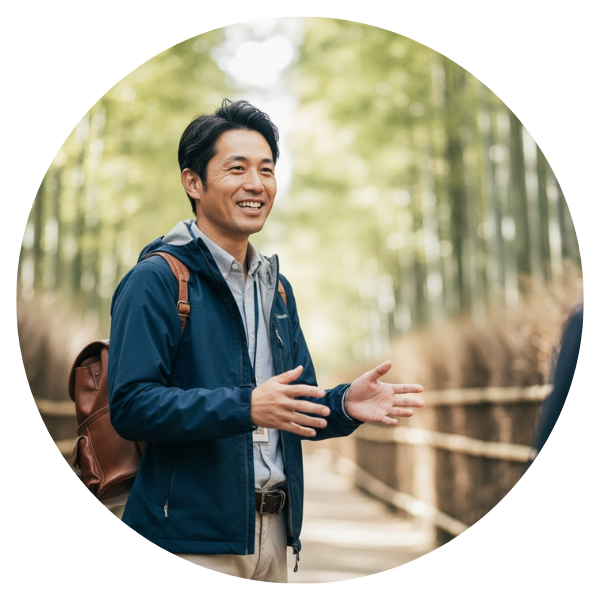
Hi, I’m Kai. I’m a Tokyo-based travel writer, tourism industry insider, and the author of a published guidebook for international visitors to Japan. With over 10 years of professional experience at a leading Japanese tourism company, my mission is to help you skip the tourist traps and navigate Japan’s best destinations like a local. I believe the perfect day trip is like a traditional kaiseki meal: a beautiful balance of precise planning and unforgettable seasonal discovery. When I’m not out conducting field research, you’ll usually find me drafting new itineraries with one of my favorite fountain pens!