
Yes—Kamakura is worth visiting in winter, provided you are not coming for the postcard image of lush green hills and hydrangeas. Between December and February the town trades vivid color for bare temple architecture, sharp coastal light, New Year ritual, and plum blossoms that begin in late January. The catch is that winter here is not one season. The first three days of January bring some of the year’s heaviest crowds to Tsurugaoka Hachimangu; mid-to-late January is when the temples feel most relaxed; February adds flowers and a little more daylight. If quiet temples and seasonal atmosphere matter more to you than gardens in full leaf, winter is a rewarding time. If you want Kamakura at its most lush, come in spring or early summer instead.
Planning a winter day trip from Tokyo? If you want to see Kamakura’s major temples and add Enoshima without juggling local transfers, a private guided trip is worth comparing—particularly outside the January 1–3 holiday rush. Check winter dates, pickup details, and the itinerary for this private Kamakura and Enoshima tour.
Is Kamakura Worth Visiting in Winter?
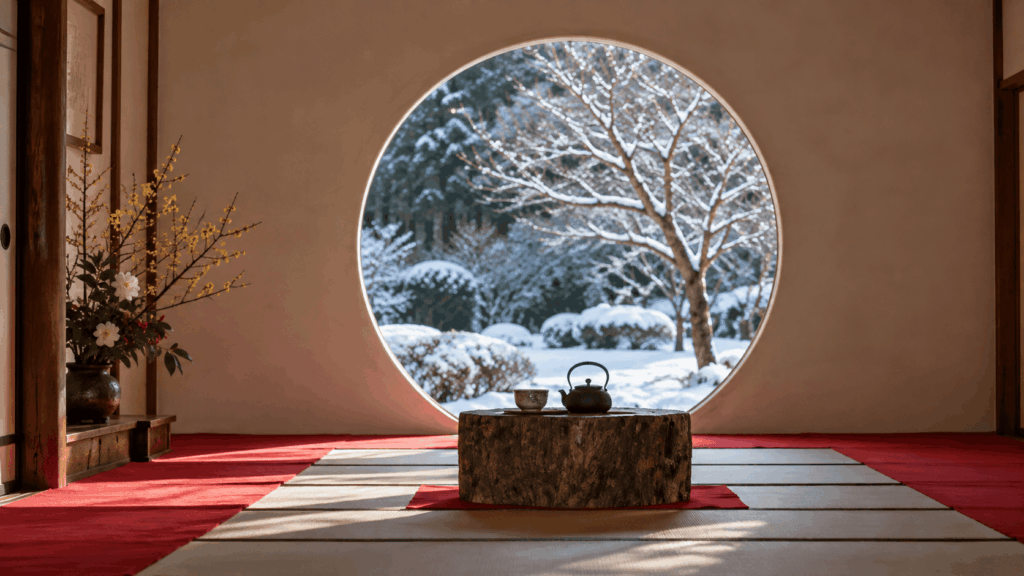
The honest answer depends on what you want from the day. Winter strips the town back. At Engaku-ji, the wooden halls and stone paths read more clearly against bare trees. At Tsurugaoka Hachimangu, the first days of January are given over to hatsumode, the year’s first shrine visit. Hasedera stays open all winter, and its garden keeps producing small, specific flowers—daffodils and fragrant plum in January, plum and fukujuso in February. Along the coast, the air is often clearer than in summer, though the wind can make it feel colder than the thermometer suggests.
What winter does not give you is abundance. The hydrangea displays are months away, the temple ponds can look flat, and the light is gone by late afternoon. If your mental image of Kamakura is lush and green, winter will not match it.
Best for: temple-lovers, photographers who prefer bare branches and hard light, repeat visitors to Japan, travelers who dislike peak-season crowds, and anyone comfortable walking outdoors for five or six hours in roughly 5–12°C.
Not ideal for: travelers whose main reason for coming is lush gardens or hydrangeas, anyone who feels the cold easily and plans to be outside all day, and visitors with only one January day who expect the town to be empty.
| Winter advantage | What you gain | What you give up |
|---|---|---|
| Quieter temples outside the New Year period | Space to walk Engaku-ji and the Kita-Kamakura temple path at your own pace | Bare trees and less color in the grounds |
| Clearer coastal air | Better odds of seeing Mt. Fuji from Inamuragasaki or Shichirigahama | Nothing guaranteed; visibility changes by the hour |
| Small seasonal flowers | Daffodils, fragrant plum, camellia, winter peony, and plum from February | Nothing on the scale of the June hydrangeas |
| New Year culture | Hatsumode at Tsurugaoka Hachimangu and a genuinely Japanese start to the year | Heavy crowds and traffic restrictions around January 1–3 |
| Comfortable walking weather | No summer heat or humidity on the temple stairs | Short daylight; Engaku-ji closes at 16:00 in December–February |
The mistake I see travelers make is treating winter as a single low-crowd window. In Kamakura it is at least three different trips: a mild, quiet December; a January split between one of the country’s busiest hatsumode periods and a much calmer second half; and a February that slowly brings flowers back. The month you choose matters more than the season label. If you are weighing a guided day trip against doing it yourself, the practical trade-offs are covered further down.
Kamakura in December vs January vs February
December, January, and February are not interchangeable. Temperatures differ by only a few degrees, but crowds, flowers, daylight, and atmosphere change enough to alter how you should plan the day. January needs a second split of its own: the first three days are a cultural event, while the rest of the month is the quietest stretch of the winter.
| What changes | December | January | February |
|---|---|---|---|
| Typical temperature | Around 10°C (50°F) on average; milder early in the month | Around 7°C (45°F); the coldest stretch | Around 7°C (45°F), but noticeably longer days |
| Crowd level | Moderate; weekends busy, weekdays calmer | Extreme January 1–3, then much quieter | Low to moderate; weekends still busy |
| Main seasonal appeal | Early-winter calm, year-end mood, possible foliage tail | Hatsumode culture, bare temple architecture, quiet after the first week | Plum blossoms, winter peony, longer daylight |
| Flowers and plants | Senryo berries, camellia, and winter cherry at Hasedera | Daffodil, fragrant plum, and winter peony from January 1 | Plum, fukujuso, and winter peony until mid-February |
| New Year atmosphere | Builds in late December | Full intensity January 1–3, lingering into the first week | None |
| Best for | Fixed December dates, a gentler introduction, year-end mood | Culture in early January; quiet temples in mid-to-late January | Flowers, balance, and the best all-round winter experience |
| Main drawback | No headline seasonal sight; early sunset | New Year crowds, or cold and bare trees later | Still cold; bloom timing is unpredictable |
| Verdict | Good if your dates are fixed | Split the month: avoid January 1–3 for quiet | Strongest choice for most winter visitors |
Read the table against your fixed travel dates rather than the other way around. If you have a choice, February gives you the most balanced version of winter. If your dates are locked to early January, decide whether you want the New Year experience or the quiet temple experience—they are not the same trip.
Kamakura in December
December is the gentlest introduction to winter in Kamakura. Average temperatures sit around 10°C (50°F), a few degrees warmer than January and February, and the town still carries some end-of-year mood rather than deep winter stillness.
The one bit of color you might catch is autumn foliage. Kamakura’s leaves usually peak from late November to early December, and Engaku-ji is one of the places that can still look good in the first week of the month. Treat that as a bonus, not a plan: the timing shifts every year, and by mid-December most of the maples are bare.
Flowers are subtle. Hasedera’s official garden calendar lists senryo, kan-tsubaki, and kofuku-sakura for December—small accents around the grounds rather than a spectacle. Look for them in the garden rather than at the main hall. Tsurugaoka Hachimangu’s winter peony garden does not open until January 1, so December visitors miss the town’s most photogenic winter flower display.
Best for: travelers whose dates are already fixed in December, anyone who wants a softer, less crowded first look at Kamakura, and people who enjoy the year-end atmosphere without the New Year crush.
Main drawback: there is no headline seasonal sight. Daylight is short, with sunset around 4:30 pm, and a grey December day can make the temples feel more closed-in than dramatic.
Kamakura in January
January is the month that most needs splitting. The first three days and the rest of the month are barely the same experience.
Early January (roughly January 1–3): Tsurugaoka Hachimangu is one of Japan’s busiest hatsumode shrines. In recent years the grounds have stayed open 24 hours from December 31 through January 3; on January 4 the hours shorten, and from January 5 the normal 6:00–20:00 schedule returns. Check the shrine’s official notice for the current year, because the dates and hours are announced annually.
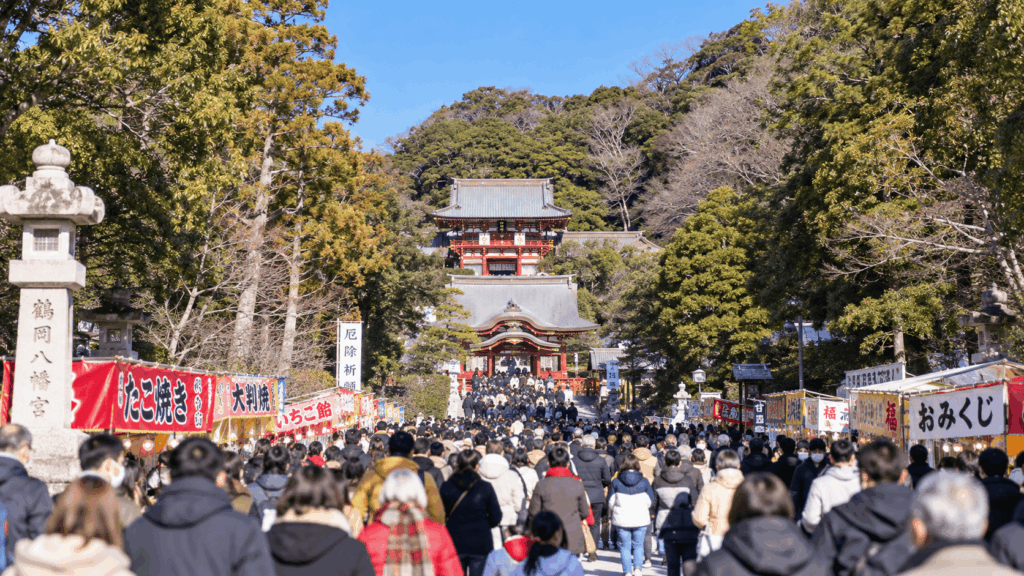
Expect dense crowds, food stalls, and restricted movement around the shrine and along Wakamiya Oji. Kamakura also closes its center to cars during the peak. In the 2026 New Year period, restrictions ran from 11:00 pm on December 31 to 5:00 pm on January 1, and from 9:00 am to 5:00 pm on January 2 and 3. Take the train, and do not plan to drive into the center.
If you want the ritual itself, this is a genuine cultural experience: the crowd is part of it. The shrine’s live camera is a useful way to check conditions before you commit. If you want quiet temples, avoid January 1–3 entirely.
One detail I noticed after the first three days was how long the New Year atmosphere lingered: the flags along Dankazura were still up, and the approach felt festive without the worst of the crush. I would not assume the same decorations every year, but it is a good reason to consider the days just after the holiday period rather than writing off the whole month.
Mid-to-late January: from about the second week, the town settles. Engaku-ji and the Kita-Kamakura temple path are the places to head: the crowds thin, the architecture holds the eye, and you can walk at your own pace. Do not expect emptiness—weekends still bring day-trippers—but the difference from the New Year period is stark.
January is the coldest month, with an average around 7°C (45°F). The shaded temple grounds feel colder than the number suggests. Plum blossoms may start in late January in some spots, but the reliable January flowers are daffodils and fragrant plum at Hasedera, not the full plum season.
Best for: travelers who want hatsumode culture in the first days, and travelers who want the quietest temple experience later in the month. Photographers who like bare branches and low winter light also do well here.
Main drawback: the month is a tale of two halves. Choose the wrong week and you get either the year’s biggest crowd or a landscape that looks dormant if you came for color.
Kamakura in February
February is the best all-round winter month for most travelers, provided you are not arriving in the middle of a cold snap. Average temperatures are still around 7°C (45°F), but the days are noticeably longer: sunset moves from about 5:00 pm at the start of the month to around 5:20 pm by late February. That extra half-hour matters when temples close in the late afternoon.
Plum is the reason to choose February. Hasedera’s garden lists ume and kobai; Hokai-ji, a short walk from Kamakura Station’s east side, is known for red, white, and weeping plum that typically runs from mid-February to mid-March; Tsurugaoka Hachimangu’s plum usually starts in late January and peaks between mid-February and mid-March. At Tsurugaoka, the winter peony garden by Genji Pond stays open until roughly mid-February (9:00–16:30, last entry 16:00, ¥500), which gives you two different flower displays in one visit.
Hokai-ji is also the easiest add-on if you are already in central Kamakura: it is a short walk from the station’s east side, admission is ¥300, and winter hours run 9:30–16:00. The plum trees are in the grounds rather than in a separate garden, so you can see them without committing to a long detour.
Best for: travelers who want flowers without the spring crowds, anyone choosing between January and February, and photographers looking for soft late-winter light.
Main drawback: bloom timing varies. In early February the plum may still be mostly buds, and a cold snap can delay everything by a week or two. Check the current bloom reports before building a day around one temple.
What Winter in Kamakura Actually Feels Like
Kamakura’s winter is milder than most first-time visitors expect. The city’s official tourism association puts the average at around 10°C (50°F) in December and around 7°C (45°F) in January and February. Daytime highs often reach 10–12°C, while early mornings can sit near 2–5°C. The number that matters, though, is not the air temperature but how long you are outside.
Two things make it feel colder than Tokyo. The first is the coast: wind comes off Sagami Bay and cuts through the streets near Inamuragasaki and Shichirigahama. The second is the temple grounds, where tall trees and hillside shadows keep the air still and cold even when the open street is pleasant. You will spend most of the day walking slowly, stopping to look, and standing on stone or gravel—conditions that make cold hands and feet the main complaint.
Kai’s tip: The mistake I see first-time visitors make is dressing for the sunny street and then finding the temple grounds much colder. The shaded sections at Engaku-ji and Hasedera hold the cold, and once you are walking slowly and stopping to look, you feel it. Bring a thick wool coat or a warm outer layer and shoes you can walk in for hours; gloves make a bigger difference than most people expect.
What to Wear in Kamakura in Winter
Dress for a full day outdoors, not for a shopping afternoon. A warm coat or a thick wool outer layer, a sweater or fleece underneath, gloves, a scarf, and shoes with grip are the basics. The temples involve stone stairs, gravel paths, and uneven ground, so leave heels and thin soles at home. Warm socks matter more than most people expect. If you run cold, disposable hand warmers are sold at convenience stores and are worth the small cost.
The Best Things to Do in Kamakura in Winter
You do not need a long list of Kamakura attractions in winter. The season rewards a narrower plan: five experiences where the cold months add something rather than take it away.
Enjoy the Quiet at Engaku-ji and Kita-Kamakura
Engaku-ji is the reason many travelers come to Kamakura in winter. The temple is a one-minute walk from Kita-Kamakura Station, opens at 8:30, and closes at 16:00 from December to February (last exit 16:30). Admission is ¥500. The hillside grounds hold a Sanmon gate, a Buddha hall, and the Shariden reliquary hall, and the upper paths give you the feeling of being inside the forest rather than beside it.
Winter changes the experience. The maples are bare, the moss is muted, and the architecture takes over. If you are here for carved wood, stone steps, and silence, that is an upgrade. If you are here for color, it is not.
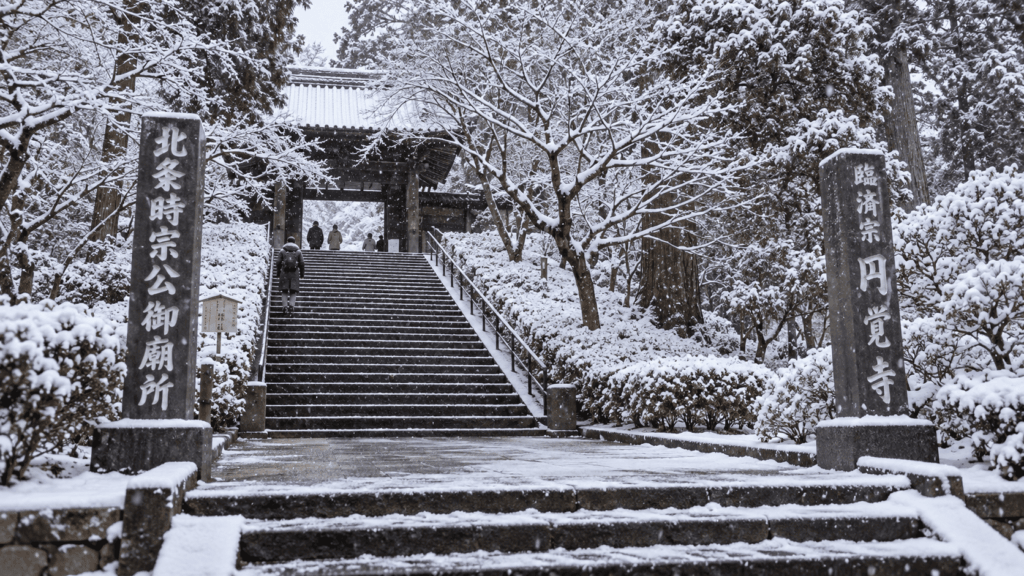
Kai’s tip: What I remember from walking Engaku-ji in January and February is not a single view but the pace: fewer people, bare branches, and enough quiet to hear the gravel underfoot. The bare trees do make the grounds look starker than in summer—that is real—but if you are here for the architecture and the stillness, that is the trade you want to make. I would still avoid promising anyone an empty temple; weekends can be busy.
Best for: temple architecture, slow walking, photographers, repeat visitors.
Experience New Year Atmosphere at Tsurugaoka Hachimangu
Tsurugaoka Hachimangu is Kamakura’s civic center, and in the first days of January it becomes a different place. The grounds are free to enter and normally open 6:00–20:00, but the New Year schedule is the one to check: in recent years the shrine has stayed open around the clock from December 31 through January 3. Come for the ritual, not for quiet. Early morning is calmer than midday, and the days after January 3 keep some of the atmosphere with far less pressure.
Walk the approach from Kamakura Station along Komachi-dori, then look for the flags along Dankazura, the raised central approach on Wakamiya Oji. The shrine’s live camera is the quickest way to judge conditions before you go. If the crowd is already dense at the torii, treat that as your answer and come back another morning.
Best for: Japanese New Year culture, photographers, travelers who accept crowds as part of the experience.
Look for Plum Blossoms and Other Winter Flowers
Winter flowers in Kamakura are small-scale but real. Hasedera’s garden is the most reliable place to look in January, when daffodils and fragrant plum appear before the main plum season. By February, Hokai-ji and Hasedera are the two easy additions: Hokai-ji for red, white, and weeping plum, Hasedera for plum and fukujuso. At Tsurugaoka Hachimangu, the winter peony garden by Genji Pond is the one formal display, running from January 1 to roughly mid-February.
The mistake is expecting a hydrangea-scale spectacle. These are accents—a few trees, a small garden, a cluster of flowers against a cold backdrop. Check current bloom reports before building the day around one temple, especially in early February.
Best for: travelers who want a little color, February visitors, photographers.
Try for a Clear View of Mt. Fuji from the Coast
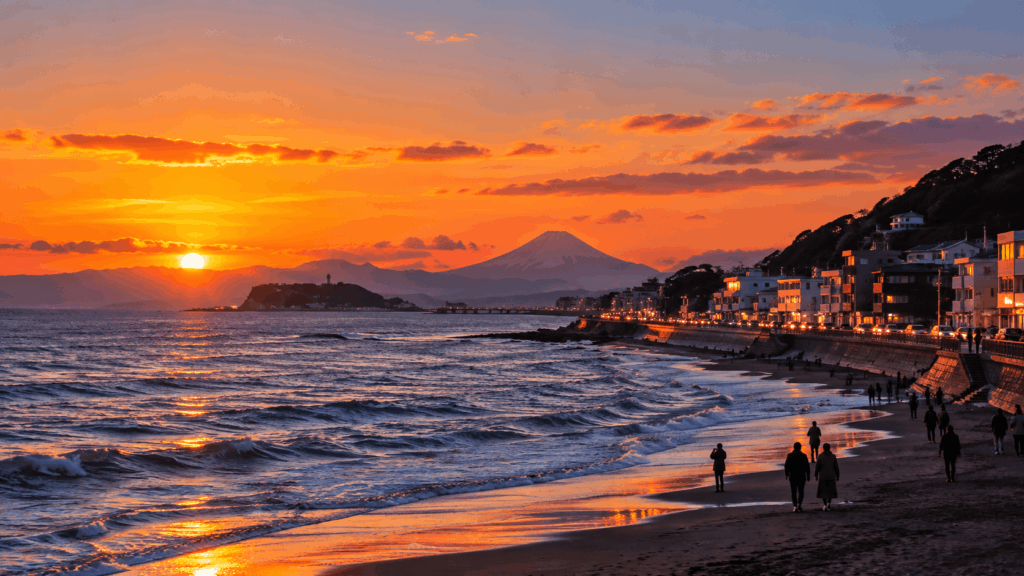
The coast is Kamakura’s other winter advantage. Inamuragasaki Park is about five minutes on foot from Inamuragasaki Station and looks across Sagami Bay toward Enoshima and Mt. Fuji. Shichirigahama and Zaimokuza offer longer beach walks with the same mountain in the distance. On cold, clear mornings the air is often sharp enough to make the mountain look closer than it is.
But this is weather, not scheduling. Cloud, haze, and the angle of the sun can erase Fuji completely. Go early, check the forecast, and treat a clear view as a bonus rather than the purpose of the trip. The clearest views I have had from this coast came on bright, dry mornings, not on overcast afternoons. If capturing these scenes is your priority, explore our guide to the best photo spots around Kamakura.
Best for: photographers, travelers with a flexible schedule, anyone happy to walk the beach without a guaranteed payoff.
Visit the Great Buddha and Hase Area Without the Summer Crush
The Great Buddha and Hase area are easier to enjoy in winter than in summer. Kotoku-in is open 8:00–17:00 from October to March (last entry 16:45), admission ¥300; Hasedera is open 8:00–17:00 with last entry at 16:30, admission ¥400. Both are a short walk from Hase Station on the Enoden line, with slopes and stairs in between.
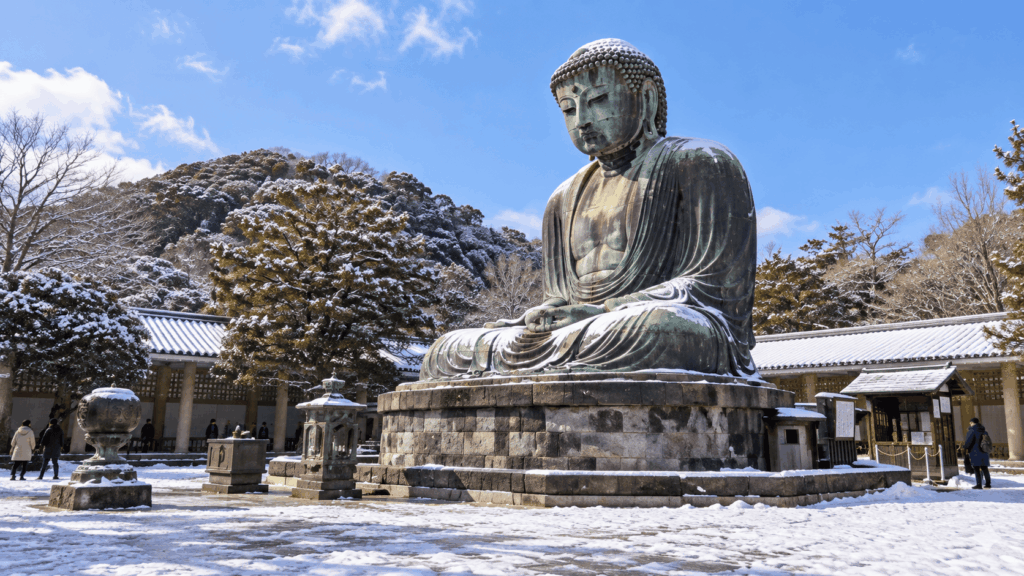
Mornings are the best window: fewer groups, softer light, and enough time to see both before lunch. The New Year period is the exception—treat January 1–3 as a crowd day everywhere in central Kamakura, not just at the shrine.
Best for: first-time visitors, families with older children, anyone combining temples with the coast.
How Winter Changes Your Kamakura Itinerary
Winter changes the order of a Kamakura day. Temples close earlier than the coast and the shops, so put them first. The practical rule is three areas, not five: Kita-Kamakura, central Kamakura, and Hase or the coast.
A workable winter route: start at Engaku-ji when it opens at 8:30, walk the Kita-Kamakura temple path, then take the train one stop to Kamakura for Tsurugaoka Hachimangu and Komachi-dori. After lunch, ride the Enoden to Hase for Kotoku-in and Hasedera, then finish at the coast for sunset. Sunset is around 4:30 pm in December, 4:50 pm in January, and 5:20 pm by late February, so the last temple entry is the constraint, not the darkness. For a detailed step-by-step breakdown across all seasons, check our complete Kamakura day trip route.
This is still a full day. If you want to linger at Hasedera’s garden or walk the beach, drop one of the central stops. A slower day with three places beats a rushed day with six.
Kai’s tip: Winter is the season to cut your list, not extend it. I would pick three areas at most—Kita-Kamakura, central Kamakura, and Hase or the coast—and accept that you will not see everything. The pleasure of the day comes from walking slowly between a few places, not from ticking off a fifth temple in the last hour of daylight.
Best for: first-time visitors who want a structure, not a checklist.
Kamakura Only vs Kamakura + Enoshima in Winter
Adding Enoshima is the most common way winter itineraries become stressful. The Enoden takes about 25 minutes from Kamakura Station to Enoshima Station, and the island itself involves a walk from the station, a pedestrian bridge, and a lot of up-and-down if you go beyond the shopping street. Give it at least two to three hours, not one.
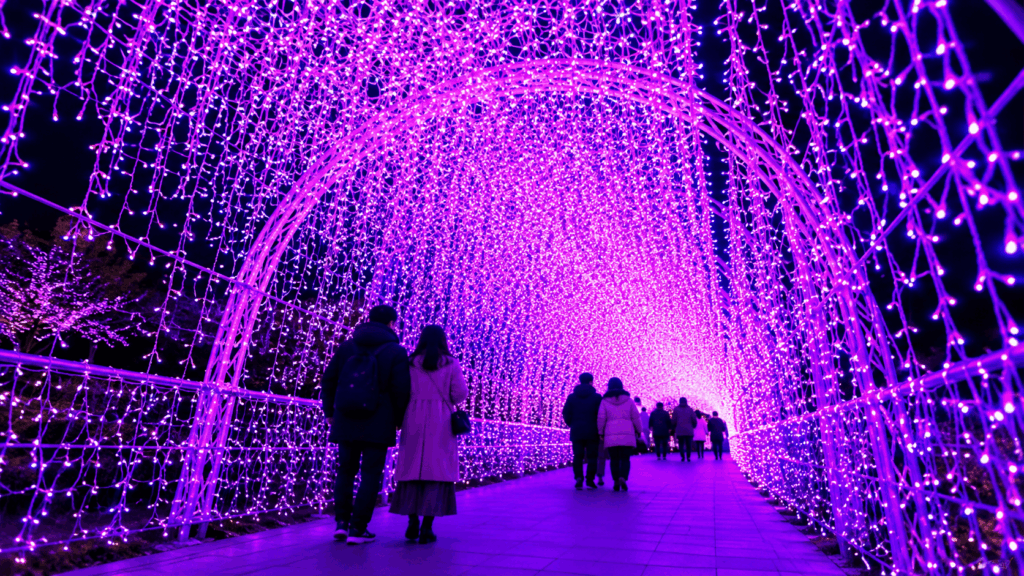
For a first visit, choose Kamakura only. You will see more of the temples and spend less time on trains. Add Enoshima if you have already seen Kamakura, start early, and are willing to drop either Kita-Kamakura or Hasedera. In winter, the shorter daylight makes that trade-off sharper.
Best for: repeat visitors, travelers who want a coastal add-on, and anyone who values variety over depth.
DIY or Guided Tour in Winter?
Kamakura is one of the easiest day trips from Tokyo to do independently. The JR Yokosuka Line runs from Tokyo Station to Kamakura in about an hour for around ¥1,040 one way, and Kita-Kamakura is one stop before Kamakura. Trains are frequent, IC cards work, and the Enoden connects the station to Hase and Enoshima. If you are visiting Kamakura alone or as a couple and are happy to plan your own route, a tour adds little.
A guided day tour makes more sense when the day is tight. Winter gives you roughly nine hours of usable light, and a tour removes the transfer decisions, the ticket stops, and the risk of spending the afternoon figuring out how to reach Enoshima. The trade-off is flexibility: you see the stops on the operator’s schedule, not your own.
| Factor | DIY by train | Guided day tour |
|---|---|---|
| Cost | Lower per person: train fare plus individual admission fees | Higher upfront, but often bundles temple tickets and transport |
| Flexibility | High; change plans, linger, skip a stop | Fixed itinerary and timings |
| Efficiency | Good for Kamakura only; more planning for Enoshima | Best for covering Kamakura and Enoshima in one day |
| Number of sights | You choose; easy to overpack | Predetermined; usually four to five stops |
| Transport complexity | Low between Tokyo and Kamakura; moderate around the coast | Low; someone else handles the driving and timing |
| Best for | Independent travelers, repeat visitors, slow days | First-timers with limited time, families, Enoshima add-ons |
If you want to compare current guided options, look for a tour that includes Hasedera and Kotoku-in admission and states its meeting point clearly. Many Kamakura and Enoshima day tours run about nine to nine and a half hours, use an English-speaking guide, and offer free cancellation up to 24 hours before departure. Check the current listing for the exact inclusions, because operators change routes and pickup points.
If you want to combine Kamakura’s main sights with Enoshima but would rather not manage every transfer and temple closing time yourself, this private guided day trip is the option worth checking.
Why I’d book this one
- English-speaking guidance: Recent travelers frequently mention helpful guides who make the temples and local history easier to understand.
- Less transport planning: Private transport and Tokyo pickup reduce the number of connections you need to organize.
- A more personal pace: Reviews highlight flexibility and a comfortable experience, although the exact stops and timings should be confirmed before booking.
Who Should — and Shouldn’t — Visit Kamakura in Winter?
Winter Kamakura is not for every traveler, and the fit is easier to judge by temperament than by season.
Choose winter if you:
- care more about temple architecture and atmosphere than gardens in bloom
- want to photograph bare branches, stone, and clear coastal light
- have been to Japan before and want a slower, less crowded day
- are interested in hatsumode and Japanese New Year culture
- are comfortable walking outdoors for five or six hours in the cold
Choose another season if you:
- are coming mainly for hydrangeas or lush green scenery
- feel the cold easily and want long, warm breaks between sights
- have limited mobility or are traveling with very young children
- have only one day in the region and want a guaranteed postcard landscape
- expect January to be empty and will be disappointed by holiday crowds
My own summary is simple: the scenery is a little stark, but the trade is worth it if you want to see the temples without queuing. That is the version of Kamakura winter I would recommend to a friend—not a secret season, just a quieter one.
FAQ
Is Kamakura worth visiting in December?
Yes, if your dates are already fixed and you want a gentler introduction to winter. Average temperatures are around 10°C (50°F), a little milder than January and February, and early December can still hold the tail end of autumn color—though the timing changes every year. December is the least flower-focused winter month: Hasedera has camellia and senryo, but Tsurugaoka Hachimangu’s winter peony garden does not open until January 1. Sunset is around 4:30 pm, so plan the temples for the morning.
Is Kamakura crowded in January?
It depends entirely on the dates. January 1–3 is one of the busiest periods of the year at Tsurugaoka Hachimangu, with hatsumode crowds, food stalls, and traffic restrictions in the center. After January 3, the crowds drop sharply. Mid-to-late January is the quietest stretch of the winter for temple walking, though weekends still bring day-trippers. If you want both the New Year atmosphere and some breathing room, the days just after the holiday period are a reasonable compromise.
Does it snow in Kamakura in winter?
Snow is possible, but it is not something to plan around. Some winters pass with little or none, and a snow-covered Kamakura is a bonus rather than a reliable seasonal sight. If snow does fall, the temples look dramatic, but trains and buses slow down and stone steps become slippery. Check the forecast on the morning of your visit rather than choosing a date in the hope of snow.
Can you see Mt. Fuji from Kamakura in winter?
Yes, on clear days. Inamuragasaki Park and Shichirigahama are the easiest places to try, with Enoshima in the foreground and the mountain across Sagami Bay. Winter mornings offer the best odds because the air is often drier and sharper, but cloud and haze can hide Fuji completely. Go early, check the forecast, and treat a clear view as a bonus rather than the reason for the trip.
What should I wear in Kamakura in January or February?
A warm coat, a sweater or fleece underneath, gloves, a scarf, and shoes with grip. The temple grounds are colder than the open street because trees and hillside shadows hold the cold, and you will spend a lot of time standing still on stone or gravel. Warm socks and disposable hand warmers make a noticeable difference. Leave heels and thin soles at home; the stairs and paths around Engaku-ji, Hasedera, and Kotoku-in are not kind to them.
How many hours do you need in Kamakura in winter?
A focused day covering Engaku-ji, Tsurugaoka Hachimangu, and the Hase area takes about six to seven hours including trains and lunch. If you add the Kita-Kamakura temple path and a walk along the coast, plan eight to nine hours. In winter the limit is temple closing time rather than darkness: Engaku-ji closes at 16:00 from December to February, and Hasedera’s last entry is 16:30. Trying to add Enoshima on the same day usually pushes the schedule past what the daylight allows.
Final Verdict: Which Winter Month Fits Your Trip?
The right winter month depends less on the weather than on what you want the day to feel like. Use this as a final check against your own priorities.
| Traveler type | Best winter choice | Why |
|---|---|---|
| First-time visitor with one day | February or mid-to-late January; Kamakura only | Best balance of flowers, daylight, and manageable crowds; adding Enoshima makes the day rushed |
| Here for New Year culture | January 1–3 | Hatsumode at Tsurugaoka Hachimangu is the main event; accept the crowds as part of it |
| Here for quiet temples | Mid-to-late January | The post-holiday calm makes Engaku-ji and the Kita-Kamakura path feel unusually relaxed |
| Here for flowers | February | Plum at Hasedera and Hokai-ji, plus winter peony at Tsurugaoka until roughly mid-February |
| Traveling with family | February or early December; Hase area | Milder than deep winter, shorter loops, and no New Year crush |
| Tight schedule or want Enoshima | A guided day tour, or skip Enoshima | Short daylight makes a DIY Kamakura-plus-Enoshima day feel compressed |
| Repeat visitor | Mid-to-late January | Space to revisit favourite temples without peak-season pressure |
Choose Kamakura in winter if you want the temples without the summer queues, you are interested in hatsumode or plum blossoms, and you are happy to trade lush scenery for bare branches and clear coastal light. Choose another season if hydrangeas, deep green gardens, or warm-weather walking are the point of your trip—winter will not give you those, and no amount of planning changes that.
If I had to choose one week for a friend, I would pick the second half of January for temples, or the second half of February for flowers. The first week of January is a different trip: worth doing once for the atmosphere, not for solitude. That is the honest version of winter in Kamakura—quieter, starker, and more rewarding than the generic “fewer crowds” advice suggests, as long as you pick your week with care.
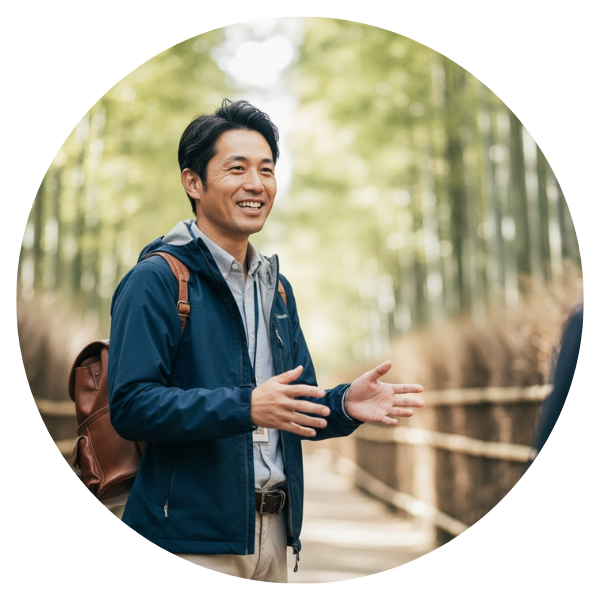
Hi, I’m Kai. I’m a Tokyo-based travel writer, tourism industry insider, and the author of a published guidebook for international visitors to Japan. With over 10 years of professional experience at a leading Japanese tourism company, my mission is to help you skip the tourist traps and navigate Japan’s best destinations like a local. I believe the perfect day trip is like a traditional kaiseki meal: a beautiful balance of precise planning and unforgettable seasonal discovery. When I’m not out conducting field research, you’ll usually find me drafting new itineraries with one of my favorite fountain pens!