
Fukuoka and Nagasaki sit only about 1 hour 20 minutes apart by train, but they give you two completely different versions of Kyushu. One is a fast, food-obsessed port city that is easy to move through; the other is a hilly harbor city layered with centuries of Japanese, Chinese, and European history. The real question is not which city is “better” in the abstract — it is which one fits the trip you are actually taking. This guide answers that first, then breaks it down by trip length, walking load, and traveler type.
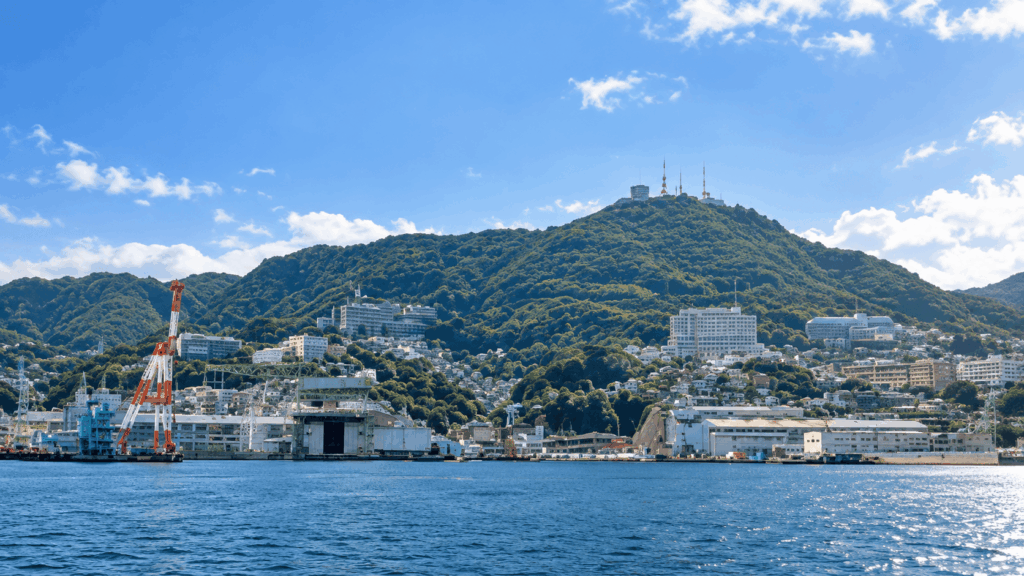
If you’re leaning toward Fukuoka as your base but still want to explore Nagasaki, a private guided Kyushu day tour is worth comparing with the DIY train journey. Check the itinerary options, available dates, and what’s included in this private tour — especially whether the customizable route can focus on Nagasaki rather than splitting your time across multiple areas.
Fukuoka vs Nagasaki: The Short Answer
If this is your first time in Kyushu and you value easy logistics, food, nightlife, and onward connections, choose Fukuoka. Its airport is minutes from the city center, Hakata Station links you to the rest of Japan, and the evenings around Nakasu and Tenjin stay lively late.
If you are already visiting Tokyo, Osaka, or Kyoto and want the city that feels genuinely different — history, hills, harbor views, and a more unusual urban character — choose Nagasaki. Nagasaki is hillier and takes a little more planning, but it rewards you with a sense of place you will not find in Japan’s big cities.
If you have roughly three nights or more, this does not have to be an either/or decision. Fukuoka works well as a base, and Nagasaki is reachable as a day trip — or better, as a one-night stay so you can catch the night view.
Having walked both, the quickest way I would frame it is this: Fukuoka is the city you use, and Nagasaki is the city you explore. And if the idea of staying in Fukuoka while still seeing Nagasaki appeals to you, that middle path is covered further down — keep an eye out for the day-trip section.
Fukuoka vs Nagasaki at a Glance
Use this table to make a rough call in under a minute, then read the sections below for the reasoning.
| Category | Fukuoka | Nagasaki | Better choice |
|---|---|---|---|
| First-time Kyushu trip | Easy, familiar, high convenience | Rewarding but hillier and needs more planning | Fukuoka for ease; Nagasaki for a stronger memory |
| Food | Yatai, Hakata ramen, huge variety | Champon, Hatoshi, Shinchi Chinatown | Fukuoka for range; Nagasaki for distinct local dishes |
| History and culture | Dazaifu, Hakata’s older districts | Dejima, Glover Garden, Oura Cathedral, Peace Park | Nagasaki |
| Nightlife | Nakasu and Tenjin, yatai running late | Quieter evenings; Chinatown winds down earlier | Fukuoka |
| Unique city atmosphere | Big, modern, easy to navigate | Hilly harbor city with layered East–West history | Nagasaki |
| Airport access | Subway reaches Hakata in about 5 minutes | About 1 hour 20 minutes by train from Hakata | Fukuoka |
| Getting around | Subway and a relatively flat center | Tram plus more walking between sights | Fukuoka |
| Walking and hills | Downtown is generally flat | Notably steep in places | Fukuoka for comfort; Nagasaki for scenery |
| Day-trip base | Excellent hub for the region | Better treated as a destination | Fukuoka |
| One-night stay | Comfortable and easy | Doable but rushed | Depends on what you want to see |
| Already visiting Tokyo or Osaka | Feels more familiar | Feels more different | Nagasaki |
| Best for 2–3 nights | Strong as a base | Strong as a focused stay | Both are possible |
Choose Fukuoka If You Want Food, Nightlife, and an Easy Base
Fukuoka is the lower-friction choice, and that advantage shows up from the moment you arrive. It is also the better base if you plan to visit other parts of Kyushu, because Hakata Station connects you to the rest of the island by shinkansen and limited express.
Fukuoka Is Easier From the Moment You Land
Fukuoka Airport is famously close to the city. The subway runs from the airport to Hakata Station in roughly 5 minutes — about two stops — and to Tenjin, the main shopping and dining district, in around 11 minutes. Fares are in the ¥260 range. Trains run frequently from early morning to around midnight.
One detail catches out a lot of international visitors: the subway station is at the domestic terminal. If you arrive on an international flight, you first take a free shuttle bus to the domestic terminal (about 10 minutes), then board the subway. It adds a step, but door-to-city times are still short by the standards of most Japanese cities.
Once you are in town, Hakata and Tenjin are linked by subway in under 10 minutes, which makes Fukuoka easy to use even on a one-night stop.
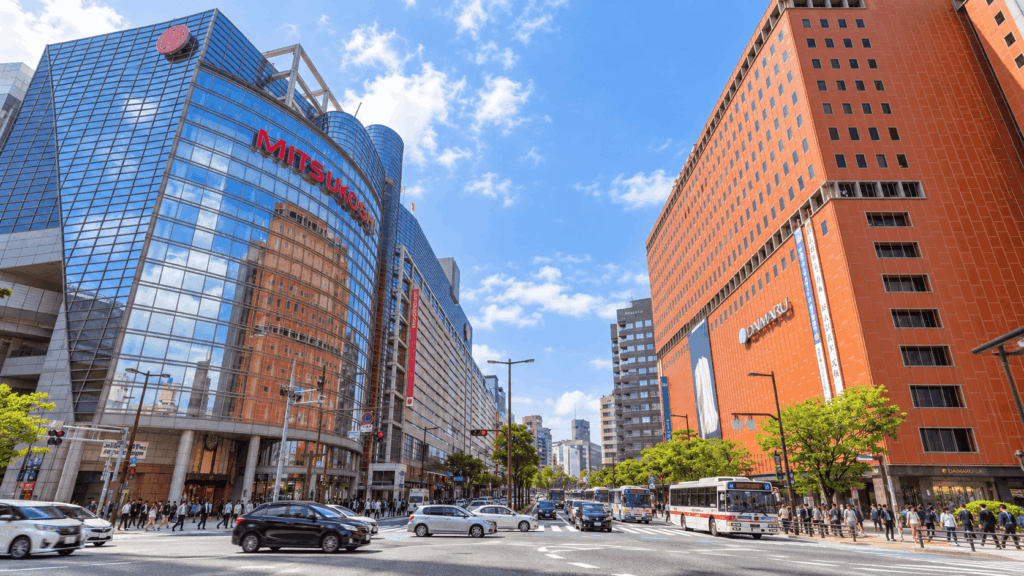
Fukuoka Works Better After Dark
Evenings are where Fukuoka pulls clearly ahead of Nagasaki. The city has roughly 100 yatai (open-air food stalls) across its districts, concentrated around Nakasu and Tenjin. Most open around 6:00 p.m. and run until around 2:00 a.m., though many take one day off a week (often Sunday) and stalls sometimes close in heavy rain.
Each stall seats only about seven to ten people, so part of the experience is squeezing in beside strangers and ordering Hakata ramen, oden, or grilled skewers. Popular stalls can have a short wait, and it helps to have cash ready.
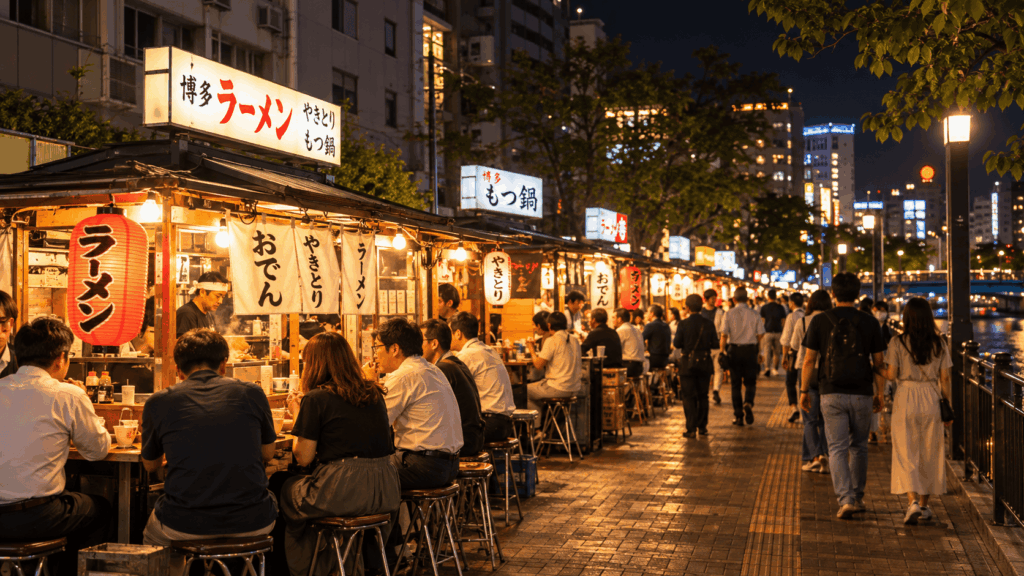
The contrast with Nagasaki matters here: Nagasaki’s dining, and especially its Chinatown, tends to slow down earlier in the evening. If late dinners and a flexible night out are important to you, that difference alone can settle the decision.
Choose Nagasaki If You Want the More Distinctive City
Nagasaki is the city that surprises people. It is not a scaled-down Tokyo or Osaka — it is a harbor city wrapped around steep hills, shaped by centuries of trade with China, the Netherlands, and the wider world. That history shows up in places like Dejima, the restored Dutch trading post; Glover Garden and nearby Oura Cathedral, tied to Nagasaki’s foreign merchant community; Peace Park and the Nagasaki Atomic Bomb Museum; and the harbor-front scenery in between.
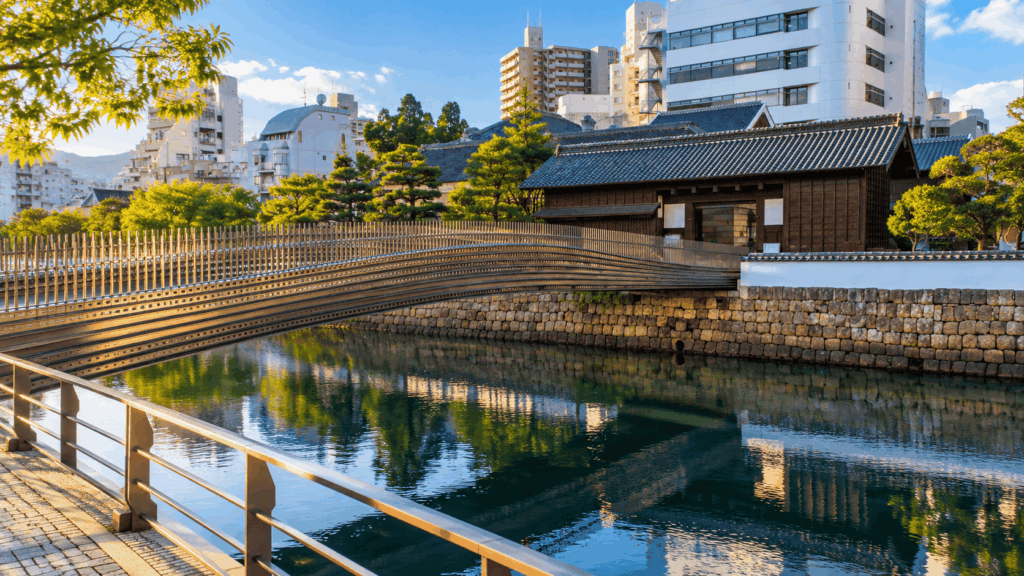
If you want a city that feels different from everywhere else in Japan, this is it. The trade-off is that Nagasaki asks a little more from you — more careful planning, and more awareness of hills.
The Hills Are Part of the Experience — but They Matter
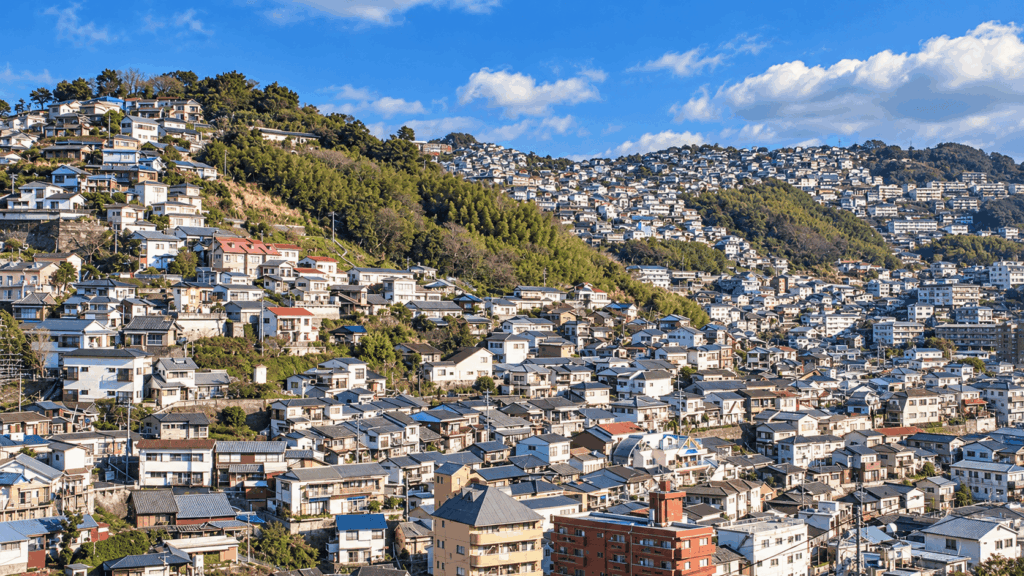
Nagasaki is built around its harbor, and much of the city climbs the surrounding slopes. This is exactly what makes the cityscape so distinctive, but it also means more walking up and down than in a flatter city. A few things make it manageable:
- Nagasaki tram: a flat fare of about ¥150 per ride, with a one-day pass around ¥600. It accepts major IC cards and contactless credit cards, which makes hopping between districts easy and cheap.
- Glover Sky Road: a free inclined elevator that lifts you up toward the Glover Garden area from street level.
- Glover Garden itself has outdoor moving walkways and escalators that carry you toward the upper viewpoints.
Kai’s tip: The hills are real, but they are more manageable than the map suggests. Glover Garden has outdoor moving walkways and escalators, and the free Glover Sky Road elevator gives you a lift up from street level — so I reached the upper viewpoints with far less effort than I expected. If stairs are a concern, build Nagasaki around the tram and these lifts rather than writing the city off.
To be clear, Fukuoka’s city center is simply flatter and easier to cover on foot — that does not mean every part of it is level, so plan for walking in both cities, just less of it in Fukuoka.
Glover Garden Is Better for Views Than for Quiet Sightseeing
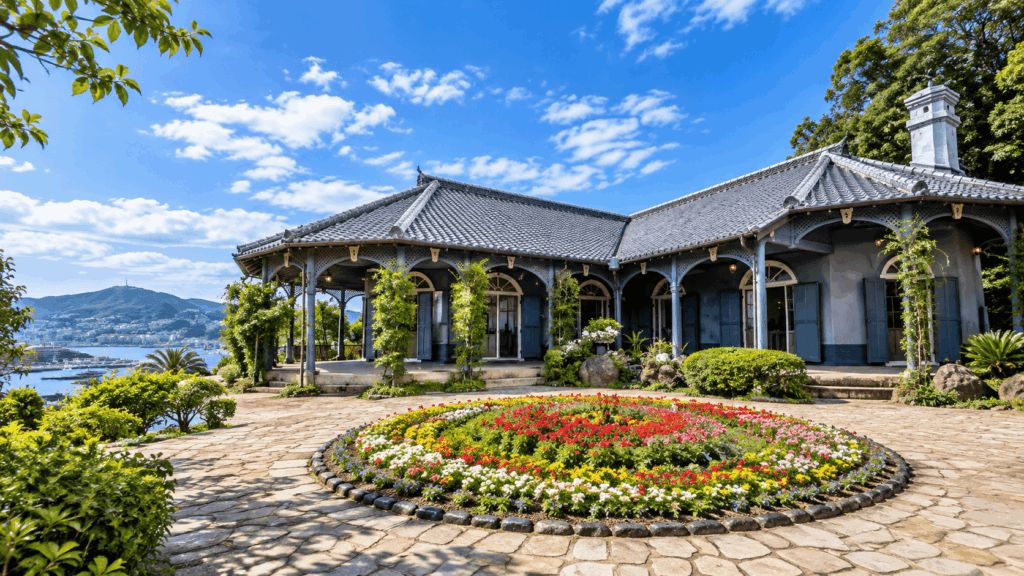
Glover Garden is the classic Nagasaki stop, and the payoff is the panorama over Nagasaki Harbor from the upper part of the slope. It is worth knowing a few practical things before you go:
- Admission: about ¥1,300 for adults and ¥650 for children, based on the revised pricing from April 2026.
- Hours: generally 8:00 to 18:00, with seasonal evening openings (often until around 21:30) during events such as the lantern nights. Evening opening dates change, so check the schedule for your dates.
- Combined tickets: a discounted combined ticket with nearby Oura Cathedral is usually available; separate combined passes that included the Atomic Bomb Museum have changed, so confirm what is currently on offer.
One expectation worth adjusting: this is a popular site, and it can be busy with school groups on weekdays. I found the late afternoon calmer on my visit, but I would not assume it is always quiet then. If a hushed, contemplative visit is what you are after, go in with flexible expectations rather than a fixed idea of tranquility.
Mt. Inasa Is Worth Planning Properly
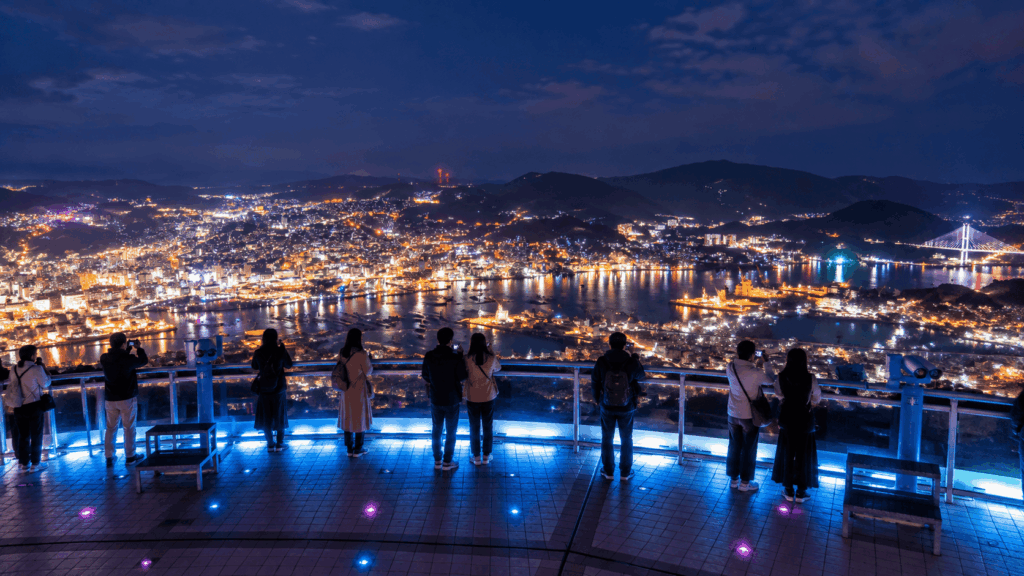
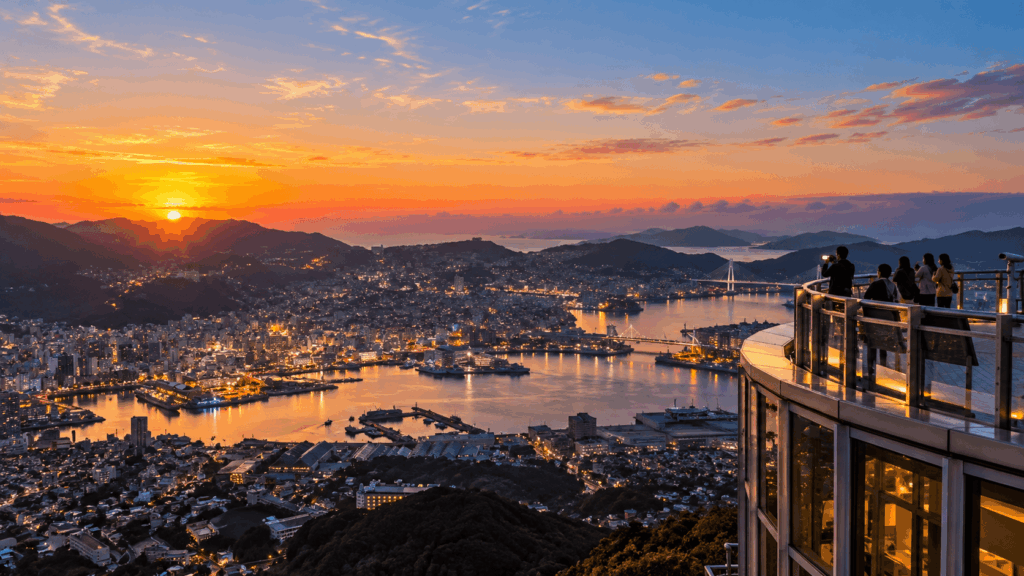
Mt. Inasa is one of Nagasaki’s signature experiences, with a 360-degree view over the city and harbor that is especially famous after dark. Reaching it takes a little planning (our guide on how to get to Mount Inasa covers the details):
- Nagasaki Ropeway: runs roughly 9:00 to 22:00, with a round-trip adult fare around ¥1,900. Service can be suspended for weather or maintenance.
- Inasayama Slope Car: normally runs 9:00 to 22:00 with a round-trip fare around ¥1,000 — but it has been out of service for maintenance. Check the current status before you plan around it.
- By car: the summit parking area is restricted on weekend, holiday, and designated evenings (typically 18:00 to 22:00), so do not assume you can drive up freely at night.
Kai’s tip: I prefer to arrive about an hour before sunset rather than at full darkness. You watch the light shift from golden hour into the full night panorama, and you avoid arriving at the same time as everyone else. Bring a light windproof layer — the summit can be windy and cooler than the city below, so it is worth packing for that even on a mild day.
Also budget your energy. Some visitors try to walk significant stretches of the hills around Mt. Inasa and arrive at the top already tired; if you want the view to be the highlight rather than a strain, use the ropeway or a bus and save your legs for the observation deck.
Nagasaki Chinatown Is Smaller — and Earlier — Than Many Visitors Expect
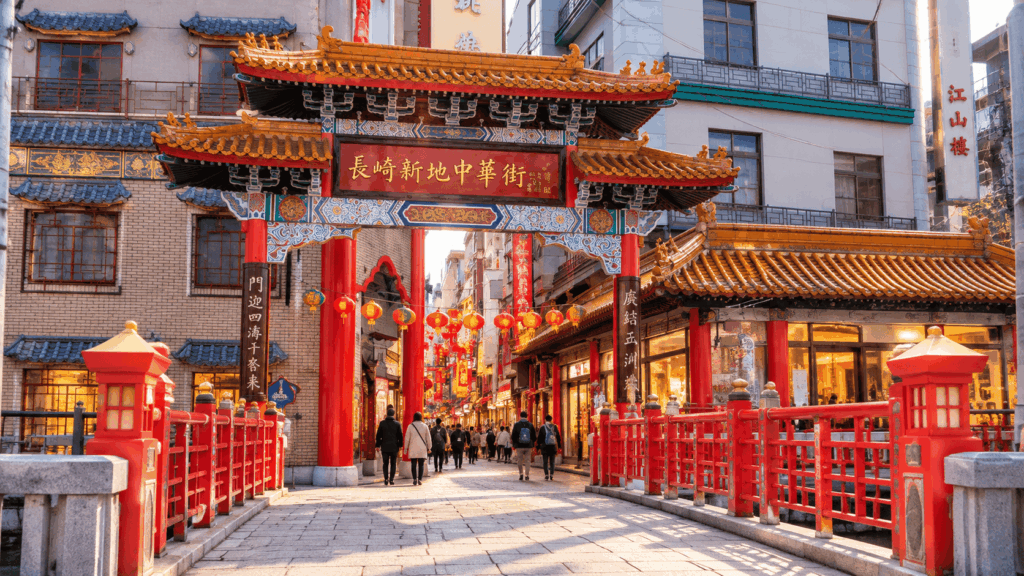
Shinchi Chinatown is Japan’s oldest Chinatown, but it is compact — roughly 250 meters of crisscrossing streets, far smaller than Yokohama’s. If you arrive imagining a sprawling district, you will likely find it smaller than expected. That is not a reason to skip it; it is a reason to use it well.
This is a good place to try Hatoshi, a Nagasaki specialty of shrimp paste sandwiched in bread and deep-fried — a quick, hot snack that suits light grazing rather than a full sit-down meal.
Kai’s tip: The scale of Shinchi Chinatown catches people out, and so does the timing. Several popular restaurants wind down by around 20:30 to 21:00, and I have seen more than one traveler arrive late and miss the meal they had planned. Treat Chinatown as an afternoon or early-evening stop — snack on Hatoshi while it is busy and lively, then have your main dinner elsewhere if you eat late.
Fukuoka vs Nagasaki for Food, History, Nightlife, and Scenery
If you are comparing the two on specific criteria, here is the short version:
- Food → Fukuoka. For sheer range and late-night convenience — Hakata ramen, yatai, and endless casual options — Fukuoka wins. That said, Nagasaki has its own distinct dishes worth seeking out, including champon and Hatoshi, so it is not a wash.
- History → Nagasaki. Dejima, Glover Garden, Oura Cathedral, and the Peace Park area together tell a story you will not find elsewhere in Japan.
- Nightlife → Fukuoka. Nakasu and Tenjin keep going late; Nagasaki is quieter after dinner.
- Scenery → Nagasaki. The harbor, the hillsides, and the view from Mt. Inasa give Nagasaki a more dramatic look.
- Overall atmosphere → Nagasaki for the more unusual, layered city; Fukuoka for big-city energy and comfort.
Travelers commonly describe Fukuoka in terms of food, city life, and convenience, and Nagasaki in terms of history and distinctiveness. That pattern is a useful starting point, but your own priorities should decide it.
Which City Is Easier to Get Around?
Fukuoka is easier, and the gap is largest at the arrival and departure points. The airport is minutes from the center, the subway connects Hakata and Tenjin quickly, and the downtown area is relatively flat and simple to navigate with luggage.
Nagasaki is compact in terms of distance, but it measures bigger in effort. The tram helps, and the main sights cluster around the harbor, yet the hills make the same distance feel longer. If you are traveling with heavy bags, young children, or mobility concerns, Fukuoka will feel noticeably smoother.
How Many Days Do You Need in Fukuoka vs Nagasaki?
Rather than asking which city is “worth it,” ask how much time you have. This is where the two cities stop competing and start combining. If you decide to focus on just one, our guide on how many days you need in Nagasaki will help you pace your stay.
| Time available | Best plan | Why |
|---|---|---|
| 1 night | Pick one city based on your priority | Splitting one night across two cities means spending it in transit; food and nightlife point to Fukuoka, history and character to Nagasaki |
| 2 nights | Stay in one city and go deeper | Moving hotels on a two-night trip costs more time than it returns; two nights in one city is relaxed |
| 3 nights | Split roughly 1–2 nights Fukuoka and 1–2 nights Nagasaki | Enough time for Fukuoka’s evening life and Nagasaki’s daytime sights and night view, with one intercity transfer |
| 4+ nights | Both cities plus surrounding day trips | Room to add Dazaifu or Itoshima from Fukuoka, and to slow down in Nagasaki |
For many travelers with three nights, the practical answer is not to choose at all. That leads to the most common real-world question about these two cities.
Can You Visit Nagasaki as a Day Trip From Fukuoka?
Yes. The fastest trains link Hakata Station and Nagasaki Station in about 1 hour 20 minutes. The route uses the limited express Relay KAMOME from Hakata to Takeo-Onsen Station, where you cross the platform to the Nishi Kyushu Shinkansen KAMOME for the final leg to Nagasaki. The transfer is straightforward, often with a few minutes of connection time.
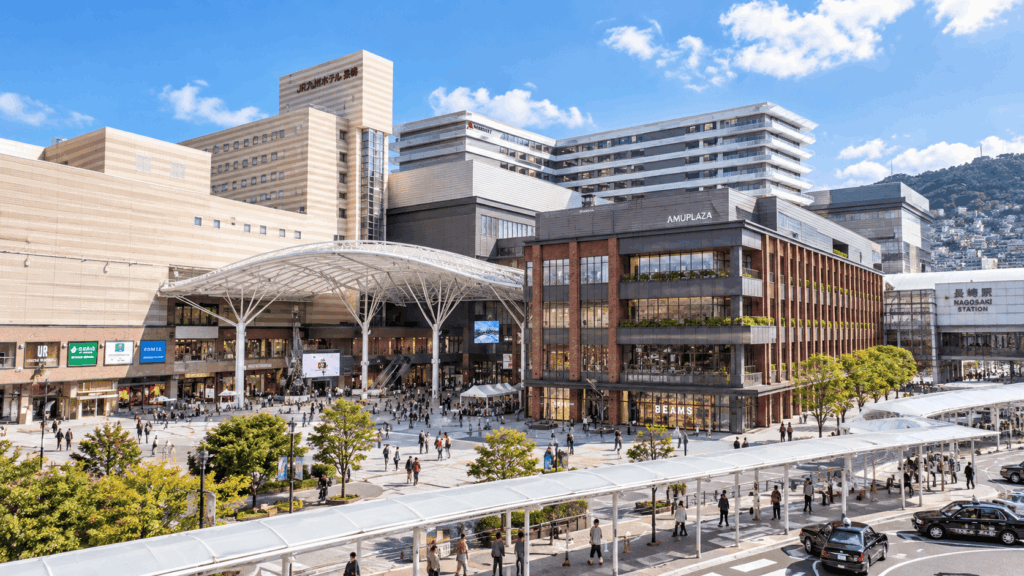
The catch is the round trip. You are spending roughly 2 hours 40 minutes or more on trains, which eats into a single day. A day trip works well if you want to cover the main sights — Peace Park, the Atomic Bomb Museum area, and the Glover Garden district — and then return to Fukuoka in the evening. It works less well if you want Mt. Inasa’s night view, since that pulls you back into the evening and makes for a long, rushed day.
If you would rather sleep in Fukuoka and skip planning the transfers yourself, a guided day trip is the simplest middle ground. Small-group tours from Hakata typically run around 10 hours, pick you up in Fukuoka, and drive you through the highlights before returning the same evening — which removes the train connections and the navigation entirely. Details, inclusions, and pickup points vary, so confirm what is covered before you book.
If you want Nagasaki’s historical highlights with fewer transport decisions and a more personal introduction to the region, a private guided day tour is another option worth examining. Unlike a fixed small-group itinerary, the customizable Fukuoka–Saga–Nagasaki tour allows you to discuss your preferred stops beforehand. Since it covers more than one area of Kyushu, confirm that the route can prioritize Nagasaki if that is your main reason for going.
Why I’d book this one
- Less transport planning: Private vehicle transport and accommodation pickup and drop-off reduce the need to coordinate intercity trains and local connections. That is especially useful if you are keeping your hotel in Fukuoka.
- More context than sightseeing alone: An English-speaking guide can help connect the region’s historical sites and cultural background. The small number of available traveler reviews includes positive comments about helpful guidance, local insights, and personal attention.
- Flexibility for your priorities: The itinerary can be discussed in advance, making it worth considering if you want to spend more time on Nagasaki’s history rather than follow a preset route. Check the planned stops and time allocation carefully, as this is a broader Kyushu tour rather than a dedicated Nagasaki-only itinerary.
See live availability, itinerary details, and recent traveler reviews for the private Fukuoka–Saga–Nagasaki tour. Admission fees and meals are extra, so check the full inclusions and current price before deciding whether the convenience and guided experience are worth it for your trip.
Day Trip vs Overnight in Nagasaki
A day trip suits you if:
- You want to cover the main historical sights efficiently in one push.
- You would rather not change hotels.
- You plan to spend your evenings back in Fukuoka for food and nightlife.
An overnight in Nagasaki suits you if:
- You want the sunset-to-night view from Mt. Inasa without a rushed return.
- You want to walk the city in the quiet of early morning or after the day-trippers leave.
- You want to absorb Nagasaki as a place, not just tick off its sights.
If the night view is a priority, an overnight is the more comfortable choice — a day trip and Mt. Inasa are technically possible together, but the timing gets tight and the day feels long. If you opt for an overnight stay, read our guide on where to stay in Nagasaki to choose between the Station and Chinatown areas.
Which Is Better If You Already Visit Tokyo or Osaka?
This is where many travelers get the decision wrong. If your Japan trip already includes Tokyo, Osaka, or Kyoto, you are already getting the scale, the crowds, and the big-city food and shopping. What your itinerary is missing at that point is contrast — and Nagasaki delivers contrast better than Fukuoka does.
Nagasaki’s hills, harbor, and mixed Chinese, Dutch, and Japanese heritage make it feel like nowhere else you will have visited. Fukuoka, for all its strengths, can read as a comfortable, familiar Japanese city to someone who has already seen the big three.
That said, Fukuoka is not simply “another big city.” Its value is different: excellent food, great nightlife, and the best base in Kyushu for onward travel. Some travelers find Fukuoka’s individual attractions less striking than Nagasaki’s, while others rate it highly precisely for convenience and food — both views are common, and the right one for you depends on what you want from this leg of the trip.
My own judgment: if you have already covered Japan’s major cities and want this Kyushu stop to feel distinct, lean toward Nagasaki. If you want an easy, enjoyable base with great food and flexible day trips, Fukuoka still earns its place.
Frequently Asked Questions
Is Fukuoka or Nagasaki better for first-time visitors to Kyushu?
For most first-time visitors, Fukuoka is the easier starting point: the airport is minutes from the center, the transport is simple, and the food and nightlife are excellent. But if you are already comfortable traveling in Japan and want the more memorable city, Nagasaki’s history and setting can be the stronger choice. There is no single right answer — it comes down to whether you are optimizing for convenience or for distinctiveness.
How many days do you need for Fukuoka and Nagasaki?
If you are visiting only one of them, one to two nights is enough for the highlights. If you want both, about three nights or more is the least stressful way to do it — for example, one to two nights in Fukuoka and one to two in Nagasaki. Trying to see both in two nights usually means spending too much of the trip in transit.
Can you visit Nagasaki as a day trip from Fukuoka?
Yes. The fastest trains take about 1 hour 20 minutes each way between Hakata and Nagasaki, with a cross-platform change at Takeo-Onsen. It is a long but workable day. Just note that a round trip costs roughly 2 hours 40 minutes or more of travel, so if you also want the Mt. Inasa night view, staying overnight is the more comfortable option.
Is Nagasaki harder to walk around than Fukuoka?
In general, yes. Nagasaki is built on hills, so there is more up-and-down walking than in Fukuoka’s relatively flat city center, and the same distance can feel longer. You can offset much of that with the tram, the free Glover Sky Road elevator, and the moving walkways inside Glover Garden. Travelers with limited mobility should plan routes around these rather than trying to walk everywhere.
Is Nagasaki worth visiting if I am already going to Hiroshima?
Many travelers find it is — but for reasons beyond the atomic bomb history. Nagasaki’s identity is broader: Dejima and its foreign merchant heritage, the harbor topography, and its layered Chinese and European influences make it a different city from Hiroshima. If that history interests you, Nagasaki adds a distinct perspective rather than repeating what you saw in Hiroshima.
My Verdict: Fukuoka or Nagasaki?
If you only remember one thing from this guide, make it the trade-off. Fukuoka is the easier city with the better food and nightlife; Nagasaki is the more distinctive city with the stronger sense of place. Neither is objectively better — they suit different trips.
Choose Fukuoka if:
- This is your first trip to Kyushu and you want it to go smoothly.
- Easy logistics, food, and nightlife matter most to you.
- You want a base for day trips to places like Dazaifu or Itoshima.
- You are only stopping briefly before heading to another city.
Choose Nagasaki if:
- You are already visiting Tokyo, Osaka, or other major Japanese cities.
- You want history and a strong sense of place.
- Harbor views and hillside scenery appeal to you.
- You are willing to trade some convenience for character.
Choose both if:
- You have roughly three nights or more.
- You do not mind one intercity transfer.
- You want Fukuoka’s evening life and Nagasaki’s daytime history and views.
By traveler type, it usually breaks down this way: first-time visitors and families tend to do best with Fukuoka; travelers on a tight schedule who can only manage one city should also lean Fukuoka; and repeat visitors or anyone who has already covered Japan’s big cities will get more out of Nagasaki. If you can give this region three nights, though, you do not have to choose at all.
When people ask me where to go in Kyushu, I usually start by asking two questions: have you already seen Tokyo or Osaka, and how many nights do you have? Those two answers settle the decision more often than any ranking does.

Hi, I’m Kai. I’m a Tokyo-based travel writer, tourism industry insider, and the author of a published guidebook for international visitors to Japan. With over 10 years of professional experience at a leading Japanese tourism company, my mission is to help you skip the tourist traps and navigate Japan’s best destinations like a local. I believe the perfect day trip is like a traditional kaiseki meal: a beautiful balance of precise planning and unforgettable seasonal discovery. When I’m not out conducting field research, you’ll usually find me drafting new itineraries with one of my favorite fountain pens!