
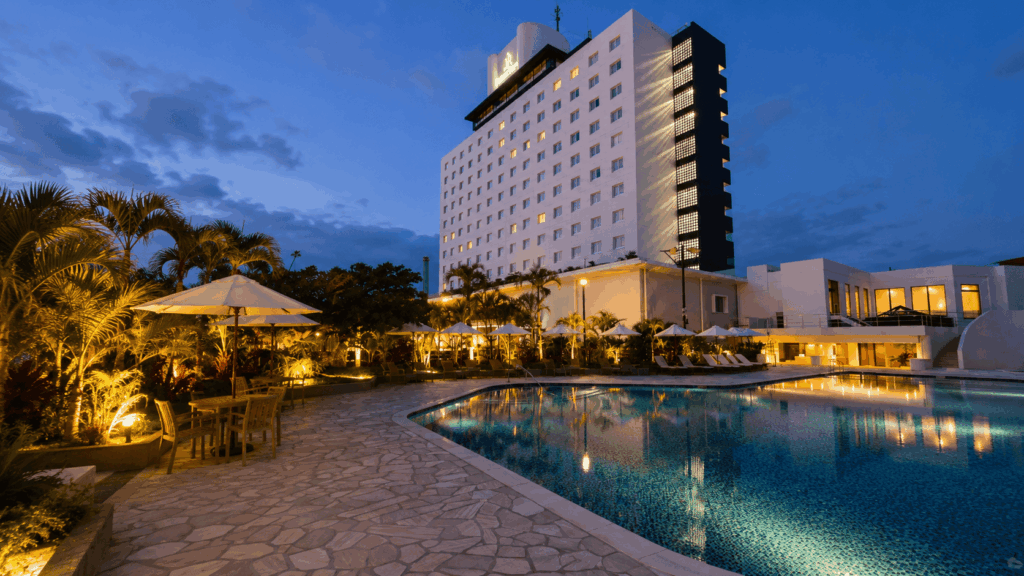
For most first-time visitors, the best area to stay in Ishigaki is around the ferry terminal. If you are planning even one day trip to Taketomi or Iriomote, staying within walking distance of Euglena Ishigaki Port Remote Island Terminal removes the most stressful part of an Ishigaki itinerary: catching a ferry on time. The port area also puts you a short walk from Euglena Mall, the bus terminal, and most of the island’s best evening restaurants.
There are real exceptions. If the hotel itself is the main point of your trip, a beachfront resort makes more sense. If you plan to be in the water every day and want to cook, wash swimwear, and shop at a supermarket, the Maezato district works better. And if you are renting a car and want quiet scenery above all else, Kabira or the north of the island may win.
Over years of helping travelers plan Yaeyama itineraries, I have sent more first-timers to the port area than anywhere else — and the reason is rarely the hotels. It is that the area quietly removes the daily friction that can sink a short trip: ferry mornings, dinner decisions, bus connections, and what to do when the weather turns.
If you like the convenience of staying downtown but still want to see Kabira Bay and other harder-to-reach parts of Ishigaki without renting a car, a private island tour is one option worth comparing. Check current pickup options, availability, and recent traveler reviews for the Okinawa Ishigaki Island Private Tour.
Quick Answer: The Best Area to Stay in Ishigaki Depends on What You’ll Do Each Day
There is no single best area on Ishigaki. The right choice depends on your itinerary, whether you are renting a car, and what you want from the trip itself.
- Most first-time visitors, especially anyone doing island hopping: stay near the ferry terminal and the downtown area around Euglena Mall. You can walk to the ferries, the bus terminal, and dinner.
- Daily diving, snorkeling, or longer stays where you want laundry and a supermarket: Maezato, where apartment-style stays and the 24-hour MaxValu Yaima make everyday logistics simple.
- Trips where the hotel is the destination: a beachfront resort on the west coast such as the Fusaki area, where you can spend a full day on the property.
- Rental-car trips that prioritise quiet scenery: Kabira or northern Ishigaki, if you accept the driving and limited dining options.
| Area | Best for | Rental car needed? | Island hopping | Dining & shopping | Beach & resort feel | Watch out for |
|---|---|---|---|---|---|---|
| Ferry terminal & downtown | First-timers, car-free travelers, island hoppers, evening food lovers | No | Excellent — ferries are a short walk away | Excellent — Euglena Mall and most izakaya are walkable | Limited — mostly simple business-style hotels | Less “”resort”” atmosphere than you might picture |
| Maezato | Daily diving, longer stays, families who cook, self-catering travelers | Not required, but useful | Good — a short drive to the terminal | Good — 24-hour supermarket, few walkable restaurants | Moderate to good — Maesato Beach plus resorts and apartments | Less walkable than downtown; a car makes it easier |
| Beachfront resorts (Fusaki area) | Resort-first trips, families wanting pools and on-site facilities | Recommended if you want to eat away from the hotel | Limited — a 15-minute drive or taxi to the terminal | Limited — mostly on-site dining | Excellent — beachfront, pools, large grounds | You are tied to the property unless you drive |
| Kabira & northern Ishigaki | Quiet scenery, slow-paced trips, couples with a rental car | Yes | Not convenient — a long drive to the terminal | Limited — a handful of restaurants | Excellent scenery, limited resort infrastructure | Long drives for everything except the view |
If the port area sounds right for your trip, the practical next step is comparing hotels within a short walk of the terminal — most are simple business-style stays, so the decision usually comes down to room size, breakfast, and whether you want a bath or a shower.
1. Ishigaki Port & Downtown — Best for First-Time Visitors and Island Hopping
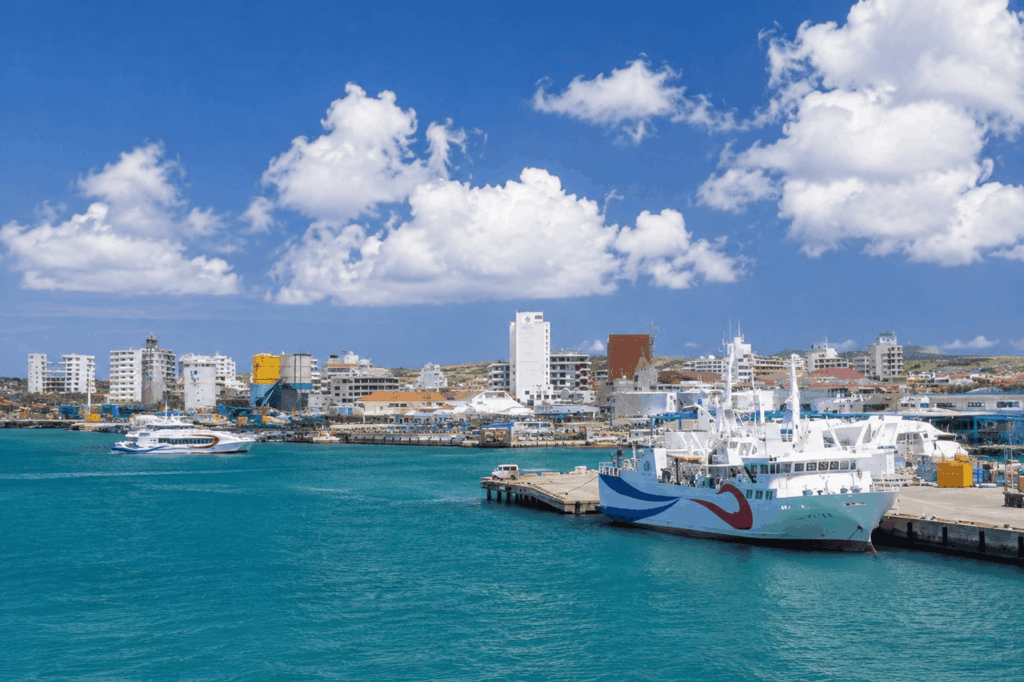
The port district is the operational centre of a Yaeyama trip. Euglena Ishigaki Port Remote Island Terminal is where high-speed ferries leave for Taketomi, Iriomote, Kuroshima, Kohama, Hateruma and the other islands. Taketomi is about 10–15 minutes away, with departures roughly every hour through the day; the Iriomote run takes about 50 minutes to Uehara Port. From a hotel in this district, you walk to the terminal in minutes, buy tickets at the counter, and board without a car, a taxi, or a bus transfer.
The area also concentrates Ishigaki’s everyday conveniences. Euglena Mall, a covered shopping street about a five-minute walk from the terminal, has restaurants, souvenir shops, a pharmacy and cafes. Ishigaki Bus Terminal sits behind the port, roughly two to three minutes on foot, which matters if you arrive by airport bus or plan a bus day. Hotels here are mostly compact business-style properties — Hotel Miyahira, for example, is about a one-minute walk from the terminal — rather than beachfront resorts.
Kai’s tip: The mornings are the hidden test of an Ishigaki trip. Taketomi’s first ferry leaves around 7:30, and ferry days start earlier than most travelers expect. What I have seen work again and again is staying close enough to the terminal that you can buy breakfast at the mall or the terminal shops, drop your bag back at the hotel before boarding, and still make the early boat without a taxi. Travelers who stay farther out almost always have to plan the ferry morning around a drive or a bus they cannot afford to miss.
The trade-off is the evening. After a day on Taketomi or Iriomote, the last ferries return around 17:30, and the port district has the island’s densest cluster of restaurants and izakaya — most of them a walk away. You finish dinner, walk back in five or ten minutes, and the day ends without a car journey.
Who Should Stay Near Ishigaki Port?
- First-time visitors: this is the easiest base to navigate while you learn how the island works.
- Travelers without a rental car: ferries, buses and dinner are all on foot.
- Anyone doing Taketomi or Iriomote day trips: the terminal is the reason this area wins for island hopping (if you are planning one, check our Taketomi day trip guide).
- Short stays of two or three nights: you maximize time out of the hotel rather than in it.
- Travelers who want evening food options: the downtown cluster around Euglena Mall has the most choice on the island. For local recommendations, see our guide on what to eat in Ishigaki.
The Downside: Convenience Beats Resort Atmosphere
What the port area does not offer is a resort experience. The hotels are functional rather than atmospheric, and if you pictured Ishigaki as a beachfront escape with infinity pools, this district will feel underwhelming. In the hotel I used, the shared bath was genuinely hot and welcome after a day of ferry travel — but it was a city bath, not a resort spa. A summer squall drumming on the roof at midnight sounded exactly like rain on a city hotel, because that is what it was. None of this matters if you treat the room as a base; it matters a lot if the room is the trip.
Recent traveler reviews reflect the same split: visitors who rate the port area highly almost always mention location and convenience, while those who were disappointed tend to be travelers who wanted a resort holiday. Read reviews with that lens and the pattern becomes predictable.
If your trip is built around Taketomi and Iriomote day trips, a guided tour from Ishigaki can also remove the ferry-and-bicycle planning entirely — worth considering if you want someone else to handle the connections.
2. Maezato — Best for Diving, Longer Stays and Everyday Practicality
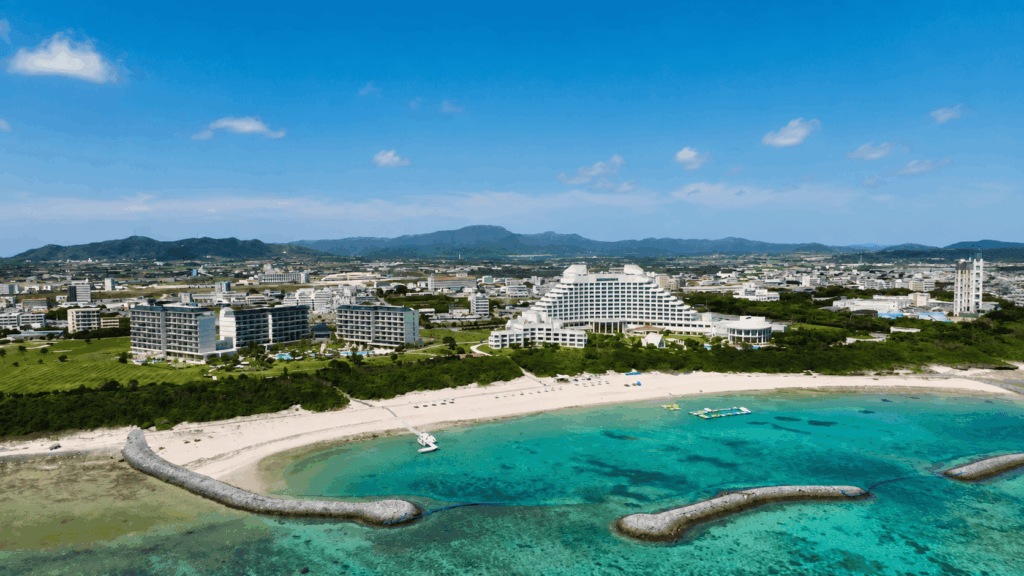
Maezato sits on the southeast coast, about ten minutes by car from the ferry terminal along the main road south of the city. It is the area I recommend to divers, snorkelers, and travelers staying four or more nights who want everyday logistics to be boringly simple.
The district has two things downtown lacks: a real beach and a real supermarket. Maesato Beach — the strip of sand in front of the Maezato district — is where ANA InterContinental Ishigaki Resort sits, directly on the beach with pools and grounds. And MaxValu Yaima at Maezato 292-1 is a large supermarket currently open 24 hours, with a Daiso next door for sunscreen, hats, and the small things travelers forget. For a diving trip, that combination changes how the day works: you can rinse gear, shop for food, and stay in an apartment with laundry rather than depending on hotel services.
Why an In-Room Washer and Dryer Can Matter More Than a Sea View
This is the point I find myself making most often to travelers who spend every day in the water. Wet swimwear and rash guards do not dry overnight in subtropical humidity, and on a six-day trip you will run out of dry gear by day three if you are hand-washing in a sink. Many apartment-style stays in Maezato include a washing machine and a gas dryer in the room, which means you wash at night and start the morning with dry swimwear. For a water-heavy itinerary, that practicality beats a sea view you only see at breakfast.
Kai’s tip: If every day involves the water, check the laundry setup before you book. In the Maezato apartment I used, the in-room washer and gas dryer had swimwear and rash guards dry by morning — something no hotel laundry service can match for convenience. The trade-offs were minor: the shower pressure was gentle in that particular unit, which meant washing long hair took patience, and the area has almost no walkable restaurants, so dinner meant cooking or driving. For divers who cook and wash, that is a fair deal; for travelers who want to eat out every night, it is not.
Supermarkets, Pharmacies and the Practical Side of Maezato
The 24-hour MaxValu makes Maezato self-sufficient in a way downtown is not. You can buy breakfast food, drinks, sunscreen and snacks without planning around shop hours, and the attached Daiso covers most travel essentials at very low prices. For families, that means you are not paying resort prices for water and nappies.
The catch is movement. Maezato is not a walking district — it is spread out along the coast, and most restaurants, the ferry terminal, and the airport are short drives away. A rental car makes Maezato very easy; without one, you are relying on taxis and the local bus, which is workable for a diving trip but not relaxing for sightseeing.
Maezato’s Two Very Different Accommodation Styles
Maezato offers two distinct ways to stay, and they suit different trips:
- Apartment-style stays: kitchens, in-room laundry, self check-in, and lower prices for longer stays. Best for divers, self-caterers, and families who want space and routine.
- Beachfront resorts: Maesato Beach on your doorstep, pools, restaurants and services. Best for travelers who want a resort stay with better access to practical shopping than the west coast offers.
If you are weighing these two styles against each other, the deciding factor is usually how many meals you want to cook versus how much service you want to buy.
3. Beachfront Resorts Around Fusaki — Best When the Hotel Is Part of the Vacation
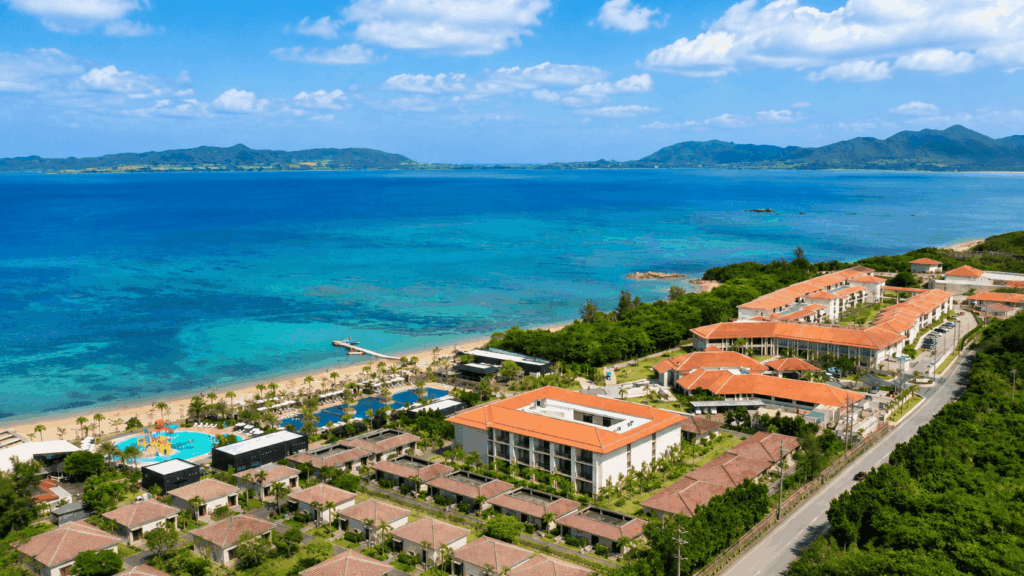
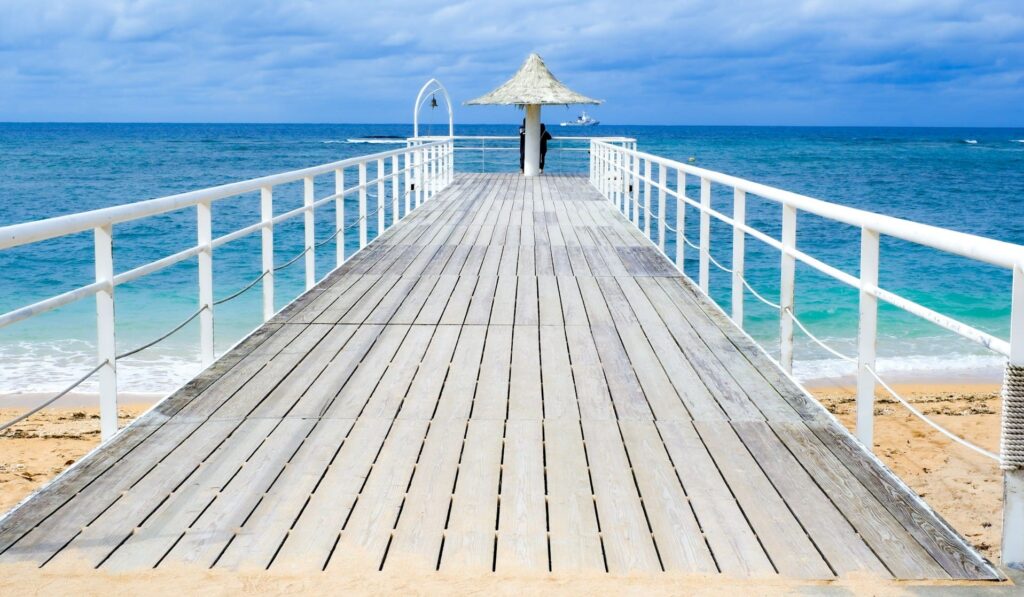
If your idea of an Ishigaki trip is waking up to the ocean, spending the day between pools and beach, and letting the hotel handle meals, the west coast resort area around Fusaki is the strongest match. Fusaki Beach Resort Hotel & Villas anchors this stretch — a large beachfront property with multiple pools, restaurants and extensive grounds, about 15 minutes by car from the ferry terminal and roughly 35 minutes from the airport.
This area works when the hotel itself is a destination rather than a base. On a resort-first day, the pattern is: breakfast on the property, a morning at the beach or pool, lunch on site, and an early evening that never requires leaving the grounds. For families, that self-contained rhythm removes most of the planning stress of a trip. For couples, it delivers the relaxation that downtown cannot.
What surprised me most about staying at a large beachfront resort on this island was how easily the whole day disappeared without leaving the property — an evening walk along the beach at night, with the sky clear, was genuinely memorable. Two honest caveats: stars and calm water depend entirely on weather and moon phase, so treat that as a good night, not a guarantee. And on a busy holiday weekend, the lounge queue was around 30 minutes one evening — fine if you expect it, frustrating if you imagine resort service is instant. These are the realities of a popular resort in high season, not failings unique to one property.
Kai’s tip: Large resorts look compact in booking photos and are not. At the resort I stayed at, breakfast meant a real walk from my room block to the dining building — five minutes each way, in sandals, with plates to carry back for the kids. Check the resort map, not just the room photo, and ask how far your room is from the pool, the beach and the restaurants. That internal distance quietly decides how relaxed your mornings are.
The Hidden Downside of a Large Resort: Distance Inside the Hotel
Recent guest reviews of large Ishigaki resorts consistently mention the same practical notes: rooms in some wings are a long walk from restaurants and pools, and breakfast can mean a queue in peak season. The fixes are easy once you know — request a room closer to the main facilities, or book the villas if you want more privacy and less walking. The point is that a resort stay still involves logistics; they are just different logistics from downtown.
The bigger trade-off is location. From Fusaki, the ferry terminal is a 15-minute drive or a taxi ride of around 4,000 yen, and the downtown restaurants are not walkable. If you are planning multiple island-hopping days, the resort will add a drive or taxi to every ferry morning. If you only do one island day and spend the rest at the hotel, that cost is easy to absorb.
Who Should Choose the Fusaki Resort Area?
- Families who want pools, beach access and on-site meals: the self-contained setup reduces daily decision-making.
- Couples on a relaxation-first trip: if the room and the grounds are the point, this area wins.
- Travelers with a rental car who still want a resort base: you can eat out occasionally without depending on taxis.
- Anyone doing one island day at most: the ferry distance only matters once or twice.
If this sounds like your trip, the practical comparison is between the resort areas themselves — grounds size, room-to-facility distances, pool and dining options — rather than between resorts and downtown.
4. Kabira and Northern Ishigaki — Best for Quiet Scenery, but Only If You Accept the Driving
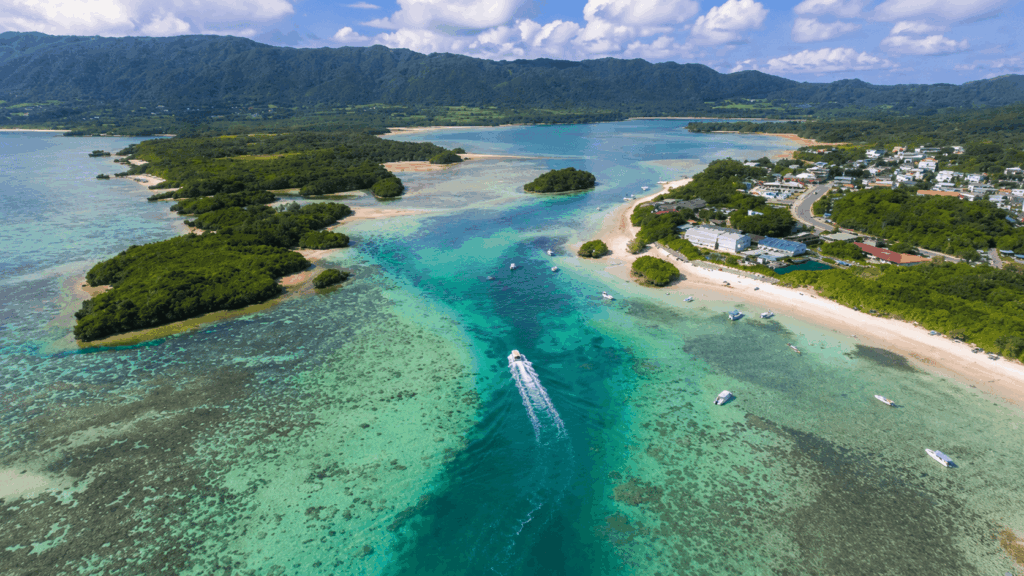
Kabira Bay, on the northwest coast, is the postcard image of Ishigaki: a sheltered bay of turquoise water ringed by green hills, with glass-bottom boats running roughly 30-minute trips over the coral. It is beautiful, and it is also a long way from everything practical. The bay sits about 23 kilometres from the ferry terminal — roughly 30–35 minutes by car, or around 45 minutes to an hour by bus on the limited local routes (read our full guide on getting to Kabira Bay for details).
I have not stayed in Kabira myself, and I would not recommend travelers decide on it purely from photos. What recent visitors consistently report matches what the geography suggests: the scenery and quiet are excellent, and the trade-off is that everything except the view involves a drive — dinner options are a handful rather than a district, the ferry terminal is a long trip for island-hopping days, and without a rental car the area is genuinely difficult to use.
Don’t Choose Kabira Just Because It Looks Best in Photos
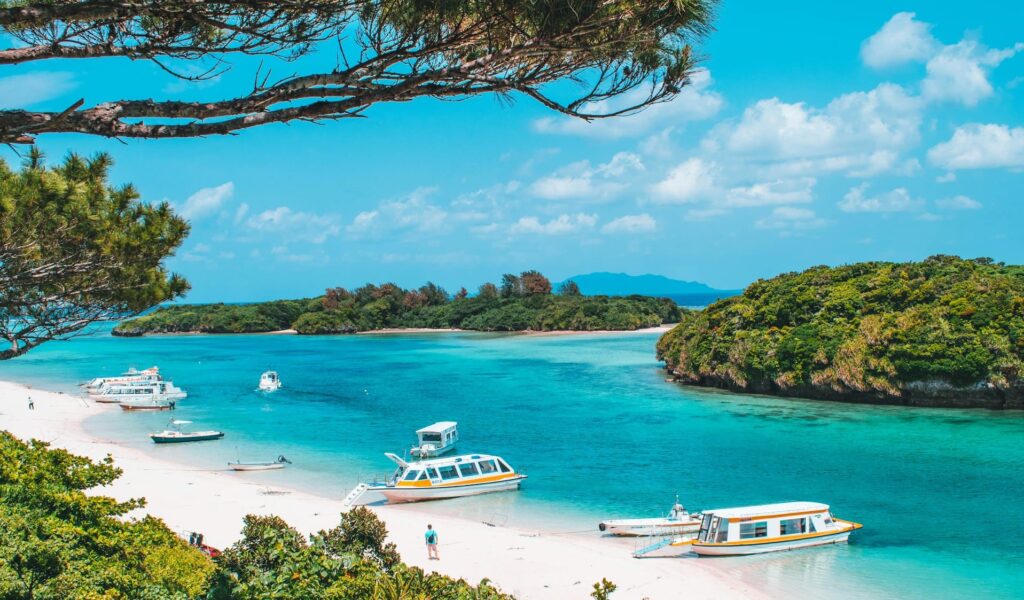
Kabira’s appeal is real, but it is a location for a specific kind of trip: slow, scenic, rental-car based, and not built around ferries or daily water activities. If you picture a two-night stay where you watch the bay, drive to nearby viewpoints, and eat at the small local restaurants, it can be exactly right. If your itinerary is ferry mornings, downtown dinners and daily beach time, the north will cost you an hour of driving every day.
For most first-time visitors, the smarter move is to base yourself in the port area or Maezato and visit Kabira Bay for the day — it is a classic rental-car or bus day trip, not a reason to relocate your whole stay.
If you want to stay near the port but do not want to spend a sightseeing day working around local bus timetables or driving yourself, this is the guided option that fits that trade-off best.
Why I’d book this one
- It removes the car question: pickup options make it possible to keep a convenient downtown base while reaching sights such as Kabira Bay without renting a car.
- The itinerary is flexible: recent travelers repeatedly mention helpful route adjustments, clear coordination, and a knowledgeable local guide rather than a rigid one-size-fits-all circuit.
- It keeps the commitment lower while plans are still moving: the booking page lets you check current cancellation terms, dates, and start-time options before finalising the rest of your Ishigaki itinerary.
Ishigaki Area Comparison: Which Location Has the Least Friction for Your Trip?
Instead of ranking areas as “”best”” in the abstract, it helps to compare them by the friction they create on a real day. These are the moments where an area quietly makes or breaks a trip:
- Morning friction: how hard it is to get to an early ferry. Downtown is a walk; Maezato is a short drive; Fusaki and Kabira are real journeys.
- Evening friction: how easy it is to find dinner and get back. Downtown wins; Maezato means cooking or driving; Fusaki means on-site dining; Kabira means very few options.
- Wet-gear friction: how wet swimwear and gear dry overnight. Apartment stays in Maezato with washers and dryers win; hotel-only stays depend on the property.
- Bad-weather flexibility: what you can do when the weather turns. Downtown has covered shopping, museums and indoor restaurants; resort areas have pools and facilities; Kabira is exposed to the weather.
- Resort friction: how much internal walking and queuing the property itself creates. This is a per-hotel variable, not an area variable.
- Car dependence: how much of the trip needs a car. Downtown is fine without one; Maezato is easier with one; Fusaki is workable with taxis but better with a car; Kabira essentially requires one.
| Your situation | Best area | Why | The compromise |
|---|---|---|---|
| First trip to Ishigaki | Ferry terminal & downtown | Everything is walkable while you learn the island | Simple hotels, no resort feel |
| No rental car | Ferry terminal & downtown | Ferries, buses and dinner on foot | Fewer beach days without planning |
| Taketomi or Iriomote day trips | Ferry terminal & downtown | Walk to the early ferry, back for dinner | No beach at your doorstep |
| Daily diving or snorkeling | Maezato | Laundry, supermarket and apartments for wet gear | Fewer walkable restaurants; car helps |
| Family resort holiday | Fusaki resort area | Pools, beach and meals all on site | Drives or taxis for anything off-property |
| Quiet scenery, slow pace, rental car | Kabira or the north | Scenery and calm above all else | Long drives, limited dining |
| 4+ nights mixing ferries and relaxation | Split: downtown + a resort | Efficient ferry days and a proper resort finish | One luggage move between hotels |
Where to Stay in Ishigaki Without a Car
Ishigaki is genuinely manageable without a rental car if you choose the right base — and that base is the downtown port area. The island’s most frequent bus route connects the airport to the city roughly every 15 minutes from early morning until around 21:00 (about 25–35 minutes, depending on the operator), and the bus terminal is two to three minutes on foot from the ferry terminal. From a downtown hotel, the practical loop is: walk to the ferry, ferry to Taketomi, ferry back, walk to dinner. The whole day needs no vehicle.
For bus users, a day pass on the main operator (around 1,000 yen for 24 hours, or about 2,000 yen for a five-day pass) generally pays for itself quickly — a single fare from the city to Kabira Bay is around 730 yen each way, so the pass is worth it for that trip alone. Maezato is reachable by bus but less convenient; Fusaki and Kabira are possible by bus but limited in frequency, so plan those days around the timetable.
Two honest notes from watching car-free travelers: first, the airport-to-city bus is the easy part — the harder part is the local routes, so check timetables before building a day around them. Second, if you are staying at a beachfront resort without a car, the practical cost is not the transfer itself but the loss of flexibility — every dinner outside the hotel and every ferry morning becomes a taxi fare.
Should You Split Your Stay Between Downtown and a Resort?
Splitting your stay between the downtown port area and a beachfront resort is the best structure for one specific pattern: trips of four or more nights where you want both efficient island-hopping days and a proper resort finish.
The logic is simple. Island-hopping days work best from downtown, where the ferry terminal and dinner are on foot. Relaxation days work best at a resort, where the hotel itself is the destination. A four-night trip can be two nights downtown for Taketomi and Iriomote, then two nights at a Fusaki-area resort where you stop moving. The change of pace is the point.
The cost is one luggage move — a 15-minute drive between the two bases, which on a four-night trip is a small price. For two or three nights, the move is rarely worth it: pick the area that matches the majority of your days and stay put. And if you are splitting, the order matters: do the ferry days first while your energy is highest, and let the resort be the wind-down.
If you are weighing a split stay, the comparison that matters is between downtown hotels and resort properties together — room quality, meal costs and what each base gives you on its best day — rather than comparing the two areas in isolation.
FAQ: Ishigaki Accommodation Questions, Answered
What is the best area to stay in Ishigaki for first-time visitors?
For most first-time visitors, the area around the ferry terminal and downtown is the safest choice. You can walk to Euglena Ishigaki Port Remote Island Terminal, the bus terminal, Euglena Mall, and the island’s densest cluster of restaurants. That walkability matters most on ferry mornings, when Taketomi and Iriomote departures start early and a taxi or bus connection adds stress you do not need on a first trip.
Where should I stay in Ishigaki without a rental car?
Stay near the ferry terminal and downtown. The airport-to-city bus runs roughly every 15 minutes during the day, the bus terminal is two to three minutes from the ferry terminal, and ferries, restaurants and shops are all on foot. Maezato is workable by bus but less convenient, and Kabira or the Fusaki resort area without a car means taxi fares for every ferry morning and dinner outside the hotel.
Is it better to stay near Ishigaki Port or at a beach resort?
It depends on what your days look like. If your itinerary is built around island hopping, downtown wins — ferries and dinner are on foot, and the port area has the best bad-weather options on the island. If the hotel itself is the destination — pools, beach access, on-site meals, minimal planning — a beachfront resort around Fusaki is the better match, and the ferry terminal becomes a 15-minute drive or taxi ride on the days you use it.
Where should I stay in Ishigaki for diving and snorkeling?
Maezato is the most practical base for a water-heavy trip. The area combines Maesato Beach, a 24-hour MaxValu Yaima supermarket, and apartment-style stays with in-room washers and dryers — which matters more than a sea view when you need dry swimwear every morning. You will want a car or short taxi rides to reach dive shops, the ferry terminal and restaurants, but the everyday logistics are the easiest on the island.
Is it worth splitting my stay between Ishigaki City and a resort?
Yes, for trips of four or more nights where you want both island-hopping days and a proper resort finish. Two nights downtown for Taketomi and Iriomote, then two nights at a west coast resort to stop moving, gives you the best of both — at the cost of one luggage move of about 15 minutes. For two or three nights, skip the split and pick the area that matches most of your days.
My Recommendation by Traveler Type
Here is how I would decide, traveler by traveler, based on the trips I have helped plan on Ishigaki over the years.
For first-time visitors doing any island hopping: base yourself near Euglena Ishigaki Port Remote Island Terminal. The walkability removes the two most stressful moments of a Yaeyama trip — ferry mornings and finding dinner — and there is always the option of a resort on your next visit.
For families: choose by age and energy. Families who want zero planning stress and on-site everything will get more from the Fusaki resort area, where pools, beach and meals are all inside the property. Families who want supermarket prices, a washing machine and cooking space — especially on longer stays — will find Maezato’s apartment-style accommodations far more practical.
For travelers on a tight schedule (two or three nights): do not split your stay and do not chase scenery at the expense of logistics. The port area is the only base where every hour of a short trip is usable without a car.
For repeat visitors who have already done the ferry circuit: this is the trip to try Kabira or the north — but only with a rental car and only if you accept that dinner options are limited and most days involve driving. If you would rather relax, a beachfront resort with a slower itinerary is the more reliable reward.
For divers and daily snorkelers: Maezato, without hesitation. Dry swimwear, a supermarket that never closes, and space to deal with wet gear are worth more than a sea view when the water is your daily plan.
The rule I end up repeating to almost everyone: choose the area that matches the majority of your days, not the area that photographs best. On Ishigaki, most accommodation disappointment comes from a mismatch between travel style and location — fix that first, and the hotel booking becomes much easier.

Hi, I’m Kai. I’m a Tokyo-based travel writer, tourism industry insider, and the author of a published guidebook for international visitors to Japan. With over 10 years of professional experience at a leading Japanese tourism company, my mission is to help you skip the tourist traps and navigate Japan’s best destinations like a local. I believe the perfect day trip is like a traditional kaiseki meal: a beautiful balance of precise planning and unforgettable seasonal discovery. When I’m not out conducting field research, you’ll usually find me drafting new itineraries with one of my favorite fountain pens!