
Lake Toya in winter is worth visiting for open-water scenery, a lakeside onsen hotel and a quiet evening. Stay one night if bathing, dinner and the illuminated town are the reason you are coming. A day trip works well for the lake itself, either independently around Toyako Onsen or on a tour combining several regional sights.
The most useful decision is your arrival time. An afternoon in town leaves room for a cruise; the hotel shuttle arriving around 16:00 is better suited to checking in, dinner and baths. Snow activities and higher viewpoints need their own transport and operating checks.
Staying for the lake views and onsen?
The Lake View Toya Nonokaze Resort has lake-facing rooms and rooftop open-air bathing. Compare the room and meal plan for your dates, then arrange shuttle seats separately if needed.

Quick Answer: Is Lake Toya Worth Visiting in Winter?
- Stay one night for a lake-view hotel, an evening bath and the Illumination Tunnel without arranging a late return.
- Visit independently for the day for several hours around the lakeshore. The published 07:40 bus from Sapporo and 17:10 return leave 6 hours 50 minutes in Toyako Onsen.
- Choose a group sightseeing tour for several places, such as the lake area and Noboribetsu, with transport between stops arranged.
- Choose a ski destination if skiing is the main purpose. For tubing or snowmobiling, choose a confirmed venue and session before organizing the rest of your day.
For a first visit without a car, central Toyako Onsen on the southern shore is the practical base: hotels, the cruise pier, the bus terminal and nearby indoor attractions are concentrated here. Silo Observatory, Lake Hill Farm and the ropeway are separate excursions.
Winter Weather at Lake Toya: What to Really Expect
Prepare for freezing conditions, wind off the water, slippery paths and short daylight. On a clear morning, open water and snowy hills make the lake a rewarding sight; low cloud or falling snow can hide the distant mountains. Keep outdoor priorities early and a warm indoor break nearby.
Lake Toya is an unfrozen lake. Its deep, large body of water resists complete winter freezing. Visit for the contrast between the water and the winter landscape; ice walking and skating on the lake are not part of the trip.
| When you visit | What to plan around | Where flexibility helps |
|---|---|---|
| December | The lake, hotel and activities confirmed open for your date | Snow venues may open later in the month or season, depending on snowfall |
| January–February | A compact outdoor plan, warm breaks and time for slower travel | Snow, wind and ropeway maintenance can change the day’s options |
| March | Slushy or icy footing and the activity operator’s closing dates | The Illumination Tunnel starts at 18:00 rather than 17:00 |
Pack warm layers, a windproof outer layer, gloves, a hat and waterproof footwear with grip. A short lakeshore walk followed by a café or museum is more comfortable than treating the whole waterfront afternoon as uninterrupted outdoor time.
If a particular snowy landscape is essential, leave your sightseeing order flexible. A hotel stay can still be enjoyable in poor visibility, while a distant viewpoint offers less value when its main view is hidden.
Things to Do at Lake Toya in Winter
Begin with the lakeshore and one main activity. Add an outlying stop only when its outward and return journeys fit. Our all-season Lake Toya attractions guide covers the wider choice.
Lake Toya Cruise: A Winter Lake Circuit

Toyako Kisen’s winter circuit runs from November to early April, with departures generally hourly from 09:00 to 16:00. The circuit takes about 45 minutes and costs ¥1,800 per adult or ¥900 per elementary-school child.
Passengers stay aboard in winter; there is no Nakajima island landing. Choose it for views from the water. Board the daytime island circuit at Ekimae Pier, behind Hotel Grand Toya; the fireworks-cruise pier is a different location.
Allow time for ticketing before departure. Even an online ticket needs exchanging for a paper ticket at the counter, completed at least 10 minutes before sailing. The operator can move the last departure earlier around sunset, and weather may interrupt service. Use the official cruise timetable, fares and boarding details when choosing your sailing.
On a short or cloudy visit, a lakeshore walk may be enough. If the cruise is your priority, give it the first suitable window rather than leaving it until the final hour before your bus.
Illumination Tunnel: A Short Evening Walk

The 2026–27 Illumination Tunnel is scheduled for November 1, 2026–April 27, 2027 at Nigiwai Hiroba in central Toyako Onsen. The roughly 70-meter tunnel is free to enter.
- November–February: 17:00–22:00.
- March–April: 18:00–22:00.
Allow around 15–30 minutes for the tunnel, photographs and a short walk back toward your hotel, with more time if your hotel is farther away or the paths are icy. The separate Illumination Street also lights the town throughout the year. See the official seasonal announcement for changes.
My planning preference: Fit the tunnel around dinner, rather than rushing dinner to reach the lights. An overnight makes that simple. The 17:10 direct bus to Sapporo leaves too soon after the midwinter switch-on for a relaxed visit; in March it departs before the tunnel lights up.
Usuzan Ropeway: Check Operations Before Traveling

The ropeway offers a higher view of the lake and volcanic landscape. The standard return fare is ¥2,000 for adults and ¥1,000 for elementary-school children. The ride takes about six minutes each way; allow around 40–60 minutes for the ropeway and accessible viewpoints, plus your travel to the lower station.
The lower station is in Showa Shinzan, away from the hotel waterfront. Donan lists approximately 15 minutes and ¥400 each way between Toyako Onsen and Showa Shinzan. Choose both buses before leaving town: a currently published example is 12:50–13:05 outward and 15:05–15:20 back, leaving about two hours in the area.
Use the outward timetable and return timetable, then check the ropeway’s operating calendar and live status. Winter hours are shorter, maintenance can close the ropeway and wind can stop it. Mountain paths have their own access conditions.
If you miss the intended return, the next published bus may leave a long gap. Agree a taxi alternative before relying on a tight connection, or keep this excursion separate from your cruise and departure-day plans.
Toyako Visitor Center and Volcano Science Museum
These adjoining facilities make a useful indoor stop near the bus terminal. The Visitor Center is free; the Volcano Science Museum costs ¥800 for high-school students and adults, or ¥400 for elementary and junior-high students.
Winter opening is 10:00–16:00 from October through March. Both have Monday closures, moving to the next weekday when Monday is a holiday, and year-end/New Year closures. The Visitor Center lists December 29–January 3 as its annual closure. Allow around 30–60 minutes for a visit.
The museum’s eruption film lasts about 13 minutes; winter screenings normally start every half-hour from 10:30, with the final screening at 15:30. Arriving at 15:50 leaves too little time for that part of the visit. See the Visitor Center information and Volcano Science Museum information.
On a closure day, use a café or your hotel for the indoor break. The nearby Nishiyama and Konpira crater walking routes also close for winter, so they are not substitutes for an unavailable museum.
Snow Activities: Check the Venue and the Season

Snow play needs a separate booking and transport plan. Two places to investigate are:
- Snow Park Toya at Green Stay Toyako: advertises snowshoeing, cross-country ski walks, sledding and tubing. Its displayed January 17 opening refers to the 2026 season. Ask about the coming season’s actual dates, session, equipment and transfer through the park’s current information.
- Snowmobile and snow-rafting activities by Silo Observatory: a separate venue with 2026–27 information. Published examples are about ¥2,000 per adult for 10-minute snow rafting and ¥5,000 for a 15-minute standard snowmobile drive; a rear-seat passenger aged six or above is listed at ¥2,500. Opening dates differ by plan and snowfall.
Activity duration is only the time on the course. Allow more for arrival, check-in, equipment and the return transfer, and read the operator’s age and participation rules. Neither venue fits naturally into a short waterfront walk. For a holiday centered on skiing, organize your accommodation around the ski area.
Lake Hill Farm: A Separate Countryside Stop

Lake Hill Farm is a pleasant gelato or café stop when it fits a drive or tour route. The farm’s latest notices confirm winter hours of 09:00–17:00 from October 1, 2026.
It is outside the central hotel walking loop. With no car, settle both transfers first: time waiting for a bus or taxi can exceed the café stop itself. Keep it out of an already full lakefront day unless the journey is arranged.
Silo Observatory: Do Not Add It to the Waterfront Walk
Silo is an elevated roadside viewpoint, with free admission and parking. The operator suggests 15–30 minutes for a short visit and estimates a taxi from Toyako Onsen at around 15 minutes and ¥4,000 one way.
That makes it an easy stop on a suitable driving route, but a separate expense and excursion from a hotel. The observatory’s access information also identifies the Sapporo–Lake Toya bus route; local boarding, reservations and the return service need arranging. A bus shown at the stop is not a frequent shuttle.
For a first afternoon without a car, prioritize the hotel, pier and shore. Add Silo when the complete transfer fits your daylight, and leave it for another time if the view is clouded out.
Can You Use an Onsen on a Day Trip?
Yes, at a hotel offering day-use bathing. Nonokaze currently reserves its baths for staying guests, so choose another property for a day visit.
One practical option is Toyako Manseikaku Hotel Lakeside Terrace. Its published afternoon day-use hours are 13:00–21:00, with final admission at 20:00. Standard adult admission is ¥1,200 on weekdays or ¥1,500 on weekends and public holidays, with a towel set an extra ¥400. Admission can be restricted when busy; confirm same-day access using the hotel’s day-use information.
For the 17:10 bus, an early-afternoon bath is easier than trying to bathe after the lights. The two baths alternate between men and women by calendar date, so the rooftop bath shown in a photograph may not be the one available to you that day.
Getting to Lake Toya in Winter
By Public Transport: Two Different Bus Journeys
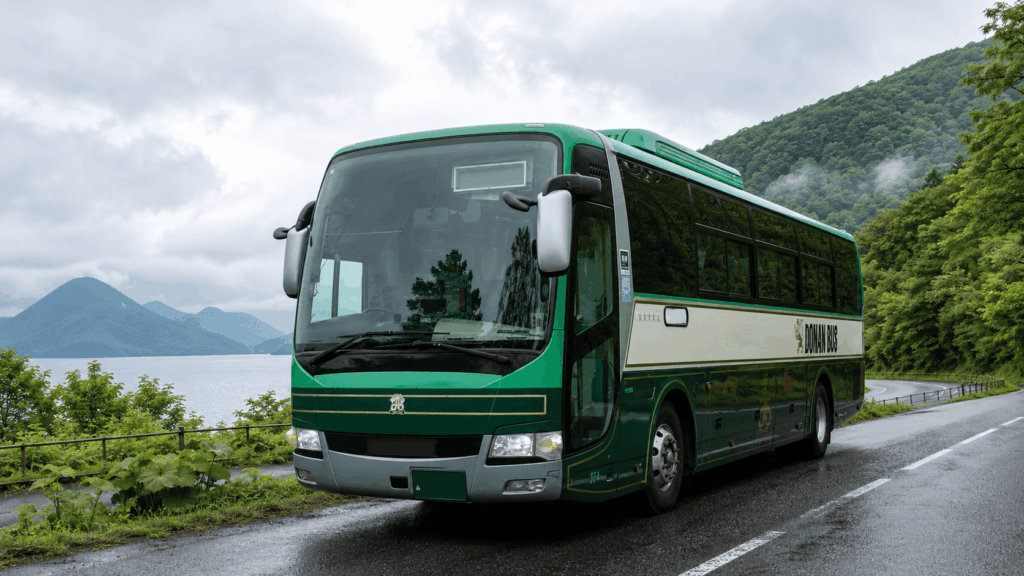
JR Toya Station and Toyako Onsen are different places. The railway station is away from the hotel waterfront. Choose transport to the onsen town, including the final local journey; our Lake Toya transport guide covers other starting points.
Direct from Sapporo: Donan’s reservation-only bus costs ¥3,700 one way per adult, with a route estimate of roughly 2 hours 45 minutes. Book both directions through the operator; online reservations close two hours before the service leaves its starting point. The first listed departure is from Sapporo Station bus stop 7.
By rail: take a Limited Express Hokuto stopping at Toya, then a local bus to Toyako Onsen. Donan’s local route costs ¥400 one way and lists about 26 minutes, with individual services varying. Include the wait between train and bus.
Hokuto uses reserved seating. Use JR Hokkaido’s reservation information and match your train with the station-to-onsen timetable and onsen-to-station timetable. Check any rail-pass coverage separately from the local bus fare.
Continuing between Sapporo and Hakodate? Toya Station is on that rail corridor, making an onsen overnight a possible stop between the cities. Include the local bus journeys, waiting, luggage and check-in in your travel day.
Hotel Shuttles: Reserve the Seat Separately
Nonokaze’s hotel-guest shuttles are useful for a stay focused on dinner and bathing. The published schedule is:
| Route | To Nonokaze | Return | Fare per person, one way |
|---|---|---|---|
| Sapporo Station north exit | 13:30–16:00 | 10:00–12:30 | ¥1,000; free with a qualifying room booking by hotel telephone or official website |
| New Chitose Airport | 14:00–16:20 | 10:15–13:00 | ¥1,500; ¥1,000 with a qualifying telephone or official-website room booking |
Use the hotel’s shuttle instructions and reservation link. Online requests are accepted up to three days before the stay, subject to seats; contact the hotel directly closer to arrival. Your room confirmation does not confirm the bus. Keep the shuttle’s confirmation reply, and rebook the bus if you cancel and remake the room reservation.
At Sapporo, allow the requested 15 minutes before departure for reception. For the airport, leave room for arrival procedures and delays before the bus. A flight landing shortly before 14:00 is a poor connection.
The morning return has an important consequence: the 10:00 Sapporo shuttle leaves before the hotel’s 11:00 checkout. The late-arrival itinerary below keeps sightseeing modest; use later public transport if a longer second morning matters.
By Rental Car
A car helps when your route includes the farm, Silo or a snow venue. For a Sapporo round trip, collect and return it in Sapporo, allowing time for the rental desk, fuel and the return deadline. Hotel parking and stops need checking alongside the drive.
Choose winter equipment with the rental company and allow extra time for snow and ice. A city pickup page does not guarantee winter tires or a specific airport depot. If you lack winter-driving experience, the bus, train or a tour is the easier choice for this visit.
If you are comfortable driving in these conditions and want the outlying stops, compare a car for your full Sapporo-to-Sapporo itinerary.
Where to Leave Your Luggage
For an overnight, take a small bag if convenient. Nonokaze confirms front-desk storage before check-in and after checkout, which helps with an afternoon cruise or a later return bus.
If you are returning to the same Sapporo hotel, ask whether it can keep your main suitcase during the Toya stay. Station lockers are another option, with size and overnight charging rules to read before leaving a bag. If your onward destination is Hakodate or the airport, take the bag with you or arrange forwarding; collecting it in Sapporo would add a return journey.
For the independent day trip below, reservable storage in Sapporo can help when hotel storage is unavailable. Choose a store accepting drop-off well before the 07:40 departure and collection after the scheduled 19:50 return, with room for delays.
Enter Sapporo and choose a store whose drop-off and collection hours fit your day. Check the route to the departure stop and the full booking total.
Day Trip vs Overnight: Which Should You Choose?
Stay overnight for the hotel and evening; visit for the day for the scenery. Bathing can fit either version, but a hotel stay gives it more time. A combined tour makes most sense when seeing several places is more important than hours at the lake.
| Priority | Independent day trip | Group sightseeing tour | One-night stay |
|---|---|---|---|
| Time around the lake | Choose your own lake-focused plan within the return connection | Time shared between several destinations | Afternoon and morning, depending on transport |
| Evening lights | Need a later connection than the 17:10 Sapporo bus for an unhurried visit | Only if the actual route stays for them | Easy to fit around dinner |
| Bathing | Use an available day-use hotel | Only if the selected package includes time and admission | Choose the hotel and shared or private bath arrangement |
| Regional variety | Additional journeys use sightseeing time | The principal advantage | Add an excursion if your arrival and departure allow it |
| Cost to compare | Return transport, activities and meals | Dated tour total plus excluded spending | Room and meals, transfers, local taxes and extras |
An Independent Day Trip Is Possible
The published 07:40 Sapporo → 10:20 Toyako Onsen bus and 17:10 Toyako Onsen → 19:50 Sapporo return leave 6 hours 50 minutes between buses. Reserve both seats; the return arrives at Sapporo Ekimae, Kita 2 Nishi 3, rather than assuming the same boarding point in both directions.
The bus times below come from Donan’s outward timetable and return timetable. Sightseeing times are a suggested allocation for central Toyako Onsen, with normal service and walkable conditions.
| Time | Suggested plan | Useful buffer or alternative |
|---|---|---|
| 07:40–10:20 | Direct bus from Sapporo | Arrive at your boarding stop ahead of departure |
| 10:20–11:00 | Toilets, walk to Ekimae Pier, tickets | Complete paper-ticket exchange by 10:50 for the 11:00 sailing |
| 11:00–11:45 | Winter lake cruise | If delayed, move to a later sailing and shorten the afternoon |
| 12:00–13:00 | Lunch and a warm break | Allow walking time between the pier and restaurant |
| 13:15–14:15 | Visitor Center/museum, or a day-use bath | Choose according to opening days and your interests; allow longer for bathing and changing |
| 14:15–16:30 | Short lakeshore walk, café or a longer bath | Keep this flexible rather than adding several distant stops |
| 16:30–17:10 | Return toward the terminal, toilets and boarding | Use an earlier indoor break if conditions are poor |
| 17:10–19:50 | Reserved bus to Sapporo | Allow for winter road delays after the scheduled arrival |
For the wider route choice, see our Lake Toya day-trip guide. If you prefer the ropeway, substitute a complete Showa Shinzan excursion for a substantial part of this afternoon. Keep Silo, a snow activity and the ropeway out of the same compact waterfront plan.
If the outward bus is late: protect lunch and the return journey, then choose one main activity. If the cruise is canceled, the museum can fill the indoor part on an open day. If your reserved return is disrupted, contact Donan and check a local bus or taxi to Toya Station with a confirmed onward train; take account of seat availability and the last local service.
Choose the Group Tour for the Combination of Stops
The existing Lake Toya–Noboribetsu group tour from Sapporo combines the lake observation area, Lake Hill Farm, Showa Shinzan and Hell Valley. It returns to Sapporo that evening. Winter snowmobiling is optional and paid separately, with a weather-dependent alternative.
It suits a traveler who wants regional variety without arranging every transfer. Meals, the snowmobile fee and additional attraction tickets are excluded; a cruise, ropeway ride, hotel bath or evening tunnel visit should only be expected if the selected package explicitly includes them.
The listing offers English and Chinese, with more limited commentary possible when the driver also guides a small group. It marks children under three, people over 70, wheelchair users and some other participants as unsuitable. Check the meeting option and advise the provider about luggage before booking.
Choose Overnight for an Unhurried Evening
An overnight gives dinner, bathing and the lights room in your schedule. It is particularly appealing for a couple or anyone wanting a quiet break between busier sightseeing days. Choose the room, meals and bath access you want, then fit your transport around them.
If those parts of the stay do not interest you, an independent day may be better value. Paying for a room adds little sightseeing time when you arrive at 16:00 and leave at 10:00; the benefit of that version is the hotel itself.
Winter Trip Budget: Day Visit or One Night?
For one adult traveling by the direct Sapporo bus, a simple day with the cruise and lunch comes to ¥10,200–10,700: ¥7,400 return bus + ¥1,800 cruise + a ¥1,000–1,500 lunch allowance. The lunch amount is a planning estimate, not a fixed restaurant price. Add ¥800 for the museum, or the applicable bath and towel charge for day-use bathing.
For a couple, compare the following on the same dates. Let R be the actual quoted total for one room, two adults, one night, dinner and breakfast, and T the local taxes still payable. Use the full room total rather than doubling a quote that already covers both people.
| Two-adult plan | Calculation | What the total covers |
|---|---|---|
| Independent day | ¥20,400–21,400 | Two return bus fares, two cruise tickets and two estimated lunches; museum and bathing extra |
| Nonokaze with Sapporo hotel shuttle, third-party room booking | R + ¥4,000 + T | Quoted half-board room and two people’s return shuttle; sightseeing and lunches extra |
| Same stay with public bus both ways | R + ¥14,800 + T | Quoted half-board room and two return public-bus fares; more departure-time choice |
| Group sightseeing day | Two dated tour fares + excluded meals and activities | Compare the actual selected package and your preferred extras |
The day-visit total excludes your Sapporo hotel. If the Toya night replaces a Sapporo night you would otherwise pay for, subtract that saved room cost when comparing the whole trip.
For Nonokaze, the hotel’s notice for stays from April 1, 2026 lists combined accommodation tax of ¥300, ¥700 or ¥1,500 per taxable person per night, depending on the lodging-price band, plus adult bathing tax of ¥100 per night. Confirm the applicable band and any taxes already collected on your booking; a meal-inclusive room total alone does not identify the taxable lodging amount.
Compare booking channels on the full cost. For two adults using the Sapporo shuttle both ways, the published third-party-booking shuttle total is ¥4,000, while qualifying direct room bookings receive that shuttle free. A cheaper room offer needs to be compared with that difference, the same meals and cancellation terms. A separately booked private bath adds ¥4,400 per 50-minute session.
Where to Stay: Lake-View Onsen Hotels
For these plans, start with central Toyako Onsen on the southern lakeshore. A room near the promenade and pier makes it easier to fit a short walk or cruise around meals.
Nonokaze Resort: A Useful Lake-View Benchmark
The Lake View Toya Nonokaze Resort suits a visit built around the lake and hotel. Its shared bathing facilities include the rooftop open-air bath and indoor baths with lake views; a hotel room booking and a private-bath reservation are separate choices.
For an ordinary lake-view room, compare the bed arrangement, space, floor and meal inclusion. For an in-room hot-spring bath, select a category explicitly describing that facility: the hotel’s room descriptions distinguish suites with view hot-spring baths from rooms without them.
A lower-cost way to add privacy to an ordinary room can be the separately reserved private bath: ¥4,400 per room for 50 minutes, subject to availability. The hotel’s reservation page lists hourly starts from 16:00 through 22:00. Confirm your session with the hotel rather than treating it as included in a room offer. Use the bath information for the shared facilities, and ask about any access or bathing-policy requirements before reserving.
Choose the room for the overnight you want
- Lake setting: compare the specific room’s view, beds and floor for your party.
- Bathing time: staying gives you access to the hotel’s shared baths, with a private session available by separate reservation.
- Dinner and breakfast: select an offer explicitly including both if they are central to your stay.
Compare the full total with the shuttle charges and local taxes above. A standard room does not include its own hot-spring bath.
How to Book the Room, Shuttle and Private Bath
- Choose dates and enter every guest. Include children’s ages, then compare room layout, meals, the total for the whole party and the selected offer’s cancellation terms. Save the confirmed room booking and reference.
- Reserve transport around that booking. For the hotel shuttle, follow the official access page’s request process and obtain a confirmation reply for each required direction. Include your stay details and passenger numbers. If seats are unavailable, use the public bus or rail route before committing to a tight arrival plan.
- Arrange a private bath if you want one. Request the separate session through the hotel, allowing time after arrival and around dinner. A request is complete when the hotel confirms it.
- Keep the confirmations together. Recheck the boarding point, room and meal plan, and tell the hotel if your arrival changes. A room cancellation or rebooking also requires attention to the separate bus reservation.
For a family with younger children, the buffet is the straightforward dining option to investigate. The hotel’s French-kaiseki and Japanese-kaiseki restaurants exclude elementary-school children and younger, and those dinner plans require advance booking. See the hotel’s dining arrangements before choosing a package.
What to Compare Before Booking Any Hotel
- View and room: read the room category rather than relying on the property’s name or its best promotional photograph.
- Bathing: decide whether shared baths, a separate private session or an in-room hot-spring bath meet your needs.
- Food: compare the same meals and restaurant suitability. A room-only rate is not equivalent to a dinner-and-breakfast plan.
- Location and timing: allow for the walk from the terminal or pier, hotel check-in, meal arrangements and your actual return departure. Nonokaze’s standard check-in is 15:00 and checkout 11:00.
- Full cost: include children, local charges, transfers and private-bath fees, then compare the relevant cancellation conditions.
Other central properties, such as Toya Kanko Hotel, are worth comparing for a different room style or budget. Choose from dated offers with the facilities and meals you actually want.
Sample Winter Overnight Itinerary
The right plan depends on how you reach town. The first version leaves a daylight activity on arrival; the second works with Nonokaze’s later shuttle. For more days, use our Lake Toya itinerary guide.
Arriving Around 14:10: One Activity Before Dinner
Donan’s published 11:30 Sapporo → 14:10 Toyako Onsen bus is a useful starting point. This suggested plan assumes a central hotel, normal roads and an operating 15:00 cruise.
- 14:10–14:40: reach the hotel, leave bags with reception and walk toward Ekimae Pier. At Nonokaze, pre-check-in bag storage is available.
- By 14:50: finish ticketing for the 15:00 cruise. If arrival is delayed or the sailing is unavailable, use a short lakeshore walk instead.
- 15:00–15:45: take the winter circuit, then return to the hotel for room check-in and a warm break.
- Dinner and evening: use the dining time attached to your reservation, visit the tunnel when lit, and leave bathing time on either side.
- Next morning: breakfast, a bath or short walk, then the departure you reserved. If using the 10:00 hotel shuttle, aim to finish packing and settle the bill well before departure.
Keep Silo and the farm for a separate arranged excursion. A weather delay is easier to absorb when the day’s extra is one cruise rather than three distant stops.
Arriving Around 16:00: Make the Hotel the Plan
For Nonokaze’s Sapporo shuttle, the practical sequence is check-in → bath or rest → dinner → lights. The airport shuttle arrives a little later, at 16:20. In midwinter, leave daytime lake sightseeing until the following morning.
The hotel publishes buffet dinner hours of 17:00–21:00 and breakfast of 07:00–10:00, with arrangements subject to the day and your booked plan. Ask about your dinner slot at check-in and work the tunnel around it. Avoid reserving a private bath at the exact time your shuttle is due.
Leaving at 10:00? Have breakfast early enough for a short shore walk or a bath, then collect bags and board. A 09:00 cruise returning around 09:45 leaves little recovery time for walking back, collecting luggage and boarding the shuttle, so it is a poor default plan.
Want a relaxed cruise the next morning? Choose a later confirmed departure instead. One workable allocation is checkout and bag storage before heading to the pier, a 10:00–10:45 cruise, bag collection and lunch, then the reserved 12:50 public bus to Sapporo, arriving 15:30. Reach the terminal ahead of departure. This replaces the morning hotel shuttle and changes your transport cost.
Whichever version you choose, allow time for walking on icy paths, changing after a bath and collecting bags. Those are part of the stay, not spare minutes available for another attraction.
Common Mistakes to Avoid at Lake Toya in Winter
- Booking the hotel before considering the available hours. A late shuttle and early return make this primarily a hotel stay. Use an earlier arrival or later return for more sightseeing.
- Treating every attraction as walkable. The ropeway, farm, Silo and snow venues each need a transfer plan.
- Relying on a previous season’s dates. Use announcements covering your visit, especially for snow activities, fireworks and ropeway maintenance.
- Arranging only the outward journey. Reserve the return when required and leave space before an important train, flight or rental-car deadline.
- Comparing incomplete hotel prices. Match meals, guest numbers, shuttle charges, taxes and bath arrangements.
- Adding sights to justify an overnight. Choose the stay because you want the evening and hotel; choose a day visit if those are not priorities.
FAQ: Lake Toya in Winter
Does Lake Toya freeze in winter?
The main lake is known for remaining unfrozen. Enjoy open-water views with the winter landscape, rather than planning ice walking or skating.
Are there winter fireworks at Lake Toya?
The regular long-running fireworks are a warm-season event. Separate winter fireworks have been held, but a February 2026 announcement does not establish dates for February 2027. Use the tourist association’s event calendar for your season; plan the winter evening around confirmed events and your hotel.
Is the Usuzan Ropeway open in winter?
It normally operates a winter schedule, with maintenance closures and weather interruptions. Check its current calendar before arranging the Showa Shinzan journey. An open ropeway does not mean all mountain walking paths are accessible.
Is Lake Toya worth visiting in winter without a car?
Yes. Central Toyako Onsen is a workable base for the shore, cruise, museum and hotel. For outlying stops, choose a specific bus pair, a taxi arrangement or a suitable tour.
How many days should I spend at Lake Toya in winter?
One night suits a lakeside hotel stay. Two nights give more flexibility for an activity or poor weather; a day trip is enough for a focused shore-and-cruise visit. Count your usable hours, especially if arriving on the 16:00 hotel shuttle.
Lake Toya or Noboribetsu in winter—which is better?
Choose Lake Toya for open lake views and a lakeside hotel, or Noboribetsu for the geothermal valley and its onsen-town setting. Winter path access matters in both places. Our Lake Toya vs Noboribetsu comparison covers the wider decision.
Can I see the Illumination Tunnel on a day trip?
Yes, with a suitable evening return. For example, Donan currently lists an 18:05 Toyako Onsen → 18:19 Toya Station local bus, allowing a short visit after the November–February 17:00 switch-on. Choose a confirmed later Hokuto train with transfer time; 18:19 is the bus’s station arrival, not a promised train connection. In March the tunnel starts at 18:00, so arrange a later departure or stay overnight.
Final Verdict: Is Lake Toya Worth It in Winter?
Yes, if the lake and the pace of the visit appeal to you. Choose one night for dinner, baths and the lit-up town. Choose an independent day for time at the lake, or a combined tour for several regional stops.
Start with your arrival and return, then choose one main daylight activity. For an overnight, the room, meals and bathing arrangements matter more than squeezing another distant viewpoint into the plan.
Updated November 16, 2026. Seasonal dates, fares and published schedules were checked on November 15; services remain subject to weather and operating changes.

Hi, I’m Kai. I’m a Tokyo-based travel writer, tourism industry insider, and the author of a published guidebook for international visitors to Japan. With over 10 years of professional experience at a leading Japanese tourism company, my mission is to help you skip the tourist traps and navigate Japan’s best destinations like a local. I believe the perfect day trip is like a traditional kaiseki meal: a beautiful balance of precise planning and unforgettable seasonal discovery. When I’m not out conducting field research, you’ll usually find me drafting new itineraries with one of my favorite fountain pens!