
Yes, Kurokawa Onsen is worth visiting if you want a rural hot-spring stay and can give it a night. The harder sell is a dedicated day trip from Fukuoka: the direct-bus timetable leaves very little time in the village. A visit from nearby Aso, Kumamoto or Yufuin can work much better.
The key decision is what you want to buy time for: an unhurried ryokan stay, one bath on a nearby route, or a short stop on an Aso sightseeing day. Those are three different trips.
This article contains affiliate links. We may earn a commission at no extra cost to you.
Staying overnight and want your own onsen bath?
Yumerindo Hanadomari has guest-room hot-spring baths. Compare the rooms and meal plans for your dates.
Check Hanadomari rooms & prices
Choose the Hanadomari annex; meals depend on the selected plan.
Only one day from Fukuoka? Compare the shared Aso and Kurokawa day tour for a combined sightseeing day. Onsen entry is extra. The page lists a short Kurokawa stop (1 hour in its itinerary and about 90 minutes in its description); confirm with the provider if bathing is essential.
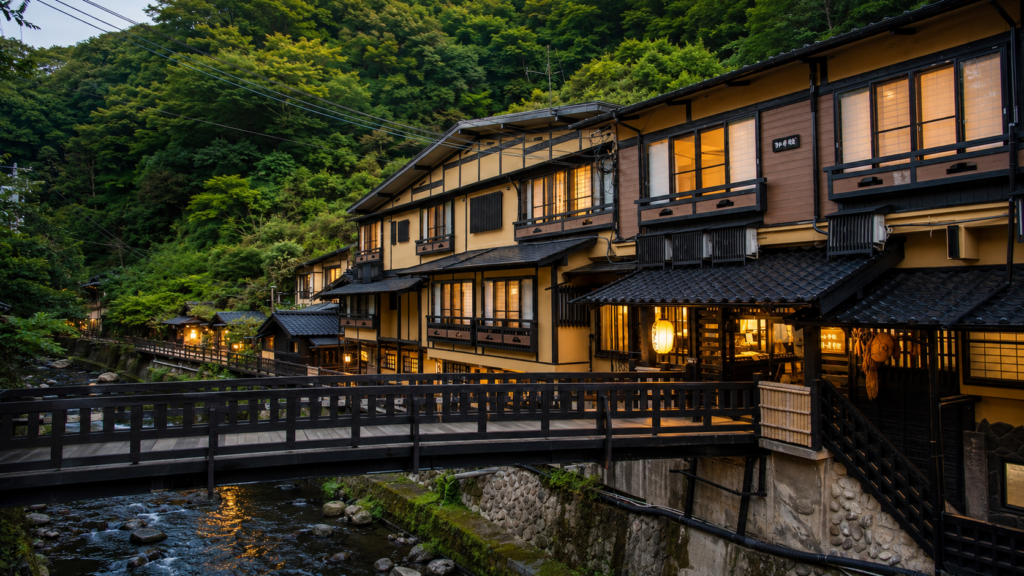
The scenic images illustrate the atmosphere; use each ryokan’s own current photos when choosing a specific bath or room. Travel information checked on November 11, 2026.
Quick Answer: Is Kurokawa Onsen Worth It?
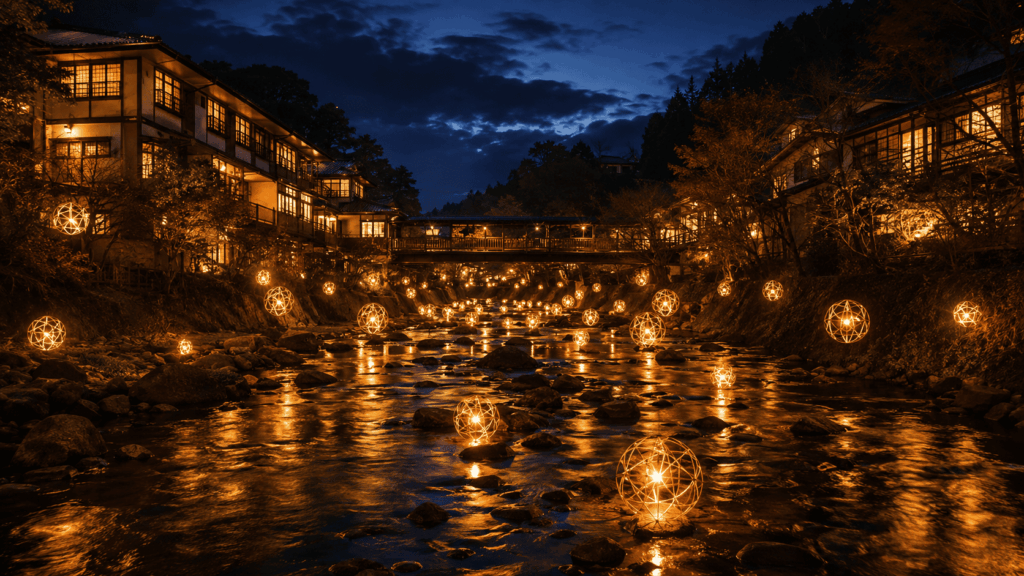
Kurokawa’s appeal is the combination of small inns, wooded slopes, outdoor baths and a slower evening. You do not need to tick off a long sightseeing list to enjoy it. You do need to enjoy the idea of spending much of your visit bathing, eating and relaxing.
| Your Plan | Is It Worth It? | The Booking That Fits |
|---|---|---|
| One night focused on bathing and a ryokan stay | Usually the strongest reason to make the detour. | A suitable room and meal plan, plus transport that reaches it in time. |
| Day visit from nearby Aso, Kumamoto or Yufuin | Often worthwhile if the full return schedule leaves several hours. | A car or reserved bus journey; choose the bath after checking its hours. |
| Fukuoka round trip using the direct bus | A fragile plan: the earliest arrival and last return leave only 91 minutes in town. | Both reserved bus legs; one nearby bath at most, if the day runs smoothly. |
| Aso sightseeing plus a short Kurokawa stop | A reasonable compromise if scenery matters as much as bathing. | A combined day tour whose actual stops match your priorities. |
My recommendation: make room for one night if Kurokawa is one of the experiences you most want from Kyushu. If it is only a possible extra, fit it into a nearby route rather than spending most of a day traveling from Fukuoka solely for a rushed soak.
It is a weaker choice if you want nightlife, extensive shopping or lots to do without entering a bath. You can still appreciate the village without bathing, but that changes how much travel time the detour deserves.
The Honest Reality: Day Trip vs Overnight
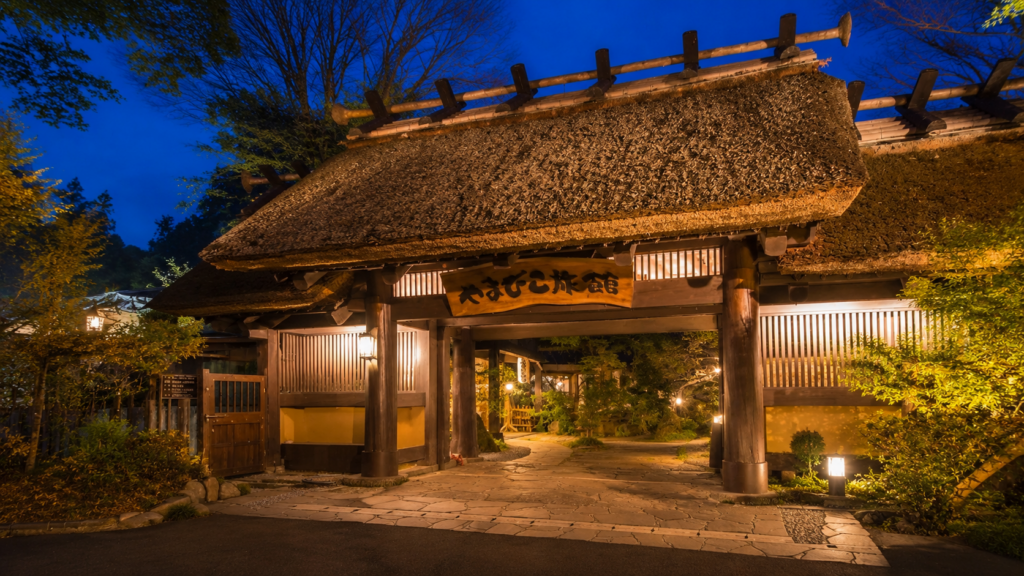
“Can I get there?” and “Will the visit feel worthwhile?” are different questions. The direct bus makes Kurokawa accessible from Fukuoka. Its timetable makes a relaxed same-day visit difficult. A car, an overnight booking or a different starting city changes the calculation.
The Fukuoka Direct-Bus Day Trip Reality Check
The operator’s published timetable lists these outbound journeys from Tenjin. Hakata and the airport have their own boarding times; use the time for your actual stop.
| Departure from Tenjin | Arrive at Kurokawa | Same-Day Direct-Bus Return? |
|---|---|---|
| 9:30 AM | 12:29 PM | 2:00 PM departure: 91 minutes between buses. |
| 11:15 AM | 2:14 PM | No: the last direct return has already left. |
| 12:40 PM | 3:39 PM | No: plan an overnight stay or another confirmed onward route. |
Those 91 minutes are stop-to-stop time, not bathing time. Walking, reception, changing and returning to the bus all come out of the same allowance. A late arrival or a full bath can remove the chance to soak altogether.
If you take this route, choose one nearby bath at most, confirm it is accepting visitors, and keep a generous return buffer. Do not plan two baths and lunch. If everything is running late, a brief village walk is preferable to missing your reserved departure.
The published adult fare from the Fukuoka terminals is ¥4,000 each way: ¥8,000 for two one-way journeys. With a ¥600 single bath, that becomes ¥8,600 before food and towels; with the ¥1,500 adult bathing pass, ¥9,500. These are public-bus examples, not tour or accommodation prices. Check the official fare chart before booking.
When the Fukuoka Aso and Kurokawa Tour Makes Sense
The existing tour is now listed as “Fukuoka: Southern Aso Railway, Mt Aso, Kurokawa Onsen Tour.” It is a shared sightseeing product. Choose it because you want the combination of places and arranged transport.
It does not solve the need for a long Kurokawa bathing session. Its itinerary and description disagree on the stop length, so ask before committing if entry to a particular bath is your main reason for joining. The railway fare and onsen entry are listed as extra costs.
Choose the tour for the combination of stops.
It suits an Aso-plus-Kurokawa sample day from a Fukuoka base. If your priority is several baths, choose a different plan with more time in the village.
Compare tour dates, stops & booking terms
This is a shared group tour with a fixed schedule. Confirm the current meeting instructions and Kurokawa stop length directly with the provider.
That is the useful comparison: a combined scenery day versus a trip centered on bathing. A short organized stop can fit the first plan very well and still disappoint someone expecting the second.
What an Overnight Stay Gives You
One night lets you separate travel from bathing. You can arrive, leave your luggage, settle into your accommodation and use its baths without counting backward from an afternoon return bus. You also get the village after the day visit has ended and another opportunity to bathe before leaving.
Dinner, a private bath and early-morning access depend on the booking. A dinner-and-breakfast plan is different from room-only; a shared outdoor bath is different from a bath in your room. Check the specific property and plan rather than treating “ryokan” as a bundle of guaranteed inclusions.
| What You Want | Fukuoka Direct-Bus Day Trip | Overnight Stay |
|---|---|---|
| Time for bathing | One nearby bath at most within a short, delay-sensitive visit. | More flexibility around your own ryokan’s hours and other baths’ day-entry hours. |
| Dinner at the ryokan | Not compatible with the direct return above. | Only if you book a dinner-inclusive plan and arrive by its deadline. |
| Evening village atmosphere | Missed with a 2:00 PM departure. | Available, with Yu-akari only during its announced winter season. |
| Morning bathing | Not part of the visit. | Possible if your accommodation opens its baths then; quiet is not guaranteed. |
| Budget comparison | ¥8,000 return bus fare, then bathing, towels and food. | The same bus fare if returning to Fukuoka, plus your dated accommodation quote and extras. |
For different budgets and locations, start with our guide to where to stay in Kurokawa Onsen. A central inn may be easier with bus luggage; an outlying forest property can suit a stay built around the accommodation itself.
Prefer to bathe privately, on your own schedule?
Compare Yumerindo Hanadomari with the other ryokan in our stay guide. The annex combines a guest-room hot-spring bath with a kitchenette, useful if privacy and flexibility matter more than a large resort.
See Hanadomari room types & availability
Select your actual dates and party size. Check whether dinner and breakfast are included; a room booking alone does not promise a kaiseki meal. Ask about tattoos, access needs or dietary requirements before paying.
A Simple One-Night Plan Without Rushing
- Before arrival: book a room and both transport legs, then confirm the latest arrival time for your meal plan and any pickup.
- Arrival afternoon: leave luggage with permission, check in at the stated time, and enjoy your own accommodation first. Add another bath only if its visitor hours work.
- Evening: keep your dinner reservation. Take a short village walk afterward; check seasonal event details if Yu-akari matters to the trip.
- Next morning: use the property’s bath if open, have breakfast if included, and leave enough time for checkout and the bus stop.
You do not have to complete three public baths to justify staying. One excellent bath, a meal you chose deliberately and a quiet evening can be the better use of the room price.
How the Nyuto Tegata (Bathing Pass) Works
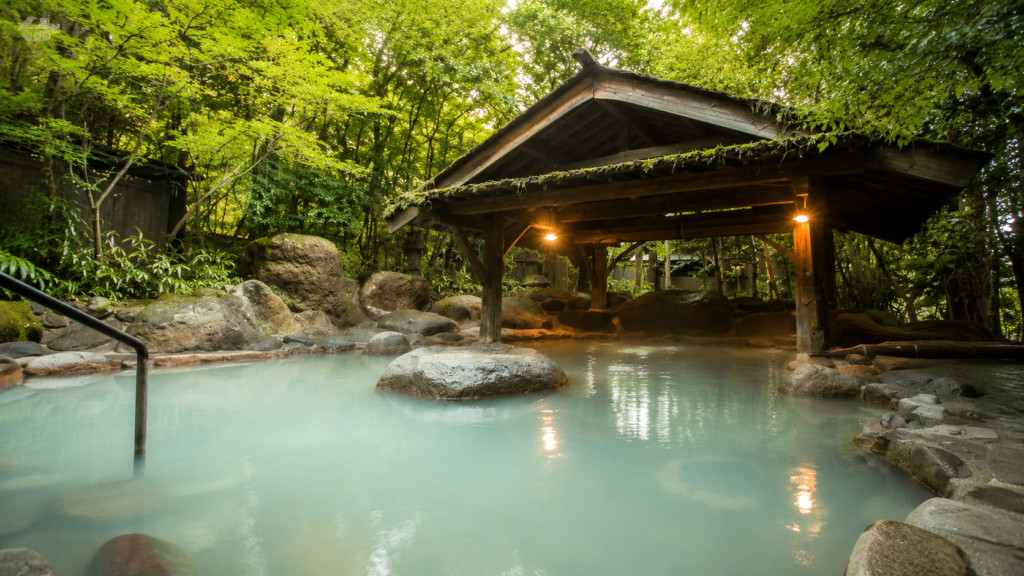
The Nyuto Tegata is the wooden pass used for Kurokawa’s outdoor-bath hopping. It is convenient if you genuinely want to compare several participating baths. It is not an automatic purchase for every day visitor.
- Adult price: ¥1,500 per person.
- Uses: three different participating baths, or two baths and one participating food, drink or souvenir benefit.
- Validity: six months from purchase. Remaining uses can be saved for another visit within that period.
- Sharing: one person per pass; you cannot split it among your group.
- Purchase: participating ryokan or the association’s Kaze no Ya information center.
- Scope: the participating outdoor-bath scheme, not unrestricted access to every private bath, guest facility or room.
Check the official tegata rules and participating locations, including linked-property counting restrictions. Children have a separate ¥700 product and different benefit arrangements; check the child’s age and product before buying.
Is the Tegata Actually Cheaper?
Add the fees for the baths you will really visit. The examples below are arithmetic, not promises that a particular combination is open on your date.
| Baths You Actually Plan to Use | Pay Separately | ¥1,500 Adult Tegata |
|---|---|---|
| One bath at ¥600 | ¥600 | Costs ¥900 more if the remaining uses go unused. |
| Two baths at ¥600 each | ¥1,200 | Costs ¥300 more unless you value a remaining eligible use. |
| Two baths at ¥800 each | ¥1,600 | Saves ¥100, with an eligible use still available. |
| Three baths at ¥500 each | ¥1,500 | Breaks even; no cash saving on these bath fees. |
| Three baths at ¥700 each | ¥2,100 | Saves ¥600 if all three visits are permitted and completed. |
For the short Fukuoka bus visit, a single-entry fee will usually be the sensible starting point. If you want the wooden souvenir or will use the balance later, you can still choose the pass; just recognize what you are paying for.
Hours, Closures and Towels
Check the association’s day-bathing status page and the ryokan before setting out. Each bath can have its own reception cutoff, cleaning closure or capacity limit. A village-wide opening window does not mean every bath accepts visitors throughout it.
The official visitor FAQ allows roughly two to three hours for three baths. Treat that as a planning guide and add time for meals, longer walks or waiting. There is no need to turn the pass into a speed challenge.
Bring a small washing towel and something to dry yourself with. Check whether towels are included, sold or rented at your chosen bath, and carry cash for admission and small purchases. Overnight room amenities and day-entry arrangements are different.
Which Bath Should You Choose? By Traveler Type
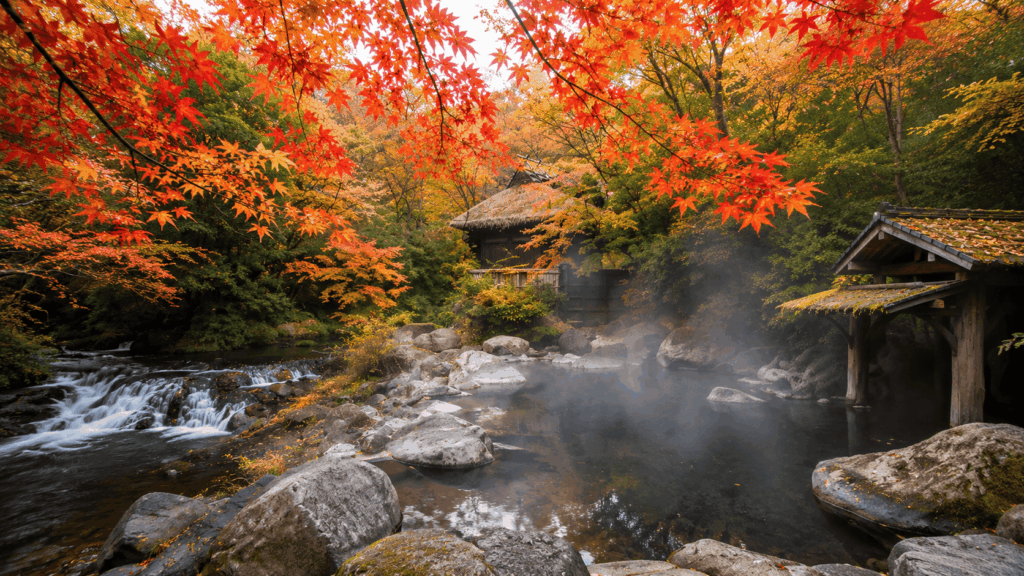
Choose by the experience and the practical route, not by a claim that one pool is always empty or has the “best” water. For a short visit, availability and distance can matter more than a famous name.
| Ryokan | Why Put It on Your Shortlist? | What to Confirm First |
|---|---|---|
| Yamamizuki (山みず木) | Riverside outdoor bathing in a wooded setting. | It is outside the central cluster. Check transport and day-entry hours before committing. |
| Ikoi Ryokan (いこい旅館) | Its standing-bath feature adds variety to a conventional soak. | Which baths are available to you that day; the fee and pass rules. |
| Shinmeikan (新明館) | A distinctive cave-bath setting rather than another standard outdoor pool. | The available bath differs by gender; day-entry reception can end early. |
| Kurokawasou (黒川荘) | A wooded, rock-framed setting for travelers choosing by scenery. | The current visitor bath, opening hours and entry arrangements. |
| Sanga (山河) | A woodland setting away from the busiest central lane. | The walk or transfer and which bath the day-entry fee covers. |
| Yamabiko Ryokan (やまびこ旅館) | Large outdoor-bath scenery; a good candidate if openness is the priority. | Day visitors use the outdoor baths; guest-only facilities are separate. |
| Okunoyu (奥の湯) | Several bath styles at a riverside property. | Some baths are mixed, while others are women-only or guest-only. Not every facility is included for a day visitor. |
Check current single-entry prices alongside availability. The association’s published fee sheet includes examples around ¥500–¥800, but a static list is not a guarantee of today’s fee or access. Private bathing is a separate question.
If You Only Have Time for One Bath
Choose one that is open, nearby and suitable for everyone in your party. Shinmeikan is distinctive if the cave-bath experience appeals, but confirm which bath you can use. A short visit should not depend on arriving at the last possible reception time.
If you have several hours, you can be more selective about scenery and compare two contrasting settings. Keep a non-bathing break between visits instead of chasing the maximum number of stamps.
Yamamizuki Is Not a Quick Central-Village Add-On
Yamamizuki’s riverside setting is a reason to plan for it specifically. Do not rely on the old advice that it is a ten-minute stroll from the center with a free pickup available to bath hoppers. Its free bath-hopping shuttle ended in May 2022.
Any pickup offered to an overnight guest is a separate arrangement to confirm with the property. For a day visit, establish how you will get there and back before paying for a pass or committing your limited stop time.
Private Baths, Tattoos and First-Time Bathers
If sharing a nude bath would stop you enjoying the trip, decide on a private option first. A guest-room hot-spring bath and a reservable family bath are different products: check who can use it, the reservation process, time limit and fee.
Tattoo rules are property-specific, including for private facilities. Use our Kurokawa Onsen tattoo guide as a starting point, then get confirmation from the ryokan for your actual booking. A covered tattoo or a private room is not a universal permission slip.
At a shared bath, wash before soaking, keep your towel out of the water, tie up long hair and follow posted rules. Do not photograph the bathing area. If you are unsure of a facility’s layout or accessibility, ask before entering rather than assuming every outdoor bath has an easy, level approach.
How to Get to Kurokawa Onsen: Is the Journey a Pain?
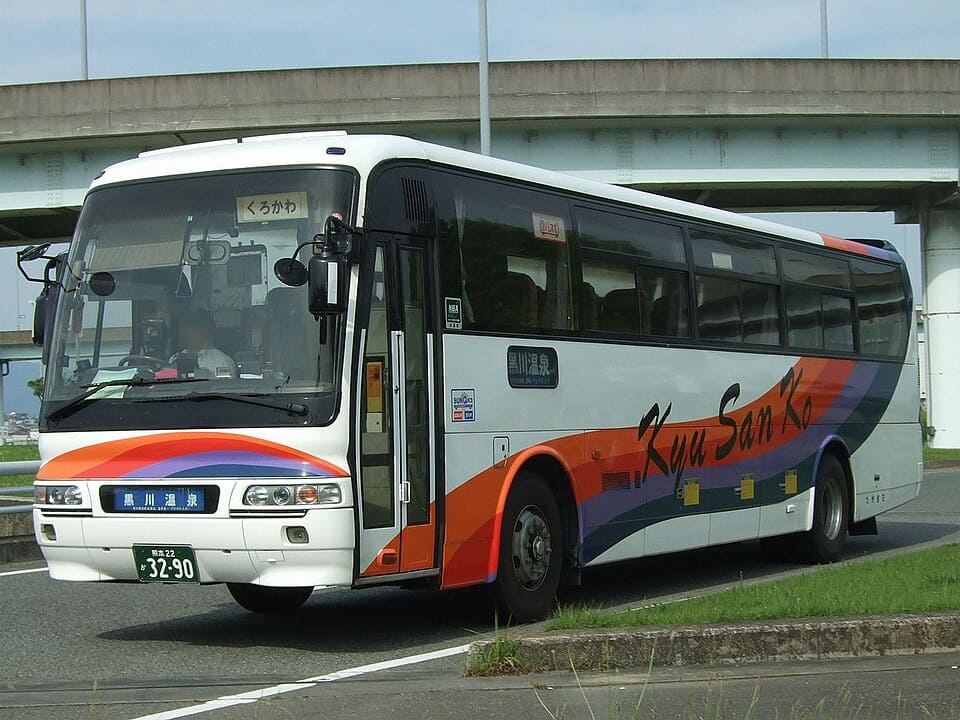
There is no railway station in Kurokawa. The main choices are a reserved intercity bus or a road journey. That makes it less flexible than a town on a frequent rail line, but it does not mean every route requires complicated transfers.
| Starting Point | Public-Transport Option | What Changes the Decision |
|---|---|---|
| Fukuoka | Direct reserved highway bus via Tenjin, Hakata and Fukuoka International Airport. | Sparse returns make an overnight stay much easier to justify. |
| Kumamoto | Through Kyushu Odan Bus from Kumamoto Station / Sakuramachi. | You do not have to build a compulsory train-and-bus transfer at Higo-Ozu. |
| Yufuin | Through Kyushu Odan Bus; roughly 1 hr 35 min on the published timetable. | Check both directions before choosing it as a day trip or hotel-transfer day. |
| Beppu | A through Kyushu Odan service exists, but not every service extends to Beppu. | Check the specific through departure instead of assuming you must transfer at Yufuin. |
From Fukuoka
Allow roughly three hours from Tenjin, with different journey lengths from Hakata or the international airport. Reserve the service you need rather than arriving at the terminal expecting a bus every hour.
The operator’s reservation instructions require Kurokawa-origin reservations by 7:00 PM on the previous day. Book the return in advance. For SUNQ Pass travel, check your particular pass’s region, validity and reservation procedure; a pass does not create an extra departure.
From Kumamoto
The Kyushu Odan Bus runs directly from Kumamoto Station and Sakuramachi to Kurokawa. The published early service reaches Kurokawa at 10:15 AM, with a return toward Kumamoto at 4:25 PM. That is a much larger village window than the Fukuoka direct-bus example.
Check the complete Kyushu Odan timetable for your date and both directions. A stop on an Aso-area bus route does not mean you can also fit in an independent crater excursion without studying the connecting services.
From Yufuin or Beppu
Yufuin’s published morning departure is 9:10 AM → 10:45 AM at Kurokawa. The afternoon Kurokawa departure toward Yufuin is 3:00 PM, reaching Yufuin at 4:33 PM. These services can support a proper daytime visit if seats and bath hours work.
A through service also links Beppu with Kurokawa; you do not always need to change in Yufuin. However, only some services run the entire route. Read the row for Beppu as well as the row for Kurokawa.
Driving, Luggage and Rail Passes
A car gives you more control over arrival, stops around Aso and visits to outlying ryokan. Compare the complete cost of rental, insurance, fuel, tolls and parking with your party’s other options. In winter, ask about appropriate equipment and current road conditions.
Confirm parking and luggage arrangements with your accommodation. Village lanes and steps can be awkward with large cases. If you plan to leave luggage before check-in or use a pickup, agree on the details rather than assuming those services are available on demand.
The JR Pass does not cover these road-bus legs. A rail journey to another town still leaves a final transfer, so compare it with the through bus before assuming it saves time. For the wider route choices, use our Kurokawa Onsen transport guide and the operator’s current timetable.
When to Visit: Seasons, Crowds and Yu-akari
Winter: Best for a Stay Built Around the Onsen
Cold air makes outdoor bathing especially appealing, and winter brings the possibility of Yu-akari’s bamboo-light displays. Snow is possible, but a white village scene is not something to promise for every winter date. Road conditions matter more if you are driving.
Check the event announcement for your own winter. The most recent official schedule located for this review was December 20, 2025–March 31, 2026, with lights from 5:00–9:30 PM. Those are past-season dates, not confirmation of the 2026–27 event. Check the official association website for the relevant announcement.
An afternoon return or a daytime tour will not automatically include the lights. If they are a deciding reason to come, match your accommodation or confirmed evening transport to the published event hours.
Autumn: Attractive Scenery, With Dates That Matter
Autumn colors add to the appeal of wooded baths. Timing shifts with weather and elevation, and popular foliage weekends can be busy. Check recent local conditions rather than choosing a single “best” week from a generic seasonal calendar.
Spring: A Good All-Round Choice
Spring suits a trip mixing bathing with village walks and other Kyushu stops. Early spring can still be chilly. Holiday periods can be busy, so do not assume a spring weekday and Golden Week offer the same experience.
Summer: Green Scenery, Rain and Warm-Weather Trade-Offs
The wooded setting remains attractive in summer, but humidity and heavy rain can affect how much you enjoy walking and soaking. Summer holidays can bring visitors too. Choose the season because it fits your itinerary, not because every bath is supposedly empty.
For a quieter visit, build flexibility into the plan. Staying overnight gives you more chances to find a less busy moment at your own accommodation. Ask staff about bath hours and likely demand; no particular hour guarantees solitude.
Common Mistakes First-Time Visitors Make
- Booking accommodation before checking arrival requirements. Make sure your bus reaches the property in time for check-in and any included dinner.
- Reading 91 minutes as a bathing allowance. It includes every walk, queue and change of clothes between the two buses.
- Buying the pass automatically. One or two inexpensive baths can cost less individually.
- Choosing a bath only from a photo. Confirm visitor access, gender arrangements, hours and the route there.
- Treating all facilities as part of day entry. Guest-only indoor or family baths may be separate.
- Expecting an evening event on a daytime itinerary. Match the actual event hours to where you will be sleeping.
- Leaving food until the last minute. Check meal times and reserve a dinner-inclusive stay if a ryokan dinner is part of the reason for coming.
For breaks between baths, village walks and other nearby ideas, use our things to do in Kurokawa Onsen guide. Pick one or two extras that fit your time rather than treating the village as a checklist.
Kurokawa Onsen vs Yufuin: Which Should You Choose?
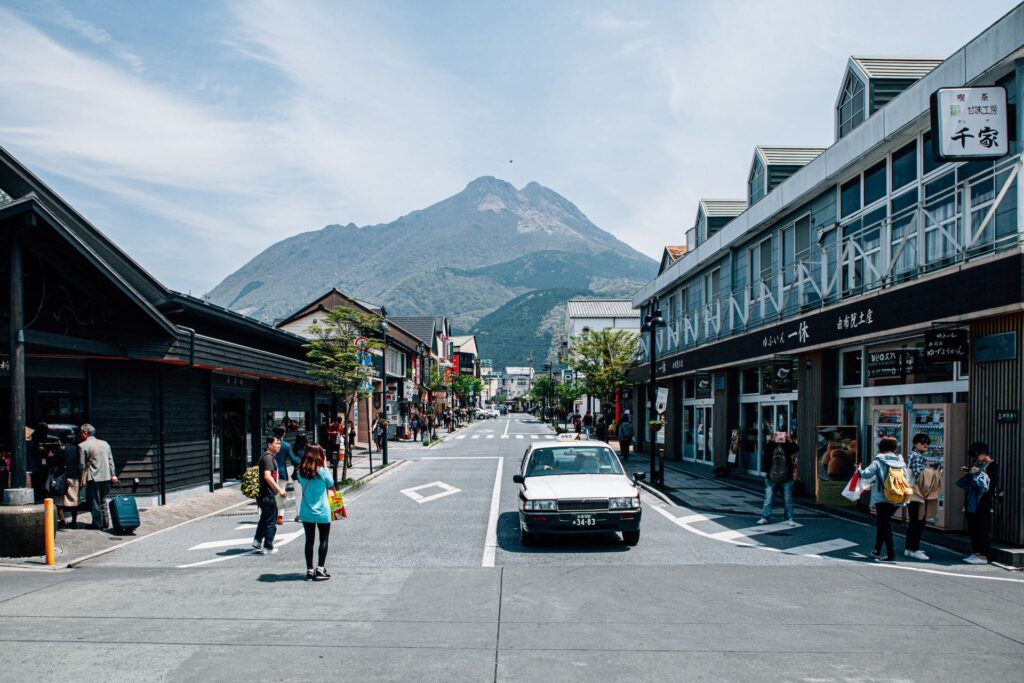
Choose Kurokawa when bathing and the accommodation are the main experience. Choose Yufuin when you want more variety between baths, especially if someone in your party will not be bathing.
| Your Priority | Kurokawa | Yufuin |
|---|---|---|
| Main appeal | Bathing and a rural ryokan stay. | A mix of cafés, shopping, scenery and bathing. |
| If you will not bathe | Best as a short stop on a nearby route. | More to build a sightseeing day around. |
| Transport | No railway station; bus or road access. | A railway station as well as highway-bus options. |
| Best fit | Travelers happy to spend the evening and morning at their accommodation. | Travelers wanting more things to browse between meals and baths. |
You can combine them as two overnight stops, using the through bus between them. That works best when each stay has a purpose. Adding both simply to collect two town names can turn a relaxing section of Kyushu into repeated packing and checkout.
Frequently Asked Questions
Can You Do Kurokawa Onsen as a Day Trip from Fukuoka?
Yes, but the direct-bus version is a tight, delay-sensitive visit rather than a relaxed bathing day. Choose one nearby bath at most, or compare the combined Aso tour if a broader sightseeing day is what you want. Staying overnight is the stronger choice for an onsen-focused trip.
How Long Do You Need in Kurokawa Onsen?
A few hours can work for one or two baths and a walk when their hours line up. One night is better if you want to settle into a ryokan, enjoy its meals and bathe again before departure. Leave more time for outlying properties, slow walking or a group with different needs.
Is Kurokawa Onsen Overrated or Too Touristy?
It is a popular destination, so empty-bath expectations can disappoint. Its appeal remains strong if you want a small hot-spring village and a ryokan stay. It can feel less worthwhile if you spend a long day getting there, rush a single bath and miss the part of the visit you were imagining.
How Many Baths Can You Visit With the Nyuto Tegata?
The adult pass gives three eligible uses under the current scheme; one can be an eligible food, drink or souvenir benefit. It does not give unlimited entry or automatic use of private baths. Follow the participation and linked-property rules when choosing your route.
Is the Nyuto Tegata Worth It for Two Baths?
Sometimes. Add the current single-entry fees and compare them with the pass, then consider whether you will use the remaining benefit. Two visits alone do not automatically make it cheaper.
Can Couples Bathe Together?
Choose a confirmed private bath, a room with its own hot-spring bath, or a facility that explicitly offers mixed bathing under conditions you are comfortable with. A standard shared-bath booking does not imply that a couple can enter the same pool.
Are Tattoos Allowed?
Ask the specific ryokan about the bath or room you intend to book. Policies can differ between facilities, and private bathing does not remove the need to confirm. Get an answer before paying if tattoo access determines whether you can enjoy the stay.
Is Kurokawa Worth Visiting Without Bathing?
As a short stop on a nearby road trip, it can be. For a long dedicated journey, the case is weaker because bathing is the core attraction. Yufuin may be easier to justify if cafés, shopping and walking are your main interests.
Do You Need a Car?
No. Direct intercity buses connect Kurokawa with the main starting points described above. The trade-off is a fixed schedule and the need to reserve. A car becomes more useful when you want several rural stops or an accommodation well outside the central village.
Final Verdict: Who Should Visit Kurokawa Onsen?
Choose Kurokawa If…
- You want an onsen-centered night: the accommodation, bathing and a slow evening are the point of the visit.
- You have a practical nearby route: a car or suitable bus schedule gives you time to enjoy the village.
- You can choose the right room: shared versus private bathing and meal inclusions match your actual preferences.
Reconsider the Detour If…
- You only have a very short Fukuoka bus window and would be disappointed without a proper soak.
- Nobody in your party wants to bathe and you are making a long journey just for a village walk.
- You want a busy evening of shops and entertainment rather than spending time at your accommodation.
Families can enjoy Kurokawa too; choose a property with suitable room, meal and bathing arrangements rather than judging the whole village by whether it has lots of children’s attractions. The same principle applies to solo travelers: compare the actual room offer and requirements for your party.
Make the overnight plan concrete.
Start with a room that matches the reason you are coming: a private bath, an atmospheric shared bath, a meal plan, or an easy walk with luggage. Hanadomari is worth comparing for the guest-room bath option.
Compare Hanadomari rooms for your dates
Check the full room total and meal conditions, then reserve transport around the property’s arrival requirements. Use our stay guide for a broader shortlist.
Staying in Fukuoka and choosing the scenery-day version? Check the combined Aso and Kurokawa tour against your priorities. Building an overnight stay? Use our Kurokawa ryokan comparison, then line up the room and transport together.
Hi, I’m Kai. I’m a Tokyo-based travel writer, tourism industry insider, and the author of a published guidebook for international visitors to Japan. With over 10 years of professional experience at a leading Japanese tourism company, my mission is to help you skip the tourist traps and navigate Japan’s best destinations like a local. I believe the perfect day trip is like a traditional kaiseki meal: a beautiful balance of precise planning and unforgettable seasonal discovery. When I’m not out conducting field research, you’ll usually find me drafting new itineraries with one of my favorite fountain pens!