
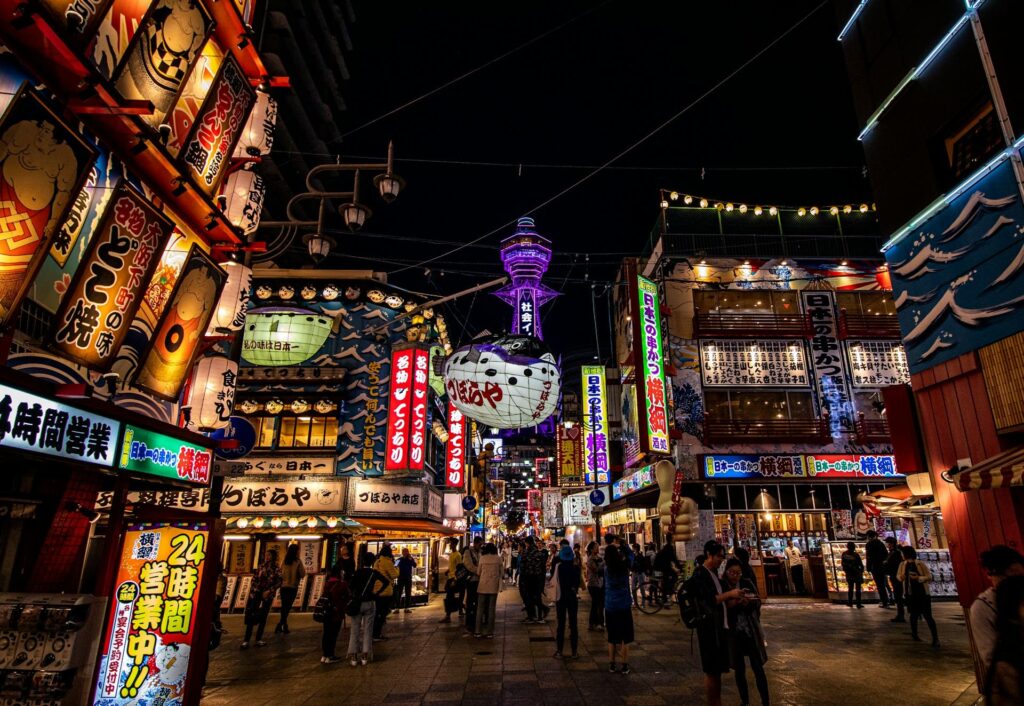
With its neon-lit streets, giant 3D signboards, and the iconic Tsutenkaku Tower, Shinsekai is one of Osaka’s most visually striking neighborhoods. Originally developed in 1912 as an entertainment district, it now offers a gritty, retro atmosphere that feels very different from the polished streets of Umeda, Kyoto, or Tokyo.
Still, many first-time visitors hesitate before going. You might be wondering: Is Shinsekai safe at night? What are the rules for eating Kushikatsu? Should I explore on my own or book a food tour?
This guide answers those questions with practical tips on night safety, Kushikatsu etiquette, Tsutenkaku Tower, photo spots, and how to plan a smooth evening in Shinsekai.
Quick Answer: Is Shinsekai Worth Visiting?
Yes. If you enjoy street photography, local food, neon lights, and neighborhoods with character, Shinsekai is worth at least one evening in Osaka.
- Time Needed: 2 to 3 hours is enough for photos, a walk around the area, and a casual meal.
- Best Time to Go: Late afternoon to evening. The neon lights are most photogenic around dusk and just after sunset.
- Safety: The main tourist streets around Tsutenkaku Tower are generally safe and busy in the evening. Use normal city caution, especially if you leave the busiest tourist streets late at night.
- Must-Eat Food: Kushikatsu, Osaka’s famous deep-fried skewers of meat, seafood, and vegetables.
- Best For: Photographers, first-time Osaka visitors, casual food lovers, and travelers who want something more retro than Dotonbori.
If you want to enjoy Shinsekai’s food scene without choosing restaurants, translating menus, or figuring out Kushikatsu etiquette on your own, compare a guided food tour before finalizing your evening plan.
👉 Check current Shinsekai food tour availability, inclusions, and reviews
Is Shinsekai Safe at Night for Tourists?
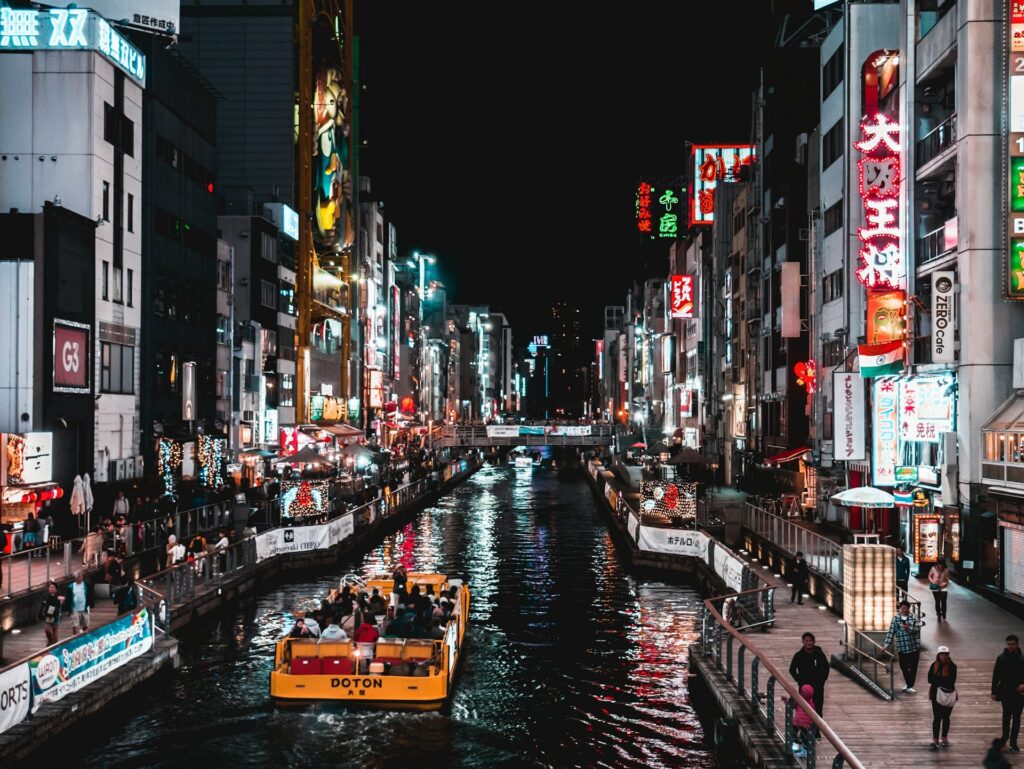
A common rumor online is that Shinsekai is “dangerous.” Part of that reputation comes from its proximity to the Airin or Kamagasaki area around Shin-Imamiya, which has historically been associated with day laborers and low-cost lodging. The wider area has changed substantially, but it can still feel less polished than many major tourist districts in Japan.
For visitors, however, the main Shinsekai tourist area is generally easy to explore after dark. The streets around Tsutenkaku Tower, Janjan Yokocho, and the main restaurant strips are well-lit, commercial, and usually filled with diners, families, domestic tourists, and international travelers taking photos.
Where to Stay Safe vs. Where to Be Careful
- The Main Tourist Zone: The area immediately around Tsutenkaku Tower, Shinsekai Hondori, Janjan Yokocho Alley, Ebisucho Station, and Dobutsuen-mae Station is the part most visitors come to see. This is where you will find the neon signs, Kushikatsu restaurants, souvenir shops, and classic photo spots.
- Where to Be More Careful Late at Night: South and southwest of Shin-Imamiya Station and Dobutsuen-mae Station, you move quickly from the main tourist streets into the Airin or Kamagasaki area and residential blocks. This is not a no-go zone, and the wider area now has hotels and visitor-oriented businesses, but it is less tourist-focused than central Shinsekai. Late at night, keep to well-lit routes, avoid treating residential streets as photo spots, and use normal city awareness.
In short, Shinsekai is not a place you need to fear, but it is a place where you should keep your bearings. Stay in the busy tourist streets, avoid quiet residential blocks late at night, do not photograph people or shop interiors too closely without permission, and use the same common sense you would in any unfamiliar city at night.
Shinsekai Kushikatsu: What to Eat and How the Rules Work
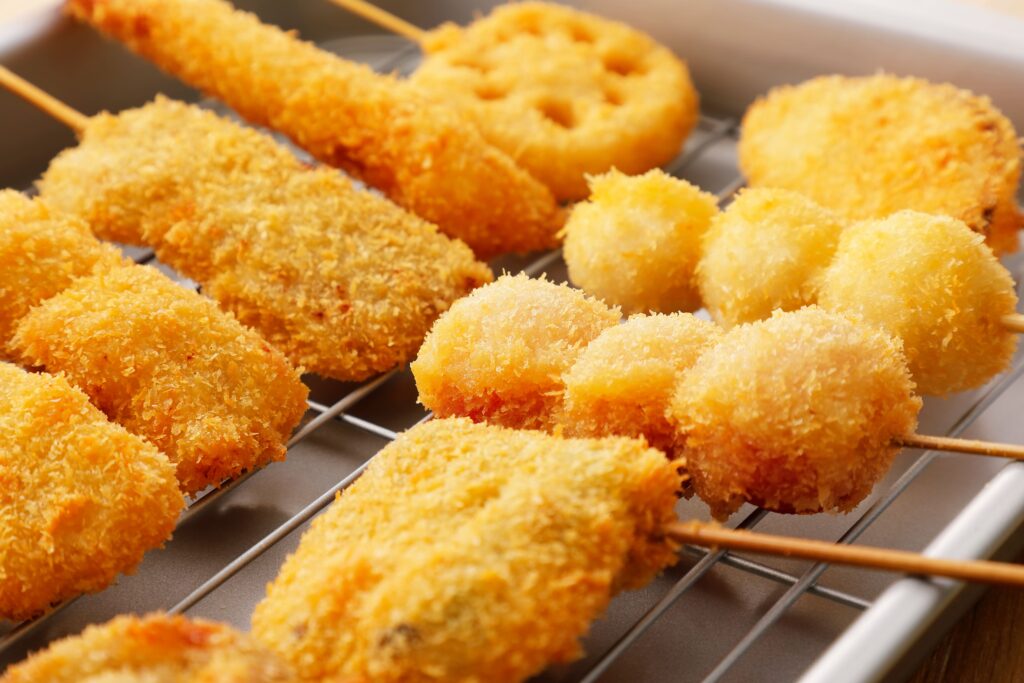
You cannot visit Shinsekai without trying Kushikatsu, one of Osaka’s most famous casual foods. Kushikatsu are skewers of meat, seafood, vegetables, cheese, or other ingredients that are battered, deep-fried, and served with a sweet-savory sauce.
Shinsekai is one of the best places in Osaka to try it because the neighborhood is packed with Kushikatsu restaurants, from famous chains to small standing bars.
The “No Double-Dipping” Rule
For decades, the golden rule of Kushikatsu was simple: dip your skewer into the shared sauce container once, take a bite, and never dip it again. If you wanted more sauce, you used a piece of cabbage to scoop sauce onto your food instead of putting a bitten skewer back into the communal sauce.
Today, many Kushikatsu restaurants use squeeze bottles, individual sauce dishes, or other more hygienic systems instead of shared sauce tubs. This means the pressure of getting the old rule wrong is much lower than it used to be.
However, the rule is still worth knowing. If a restaurant provides a shared sauce container, do not double-dip. If sauce comes in a bottle or individual dish, simply follow the restaurant’s setup and use it on your own plate.
Best Kushikatsu Restaurants Compared
There are many Kushikatsu shops in Shinsekai. The best choice depends on whether you want the easiest first-time experience, a more local atmosphere, or a quick bite between photo stops.
| Restaurant Type | Best For | Ordering Support | Rough Budget | Notes |
|---|---|---|---|---|
| Kushikatsu Daruma | First-time visitors who want the classic Shinsekai experience | Large branches are usually easier for first-time visitors, though support varies by branch | Around ¥1,500–2,500 per person at the Shinsekai main branch, depending on how much you order | Look for the famous angry chef statue. According to official information, the Shinsekai main branch is cash-only, does not take reservations, and requires one drink per person except for elementary-school-age children and younger. |
| Yaekatsu | Travelers who want a more local, old-school counter experience | Japanese may be more useful here, but pointing can work | Often around ¥1,000–2,000 per person | Hours, holidays, payment methods, and queues can change. Carry cash as a backup. |
| Small tachinomi and standing bars | Adventurous eaters and quick snack stops | Usually limited English support | Often around ¥500–1,500 for a light stop | Great for atmosphere, but less predictable for menus, seating, payment methods, and smoking rules. |
If it is your first time trying Kushikatsu and you want the lowest-stress option, choose a major restaurant such as Daruma or another larger shop with clear menus. If you are comfortable with a more local setting, Yaekatsu or a smaller standing bar can be more memorable.
Tip: Carry cash in Shinsekai. Even famous restaurants may be cash-only, and smaller shops can be less predictable with cards, mobile payments, English menus, and reservations.
DIY or Join a Guided Shinsekai Food Tour?
You can easily explore Shinsekai on your own. The area is compact, the main streets are easy to find, and many popular restaurants are used to foreign visitors.
That said, a guided food tour can be useful if you are short on time, nervous about ordering, traveling solo, or want to try more dishes than you would confidently choose on your own.
| DIY Visit | Guided Food Tour | |
|---|---|---|
| Cost | Often around ¥2,000–4,000 per person for food, depending on appetite | Usually much more expensive than a DIY visit; check the current booking price for your date, group size, and inclusions |
| Time | Flexible; stay as long or as little as you want | Usually around 3 hours on a fixed schedule |
| Food Variety | You choose the restaurants and dishes yourself | Some tours include a wider range of tastings across multiple stops |
| Language Help | Large chains are manageable, smaller bars may be harder | The guide handles ordering and explains the food |
| Local Insight | Limited unless you research in advance | Guides can explain the area’s history, food culture, and etiquette |
| Best For | Budget travelers, photographers, flexible planners, confident eaters | First-time visitors, solo travelers, food-focused travelers, and anyone who wants less guesswork |
If you are short on time or want to try a wider range of dishes without worrying about where to go, a guided tour may be worth considering. If you have dietary restrictions, check the current policy before booking; some standard Shinsekai food tours cannot accommodate vegan diets or gluten intolerance.
Best Photo Spots for Retro Neon and Cyberpunk Vibes
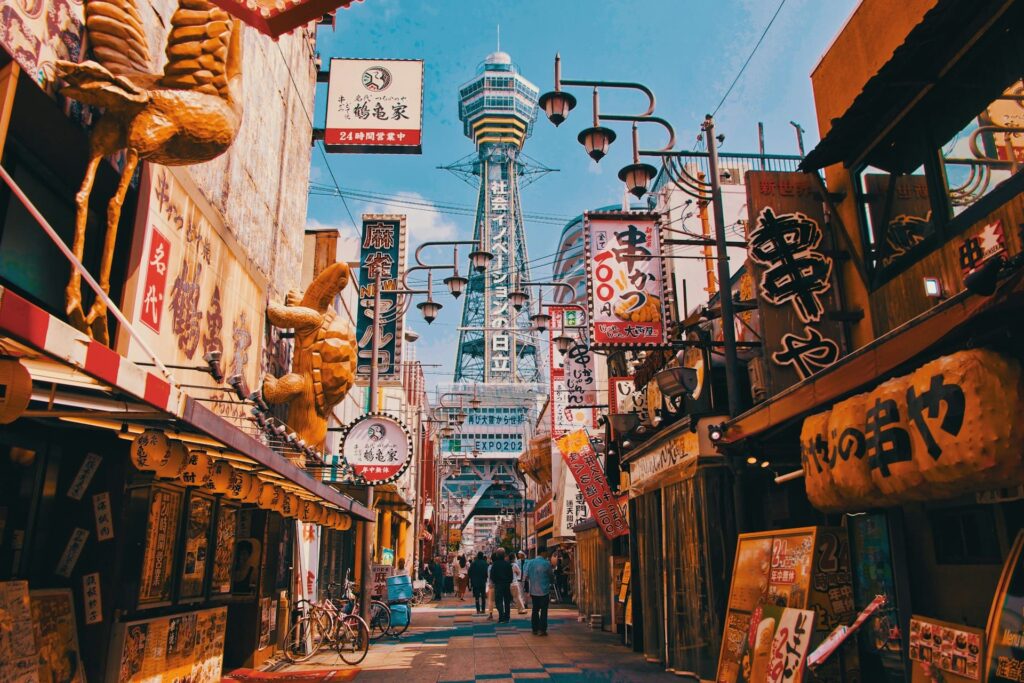
Shinsekai’s chaotic mix of oversized 3D restaurant signs, glowing lanterns, narrow alleys, and the tower rising above the streets makes it one of the best photo spots in Osaka.
Tsutenkaku Tower and the Giant Signboards
The classic Shinsekai photo is taken from the main street looking toward Tsutenkaku Tower. The view combines the tower with giant restaurant signs, lanterns, and colorful shopfronts, creating the retro Osaka look many travelers come for.
For stronger composition, stand a little farther back and use a moderate zoom lens or your phone’s telephoto mode. This compresses the scene and makes the signs look more tightly packed around the tower.
Janjan Yokocho Alley
Janjan Yokocho is a narrow covered arcade on the southern side of Shinsekai. It has a more old-school feel, with small restaurants, counters, game-like storefronts, and local dining spots packed closely together.
It is excellent for moody street photography, but be considerate. The alley is narrow, people are eating and working, and some shops may not want cameras pointed directly inside.
Best Time to Shoot: Blue Hour
The best time to photograph Shinsekai is usually around blue hour, just after sunset. The sky turns deep blue while the restaurant signs and tower lights begin to glow, giving the area its most dramatic color contrast.
A smart plan is to arrive in the late afternoon, walk around while there is still daylight, visit Tsutenkaku Tower if you want to go up, and then return to street level for neon photos after sunset.
Tsutenkaku Tower Tickets and Timing Tips
Tsutenkaku Tower is the visual symbol of Shinsekai, and going up the tower can be a fun add-on if you want a view over the neighborhood before photographing the streets below.
As of October 2026, official information lists the observatory ticket covering the general observatory and special outdoor observatory at ¥1,500 for adults aged 15 and over and ¥800 for children aged 5–14. General observatory hours are 9:00 AM to 9:45 PM, with last entry at 9:15 PM. The special outdoor observatory is also listed from 9:00 AM to 9:45 PM, with last entry at 9:35 PM.
Ticket rules, add-on attractions, reservation systems, and operating hours can change. The outdoor observatory may also close without notice in bad weather, such as rain, strong wind, or heavy fog.
Official information also states that timed-entry reservations are required when buying various tickets, and evening tickets may sell out. If the tower is important to your plan, it is better to check current ticket options in advance rather than leaving it until you arrive.
👉 Check current Tsutenkaku ticket options, time-slot rules, and availability for your date here.
How to Get to Shinsekai
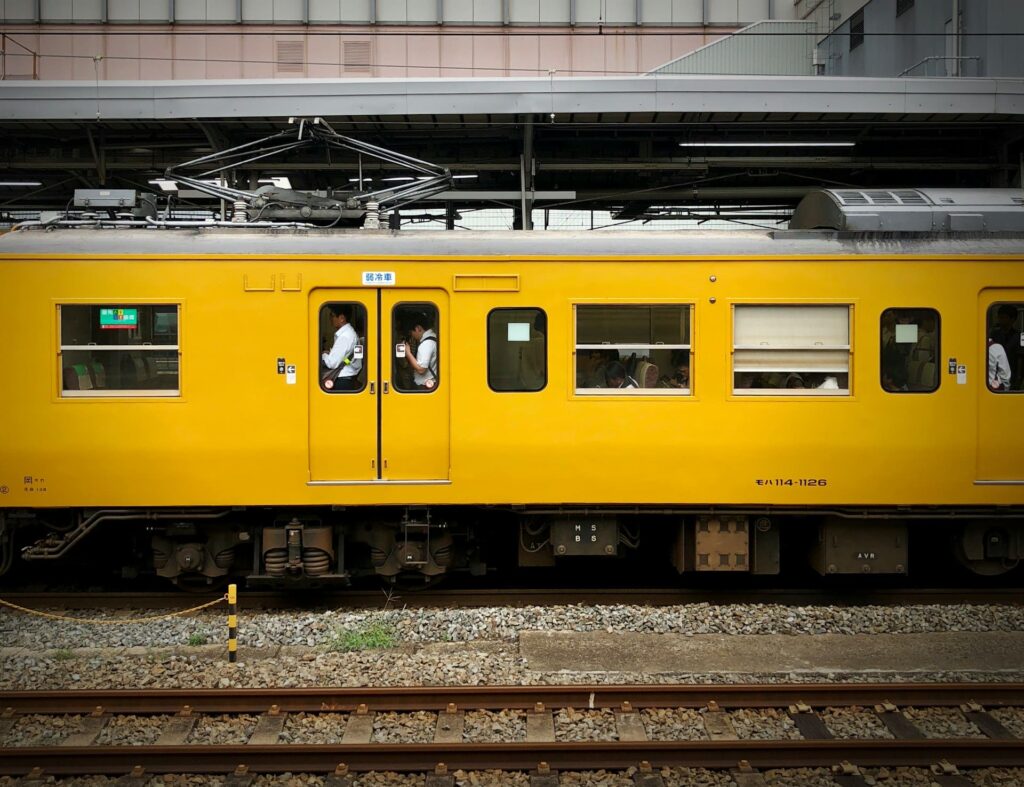
Shinsekai is easy to reach by JR and Osaka Metro. Because the neighborhood comes alive in the evening, it works well after a daytime visit to Universal Studios Japan, Osaka Castle, Namba, or Dotonbori.
| From | Route | Travel Time |
|---|---|---|
| Universal Studios Japan | JR Yumesaki Line to Nishikujo Station, then transfer to the JR Osaka Loop Line to Shin-Imamiya Station | Usually about 30 minutes |
| Osaka Castle | Walk to Morinomiya Station, then take the JR Osaka Loop Line to Shin-Imamiya Station | Usually about 15 minutes from Morinomiya |
| Dotonbori or Namba | Take the Midosuji Subway Line from Namba Station to Dobutsuen-mae Station | Usually about 5 minutes by subway |
| Dotonbori on Foot | Walk south through Namba toward Tsutenkaku | About 25–30 minutes, depending on your pace and exact starting point |
From Universal Studios Japan
After a full day at USJ, Shinsekai is a convenient place for dinner. Take the JR line from Universal City Station, transfer once at Nishikujo, and continue to Shin-Imamiya. From there, it is a short walk to the main Shinsekai streets.
From Osaka Castle and Dotonbori
If you are exploring Osaka Castle in the late afternoon, Shinsekai is an easy evening add-on by JR. From Namba or Dotonbori, the subway is the fastest option, but walking can also be enjoyable if you want to explore the city between the two areas.
Bonus Stop: Spa World Near Shinsekai
If you want something relaxing after dinner, Spa World is a large bathing and leisure complex next to Shinsekai. It can be a convenient add-on after sightseeing, especially if your hotel is nearby or you want to rest your legs after a long day.
Do not assume every facility is available 24 hours. Spa World has different operating hours and fees for different areas, including baths, pools, stone saunas, restaurants, and rest areas. Rules can also change during busy periods, maintenance, inspections, or special dates.
Spa World is also strict about tattoos. Official English information states that tattoos are not allowed, including small tattoos, tattoo ink, and tattoo stickers. If this affects you, check the latest official rules before planning a visit.
FAQ About Visiting Shinsekai
Is Shinsekai safe at night for solo travelers?
Yes, the main tourist areas around Tsutenkaku Tower and Janjan Yokocho are generally safe for solo travelers at night. The streets are usually busy and well-lit in the evening. Stay in the main tourist area, avoid quiet residential streets late at night, and use normal city awareness.
What time do restaurants close in Shinsekai?
Shinsekai is an evening food area, but it is not a 24-hour party district. Many restaurants and shops start winding down later in the evening, but closing times vary by shop, day of the week, and season. Arriving around 6:00 PM or 7:00 PM gives you a better choice of restaurants and more time to enjoy the atmosphere.
Do Kushikatsu restaurants in Shinsekai have English menus?
Many larger Kushikatsu restaurants and chains are manageable for English-speaking visitors, especially if they use picture menus, tablets, or multilingual ordering systems. Smaller independent bars may have limited English, so pointing, translation apps, and simple ordering can help.
Can I just walk around and take photos without eating?
Absolutely. There is no entrance fee to the Shinsekai neighborhood, and many visitors come specifically for street photography. That said, Kushikatsu is a big part of the area’s identity, so even a few skewers can make the visit feel more complete.
Do I need to book Tsutenkaku tickets in advance?
You may be able to buy tickets on the day, but advance booking or checking current availability is useful if you want a specific time slot, especially around sunset, weekends, holidays, or peak travel seasons. Official information notes that timed-entry reservations are required when buying various tickets and that evening tickets may sell out.
Is Shinsekai good for families?
Shinsekai can work for families in the early evening, especially around the main streets near Tsutenkaku. However, Janjan Yokocho can be narrow, smoky, and busy, and some smaller bars are not ideal for children. Families may prefer a larger sit-down Kushikatsu restaurant and an earlier visit.
Final Verdict: Is Shinsekai Right for You?
Shinsekai offers a nostalgic, slightly rough-edged side of Osaka that feels very different from the modern shopping districts and polished tourist areas. Whether it belongs in your itinerary depends on your travel style.
Choose Shinsekai if:
- You love neon street photography and retro city scenes.
- You want to try Kushikatsu in one of its most famous neighborhoods.
- You prefer local, character-filled areas over upscale nightlife districts.
- You want a quick and affordable evening plan that takes about 2 to 3 hours.
You may want to skip Shinsekai if:
- You are looking for luxury dining, cocktail bars, or a polished night out.
- You dislike crowded, narrow, or slightly smoky food streets.
- You have very limited time in Osaka and already plan to spend your main evening in Dotonbori.
For first-time visitors to Osaka: Shinsekai is worth a short evening visit, especially if you are already nearby. If you only have one night in Osaka, prioritize Dotonbori first, then add Shinsekai if you have time or want a more retro contrast.
For photographers: Shinsekai is one of Osaka’s most rewarding night photo areas. Arrive before sunset, scout your angles while there is still light, then shoot the main streets and Janjan Yokocho around blue hour.
For food-focused travelers: A DIY visit is easy if you are happy choosing one or two restaurants yourself. A guided tour is better if you want more variety, ordering help, and local explanation without planning every stop.
Once you know your style, choose your approach: explore independently, book a food tour, visit Tsutenkaku, or simply wander the neon streets with a camera and a few Kushikatsu skewers.
👉 Browse Shinsekai food tour options with current reviews and availability
👉 Check current Tsutenkaku ticket options before your visit
Prices, opening hours, transport schedules, ticket conditions, tour inclusions, payment methods, restaurant rules, facility rules, and seasonal operations can change. Always check official sources and your selected booking page before finalizing your trip.
Hi, I’m Kai. I’m a Tokyo-based travel writer, tourism industry insider, and the author of a published guidebook for international visitors to Japan. With over 10 years of professional experience at a leading Japanese tourism company, my mission is to help you skip the tourist traps and navigate Japan’s best destinations like a local. I believe the perfect day trip is like a traditional kaiseki meal: a beautiful balance of precise planning and unforgettable seasonal discovery. When I’m not out conducting field research, you’ll usually find me drafting new itineraries with one of my favorite fountain pens!