
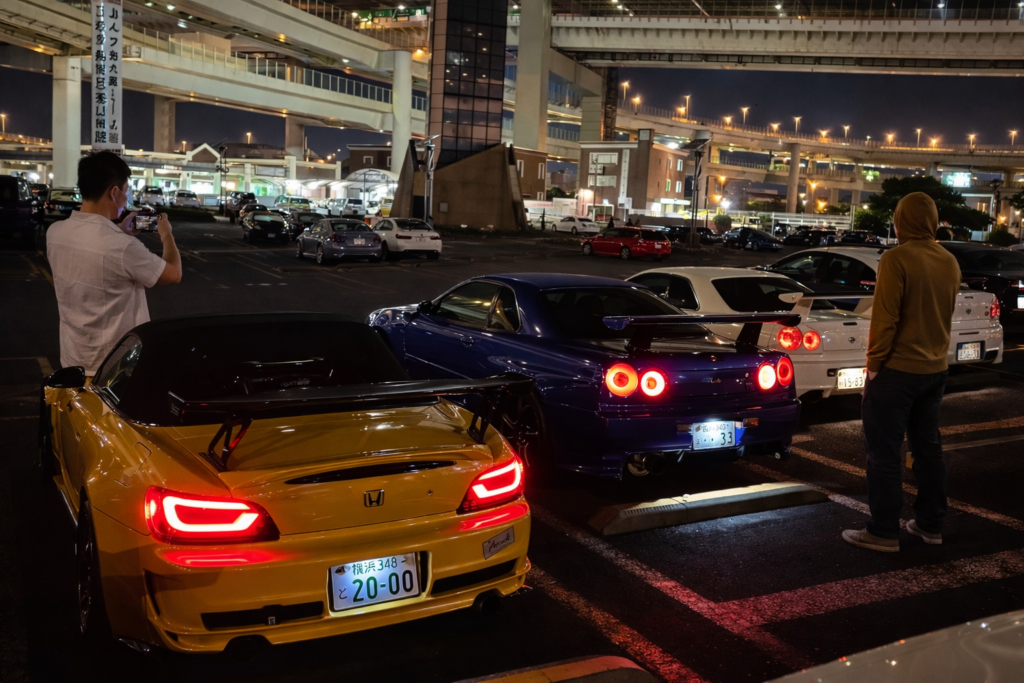
Want to experience Daikoku PA but do not have a car in Japan? A Tokyo JDM tour is often the easiest and lowest-stress option for first-time visitors, because it reduces the biggest problem with Daikoku PA: getting there and back without your own vehicle.
This guide compares the three realistic options for visiting Daikoku PA as a traveler: taking a taxi or ride-hailing vehicle, renting a car, or joining a guided JDM tour with local enthusiasts.
Quick Answer: Can You Visit Daikoku PA Without a Car?
Yes, but only as a passenger in a motor vehicle. Daikoku PA is a highway parking area on the Shuto Expressway network. You cannot walk, bike, or take a train directly there.
- Taxi or ride-hailing vehicle: Easy to arrive, but getting back is the risky part. Do not rely on simply calling a return ride from inside the parking area.
- Rental car: Gives you full control, but you need the correct driving documents, confidence driving in Japan, and comfort with Tokyo-area expressways at night.
- Guided Tokyo JDM tour: Usually costs more upfront, but transport, local guidance, and backup plans are part of the experience.
For most short-term visitors, the real question is not only “Can I reach Daikoku PA?” It is “Can I get there, enjoy the meet, and get back to Tokyo safely without ruining the night?”
What Is Daikoku PA and Why Is It Hard to Reach?
Daikoku Parking Area, often called Daikoku PA, is a highway rest stop in Yokohama connected to the Shuto Expressway system. It is accessed by expressway routes such as the Bay Shore Route and Kanagawa Route No. 5 Daikoku Line.
It is not a normal tourist attraction, a ticketed event venue, or a walkable city landmark. Car enthusiasts gather there informally, especially at night, which has made it famous among JDM fans. But it remains a real highway facility first.
That matters because Daikoku PA has no direct train station, no safe pedestrian access, and no normal street entrance for visitors on foot. You must arrive by vehicle through the expressway system, and you must leave the same way.
Taxi vs Rental Car vs Guided Tokyo JDM Tour
| Option | Taxi or Ride-Hailing | Rental Car | Guided Tokyo JDM Tour |
|---|---|---|---|
| Best for | Travelers with a confirmed round-trip driver | Experienced drivers comfortable with Japanese roads and tolls | Travelers who want the car meet experience without driving |
| Typical cost style | Metered fare plus tolls, possible late-night surcharge, and waiting time | Rental fee plus tolls, fuel, insurance options, and parking logistics | Per-person or group tour price, usually including transport and guide |
| Return transport risk | High if the driver does not wait | Low, because you have your own car | Low, because transport is part of the tour |
| Driving permit needed | No | Usually yes, depending on your country and license type | No, because you ride as a passenger |
| Difficulty level | Easy to arrive, difficult to leave | High, especially on Tokyo-area expressways at night | Low, because a local driver handles the route |
| What if Daikoku PA closes? | You may have no easy backup plan | You must find another spot yourself | Guides may switch to other car culture locations |
| Main downside | Getting stranded is the biggest risk | Paperwork, tolls, navigation, parking, and left-side driving | Higher upfront cost than doing everything yourself |
If you only compare the base price, a rental car or taxi may look cheaper. But once you include tolls, fuel, insurance options, waiting time, left-side driving, late-night navigation, and the possibility of a sudden closure, a guided tour can be the more practical choice for many visitors.
Option 1: Taxi or Ride-Hailing — Simple to Arrive, Risky to Leave
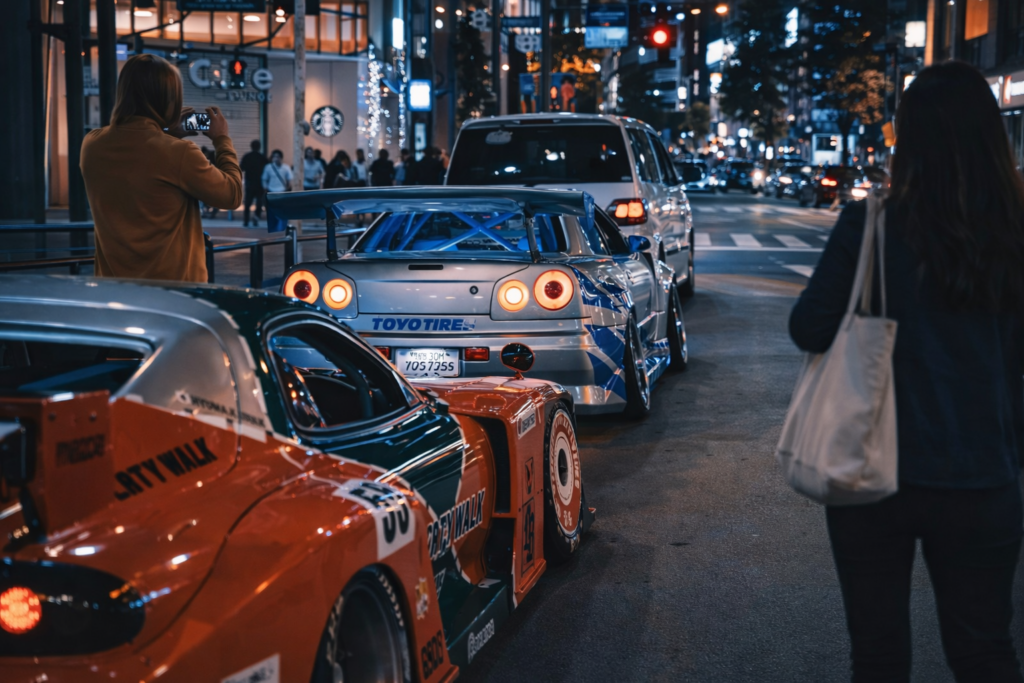
Taking a taxi to Daikoku PA sounds simple: get in from Tokyo or Yokohama, arrive at the parking area, take photos, and then call another ride home.
The problem is the return trip. Daikoku PA is inside a toll road system, not on a normal city street. Taxis do not usually wait there for random pickups, and ride-hailing apps may struggle to find a driver willing or able to enter the expressway system just to collect you.
What About Taxi Costs?
Taxi fares from central Tokyo or Yokohama vary by pickup point, traffic, route, tolls, late-night surcharges, and whether the driver agrees to wait. From central Tokyo, the total can become expensive quickly, especially late at night or if you pay for waiting time.
Before using a taxi, check an estimated fare in your app or ask the driver for a rough idea. More importantly, confirm how you will get back before you enter the expressway.
When a Taxi Can Make Sense
- You pre-arrange a round trip with a driver who agrees to wait.
- You are traveling in a group and can split the total cost.
- You have a realistic backup plan if Daikoku PA is closed or too crowded.
When a Taxi Is a Bad Idea
- You assume you can call a ride from Daikoku PA whenever you want to leave.
- You plan to arrive late at night with no confirmed return transport.
- You do not speak Japanese and have no clear way to explain the pickup problem to a driver.
Taking a taxi is not impossible, but treat it like hiring a private driver for the night, not like hailing a cab in Shibuya.
Option 2: Rental Car — Full Control, Full Responsibility
Renting a car gives you the most freedom, but it also creates a different set of challenges.
Driving Documents
Many visitors need a valid International Driving Permit before driving in Japan, but the exact rule depends on your country and license type. Some travelers may need an official Japanese translation of their home license instead of a standard IDP.
Check the rules for your own license before your trip. Do not wait until you arrive in Japan, because the correct document usually needs to be prepared before departure. The same issue applies if you are considering go-karting in Tokyo.
What Costs Should You Expect?
A basic compact rental car in Tokyo often starts from around the high-¥8,000 range for a short rental period before optional insurance, fuel, tolls, and other extras. Expressway tolls vary by route, vehicle class, ETC use, and payment method. Fuel and insurance options add more.
That means the “cheap DIY option” may not be as cheap as it first looks, especially for a solo traveler. For two or three people, it can become more competitive, but only if someone in the group is confident driving in Japan at night.
Challenges of Driving Yourself
- Tokyo-area expressways are not beginner-friendly. Expect tight curves, sudden merges, layered roads, toll gates, and fast-moving traffic.
- Night driving adds pressure. Daikoku PA is most famous after dark, which means you may be navigating unfamiliar roads late at night.
- Parking is not guaranteed. On popular nights, the parking area can fill up or close, forcing you to continue through the expressway system.
- Closures can change the plan instantly. If Daikoku PA closes after you arrive, you need to know where else to go.
If you are already comfortable driving in Japan and have the right documents, a rental car can work. For most travelers visiting Tokyo for only a few days, the learning curve is a major part of the cost.
Option 3: Guided Tokyo JDM Tour — Easiest for Most First-Time Visitors
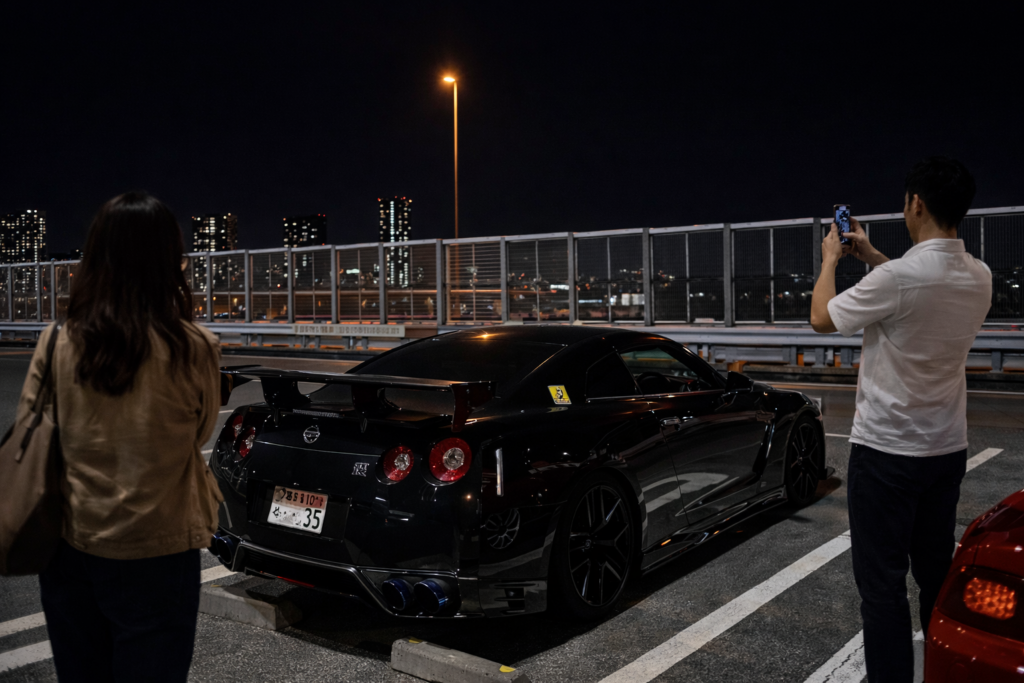
A good Tokyo JDM tour is not just a shuttle to a parking lot. The point is to experience the route, the cars, and the local car culture with someone who understands the scene.
The Daikoku “Join a Car Club” experience is designed around riding with local car enthusiasts rather than sitting in a generic sightseeing bus. The listing may include details such as small groups, English-speaking members, and a more personal car-based ride, but availability, vehicles, timing, and inclusions can change by date.
What a Guided Tour May Include
- Transport from Tokyo: The biggest benefit is avoiding the return-ride problem.
- A local guide or car club member: This can make the night easier if you do not speak Japanese or know the local scene.
- Multiple possible stops: Depending on the night, the route may include Daikoku PA, A-PIT Autobacs, Akihabara, Rainbow Bridge views, Tokyo Tower photo stops, or other car culture locations.
- Backup options: If Daikoku PA closes, a good operator should be able to adjust the route.
- JDM atmosphere: Some tours use enthusiast-owned cars, but do not assume a specific model is guaranteed unless your booking page clearly says so.
What About Tour Prices?
Guided Tokyo JDM tours are usually a premium night activity, not a cheap sightseeing option. Prices vary by date, demand, group size, discounts, platform fees, vehicle availability, and what is included.
Instead of relying on an old price from a blog post, check the current booking page for your exact date, start time, meeting point, cancellation policy, and included stops.
If your travel dates are already fixed, compare the latest start times, vehicle availability, inclusions, and cancellation rules for the Daikoku “Join a Car Club” experience before planning the rest of your evening.
Which Option Should You Choose?
Here is a simple way to decide based on your situation.
- Choose a rental car if you already have the correct driving documents, are comfortable driving on the left, and want full control over the route.
- Choose a taxi or hired driver only if you have a confirmed return plan and the driver understands that Daikoku PA is inside the expressway system.
- Choose a guided Tokyo JDM tour if you are a first-time visitor, solo traveler, photographer, or JDM fan who wants to enjoy the night without driving stress.
- Skip Daikoku PA if you expect a guaranteed car lineup, guaranteed access, or a cheap, simple attraction like a normal viewpoint.
Tokyo JDM Tour: What to Expect on the Night
A typical guided Tokyo JDM tour is usually built around evening or late-night car culture, but exact timing and stops vary by operator, date, road conditions, police activity, and weather.
Sample Flow
- Meeting point: Usually somewhere convenient in central Tokyo. Confirm the exact location after booking.
- Expressway cruise: You may travel through Tokyo’s illuminated highway network, depending on the route.
- Daikoku PA if open: You may have time to walk around, take photos, and see what cars have gathered that night.
- Backup or bonus stops: If Daikoku PA is closed or conditions change, the guide may use other car culture spots or Tokyo night photo locations.
- Return or drop-off: Check whether your tour includes hotel drop-off, station drop-off, or return to the original meeting point.
Before Booking, Check These Details
- Meeting point: Confirm the exact start location before the night of the tour.
- Drop-off: Check whether drop-off is included and where it is offered.
- Vehicle type: Do not assume a specific car model is guaranteed unless the listing says so clearly.
- Daikoku PA access: Make sure the tour has a backup plan if the parking area closes.
- Weather policy: Check what happens during heavy rain, severe storms, or road closures.
- Cancellation policy: Read the current booking conditions on your selected platform before paying.
- Group size: Smaller groups usually create a better experience for photos, questions, and interaction with guides.
Daikoku PA Closures: Why Backup Plans Matter
Daikoku PA can close unexpectedly because of police activity, crowd control, weather, road conditions, parking congestion, or other operational reasons. This is one of the biggest reasons travelers choose a guided tour instead of trying to go alone.
If you are there by taxi, a closure may leave you with no meaningful backup plan. If you are there in a rental car, you have to understand the expressway network well enough to choose another stop yourself.
With a guided Tokyo JDM tour, the night does not have to end immediately. Depending on conditions, local guides may be able to pivot to other car culture spots or photo stops such as Tatsumi PA, Shibaura PA, A-PIT Autobacs, Rainbow Bridge, Odaiba, or Tokyo Tower views.
No operator can guarantee Daikoku PA access, but a good tour should have a realistic plan B.
Best Days and Times to Visit Daikoku PA
Daikoku PA is most famous at night, especially when car enthusiasts gather informally. Friday and Saturday nights are often associated with bigger crowds and more atmosphere, but they may also bring more police attention, congestion, and closure risk.
Weeknights may be calmer, but turnout is less predictable. Rain, cold weather, holidays, road conditions, and local enforcement can all change the atmosphere. Treat any “best night” advice as a general pattern, not a guarantee.
If your priority is maximum atmosphere, a weekend night tour may be more exciting. If your priority is a lower-stress experience, a quieter night may suit you better.
What to Bring on a Tokyo JDM Tour
You do not need driving documents if you are joining as a passenger, but a little preparation will make the night easier.
- Passport or ID: Bring identification in case the operator needs to confirm your booking.
- Warm layer: Highway parking areas can feel colder at night, especially in winter or near the bay.
- Comfortable shoes: You may be standing, walking around cars, or moving between photo spots.
- Camera or phone with storage: Night car meets are photo-heavy, so charge your battery before you go. For more city-night ideas, see this guide to the best Tokyo cyberpunk neon photo spots.
- Cash or IC card: Useful for convenience stores, drinks, or transport before and after the tour.
- Motion sickness medicine: Consider this if you are sensitive to highway driving or winding roads.
Frequently Asked Questions
Can I go to Daikoku PA by train or on foot?
No. Daikoku PA is part of a highway parking area system, not a walkable tourist attraction. There is no train station or safe pedestrian route directly into the parking area.
Can I take an Uber or taxi to Daikoku PA?
You may be able to take a taxi or ride-hailing vehicle there, but the return trip is the problem. Because Daikoku PA is inside a toll road system, you should not assume you can simply call another ride when you are ready to leave. Only consider this if you have a confirmed return plan with a driver who will wait for you.
Do I need an International Driving Permit for a Tokyo JDM tour?
No, not if you are joining as a passenger. You only need the correct driving documents if you plan to drive in Japan yourself. Requirements vary by country and license type, so check your own rules before renting a car.
Is Daikoku PA guaranteed on a guided tour?
No. Daikoku PA can close because of police activity, crowd control, weather, road conditions, parking congestion, or other operational reasons. A good tour should have backup options, but no operator can guarantee that Daikoku PA will be open every night.
What happens if Daikoku PA is closed?
The route may change. Depending on the night, guides may use alternative car culture spots, photo stops, or other parking areas such as Tatsumi PA, Shibaura PA, A-PIT Autobacs, or areas around Tokyo and Yokohama. Exact alternatives depend on traffic, weather, police activity, and the tour operator’s plan.
What kind of cars will I see?
The lineup changes every night. You may see cars such as Nissan Skyline GT-Rs, Toyota Supras, Mazda RX-7s, Honda NSXs, Mitsubishi Lancer Evolutions, lowriders, classic builds, supercars, or modified imports, but no specific model is guaranteed.
Is a Tokyo JDM tour good for people who are not car experts?
Yes, as long as they are interested in the atmosphere. You do not need to know every engine code or model year to enjoy the lights, sounds, route, and energy of the night. However, the experience is still car-focused, so it may feel niche for someone with no interest in vehicles.
Is it safe to visit Daikoku PA?
Daikoku PA is a real highway facility, so the main safety concerns are transport, road access, crowd behavior, and sudden closures. Going with a guide does not remove every risk, but it can reduce the biggest problems for travelers: getting there legally, getting back to Tokyo, and having a backup plan if the parking area closes.
What is the best night to visit Daikoku PA?
Friday and Saturday nights are often associated with bigger crowds and more cars, but they can also bring more police attention and a higher chance of closures. Weeknights may be calmer and less predictable. The “best” night depends on whether you prefer maximum atmosphere or a lower-risk visit.
Can I drink alcohol before the tour?
If you are joining as a passenger, you are not driving. However, you should still follow the operator’s rules, respect the vehicle, and avoid being disruptive. Remember that you may be spending several hours in a small car with a local driver and other guests.
Final Verdict: Is a Tokyo JDM Tour Worth It?
A Tokyo JDM tour is worth considering if you care more about the experience than simply checking Daikoku PA off a list. You are paying for transport, local knowledge, route flexibility, translation help, and the chance to enjoy the night without driving on unfamiliar expressways.
Choose a guided Tokyo JDM tour if…
- You are a first-time visitor to Japan and want to experience car culture without driving risks.
- You are traveling solo and do not want to get stranded at a highway parking area.
- You grew up with Gran Turismo, Initial D, or Tokyo Drift and want a real Tokyo car culture experience.
- You want night photos of JDM cars, expressways, and Tokyo scenery.
- You prefer having a backup plan if Daikoku PA closes.
Choose a different option if…
- You are on a tight budget and do not mind researching rental car logistics.
- You have no interest in cars or car culture.
- You prefer early nights and daytime activities.
- You expect a guaranteed car lineup or guaranteed Daikoku PA access.
Overall verdict: If your main goal is to see Tokyo’s JDM scene without renting a car, dealing with the Shuto Expressway, or gambling on a taxi ride back from Daikoku PA, a guided Tokyo JDM tour is the most practical option for many travelers.
It is not the cheapest way to spend a night in Tokyo, and Daikoku PA access is never guaranteed. But if you want an easier, more flexible, and lower-stress way to experience Tokyo car meet culture, it is usually a much better choice than trying to improvise your own route after dark.
Prices, taxi fares, tolls, rental car rates, opening conditions, transport schedules, tour inclusions, vehicle availability, meeting points, cancellation rules, and Daikoku PA access can change. Always check official sources and your selected booking page before finalizing your trip.

Hi, I’m Kai. I’m a Tokyo-based travel writer, tourism industry insider, and the author of a published guidebook for international visitors to Japan. With over 10 years of professional experience at a leading Japanese tourism company, my mission is to help you skip the tourist traps and navigate Japan’s best destinations like a local. I believe the perfect day trip is like a traditional kaiseki meal: a beautiful balance of precise planning and unforgettable seasonal discovery. When I’m not out conducting field research, you’ll usually find me drafting new itineraries with one of my favorite fountain pens!