
Your suitcase wheel just snapped on a Tokyo sidewalk, or you bought too many souvenirs and your current bag is suddenly too small. Either way, do not leave it beside a trash area, in a station, or in your hotel room without permission. In Tokyo, a suitcase is usually treated as oversized garbage (sodai gomi), and abandoned luggage can create problems for hotels, stations, and local residents.
The best way to throw away a broken suitcase in Tokyo depends on one question: do you need a replacement bag? If yes, a luggage shop such as Ginza Karen may be practical if the shop agrees to accept your old suitcase when you buy a new one. If you only need disposal, a pickup service such as ReCase is usually easier. If the damage is minor, repair may save you money and stress. Here is how I would choose between the options as a Tokyo-based travel writer who often helps visitors solve last-minute luggage problems.
Quick Answer: What Should You Do With a Broken Suitcase in Tokyo?
- If you are checking out soon: Ask your hotel first, then use a confirmed pickup service or shop take-back option. Do not start with the ward garbage system unless you have enough time.
- If you need a new suitcase today: Go to a luggage shop such as Ginza Karen and ask whether they can accept your old suitcase when you buy a replacement. Confirm the current fee and conditions before paying.
- If you do not need to buy new luggage: Use a suitcase pickup service such as ReCase. The listed fee can change, so check the official booking page before you reserve.
- If the damage is minor: Try a repair shop such as Riat! for wheel, handle, zipper, or corner damage before deciding to throw the suitcase away.
- If your suitcase cannot roll: Do not drag it through Shinjuku, Tokyo Station, Ueno, or Ginza if you can avoid it. Use a taxi, ride-hailing app, hotel-arranged car, or private vehicle.
- If you are staying at a hotel: Ask the front desk before checkout. Never abandon the suitcase in your room without permission.
Which Suitcase Disposal Option Should You Choose?
| Option | Best For | Same-Day? | Need to Buy New Luggage? | Pickup Available? | Key Risk |
|---|---|---|---|---|---|
| Ginza Karen | Buying a replacement suitcase and asking about old luggage acceptance | Usually possible if the shop accepts it | Yes | No | Fee and conditions may change by store and timing |
| ReCase Pickup | Disposing of a suitcase without buying a new one | Depends on available booking slots | No | Yes | The suitcase must be completely empty |
| Repair Shop (Riat!) | Fixing a broken wheel, handle, zipper, or minor body damage | Sometimes, depending on the repair and shop workload | No | No | Not all damage is repairable; check before carrying the bag across town |
| Hotel Front Desk | Asking for help before checkout | Depends on the hotel | No | No | Some hotels may refuse or charge a disposal fee |
| Ward Oversized Garbage | Residents or long-stay visitors with time | No | No | No | Requires application, payment, and scheduled pickup — rarely convenient for tourists |
Can You Throw Away a Broken Suitcase in Tokyo?
Not in a regular trash can. In many Tokyo wards, large items such as suitcases are handled as oversized garbage, or sodai gomi. The official process normally requires an application, payment of a disposal fee, and leaving the item at a designated place on a scheduled collection day. The exact process and fee depend on the ward, so always check the local official page if you plan to use this route.
That system is designed mainly for residents, not travelers checking out tomorrow morning. Even when an online application is available, the waiting time, address requirements, sticker or payment process, and ward-specific rules can make it impractical for short-term visitors.
Kai’s tip: The mistake I see travelers make is treating sodai gomi like a same-day tourist service. It usually is not. If you are leaving Tokyo within a day or two, start with your hotel, ReCase, or a luggage shop instead of trying to learn the ward garbage system under time pressure.
The most important rule is simple: do not leave a suitcase on the street, in a station, beside a trash area, or in your hotel room without permission. Even if it is broken, the suitcase still needs a confirmed handover route.
Option 1: Buy a New Suitcase and Ask About Old Luggage – Ginza Karen

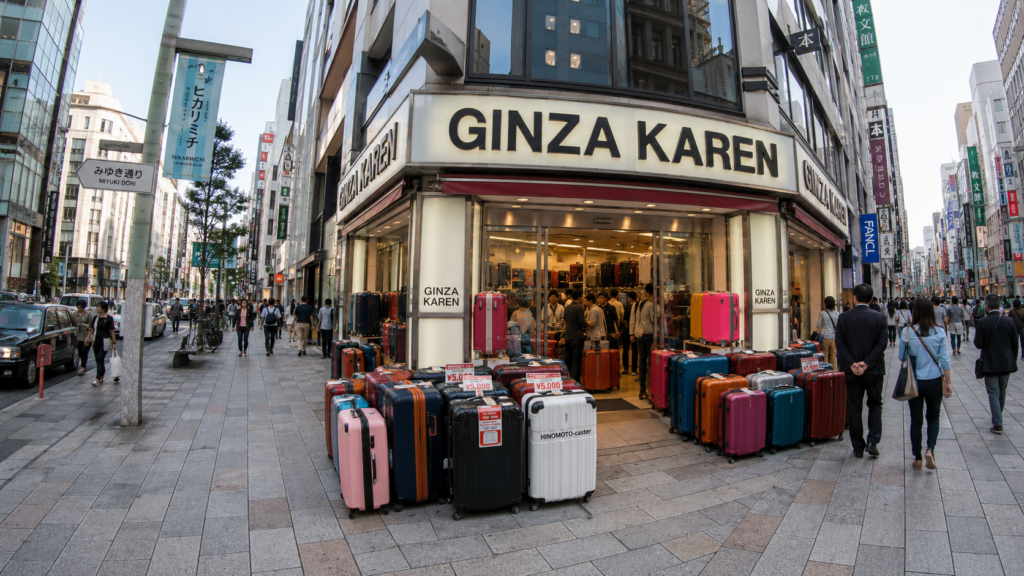
Ginza Karen is often mentioned by travelers who need affordable luggage in Tokyo and want to solve two problems in one trip: buy a replacement suitcase and ask whether the shop can accept the old one. This can be useful if your suitcase is broken, too small, or no longer worth taking home.
Ginza Karen has convenient Tokyo locations such as:
- Nihonbashi Ningyocho area: Useful if you are staying around Tokyo Station, Ginza, Nihonbashi, or Ningyocho. Check the latest address and hours before you go.
- Asakusa area: Useful if you are staying around Asakusa, Ueno, Kuramae, or eastern Tokyo. Check the latest opening days and hours before you go.
Do not assume old-suitcase acceptance is always free, automatic, or available at every moment. Fees, purchase conditions, accepted suitcase sizes, and staff instructions can change. Before you choose a replacement suitcase, ask clearly:
“If I buy a new suitcase today, can I leave my old broken suitcase here? Is there a disposal fee?”
Kai’s tip: I always tell readers to ask this question before they start comparing colors and sizes. Once you have paid, it becomes more awkward if the old suitcase cannot be accepted. Also confirm whether you can transfer your belongings inside the shop, especially if the old bag is damaged or hard to open.
If the answer is yes, empty your old suitcase first, move your belongings into the new one, and follow the staff’s instructions about where to leave the old bag. Keep your passport, wallet, medication, electronics, keys, receipts, and tax-free documents with you during the transfer.
What Else to Check Before Buying
- Disposal fee and conditions: Is old-suitcase acceptance free, paid, or tied to a purchase?
- Suitcase size: Make sure your souvenirs fit, but avoid buying a suitcase so large that trains, taxis, and elevators become difficult.
- Airline limits: Check your airline’s checked baggage size and weight rules before upsizing.
- Tax-free shopping: If available, bring your passport and ask before payment.
- Transfer space: Make sure you have enough room and time to move everything from the old suitcase to the new one.
What If You Are Near Another Store?
Ginza Karen is commonly recommended for this situation, but it is not the only place to ask. Larger department stores and specialist luggage retailers may have their own policies, but they vary widely. Ask before buying, and do not rely on general electronics or discount stores for disposal unless they confirm it directly.
If the shop cannot accept your old suitcase, do not panic. Use a pickup service, ask your hotel, or try a repair shop instead of leaving the suitcase behind. If the main problem is that your current hotel area is inconvenient, you may also want to review my guide to where to stay in Tokyo for first-time visitors so your next stay is easier for luggage movement.
Option 2: Use a Pickup or Recycling Service – ReCase

If your suitcase is unwanted but you do not need to buy a replacement, a dedicated pickup and recycling service is usually the cleanest option. You avoid buying luggage you do not need, and you do not have to carry a broken suitcase across town.
ReCase is a suitcase recycling and pickup service in Japan. The official site lists pricing per suitcase, accepts empty suitcases, and says damaged suitcases can be handled. Pricing, coverage, pickup slots, and conditions can change, so check the official booking page before you commit.
How to use ReCase:
- Visit the official ReCase website and check whether pickup is available for your address or hotel.
- Select your pickup date and time window. Availability depends on location and booking demand.
- Empty the suitcase completely. Do not leave clothing, liquids, batteries, documents, or souvenirs inside.
- Ask your hotel front desk whether they can hand over the empty suitcase to the pickup service if you will not be present.
- Leave the suitcase only at the confirmed handover point and only at the agreed time.
ReCase is best for travelers who need disposal only, especially when the suitcase is too damaged to move easily. It is less useful if you need a replacement suitcase immediately, because it does not solve the buying-new-luggage part of the problem.
Book a ReCase pickup here and confirm the current fee, pickup area, and empty-suitcase rules
Option 3: Repair Your Suitcase – Riat! and Other Options
Before you decide to throw away a broken suitcase, ask yourself: can this be repaired? A broken wheel, loose handle, stuck zipper, cracked corner, or damaged caster may be fixable. If the main body is still solid, repair can be cheaper and less wasteful than buying a new suitcase and arranging disposal.
Riat! (リアット!) is a well-known repair chain in Japan, and some locations handle luggage repairs such as wheels, handles, zippers, and casters. Availability, turnaround time, and accepted repairs depend on the shop, so check the nearest location before carrying a heavy suitcase there.
When repair makes sense:
- Only the wheel, caster, handle, or zipper is damaged.
- The shell and frame are still strong enough for travel.
- You have time before your flight or next hotel transfer.
- You like your current suitcase and do not want to buy a replacement.
When repair is not practical:
- The shell is cracked or shattered.
- The frame is bent and the bag no longer closes properly.
- The zipper is torn away and the contents cannot be secured.
- The repair cost is close to the price of a new suitcase.
If you are already near a luggage shop, you can also ask whether they offer in-store repair or can recommend a nearby repair counter. If your next move is a bullet train trip, check your baggage plan before departure; my Tokyo to Kyoto by Shinkansen guide explains luggage considerations for that route.
Can Your Hotel Dispose of Your Suitcase?
Your hotel should be your first place to ask, but not your place to abandon the suitcase. Some hotels may help arrange disposal for a fee, while others may refuse because oversized garbage rules vary by ward and property policy.
Ask the front desk before checkout, ideally the day before you leave:
“My suitcase is broken. Can the hotel help dispose of it? Is there a disposal fee?”
Kai’s tip: What catches people out is timing. A hotel that might help with disposal at 6:00 PM may not be able to solve it at 7:30 AM while you are rushing to Narita, Haneda, or Tokyo Station. Ask the night before checkout, and get a clear yes, fee, and handover instruction.
If the hotel says no, do not leave the suitcase in your room or beside the lobby trash area. Use a pickup service, ask a luggage shop when buying a replacement, or take it with you until you have a confirmed disposal option.
Can You Dispose of a Suitcase at Narita or Haneda Airport?
Do not rely on the airport as your main disposal plan unless you have confirmed the service directly before you go. Airports commonly offer baggage storage, luggage delivery, wrapping, and repair-related services, but those are not the same as guaranteed suitcase disposal.
Some airports in Japan may offer paid suitcase disposal services, but this is not something I would assume at Narita or Haneda without checking first. If your suitcase breaks on the way to the airport, ask an information counter or baggage service counter what options are available that day. If you are still in central Tokyo, it is safer to arrange disposal before heading to the airport.
If the suitcase is still usable and you only need to avoid carrying it to the airport, luggage delivery may be a better alternative. This is not a disposal service, so check the route, handover time, and luggage condition rules first:
See Tokyo airport luggage delivery details on Klook and confirm pickup timing before you rely on it
Broken Wheel or Handle? How to Move Around
A broken wheel changes the decision. Tokyo train stations can involve long walks, stairs, escalators, ticket gates, and crowded platforms. Dragging a heavy suitcase through Shinjuku, Tokyo Station, Ginza, or Ueno can quickly turn a small problem into a stressful day, especially if you also have to navigate the Shinjuku station maze.
Your best transport options with broken luggage:
- Taxi or ride-hailing app: Use GO, Uber, or DiDi for door-to-door transport. A short taxi ride to a luggage shop, hotel, or repair shop is much easier than dragging a broken suitcase through a station.
- Hotel-arranged taxi: Ask the front desk to help call a taxi large enough for your luggage, especially if the handle or wheels are unusable.
- Luggage storage or forwarding: If the suitcase still rolls and you only need temporary relief, check staffed counters or storage options. My Tokyo Station and Shinjuku luggage storage guide explains when lockers are not enough.
- Private car with chauffeur: This is not necessary for everyone, but it makes sense if you need door-to-door movement, a flexible schedule, and sightseeing after the luggage problem is solved.
Recommended If You Still Want to Sightsee: Private Customizable City Tour with Chauffeur
If your suitcase problem eats up your morning, the rest of your Tokyo day can fall apart quickly. This is where a private car makes sense: not as a disposal service, but as a way to avoid dragging bags through stations while still keeping your sightseeing day usable.
Why I’d book this one:
- Door-to-door movement: It is much easier for families, older travelers, or anyone dealing with broken wheels, extra souvenirs, or a replacement suitcase.
- Flexible itinerary: A customizable Tokyo day lets you adjust the route after a luggage shop, hotel stop, or repair errand instead of losing the whole day.
- Review pattern: Reviewers consistently mention comfort, helpful drivers, flexible pacing, and the ability to see major Tokyo sights without managing complicated transfers.
| Option | Best For | Price | Important Note |
|---|---|---|---|
| Private Customizable City Tour with Chauffeur | Travelers who want sightseeing plus easier movement after a luggage problem | Check current price | Not a disposal service; use it for transport and sightseeing flexibility |
| Tokyo airport luggage delivery | Usable suitcases that need forwarding, not disposal | Check current price | Useful only if the bag is accepted for delivery and still travel-safe |
If you are mainly trying to understand whether a private guide or private vehicle is worth it in Tokyo, my Tokyo private tour guide guide explains when it saves time and when public transport is enough.
How to Choose: Repair, Replace, or Dispose?
| Your Situation | Best Route | Why |
|---|---|---|
| Minor damage: wheel, handle, zipper, caster | Repair at Riat! or a similar shop | May be cheaper and less wasteful than buying new if the suitcase body is still solid. |
| Major damage + need a new suitcase | Replace at Ginza Karen or another luggage shop and ask about old suitcase acceptance | You may solve buying and disposal in one trip if the shop agrees. |
| Major damage + do not need a new suitcase | Dispose via ReCase pickup service | Avoid buying luggage you do not need and avoid carrying a broken suitcase across town. |
| Checking out tomorrow, hotel cannot help | Book ReCase pickup or go to the nearest luggage shop | You need a confirmed handover plan before checkout. |
| Wheels or handle are broken | Taxi or private car to repair shop, luggage store, or hotel | Dragging broken luggage through Tokyo wastes time and can damage the suitcase further. |
| Staying in Tokyo for several weeks | Ward oversized garbage system | You may have enough time to apply, pay, and wait for the scheduled collection day. |
What Should You Avoid When Disposing of Luggage in Tokyo?
The worst mistake is assuming that a broken suitcase can be treated like normal trash. Even if the suitcase is unusable, it still needs to go through an accepted route.
- Do not leave it in your hotel room without permission. The hotel may need to arrange disposal separately and may charge you later.
- Do not leave it on the street. This can be treated as illegal dumping and creates a problem for local residents.
- Do not leave it in a station or coin locker area. Unattended luggage may cause security concerns. If you are struggling with heavy bags, find alternative luggage storage options instead.
- Do not rely on regular trash bins. A suitcase is too large for normal garbage disposal in most Tokyo wards.
- Do not assume airport storage means disposal. Baggage storage and delivery counters are not the same as suitcase disposal services.
What Should You Do Before Handing Over Your Old Suitcase?
Before leaving your suitcase with a hotel, shop, or pickup service, empty it completely and check every pocket. This matters more than people think because side pockets, zipper compartments, and inner mesh pockets are easy to forget when you are stressed.
Kai’s tip: I always tell readers to check the suitcase twice: once while it is open, and once after you think it is empty. Look inside the lining pockets, document sleeves, laundry bags, and small zipper sections. Passports, medication, chargers, keys, and tax-free receipts are the items people most regret losing.
- Passport, wallet, cash, and credit cards
- Medication and medical documents
- Electronics, chargers, adapters, and batteries
- House keys, car keys, and hotel key cards
- Souvenirs, receipts, and tax-free shopping documents
- Liquids, food, cosmetics, and anything that may leak
- Airline baggage tags or documents related to a damage claim
Remove your name tag if you do not need it, but keep any airline baggage tag until you are sure there is no travel-related claim, insurance issue, or repair record connected to the suitcase.
FAQ About Broken Suitcase Disposal in Tokyo
Can I throw away a suitcase in a normal trash area in Tokyo?
No. A suitcase is usually too large for normal trash and is treated as oversized garbage. Use a confirmed disposal route such as hotel assistance, a shop take-back option, a pickup service, or the official ward system.
Can I leave a broken suitcase at my hotel in Tokyo?
Only if the hotel agrees. Ask the front desk first and confirm whether there is a fee. Do not leave it in your room without permission.
Is Ginza Karen the best place to buy a suitcase and dispose of the old one?
It can be a practical option if you need a replacement suitcase anyway. The key is to confirm the current disposal conditions with the staff before you pay.
What should I do if Ginza Karen cannot take my old suitcase?
Use a suitcase pickup or recycling service such as ReCase, ask your hotel for help, or try a repair shop if the damage is minor.
What is the easiest option if I do not need new luggage?
A suitcase pickup service such as ReCase is usually easiest because you do not need to buy another bag. Make sure the suitcase is empty and confirm the pickup location, price, and timing in advance.
Can I repair my suitcase in Tokyo?
Yes, if the damage is minor. Repair shops may handle wheel replacements, handle repairs, zipper fixes, and caster issues. Check the nearest shop before carrying a heavy broken suitcase there.
Is it illegal to leave a suitcase on the street in Tokyo?
Leaving unwanted luggage on the street can be treated as illegal dumping. Even if the suitcase is broken, use an approved disposal method.
Can I take a broken suitcase on Tokyo trains?
You can, but it may be difficult if the wheels or handle are broken. Large stations often involve long walks, stairs, and crowded platforms. A taxi, private car, or hotel-arranged vehicle may be easier.
Should I repair my suitcase instead of disposing of it?
If the damage is minor and you have time, repair is worth considering. If the shell, frame, or main structure is badly damaged and you are leaving Japan soon, replacement or disposal is more realistic.
Final Verdict – Best Option for Your Situation
| Your Situation | Best Option | Why |
|---|---|---|
| Broken suitcase + need a replacement today | Ginza Karen or another luggage shop | You may solve buying and disposal in one stop if the shop accepts the old suitcase. |
| Broken suitcase + do not need new luggage | ReCase pickup service | Avoid buying luggage you do not need. No dragging broken bags across town. |
| Minor damage: wheel, handle, zipper, caster | Riat! or another repair shop | Repair may be cheaper and faster than replacement if the suitcase body is still usable. |
| Checking out tomorrow | Ask hotel first, then book pickup | You need a confirmed handover plan before checkout. |
| Wheels or handle are broken | Taxi or private car to shop, repair, hotel, or airport | Dragging broken luggage through Tokyo wastes time and energy. |
| Long-term stay | Ward oversized garbage system | You may have enough time to complete the application and collection process. |
My Practical Recommendation
Choose Ginza Karen or another luggage shop if: You need a replacement suitcase today and the shop confirms old-suitcase acceptance before payment.
Choose ReCase if: You do not need a new suitcase and want a confirmed pickup route from your hotel or address.
Choose repair if: The suitcase body is still solid and the problem is limited to a wheel, handle, zipper, or caster.
Choose a taxi or private car if: The wheels or handle are broken and you still need to move across Tokyo. Do not turn a luggage problem into a station problem.
Recommended If the Luggage Problem Has Already Disrupted Your Day
If your morning has already been consumed by hotel calls, a replacement suitcase, or a repair stop, a private customizable city tour can help you salvage the rest of the day. It is best for families, travelers with heavy bags, older visitors, and anyone who wants to avoid complicated transfers after a stressful start.
Why I’d book this one:
- It keeps the day flexible: You can build the route around your hotel, luggage shop, repair stop, and sightseeing priorities.
- It reduces station stress: Broken wheels, extra bags, and crowded platforms are a bad combination in Tokyo.
- It matches the review pattern: Reviewers repeatedly highlight comfort, driver helpfulness, and the ability to cover major Tokyo sights efficiently.
For most travelers, the safest plan is simple: confirm acceptance before paying, empty the suitcase completely, and avoid dragging broken luggage across Tokyo unless you really have to.

Hi, I’m Kai. I’m a Tokyo-based travel writer, tourism industry insider, and the author of a published guidebook for international visitors to Japan. With over 10 years of professional experience at a leading Japanese tourism company, my mission is to help you skip the tourist traps and navigate Japan’s best destinations like a local. I believe the perfect day trip is like a traditional kaiseki meal: a beautiful balance of precise planning and unforgettable seasonal discovery. When I’m not out conducting field research, you’ll usually find me drafting new itineraries with one of my favorite fountain pens!