
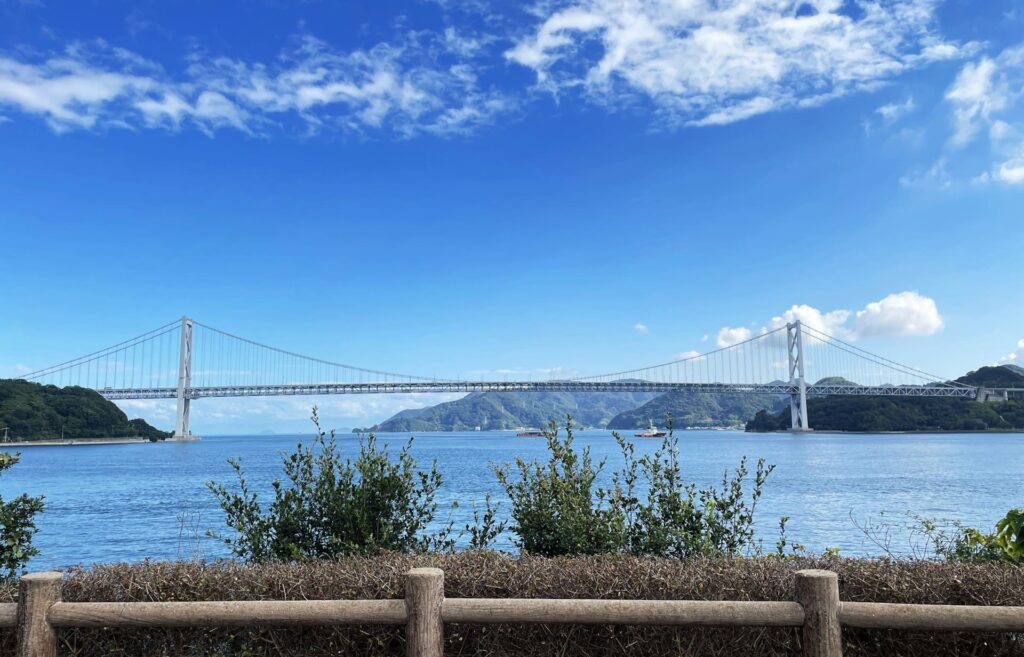
Onomichi is a town built on a slope, and the best things to do in Onomichi form one natural downhill line: up to Mt. Senkoji first, then slowly down through the old lanes, Cat Alley, the Hondori shopping street, and out to the waterfront. Plan it that way and a half day is easy, a full day is comfortable, and your legs will thank you.
If you remember only one route: take the Mt. Senkoji Ropeway up in the morning, enjoy the panorama from the PEAK observatory, visit Senkoji Temple, then walk downhill through the hillside lanes, Cat Alley and the shopping street before finishing with Onomichi ramen or a seafood lunch near the water.
The mistake I see first-time visitors make is treating Onomichi as a checklist of sights. The town is really one long route — ride up, walk down — and most of its character sits in the walking-down part that guidebooks describe in two lines. If you are not cycling the Shimanami Kaido, this is still a town worth a day on its own.
One more thing up front: the town works perfectly well on foot, and a guide is a convenience rather than a requirement. If you would rather not plan every hillside turn yourself, a private local walking tour is an option worth comparing — but nothing below depends on booking one.
If you want the same hillside-first route with a licensed local guide handling the details, check current start times, availability, and recent traveler reviews for this private Onomichi tour.
The Best Way to See Onomichi in One Day
Everything worth seeing in the town center sits between the summit of Mt. Senkoji and the sea, roughly two kilometers apart as a walk — but almost all of it is uphill if you do it backwards. So the standard route I suggest to visitors is:
- Take the ropeway up from near the waterfront to the summit station (about 3 minutes).
- Walk the short path to the PEAK observatory for the view over the Onomichi Channel and the islands of the Seto Inland Sea.
- Visit Senkoji Temple, the red main hall that anchors the hillside.
- Walk down through the Path of Literature and the narrow lanes, letting the slopes and stairs do the navigation for you.
- Detour through Cat Alley (Neko no Hosomichi) on the way down.
- Emerge at Onomichi Hondori, the covered shopping street, for food, coffee or a break.
- Finish along the waterfront — the Onomichi Channel side near the station — with ramen, seafood or just the evening light.
What surprises most travelers here is how much of Onomichi’s character lives in the walking-down part: the lanes are narrow, the stairs are steep, and the views change every few dozen meters. That is the experience. You do not need to “see all 25 temples” to get it — more on that below.
How much time do you need in Onomichi?
| Time | What fits comfortably | Who it suits |
|---|---|---|
| 3–4 hours | Ropeway up, PEAK, Senkoji Temple, a relaxed walk down through Cat Alley, a quick pass through Hondori and the waterfront | Travelers on a Hiroshima–Okayama day trip who want the essentials without rushing |
| 6–8 hours | The route above plus a proper lunch (ramen or seafood), a longer wander through the old lanes, Petit Anon for coffee, and part of the Temple Walk | Most first-time visitors who want to feel the town rather than just see it |
| A full day or more | Everything above at a slow pace, plus the full Temple Walk, the waterfront at sunset, or a Shimanami Kaido ride as a separate day | Repeat visitors, photographers, and anyone pairing the town with cycling |
My honest answer: give Onomichi at least a half day. It is compact enough that you will not be bored, and hilly enough that you will not want to cram it into two rushed hours between trains.
1. Start at Onomichi Station — and Pay Attention to the Exit
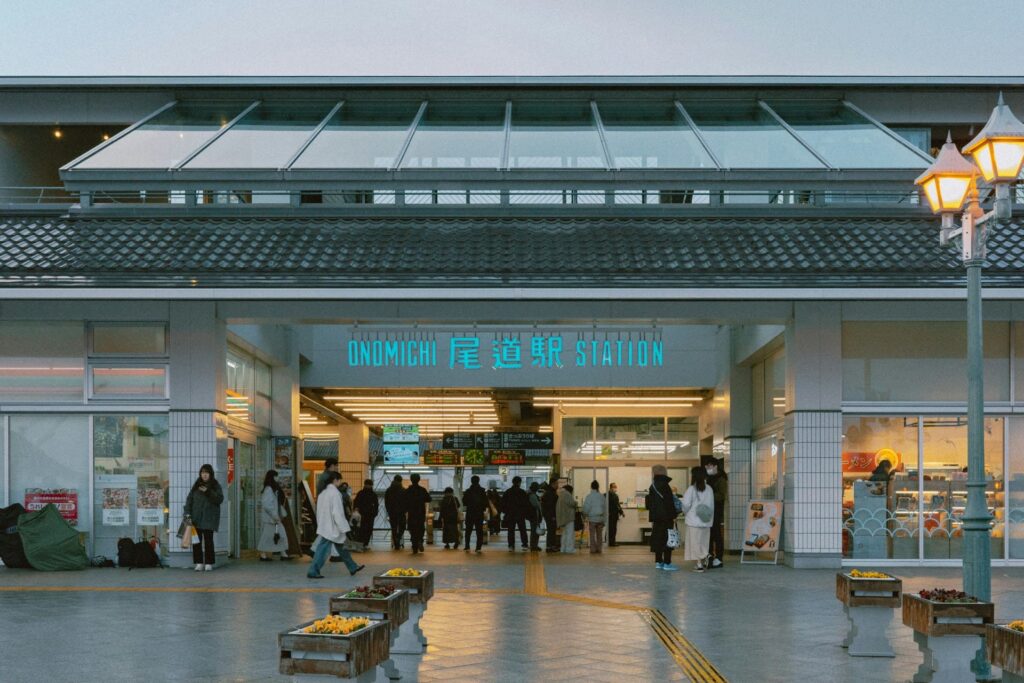
Onomichi Station sits on the JR Sanyo Main Line, about 1 hour from Hiroshima and 35–50 minutes from Okayama by local and rapid trains. (If you are arriving by shinkansen, check our guide on how to get to Onomichi from Tokyo or Osaka to ensure you use the correct station.) It is a small station, but the exit you choose matters more than you would expect.
The main exit faces the sea and the town center — this is the side you want. The town’s hills and Mt. Senkoji rise behind the station, and it is easy to walk out toward the mountain out of habit. If you do, you add a long detour before you even reach the ropeway. From the main (sea-side) exit, the ropeway’s lower station is a straight, mostly flat walk of about 15 minutes along the waterfront side, or a short bus ride (about 5 minutes) to the Nagae-guchi stop.
Kai’s tip: When you leave the ticket gate, check the signs for the port and town center, not the mountain. First-time visitors who walk toward the hillside exit are the ones I see doubling back through the station — it is the single most common wasted 15 minutes in Onomichi. The sea-side exit also puts you closest to the station’s coin lockers if you need to drop luggage before the ropeway.
2. Take the Mt. Senkoji Ropeway Up First
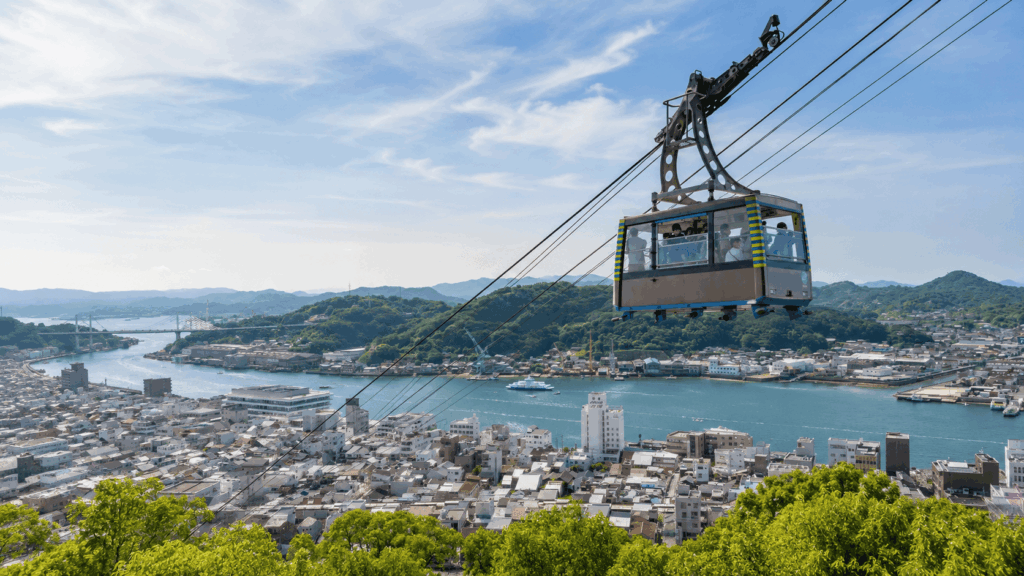
The Mt. Senkoji Ropeway runs from its lower station (Sanroku Station) near the town center up to the summit station in about 3 minutes, passing over temples and houses — an unusual ride in Japan, and the easiest way to start your day at the top instead of at the bottom.
As of mid-2026, the fare is around ¥500 one way and ¥700 round trip for adults (children about half). The ropeway runs from roughly 9:00 to 17:15, departing every 15 minutes or when full, and operates daily — though it can pause during bad weather or annual maintenance. One important date: the ropeway closes for annual inspection and repair from December 7 to 25, 2026, so plan around it if your trip falls in that window.
Ropeway or walk up?
| Option | Cost | Effort | Best for |
|---|---|---|---|
| Ropeway up, walk down | Around ¥500 (one way) | Low effort up, moderate walk down | Most visitors — saves your legs for the lanes and lets you enjoy the views facing the sea |
| Walk up, walk down | Free | High — long stair climbs | Fit hikers who want the climb itself; allow extra time and good knees |
| Ropeway round trip | Around ¥700 | Lowest effort | Travelers with limited mobility or very tight time who still want the summit view |
My standard advice is one way up. The walking-down part is where Onomichi’s lanes, cats and small views appear, and you would skip most of it with a round-trip ticket. Walking up instead is possible, but the stairs near the temple are steep, and you will arrive at the summit already tired — not the state you want for the best view of the town.
Kai’s tip: Go up early, before the mid-morning tour groups. The ropeway’s summit station and the PEAK deck are small spaces, and they feel very different at 9:30 than at 11:00. There is no guarantee of empty decks or clear skies — the Seto Inland Sea can sit under a soft haze even on fine days — but an early start gives you the best odds for both, and leaves the whole downhill walk ahead of you instead of behind.
3. Go to PEAK for the Best Panoramic View
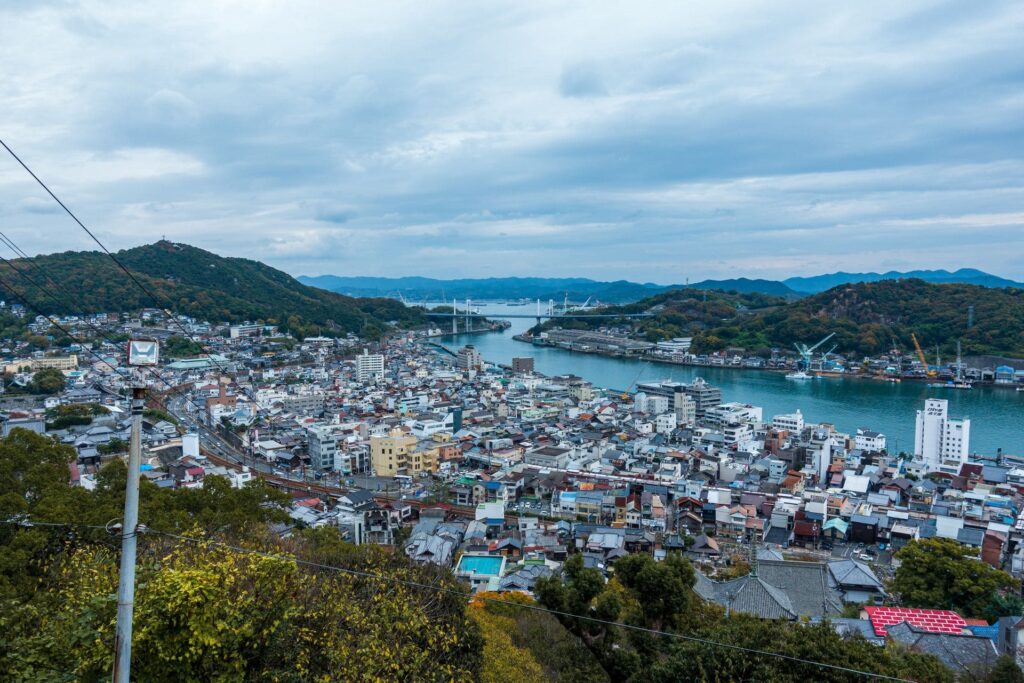
A short, gentle path from the ropeway’s summit station leads to Senkoji Park Observatory PEAK, the town’s main viewpoint. Reopened in 2022, it is a long 63-meter deck that looks straight down over the Onomichi Channel, the old town’s rooftops and the islands of the Seto Inland Sea. On a clear day you can trace the chain of islands that the Shimanami Kaido crosses — which makes a useful mental map if you are cycling later.
The park itself is open 24 hours, and the deck can be reached by a gentle slope or an elevator (the elevator runs roughly 9:00 to 17:15, matching the ropeway). A second, quieter viewpoint called MiTeMi sits a little further along the ridge on the site of the old Onomichi Castle — worth the extra few minutes if you want a different angle and fewer people.
One practical note: the view is weather-dependent. If the morning is hazy, the panorama will still be lovely but softer than the postcard version; the deck is a place to go early, not to wait around for perfect conditions that may not come.
4. Visit Senkoji Temple Before Walking Down
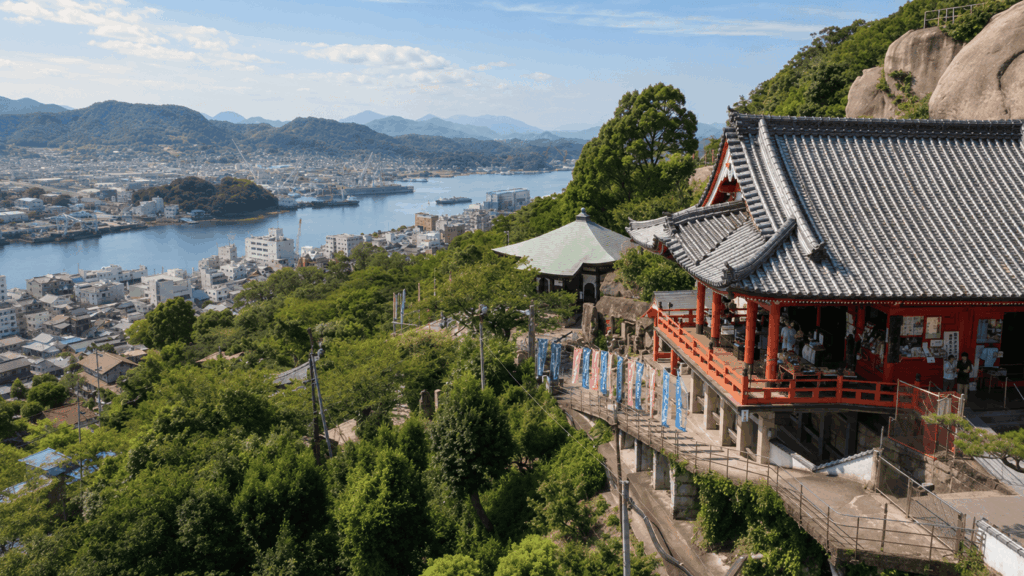
Senkoji Temple, founded in 806, is the anchor of the hillside and the reason the area around it is called Senkoji Park. Its red main hall and bell tower are the classic Onomichi image, framed by the town below. The temple grounds are open roughly 9:00 to 17:00, and admission to the main hall area is free.
The temple is about a 5-minute walk from the ropeway’s summit station, along the Path of Literature — a wooded trail lined with stones carved with poems and prose by writers connected to Onomichi, including Shiga Naoya and Hayashi Fumiko. It is a quiet, shaded stretch and a gentle introduction to the walking-down part of your day.
If you collect temple stamps (goshuin), Senkoji is one of the more atmospheric places in the region to do it — the stamp window sits in a wooden building that feels far from the tourist flow. Worth knowing: the grounds include the famous “Tama no Iwa” (Ball Rock), a large boulder tied to the temple’s founding legend, tucked in among the rocks near the main hall.
5. Walk Down Through Onomichi’s Hillside Lanes
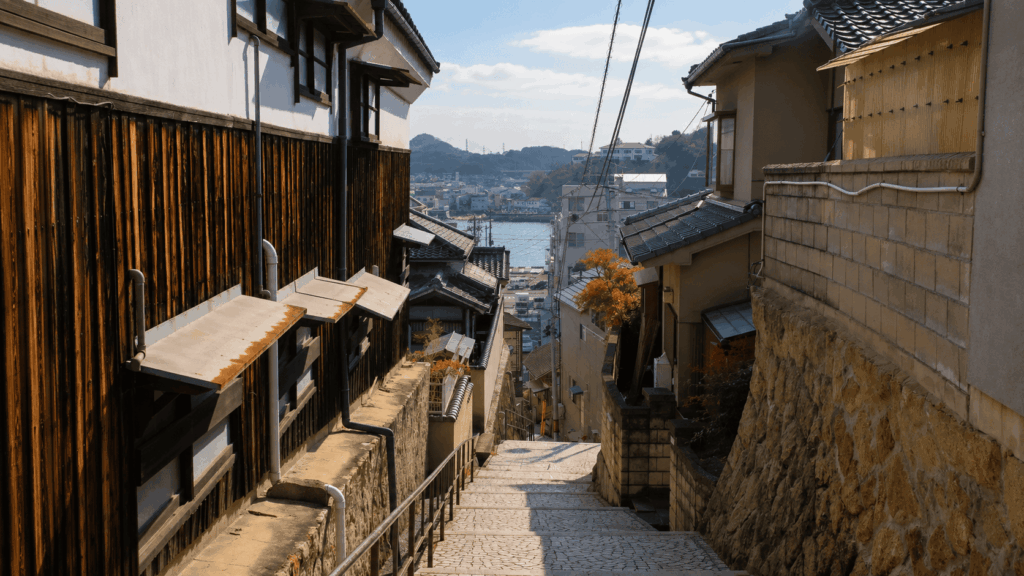
This is the part of Onomichi that most first-time visitors underestimate. From Senkoji Temple, the paths thread downhill through residential lanes, stone steps, tiny gardens and the occasional cat, eventually dropping you near the top of the shopping street. It is not a themed attraction — it is a real neighborhood with a temple or shrine every few hundred meters, and the walk is the attraction.
Along the way you pass the Path of Literature’s lower stretch, Tenneiji Temple with its three-story pagoda, and Ushitora Shrine, said to be the town’s oldest shrine, marked by a huge camphor tree said to be around 900 years old. None of these demand more than a few minutes each — the pleasure is in the sequence, and in the views that open up between houses as you drop toward the sea.
One honest note on effort: these lanes are charming, but they are not gentle sightseeing paths. Some sections are genuinely steep, with stairs that go on longer than they look from the top. The good news is that the route is downhill in this direction. The mistake I see is travelers who walk up from the town, arrive at the top already tired, and then skip the lanes they came to see because their legs are done. Ride up, walk down — and the whole neighborhood becomes easy.
If you like the idea of the downhill route but would rather spend the half day noticing the town than deciding which staircase, temple or side lane deserves your time, this is the guided option that fits this itinerary most closely.
Why I’d book this one
- The private format can be shaped around the parts of Onomichi you care about rather than forcing you through a fixed checklist.
- Recent travelers consistently highlight the guides’ local knowledge and the extra cultural context they bring to temples, shrines and the old hillside neighborhoods.
- A local guide can also help keep the route focused when you only have a half day, while still leaving room to slow down in the lanes that make Onomichi worth visiting.
Is Onomichi difficult if you have knee or mobility issues?
Yes, parts of it will be. The hillside lanes and the Path of Literature involve stairs and uneven stone, and there is no avoiding them if you want the classic views — they sit on the slope. The accessible way to experience Onomichi is to take the ropeway round trip, enjoy PEAK and the summit area (which are reachable by gentle paths and an elevator), and then return the same way instead of walking down. You will miss the deep lanes, but you will still see the town’s most famous panorama. Onomichi Hondori and the waterfront are flat and easy for anyone who wants to skip the hills entirely.
6. Treat Cat Alley as a Fun Detour — Not a Guaranteed Cat Spot
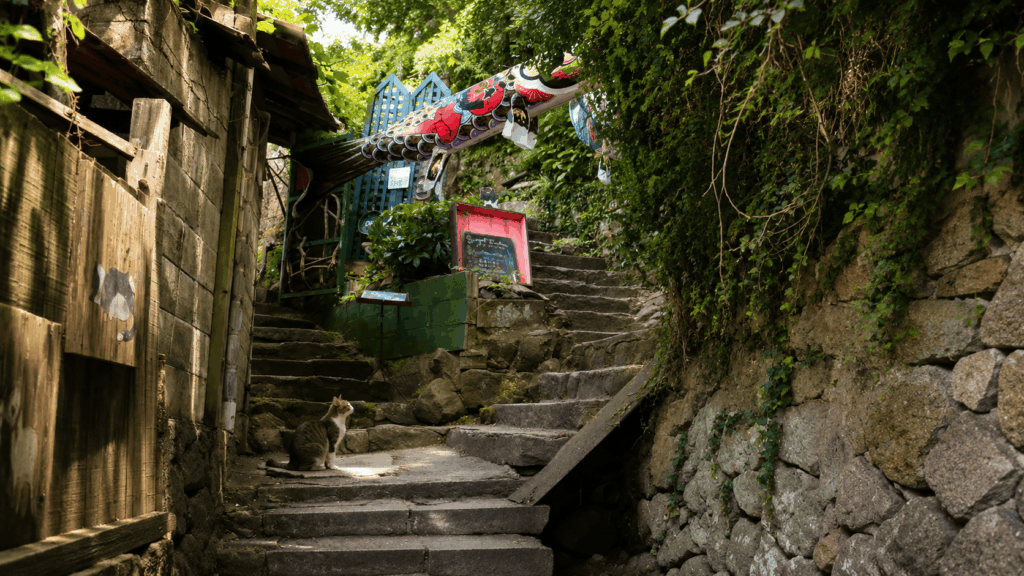
Neko no Hosomichi, usually translated as Cat Alley, is a narrow covered lane of about 200 meters between Ushitora Shrine and the area near Tenneiji. It has been dressed up as a cat-themed street: black-and-white “fukuishi-neko” (lucky stone cats), cat artwork, and small signs. It is a charming detour that takes five minutes and fits naturally into your downhill walk — you will basically pass it anyway.
Now the expectation-setting part, because this is where reviews and reality drift apart. Recent visitors consistently say they saw fewer real cats than they expected — the lane is popular, and on busy days the resident cats retreat to roofs and gardens where you cannot see them. Some visitors report seeing several cats on quiet mornings; others report seeing none at all. If your whole reason for coming is guaranteed cat encounters, lower that expectation. If you enjoy the cat-themed lane as a quirky local project with the possibility of a real cat or two, it will likely delight you.
Kai’s tip: Walk Cat Alley slowly and look down and up — most of the fun is in the details: the stone cats tucked into corners, the hand-painted tiles, the small shrines for cats. That is also how the neighborhood’s real cats, when they are out, tend to be spotted: asleep on a roof edge or under a parked bicycle, not posing in the middle of the lane. Quiet mornings give the best odds, which is another reason to start your day early.
7. Take a Break at Petit Anon
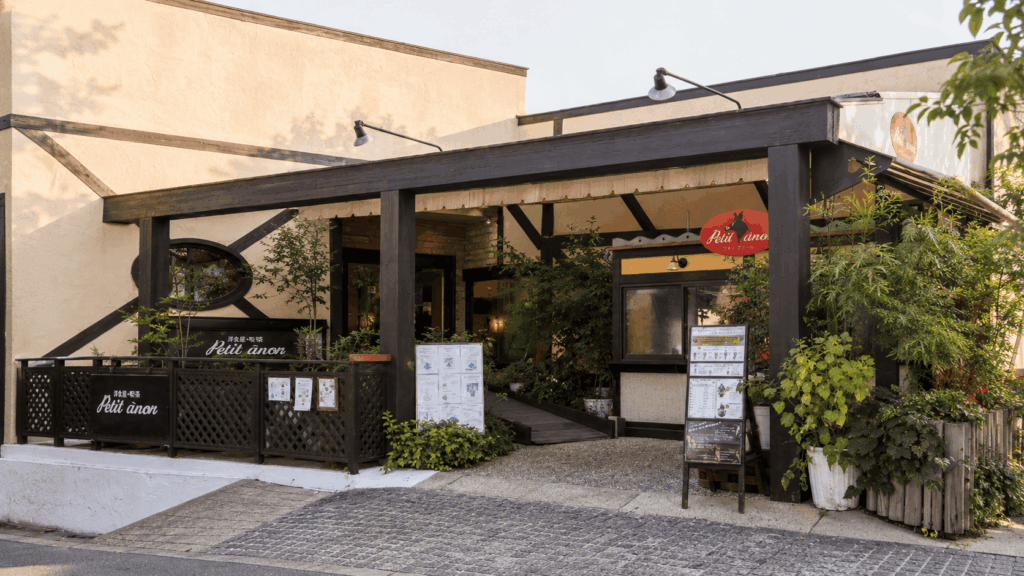
Roughly halfway down the hillside, near the lower end of the temple area, Petit Anon is a small café in an old townhouse that works well as a pause between the summit and the shopping street. It serves light meals, coffee and desserts, and the interior — wooden beams, low tables, windows over the lanes — is very much the Onomichi aesthetic. Hours are roughly 10:00 to 14:30 and 17:30 to 21:30, closed Wednesdays; check current hours before relying on it, as small-town cafés adjust them.
Is it essential? No. It is a pleasant stop if you want coffee and a seat before the long flat stretch of the shopping street, and it is one of the few sit-down options on the hillside itself. If the timing does not work, skip it — there are plenty of coffee stops along Hondori below.
8. Walk Onomichi Hondori Shopping Street
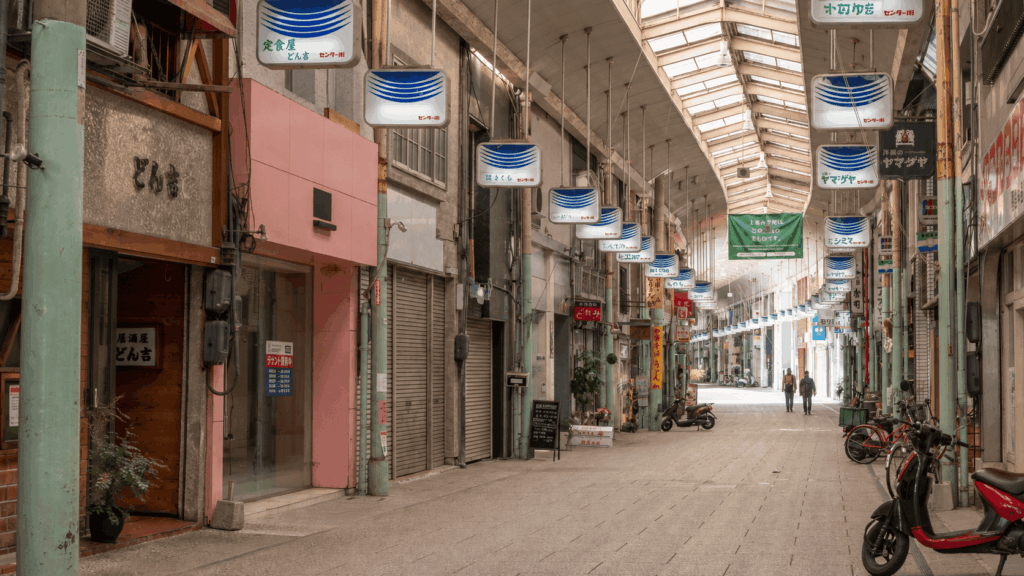
By the time you come down from the lanes, you will have earned the flat ground. Onomichi Hondori is the covered shopping street that runs roughly 1.2 kilometers (some sources say up to 1.6 km) through the center of town, parallel to the water. Covered arcades are common in Japan, but Hondori is notable for how alive it still is — a mix of long-running local shops, fishmongers, bakeries, secondhand stores and the occasional modern café, rather than a tourist corridor of souvenir stands.
It is also your practical lifeline: covered, so it works in rain and strong sun; flat, so it is a rest for your legs; and dense with small food stops, which makes it the easiest place to eat if you have not decided on a meal yet. Walking the full length takes 20–30 minutes at a browsing pace, but most visitors naturally dip in and out of the side streets, which is exactly what the street is for.
Grab breakfast or bread for the waterfront
If you arrive early, the town’s bakery scene is worth knowing about. One local favorite is Pan’ya Kōro (Bakery Route), a small bakery a short walk from the station that opens from 7:00 and sells out as the day goes on (closed Mondays and Tuesdays). Bread from places like this — or from the bakeries inside Hondori itself — makes a natural picnic for the waterfront benches later in the day. On a morning visit, a bakery stop before the ropeway is a small ritual that rewards you at the end of the walk.
9. Spend Some Time Along the Waterfront
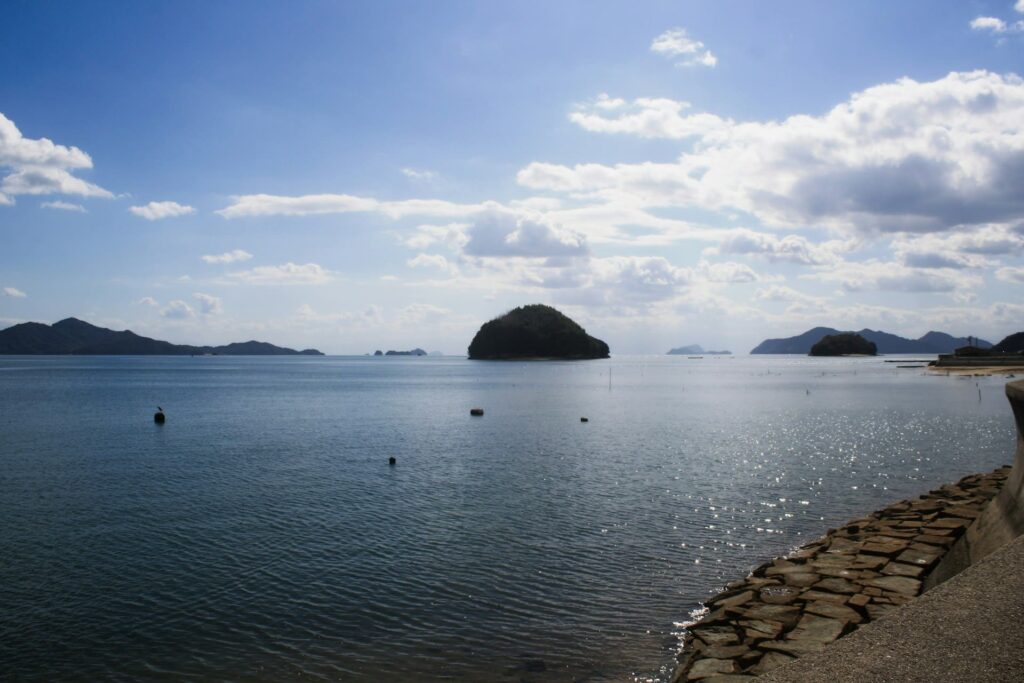
Onomichi’s character is half hillside, half port, and the waterfront side of the station is where the port half lives. The Onomichi Channel is busy with ferries and small boats, and the walk along the water between the station and the ferry terminals is short, flat and atmospheric — especially late in the day, when the light comes across the islands (see our Onomichi sunset guide for the best viewpoints and timing).
The most interesting single stop is ONOMICHI U2, a converted former prefectural warehouse next to the station that now holds Hotel Cycle (a cycling-themed hotel), a Giant bike shop, cafés, restaurants and a bakery. It opened in 2014 and is the clearest sign of how the town has embraced its Shimanami Kaido identity. Even if you are not cycling, it is worth a wander — and it is the most convenient place near the station for coffee, lunch or shelter while you wait for a train.
10. Try Onomichi Ramen — but Don’t Ignore the Seafood
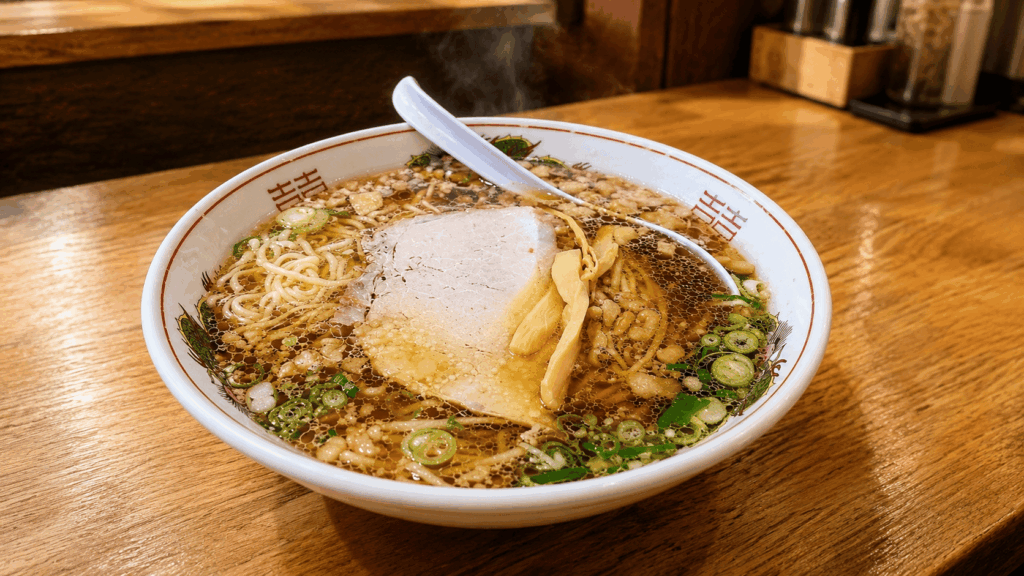
Onomichi ramen is the dish most visitors come for: a soy-sauce broth topped with pork back-fat (lard), flat noodles, and usually green onions and chashu. It is richer than the lighter styles of Hiroshima city and satisfies quickly after a morning on the hills. One clarification you will not find in older guidebooks: the legendary Shukaen, the ramen shop that defined the style for over 70 years, closed in 2019. Its recipe lives on at Chuka Soba Shū (a successor shop in the Jūyokka-motomachi area), and other established local shops include Maruboshi and Ippankan, both in the Doi district near the station. Hours and closing days vary — check before you go.
Now the honest part: if you have a full day, do not make ramen your only meal plan. Onomichi is a working fishing port, and the seafood is the town’s other great food story. One good example is Uoharu (Okamura Haruko Shoten), a small shop a few minutes from the station that has run as a fish shop for about 80 years and now also serves set meals of the day’s catch — open early for breakfast-style sets and again at lunch, closed Wednesdays and some Thursdays. Options like this are easy to miss because they have no big signage in English, but they are the meals locals actually eat.
My practical advice: choose your main meal by timing. If you finish the walk hungry around noon, a bowl of Onomichi ramen is fast, filling and cheap. If you have an evening in town, save the seafood for dinner and keep the afternoon light. For more recommendations, check out our complete guide to the best food in Onomichi.
11. Walk Part of the Temple Route — Don’t Feel You Need to Complete It
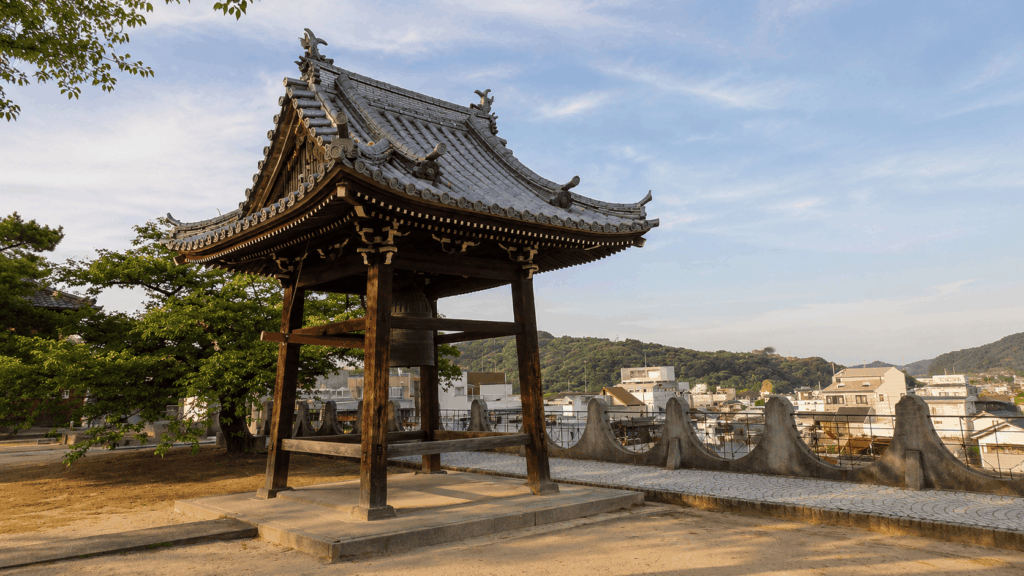
Onomichi’s 25 temples and shrines are strung along a route of about 2.5 kilometers through the hills — often called the Onomichi Temple Walk. It sounds like a checklist, and you can treat it as one, but most visitors get more from walking part of it than from completing all of it. Senkoji, Tenneiji and Ushitora Shrine, which you already pass on the main downhill route, are among the most atmospheric stops on the circuit.
The full route takes anywhere from an hour to a half day depending on pace and how many temples you actually enter. My suggestion: do the stretch between Senkoji and the town on your way down, and save the rest for a second visit or for a day when the weather is good and you feel like wandering without a plan. Completing the route for its own sake is a goal for repeat visitors, not a requirement for a first day.
12. Decide Separately Whether Shimanami Kaido Belongs in Your Day
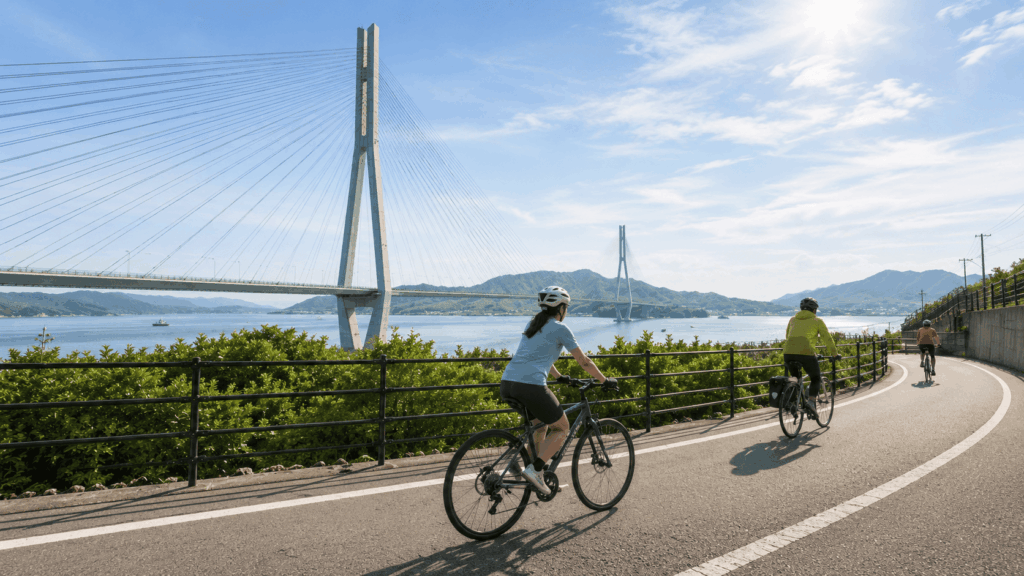
The Shimanami Kaido is the famous 70-kilometer cycling route from Onomichi across the islands of the Seto Inland Sea to Imabari on Shikoku. It is a wonderful ride, and it is the reason many people come to this part of Japan — but it is not a “thing to do” you add to a town day. Experienced cyclists ride it in around 4 hours; most tourists take 7–10 hours with stops, and many split it over two days with an overnight on an island.
The mistake I see in itineraries is trying to combine the ride with the town on the same day. You can do a short version — rent a bike, cross one or two islands and return — but that still eats 3–4 hours and will cut deep into your town route. My advice: if you are in Onomichi primarily for the town, leave the Kaido for a separate day. If you are here for the ride, plan the town for the morning of your arrival day or the evening of your return, and let the bike be the main event.
Is Onomichi Worth Visiting If You Don’t Cycle?
Yes — clearly. The Shimanami Kaido gets the international headlines, but the town’s hillside lanes, temples and port atmosphere existed long before the bike route, and they are the reason locals recommend Onomichi to visitors who never touch a bicycle. In fact, the town’s charm is easier to feel without the pressure of a ride schedule. If you enjoy old neighborhoods, temple walks, local food and slow urban wandering, Onomichi is worth a half day at minimum — and a full day if you take your time with lunch and the waterfront.
What to Do in Onomichi When It Rains
Rain changes the plan but does not cancel the day. The hillside lanes and stairs become slippery and less pleasant, and the ropeway can pause in bad weather, so the practical move is to stay low. Onomichi Hondori is covered for its full length, which makes it the center of a rainy-day route: walk the arcade, eat, browse the side shops, and add a stop at the Onomichi City Museum of Art (near the station, open roughly 9:00 to 17:00, closed Mondays and between exhibitions — it only opens during exhibition periods, so check before relying on it).
For a still-photogenic option in light rain, ONOMICHI U2 by the station is dry, interesting and close to the ferry view — and a waterfront café with the rain on the channel is not a bad way to spend an hour. Save the hills for a dry day.
A Simple Half-Day Onomichi Route
If you only have a few hours, this is the order I would use — no timestamps, because the right pace depends on you:
- Leave luggage in a coin locker at the station (see our guide to Onomichi luggage storage for backup locations and delivery options) or check in early if your hotel allows it.
- Walk or take the short bus ride to the ropeway’s lower station.
- Ride up, and spend time at PEAK and Senkoji Temple.
- Walk down through the Path of Literature and the hillside lanes, detouring through Cat Alley.
- Emerge onto Hondori for lunch — ramen or seafood depending on your timing and mood.
- Finish with a slow waterfront walk past ONOMICHI U2 toward the station, and catch your train.
That route covers the town’s three identities — summit, lanes, port — in one downhill line, and it is realistic in 3–4 hours without feeling rushed. If you have a full day, add a proper seafood dinner, a longer Hondori browse, and an unhurried stretch of the Temple Walk. That is Onomichi at its best: not a checklist, but one long, well-planned descent from the mountain to the sea.
FAQ
How many hours do you need in Onomichi?
For the town center alone, half a day (about 3–4 hours) covers the ropeway, PEAK, Senkoji Temple, a relaxed walk down through Cat Alley and a quick pass through Hondori. A full day (6–8 hours) adds a proper lunch, a longer wander through the old lanes, a café stop and time on the waterfront. If you are also cycling the Shimanami Kaido, plan the ride as a separate day rather than squeezing it into a town day.
Is Onomichi worth visiting if you don’t cycle?
Yes. The hillside lanes, temples, old shopping street and port atmosphere existed long before the cycling route, and they are the reason many travelers visit without ever renting a bike. If you enjoy old neighborhoods, temple walks, local food and slow wandering, Onomichi is worth at least a half day on its own. If you want big attractions, shopping malls or nightlife, it will feel quiet — that is not what the town is for.
Should I walk or take the ropeway to Senkoji?
For a first visit, take the ropeway up and walk down. The ride takes about 3 minutes and saves your energy for the lanes and stairs on the way down, where most of the town’s character actually lives. Walking up is possible but steep, and you will arrive at the summit already tired. If stairs and uneven paths are a concern, take the ropeway round trip and enjoy the summit area without the downhill walk.
Are there actually cats in Cat Alley?
There are real cats in the area, but seeing them is not guaranteed — on busy days they tend to stay on roofs and in gardens where visitors cannot see them, and some visitors report seeing none at all. Treat Cat Alley as a fun five-minute detour with cat artwork, stone cats and a narrow-lane atmosphere, and treat a real cat sighting as a bonus rather than the point of the visit.
Can you visit Onomichi and cycle the Shimanami Kaido on the same day?
Only in a very short version — renting a bike, crossing one or two islands and returning still takes 3–4 hours, which cuts deep into your town route. For a proper ride, experienced cyclists take around 4 hours and most tourists 7–10 hours, so the honest answer is to separate them: give the town its own half or full day, and give the ride its own day (or two) as well.
Final Verdict: Who Is Onomichi For?
Choose Onomichi for your itinerary if you like hillside views, old lanes, temples, working port towns and food that locals actually eat. The town rewards a slow downhill walk far more than a checklist of sights, and it does not need cycling to justify a visit.
Choose another destination — or shorten your stop — if stairs and steep slopes are a problem for you, if you prefer fast-paced sightseeing with many major attractions in a day, or if your only reason to come is guaranteed cat encounters. And if your trip is built entirely around a full Shimanami Kaido ride, treat the town as a separate day rather than a same-day add-on.
- For first-time visitors: ride the ropeway up in the morning, take in PEAK and Senkoji Temple, then walk down through the lanes, Cat Alley and Hondori before a waterfront finish. That single downhill line is the whole town in its best order — 3–4 hours at a comfortable pace, 6–8 if you stop for lunch and coffee.
- For travelers on a tight schedule: the half-day version above is realistic between trains from Hiroshima or Okayama. Skip Petit Anon if time is short, and keep lunch flexible — ramen is the fast option, seafood the more local one.
- For travelers with knee or mobility concerns: take the ropeway round trip, enjoy PEAK and the summit area via the gentle paths and elevator, and skip the downhill lanes. Hondori and the waterfront are flat and easy, so the town still works — you just trade the deep lanes for comfort.
- For repeat visitors: spend the extra hours on the full Temple Walk, the quieter MiTeMi viewpoint, and an unhurried seafood dinner near the port — the town has more depth than a first pass reveals.
- For Shimanami cyclists: keep the ride as its own day. Use the morning of your arrival or the evening of your return for the town, and let the bike be the main event — the two deserve separate attention.

Hi, I’m Kai. I’m a Tokyo-based travel writer, tourism industry insider, and the author of a published guidebook for international visitors to Japan. With over 10 years of professional experience at a leading Japanese tourism company, my mission is to help you skip the tourist traps and navigate Japan’s best destinations like a local. I believe the perfect day trip is like a traditional kaiseki meal: a beautiful balance of precise planning and unforgettable seasonal discovery. When I’m not out conducting field research, you’ll usually find me drafting new itineraries with one of my favorite fountain pens!